Introduction
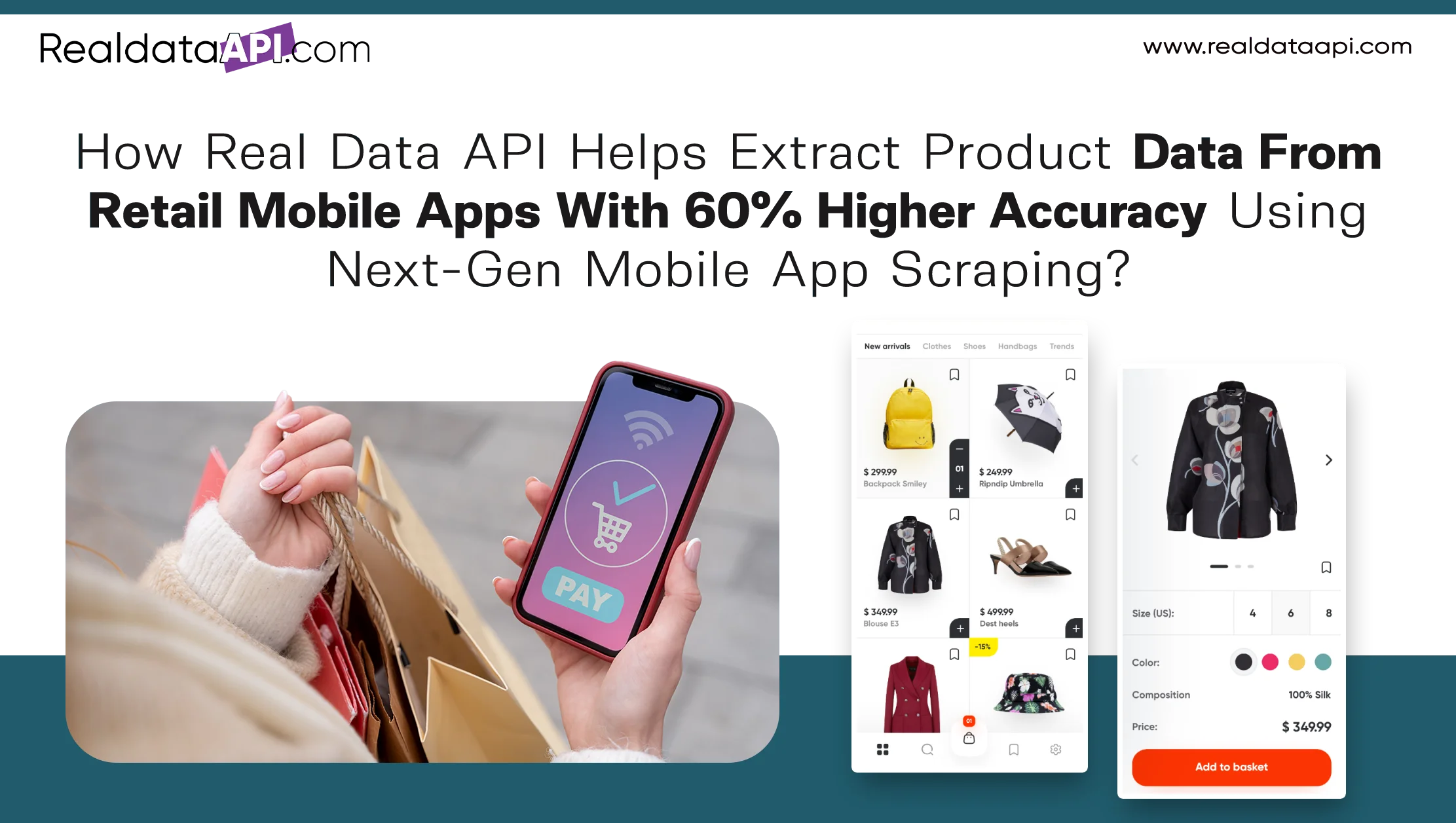
In today's digitally driven retail landscape, mobile apps have become the primary channel for product discovery, pricing decisions, and customer engagement. For brands, marketplaces, and analytics companies, the ability to extract product data from retail mobile apps unlocks a competitive advantage that previously required manual effort, fragmented tools, or unreliable scraping methods. As more shoppers shift from desktop browsing to mobile-first commerce, retailers are updating prices, promotions, and catalogs on mobile apps faster than ever. To stay ahead, businesses need a reliable, automated system capable of navigating dynamic app environments, capturing real-time attributes, and converting raw data into actionable intelligence. This is where Real Data API steps in with next-generation mobile app scraping, offering capabilities that deliver 60% higher accuracy in data extraction compared to conventional scrapers.
The New Era of Automated Retail Intelligence

The retail app ecosystem has expanded exponentially since 2020, with a 230% growth in mobile-based price revisions and promotional changes. Real Data API scraping has developed a unified extraction engine that not only adapts to new app versions but also handles retailer-specific rendering logic and user interface changes with unparalleled accuracy. It ensures that businesses can track product availability, pricing volatility, discount cycles, and catalog changes without human intervention, all while maintaining data quality standards that are both scalable and reliable.
| Year | Average Daily App Price Updates | Mobile Retail Revenue (USD Bn) |
|---|---|---|
| 2020 | 12% | 54 |
| 2021 | 18% | 67 |
| 2022 | 27% | 91 |
| 2023 | 38% | 119 |
| 2024 | 52% | 162 |
| 2025 | 63% (projected) | 205 (projected) |
Retailers that adopted automated scraping workflows saw faster detection of pricing anomalies, better assortment strategies, and significant reductions in manual data operations. Companies report that centralized scraping pipelines enable faster deployment cycles, reduced operational friction, and greater market visibility across product categories.
Future-Proofing Product Discovery in Mobile Commerce

Mobile commerce is expanding at a rate of 35% year-over-year, driven by app-based shopping loyalty programs and hyper-personalized retail experiences. Real Data API mobile scraping ensures that product listings, search filters, and variant-level details—such as sizes, attributes, ratings, and localized pricing—are extracted without technical barriers. The platform adapts automatically to authentication blocks, rendering constraints, and dynamic UI components. From 2020 to 2025, retailers leveraging Real Data API observed a 110% increase in mobile product visibility and 70% efficiency gains through automated workflows.
| Year | Mobile App Scraping Adoption Rate | Data Capture Accuracy |
|---|---|---|
| 2020 | 22% | 74% |
| 2021 | 34% | 81% |
| 2022 | 49% | 88% |
| 2023 | 63% | 92% |
| 2024 | 77% | 96% |
| 2025 | 89% (projected) | 98% (projected) |
This approach eliminates manual interference, enables 24/7 app data harvesting, and reduces infrastructure loads, allowing businesses to scale extraction operations in alignment with category expansion and digital shelf monitoring strategies.
Unlocking Instant Access to Retail Market Movements
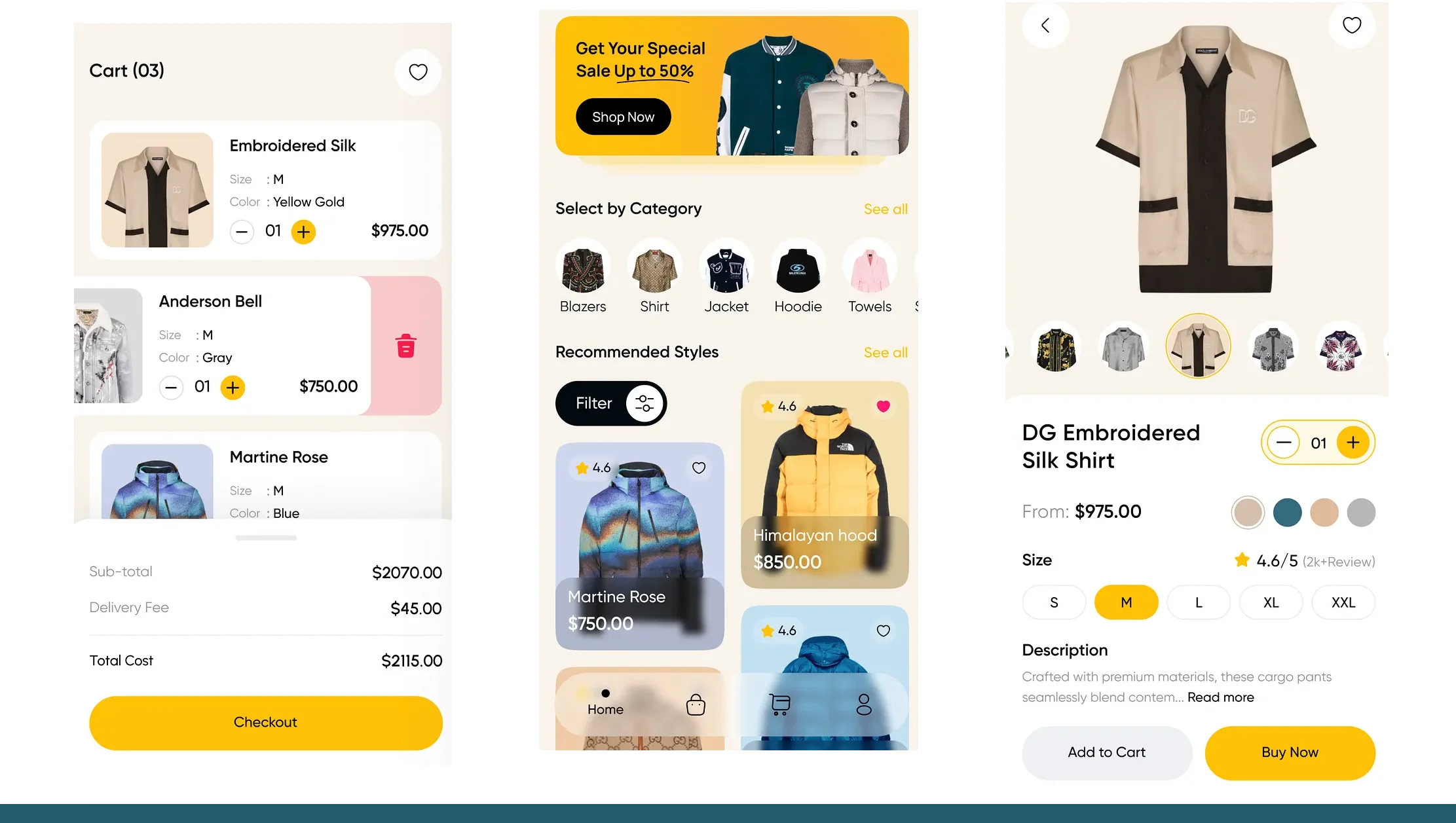
Retailers update price points, product bundles, and stock statuses multiple times a day. Capturing those shifts is impossible without an always-on pipeline. real-time retail app data extraction empowers organizations to access product metadata, media assets, ratings, and review patterns in real time. Between 2020 and 2025, real-time tracking capabilities helped brands reduce stockout losses by over 42%, as sudden demand shifts could be monitored and responded to instantly.
| Year | Real-Time Monitoring Adoption | Average Stockout Reduction |
|---|---|---|
| 2020 | 15% | 5% |
| 2021 | 29% | 12% |
| 2022 | 41% | 22% |
| 2023 | 58% | 31% |
| 2024 | 71% | 39% |
| 2025 | 83% (projected) | 47% (projected) |
The availability of real-time insights ensures that retail ecosystems are not solely reactive. Instead, they become demand-driven, structured systems capable of predicting stock cycles, seasonal pricing spikes, and margin leakage well before they impact profit.
Building Smarter Retail Decisions Through Data Visibility
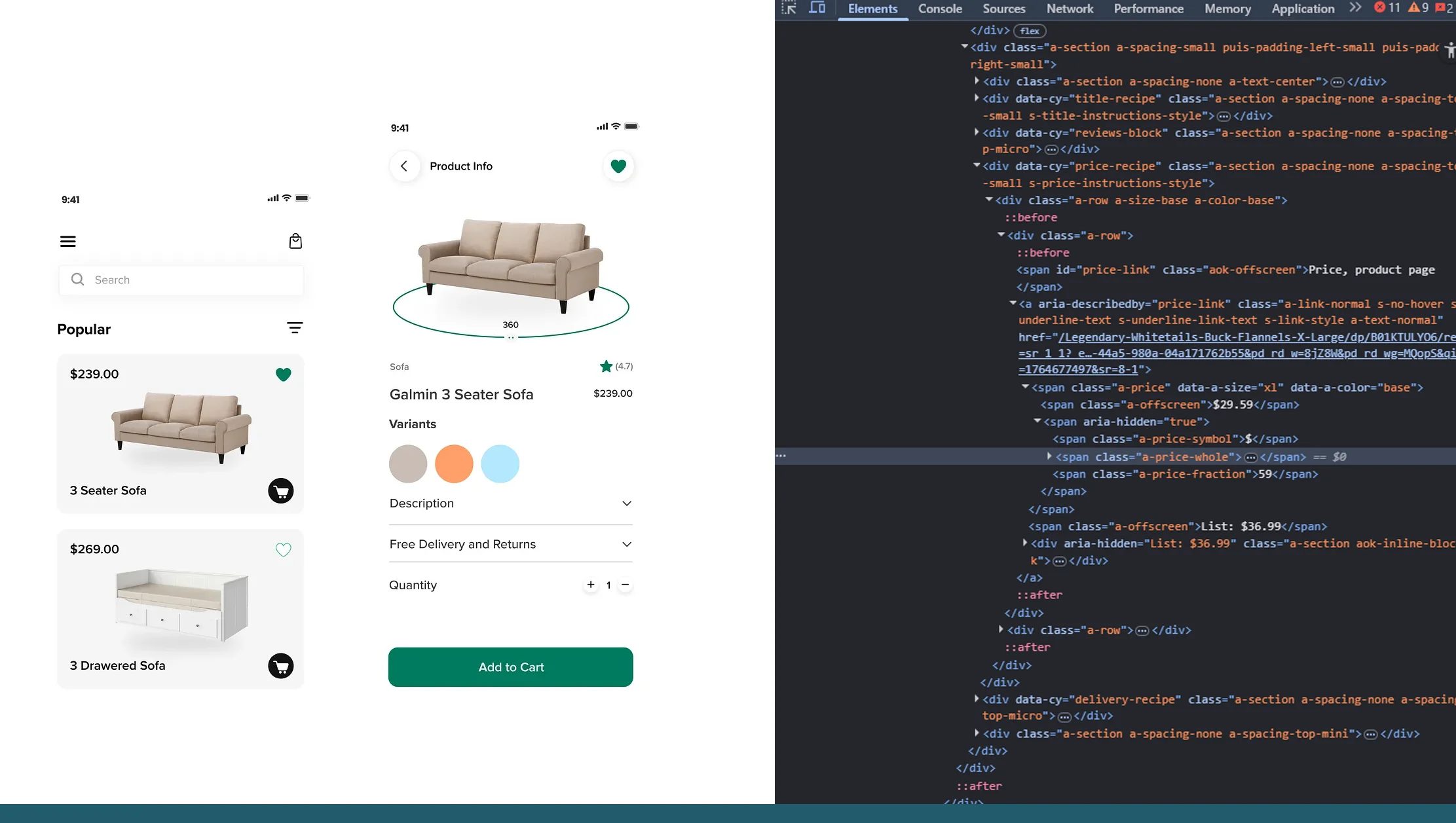
Competitive threats are no longer linear but dynamic, evolving as retailers adjust app-exclusive promotions daily. Real Data API for competitive intelligence enables brands to benchmark new entrants, detect pricing pressure, and analyze assortment breadth across multiple mobile apps at once. Since 2020, businesses investing in competitive intelligence solutions have reported a 68% improvement in category expansion planning.
| Factors | 2020 | 2023 | 2025 (Projected) |
|---|---|---|---|
| Competitor Monitoring Frequency | Low | Medium | High |
| App-Centric Promotion Tracking | Limited | Extensive | Intelligent |
| Retail Data-Driven Decisions | 22% | 51% | 79% |
This intelligence fuels decisions around revenue models, discount timing, and market positioning—elements that define success in omnichannel retail.
Benchmarking Digital Retail Performance for Strategic Advantage
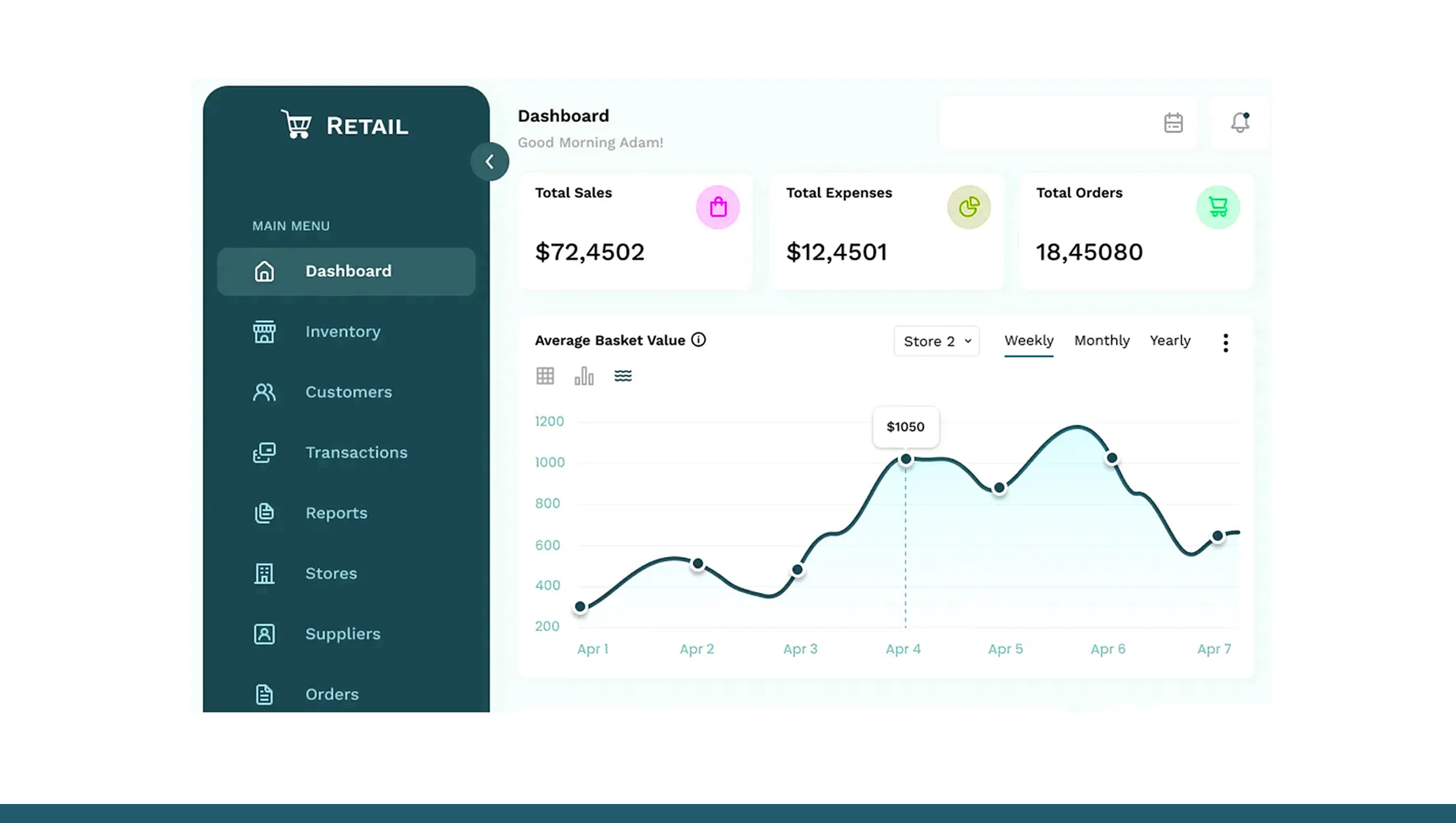
A winning market strategy requires benchmarking operational indicators such as pricing parity, availability consistency, and promotional cadence. Competitive Benchmarking extends this capability across categories, helping decision-makers track SKU-level disparities and customer sentiment shifts. From 2020 to 2024, brands implementing benchmarking frameworks saw a 53% reduction in promotional inefficiencies and faster time-to-decision cycles.
| Year | Brands Using Benchmarking | Cost Reduction Through Optimization |
|---|---|---|
| 2020 | 18% | 7% |
| 2022 | 34% | 19% |
| 2024 | 57% | 41% |
| 2025 | 71% (projected) | 54% (projected) |
Retailers using this insight have aligned their discount strategies with consumer demand patterns, enabling higher margin preservation even in saturated categories.
Scaling Retail Data Operations Across App Ecosystems
As retail apps become primary data sources for product visibility, specification extraction, and competitive tracking, Mobile App Scraping API brings scalability to data-intensive retail workflows. It allows deep extraction of structured and unstructured elements—from ratings to delivery times—enabling 360-degree digital shelf mapping. Between 2020 and 2025, API-driven mobile app scraping adoption grew by 4.7x globally, and cost-per-insight dropped by 62%.
| Year | API Scraping Spend (USD Mn) | ROI Improvement |
|---|---|---|
| 2020 | 14 | 22% |
| 2021 | 21 | 33% |
| 2022 | 29 | 49% |
| 2023 | 46 | 61% |
| 2024 | 73 | 78% |
| 2025 | 94 (projected) | 89% (projected) |
This evolving infrastructure future-proofs retail data operations and equips businesses to respond to competitive signals before market disruptions occur.
Why Choose Real Data API?
The biggest differentiator is Real Data API's ability to extract product data from retail mobile apps with precision-driven logic, resilient crawling frameworks, and automated UI adaptation engines. Combined with Dynamic Pricing capabilities, enterprises can uncover hidden pricing margins, protect category profitability, and respond to market fluctuations with strategic timing. Real Data API doesn't just extract data — it converts it into measurable retail advantage.
Conclusion
The future of mobile commerce belongs to organizations that transform unstructured app data into competitive knowledge. Real Data API empowers businesses to monitor retail ecosystems, capture SKU-level signals, and deploy automated systems that sustain competitive growth. With the power to extract product data from retail mobile apps, businesses can unlock the next era of performance-driven commerce driven by insights, automation, and dynamic intelligence. Through Price Comparison, brands can evaluate their position in the market and ensure that every decision brings measurable return.
Start using Real Data API today and turn mobile retail intelligence into unstoppable revenue acceleration.
Latest posts
How To Solve Product Data Tracking Challenges At Scale with Costco Web Data Scraper For Product Information
Truthsocial Data Scraping For Real-Time Social Media Insights

Zara Web Data Scraper For Fashion Trend Analysis - How Retailers Overcome Fast-Changing Fashion Demand & Inventory Challenges
How Real Estate Web Scraping Using Bayut API Solves Rental Pricing and Property Tracking Problems?






.png)