Introduction
Tracking grocery prices manually has long been a challenge for retailers, analysts, and food supply stakeholders across Australia. Fresh produce pricing fluctuates frequently due to seasonal availability, weather conditions, logistics costs, and competitive promotions. Relying on spreadsheets or periodic checks leads to incomplete insights and delayed decision-making. This is where automation reshapes the process. By leveraging modern data extraction tools, businesses can Scrape Coles and Woolworths fresh produce pricing data at scale, ensuring accuracy and real-time visibility. With automated pipelines powered by APIs, teams move from reactive analysis to proactive strategy building. Real Data API simplifies this transition by enabling structured data capture directly from leading supermarket platforms. Additionally, solutions like the Coles Online Grocery Scraping API eliminate inconsistencies and provide standardized datasets that integrate seamlessly with analytics systems. Automation not only saves time but also creates a foundation for competitive intelligence, demand forecasting, and price optimization across Australia's fast-moving grocery market.
Understanding the Shift Toward Automated Market Intelligence
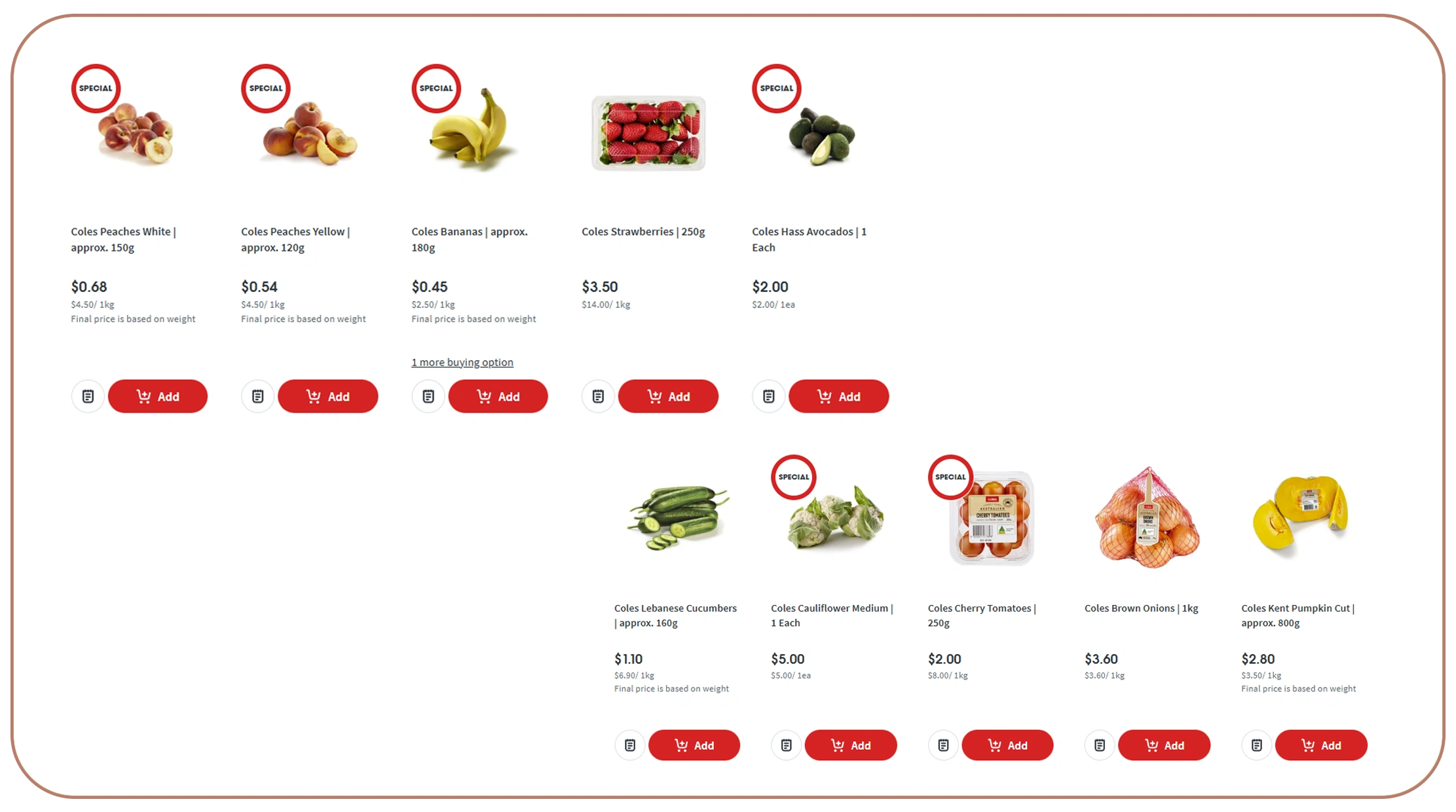
The Australian grocery sector has seen rapid digital transformation over the past decade. Between 2020 and 2026, online grocery adoption increased significantly, with fresh produce becoming one of the most frequently searched categories. To Extract fresh fruit and vegetable data from Australian supermarkets, businesses increasingly depend on automated scraping systems rather than manual audits.
Market Data Growth (2020–2026)
| Year | Online Produce Listings | Avg Weekly Price Changes | Data Points Captured |
|---|---|---|---|
| 2020 | 12,500 | 8% | 1.2M |
| 2022 | 18,900 | 11% | 2.4M |
| 2024 | 26,300 | 14% | 3.9M |
| 2026 | 34,700 | 18% | 5.6M |
Automated collection enables consistent monitoring of fruits and vegetables such as apples, tomatoes, onions, and leafy greens. Businesses gain access to historical pricing, availability trends, and promotional patterns without human error. This level of intelligence supports procurement teams, agri-businesses, and retail analysts in responding faster to supply shifts and consumer demand changes. Automation also allows granular tracking by region, package size, and brand, creating deeper insights that manual tracking simply cannot match at scale.
Comparing Retail Giants Through Structured Data
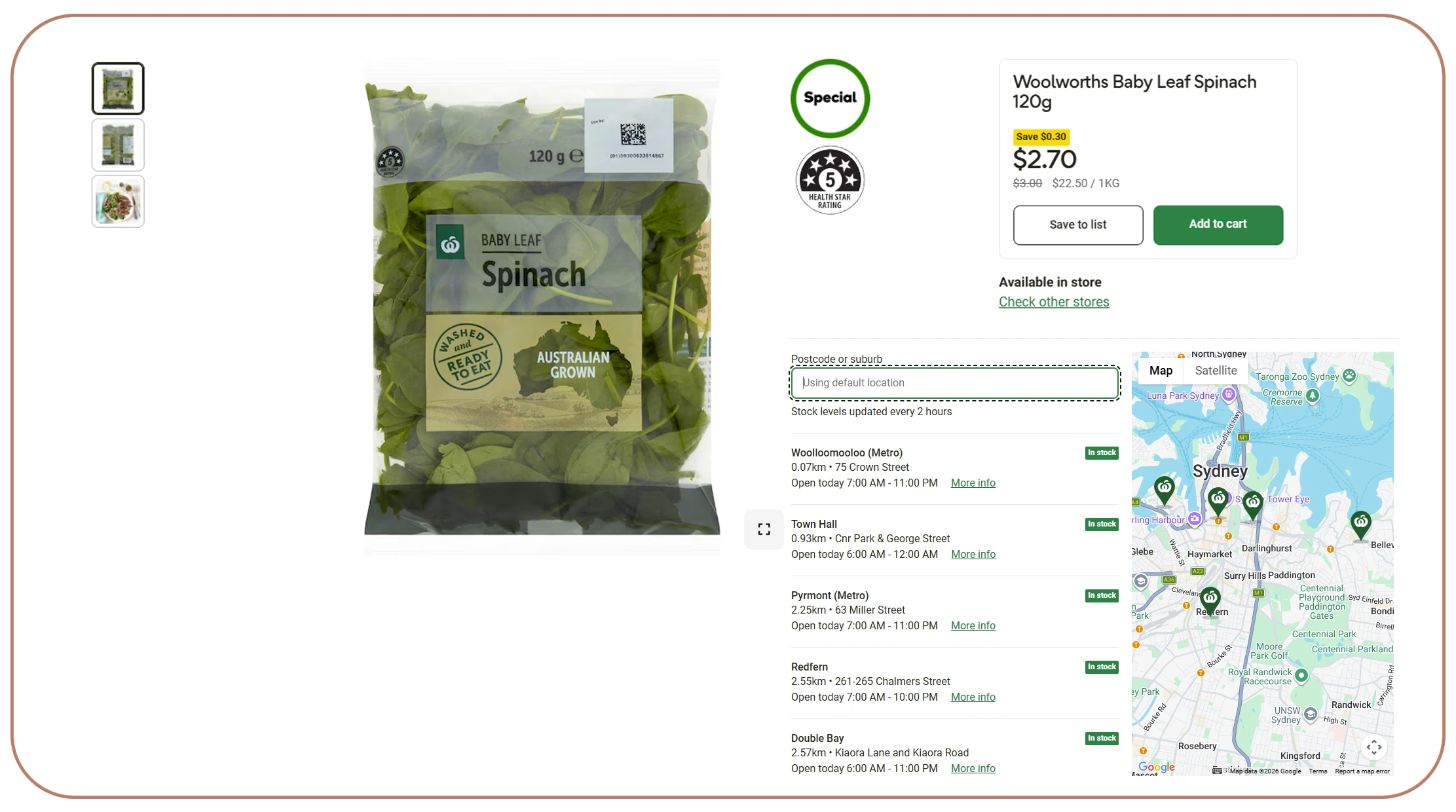
Pricing competition between Australia's largest supermarkets remains intense. A structured approach allows analysts to perform Coles vs Woolworths fresh produce price comparison without relying on ad-hoc checks.
Average Produce Price Index (2020–2026)
| Year | Coles Index | Woolworths Index | Price Gap |
|---|---|---|---|
| 2020 | 100 | 102 | 2% |
| 2022 | 107 | 109 | 2% |
| 2024 | 113 | 116 | 3% |
| 2026 | 121 | 124 | 3% |
Through automated scraping, differences in pricing strategies become clear. Woolworths often emphasizes premium sourcing and organic options, while Coles frequently adjusts prices through short-term promotions. Real Data API structures these datasets so businesses can analyze trends over time, identify pricing leadership, and adjust sourcing strategies accordingly. Automated comparison also supports regional analysis, showing how pricing varies between metro and regional areas, enabling smarter location-based decisions.
Capturing Real-Time Pricing Movements
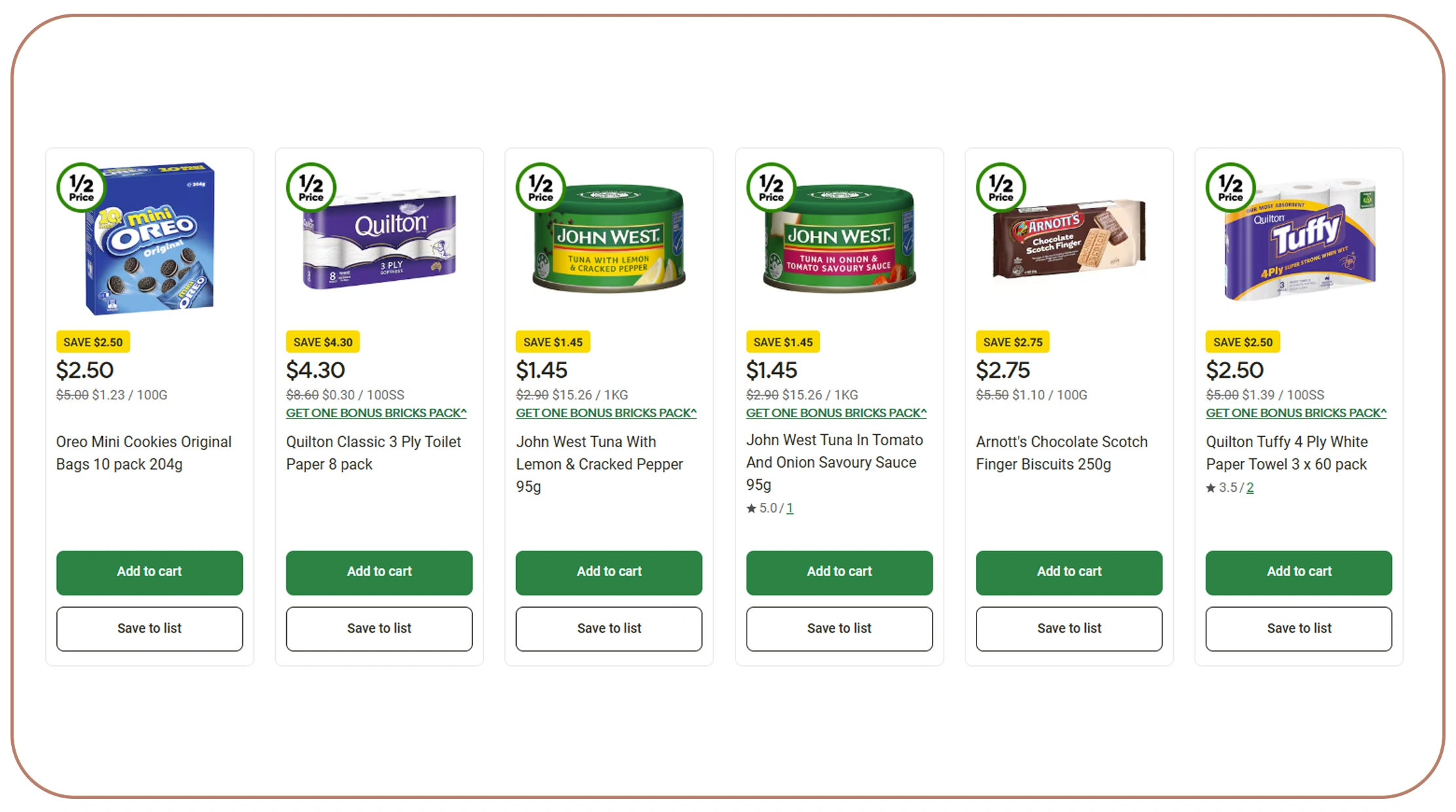
Fresh produce prices are among the most volatile in the grocery sector. Automated systems for Woolworths fresh produce data extraction allow continuous monitoring of rapid changes driven by seasonality and logistics.
Weekly Price Volatility Trends
| Year | Avg Weekly Change | Peak Seasonal Spike |
|---|---|---|
| 2020 | 6% | 15% |
| 2022 | 9% | 19% |
| 2024 | 13% | 24% |
| 2026 | 17% | 28% |
With automated extraction, businesses detect price spikes early, helping procurement teams negotiate better contracts and reduce cost exposure. Retail analysts can correlate price movements with weather events or import disruptions, turning raw data into actionable intelligence. Instead of reacting weeks later, decision-makers gain immediate insight, improving margins and reducing operational risk.
Leveraging Structured Data for Strategic Planning
Reliable automation depends on specialized tools such as a Coles Australian supermarket data scraper, which captures structured listings, prices, and availability in a standardized format.
Data Coverage Expansion (2020–2026)
| Year | SKUs Tracked | Categories Covered | Update Frequency |
|---|---|---|---|
| 2020 | 4,800 | 6 | Weekly |
| 2022 | 7,300 | 9 | Daily |
| 2024 | 11,600 | 12 | Daily |
| 2026 | 16,900 | 15 | Real-time |
By centralizing produce data, businesses gain the ability to forecast demand, plan inventory, and optimize pricing strategies. Historical datasets spanning multiple years enable long-term trend analysis, revealing which products show stable pricing versus high volatility. This insight supports smarter sourcing decisions and reduces reliance on assumptions or outdated reports.
Scaling Data Collection Through APIs
Modern data strategies prioritize scalability, making solutions like the Woolworths Grocery Scraping API essential for long-term operations.
API-Driven Data Efficiency
| Metric | Manual Tracking | API Automation |
|---|---|---|
| Data Accuracy | 85% | 99% |
| Collection Time | Days | Minutes |
| Scalability | Low | High |
| Integration | Limited | Seamless |
APIs enable seamless integration with BI tools, dashboards, and machine-learning models. Businesses can automate alerts, build predictive pricing models, and analyze cross-category trends without manual intervention. This scalability ensures that as product listings expand, data pipelines remain efficient and reliable.
Transforming Raw Listings into Actionable Insights
A comprehensive approach to Web Scraping Coles Online Dataset allows businesses to move beyond raw data into actionable insights.
Data Utilization Growth
| Year | Raw Listings | Analyzed Records | Strategic Decisions |
|---|---|---|---|
| 2020 | 1.2M | 0.5M | 120 |
| 2022 | 2.4M | 1.6M | 310 |
| 2024 | 3.9M | 3.1M | 580 |
| 2026 | 5.6M | 4.9M | 920 |
Structured datasets support advanced analytics such as demand forecasting, supplier benchmarking, and price elasticity modeling. Over time, businesses build a data asset that strengthens decision-making and creates a sustainable competitive advantage.
Why Choose Real Data API?
Real Data API delivers reliable, scalable grocery intelligence through automated pipelines. With support for Web Scraping Woolworths Dataset, the platform ensures high data accuracy, flexible integrations, and compliance-ready extraction methods. Businesses benefit from faster deployment, reduced operational costs, and consistent access to historical and real-time datasets. Whether you are a retailer, analyst, or agri-business, Real Data API transforms complex grocery data into structured insights you can trust.
Conclusion
Automation has become essential in navigating Australia's dynamic fresh produce market. By replacing manual tracking with API-driven extraction, businesses gain accuracy, speed, and strategic clarity. Leveraging solutions like Web Scraping Woolworths Dataset enables long-term trend analysis, competitive benchmarking, and smarter pricing decisions.
Ready to automate your grocery intelligence? Connect with Real Data API today and turn fresh produce data into a competitive advantage!
Latest posts

How Twitter Scraper Enables Faster Social Media Data Collection for Trend, Competitor, Audience Intelligence, and Social Media Data Collection

How Trip.com travel dataset Helps Brands Track Hotel Prices, Reviews, Availability, and Competitor Trends

How Reddit Scraper Solutions Collect Public Data for Market Research and Competitive Analysis
How Wildberries Product Scraper Helps Track Prices, Sellers, and Product Availability






.png)



