Introduction
The online alcohol delivery industry has been growing rapidly, and with platforms like DoorDash expanding aggressively into on-demand liquor delivery, the competition is more intense than ever. Whether you are a beverage brand, alcohol retailer, analytics company, or price-intelligence provider, the ability to scrape DoorDash liquor sellers data can unlock high-value insights for decision-making and strategic planning.
From product assortments to pricing trends, offers, availability, delivery time, and customer reviews—DoorDash hosts a massive dataset that reflects real-time market behavior across cities. But extracting this data manually is nearly impossible. That's why businesses now rely on web scraping and automated data collection to systematically gather structured insights from DoorDash's liquor category.
This blog provides a deep dive into how to scrape data from DoorDash liquor sellers, why it matters, what datasets you can extract, technical challenges, compliance considerations, top use cases, and the smartest ways to stay ahead in the Liquor Data Scraping API market.
Why Scrape DoorDash Liquor Sellers Data?
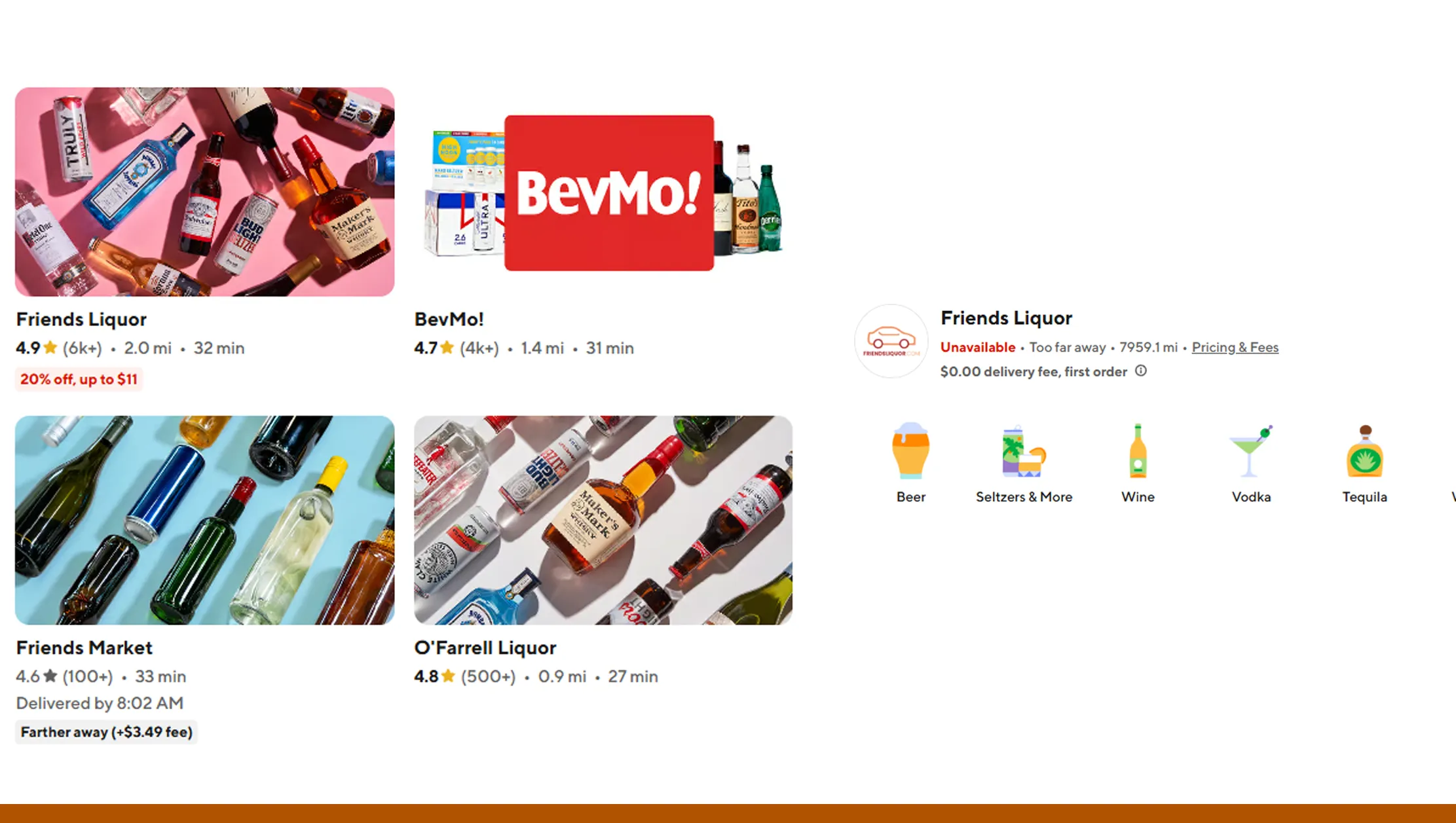
DoorDash lists thousands of liquor retailers, including:
- Local wine shops
- Cannabis-infused beverage stores (in permitted areas)
- Beer, wine, and spirits outlets
- Convenience stores with alcohol offerings
- Large chains like Total Wine, BevMo, Walgreens (depending on region)
Scraping this data helps businesses understand:
1. Real-Time Pricing Trends
Alcohol pricing fluctuates based on location, demand, supply, and time of day. With the help of AI Chatbot, Scraped data helps monitor:
- Bottle-level price changes
- Price differences across geographies
- Seasonal promotions (New Year, Christmas, events)
- Price elasticity and demand correlation
This is incredibly valuable for beverage brands and retailers aligning their pricing strategies.
2. Product Availability & Stock Insights
You can track:
- Which liquor brands are most available
- Out-of-stock frequency
- Regional availability gaps
- Real-time assortment changes
Beverage producers use this to optimize supply chain and distribution.
3. Competitor Benchmarking
By scraping competitor stores on DoorDash, businesses can compare:
- Pricing
- Product variety
- Delivery charges
- Ratings & reviews
- Discount strategies
This provides an edge in product positioning and retail strategy.
4. Store Performance Analysis
Liquor store owners use scraping to monitor:
- Top-rated stores
- Delivery times
- Popular brands in each city
- Packaging and labeling standards
This helps them improve customer experience.
5. Consumer Demand Patterns
Scraping reviews, ratings, and item trends reveals insights like:
- Most ordered items
- Seasonally trending products
- Customer pain points
- Preferred brands
This assists in targeted marketing and promotional planning.
What Liquor Data Can Be Scraped from DoorDash?
Depending on your goals, you can extract a wide range of structured data. Here's a complete Liquor Dataset breakdown:
1. Store-Level Data
- Store name
- Store type (local wine shop, convenience store, liquor retailer)
- Store address
- Operating hours
- Delivery time estimates
- Ratings & total reviews
- Delivery charges & service fees
- Store availability in specific ZIP codes
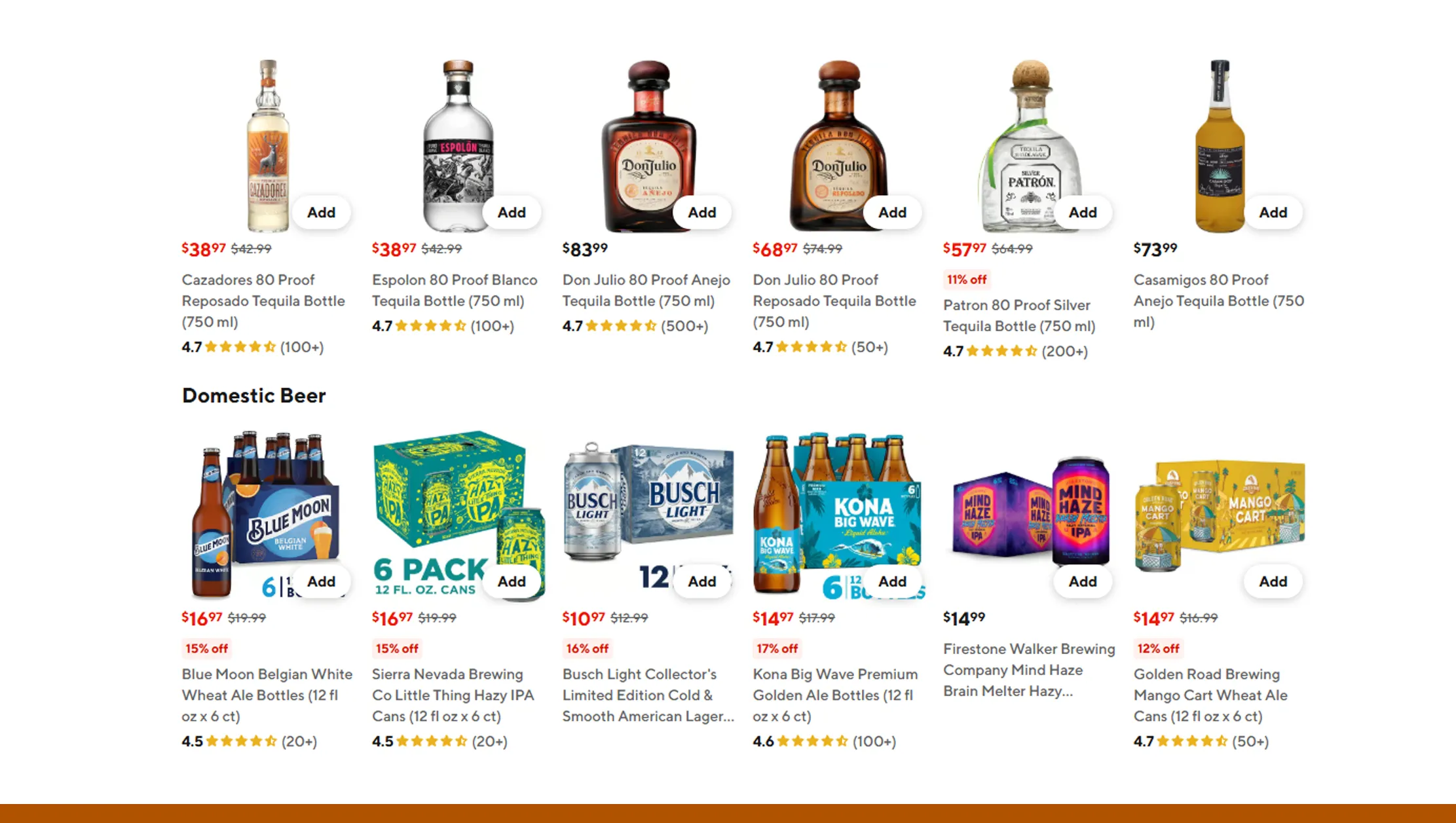
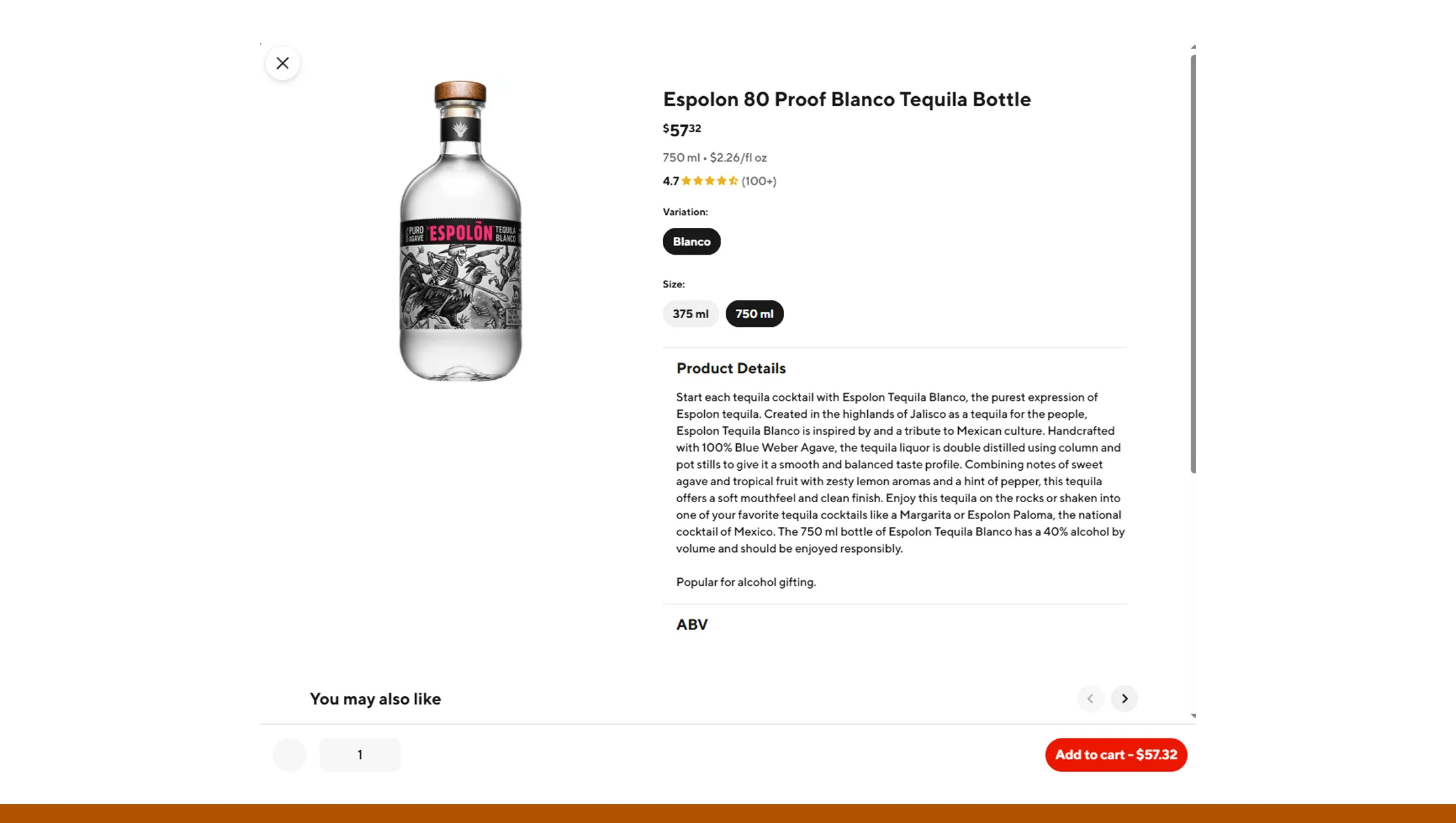
2. Product-Level Data
- Product name
- Category (beer, wine, spirits, RTDs, mixers)
- Volume (750ml, 1L, 12-pack, etc.)
- SKU or variant details
- Images
- Pricing (original price + discounted price)
- Out-of-stock status
- Alcohol percentage
- Ingredients (for certain beverages)
3. Promotions & Discounts
- Percentage discounts
- Buy-one-get-one (BOGO) offers
- Seasonal deals
- Store-level promotions
- Limited-time discounts
4. Customer Reviews & Ratings
- Review text
- Star rating
- Timestamp
- Verified purchase indicators
- Sentiment trends
5. Delivery Data
- Real-time delivery estimates
- Surge pricing (if applicable)
- Additional delivery charges
- Convenience fees
All this information together unlocks powerful intelligence capabilities for brands and retailers.
Technical Steps to Scrape DoorDash Liquor Sellers Data
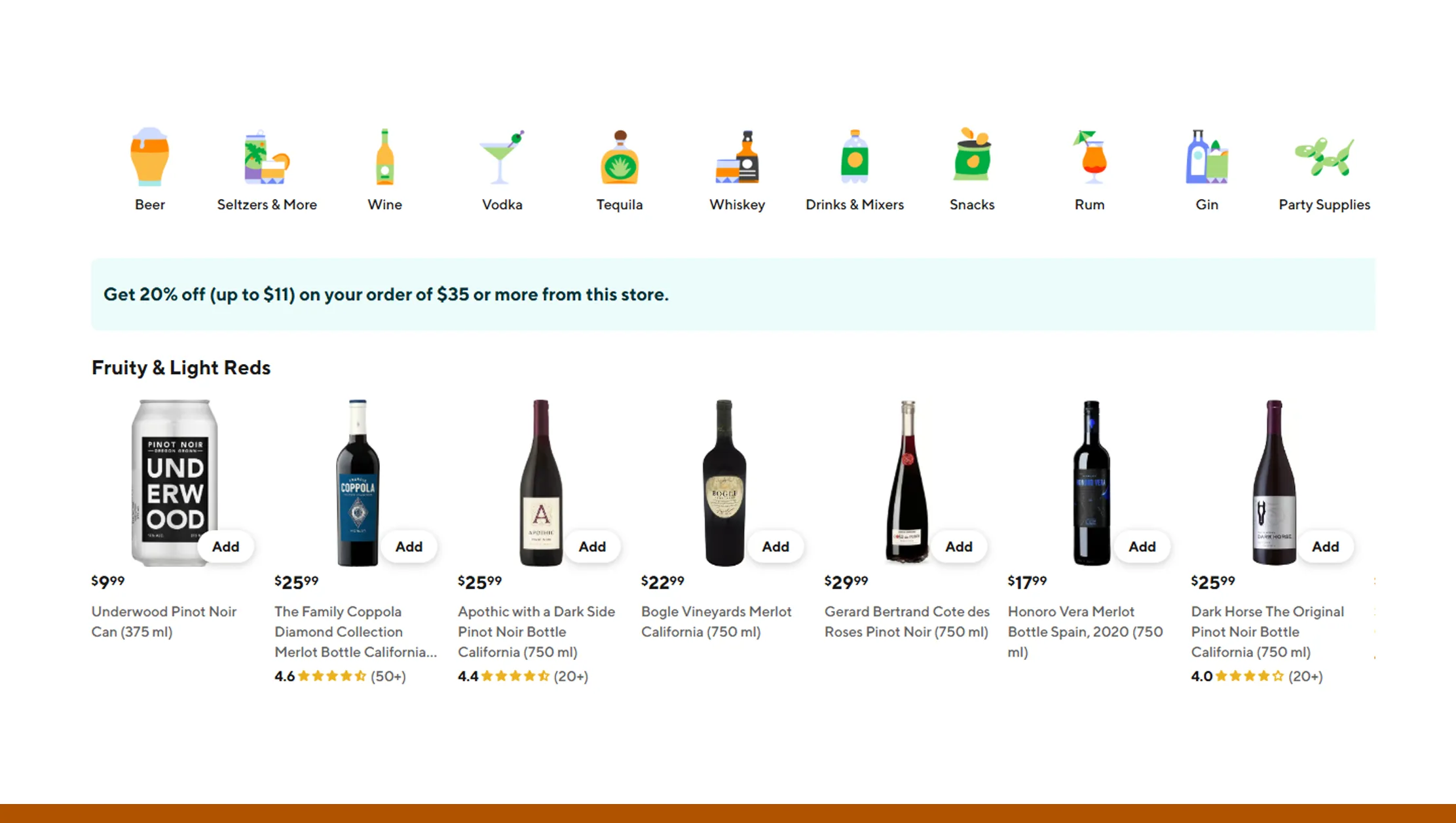
DoorDash Delivery API efficiently requires a well-designed workflow. Here's a high-level approach:
Step 1: Identify Target Categories & URLs
DoorDash categorizes stores under:
- Beer
- Wine
- Spirits
- Alcohol Bundle Deals
- Pre-mixed cocktails
- Local liquor shops
Tools like automated crawlers or API-based solutions can extract category-level URLs and subpages.
Step 2: Use Geolocation & ZIP Codes
DoorDash content varies by delivery region. To extract accurate liquor data:
- Rotate ZIP codes
- Use city-level coordinates
- Handle age verification pop-ups programmatically
This ensures region-specific data extraction.
Step 3: Crawl Store Listings
The scraper collects:
- Store names
- Ratings
- Delivery fees
- Availability indicators
Pagination logic is required as DoorDash loads content dynamically.
Step 4: Scrape Store-Level Product Data
For each store, extract:
- Product catalogs
- Updated price lists
- Offers
- Stock availability
- Product descriptions
This requires handling:
- Infinite scroll
- JavaScript rendering
- Dynamic API calls
Step 5: Scrape Reviews & Ratings
Reviews provide sentiment insights for:
- Product satisfaction
- Store quality
- Delivery performance
Sentiment analysis tools can convert raw review text into actionable intelligence.
Step 6: Store, Clean, and Normalize the Data
Output formats typically include:
- JSON
- CSV
- Excel
- SQL database
Normalization includes:
- Mapping categories
- Removing duplicates
- Standardizing price/volume formats
Step 7: Automate & Schedule the Scraper
Liquor industry trends shift hourly. Automated scheduling allows:
- Daily pricing updates
- Real-time stock monitoring
- Competitor tracking
- Continuous insights
Challenges in Scraping DoorDash Liquor Categories
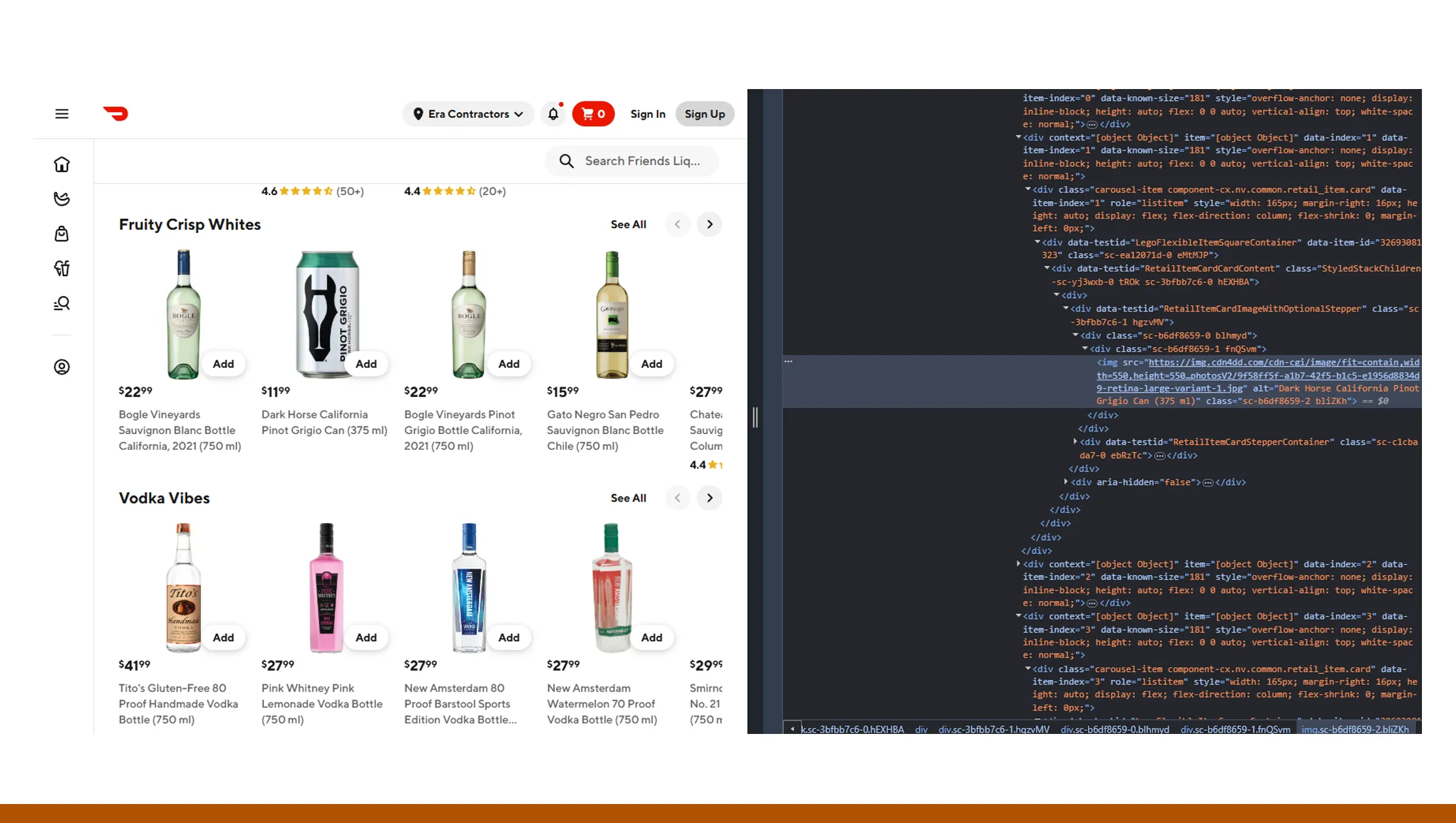
DoorDash is a dynamic, modern website with several scraping barriers:
1. Heavy JavaScript Rendering
Most data loads via API calls and front-end scripts.
2. Frequent DOM Structure Updates
Selectors may break and need periodic maintenance.
3. Geolocation Restrictions
Liquor availability depends on PIN codes.
4. Age Verification Checks
Dedicated handling is required to bypass legal-age prompts compliantly.
5. Anti-Bot Systems
IP blocks or rate limits may occur without proper:
- Proxy rotation
- User agents
- Delayed crawling
- Session handling
6. Legal Compliance
Ensure scraping aligns with:
- Local alcohol regulations
- DoorDash's public data usage guidelines
- Ethical scraping best practices
Working with expert scraping providers is essential to navigate these complexities.
Top Business Use Cases for DoorDash Liquor Data Scraping
1. Price Intelligence & Market Positioning
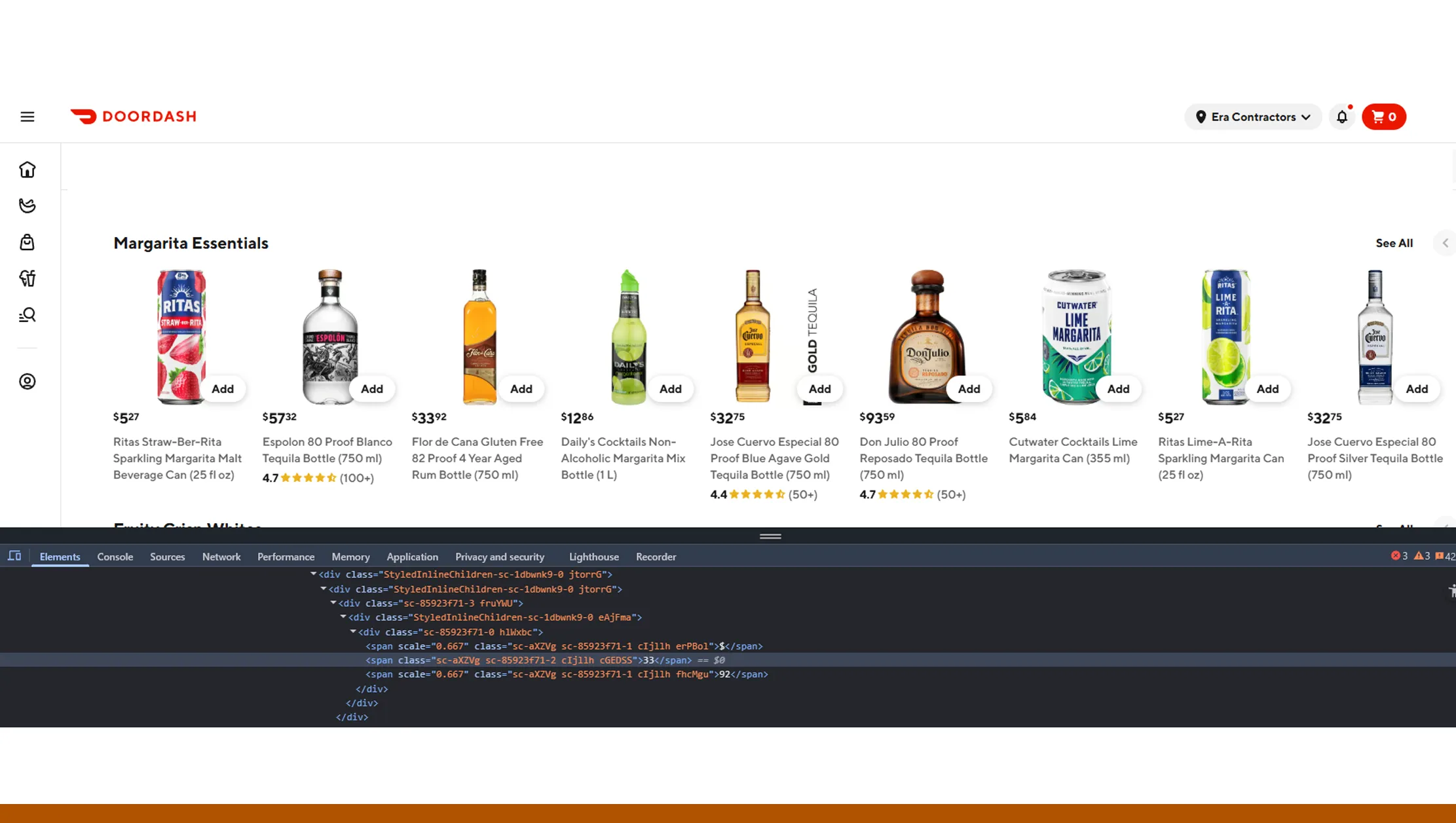
Pricing varies widely across cities. Liquor sellers use scraped data for:
- Dynamic pricing
- Competitive benchmarking
- Margin optimization
2. Market Expansion Strategy
Brands entering new states can analyze:
- Demand hotspots
- Top-performing alcohol categories
- Store saturation
- Consumer preferences
3. Promotional Effectiveness
Assess how:
- Discounts
- Seasonal offers
- Limited-time deals
impact sales performance in real time.
4. Inventory Optimization
Track which SKUs go out of stock often and adjust supply chains accordingly.
5. Consumer Sentiment Analysis
Reviews reveal insights into:
- Packaging complaints
- Product taste and quality
- Delivery experience feedback
6. Alcohol Category Intelligence
Understand what is trending:
- Craft beer
- Premium whisky
- Red wine
- Ready-to-drink cocktails
- Alcohol-free beverages
7. Competitor Store Monitoring
Get alerts when competitors:
- Change prices
- Add new items
- Launch promotions
Best Practices for Scraping DoorDash Liquor Data
- Use rotating proxies across regions
- Respect rate limits to avoid blocks
- Implement headless browser rendering (Puppeteer/Selenium)
- Extract data directly from DoorDash APIs when accessible
- Use CAPTCHA solvers where required
- Ensure compliance with local laws and ethical scraping rules
How Real Data API Can Help You Scrape DoorDash Liquor Sellers Seamlessly
Scraping DoorDash liquor data at scale requires advanced infrastructure, rotating proxies, headless rendering, and compliance-driven workflows. Manual or inexperienced scraping setups often fail due to anti-bot defenses and dynamic data loading.
Real Data API's Enterprise Web Crawling tool solves this by providing:
- Fully managed DoorDash data extraction
- Real-time liquor pricing and catalog data
- Scalable API-based liquor store scraping
- ZIP-code–based geolocation search
- Daily/hourly automated updates
- Clean, structured datasets for analysis
- Compliance-focused data collection
- Ready-to-use JSON, CSV, Excel, API outputs
Whether you need pricing trends, product availability, competitor benchmarking, or review analytics—Real Data API delivers accurate, reliable, and clean liquor data from DoorDash at any scale.
Conclusion
Scraping data from DoorDash liquor sellers is a powerful strategy for understanding alcohol market trends, optimizing pricing, tracking competitors, and making data-driven business decisions. From product catalogs to reviews, delivery times, and promotional activity—DoorDash holds rich insights that can transform how beverage companies and retailers operate.
If you want seamless, scalable, and compliant access to DoorDash liquor data, Real Data API provides end-to-end web scraping solutions tailored to your needs. Whether you're analyzing trends or integrating real-time data into your apps or dashboards, Real Data API ensures you get clean, structured, and accurate datasets without any technical complexity.
Latest posts
How Gemini Scraper For Real-Time Data Extraction Enables Faster Market Intelligence, Monitoring, and Competitive Analysis
How Web Scraping Makemytrip Travel Data For Market Research Helps Identify Growth Opportunities?
How to Solve Data Freshness Challenges With Claude Web Scraping for Real-Time Information?
How to Scrape Dynamic Website Data Using a Scraping Browser API Without Browser Automation Complexity?



.png)