
Introduction
In today's data-driven economy, financial institutions, lenders, and compliance teams rely heavily on structured public records to understand risk, opportunity, and market direction. One of the most valuable sources of such intelligence is UCC filings, which reveal how businesses secure credit and manage collateral. When organizations Scrape UCC data for financial trends analysis, they gain visibility into borrowing patterns, sectoral growth, and regional risk exposure that would otherwise remain hidden.
By leveraging modern data pipelines and automation, UCC data extraction transforms scattered state-level records into nationwide intelligence. This enables enterprises to identify emerging credit trends, monitor compliance obligations, and benchmark competitors with precision. In this blog, we explore how Real Data API empowers businesses to turn raw UCC filings into actionable insights for competitive intelligence and compliance analysis across the United States.
From Regulatory Burden to Strategic Asset
For many years, UCC filings were treated only as legal necessities. Today, however, organizations view them as a strategic data source that supports smarter decision-making. Through UCC data extraction for compliance and risk management, businesses can monitor borrower behavior, detect early warning signals, and align their credit strategies with real-world trends.
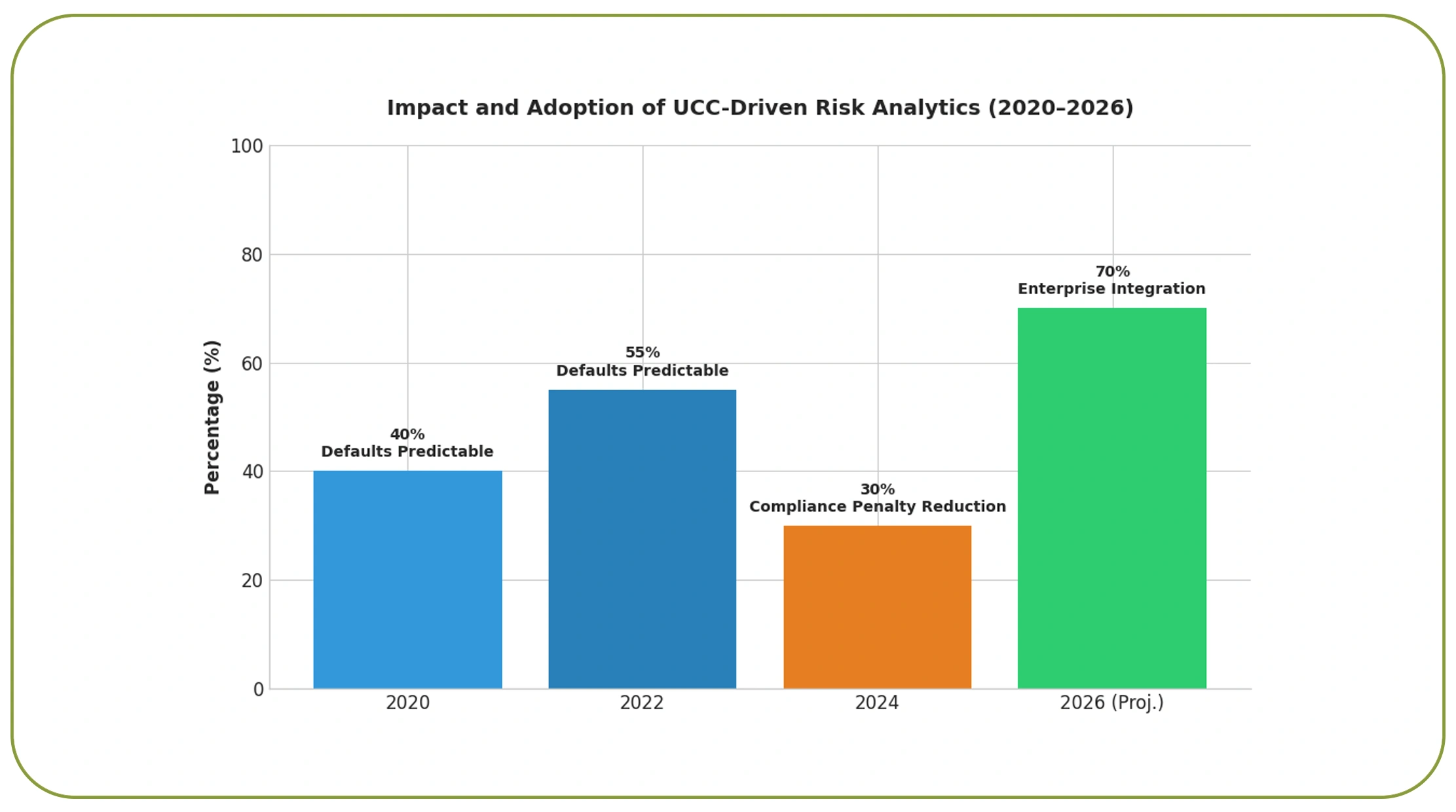
Between 2020 and 2026, the value of UCC-driven risk analytics has grown significantly. In 2020, lenders reported that nearly 40% of credit defaults could have been predicted using collateral filing trends. By 2022, that number increased to 55% as data quality and accessibility improved. In 2024, financial analysts observed that institutions using automated UCC monitoring reduced compliance-related penalties by nearly 30%. Projections for 2026 suggest that over 70% of enterprise compliance programs will integrate UCC intelligence into their core risk frameworks.
These trends show that regulatory data no longer sits idle. Instead, it fuels proactive risk management strategies, helping organizations anticipate market disruptions, strengthen compliance postures, and protect long-term financial stability.
Understanding the Scope of Filing Intelligence
UCC filings are not limited to local transactions—they represent a nationwide footprint of secured lending activity. Accessing Nationwide UCC collateral filing data enables companies to see how credit flows across industries and regions, revealing broader economic signals that shape market behavior.
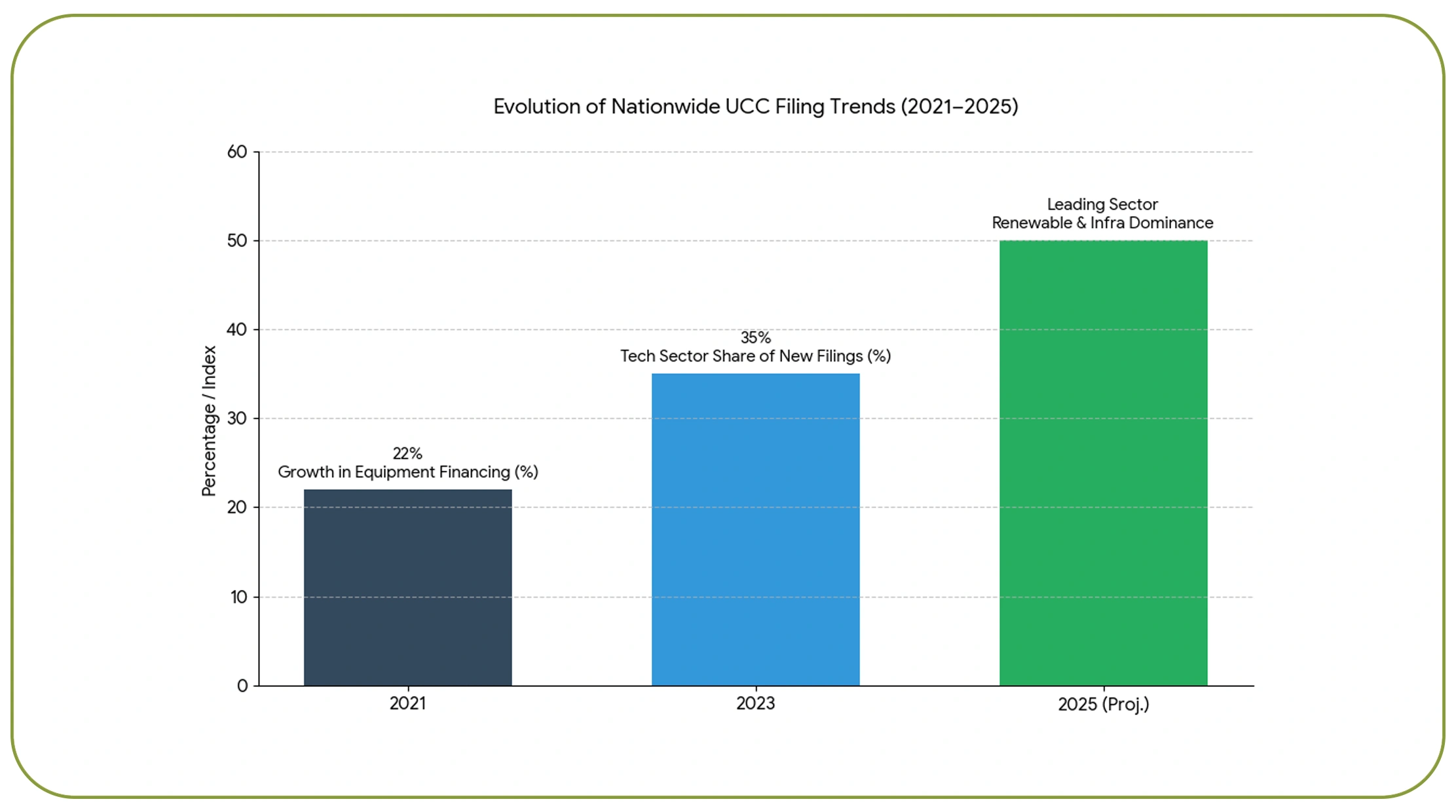
From 2020 onward, nationwide filing volumes surged as businesses sought working capital during economic uncertainty. In 2021, filings related to equipment financing increased by nearly 22%, highlighting a resurgence in manufacturing and logistics. By 2023, technology-driven sectors accounted for over 35% of all new filings, reflecting digital transformation across industries. In 2025, analysts predict that renewable energy and infrastructure projects will dominate collateral registrations, driven by sustainability initiatives and public-private partnerships.
This evolution underscores the importance of having centralized access to filing data. With comprehensive nationwide coverage, organizations can benchmark regional lending trends, identify high-growth sectors, and refine competitive strategies based on real financial behavior rather than assumptions.
Turning Filings into Market Intelligence
Raw data alone does not deliver value—it is the analysis that unlocks insights. Through advanced UCC filing data analysis, businesses transform legal records into indicators of market momentum, competitive positioning, and financial health.
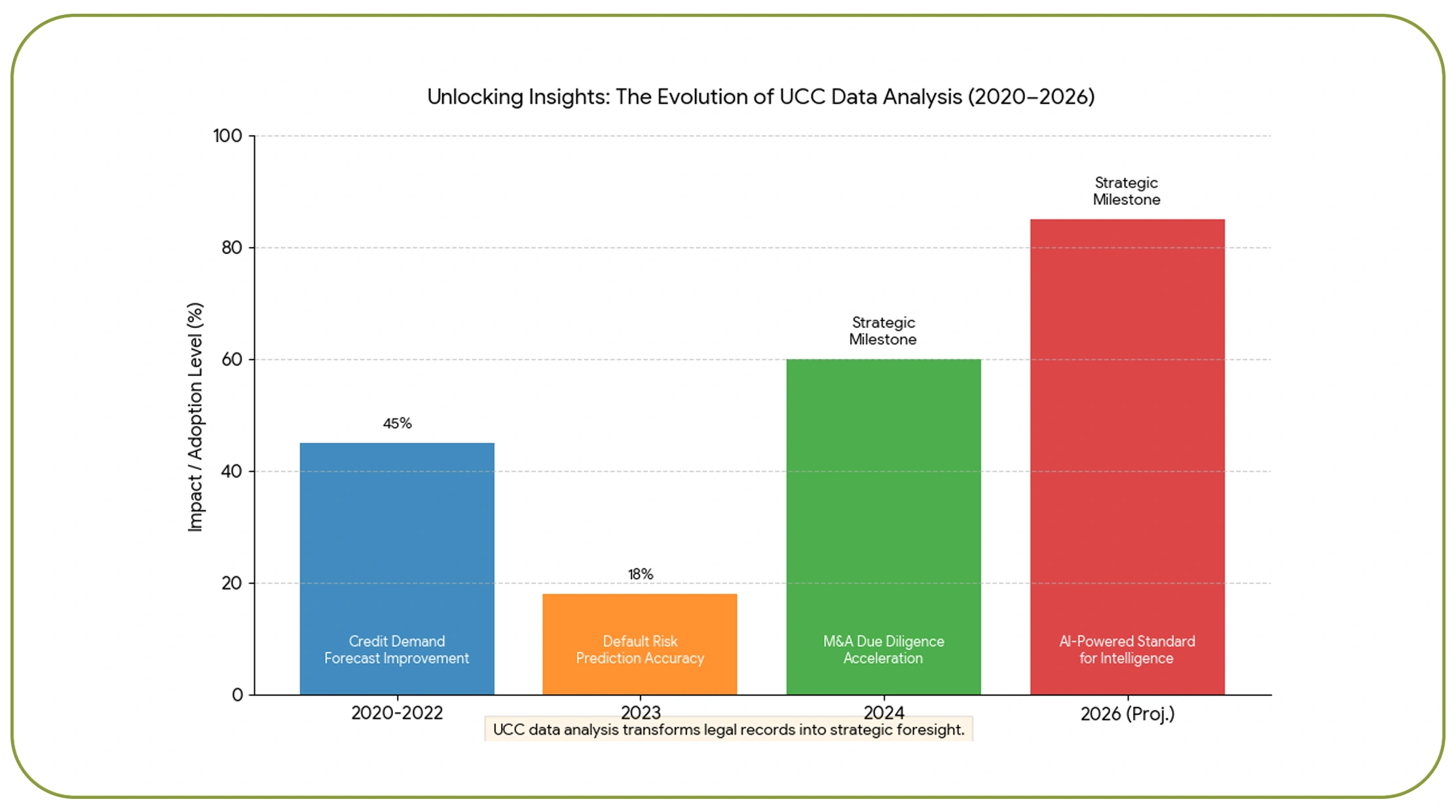
From 2020 to 2022, companies focusing on analytics reported a 45% improvement in their ability to forecast credit demand. In 2023, financial service providers that used predictive models based on filing patterns achieved up to 18% higher accuracy in default risk prediction. By 2024, investment firms leveraged historical filing trends to guide mergers and acquisitions, identifying financially stable acquisition targets faster than traditional due diligence methods. Looking ahead to 2026, industry experts anticipate that AI-powered analysis of UCC data will become standard practice in competitive intelligence.
These advancements demonstrate how filings move beyond compliance into strategic foresight. When combined with real-time processing, UCC data becomes a foundation for smarter lending, targeted investments, and resilient financial planning.
Automating Intelligence at Scale
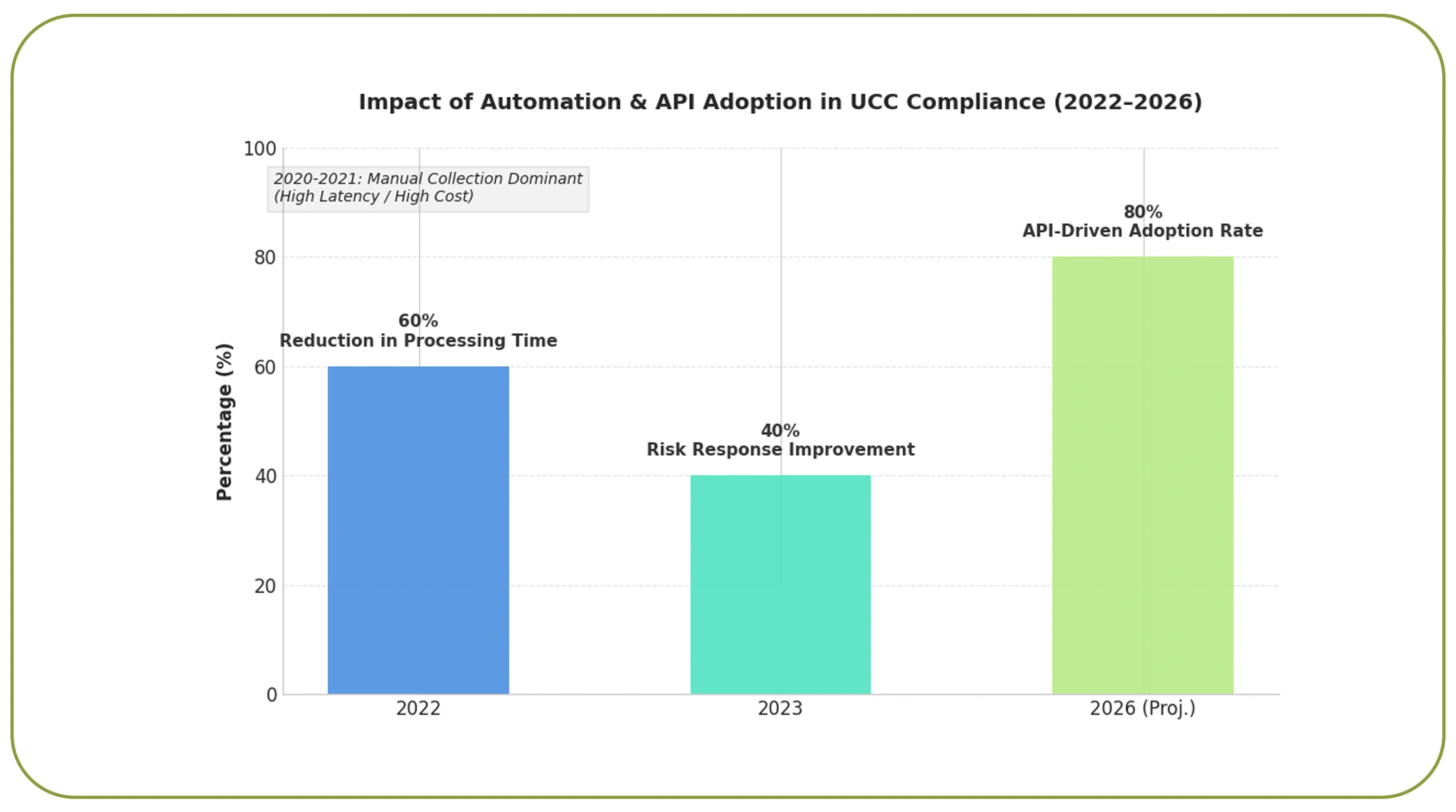
The challenge for most organizations lies not in recognizing the value of data, but in accessing it efficiently. A modern Web Scraping API solves this problem by automating the collection of UCC filings from multiple jurisdictions and presenting them in a unified, structured format.
From 2020 to 2021, manual data collection dominated compliance workflows, often resulting in delayed insights and higher operational costs. By 2022, companies adopting automated APIs reduced data processing time by nearly 60%. In 2023, financial institutions reported that real-time access to filing updates improved their response to credit risk events by 40%. Forecasts for 2026 suggest that over 80% of data-driven compliance teams will rely on API-driven extraction instead of traditional manual methods.
Automation not only improves efficiency but also ensures data consistency and accuracy. With scalable APIs, enterprises can shift focus from gathering data to interpreting it—maximizing the strategic impact of every filing.
Building Scalable Intelligence Frameworks
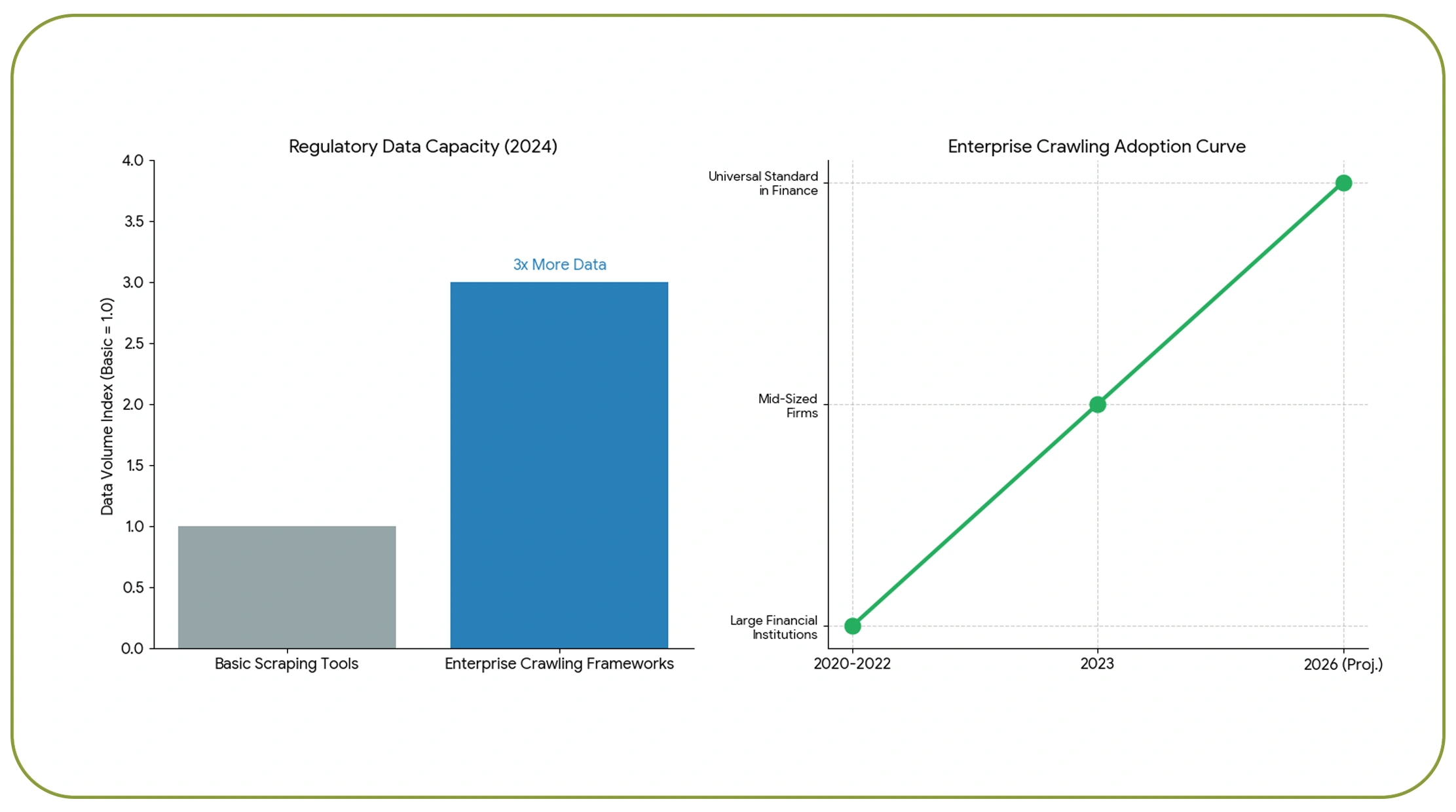
As data volumes grow, organizations need infrastructure that can scale without compromising performance. This is where Enterprise Web Crawling becomes essential. By deploying enterprise-grade crawlers, businesses can continuously monitor filing repositories, ensuring that no critical update goes unnoticed.
Between 2020 and 2022, only large financial institutions invested in enterprise crawling solutions. By 2023, mid-sized firms began adopting similar technologies to stay competitive. Reports from 2024 show that enterprises using scalable crawling frameworks processed three times more regulatory data than those relying on basic scraping tools. Looking ahead to 2026, industry forecasts indicate that enterprise crawling will become a core component of financial intelligence platforms, supporting everything from compliance audits to market forecasting.
This shift reflects a broader trend: data collection is no longer a tactical activity—it is a strategic capability. Organizations that invest in scalable frameworks gain a sustainable advantage in speed, accuracy, and insight delivery.
Transforming Raw Records into Actionable Assets
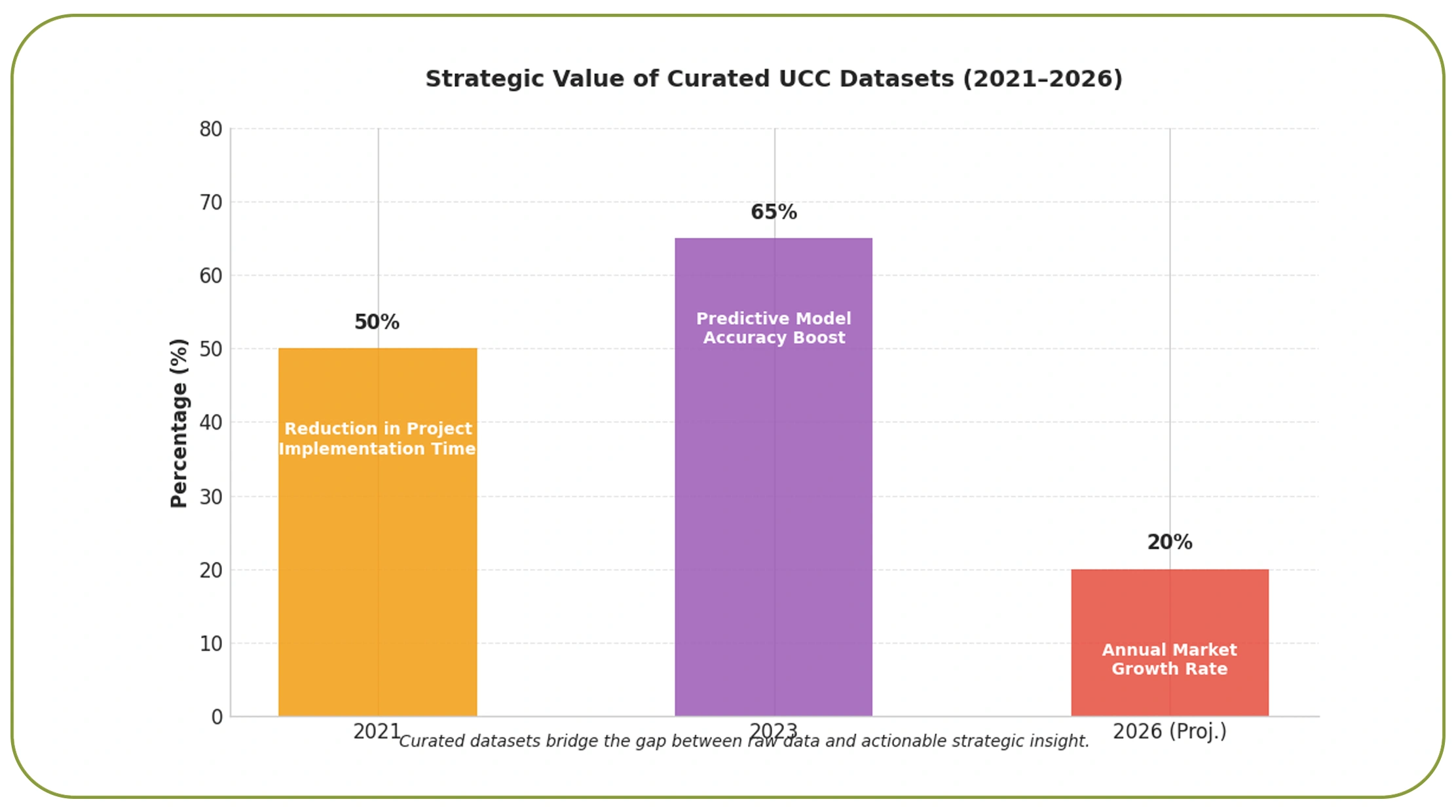
While APIs and crawlers collect data, it is curated datasets that enable long-term strategic planning. With Web Scraping Datasets, businesses gain access to historical and real-time filing information packaged for immediate analysis and reporting.
From 2020 onward, demand for ready-to-use datasets increased as analytics teams sought faster time-to-value. In 2021, companies using curated datasets reduced project implementation timelines by nearly 50%. By 2023, data science teams leveraged historical filing datasets to train predictive models, achieving higher forecasting accuracy. Projections for 2026 show that the market for regulatory and financial datasets will grow by over 20% annually, driven by the need for advanced competitive intelligence.
Datasets bridge the gap between raw extraction and meaningful insight. They empower analysts, compliance officers, and strategists to work from a single source of truth—ensuring that decisions are backed by comprehensive, reliable information.
Why Choose Real Data API?
Real Data API stands at the intersection of automation, scalability, and intelligence. Designed for enterprises seeking actionable insights, it supports diverse use cases ranging from Market Research, Scrape UCC data for financial trends analysis to compliance monitoring and competitive benchmarking.
What sets Real Data API apart is its ability to unify fragmented UCC records into a cohesive, analysis-ready format. With robust APIs, enterprise-grade crawling, and curated datasets, organizations gain the flexibility to integrate UCC intelligence directly into their workflows. Whether you are a lender assessing portfolio risk, a compliance team tracking regulatory exposure, or a strategist exploring nationwide financial trends, Real Data API delivers the tools you need to stay ahead.
By reducing manual effort and increasing data reliability, Real Data API enables faster decisions, deeper insights, and stronger competitive positioning in a rapidly evolving financial landscape.
Conclusion
UCC filings represent one of the richest yet most underutilized sources of financial intelligence in the United States. When organizations Scrape UCC data for financial trends analysis, they unlock insights that drive smarter lending, stronger compliance, and sharper competitive strategies. From nationwide trend discovery to enterprise-scale automation, modern UCC data extraction transforms regulatory records into a powerful decision-making asset.
If you are ready to elevate your financial intelligence strategy, now is the time to act. Partner with Real Data API to turn UCC filings into actionable insights that fuel growth, mitigate risk, and strengthen your competitive edge—start your UCC data journey today and transform compliance into opportunity!
Latest posts

How Scrape Xiaohongshu Product Trends in Real Time Solves Product Discovery and Competitor Monitoring Challenges?

How to Scrape Taobao Product Data to Solve Pricing, Inventory, and Competitor Monitoring Challenges?
How to Extract grocery product listings Data from SPAR to Build Accurate Grocery Intelligence and Competitive Market Insights?

Scrape Douyin follower growth and engagement data to track influencer performance and trends







.png)



