Introduction
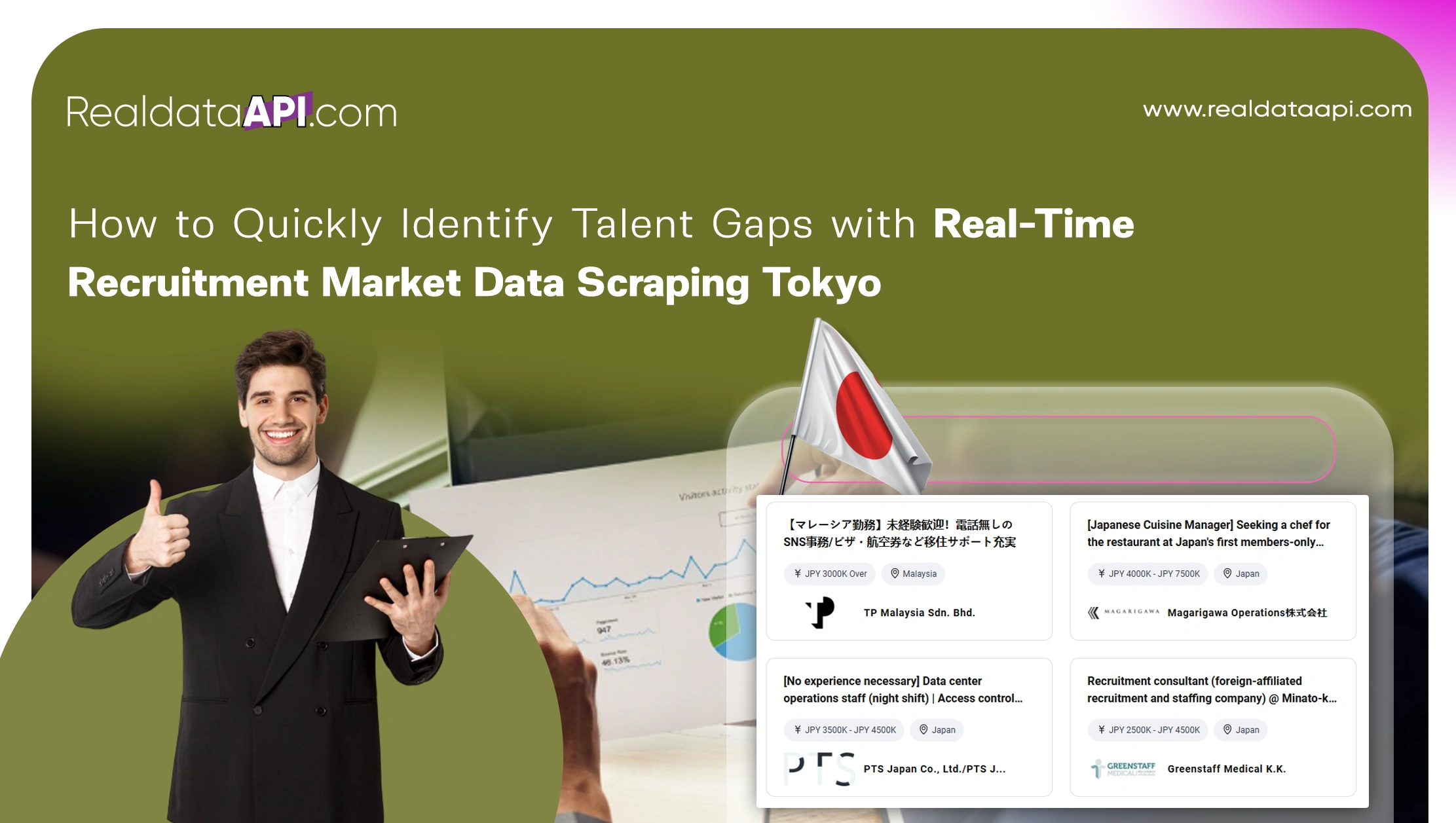
Tokyo is one of the world’s largest and most competitive employment hubs, hosting thousands of global companies and startups. As industries rapidly evolve due to digital transformation, automation, and economic shifts, identifying talent shortages has become a major challenge for organizations. Businesses must monitor job market activity, skill demand, and recruitment trends to ensure they can attract the right talent at the right time.
This is where real-time recruitment market data scraping Tokyo becomes an essential strategy for businesses, recruiters, and market analysts. By collecting recruitment data from job boards, career portals, and company websites, organizations gain immediate insights into hiring patterns, emerging skill demands, and talent availability.
Advanced tools like the Recruitment Data Scraping API enable companies to automatically gather and structure job listing information at scale. Instead of manually tracking recruitment activities across multiple platforms, organizations can access centralized datasets that reveal hiring trends and workforce gaps in real time.
By leveraging automated recruitment intelligence, businesses can improve workforce planning, optimize hiring strategies, and stay ahead in Tokyo’s competitive labor market.
Monitoring Job Availability Across Industries
Understanding which industries are actively hiring is critical for identifying workforce shortages. Companies often scrape job listings data in Tokyo to analyze recruitment activity across technology, finance, healthcare, and logistics sectors.
Job listing analysis helps organizations determine how many positions are open, what roles are in demand, and which industries are experiencing rapid hiring growth. Over the past few years, Tokyo has seen strong recruitment growth in technology and digital services, while traditional sectors have experienced slower expansion.
Tokyo Job Listings by Industry (2020–2026)
| Year | IT & Software | Finance | Healthcare | Manufacturing | Logistics |
|---|---|---|---|---|---|
| 2020 | 95K | 60K | 70K | 120K | 55K |
| 2021 | 110K | 65K | 78K | 125K | 65K |
| 2022 | 125K | 72K | 85K | 130K | 75K |
| 2023 | 145K | 80K | 95K | 135K | 90K |
| 2024 | 165K | 88K | 110K | 140K | 105K |
| 2025 | 185K | 95K | 125K | 145K | 120K |
| 2026 | 210K | 105K | 140K | 150K | 135K |
Key insights include:
- Technology hiring continues to grow due to AI and digital transformation.
- Healthcare roles are increasing because of demographic changes.
- Logistics recruitment is expanding alongside e-commerce growth.
Monitoring these trends helps organizations identify where talent demand is increasing most rapidly.
Understanding Workforce Demand Patterns
Hiring trends provide valuable insights into the direction of the labor market. Companies often Extract hiring trends in Tokyo Japan to analyze workforce demand across industries and anticipate talent shortages.
Recruitment data reveals patterns such as the growth of remote work, increased demand for digital skills, and rising competition for specialized professionals. These insights allow HR teams to adjust recruitment strategies and identify future workforce needs.
Top Skills in Demand in Tokyo (2020–2026)
| Skill | 2020 | 2022 | 2024 | 2026 Forecast |
|---|---|---|---|---|
| Data Analytics | Medium | High | Very High | Very High |
| Artificial Intelligence | Medium | High | Very High | Very High |
| Cybersecurity | Medium | High | High | Very High |
| Cloud Computing | Medium | High | High | Very High |
| Healthcare Management | High | High | Very High | Very High |
Important observations include:
- AI and machine learning roles have grown significantly since 2020.
- Cybersecurity demand is rising due to increasing digital threats.
- Healthcare management positions are expanding to support an aging population.
These insights help businesses proactively address talent gaps.
Analyzing Market Activity Across Recruitment Platforms
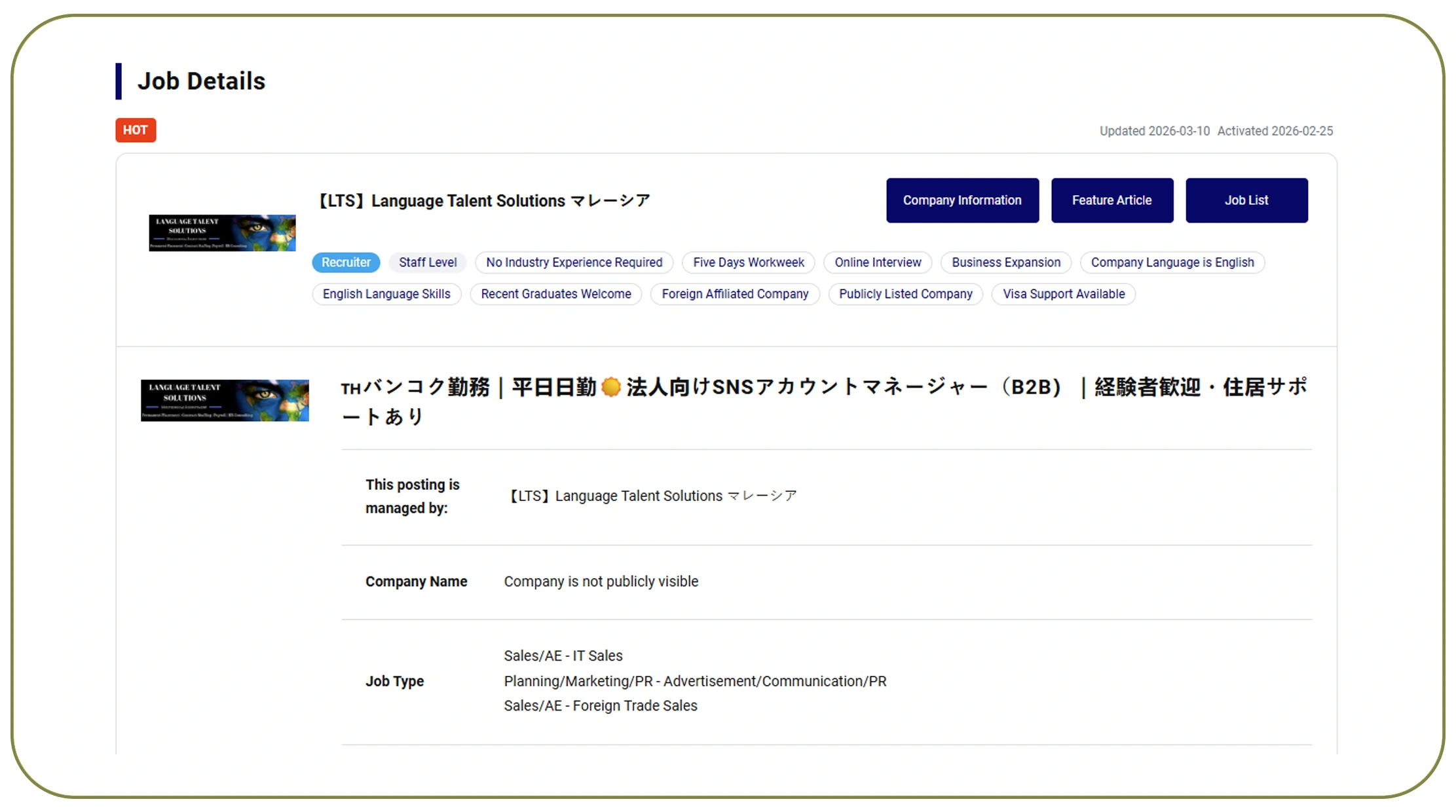
Recruitment activity across multiple job platforms provides a broader view of the labor market. Organizations rely on Tokyo job listing market data extraction to analyze job postings from recruitment portals, corporate websites, and staffing agencies.
By aggregating this information, businesses can identify recruitment trends, employer demand, and salary patterns across industries.
Tokyo Recruitment Market Growth (2020–2026)
| Year | Total Job Listings | Average Salary Growth | Companies Hiring |
|---|---|---|---|
| 2020 | 400K | 2% | 30K |
| 2021 | 450K | 3% | 34K |
| 2022 | 500K | 4% | 38K |
| 2023 | 560K | 5% | 42K |
| 2024 | 620K | 6% | 47K |
| 2025 | 690K | 7% | 52K |
| 2026 | 760K | 8% | 58K |
This analysis highlights how recruitment activity has steadily increased as Tokyo’s economy continues to recover and expand.
Leveraging Automation for Workforce Intelligence
Collecting job data manually can be time-consuming and inefficient. Businesses increasingly rely on automated job listing data collection Tokyo to gather recruitment insights quickly and accurately.
Automation enables organizations to monitor job listings continuously, track changes in hiring demand, and generate real-time labor market reports. Automated systems can collect thousands of job postings daily from various platforms.
Automated Data Collection Growth (2020–2026)
| Year | Job Listings Collected | Companies Tracked | Skills Identified |
|---|---|---|---|
| 2020 | 350K | 25K | 12K |
| 2021 | 420K | 30K | 15K |
| 2022 | 500K | 35K | 18K |
| 2023 | 580K | 40K | 21K |
| 2024 | 650K | 45K | 25K |
| 2025 | 720K | 50K | 28K |
| 2026 | 800K | 55K | 32K |
Automation improves the speed and accuracy of labor market analysis while reducing operational costs.
Building Structured Recruitment Intelligence Databases

Recruitment analytics requires well-organized data for effective analysis. Structured Recruitment Datasets enable organizations to track hiring patterns, analyze job roles, and benchmark salaries across industries.
These datasets typically include job titles, employer details, required skills, location data, and compensation information.
Example Recruitment Dataset Structure
| Data Field | Description |
|---|---|
| Job Title | Position listed by employer |
| Company Name | Hiring organization |
| Industry | Sector classification |
| Job Location | City or region |
| Salary Range | Compensation offered |
| Required Skills | Technical or professional skills |
Structured datasets enable companies to perform workforce forecasting, talent gap analysis, and market research more efficiently.
Enabling Scalable Recruitment Intelligence
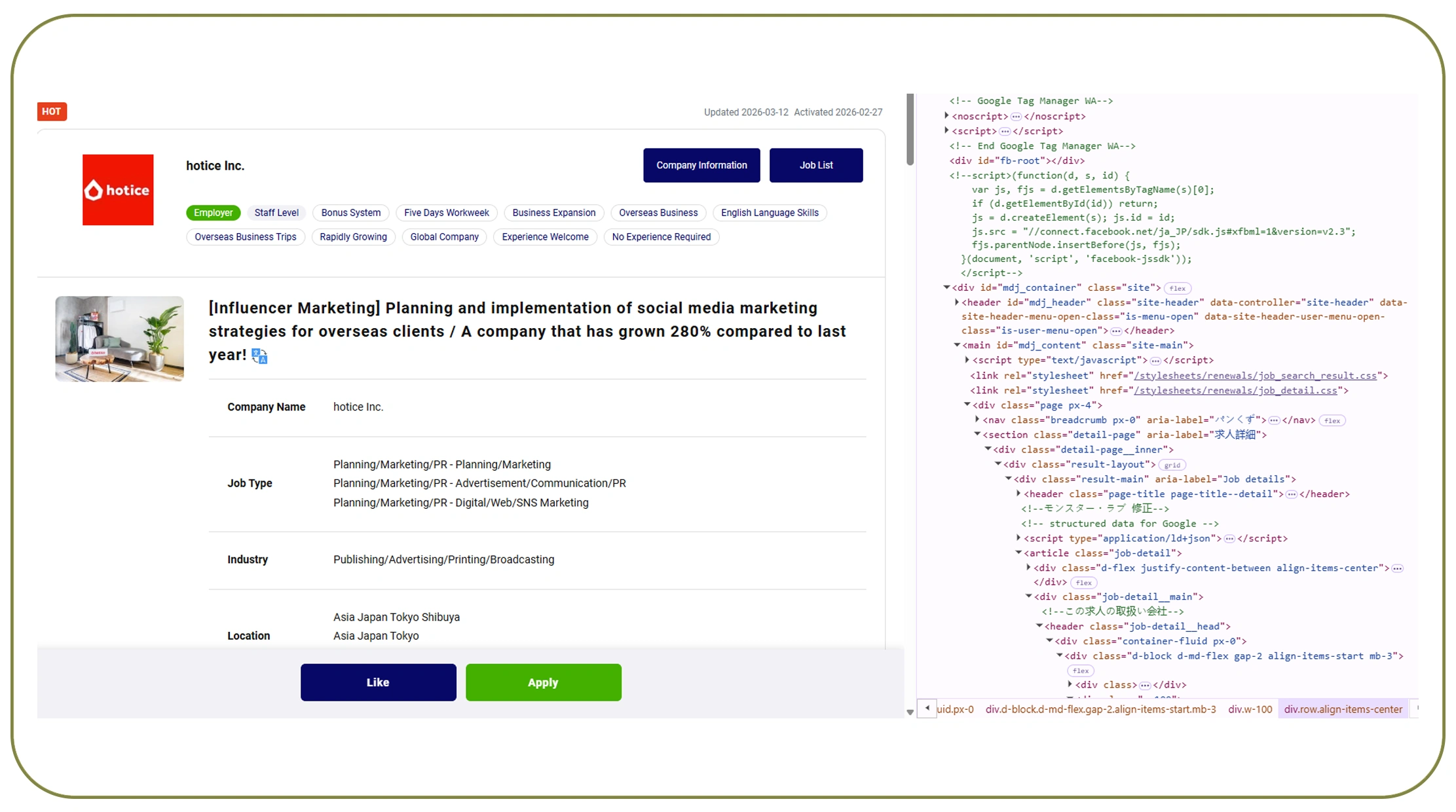
Organizations dealing with large volumes of recruitment data often rely on a Web Scraping API to automate data extraction and integration.
API-driven solutions enable businesses to collect recruitment intelligence at scale, monitor job market changes in real time, and integrate datasets into analytics platforms.
API Adoption for Recruitment Data (2020–2026)
| Year | API Users | Data Requests per Day | Job Listings Processed |
|---|---|---|---|
| 2020 | 120 | 10K | 300K |
| 2021 | 180 | 18K | 420K |
| 2022 | 250 | 25K | 520K |
| 2023 | 320 | 35K | 600K |
| 2024 | 400 | 45K | 700K |
| 2025 | 480 | 55K | 780K |
| 2026 | 550 | 65K | 850K |
These technologies allow businesses to maintain up-to-date labor market intelligence without building complex infrastructure.
Why Choose Real Data API?
Organizations looking for reliable recruitment intelligence need scalable and accurate data extraction solutions. Real Data API supports advanced Market Research capabilities by enabling businesses to collect and analyze recruitment data efficiently.
With real-time recruitment market data scraping Tokyo, companies can gain deeper insights into hiring activity, workforce demand, and emerging skill trends.
Key benefits include:
- Automated recruitment data collection from multiple job platforms
- Large-scale workforce intelligence extraction
- Real-time labor market analytics
- Customizable recruitment datasets for enterprise analysis
- Reliable infrastructure for continuous data monitoring
These capabilities help organizations transform recruitment data into strategic workforce insights.
Conclusion
Tokyo’s dynamic job market requires organizations to monitor hiring trends continuously to stay competitive. Identifying talent gaps early allows businesses to adjust recruitment strategies, attract skilled professionals, and maintain operational efficiency.
By leveraging real-time recruitment market data scraping Tokyo, companies can collect large-scale recruitment insights, analyze workforce trends, and identify talent shortages across industries.
With advanced tools like the Recruitment Data Scraping API and scalable data infrastructure, businesses can transform recruitment data into actionable intelligence.
Start leveraging Real Data API today to unlock real-time recruitment insights and stay ahead in Tokyo’s evolving talent market!
Latest posts

How Ixigo API Helps Businesses Solve Flight, Train, Hotel, Travel, and Pricing Data Challenges

How to Extract Restaurants, Menus, Prices, Ratings, and Business Data for Market Insights
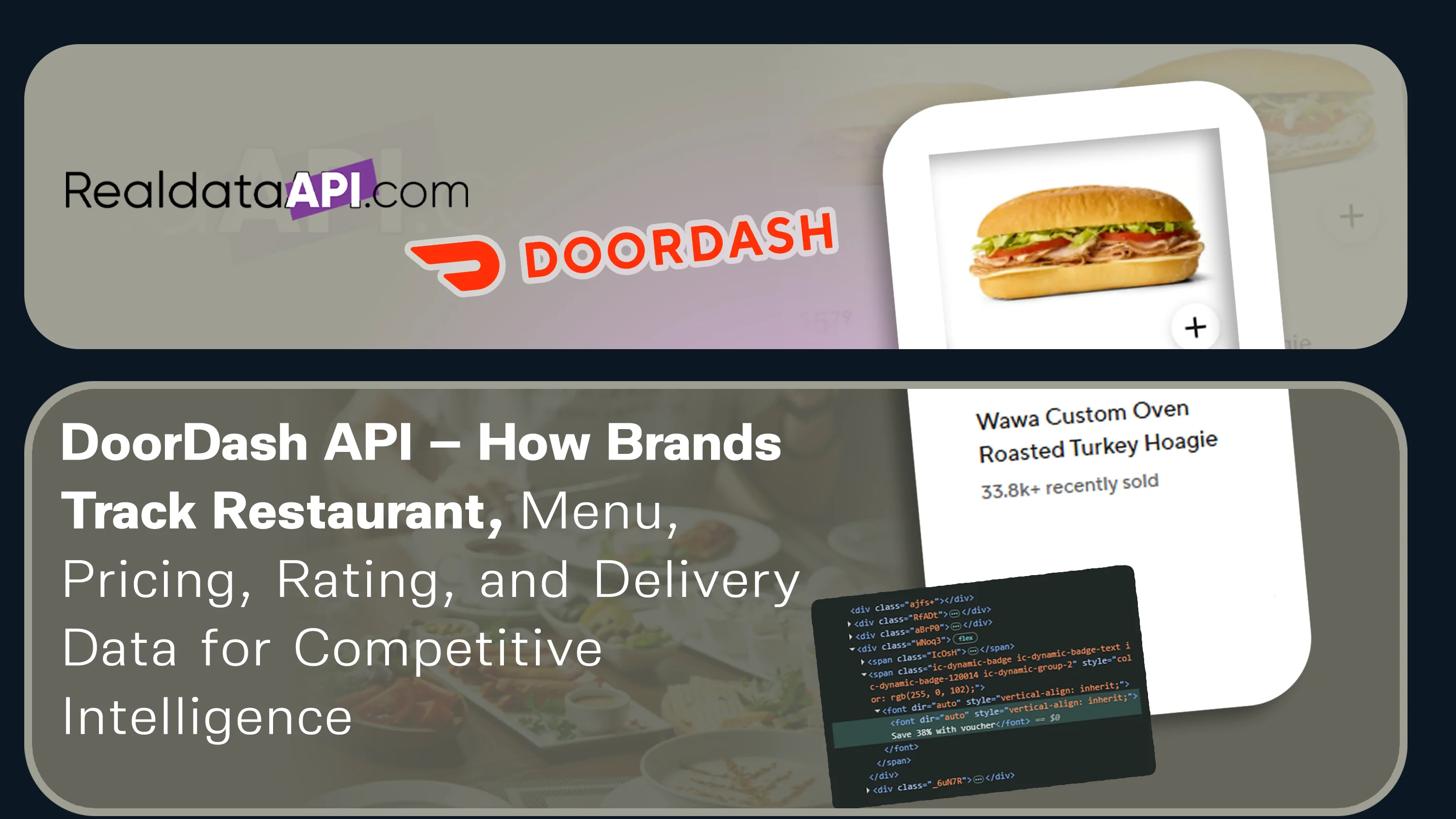
How Brands Track Restaurant, Menu, Pricing, Rating, and Delivery Data for Competitive Intelligence

How Retailers Track Fashion Products, Prices, Brands, and Category Data for Competitive Intelligence Using AJIO API






.png)