
Introduction
Germany’s automotive industry is one of the most advanced and competitive in the world, and cities like Berlin and Munich represent two of the most dynamic hubs for used car trading. With thousands of listings updated daily across online marketplaces, dealership websites, and classified platforms, the used car market in these cities is driven by real-time pricing, demand fluctuations, and consumer preferences.
For automotive businesses—including dealerships, aggregators, and analytics firms—gaining accurate insights into pricing trends, inventory levels, and customer demand is essential. However, manually collecting and analyzing such vast amounts of data is inefficient and unsustainable.
This is where web scraping becomes a powerful enabler. By implementing web scraping used car price analysis in Berlin and Munich, businesses can collect structured data at scale, unlock market insights, and make smarter pricing and inventory decisions.
| Metric | Value |
|---|---|
| Total Listings (Berlin + Munich) | 1.5M+ |
| Daily Listing Updates | 20–35% |
| Avg Price Variation | €500–€3,000 |
| Popular Platforms | Mobile.de, AutoScout24 |
| EV Demand Growth | 18% YoY |
These figures highlight the need for real-time automotive data intelligence to stay competitive in these fast-moving markets.
Why Market Intelligence Matters in Berlin and Munich
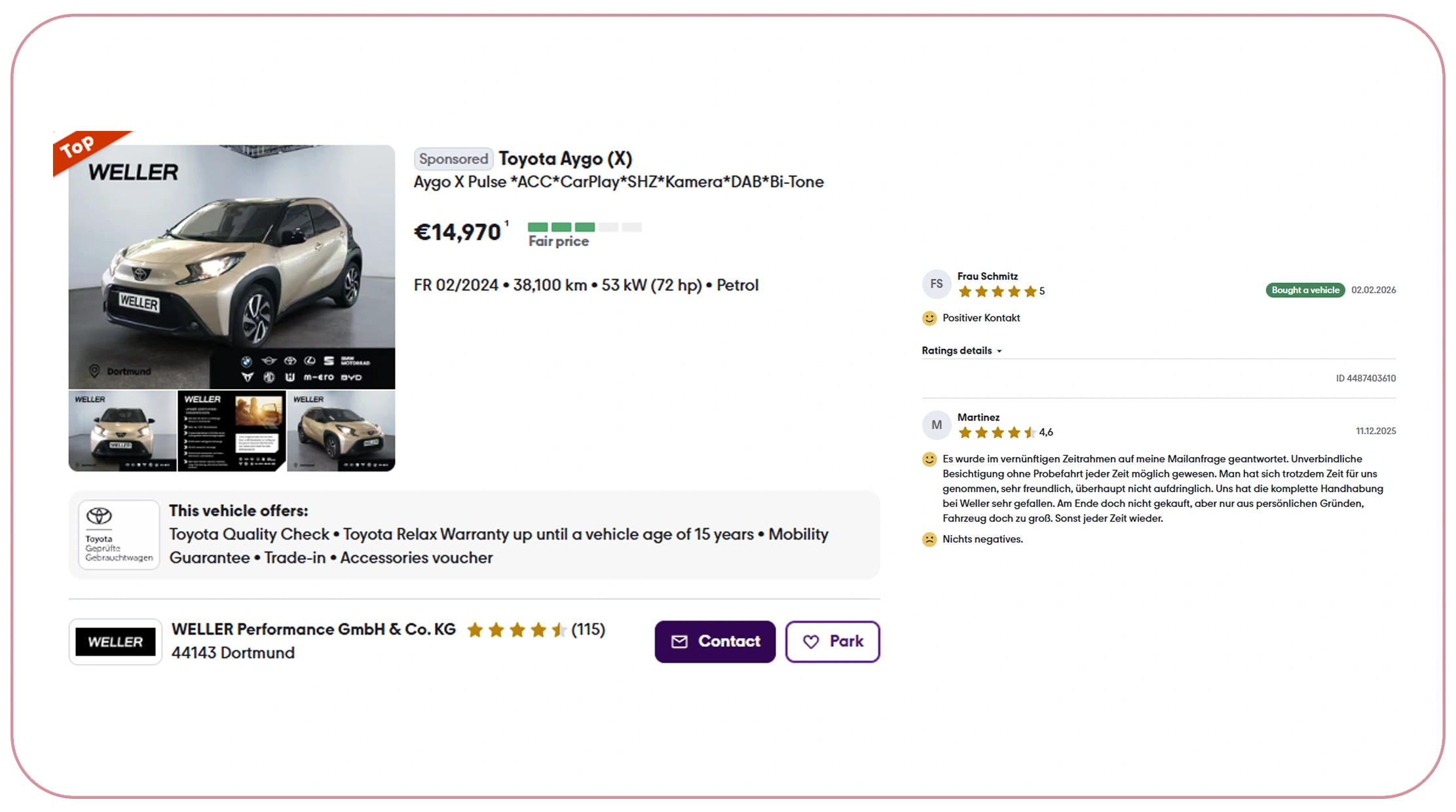
Berlin and Munich represent two unique automotive ecosystems:
- Berlin: A tech-driven market with rising EV adoption and strong demand for affordable vehicles
- Munich: A premium automotive hub with higher demand for luxury brands and performance vehicles
Several factors influence used car pricing and demand:
- Vehicle condition and mileage
- Brand perception and model popularity
- Fuel type (EV vs petrol/diesel)
- Seasonal demand trends
- Economic and regulatory changes
Without real-time insights, businesses risk:
- Mispricing vehicles
- Overstocking low-demand models
- Missing high-demand opportunities
By leveraging extract second-hand vehicle data in Berlin and Munich, companies can:
- Optimize pricing strategies
- Improve inventory turnover
- Enhance customer targeting
- Increase profitability
The Role of Web Scraping in Automotive Intelligence
Web scraping automates the process of collecting data from multiple automotive platforms, enabling businesses to:
- Extract vehicle inventory data extraction in Berlin and Munich
- Monitor competitor pricing in real time
- Track inventory availability
- Analyze customer demand patterns
Using enterprise web crawling, organizations can collect millions of data points daily and convert them into actionable insights.
Key Data Sources for Used Car Insights
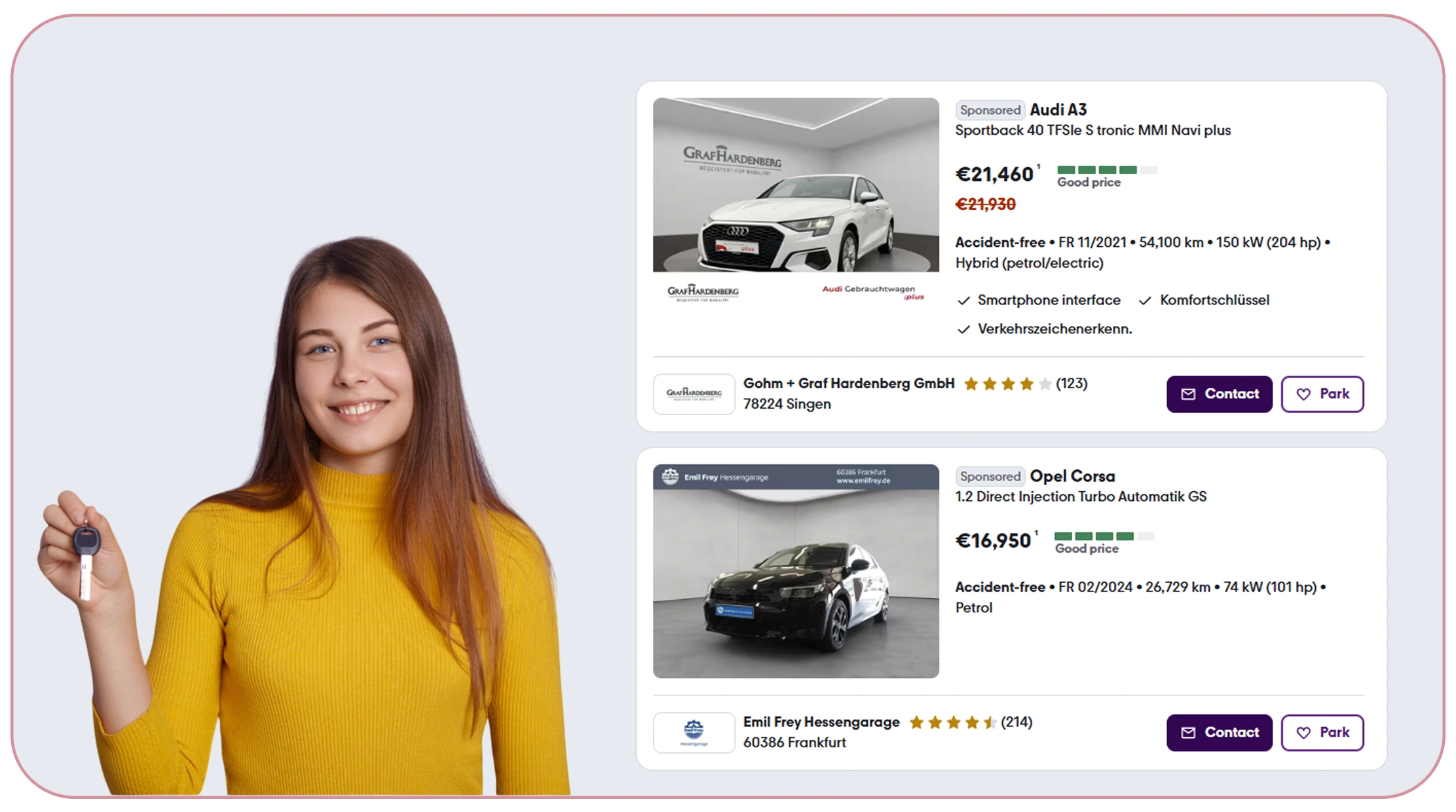
To build a comprehensive automotive intelligence system, businesses rely on multiple sources:
1. Automotive Marketplaces
- Mobile.de
- AutoScout24
Provide:
- Vehicle pricing
- Mileage and specifications
- Dealer vs private listings
2. Dealership Websites
Offer:
- Exclusive listings
- Promotional pricing
- Inventory updates
3. Classified Platforms
- eBay Kleinanzeigen
Useful for:
- Local demand trends
- Private seller pricing
4. Auction Platforms
Provide insights into:
- Wholesale pricing
- Dealer acquisition trends
How Businesses Use Scraped Automotive Data

1. Dynamic Pricing Optimization
With dynamic pricing, dealerships can adjust vehicle prices in real time based on:
- Competitor listings
- Demand fluctuations
- Inventory levels
This ensures faster sales and improved margins.
2. Competitor Monitoring
Using a Berlin and Munich automotive market data scraper, businesses can:
- Identify pricing gaps
- Track competitor strategies
- Adjust pricing instantly
3. Demand Analysis
Scraped data helps businesses:
- Analyze used car demand data in Berlin and Munich
- Identify popular models
- Forecast seasonal demand trends
4. Inventory Optimization
Data insights enable:
- Better procurement decisions
- Reduced inventory holding costs
- Improved stock management
Web Scraping API Use Cases in Automotive Industry
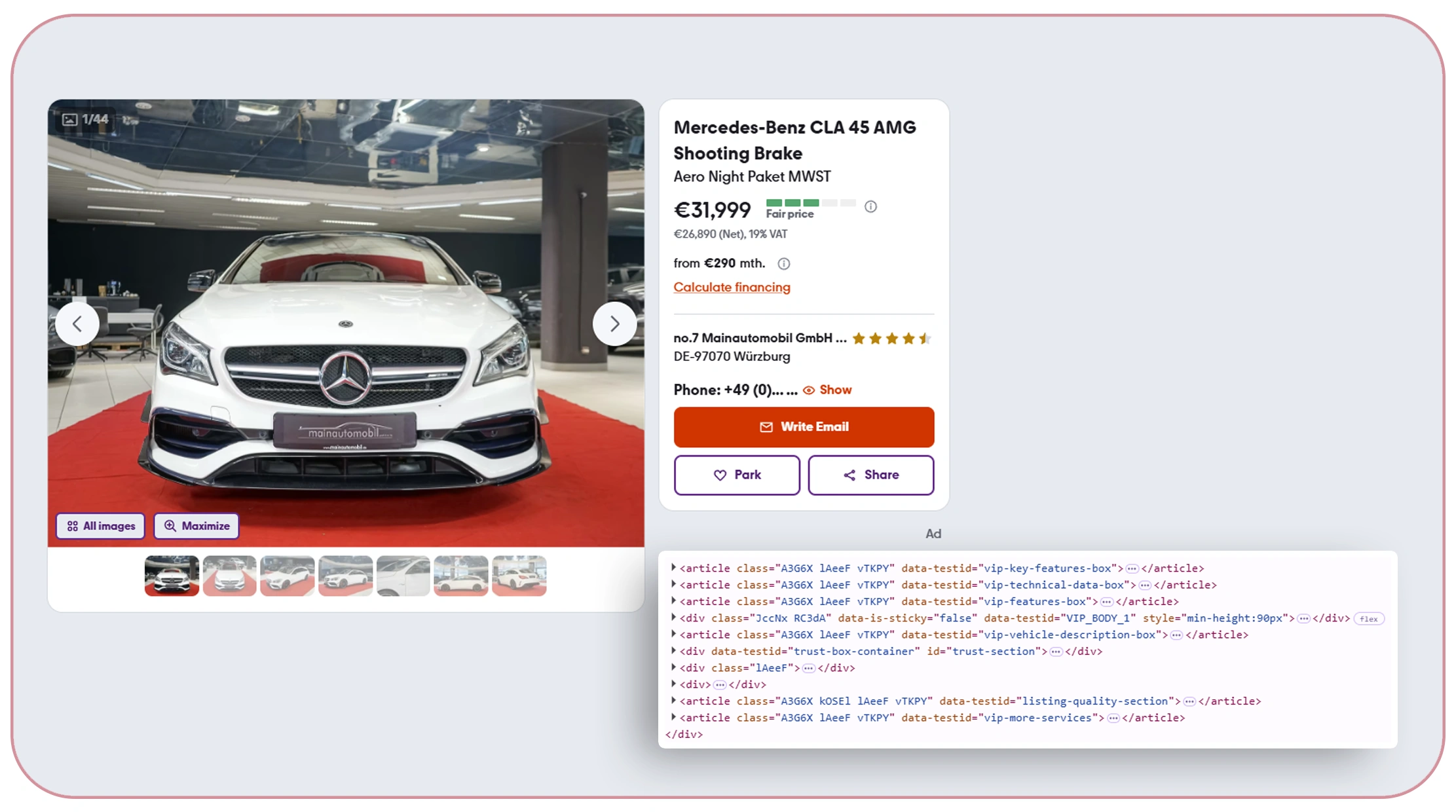
A Web Scraping API simplifies large-scale data extraction and improves scalability.
Key Use Cases:
- Real-time vehicle price tracking
- Competitive benchmarking
- Demand analysis
- Inventory optimization
- Predictive pricing models
Using web scraping services, businesses can focus on insights rather than infrastructure.
Building a High-Quality Automotive Dataset
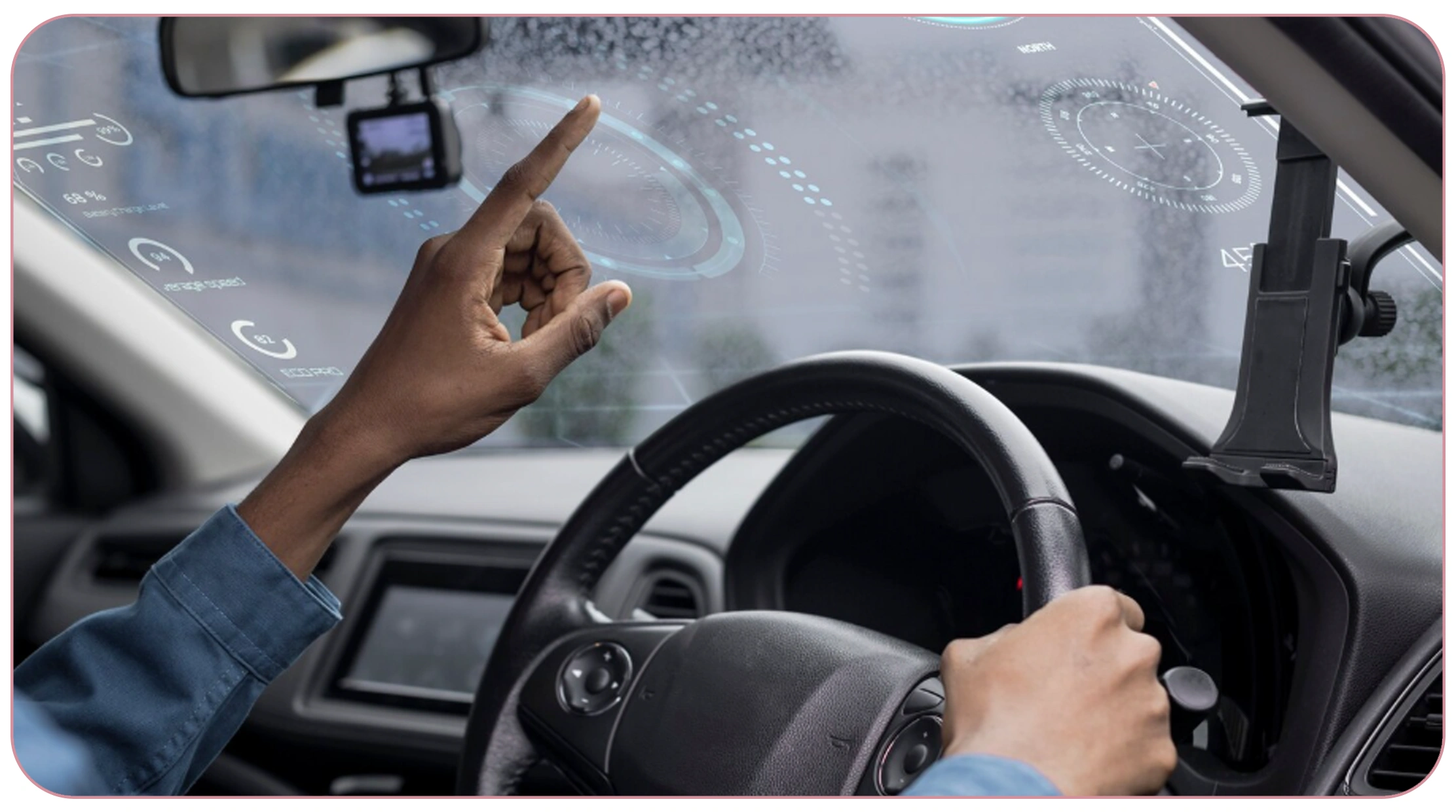
A comprehensive dataset includes:
- Vehicle pricing history
- Mileage and specifications
- Location-based demand
- Seller type (dealer/private)
- Listing duration
This dataset enables:
- Trend analysis
- Forecasting models
- Strategic decision-making
Challenges in Automotive Data Scraping
1. Dynamic Website Structures
Frequent UI changes require updates.
2. Anti-Scraping Mechanisms
CAPTCHA, IP blocking, and rate limits.
3. Data Normalization
Different formats across platforms.
4. Language & Regional Complexity
Handling German-language listings.
Best Practices for Automotive Data Extraction
- Use reliable Web Scraping API solutions
- Implement proxy rotation
- Normalize and clean data
- Ensure compliance with regulations
- Use scalable enterprise web crawling systems
Future of Automotive Market Intelligence
The automotive industry is moving toward:
- AI-driven pricing engines
- Predictive analytics
- Real-time dashboards
- Automated decision-making
Businesses investing in Berlin and Munich automotive market data scraper solutions will lead the future.
Conclusion: Unlock Automotive Insights with Real Data API
In today’s competitive automotive landscape, success depends on how effectively businesses can extract second-hand vehicle data in Berlin and Munich and convert it into actionable insights.
From vehicle inventory data extraction in Berlin and Munich to implementing dynamic pricing strategies, web scraping empowers businesses to stay ahead in rapidly evolving markets.
However, building and maintaining large-scale scraping infrastructure can be complex and resource-intensive. That’s where Real Data API provides a powerful advantage.
Why Real Data API?
Real Data API is an enterprise-grade solution designed for automotive intelligence and large-scale data extraction.
- Real-time access to used car listings and pricing data
- Scalable Web Scraping API infrastructure
- Clean, structured, analytics-ready datasets
- Support for enterprise web crawling
- Reliable, maintenance-free data pipelines
Take Action Today
If you want to:
- Perform web scraping used car price analysis in Berlin and Munich
- Analyze used car demand data in Berlin and Munich
- Build advanced pricing models
- Scale your automotive data strategy
Start using Real Data API today and unlock powerful automotive market intelligence.
Real Data API — Driving Smarter Decisions in Automotive Analytics.
Latest posts
How ecommerce scraping API for real-time product data Helps Businesses Track Prices, Inventory, and Competitor Changes
How Web Scraping APIs for Business Data Improve Pricing and Product Insights
How Extracting Bilibili API Data for Social Media Analytics Helps Brands Track Content, Engagement, and Audience Trends

How Prom.ua scraper Helps Businesses Collect Marketplace Data for Competitive Pricing and Product Intelligence






.png)



