Introduction
The wine e-commerce boom has transformed how consumers discover, compare, and purchase wines online. Among all online wine retailers, Wine.com API stands out as the world's largest online wine marketplace, with thousands of SKUs, curated collections, expert reviews, customer ratings, detailed product pages, and region-specific availability.
For brands, distributors, sommeliers, importers, and data-driven businesses, Web scraping Wine.com data opens the door to powerful insights—from price monitoring and varietal trends to inventory movements, professional ratings, and competitive benchmarking.
This detailed guide explores how to scrape Wine.com data, what data points can be extracted, the challenges involved, top business use cases, legal and ethical considerations, and how scraping tools or APIs can help you access clean, structured wine data for advanced analytics and decision-making.
Why Scrape Data from Wine.com?
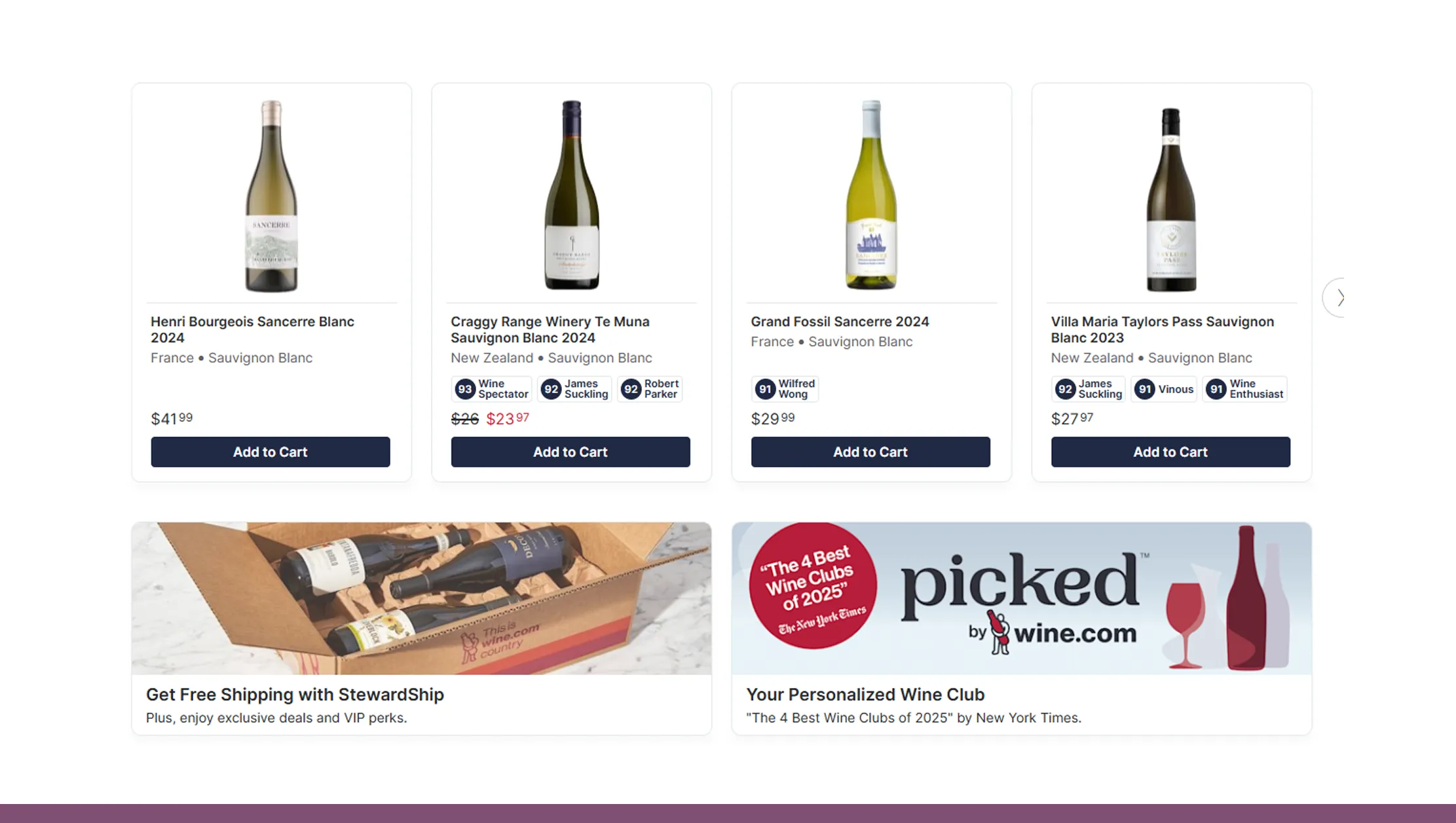
Wine.com provides a uniquely rich dataset because it offers not just e-commerce listings but also expert tasting notes, professional wine scores, detailed product descriptions, and inventory patterns across regions.
With the help of Liquor Data Scraping API, Wine.com helps businesses unlock insights such as:
1. Real-Time Wine Pricing Intelligence
Wine pricing varies across:
- Regions
- Vintage
- Retailer discounts
- Seasonal promotions
- Availability
Scraping lets you monitor competitor pricing in real time to optimize your product strategy.
2. Competitive Product Benchmarking
Brands can compare themselves against:
- Similar varietals
- Same region competitors
- Specific vintage comparisons
- Ratings & reviews
- Expert notes
This helps in branding, marketing, and product positioning.
3. Inventory & Stock Availability Analysis
Data scraping helps spot:
- High-demand wines
- Out-of-stock trends
- Seasonal availability patterns
- Region-specific assortments
This is crucial for supply chain optimization.
4. Consumer Insights from Reviews
Wine.com hosts thousands of user-generated and expert reviews. Scraping this helps uncover:
- Sentiment trends
- Taste preferences
- Popular varietals
- Price sensitivity
- Preference differences by region
5. Market Demand Forecasting
By tracking what wines frequently sell out or trend upward, brands and distributors can forecast demand more accurately.
6. Wine Ratings & Score Trends
Wine.com aggregates ratings from multiple sources, making it ideal for:
- Vintage scoring analytics
- Regional taste preference studies
- Rating-based product ranking
What Types of Data Can Be Scraped from Wine.com?
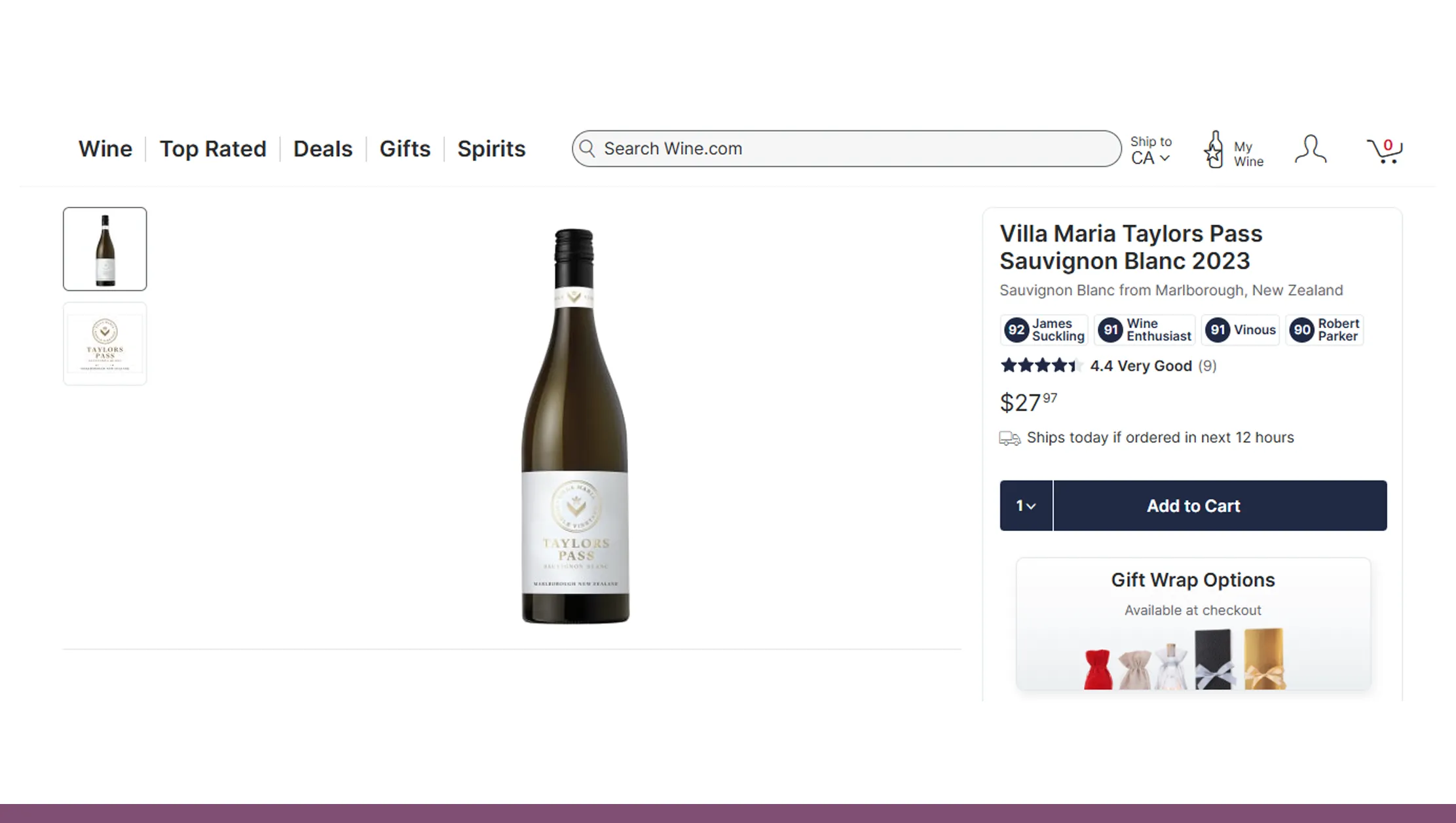
Wine.com Liquor Dataset hosts one of the most detailed wine catalogs online. A well-designed scraper can extract the following:
1. Product Details
- Wine name
- Winery
- Varietal (Cabernet Sauvignon, Pinot Noir, etc.)
- Region & sub-region
- Country
- Vintage
- ABV (alcohol percentage)
- Bottle size (750ml, 1.5L, etc.)
- Price
- Sale price / discounted price
- Tasting notes
- Winemaker notes
- Professional reviews
- Wine scores (Wine Spectator, James Suckling, Wine Advocate, etc.)
- Food pairing suggestions
- Bottle images
2. Customer Review Data
- Review text
- Star ratings
- Reviewer name
- Review date
- Verified purchase tags
- Sentiment indicators
3. Store-Level Data
Wine.com availability varies by region (due to alcohol shipping laws). Scraped datasets include:
- Region-wise availability
- Shipping restrictions
- Delivery timelines
- Localized inventory
- Warehouse-based stock changes
4. Pricing & Promotion Data
- Price history
- Flash deals
- Add-to-cart discounts
- Shipping promotions
- Loyalty program offers
5. Metadata & SEO Elements
Useful for competitive SEO analysis:
- Page titles
- Meta descriptions
- Structured data
- Product schema
How to Scrape Wine.com Data: Step-by-Step Technical Overview
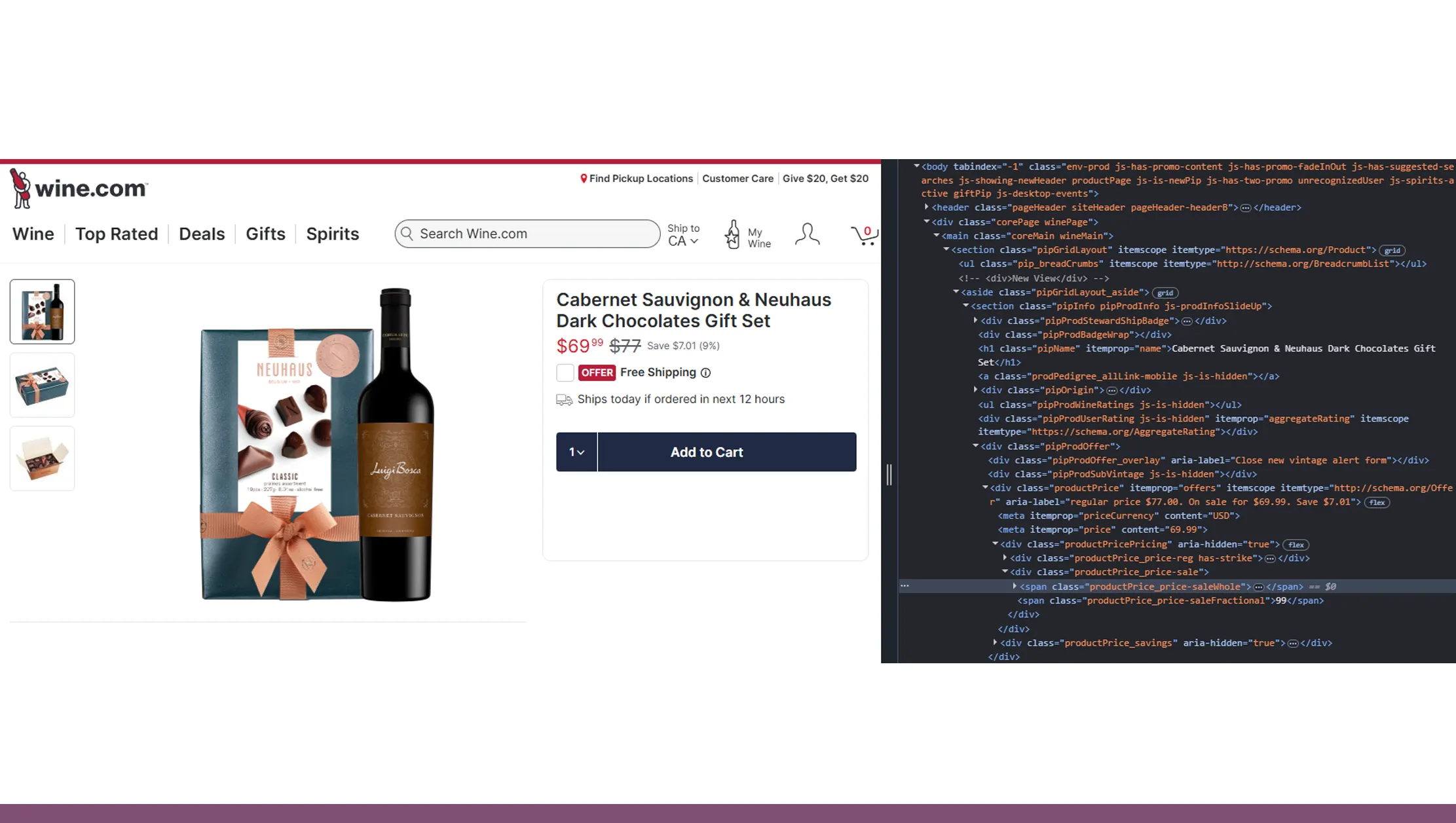
Scraping Wine.com requires a smart, layered approach because the platform uses dynamic content, filtering options, and geo-based restrictions.
Step 1: Identify the URLs and Categories to Scrape
Wine.com has extensive category breakdowns:
- By varietal
- By price range
- By region
- By countries
- By ratings
- By awards
- By staff picks
A scraper must first crawl category pages and extract all product page URLs.
Step 2: Handle JavaScript Rendering
Wine.com loads product details dynamically through:
- API calls
- JavaScript rendering
- Client-side scripts
To extract this data, you need headless browsers like:
- Selenium
- Puppeteer
- Playwright
Step 3: Manage Pagination & Filters
The scraper should handle:
- Infinite scrolling
- "Load more" buttons
- Filter-based sorting (price, rating, type, region)
This ensures full dataset coverage.
Step 4: Scrape Product Details from Each Wine Page
Product pages are the most valuable section containing:
- Tasting notes
- Winery details
- Multiple images
- Expert scores
These must be collected cleanly and mapped to structured fields.
Step 5: Extract Geolocation-Based Availability
Wine.com prices and availability change based on:
- User ZIP code
- Shipping eligibility
- Regional stock
Scrapers must integrate ZIP-level rotation to capture accurate data.
Step 6: Scrape Review and Rating Data
Many businesses use this for sentiment analysis and brand intelligence. Use techniques such as:
- Iterating review pagination
- Extracting reviewer info
- Capturing professional scores
Step 7: Clean, Normalize, and Store the Data
Data outputs can be structured into:
- CSV
- JSON
- SQL databases
- API endpoints
Normalization includes:
- Standardizing varietal names
- Mapping regions
- Converting price formats
- Removing duplicates
Step 8: Automate Daily or Weekly Scraping
Wine data changes frequently due to:
- New vintages
- Seasonal promotions
- Flash sales
- Review additions
Schedule automated runs for continuous data updates.
Challenges in Web Scraping Wine.com Data
By using Market Research tool, Wine.com implements several anti-scraping mechanisms to protect its platform. These include:
1. Dynamic Content Loading
Many details are not visible in HTML but load via API calls.
2. Geo-Restricted Data
Wine availability varies by state due to alcohol laws.
3. Sophisticated Anti-Bot Systems
Frequent requests without headers/proxies can result in IP blocks.
4. Structured Data Complexity
Wine.com's product pages include deep details such as:
- Vintage mapping
- Region identification
- Multiple ratings sources
Scraping these accurately requires careful extraction.
5. High Volume of SKUs
Wine.com lists tens of thousands of products—requiring scalable crawling.
Top Use Cases of Wine.com Data Scraping
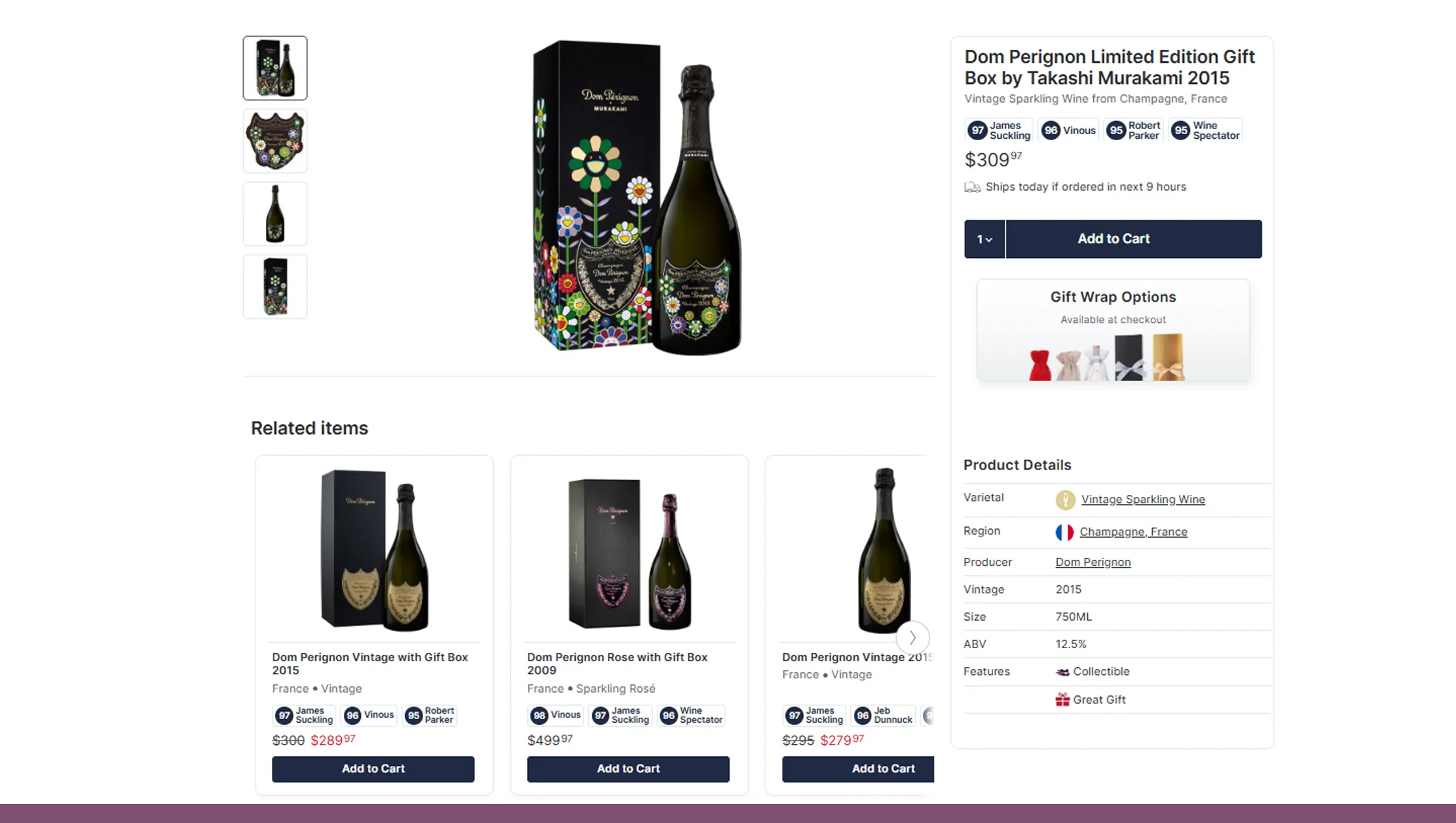
Wine data is used across many industries. Here are the most powerful applications:
1. Price Monitoring & Competitive Benchmarking
Brands monitor their pricing against:
- Competitor offerings
- Vintages
- Retailers across regions
2. Market Trend Analysis
Scraping Wine.com helps identify:
- Trending varietals
- Rising wine regions
- Best-selling brands
- Seasonal demand patterns
3. Inventory Optimization
Distributors and wineries track:
- Out-of-stock alerts
- Stock movement trends
- SKU-level demand
4. Review & Sentiment Analysis
Brands analyze:
- Customer sentiments
- Flavor preferences
- Complaints and positive mentions
5. Wine Ratings & Vintage Performance
Extracted rating data helps understand:
- How vintages improve/decline
- How ratings impact sales
- Which wine critics influence purchases
6. Product Recommendation Engines
Wine-tech apps use scraped data to recommend wines based on:
- Taste profiles
- Ratings
- Price sensitivity
- User behavior
7. Competitor Product Launch Tracking
Detect when competitors introduce:
- New varietals
- Premium labels
- Limited editions
Best Practices for Ethical & Efficient Wine.com Scraping
To scrape Wine.com effectively and ethically:
- Implement rotating proxies
- Use headless browsers for dynamic pages
- Respect rate limits to avoid detection
- Schedule scraping during low-traffic hours
- Store data in structured formats
- Stay compliant with wine shipping laws
- Avoid scraping personal user data
Conclusion
Web scraping Wine.com data empowers wineries, distributors, researchers, retailers, and data companies with the insights they need to understand market trends, optimize pricing, forecast demand, track competitor strategies, and improve customer satisfaction. With detailed product specifications, professional ratings, customer reviews, and region-specific availability, Wine.com provides some of the richest datasets in the alcohol e-commerce world.
However, scraping Wine.com at scale requires advanced infrastructure, rotating proxies, and a strong understanding of dynamic content extraction. That's where Real Data API becomes the most powerful solution—delivering clean, structured, and ready-to-use Wine.com data without technical challenges. Whether you need real-time pricing, product catalogs, reviews, or ratings intelligence, Real Data API helps you access accurate wine datasets for analytics, dashboards, competitive intelligence, and automation.
Latest posts
Truthsocial Data Scraping For Real-Time Social Media Insights
Zara Web Data Scraper For Fashion Trend Analysis - How Retailers Overcome Fast-Changing Fashion Demand & Inventory Challenges
How Real Estate Web Scraping Using Bayut API Solves Rental Pricing and Property Tracking Problems?
How Trendyol Data Collection for Ecommerce Market Research Solves Assortment, Pricing, and Market Intelligence Challenges?


.png)