
Introduction
In today’s hyper-competitive retail landscape, understanding regional pricing trends is essential. Zip-code level pricing data mining for retailers provides granular insights that enable companies to optimize local pricing strategies, track competitor behavior, and maximize revenue.
Retailers with multiple store locations or e-commerce operations can no longer rely on national averages for pricing decisions. By analyzing prices at the zip-code level, businesses gain visibility into local demand, promotional effectiveness, and pricing elasticity. Real Data API offers tools to collect, structure, and analyze this data efficiently, enabling data-driven decisions that improve profitability and competitive positioning.
From 2020 to 2026, hyperlocal pricing data has proven critical for retailers responding to shifting consumer behavior, regional economic conditions, and competitive pressures. This blog explores how advanced data extraction, analysis, and visualization empower retailers to make smarter, location-based pricing decisions.
Unlocking Regional Insights
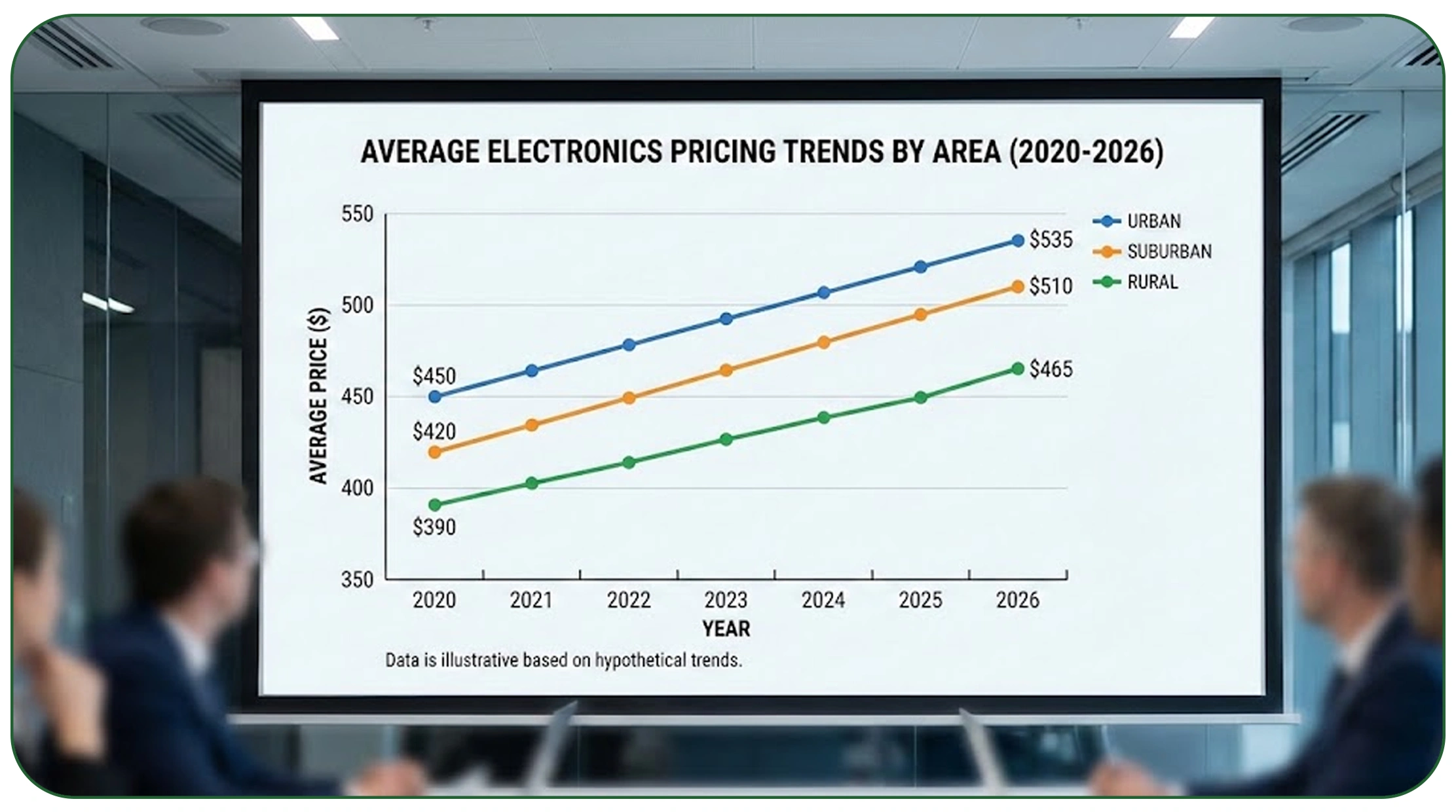
Collecting detailed pricing data allows businesses to understand micro-market trends. Scrape zip-code level pricing data for retailers enables granular tracking of product prices, promotions, and competitor adjustments across neighborhoods.
Between 2020 and 2026, retailers observed distinct pricing variations between urban, suburban, and rural areas. The table below shows average electronics pricing trends across zip codes:
| Year | Urban Avg Price ($) | Suburban Avg Price ($) | Rural Avg Price ($) |
|---|---|---|---|
| 2020 | 450 | 430 | 420 |
| 2021 | 460 | 440 | 425 |
| 2022 | 470 | 450 | 430 |
| 2023 | 480 | 460 | 435 |
| 2024 | 490 | 470 | 440 |
| 2025 | 500 | 480 | 445 |
| 2026 | 510 | 490 | 450 |
Granular data extraction allows businesses to detect regional price sensitivity, forecast demand, and adjust promotions for maximum ROI. Retailers using zip-code-level insights reported up to 18% improvement in revenue per location.
Structuring Location-Based Data
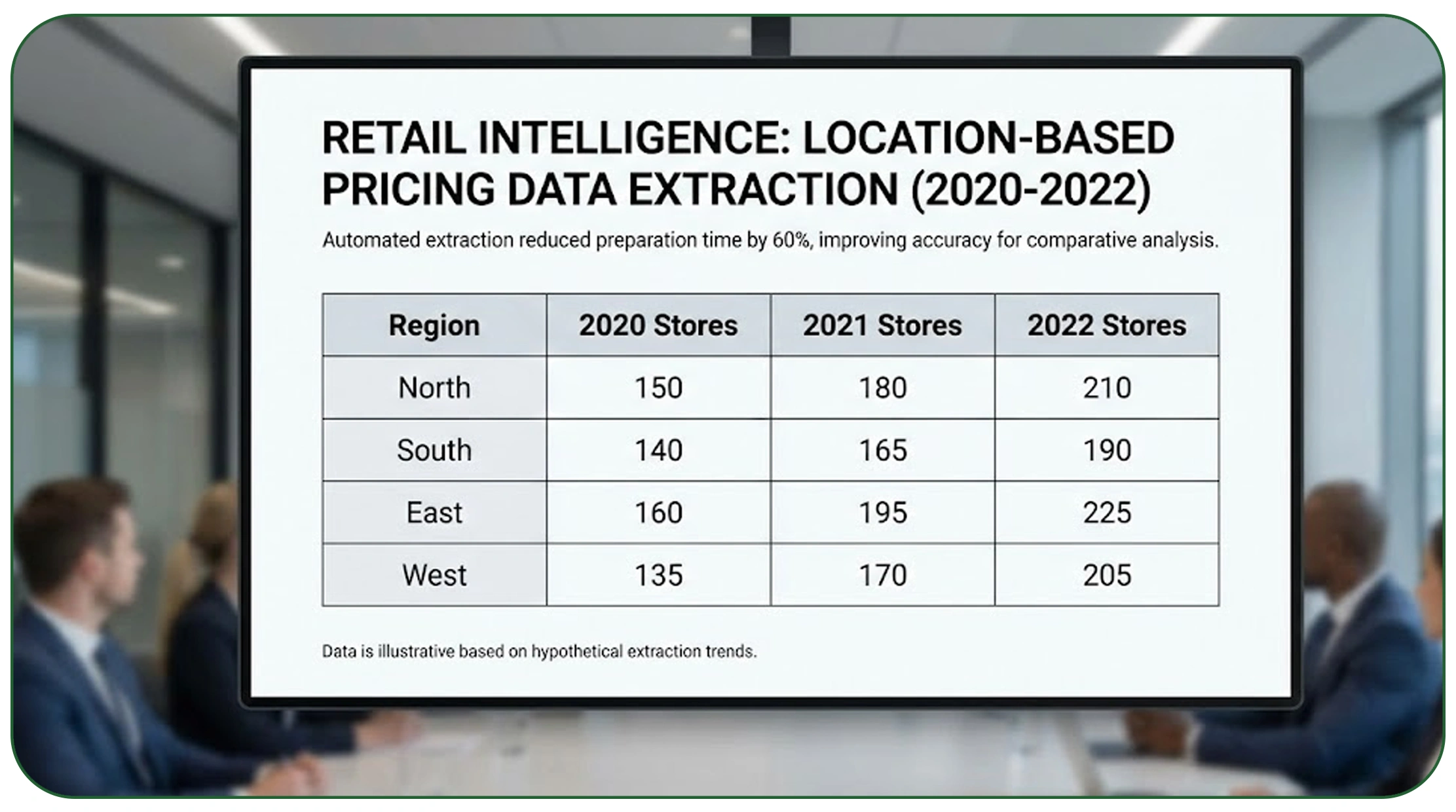
Accurate insights require structured datasets. Extracting location-based pricing data for retail intelligence ensures that information is organized by zip code, product, category, and store, enabling comparative analysis and trend tracking.
From 2020 to 2022, manual data collection posed challenges due to inconsistent formats and delayed updates. Automated extraction reduced preparation time by 60%, improving accuracy for analysis. The table below shows the number of stores analyzed per region:
| Year | Urban Stores | Suburban Stores | Rural Stores |
|---|---|---|---|
| 2020 | 1200 | 800 | 500 |
| 2021 | 1250 | 850 | 520 |
| 2022 | 1300 | 900 | 540 |
| 2023 | 1350 | 950 | 560 |
| 2024 | 1400 | 1000 | 580 |
| 2025 | 1450 | 1050 | 600 |
| 2026 | 1500 | 1100 | 620 |
Structured datasets allow retailers to monitor pricing variations, generate dashboards, and apply predictive models for more accurate decision-making.
Analyzing Price Variation
Tracking local prices enables a better understanding of market dynamics. Extract local retail prices by zip code geographical price variation analysis highlights differences in consumer spending power, local promotions, and competitor positioning.
The table below shows average grocery item prices in selected regions:
| Year | Urban ($) | Suburban ($) | Rural ($) |
|---|---|---|---|
| 2020 | 12.5 | 11.8 | 11.2 |
| 2021 | 12.8 | 12.0 | 11.5 |
| 2022 | 13.0 | 12.2 | 11.8 |
| 2023 | 13.3 | 12.5 | 12.0 |
| 2024 | 13.6 | 12.8 | 12.3 |
| 2025 | 14.0 | 13.0 | 12.5 |
| 2026 | 14.3 | 13.3 | 12.8 |
Retailers leveraging this data reported 15% better alignment between local pricing and demand. Geographical analysis also uncovers high-margin locations and areas requiring pricing adjustments.
Implementing Adaptive Pricing
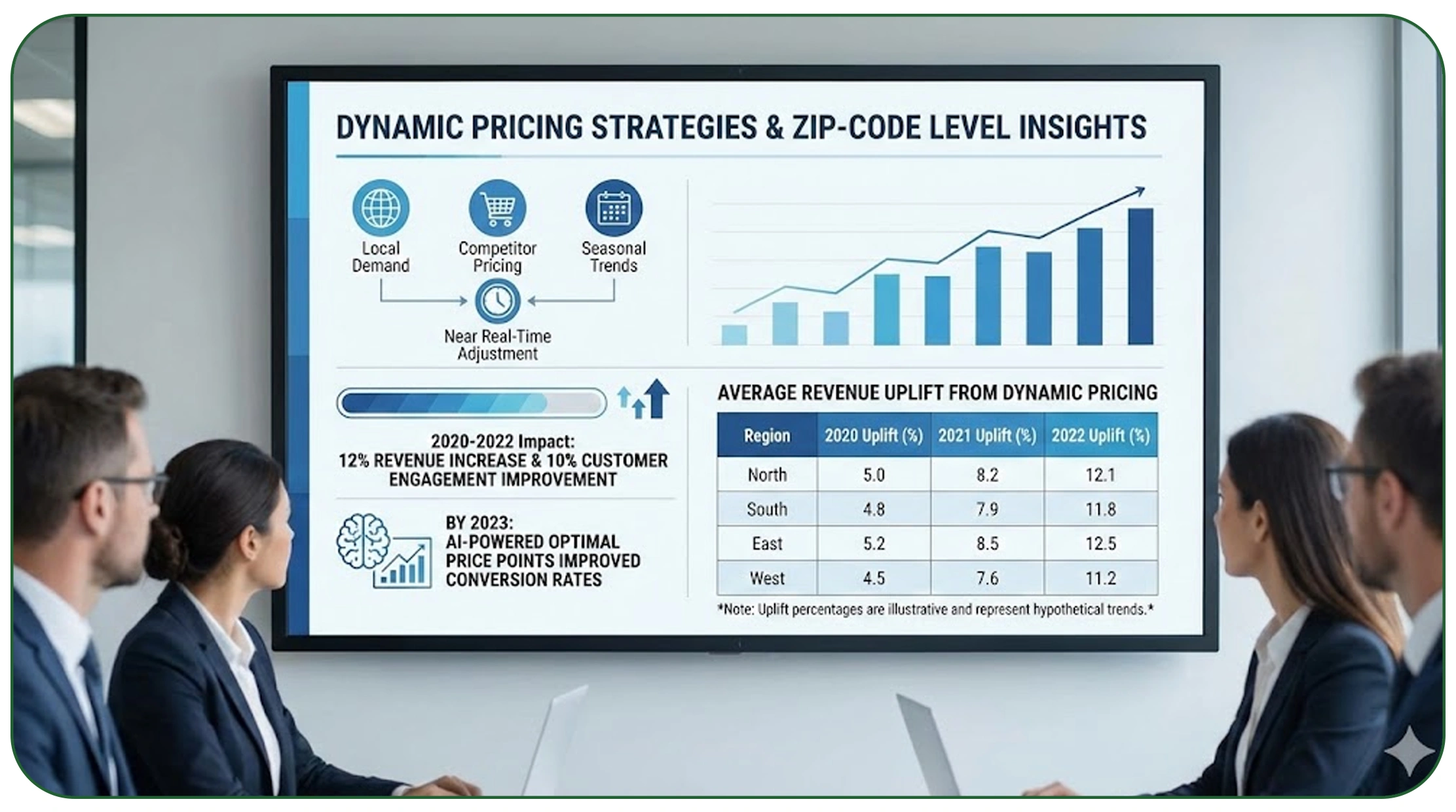
Dynamic pricing strategies are more effective with granular data. Dynamic Pricing relies on zip-code-level insights to adjust prices in near real-time, considering local demand, competitor pricing, and seasonal trends.
From 2020 to 2022, retailers implementing dynamic pricing saw a 12% increase in revenue and a 10% improvement in customer engagement. By 2023, AI-powered models predicted optimal price points for each zip code, improving conversion rates. The table below shows average revenue uplift from dynamic pricing:
| Year | Revenue Uplift (%) | Avg Price Change Frequency | Conversion Rate (%) |
|---|---|---|---|
| 2020 | 8 | 3/month | 5 |
| 2021 | 9 | 4/month | 6 |
| 2022 | 10 | 4/month | 7 |
| 2023 | 12 | 5/month | 8 |
| 2024 | 13 | 6/month | 9 |
| 2025 | 14 | 6/month | 10 |
| 2026 | 15 | 7/month | 11 |
Dynamic pricing enables retailers to respond to competitors and local market conditions with agility.
Monitoring Prices Continuously
Continuous observation of local prices improves competitive intelligence. Price Monitoring helps businesses track fluctuations, identify promotions, and adjust strategies accordingly.
The table below shows average number of monitored products per year:
| Year | Products Monitored | Price Updates Per Month | Regions Covered |
|---|---|---|---|
| 2020 | 50,000 | 2 | 100 |
| 2021 | 60,000 | 3 | 120 |
| 2022 | 70,000 | 4 | 140 |
| 2023 | 80,000 | 5 | 160 |
| 2024 | 90,000 | 5 | 180 |
| 2025 | 100,000 | 6 | 200 |
| 2026 | 110,000 | 6 | 220 |
Retailers using price monitoring reported faster reactions to competitor promotions and more precise discount strategies, increasing sales and customer satisfaction.
Automating Data Collection
Efficient extraction requires robust tools. Web Scraping API automates data collection from multiple locations, providing structured, real-time pricing data for analysis.
| Feature | 2020 | 2021 | 2022 | 2023 | 2024 | 2025 | 2026 |
|---|---|---|---|---|---|---|---|
| Stores Monitored | 500 | 600 | 700 | 800 | 900 | 1000 | 1100 |
| Products Covered | 50k | 60k | 70k | 80k | 90k | 100k | 110k |
| Update Frequency (daily) | Yes | Yes | Yes | Yes | Yes | Yes | Yes |
| Accuracy Rate (%) | 90 | 92 | 94 | 95 | 96 | 97 | 98 |
Automation reduces manual effort, ensures accuracy, and enables retailers to focus on strategy instead of data gathering.
Why Choose Real Data API?
Real Data API offers an Instant Data Scraper for businesses using zip-code level pricing data mining for retailers. The platform provides automated extraction, structured datasets, and real-time updates for accurate, scalable hyperlocal insights.
Retailers can monitor competitor pricing, track promotions, and analyze local demand across multiple locations effortlessly. Integration with dashboards, predictive models, and analytics tools enables faster decision-making, better inventory planning, and optimized pricing strategies. Real Data API ensures data accuracy, reduces operational costs, and helps retailers leverage hyperlocal intelligence to maximize revenue and stay ahead in competitive markets.
Conclusion
Hyperlocal pricing insights are crucial for modern retail success. By using zip-code level pricing data mining for retailers, businesses can unlock location-specific trends, optimize pricing, and gain a competitive edge.
Leverage Real Data API to collect, analyze, and act on zip-code-level pricing data—start mining local pricing insights today and make smarter, data-driven retail decisions!
Latest posts
How Target API Simplifies Product, Price, Category, Inventory & Retail Data Collection for Retail Intelligence

How Pull & Bear Fashion Dataset Solves Fashion Intelligence Challenges Across Products, Prices, Categories, and Apparel Trends?

How Levi's Fashion Dataset Improves Fashion Intelligence Across Products, Prices, Categories, and Denim Market Trends?

How Myntra Fashion Dataset Solves Fashion Intelligence Challenges Across Products, Prices, Brands, and Fashion Market Trends?






.png)