Introduction
The rapid growth of ecommerce analytics, competitor monitoring, and digital market intelligence has increased the adoption of automated data extraction across industries. Businesses now rely on web scraping to collect pricing, inventory, product descriptions, customer reviews, and trend data from online platforms. However, large-scale data extraction also raises important compliance, privacy, and governance concerns.
Understanding ethical web scraping legal considerations for businesses is essential for organizations that want to build secure, compliant, and sustainable data collection strategies. Companies using a scalable Web Scraping API must ensure that data extraction activities align with privacy regulations, website usage policies, intellectual property guidelines, and ethical data governance practices.
Modern businesses are increasingly focusing on responsible automation frameworks that minimize operational risks while maximizing data intelligence value. Ethical scraping practices help organizations avoid compliance violations, reduce legal exposure, and maintain transparency in ecommerce data collection workflows.
Between 2020 and 2026, stricter privacy regulations and growing concerns around responsible data usage have significantly increased the importance of compliance-focused web scraping strategies for ecommerce businesses worldwide.
Why Responsible Data Collection Matters

Responsible data collection has become a critical requirement for businesses operating in data-driven ecommerce environments. Organizations must ensure that automated extraction systems collect publicly accessible information in ways that do not violate regulations or negatively impact website operations.
Businesses increasingly focus on how to scrape websites legally and ethically to support long-term ecommerce intelligence initiatives while minimizing operational and reputational risks. Ethical extraction frameworks help businesses maintain transparency, improve trust, and establish sustainable automation practices.
Core Principles of Responsible Data Collection
- Respecting website usage policies
- Avoiding excessive request frequency
- Collecting publicly accessible information responsibly
- Maintaining transparent data governance
- Protecting customer privacy
Ethical Scraping Adoption Trends (2020–2026)
| Year | Businesses Using Ethical Scraping Policies | Compliance Improvement | Risk Reduction |
|---|---|---|---|
| 2020 | 26% | 18% | 15% |
| 2021 | 35% | 26% | 23% |
| 2022 | 47% | 35% | 32% |
| 2023 | 59% | 44% | 41% |
| 2024 | 71% | 53% | 50% |
| 2025 | 83% | 62% | 59% |
| 2026 | 92% | 71% | 68% |
Responsible scraping practices help businesses improve compliance while supporting sustainable ecommerce intelligence operations.
Why Privacy Regulations Influence Ecommerce Scraping
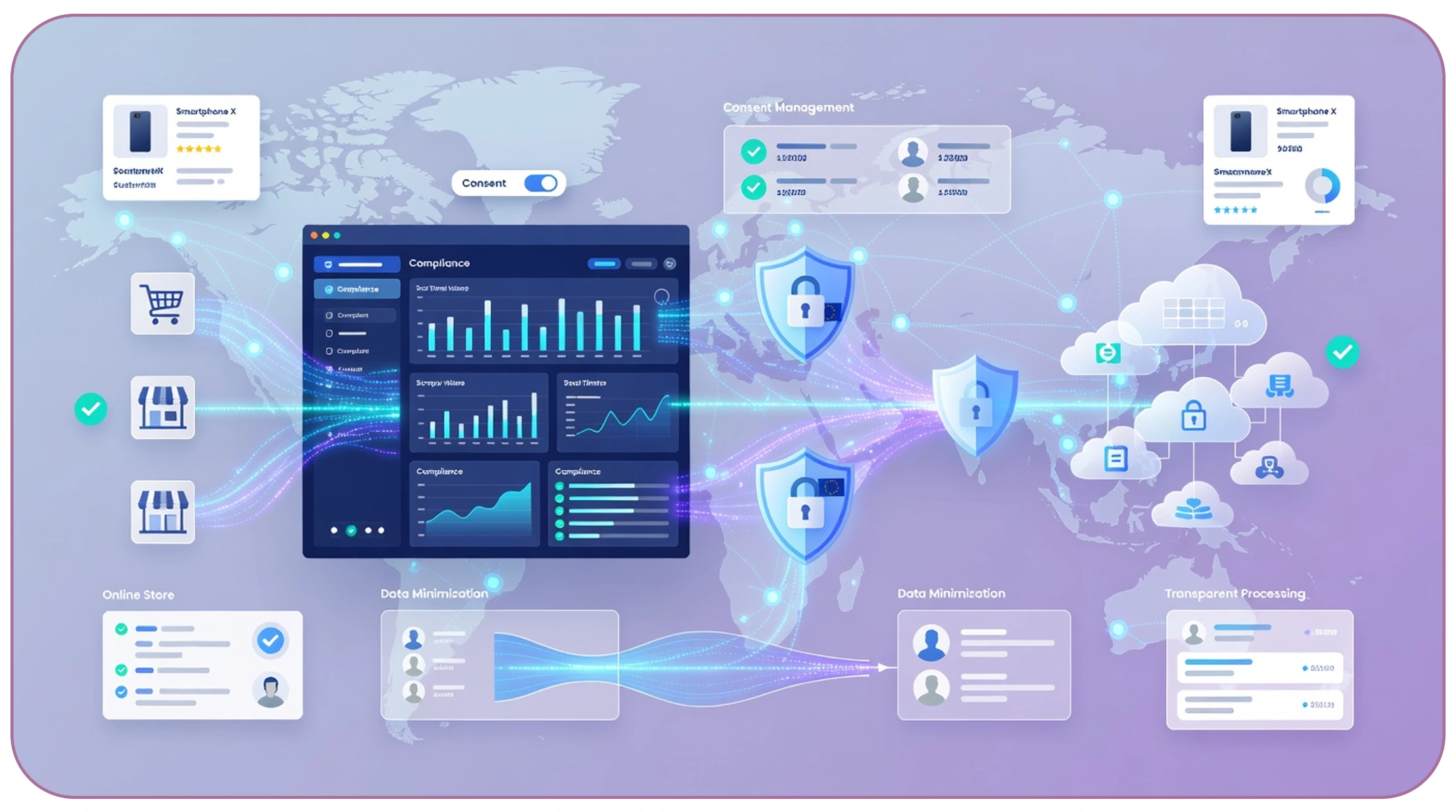
Privacy regulations have significantly changed how businesses approach ecommerce data collection and digital analytics. Organizations must ensure that their data extraction systems align with international privacy standards and responsible data handling requirements.
Companies increasingly prioritize GDPR and privacy compliance in web scraping projects to avoid legal complications and maintain secure data governance processes. Compliance-focused scraping systems help businesses manage public data responsibly while respecting privacy protections.
Key Privacy Compliance Considerations
- Data minimization practices
- Transparent data processing workflows
- Secure data storage policies
- Consent-aware analytics systems
- Responsible handling of personal information
Privacy Compliance Growth Trends
| Year | Businesses Implementing Privacy Controls | Compliance Automation Growth | Data Governance Adoption |
|---|---|---|---|
| 2020 | 28% | 19% | 21% |
| 2021 | 37% | 27% | 29% |
| 2022 | 49% | 36% | 38% |
| 2023 | 61% | 45% | 47% |
| 2024 | 73% | 54% | 56% |
| 2025 | 84% | 63% | 65% |
| 2026 | 93% | 72% | 74% |
Privacy-focused automation frameworks help businesses reduce compliance risks while improving operational transparency.
How Ethical Extraction Improves Ecommerce Intelligence
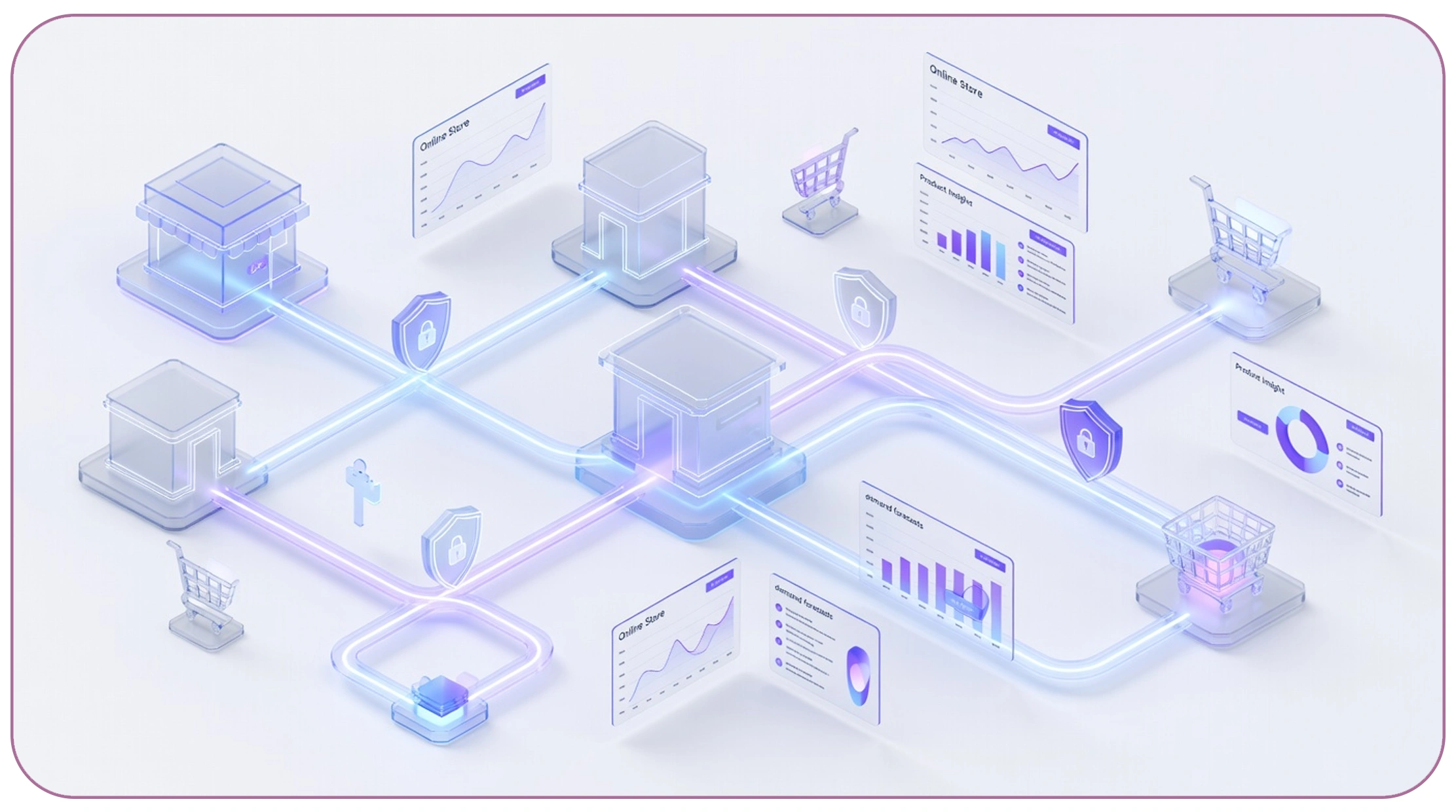
Ethical ecommerce intelligence strategies help businesses balance large-scale data collection with responsible automation practices. Organizations implementing structured compliance workflows can improve operational scalability without compromising legal or ethical standards.
Businesses increasingly follow best practices for ethical ecommerce data extraction to improve market intelligence operations while maintaining secure and compliant scraping infrastructures. Ethical automation frameworks reduce operational risks while improving data quality and analytics reliability.
Best Practices for Ethical Data Extraction
- Monitoring request frequency responsibly
- Using structured compliance policies
- Respecting robots.txt guidelines when applicable
- Avoiding disruptive scraping behavior
- Implementing secure storage systems
Ethical Automation Adoption Statistics
| Year | Businesses Using Ethical Automation Policies | Data Quality Improvement | Operational Stability |
|---|---|---|---|
| 2020 | 24% | 58% | 54% |
| 2021 | 33% | 65% | 61% |
| 2022 | 45% | 73% | 69% |
| 2023 | 58% | 80% | 77% |
| 2024 | 70% | 86% | 83% |
| 2025 | 82% | 92% | 89% |
| 2026 | 92% | 97% | 95% |
Ethical extraction frameworks improve ecommerce intelligence reliability while supporting long-term automation scalability.
Why Compliance Strategies Reduce Business Risks

Businesses operating large-scale scraping infrastructures face multiple operational and legal risks related to data governance, intellectual property concerns, and regulatory compliance. Without proper compliance strategies, companies may experience disruptions or reputational challenges.
Organizations increasingly focus on legal risks and compliance strategies for web scraping businesses to create secure automation frameworks that minimize exposure to regulatory complications. Structured compliance systems improve accountability while supporting responsible ecommerce intelligence collection.
Common Compliance Risk Areas
- Privacy regulation violations
- Excessive website request activity
- Inadequate governance documentation
- Unstructured data handling workflows
- Poor access management policies
Compliance Strategy Growth Trends
| Year | Businesses Using Compliance Frameworks | Operational Risk Reduction | Governance Efficiency |
|---|---|---|---|
| 2020 | 22% | 17% | 15% |
| 2021 | 31% | 25% | 23% |
| 2022 | 43% | 34% | 31% |
| 2023 | 56% | 43% | 40% |
| 2024 | 68% | 52% | 49% |
| 2025 | 80% | 61% | 58% |
| 2026 | 91% | 70% | 67% |
Compliance-focused scraping strategies help businesses improve governance while reducing operational and legal risks.
How Professional Scraping Solutions Improve Governance
Modern businesses increasingly rely on managed automation platforms that provide scalable infrastructure, governance controls, and secure data collection workflows. Professional automation systems simplify compliance management while improving operational reliability.
Organizations adopting enterprise-grade Web Scraping Services can automate ecommerce intelligence collection while maintaining structured governance and security standards. Managed scraping services help businesses scale analytics operations efficiently without compromising ethical practices.
Benefits of Managed Scraping Services
- Enterprise-grade compliance controls
- Secure data extraction infrastructure
- Scalable analytics workflows
- Centralized governance systems
- Automated monitoring and reporting
Managed Automation Adoption Statistics
| Year | Businesses Using Managed Scraping Services | Governance Improvement | Automation Scalability |
|---|---|---|---|
| 2020 | 23% | 18% | 15% |
| 2021 | 32% | 26% | 23% |
| 2022 | 44% | 35% | 31% |
| 2023 | 57% | 44% | 40% |
| 2024 | 69% | 53% | 49% |
| 2025 | 81% | 62% | 58% |
| 2026 | 91% | 71% | 67% |
Managed scraping solutions improve compliance consistency while supporting enterprise-scale ecommerce analytics operations.
Why Enterprise Crawling Requires Structured Governance

Large-scale enterprise crawling systems process millions of webpages and ecommerce records continuously. Businesses require structured governance frameworks to ensure responsible and compliant automation practices at scale.
Organizations increasingly implement Enterprise Web Crawling strategies supported by centralized compliance management, monitoring systems, and data governance policies. Enterprise-grade crawling frameworks improve operational efficiency while supporting responsible data collection standards.
Key Features of Enterprise Crawling Systems
- Scalable infrastructure management
- Governance-focused automation workflows
- Real-time monitoring systems
- Structured audit reporting
- Secure dataset management
Enterprise Crawling Growth Trends
| Year | Businesses Using Enterprise Crawling | Operational Efficiency | Compliance Visibility |
|---|---|---|---|
| 2020 | 21% | 56% | 52% |
| 2021 | 30% | 63% | 59% |
| 2022 | 42% | 71% | 67% |
| 2023 | 55% | 78% | 75% |
| 2024 | 67% | 84% | 82% |
| 2025 | 80% | 90% | 88% |
| 2026 | 91% | 96% | 94% |
Enterprise governance frameworks help businesses scale ecommerce intelligence operations responsibly and securely.
Why Choose Real Data API?
Real Data API provides enterprise-grade automation solutions designed for scalable, secure, and governance-focused ecommerce intelligence collection. Businesses seeking structured Web Scraping Datasets can automate data extraction workflows while maintaining responsible and compliant scraping operations.
Organizations implementing ethical web scraping legal considerations for businesses can leverage Real Data API to improve data governance, privacy compliance, operational scalability, and ecommerce intelligence accuracy.
Key Features of Real Data API
- Secure ecommerce data extraction
- Enterprise-grade automation infrastructure
- Structured compliance workflows
- Real-time monitoring systems
- Scalable dataset generation
- Governance-focused analytics support
- Responsible crawling frameworks
Real Data API helps businesses transform public ecommerce information into actionable insights while supporting ethical and compliant data collection practices.
Conclusion
The growing importance of ecommerce intelligence has made responsible automation and compliance-focused scraping strategies essential for modern businesses. Organizations implementing ethical web scraping legal considerations for businesses can improve operational transparency, reduce compliance risks, and build scalable data intelligence systems responsibly.
Ethical automation frameworks help businesses maintain secure data governance while improving analytics accuracy, competitor monitoring, and market intelligence workflows. Real Data API provides enterprise-grade scraping infrastructure that supports safe, scalable, and compliance-focused ecommerce data collection for long-term business growth.
Contact Real Data API today to build secure and compliant ecommerce intelligence systems powered by ethical web scraping and scalable enterprise automation solutions!
Latest posts
Web Scraping Competitor Product Monitoring Using Marketplace Data for Real-Time E-commerce Insights and Business Growth?
How to Scrape Product Intelligence Platform Using Marketplace Data to Help Brands Optimize Pricing, Inventory, and Product Strategy?
Why Companies scrape business data from Google Maps using keywords to Build Accurate Business Lists and Competitive Insights?
How Review scraping and monitoring services Help Businesses Track Customer Sentiment and Protect Brand Reputation in 2026?

How Real Estate Investment Insights Using RERA Data Scraping Help Investors Minimize Risk and Maximize Returns

Real Data API stands out as one of the premier global companies specializing in web data Scraping and web extraction.





.png)


Rating 4.7
Rating 4.7
Rating 4.5
Rating 4.7
Rating 4.7


Disclaimer : RealData API functions solely as an independent data infrastructure and technology solutions provider. We build customized automation workflows designed to collect publicly accessible web data based exclusively on client instructions. RealData API neither owns proprietary datasets nor engages in the sale or redistribution of extracted information. Our operations are limited strictly to lawful public web data processing and never involve unauthorized access to restricted systems or private networks. Any company names, trademarks, logos, or brand references displayed on this website are used purely for demonstrative and illustrative purposes to showcase our technical capabilities and do not imply endorsement, partnership, or affiliation. Use of our platform and services remains subject to our Terms of Service.