Introduction
India’s quick commerce ecosystem has evolved rapidly since 2020, reshaping how consumers buy groceries and how brands compete on pricing. Platforms like Blinkit, Zepto, and Swiggy Instamart operate on dynamic pricing models influenced by hyperlocal demand, inventory levels, promotions, and delivery speed. For brands, retailers, and analysts, this creates a complex pricing landscape that is nearly impossible to track manually.
To stay competitive, businesses must Extract SKU-wise grocery price differences on quick commerce apps with precision and consistency. SKU-level data reveals not only price fluctuations but also discount depth, pack-size variations, and regional differences. Without this visibility, brands risk margin erosion, ineffective promotions, and loss of market share.
Real-time pricing intelligence powered by APIs has become essential for FMCG brands, pricing teams, and data-driven retailers. This blog explores how structured data extraction solves pricing disparities, supported by trend analysis from 2020 to 2026, and why Real Data API is the right partner for quick commerce price intelligence.
The Rise of Hyperlocal Pricing Intelligence
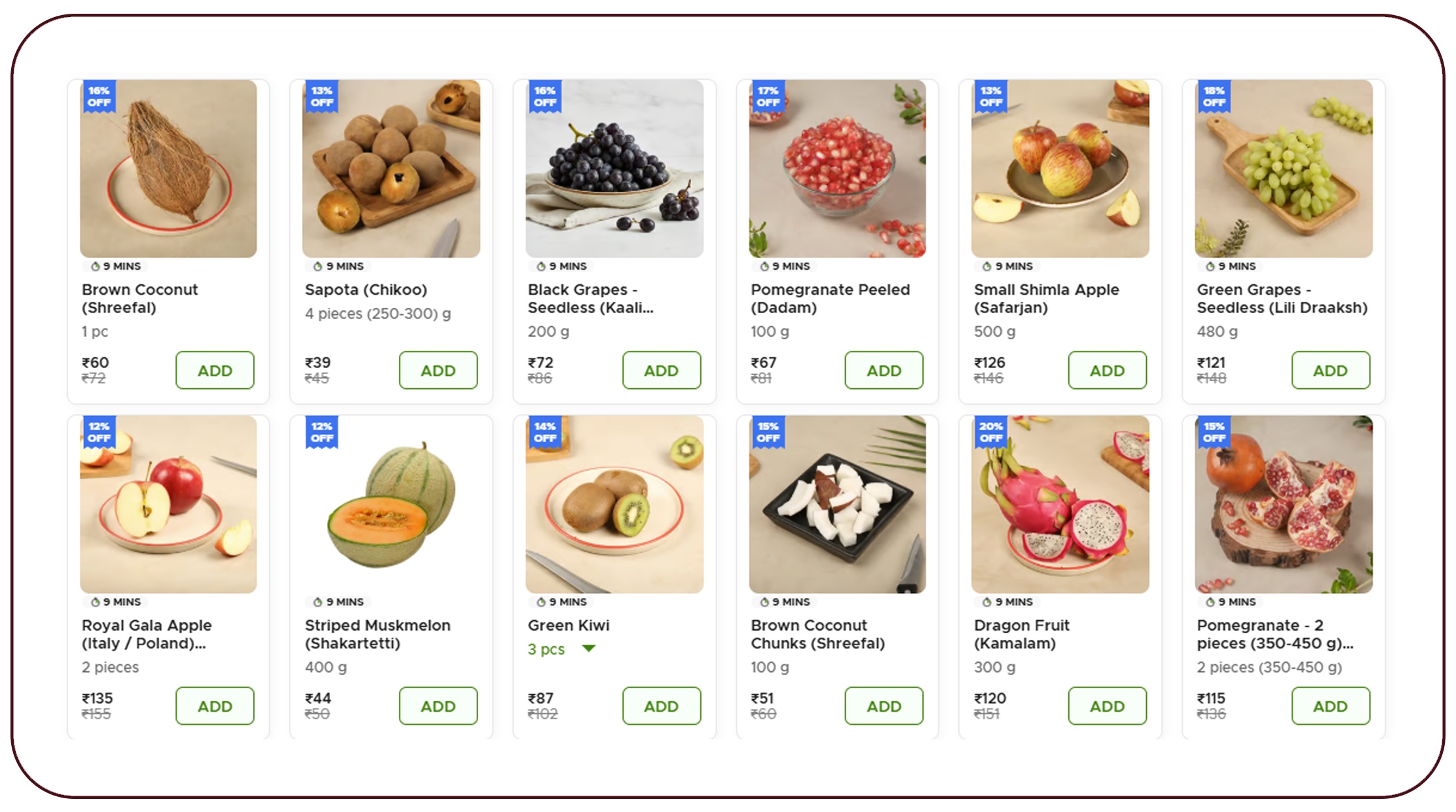
Between 2020 and 2026, India’s quick commerce market grew from an experimental convenience model to a $10+ billion industry. Prices for identical SKUs often vary across platforms due to differing warehouse networks, demand patterns, and promotional strategies.
Using scrape quick commerce prices blinkit zepto swiggy instamart enables organizations to monitor these shifts at scale rather than relying on sporadic manual checks.
| Year | Active Users (M) | Avg SKU Price Variance |
|---|---|---|
| 2020 | 8 | 4–6% |
| 2022 | 25 | 8–10% |
| 2024 | 45 | 12–15% |
| 2026* | 65 | 18–22% |
(*Projected)
These variations directly affect brand perception and conversion rates. Automated price extraction ensures accurate, continuous monitoring across geographies.
Understanding Cross-Platform Price Dynamics
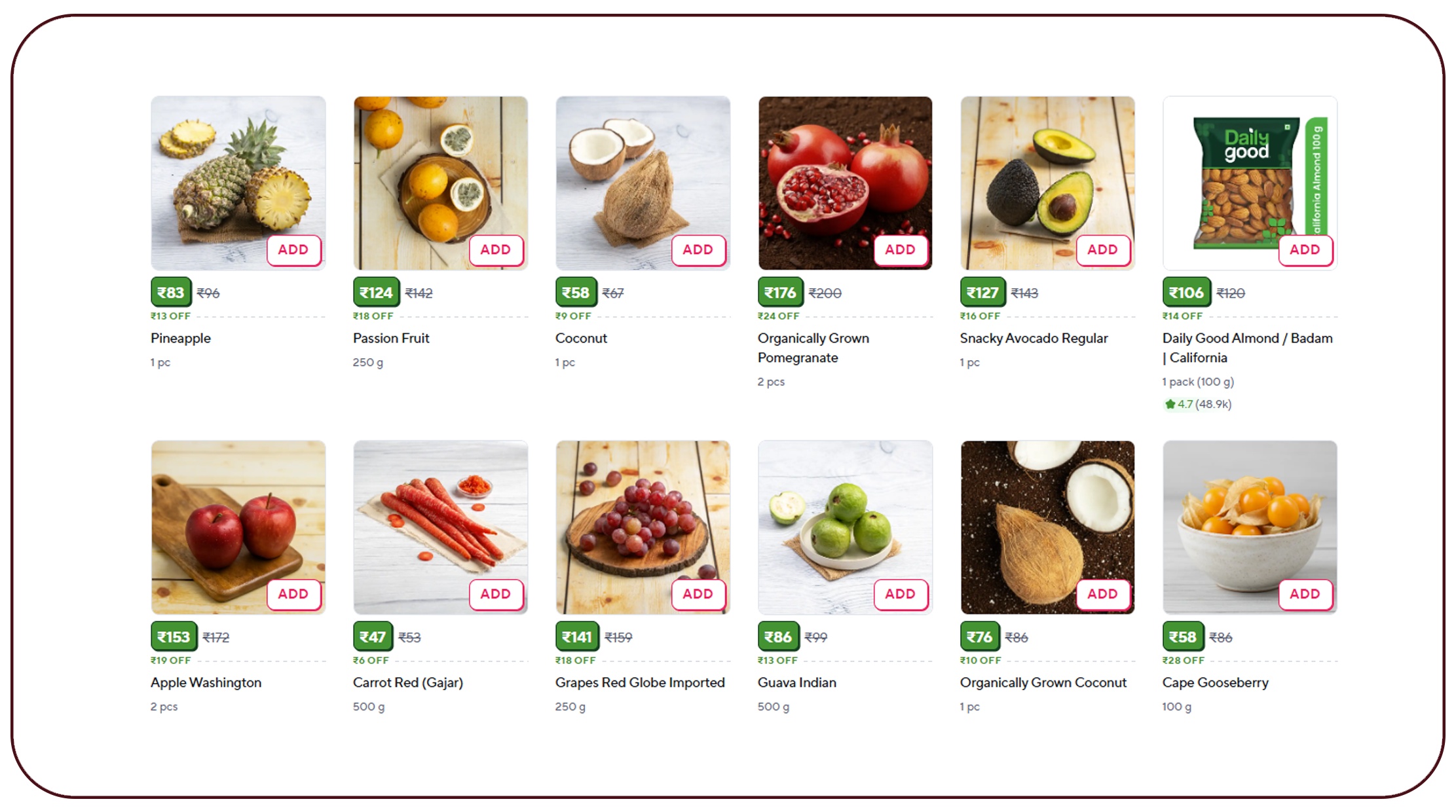
Quick commerce platforms rarely follow uniform pricing logic. Each app optimizes for speed, availability, and customer retention, resulting in inconsistent prices for identical products.
Implementing Price comparison across Blinkit Zepto Instamart allows businesses to understand which platform discounts aggressively, which maintains premium pricing, and how often prices change during peak hours.
| SKU Category | Blinkit | Zepto | Instamart |
|---|---|---|---|
| Staples | 102 | 98 | 105 |
| Snacks | 55 | 52 | 58 |
| Beverages | 78 | 74 | 80 |
These insights empower pricing teams to adjust channel-specific strategies instead of using blanket pricing policies.
Why SKU-Level Visibility Matters
Aggregated category-level pricing hides critical insights. Only granular SKU tracking shows how pack sizes, brand variants, and private labels compete in real time.
With Grocery SKU price comparison, businesses can detect when a specific SKU is consistently underpriced on one platform, leading to revenue leakage or channel conflict.
| Year | SKUs Tracked | Avg Daily Price Changes |
|---|---|---|
| 2020 | 5K | 1.2 |
| 2022 | 20K | 2.5 |
| 2024 | 50K | 4.1 |
| 2026* | 90K | 6.3 |
This level of visibility supports smarter promotion planning, improved distributor negotiations, and faster response to competitor moves.
Competitive Benchmarking Across Market Leaders
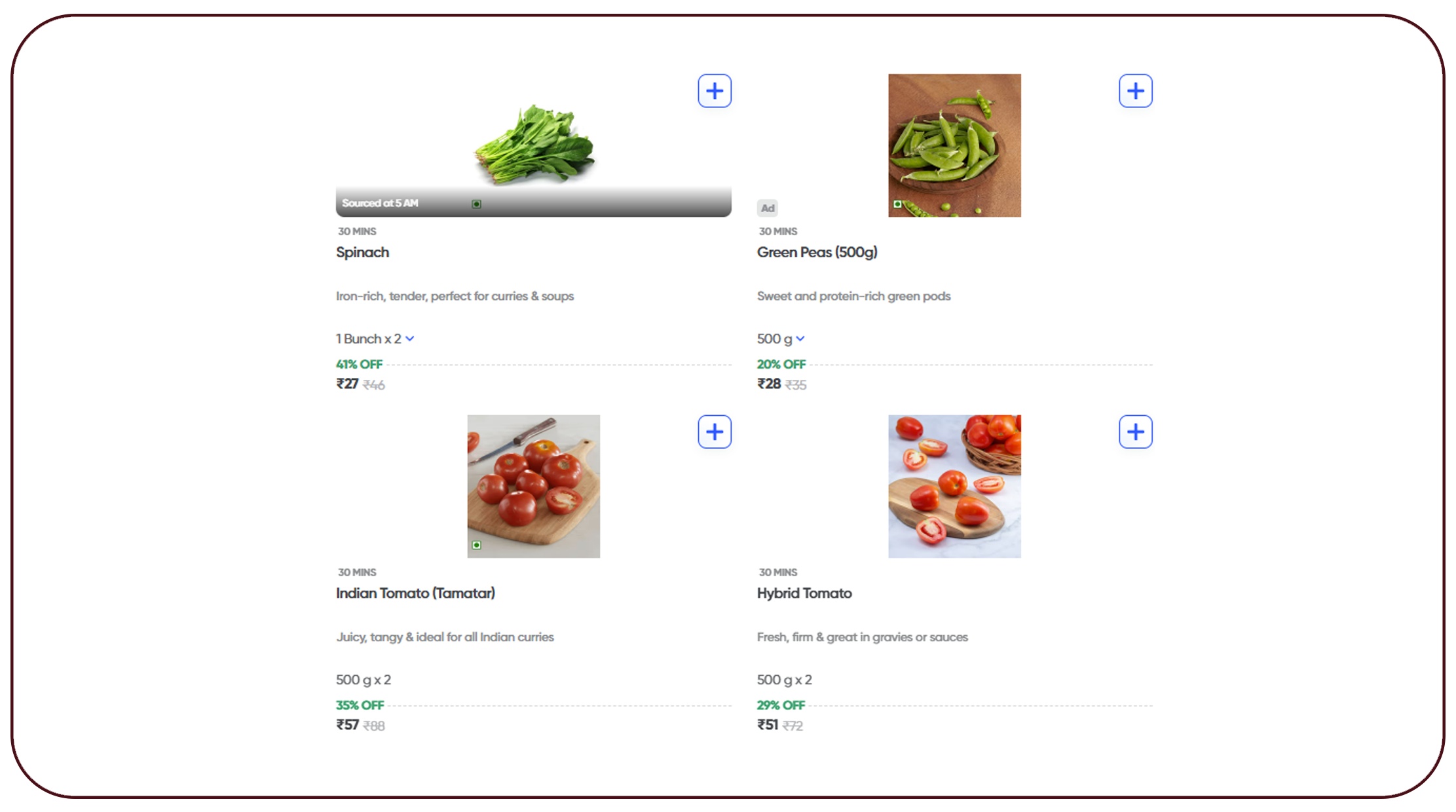
Direct benchmarking between platforms reveals structural pricing differences driven by operational models and customer acquisition strategies.
Analyzing Blinkit vs Zepto vs Instamart prices highlights which platform prioritizes growth through discounts versus margin optimization.
| Platform | Discounted Days / Month |
|---|---|
| Blinkit | 18 |
| Zepto | 22 |
| Instamart | 14 |
Such benchmarks help brands allocate inventory and ad spend more effectively across channels.
API-Driven Intelligence for Blinkit Data
Blinkit’s pricing changes frequently due to demand surges and dark store availability. Manual tracking simply cannot keep up.
The Blinkit Quick Commerce Scraping API enables automated extraction of SKU prices, stock status, and promotional tags at scale, ensuring reliable and structured datasets.
| Feature | Impact |
|---|---|
| Real-time updates | Faster decisions |
| Structured SKU mapping | Accurate analysis |
| Scalable requests | Enterprise-ready |
API-driven extraction eliminates inconsistencies and ensures clean, decision-ready data.
Building Reliable Datasets for Zepto Analysis
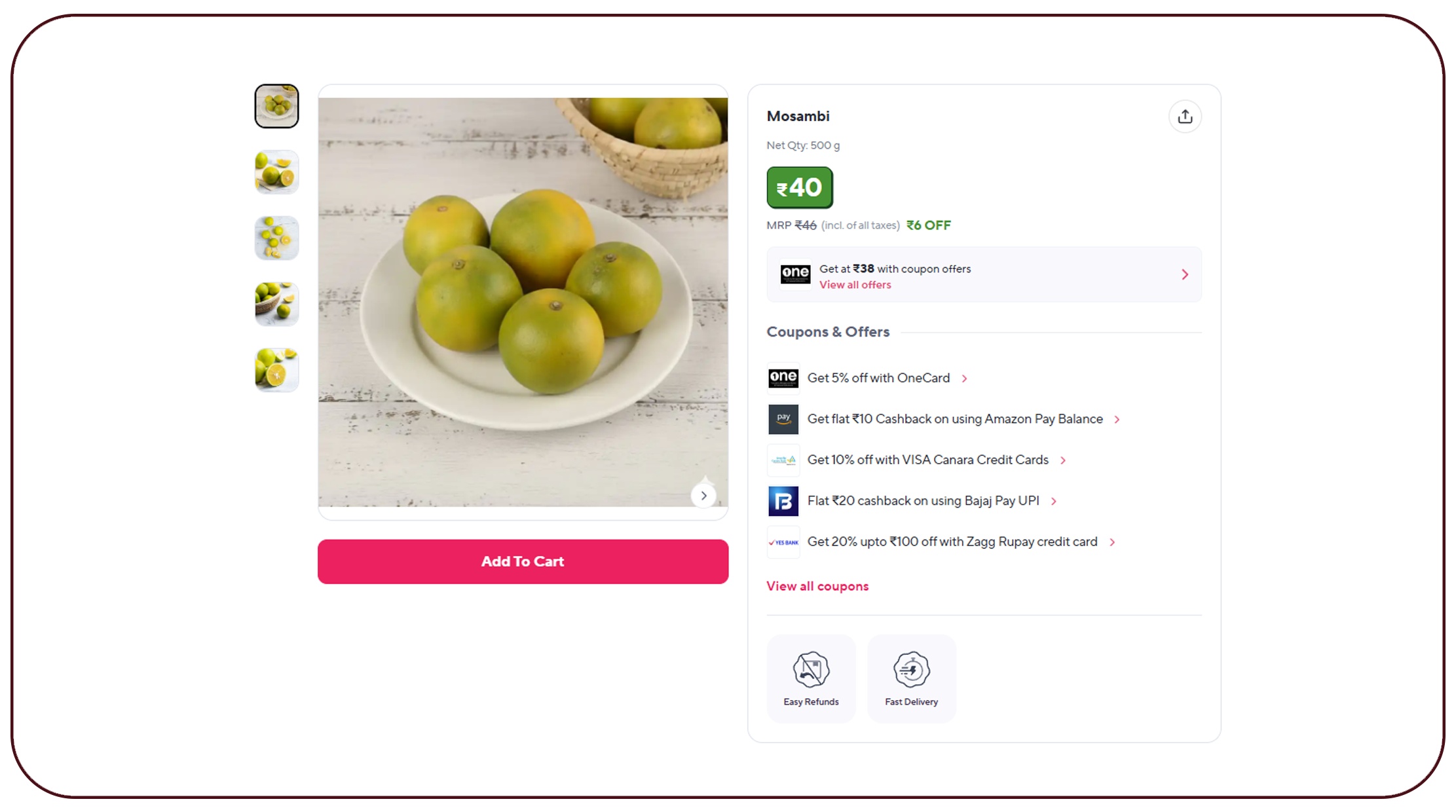
Zepto’s rapid expansion and aggressive discounting require precise historical tracking to identify long-term pricing patterns.
By leveraging Web Scraping Zepto Dataset, businesses can build longitudinal datasets spanning multiple years, enabling predictive analysis and pricing forecasts.
| Year | Data Points Collected |
|---|---|
| 2020 | 1M |
| 2022 | 6M |
| 2024 | 15M |
| 2026* | 30M |
Such datasets support advanced analytics, including demand forecasting and elasticity modeling.
Why Choose Real Data API?
Real Data API is built specifically for large-scale, high-frequency quick commerce data extraction. Whether you need structured datasets or real-time monitoring, our solutions deliver accuracy and reliability.
With our Instamart Product Data Scraper, brands gain deep visibility into Swiggy Instamart’s SKU pricing and availability. Combined with our ability to Extract SKU-wise grocery price differences on quick commerce apps, Real Data API empowers smarter pricing decisions, competitive benchmarking, and faster go-to-market strategies.
Our infrastructure is scalable, compliant, and designed for enterprise analytics teams.
Conclusion
Quick commerce pricing will only become more dynamic as competition intensifies. Brands that rely on assumptions or manual tracking will fall behind. Data-driven teams that invest in automation gain a decisive advantage.
By enabling accurate Price Comparison and helping businesses Extract SKU-wise grocery price differences on quick commerce apps, Real Data API transforms raw pricing data into actionable intelligence.
Get started with Real Data API today and turn quick commerce price disparities into strategic opportunities!
Latest posts
How ecommerce scraping API for real-time product data Helps Businesses Track Prices, Inventory, and Competitor Changes
How Web Scraping APIs for Business Data Improve Pricing and Product Insights
How Extracting Bilibili API Data for Social Media Analytics Helps Brands Track Content, Engagement, and Audience Trends
How Prom.ua scraper Helps Businesses Collect Marketplace Data for Competitive Pricing and Product Intelligence






.png)