
Introduction
In the modern food industry, data plays a critical role in helping businesses stay competitive and responsive to changing consumer behavior. Restaurants, food delivery platforms, and market researchers rely heavily on digital insights to understand pricing strategies, menu trends, and customer preferences. One effective way to gain these insights is to scrape restaurant menus and ratings in Denver from popular food platforms and restaurant directories.
By collecting structured data from restaurant listings, businesses can analyze menu items, pricing variations, cuisine popularity, customer reviews, and rating patterns. This information helps organizations identify market gaps, track competitors, and adapt to evolving dining trends. With Denver’s restaurant market expanding rapidly due to increasing tourism and food delivery demand, real-time restaurant data has become even more valuable.
Solutions like the Food Data Scraping API enable businesses to gather large volumes of restaurant data efficiently and convert it into actionable insights. From identifying trending dishes to understanding consumer sentiment, automated data collection empowers restaurants, delivery apps, and analytics companies to make smarter decisions based on reliable market intelligence.
Tracking Competitive Delivery Trends
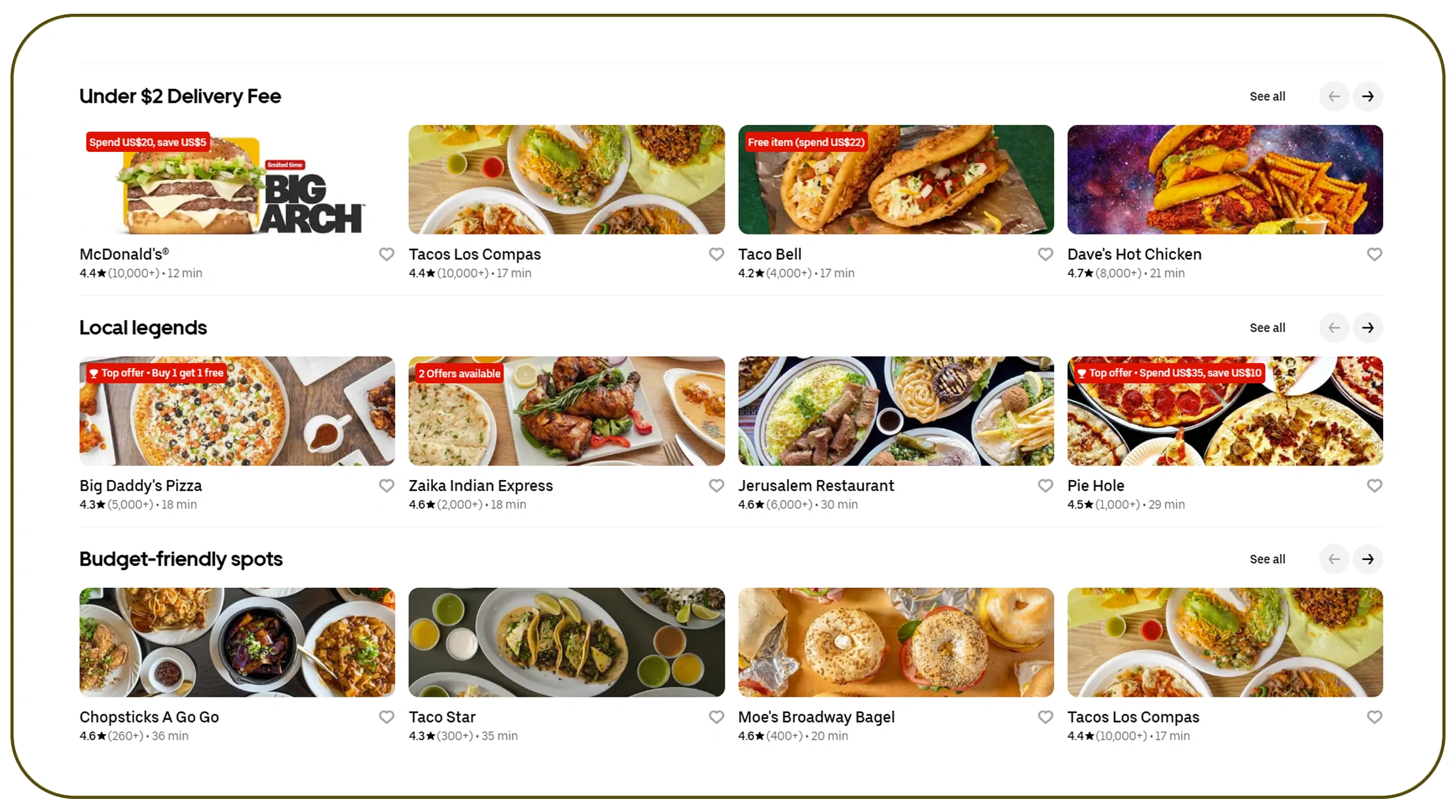
The food delivery market has experienced significant growth over the past few years, especially in metropolitan cities like Denver. Businesses analyzing delivery platforms often rely on tools like the Denver restaurant delivery data scraper to monitor menu availability, delivery charges, customer ratings, and cuisine popularity.
Food delivery orders in the United States have steadily increased since 2020. According to industry research, online food delivery revenue grew by nearly 9% annually between 2020 and 2024, with cities like Denver showing strong adoption due to busy urban lifestyles and tech-savvy consumers.
Restaurants that track delivery data can identify which dishes perform best, determine competitive pricing strategies, and optimize delivery offerings.
Online Food Delivery Growth in Denver (2020–2026)
| Year | Estimated Delivery Orders (Millions) | Growth Rate |
|---|---|---|
| 2020 | 28 | — |
| 2021 | 32 | 14% |
| 2022 | 36 | 12% |
| 2023 | 40 | 11% |
| 2024 | 45 | 12% |
| 2025 | 49 | 9% |
| 2026 | 54 | 10% |
Key insights businesses gain from delivery data:
- Identify high-demand cuisines in specific neighborhoods
- Monitor competitor delivery pricing strategies
- Analyze customer rating patterns
- Track seasonal menu changes
By analyzing this data, businesses can refine delivery strategies and remain competitive in a rapidly evolving digital food marketplace.
Understanding Local Restaurant Landscape
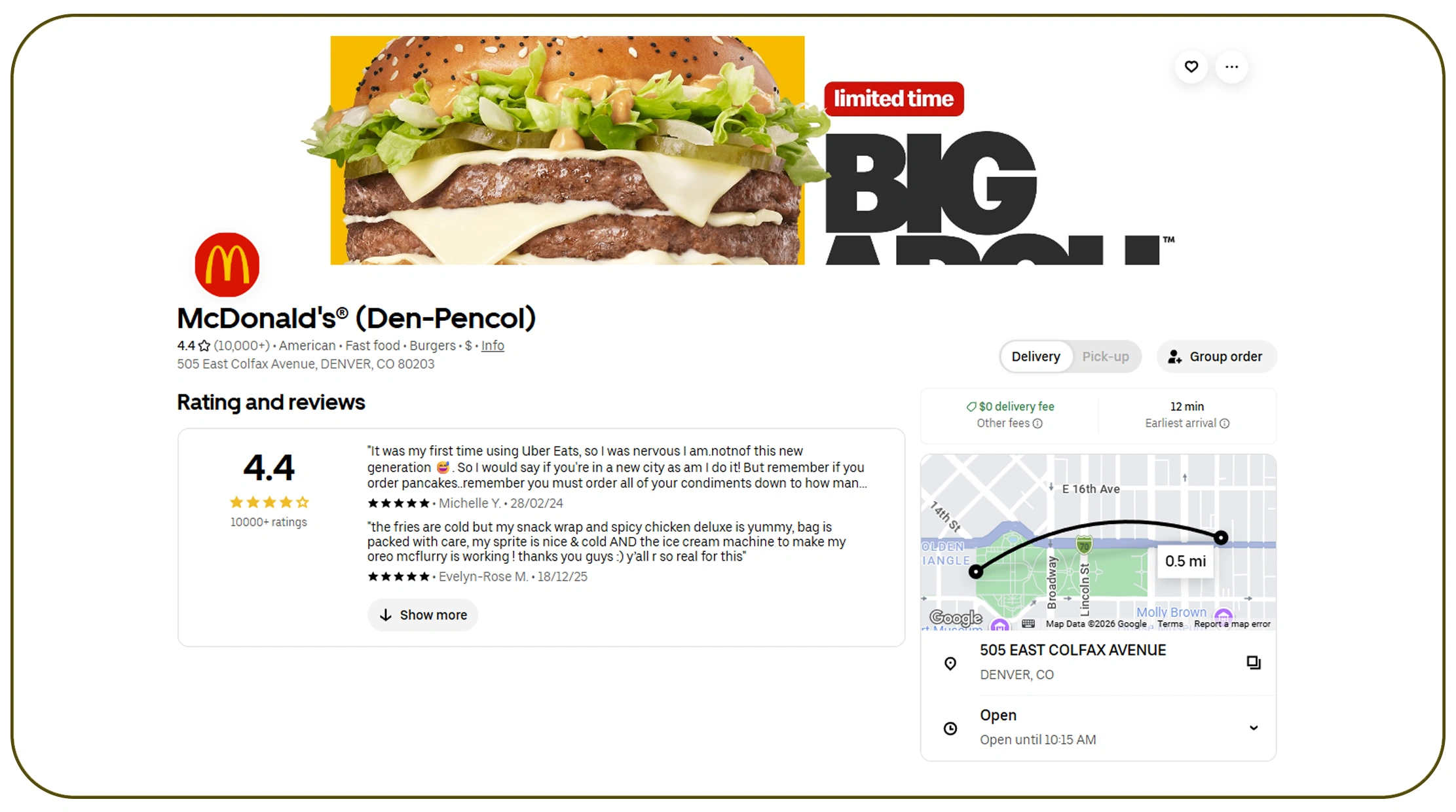
A strong understanding of the restaurant ecosystem is essential for businesses planning expansion or market entry. Using tools such as Denver restaurant listing data extraction, companies can collect information about restaurant locations, cuisine types, ratings, operating hours, and service options.
Denver’s restaurant industry has seen consistent growth due to population increases and a thriving tourism sector. From casual eateries to high-end dining establishments, the city offers a diverse culinary scene that businesses can analyze through structured data collection.
Restaurant Industry Growth in Denver
| Year | Total Restaurants | Average Rating |
|---|---|---|
| 2020 | 6,200 | 4.1 |
| 2021 | 6,450 | 4.2 |
| 2022 | 6,800 | 4.2 |
| 2023 | 7,050 | 4.3 |
| 2024 | 7,350 | 4.3 |
| 2025 | 7,700 | 4.4 |
| 2026 | 8,050 | 4.4 |
Businesses benefit from listing data in several ways:
- Mapping restaurant density across neighborhoods
- Discovering emerging cuisine trends
- Identifying underserved areas for expansion
- Benchmarking competitor ratings and services
Access to structured restaurant listing data allows companies to make data-driven expansion and marketing decisions.
Analyzing Menu Pricing and Customer Reviews
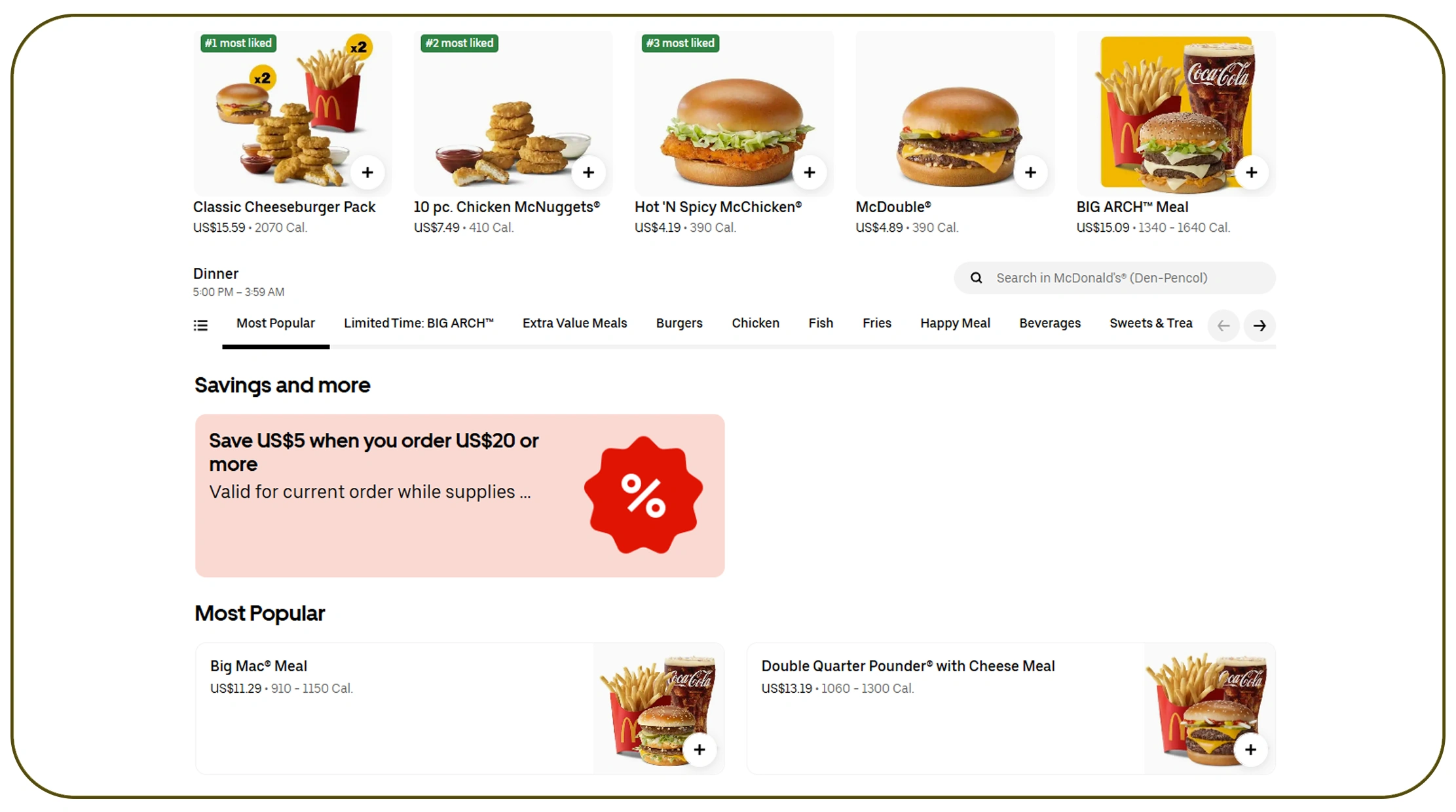
Menu pricing and customer feedback provide valuable insight into how restaurants position themselves in the market. Through Denver restaurant data extraction, businesses can analyze menu items, ingredient trends, pricing strategies, and review sentiments.
Restaurant data collected from online platforms can reveal which dishes receive the highest ratings, which cuisines generate the most engagement, and how pricing varies across different neighborhoods.
Average Menu Price Trends in Denver
| Year | Avg Meal Price ($) | Customer Rating Avg |
|---|---|---|
| 2020 | 14.20 | 4.1 |
| 2021 | 14.80 | 4.2 |
| 2022 | 15.60 | 4.2 |
| 2023 | 16.40 | 4.3 |
| 2024 | 17.10 | 4.3 |
| 2025 | 17.80 | 4.4 |
| 2026 | 18.60 | 4.4 |
Key insights from menu and review analysis include:
- Identifying top-rated dishes
- Tracking price increases or promotional discounts
- Monitoring customer feedback trends
- Understanding dietary preferences such as vegan or gluten-free options
These insights help restaurants and food platforms optimize menus and pricing strategies.
Identifying Changing Dining Preferences

Customer dining behavior changes frequently due to lifestyle trends, health preferences, and cultural influences. Data-driven insights such as Denver Colorado restaurant popularity insights help businesses understand which cuisines and restaurant categories are gaining traction.
Over the past few years, plant-based meals, fusion cuisines, and locally sourced ingredients have become increasingly popular in Denver’s food scene.
Popular Cuisine Trends in Denver
| Cuisine | Popularity 2020 | Popularity 2026 |
|---|---|---|
| American | 35% | 30% |
| Mexican | 18% | 20% |
| Asian | 15% | 18% |
| Vegan / Plant-Based | 5% | 12% |
| Mediterranean | 7% | 10% |
| Others | 20% | 10% |
Restaurants that monitor cuisine trends can:
- Introduce trending dishes earlier than competitors
- Adjust menu offerings to match demand
- Improve marketing strategies targeting food preferences
- Develop niche cuisine concepts
Understanding popularity trends helps businesses stay aligned with evolving consumer tastes.
Leveraging Structured Restaurant Data
Access to a reliable Food Dataset enables businesses to analyze large volumes of restaurant information in an organized format. Instead of manually collecting data from multiple platforms, companies can work with structured datasets that include menus, reviews, ratings, locations, and cuisine categories.
Structured restaurant datasets support several analytical applications, including demand forecasting, pricing optimization, and competitor benchmarking.
Restaurant Data Volume Growth
| Year | Dataset Records (Millions) |
|---|---|
| 2020 | 4.5 |
| 2021 | 5.2 |
| 2022 | 6.1 |
| 2023 | 7.3 |
| 2024 | 8.6 |
| 2025 | 9.9 |
| 2026 | 11.4 |
Benefits of structured restaurant datasets:
- Faster market analysis
- Better competitor monitoring
- Accurate pricing comparisons
- Efficient integration into analytics tools
Businesses that utilize well-organized datasets gain a significant advantage in identifying market opportunities and improving strategic planning.
Automating Large-Scale Data Collection
Collecting restaurant data manually can be time-consuming and inefficient. Automation tools such as a Web Scraping API allow businesses to gather restaurant information at scale while maintaining accuracy and speed.
With automated scraping solutions, organizations can collect thousands of restaurant records within minutes, enabling real-time analysis of menus, ratings, and pricing.
Advantages of Automated Data Collection
| Feature | Benefit |
|---|---|
| Real-Time Data | Access updated restaurant information instantly |
| Scalability | Collect data from thousands of listings |
| Accuracy | Reduce manual errors |
| Integration | Connect with analytics tools and dashboards |
Automation enables companies to maintain up-to-date restaurant intelligence and respond quickly to market changes. As the restaurant industry continues to digitize, automated data collection will play an increasingly important role in business decision-making.
Why Choose Real Data API?
Businesses seeking reliable restaurant insights need scalable and accurate data collection solutions. Platforms like Real Data API provide advanced capabilities for restaurant data aggregation, enabling organizations to perform deeper Market Research and scrape restaurant menus and ratings in Denver efficiently.
Real Data API offers several advantages:
- Scalable data collection infrastructure
- Accurate and structured restaurant datasets
- Real-time updates from multiple platforms
- Integration with analytics and business intelligence tools
- Customizable data extraction based on business needs
These capabilities help restaurants, delivery services, market analysts, and startups access comprehensive restaurant insights without complex technical implementation.
Conclusion
Data-driven strategies are becoming essential for restaurants and food industry businesses that want to stay competitive. By leveraging automated solutions to scrape restaurant menus and ratings in Denver, companies can analyze menu trends, monitor competitor pricing, track customer sentiment, and identify emerging food preferences.
With access to structured restaurant datasets and scalable scraping technologies, businesses can transform raw restaurant data into valuable market intelligence. Whether launching a new restaurant concept, optimizing delivery services, or performing competitive analysis, reliable data plays a crucial role in making informed decisions.
Get started with Real Data API today and unlock powerful restaurant insights to drive smarter business strategies!
Latest posts
How Gemini Scraper For Real-Time Data Extraction Enables Faster Market Intelligence, Monitoring, and Competitive Analysis
How Web Scraping Makemytrip Travel Data For Market Research Helps Identify Growth Opportunities?
How to Solve Data Freshness Challenges With Claude Web Scraping for Real-Time Information?
How to Scrape Dynamic Website Data Using a Scraping Browser API Without Browser Automation Complexity?






.png)