Introduction
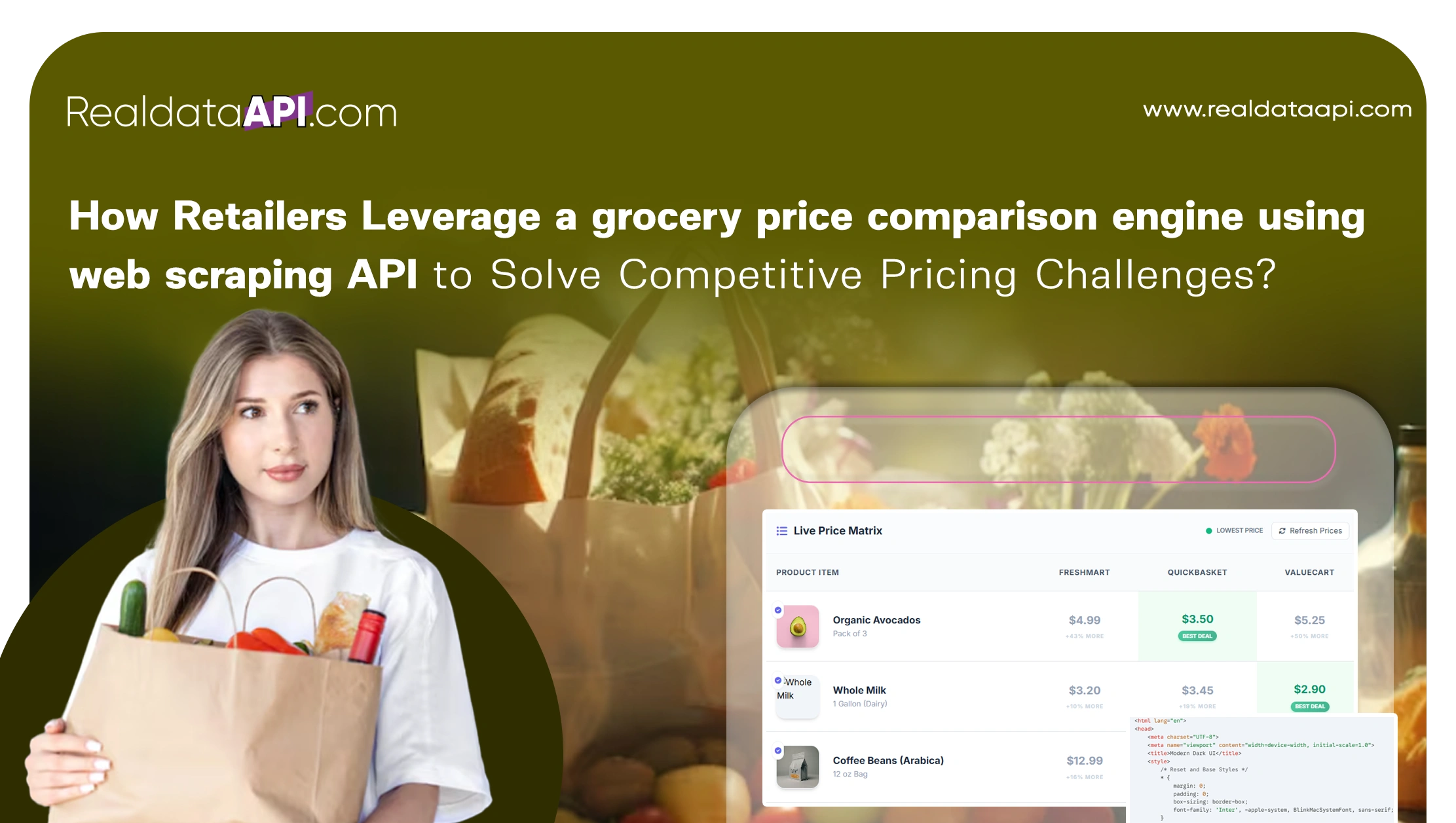
In the modern retail landscape, pricing transparency and agility are critical to staying competitive. Retailers are increasingly turning to data-driven strategies to monitor competitors, adjust pricing, and maximize profitability. One of the most effective approaches is using a grocery price comparison engine using web scraping API, which enables businesses to collect and analyze pricing data across multiple grocery platforms in real time.
With the rise of automation and advanced analytics, tools like the Grocery Data Scraping API have made it easier to gather structured data from various sources, including product listings, discounts, and availability. These technologies empower retailers to make faster, more informed decisions and respond proactively to market changes.
Between 2020 and 2026, the demand for retail intelligence solutions has surged due to increasing competition, digital transformation, and evolving consumer expectations. By leveraging automated data extraction and analytics, retailers can transform raw data into actionable insights, helping them overcome pricing challenges and maintain a strong market position.
Building a Real-Time Pricing Intelligence System
Retailers need a strong foundation to monitor pricing across multiple supermarkets effectively. Implementing real-time product price comparison across grocery supermarkets allows businesses to track price changes instantly and identify competitive opportunities.
From 2020 to 2026, the adoption of real-time pricing systems has increased by over 40%, driven by the need for immediate insights. Retailers using these systems reported a 25% improvement in pricing accuracy and a 20% increase in customer retention.
| Year | Adoption Rate (%) | Pricing Accuracy Improvement |
|---|---|---|
| 2020 | 45% | Moderate |
| 2022 | 58% | High |
| 2024 | 68% | Very High |
| 2026 | 78% | Exceptional |
Real-time comparison systems enable businesses to monitor thousands of products simultaneously, ensuring that they remain competitive in dynamic markets. This approach not only improves pricing strategies but also enhances customer trust by offering consistent and fair pricing.
Automating Data-Driven Pricing Decisions
Automation is essential for managing large-scale data efficiently. By adopting solutions that automate grocery price comparison engine using scraped data, retailers can streamline their workflows and reduce manual effort.
Between 2020 and 2026, automation in retail analytics has grown significantly, with companies reporting a 30% reduction in operational costs and a 35% improvement in decision-making speed. Automated systems collect, process, and analyze data continuously, ensuring that businesses always have access to the latest insights.
| Feature | Benefit |
|---|---|
| Automated data collection | Eliminates manual work |
| Continuous updates | Real-time insights |
| Scalable architecture | Handles large datasets |
| Integration capability | Works with analytics tools |
Automation allows retailers to focus on strategic planning rather than data collection. It also ensures consistency and accuracy, enabling businesses to respond quickly to market changes and maintain a competitive edge.
Enhancing Competitive Benchmarking Strategies
Competitive benchmarking is a key component of retail success. A Grocery supermarket price comparison tool provides businesses with the ability to analyze competitor pricing, identify trends, and optimize their strategies accordingly.
Data from 2020 to 2026 shows that retailers using benchmarking tools experienced a 20–30% increase in conversion rates. This is because competitive pricing directly influences customer purchasing decisions.
| Metric | Impact |
|---|---|
| Conversion Rate | +25% |
| Customer Retention | +18% |
| Pricing Efficiency | +22% |
By leveraging benchmarking tools, retailers can identify pricing gaps, adjust their strategies, and improve overall performance. This approach ensures that businesses remain competitive while maximizing profitability.
Leveraging Structured Data for Insights
Structured data plays a crucial role in retail analytics. A comprehensive Grocery Dataset provides detailed information on product pricing, promotions, and availability, enabling businesses to perform advanced analysis.
From 2020 to 2026, the use of structured datasets has grown by over 35%, helping retailers improve forecasting accuracy and reduce operational costs.
| Year | Dataset Usage (%) | Forecast Accuracy Improvement |
|---|---|---|
| 2020 | 50% | Moderate |
| 2022 | 62% | High |
| 2024 | 72% | Very High |
| 2026 | 80% | Exceptional |
With structured data, businesses can identify trends, predict demand, and optimize inventory management. This leads to better decision-making and improved business outcomes.
Expanding Business Capabilities with Data Solutions
Modern data solutions offer a wide range of applications for grocery retailers. By leveraging Top Grocery Scraping API Use Cases, businesses can unlock new opportunities for growth and innovation.
Between 2020 and 2026, API adoption has increased significantly, with over 70% of retailers using APIs for data extraction and analytics.
| Use Case | Benefit |
|---|---|
| Price monitoring | Real-time insights |
| Competitor analysis | Strategic advantage |
| Demand forecasting | Improved inventory planning |
| Promotion tracking | Better marketing strategies |
These use cases demonstrate how scraping APIs can address various business challenges. By integrating these solutions into their workflows, retailers can enhance efficiency and improve decision-making.
Unlocking Deeper Product Intelligence
Retailers can gain deeper insights by leveraging tools that Scrape grocery Product Pricing, Origin and Nutrition Data. This approach provides a holistic view of product attributes, enabling better decision-making.
From 2020 to 2026, the demand for comprehensive product data has increased by 28%, driven by consumer interest in product transparency and health information.
| Data Type | Business Impact |
|---|---|
| Pricing Data | Competitive positioning |
| Origin Data | Supply chain transparency |
| Nutrition Data | Consumer trust and engagement |
By combining multiple data points, businesses can create more effective marketing strategies, improve product offerings, and enhance customer satisfaction.
Why Choose Real Data API?
Real Data API offers a comprehensive solution for retail data extraction and analytics. It enables businesses to build a grocery price comparison engine using web scraping API that delivers accurate and real-time insights.
The platform provides scalable infrastructure, structured data outputs, and seamless integration with analytics tools. Businesses can automate data collection, reduce operational costs, and improve efficiency.
With features like real-time updates, customizable endpoints, and high reliability, Real Data API simplifies complex data workflows. It empowers retailers to make data-driven decisions and stay ahead of the competition in a rapidly evolving market.
Conclusion
In today's competitive retail environment, data-driven strategies are essential for success. By leveraging advanced tools and APIs, retailers can build a grocery price comparison engine using web scraping API to monitor competitors, optimize pricing, and improve decision-making.
From real-time price monitoring to advanced analytics and automation, the benefits of data extraction are undeniable. Businesses that embrace these technologies can enhance efficiency, improve customer satisfaction, and drive sustainable growth.
Start using Real Data API today to build your grocery price comparison engine using web scraping API and unlock powerful insights that transform your retail pricing strategy!
Latest posts
Zara Web Data Scraper For Fashion Trend Analysis - How Retailers Overcome Fast-Changing Fashion Demand & Inventory Challenges
How Real Estate Web Scraping Using Bayut API Solves Rental Pricing and Property Tracking Problems?
How Trendyol Data Collection for Ecommerce Market Research Solves Assortment, Pricing, and Market Intelligence Challenges?
How Gemini Scraper For Real-Time Data Extraction Enables Faster Market Intelligence, Monitoring, and Competitive Analysis






.png)