
Introduction
Businesses can improve assortment, pricing, and competitive intelligence by continuously collecting structured marketplace data and comparing product, seller, price, promotion, rating, and availability changes over time. Trendyol data collection for ecommerce market research gives brands, retailers, manufacturers, and research teams a framework for turning marketplace observations into actionable intelligence.
Trendyol is a major Turkish e-commerce marketplace, making its product ecosystem useful for research into categories, brands, sellers, pricing, promotions, and consumer feedback. For businesses competing in Turkey or analyzing regional e-commerce opportunities, marketplace-level data can reveal how competitors position products and respond to changing demand.
A Trendyol Product Scraper can be used as part of a structured data workflow to collect publicly available product information according to the business's research requirements. The resulting data can support competitor benchmarking, price monitoring, assortment analysis, product discovery, review analysis, and market trend research.
For Real Data API customers, the key objective is not simply collecting more product records. The goal is creating a consistent, historical data layer that can answer practical questions: Which products are entering a category? Which competitors are discounting? Which brands are expanding their assortment? Which products receive stronger customer engagement? Where are potential assortment gaps?
How Can Businesses Build Better Market Research From Product Data?
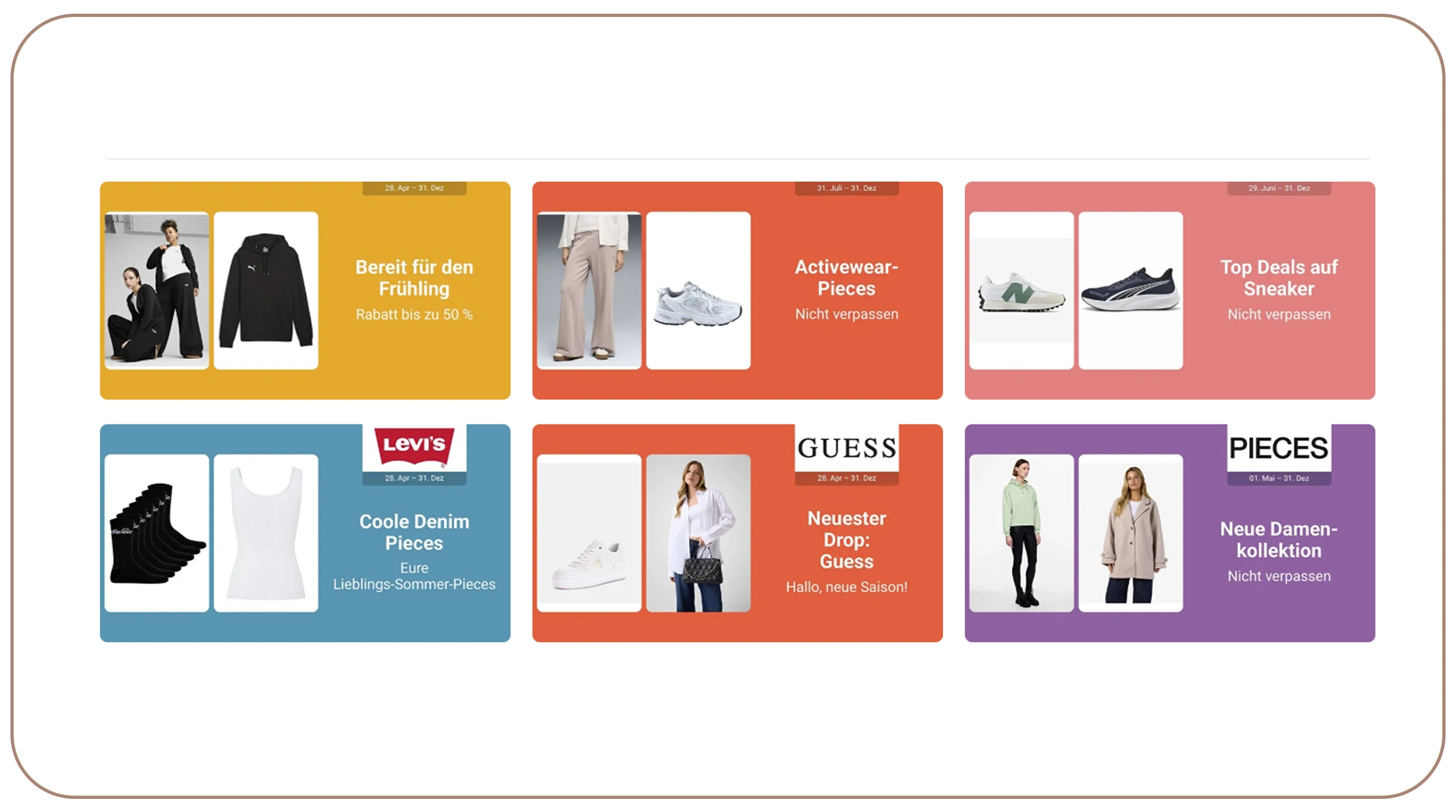
Businesses can extract Trendyol product data for market research to create a structured view of marketplace activity. Instead of manually checking individual product pages, research teams can collect product-level attributes and organize them into a centralized dataset.
Useful fields may include product name, category, brand, seller, price, discounted price, rating, review count, product URL, availability, badges, variants, and collection timestamp. These fields can then be used to compare products across categories and competitors.
For example, a consumer electronics brand could identify competing products within a specific price range. A fashion retailer could monitor new arrivals and discount patterns. A cosmetics company could examine which brands have expanded their assortment and which products attract higher review volumes.
Real Data API Market Research Framework
The following table shows an Real Data API index framework, not actual Trendyol market statistics.
| Year | Product Research Index | Assortment Monitoring Index | Competitive Analysis Index |
|---|---|---|---|
| 2020 | 100 | 100 | 100 |
| 2021 | 115 | 117 | 113 |
| 2022 | 132 | 136 | 129 |
| 2023 | 151 | 157 | 147 |
| 2024 | 173 | 181 | 167 |
| 2025 | 197 | 208 | 190 |
| 2026 | 224 | 236 | 216 |
The important insight is that marketplace research becomes more valuable when product information is captured repeatedly. A single dataset provides a snapshot, whereas historical records can identify change.
Research teams can calculate median prices, discount frequencies, product counts, brand shares, rating distributions, and review growth. These indicators can then be segmented by category, seller, brand, price band, or product type.
This approach helps businesses move from "What products are listed?" to more actionable questions such as "Which competitors are expanding?" and "Where are assortment gaps emerging?"
How Can Automated Collection Improve Product Monitoring?

A Trendyol web data scraper for ecommerce products can automate the repetitive process of collecting product information from marketplace pages and organizing it into structured records.
Manual monitoring becomes increasingly difficult as the number of products and categories grows. An automated workflow allows companies to establish consistent collection rules and capture the fields most relevant to their business objectives.
A typical product record can contain:
- Product title and URL
- Brand and category
- Seller information
- Original and current price
- Discount information
- Rating and review count
- Product availability
- Product variants
- Product attributes
- Collection timestamp
The timestamp is particularly important. Without it, businesses may know a product's current price but have no reliable way to determine when that price was observed.
Real Data API Automation Framework
The following figures are Real Data API analytical indexes and should not be interpreted as verified Trendyol statistics.
| Year | Automated Collection Index | Product Attribute Index | Monitoring Frequency Index |
|---|---|---|---|
| 2020 | 100 | 100 | 100 |
| 2021 | 118 | 121 | 116 |
| 2022 | 139 | 145 | 134 |
| 2023 | 163 | 171 | 155 |
| 2024 | 190 | 202 | 179 |
| 2025 | 220 | 236 | 207 |
| 2026 | 253 | 274 | 239 |
Automation can also improve consistency. The same fields can be collected across thousands of products, allowing analysts to compare records without manually interpreting every page.
However, volume alone does not guarantee useful market intelligence. Data should be validated, normalized, deduplicated, and timestamped. Product variants should be handled consistently, while changes in category names or seller information should be monitored.
For brands and retailers, this creates a reusable data asset. Instead of repeating the same manual research every week, analysts can work from structured historical records and focus their time on interpretation.
How Can Product-Level Data Reveal Competitive Opportunities?
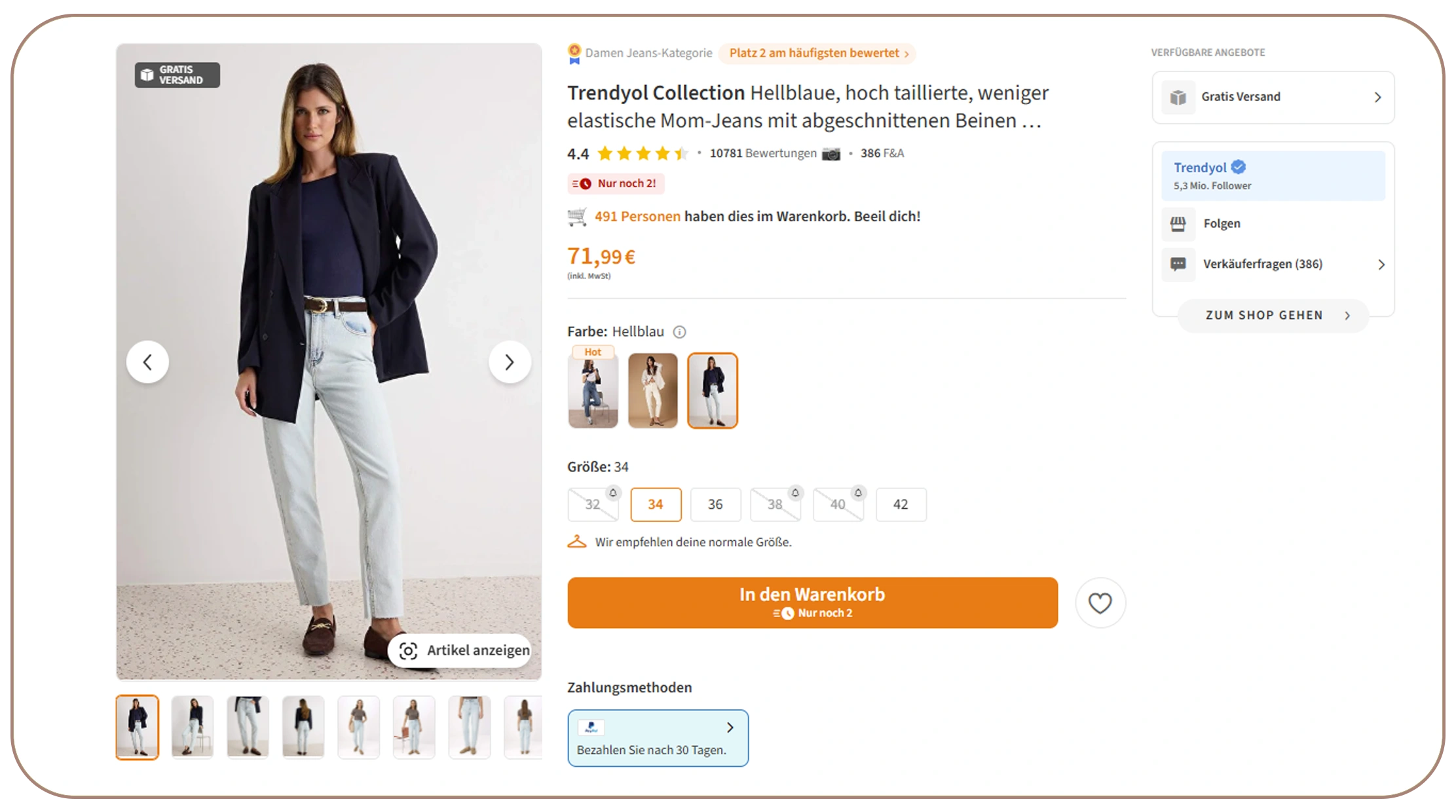
Businesses can scrape Trendyol product listings for ecommerce intelligence to understand how competitors position their products, prices, assortment, and promotions.
Competitive intelligence is especially valuable when several brands sell similar products. Comparing products by price alone may not provide enough context. Businesses should also consider ratings, review volume, product specifications, discount depth, seller count, and availability.
For example, a company may discover that its product is priced below the category average but receives fewer reviews than competing products. That could indicate a visibility or customer-engagement challenge rather than a pricing problem.
Real Data API Competitive Intelligence Framework
The following figures represent illustrative Real Data API analytical indexes, not verified marketplace statistics.
| Year | Competitive Intelligence Index | Price Monitoring Index | Assortment Comparison Index |
|---|---|---|---|
| 2020 | 100 | 100 | 100 |
| 2021 | 114 | 118 | 116 |
| 2022 | 130 | 137 | 134 |
| 2023 | 148 | 158 | 153 |
| 2024 | 169 | 181 | 174 |
| 2025 | 193 | 208 | 198 |
| 2026 | 220 | 236 | 224 |
The data can be used to construct competitor profiles. A brand profile might include the number of products listed, median price, average rating, review volume, discount frequency, and category coverage.
Businesses can also detect assortment gaps. If competitors offer multiple products in a particular subcategory while a company has little or no representation, that difference may justify further product research.
Price intelligence provides another layer. Analysts can calculate price ranges by category and identify products positioned above or below the market median. Monitoring the same products over time can reveal recurring promotional behavior.
This is more actionable than a static competitor list because it connects competitors to measurable marketplace behavior.
How Can an API Support Scalable E-Commerce Research?
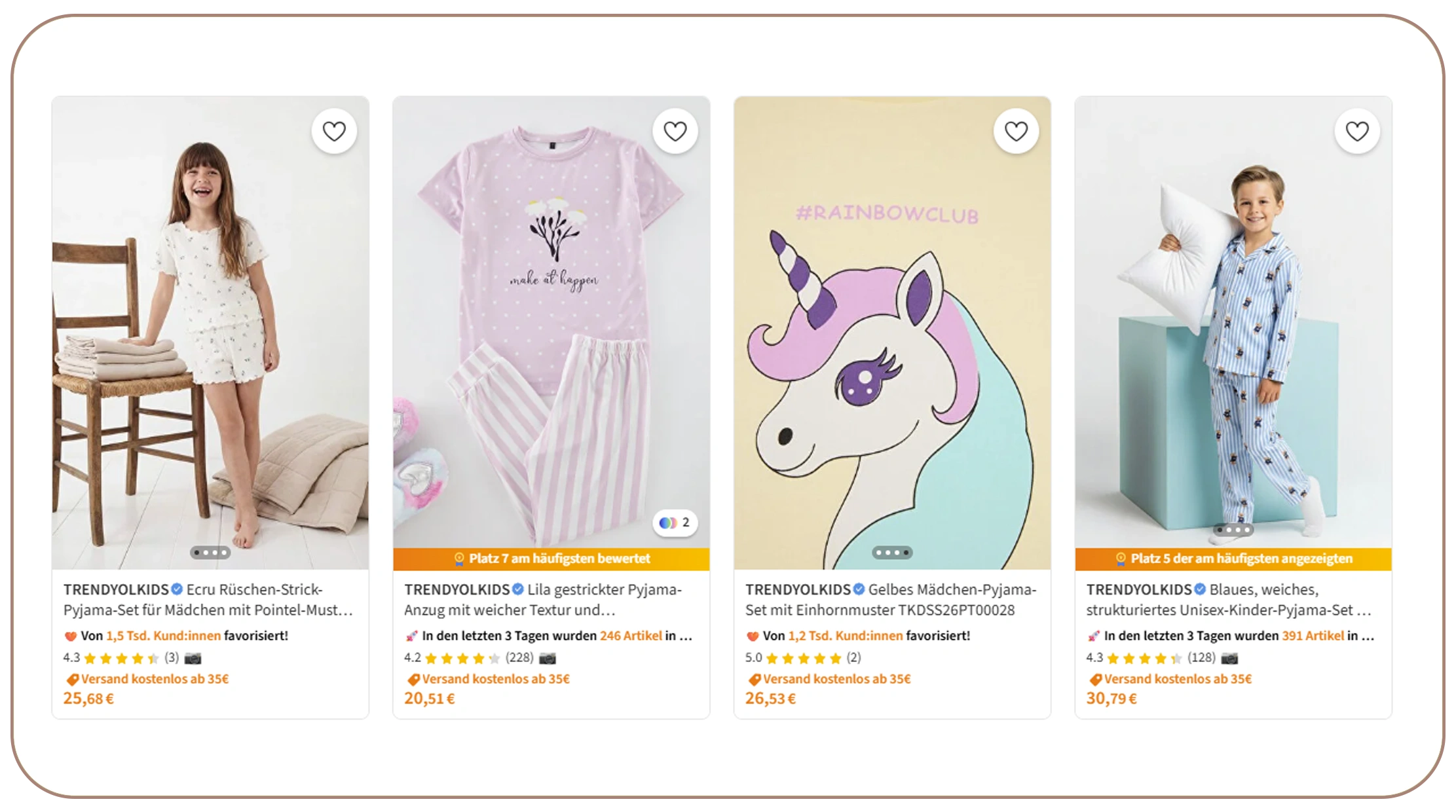
A Trendyol data extraction API for market research can provide a structured approach to collecting marketplace information and connecting it with downstream research systems.
For research teams, the main advantage of an API-based workflow is repeatability. Data can be collected according to predefined requirements and delivered into databases, analytics environments, dashboards, or internal applications.
A well-designed pipeline typically includes extraction, validation, normalization, deduplication, storage, and analysis.
Real Data API Research Infrastructure Framework
The following is an Real Data API analytical framework, not verified Trendyol usage data.
| Year | Data Extraction Index | Historical Dataset Index | Research Automation Index |
|---|---|---|---|
| 2020 | 100 | 100 | 100 |
| 2021 | 116 | 119 | 115 |
| 2022 | 134 | 140 | 132 |
| 2023 | 154 | 164 | 151 |
| 2024 | 176 | 191 | 173 |
| 2025 | 201 | 221 | 198 |
| 2026 | 230 | 256 | 225 |
An API-based architecture can support recurring data collection without requiring researchers to manually export information every time they need an updated dataset.
The workflow should also preserve historical observations. If a product's price changes, the previous record should remain available rather than being overwritten. This allows analysts to calculate price changes and identify promotional patterns.
Businesses can also apply filters before analysis. For example, a company researching footwear may collect only specific brands, categories, price ranges, or seller types. Narrower datasets can reduce unnecessary processing and focus research on commercially relevant segments.
The resulting information can feed dashboards that display product counts, median prices, discount activity, ratings, and assortment changes.
How Can API-Based Marketplace Monitoring Improve Strategic Decisions?
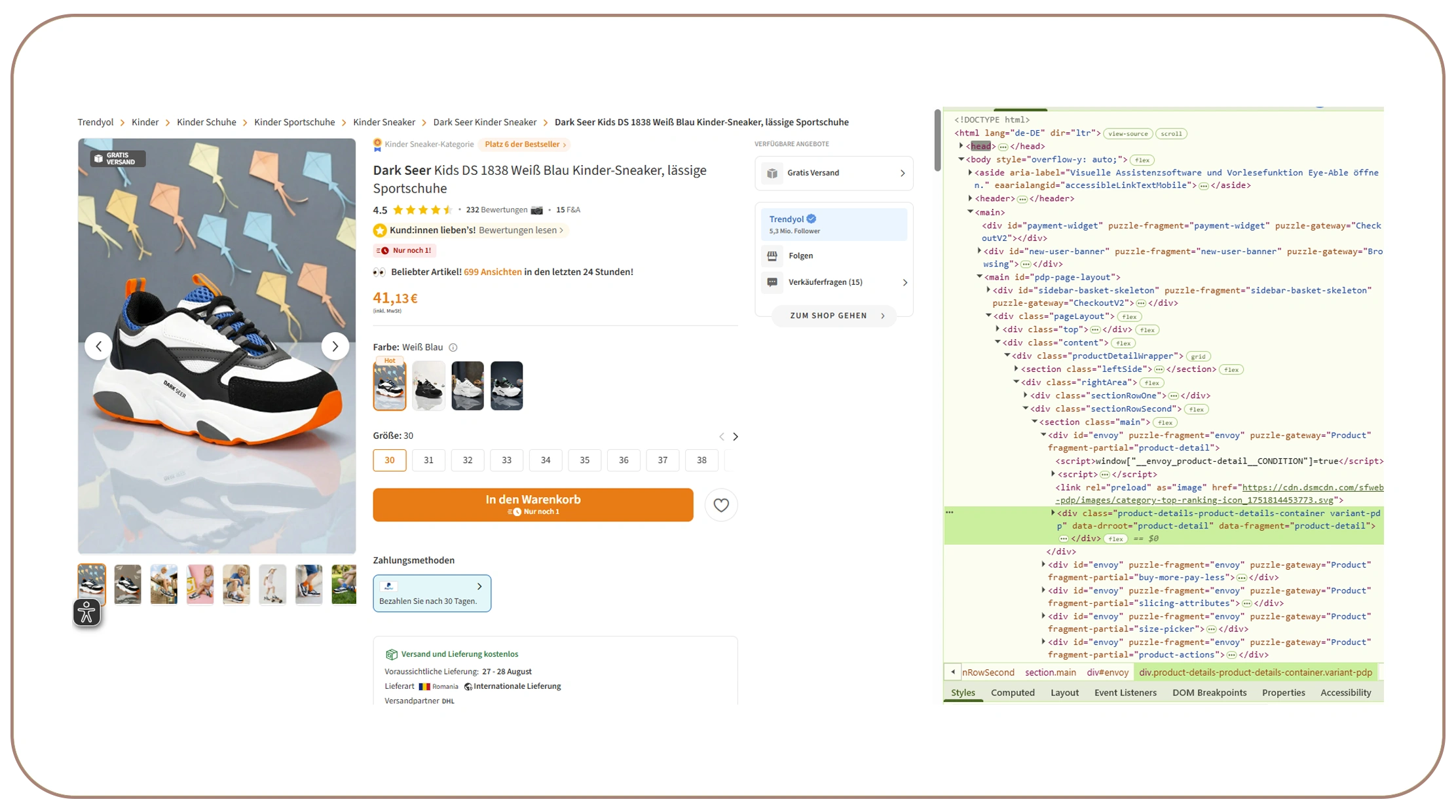
A Trendyol Scraping API can support businesses that need recurring product intelligence across large marketplace datasets. When integrated into a structured workflow, the data can support price monitoring, assortment tracking, competitor benchmarking, and market research.
The phrase Trendyol data collection for ecommerce market research therefore describes a broader business intelligence process rather than simply downloading product pages.
Consider a retailer preparing for a new category launch. It could collect competitor products, classify them by price range, analyze ratings and reviews, identify the most common product attributes, and monitor discount patterns.
Real Data API Marketplace Intelligence Framework
These are Real Data API analytical indexes, not actual Trendyol statistics.
| Year | Marketplace Intelligence Index | Pricing Insight Index | Assortment Insight Index |
|---|---|---|---|
| 2020 | 100 | 100 | 100 |
| 2021 | 117 | 120 | 118 |
| 2022 | 137 | 142 | 139 |
| 2023 | 159 | 166 | 162 |
| 2024 | 183 | 192 | 187 |
| 2025 | 210 | 222 | 215 |
| 2026 | 241 | 256 | 245 |
Recurring monitoring can also identify product lifecycle changes. New products can be detected when they first appear. Existing products can be tracked for price changes, review growth, or availability changes. Products that disappear can be flagged for further investigation.
This is particularly useful for brands with large product portfolios. Instead of asking employees to manually monitor hundreds of competing SKUs, businesses can create automated workflows that highlight only significant changes.
The resulting alerts can be used for commercial decision-making. A pricing team may investigate major competitor discounts. A category manager may investigate rapid assortment expansion. A product team may examine emerging product characteristics.
The most effective system does not overwhelm users with raw data. It prioritizes meaningful changes.
How Can Businesses Build an API-Driven Marketplace Data Pipeline?
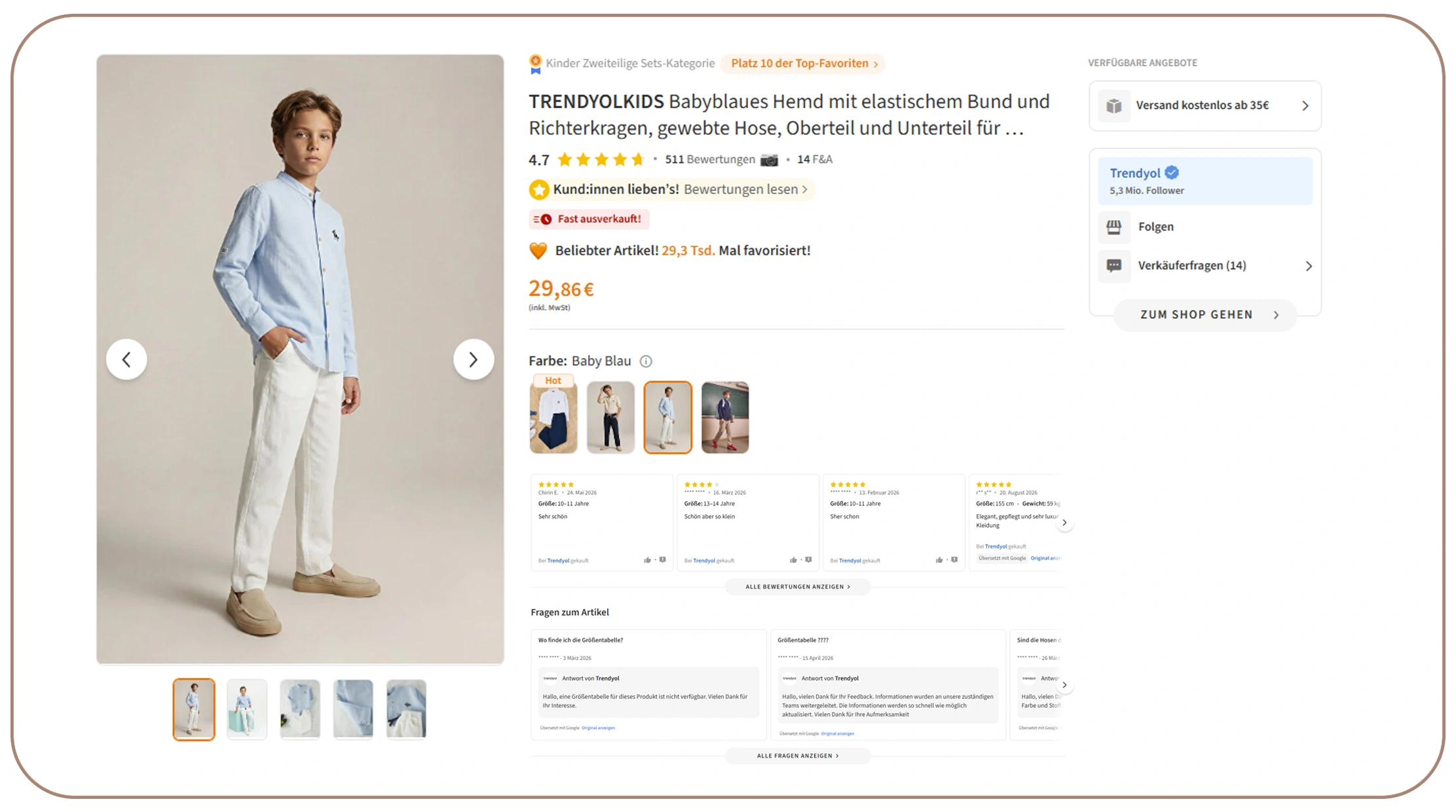
Businesses can Scrape Trendyol Data Using API workflows to create structured datasets that connect marketplace data with analytics and business applications.
A scalable architecture can include a collection layer, data-processing layer, database, analytics layer, and reporting interface. Each stage has a different role.
The collection layer retrieves the required marketplace information. The processing layer validates and normalizes records. The database preserves current and historical observations. The analytics layer calculates metrics such as price changes, assortment growth, and competitive positioning. Finally, dashboards or applications present the results to decision-makers.
Real Data API Data Pipeline Framework
The following table is an Real Data API analytical framework, not verified Trendyol marketplace data.
| Year | API Pipeline Index | Data Quality Index | Automated Analytics Index |
|---|---|---|---|
| 2020 | 100 | 100 | 100 |
| 2021 | 115 | 117 | 114 |
| 2022 | 132 | 136 | 130 |
| 2023 | 151 | 157 | 148 |
| 2024 | 173 | 181 | 169 |
| 2025 | 198 | 209 | 193 |
| 2026 | 226 | 239 | 220 |
Data quality should remain a central priority. Duplicate products can distort assortment counts. Missing prices can affect pricing calculations. Inconsistent category classifications can make category comparisons unreliable.
Businesses should therefore establish validation rules before using the data for strategic decisions. They should also maintain collection timestamps and preserve historical versions of important fields.
For AI and advanced analytics, structured marketplace data can become even more valuable. Clean product records can be used to build classification systems, recommendation workflows, pricing models, trend-detection systems, and natural-language market intelligence tools.
The goal is ultimately to convert marketplace information into machine-readable business context.
Why Choose Real Data API?
An E-Commerce Dataset can provide the structured foundation businesses need to analyze products, prices, sellers, ratings, reviews, promotions, and marketplace trends.
Real Data API can help organizations build recurring data workflows rather than depending on isolated manual research. For e-commerce brands, this can mean creating a historical product database that supports competitive intelligence and category analysis.
Trendyol data collection for ecommerce market research becomes particularly valuable when data is collected consistently. Historical records allow teams to compare current marketplace conditions against previous observations and identify meaningful changes.
Real Data API workflows can be designed around the specific data fields and frequency required by a business. Depending on the research objective, datasets can support:
- Competitor price monitoring
- Product assortment analysis
- New product detection
- Seller benchmarking
- Rating and review analysis
- Promotional tracking
- Category research
- Market trend analysis
- Demand forecasting
- Product opportunity identification
The strongest approach combines automation with data quality controls. Product records should be normalized, duplicates should be managed, and timestamps should be retained so that historical analysis remains reliable.
For brands entering the Turkish e-commerce market, retailers optimizing their assortment, and research organizations studying marketplace behavior, structured marketplace data can reduce manual research and improve analytical speed.
Conclusion
Trendyol data collection for ecommerce market research can help businesses address three major challenges: understanding competitor assortment, tracking marketplace pricing, and building reliable market intelligence from changing product information.
A current marketplace snapshot can show what is available today. A historical dataset can show what changed, when it changed, and how competitors responded. That difference is critical for pricing strategy, assortment planning, product research, and competitive benchmarking.
Brands can monitor competitor products and identify assortment gaps. Retailers can compare price ranges and promotional behavior. Manufacturers can identify emerging product categories. Market research companies can develop structured datasets for recurring industry analysis.
For the data to remain useful, businesses should focus on more than collection volume. Consistent schemas, timestamps, deduplication, validation, historical storage, and meaningful analytical metrics are essential. These practices make the resulting data easier for both human analysts and AI-driven systems to interpret.
Real Data API can serve as the data infrastructure connecting marketplace information with business intelligence workflows. Structured product information can feed dashboards, databases, analytics platforms, reporting systems, and automated alerts.
Partner with Real Data API to build structured product datasets for pricing analysis, assortment tracking, competitor monitoring, and smarter market research!
Latest posts
How Gemini Scraper For Real-Time Data Extraction Enables Faster Market Intelligence, Monitoring, and Competitive Analysis

How Web Scraping Makemytrip Travel Data For Market Research Helps Identify Growth Opportunities?
How to Solve Data Freshness Challenges With Claude Web Scraping for Real-Time Information?
How to Scrape Dynamic Website Data Using a Scraping Browser API Without Browser Automation Complexity?






.png)