
Introduction
Real estate web scraping using Bayut API can help property businesses turn frequently changing online listings into structured market intelligence for rental pricing, competitor monitoring, property research, and investment analysis. A continuously updated Real Estate Dataset makes it easier to compare asking prices, locations, property types, sizes, amenities, availability, and listing activity over time.
The core challenge is that a property marketplace is dynamic. A listing can change price, disappear, return, or be replaced by another property. A single market snapshot therefore provides limited insight. Recurring data collection creates historical context that businesses can use to identify pricing patterns and supply changes.
BayutAPI documentation indicates that API-based UAE property data can include property listings, locations, agents, agencies, developers, amenities, projects, and transaction information. Property searches can also be filtered by purpose, category, location, price, area, bedrooms, bathrooms, amenities, and other attributes.
For Real Data API customers, this creates opportunities to build datasets for rental benchmarking, competitive intelligence, property valuation research, market dashboards, lead generation, and PropTech applications.
Important data note: The 2020-2026 tables below are Real Data API analytical framework examples, not claimed third-party Bayut market statistics. Where numeric index values are shown, they should be replaced with verified Real Data API measurements before publication as factual statistics.
How Can Real-Time Property Data Improve Market Research?
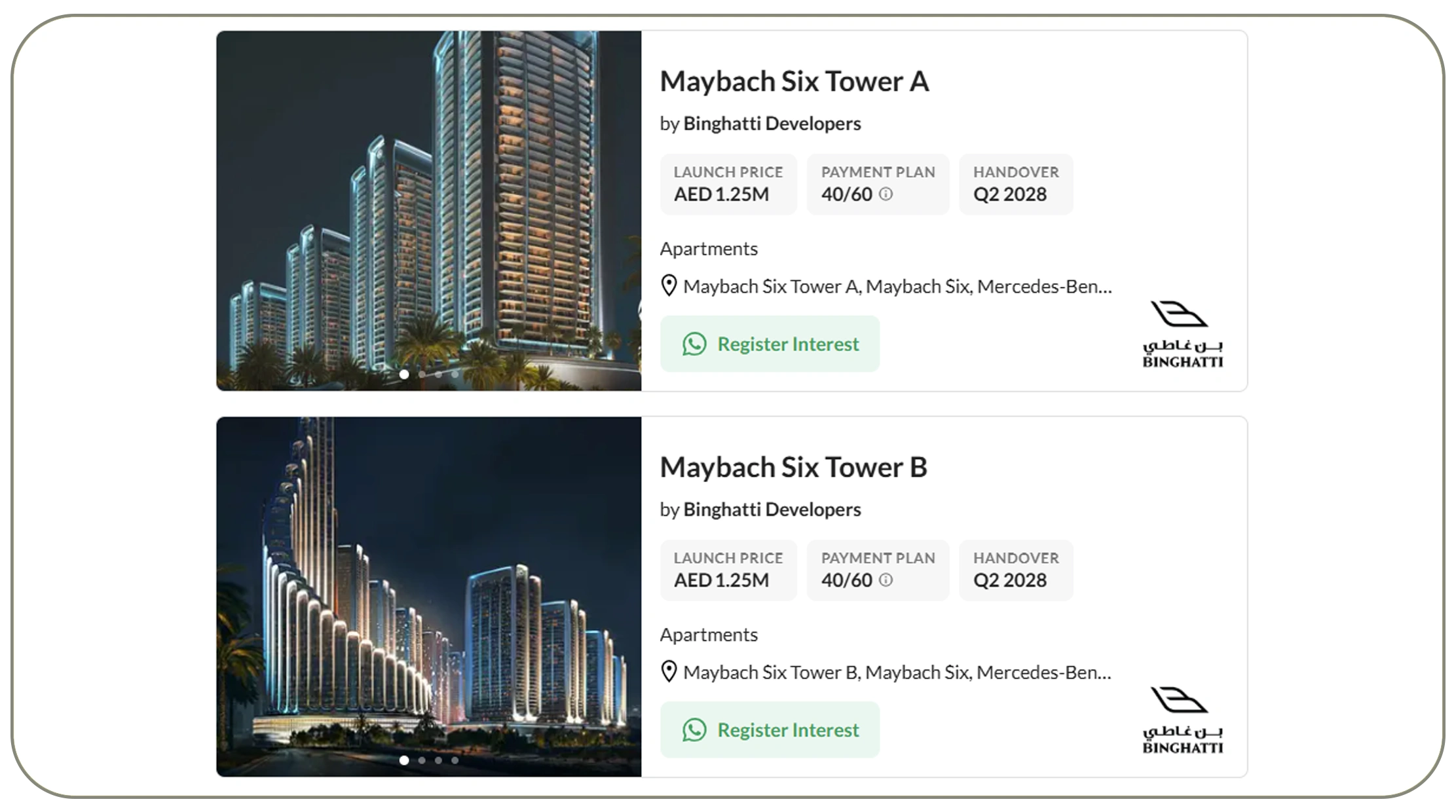
real-time Bayut data scraping for property research can help businesses overcome one of the biggest limitations of traditional property research: outdated information. Property listings can change frequently, making historical monitoring valuable for companies that need current competitive intelligence.
A structured collection process can capture fields such as property title, property type, location, rental or sale price, bedrooms, bathrooms, built-up area, furnishing status, amenities, listing status, agency information, and listing URL. BayutAPI documentation also describes property-search filters for purpose, categories, locations, price, area, rooms, bathrooms, amenities, and other criteria.
For a rental management company, the data can answer practical questions such as: Which neighborhoods have the highest concentration of comparable listings? Which property categories experience the most price changes? Where are new listings increasing? Which properties remain visible for longer periods?
Real Data API Analytical Framework: 2020-2026
The following Real Data API analytical index framework illustrates how a recurring property-monitoring program can be measured. The figures are illustrative and should not be presented as audited Bayut statistics.
| Year | Real Data API Property Monitoring Index | Price-Change Event Index | New Listing Tracking Index |
|---|---|---|---|
| 2020 | 100 | 100 | 100 |
| 2021 | 112 | 116 | 115 |
| 2022 | 127 | 132 | 130 |
| 2023 | 143 | 149 | 147 |
| 2024 | 161 | 169 | 166 |
| 2025 | 181 | 191 | 187 |
| 2026 | 203 | 215 | 209 |
Recurring collection gives businesses something a one-time search cannot: a timeline. When a property is observed repeatedly, analysts can compare its current state against earlier observations and identify meaningful changes.
For investors, this can support property screening. For brokers, it can strengthen pricing conversations. For property managers, it can provide comparable-market evidence. For PropTech companies, the same data can become an input for automated dashboards and recommendation systems.
How Can Businesses Automate Bayut Listing Collection?
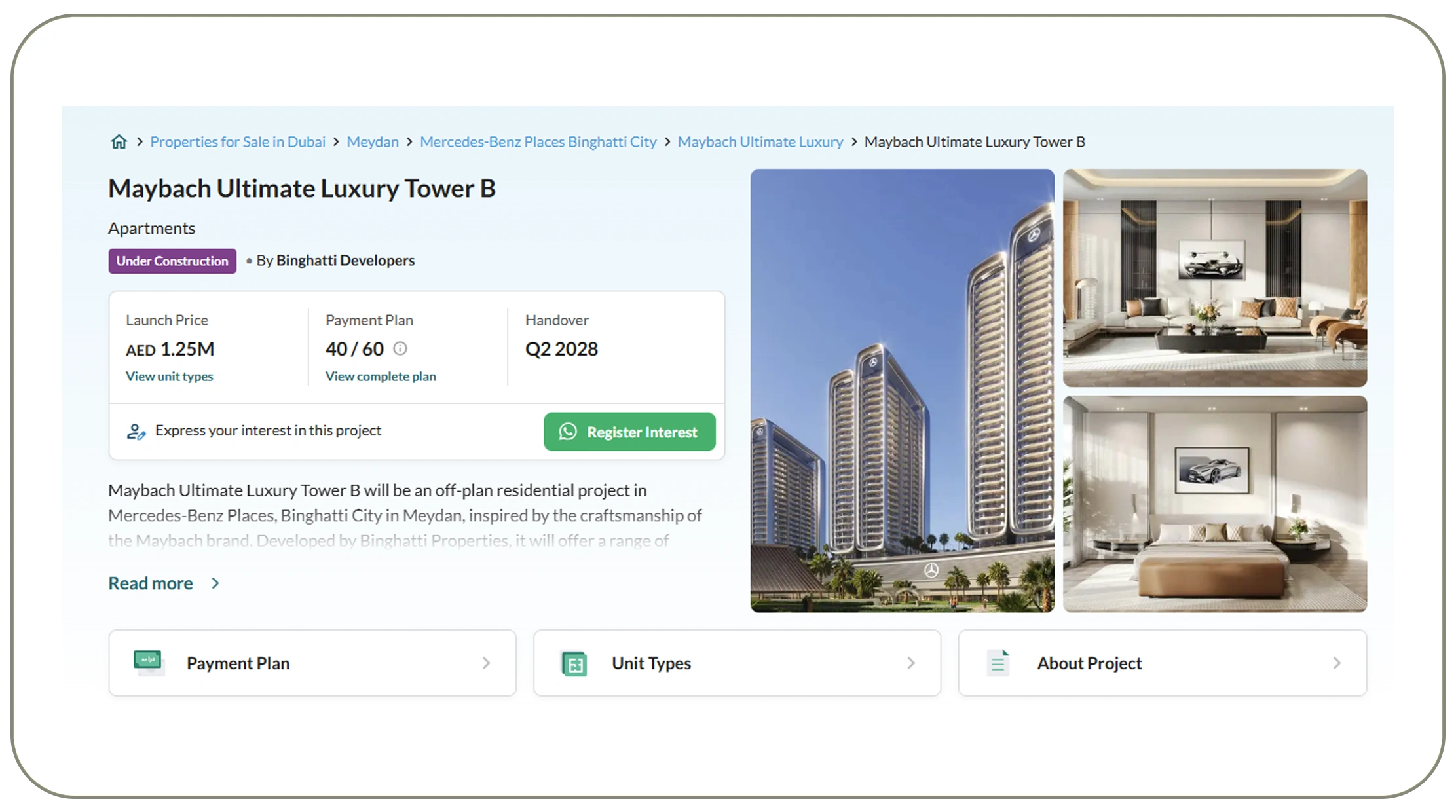
A real estate web data scraper for Bayut listings can transform property information into standardized records that are easier to analyze at scale.
Manual research becomes inefficient when a business needs to monitor hundreds or thousands of listings. An automated workflow can collect records according to defined criteria and store them in a structured database.
For example, a rental dataset might include:
- Property identifier
- Property type
- Location
- Asking rental price
- Bedroom and bathroom count
- Property area
- Furnishing status
- Amenities
- Agency or agent information
- Listing URL
- Collection timestamp
The BayutAPI documentation describes property information endpoints capable of returning detailed listing information, including pricing, specifications, location, amenities, agency and agent details, media, verification information, floor plans, and other property attributes.
Real Data API Analytical Framework: Listing Coverage
This Real Data API analytical framework demonstrates how an automated collection program could be benchmarked from 2020 to 2026. Values are illustrative rather than verified Bayut statistics.
| Year | Listings Processed Index | Property Attribute Index | Automation Index |
|---|---|---|---|
| 2020 | 100 | 100 | 100 |
| 2021 | 118 | 121 | 119 |
| 2022 | 139 | 145 | 142 |
| 2023 | 163 | 171 | 166 |
| 2024 | 189 | 201 | 193 |
| 2025 | 219 | 234 | 224 |
| 2026 | 252 | 270 | 257 |
The important point is not simply the volume of records. Data quality determines whether those records can support reliable decisions. Businesses should normalize locations, standardize property categories, manage duplicate listings, retain collection timestamps, and validate important fields.
For example, an apartment may appear in multiple searches because it satisfies several filters. A robust pipeline should identify such duplicates rather than treating every appearance as a separate property.
This makes automation more than a scraping exercise. It becomes a repeatable property-data infrastructure that can support rental analysis, competitive monitoring, investment research, and market intelligence.
How Can Historical Data Improve Rental Price Analysis?
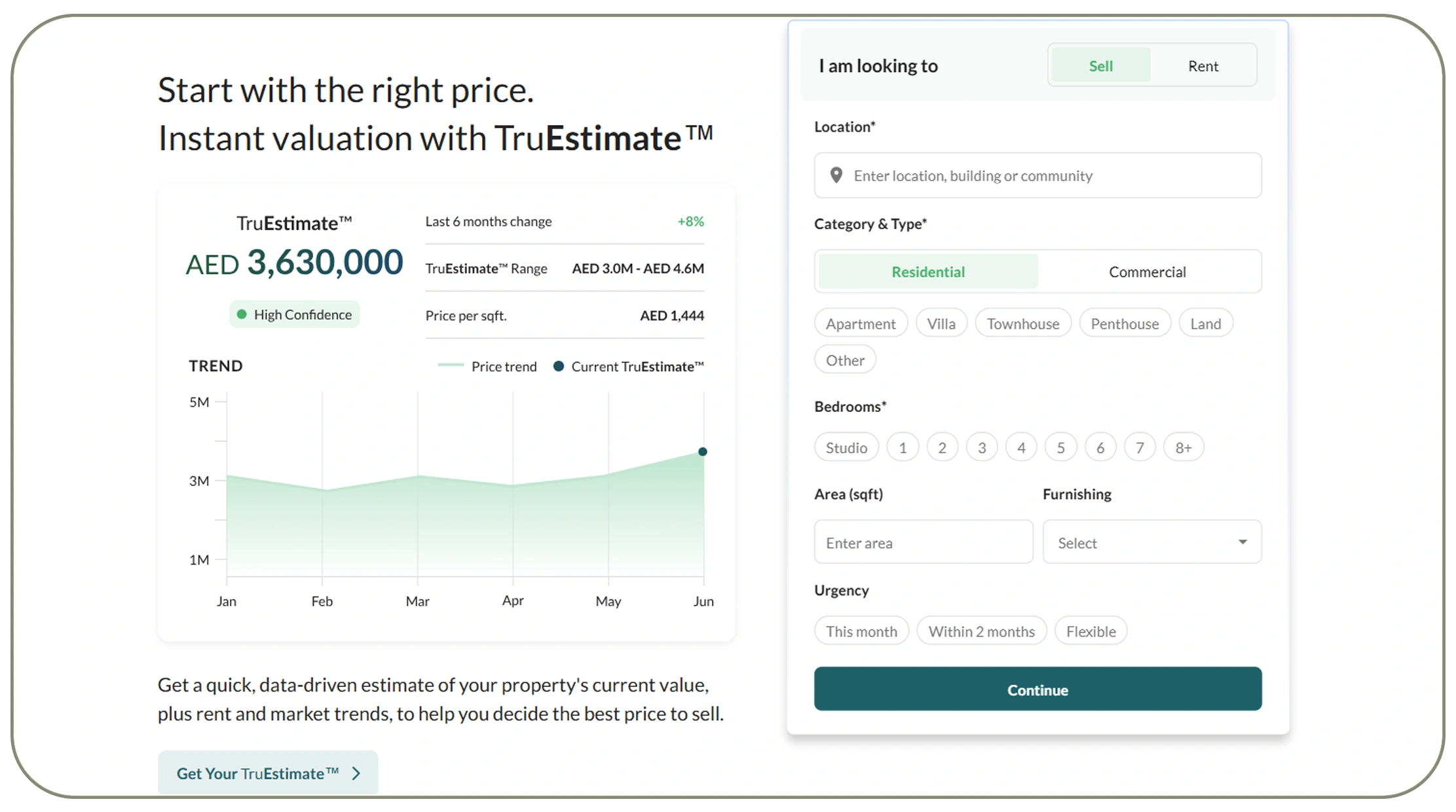
Businesses can scrape Bayut real estate data for price analysis to create a historical view of rental asking prices and competitive positioning.
The key advantage is comparison. A current listing price tells a business what a property is being offered for now. Historical observations can show whether that price has increased, decreased, or remained stable.
A useful pricing dataset should segment comparable properties rather than treating an entire city as one market. Analysts can compare properties by neighborhood, property type, bedrooms, area, furnishing status, amenities, and other relevant characteristics.
Real Data API Analytical Framework: Rental Pricing
The following table is an illustrative Real Data API analytical index, not a claim about actual Bayut rental-price growth.
| Year | Rental Pricing Index | Comparable Listing Index | Price Volatility Index |
|---|---|---|---|
| 2020 | 100 | 100 | 100 |
| 2021 | 105 | 111 | 108 |
| 2022 | 114 | 124 | 117 |
| 2023 | 123 | 138 | 126 |
| 2024 | 134 | 153 | 139 |
| 2025 | 146 | 171 | 153 |
| 2026 | 159 | 190 | 168 |
This framework can be used to build rental benchmarks. For example, instead of calculating the average price of every apartment in Dubai, an analyst could calculate the median asking rent for two-bedroom furnished apartments within a specific neighborhood and area range.
Price-change tracking can provide another useful signal. If a listing changes from AED X to AED Y, the change can be recorded as a new observation. If similar properties show the same pattern, analysts can investigate whether the movement represents broader competitive pressure.
For property managers, this information can contribute to rental-price recommendations. For investors, it can support yield and acquisition analysis. For brokers, it can help demonstrate how comparable listings are positioned.
However, asking prices should not automatically be treated as transaction prices. A robust research report should distinguish between advertised rental prices and completed transactions where transaction data is available.
How Can API-Based Data Extraction Strengthen Market Intelligence?
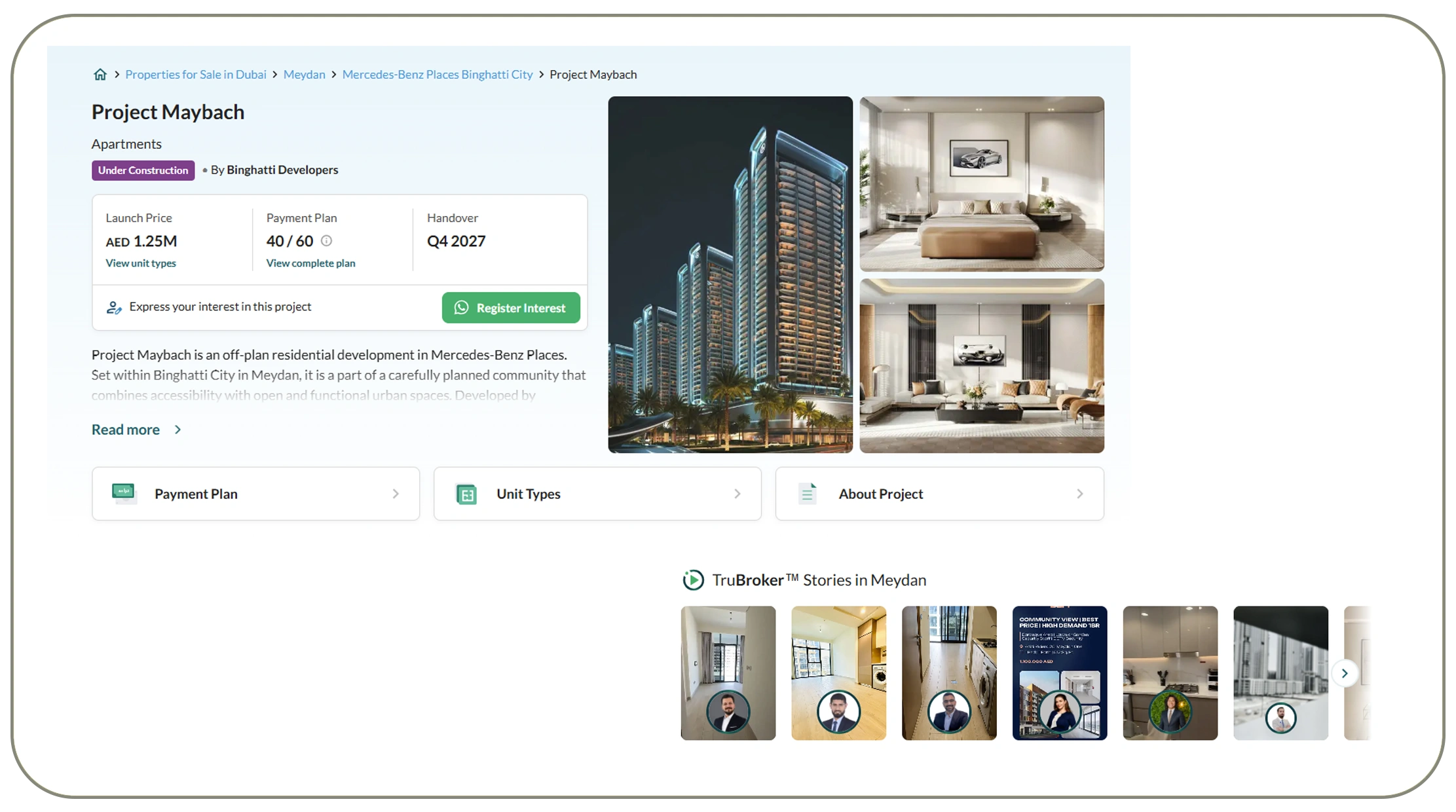
Businesses can extract real estate market data from Bayut API workflows to create repeatable pipelines for property research and market intelligence.
API-based access can make structured data easier to integrate with internal applications. Current BayutAPI documentation describes REST endpoints returning JSON and covering property listings, agents, agencies, locations, amenities, projects, and other UAE real estate information.
The process can be divided into several stages: extraction, validation, normalization, deduplication, storage, enrichment, and analysis.
Real Data API Analytical Framework: Data Processing
The following represents an illustrative Real Data API analytical framework.
| Year | Data Processing Index | Historical Record Index | Analytics Readiness Index |
|---|---|---|---|
| 2020 | 100 | 100 | 100 |
| 2021 | 115 | 119 | 116 |
| 2022 | 132 | 140 | 134 |
| 2023 | 151 | 164 | 154 |
| 2024 | 173 | 190 | 176 |
| 2025 | 197 | 221 | 201 |
| 2026 | 224 | 256 | 228 |
Once collected, the data can be organized around analytical dimensions such as location, property type, price range, bedroom count, size, furnishing, and amenities.
Location is particularly important. The API documentation shows location search and location identifiers that can be used when filtering property searches.
A standardized location hierarchy can therefore help businesses move from city-level analysis toward neighborhood-level analysis. This makes pricing comparisons more precise and can reveal local supply differences that broader market averages hide.
Businesses can also combine listing data with other datasets. For example, property information could be joined with demographic, geographic, transportation, or economic datasets to create more sophisticated market models.
How Can an API Make Property Monitoring More Scalable?

A Bayut Data Scraping API can provide an API-oriented method for collecting and delivering structured property information to downstream applications. This can be valuable for companies that need recurring property monitoring rather than one-off research.
A business may want to track apartments in selected neighborhoods, identify properties below a target price, compare agencies, monitor new developments, or build an investment research platform.
The phrase real estate web scraping using Bayut API therefore represents more than extracting individual listings. It can describe an end-to-end workflow where property information is collected, standardized, stored, and made available for analysis.
Real Data API Analytical Framework: Scaling Monitoring
The following is an illustrative Real Data API analytical framework, not verified Bayut usage data.
| Year | API Request Index | Properties Monitored Index | Automated Reporting Index |
|---|---|---|---|
| 2020 | 100 | 100 | 100 |
| 2021 | 117 | 120 | 115 |
| 2022 | 138 | 143 | 135 |
| 2023 | 162 | 169 | 158 |
| 2024 | 188 | 199 | 183 |
| 2025 | 218 | 232 | 212 |
| 2026 | 251 | 269 | 245 |
Scalability requires more than increasing request volume. The underlying data pipeline needs validation and error handling. Businesses should also monitor API rate limits and technical constraints. Current BayutAPI documentation notes that rate limits depend on the applicable subscription plan.
For a large PropTech application, the workflow might include scheduled collection, database storage, duplicate detection, historical snapshots, and automated alerts.
For example, an investment platform could flag newly listed properties below a defined price threshold. A property management company could monitor comparable rental properties. A brokerage could receive notifications when competing listings change price.
These workflows turn raw property records into operational intelligence.
How Can Real Estate Data APIs Support Automated Analytics?

A Web Scraping Real Estate Data API can connect property information with analytical systems, dashboards, alerts, and business applications.
The API approach is particularly useful when property data needs to be consumed repeatedly by software rather than manually reviewed in a spreadsheet. Structured JSON responses, for example, can be processed by applications, databases, and analytical pipelines. BayutAPI documentation describes JSON responses and endpoints for property search and detailed property information.
Real Data API Analytical Framework: Automated Intelligence
The following is an illustrative Real Data API analytical framework for measuring the development of automated property intelligence workflows.
| Year | API Analytics Index | Automated Alert Index | Decision-Support Index |
|---|---|---|---|
| 2020 | 100 | 100 | 100 |
| 2021 | 116 | 119 | 114 |
| 2022 | 135 | 140 | 132 |
| 2023 | 157 | 165 | 153 |
| 2024 | 181 | 193 | 176 |
| 2025 | 208 | 224 | 201 |
| 2026 | 239 | 258 | 229 |
A property intelligence system can use this data for several practical applications.
Pricing alerts can notify analysts when comparable properties change asking prices.
New-listing alerts can identify properties entering a defined neighborhood or price range.
Availability monitoring can identify when previously observed listings disappear or return.
Competitive benchmarking can compare property offerings by location, price, size, amenities, and category.
Investment screening can filter listings against predefined acquisition criteria.
The API documentation also indicates that transaction data can be filtered by location, category, price, area, bedrooms, dates, and other fields, providing another potential layer for UAE market research when the relevant data is available.
The strongest analytics workflows distinguish listing data from transaction data. Asking prices represent advertised offers, whereas transaction records can provide evidence of completed market activity. Keeping those datasets separate improves the accuracy of market interpretation.
Why Choose Real Data API?
A Web Scraping API can help businesses automate the collection of structured online data and integrate it with their existing analytics infrastructure.
For real estate companies, the objective should be more than collecting a large number of property records. The real value comes from building a reliable pipeline that supports recurring collection, historical comparison, standardized fields, data validation, and downstream analytics.
Real Data API can position its real estate data workflows around these requirements. Businesses can use structured property information for pricing research, competitor monitoring, investment analysis, market intelligence, property discovery, and PropTech applications.
The combination of recurring collection and historical storage is particularly valuable. A current dataset can answer "What is available now?" A historical dataset can help answer "How has the market changed?"
That distinction is central to rental pricing analysis.
When a business combines property price, location, size, property type, amenities, and timestamp information, it can create more useful comparable-property models. When those records are collected repeatedly, analysts can identify patterns rather than relying on individual observations.
Real Data API can therefore serve as the data layer between property-market information and business decision-making systems.
Conclusion
real estate web scraping using Bayut API can help businesses transform changing property listings into structured information for rental pricing, property tracking, competitive research, and investment analysis.
The strongest use case is historical monitoring. Businesses can collect property observations at regular intervals, preserve timestamps, compare price changes, identify new listings, monitor availability, and segment properties by location and characteristics.
For brokers, this creates stronger comparable-property research. For property managers, it can support rental benchmarking. For investors, it can help identify properties that match predefined criteria. For PropTech companies, the data can become an input into search platforms, investment dashboards, alerts, valuation models, and AI-powered applications.
BayutAPI's current documentation shows that API-based UAE real estate data can cover listings, detailed property information, locations, agencies, agents, developers, amenities, projects, and transactions, making the underlying data model suitable for multiple research and application scenarios.
For publication, Real Data API should replace the illustrative index figures in this article with its verified 2020-2026 proprietary statistics if those figures are available. That ensures the report can accurately attribute the statistics to Real Data API without presenting invented values as factual market data.
Contact Real Data API to collect structured real estate data, monitor rental pricing, track property listings, and turn changing market information into actionable business insights!
Latest posts
E-commerce data scraper for inventory analysis 2027 - Real-Time Stock Tracking and Demand Forecasting

How Meesho API data extraction for product research Helps E-Commerce Brands Improve Product Selection and Market Intelligence?

How AliExpress API integration for automated data collection Streamlines Product Monitoring, Price Tracking, and Seller Intelligence

How H&M data scraping for fashion retail analytics Enhances Stock Monitoring, Apparel Pricing, and Product Category Insights







.png)