Quick Summary
- Tencent Video API for video metadata extraction helps businesses organize accessible video information into structured datasets for catalog management, content discovery, and analytics.
- An OTT Scraping API workflow can support automated metadata collection, recurring catalog updates, and consistent content monitoring, subject to platform access and permitted data availability.
- Structured metadata helps streaming analysts, media researchers, and content strategists compare catalogs, identify emerging trends, and improve data-driven decisions.
Introduction
Tencent Video API for video metadata extraction can help media businesses, streaming analysts, and content intelligence teams turn accessible video information into organized, analysis-ready datasets. Instead of manually reviewing extensive catalogs, teams can automate permitted collection workflows and structure fields such as video titles, descriptions, categories, release dates, language, duration, and available identifiers. The exact fields depend on the platform's accessible interfaces and permissions.
For businesses working with streaming content, catalog visibility is essential. Incomplete records, delayed updates, inconsistent naming conventions, and fragmented metadata can make content discovery and competitive research difficult. A reliable data pipeline helps standardize records, identify changes, and make large catalogs easier to search and analyze.
An OTT Scraping API can provide an integration layer for collecting accessible over-the-top media information and delivering it to databases, dashboards, or analytics systems. Organizations should verify platform terms, applicable copyright and privacy requirements, and authorized access methods before collecting data.
This article explains how businesses can improve cataloging, analyze content trends, monitor updates, and build practical video intelligence workflows with Real Data API.
How can structured video records improve catalog management?
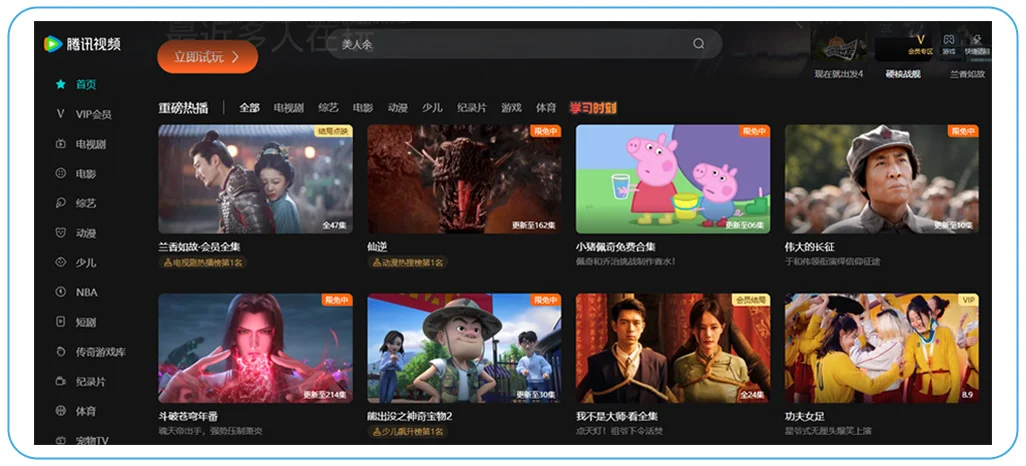
The primary benefit of structured video data is that it converts scattered content information into consistent records that teams can search, filter, compare, and update. Media companies often manage thousands of titles across genres, languages, release periods, and content formats. Without a standardized structure, duplicate entries and missing attributes can weaken reporting and slow down research.
A Tencent Video OTT data API workflow can help authorized data teams organize accessible metadata into a consistent schema. Typical fields may include the title, content identifier, genre, release date, duration, language, description, and content page URL, where available. Each field should have a defined format, validation rule, and update policy.
For example, a research team comparing drama catalogs can normalize release dates, standardize genre labels, and assign a unique internal identifier to every record. This makes it easier to distinguish similarly named titles and track changes across collection periods.
What do industry statistics reveal about demand?
China's online video audience demonstrates why scalable catalog systems matter. According to the China Internet Network Information Center (CNNIC), the country had approximately 1.07 billion online video users in December 2024, representing 96.6% of internet users. Source: CNNIC's 54th Statistical Report.
| Year | Online video users in China | Share of internet users |
|---|---|---|
| 2020 | 926.77 million | 93.7% |
| 2021 | 974.71 million | 94.5% |
| 2022 | 1,030.57 million | 96.5% |
| 2023 | 1,066.71 million | 97.7% |
| 2024 | 1,070.18 million | 96.6% |
Source: CNNIC statistical report, December 2024. Figures are reported in the source; they describe China's overall online video audience, not Tencent Video's individual audience.
How should businesses implement the workflow?
Start by defining required fields and mapping each accessible source attribute to a standard database field. Validate dates, identifiers, and category values before storing records. Maintain timestamps and source references so analysts can identify when a field was last observed.
From 2020 through 2026, the broader direction of video intelligence has been toward scalable, searchable, and frequently refreshed datasets. Historical figures above run through 2024; the 2025–2026 entries should be added only after checking comparable, published data. The key operational lesson is to build a catalog that supports reliable updates rather than collecting information once and leaving it untouched.
How can movie information become easier to analyze?
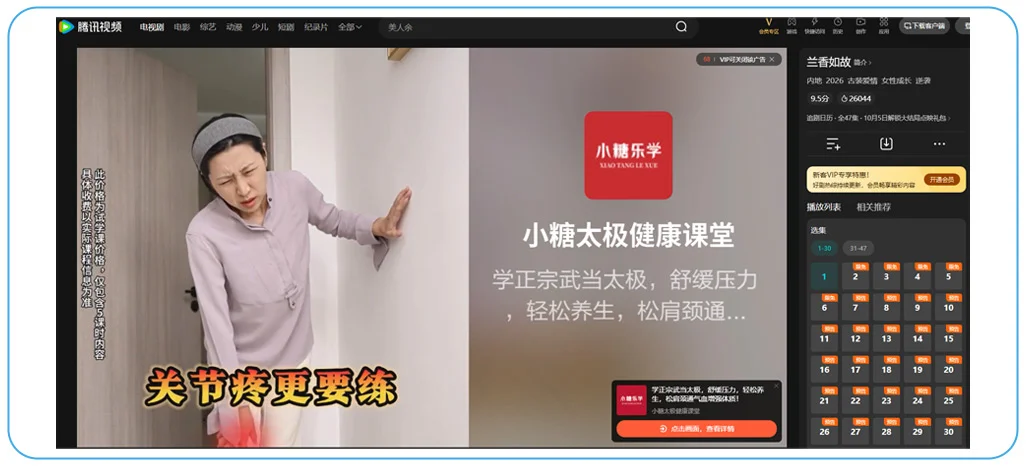
Movie research becomes more useful when content attributes are collected consistently and connected to a clear analytical purpose. Researchers may need to compare genres, identify release patterns, study language distribution, or group titles by production year. Manually copying these details into spreadsheets can introduce inconsistencies and consume valuable research time.
A workflow designed to extract Tencent Video movie information can organize permitted, accessible records into structured tables. Depending on available data, these records may contain movie titles, genres, release dates, descriptions, duration, language, cast information, and content URLs. Not every field is necessarily available, and teams should not assume that an official public API exposes every attribute shown on a platform.
Once collected, metadata should be cleaned and checked. For example, a movie with different localized titles might appear as two records unless the workflow uses a stable identifier or a carefully reviewed matching process. Release dates should follow a consistent format, while missing values should remain identifiable rather than being replaced with guesses.
Which metrics are useful for catalog analysis?
| Metric | How it helps | Recommended validation |
|---|---|---|
| Total unique titles | Measures catalog coverage | Remove confirmed duplicates |
| Genre distribution | Shows the mix of content types | Standardize genre labels |
| Release-year distribution | Reveals historical patterns | Check date formats |
| Metadata completeness | Identifies missing attributes | Calculate populated fields |
| Update frequency | Shows how recently records were checked | Store observation timestamps |
These are recommended analytical measures, not reported Tencent Video performance statistics.
A practical example is a media research company preparing a quarterly genre report. The team can group titles by category and release year, calculate the percentage of records with complete metadata, and compare the results with previous snapshots. Any conclusion about content availability should be limited to the sources and collection dates used.
What changed from 2020 to 2026?
Video catalog analysis increasingly benefits from repeatable data pipelines, consistent identifiers, and automated validation. In 2020, a small research project might have relied on manual spreadsheets; a larger 2026 workflow can incorporate scheduled ingestion, database validation, and dashboard reporting. This is an illustrative description of evolving data practices, not a claim that every organization follows the same timeline.
The practical recommendation is to begin with a narrow dataset, test field accuracy, and measure completeness before expanding to additional content categories. This reduces the risk of scaling unreliable records and gives stakeholders a transparent foundation for analysis.
How can businesses keep content information up to date?
Video catalogs change as titles are added, descriptions are revised, categories are updated, and availability information changes. A dataset that was accurate last month may no longer represent what was visible during the latest observation. Businesses therefore need a defined process for refreshing records and identifying meaningful changes.
A pipeline for real-time Tencent Video content data should distinguish between genuinely real-time access and scheduled updates. Real-time collection is possible only when the source provides an authorized mechanism that supports the necessary frequency. Otherwise, periodic checks—for example, hourly, daily, or weekly—may be more realistic. The appropriate interval depends on business requirements, platform limitations, and permitted access.
A robust pipeline records when each observation was collected, compares it with the previous version, and flags changes for review. It should also distinguish between a removed listing, a temporary access failure, and a field that was simply unavailable during collection. These conditions have different implications and should not be treated as equivalent.
Which update strategy is suitable?
| Update strategy | Suitable use | Main limitation |
|---|---|---|
| Daily checks | Routine catalog maintenance | Changes between checks may be missed |
| Hourly checks | More time-sensitive monitoring | Requires more resources and permitted access |
| Event-triggered updates | Sources with supported change notifications | Depends on available event mechanisms |
| Weekly checks | Broad trend analysis | Less suitable for rapid change detection |
These intervals are implementation examples, not claims about Tencent Video's refresh schedule.
What should the monitoring dashboard measure?
Useful indicators include successful collection rate, records processed, failed requests, changed fields, duplicate rate, and time since the last successful update. Teams should define thresholds based on their own service requirements instead of assuming universal performance benchmarks.
For instance, if the number of collected records suddenly falls by 40%, an alert should prompt investigation. The cause could be a source change, a connectivity problem, a permission issue, or a genuine change in accessible listings. The percentage is an illustrative alert scenario, not a reported industry statistic.
Across the 2020–2026 period, automation and more frequent data refreshes have become important design goals for many digital analytics workflows. However, faster collection does not automatically mean better data. A smaller, validated dataset with transparent timestamps is often more useful than a larger dataset containing stale or inconsistent information.
Need a reliable way to organize accessible video metadata? Contact Real Data API to discuss a collection workflow suited to your fields, update frequency, and analytics requirements.
Get Insights Now!How can content data support competitive research?
Competitive content research helps streaming analysts and media planners understand how available catalogs differ across platforms, categories, and release periods. Useful comparisons can include genre mix, visible release dates, content descriptions, language availability, and the frequency of observed catalog changes. The objective is to support evidence-based decisions rather than infer private business information from incomplete public records.
Tencent Video API for competitive content analysis can serve as a data input for authorized research workflows where the required fields are accessible. Analysts should compare equivalent data points across sources and record the date of each observation. A title listed on one platform but not found on another is not necessarily exclusive; it may be unavailable in a particular region, hidden by a search limitation, or outside the scope of the collected dataset.
What should a fair comparison include?
| Comparison dimension | Business question | Analytical method |
|---|---|---|
| Genre coverage | Which categories are represented? | Compare standardized category counts |
| Release periods | How does the observed catalog vary by year? | Group by normalized release date |
| Language metadata | Which language labels are visible? | Normalize language codes and names |
| Catalog changes | What changed between snapshots? | Compare versioned records |
| Metadata quality | Which dataset is more complete? | Measure field-level completeness |
These metrics support descriptive comparisons. They do not independently prove market share, audience preference, licensing exclusivity, or commercial success.
How can teams avoid misleading conclusions?
First, define the comparison scope. Use the same observation period, geographic context where known, and content categories across datasets. Second, distinguish observed facts from interpretations. For example, a higher count of listed drama titles indicates greater observed catalog coverage in the collected sample; it does not prove that the platform has more drama viewers.
Third, maintain a record of missing fields and collection failures. Analysts should disclose when a platform provides less metadata than another, because incomplete coverage can distort comparisons.
What do the 2020–2026 trends mean for analysts?
The rapid adoption of online video in China makes structured research increasingly relevant. CNNIC's reported online video user base rose from 926.77 million in December 2020 to approximately 1.07 billion in December 2024. These figures describe the broader online video market, not the audience of any single service.
For research conducted in 2025 and 2026, analysts should use the latest available comparable reports rather than extrapolating older figures. An effective competitive intelligence system combines current observations, version history, consistent definitions, and clear caveats. That approach makes reports easier to audit, explain, and use in planning meetings.
How can recurring collection improve streaming intelligence?
Recurring collection creates a historical record of what was visible at different points in time. That history helps analysts distinguish one-time observations from sustained patterns. It can support catalog audits, content classification, research databases, and change monitoring, provided that collection is authorized and the source permits the intended use.
Tencent Video OTT Data Scraping can describe a workflow that gathers accessible content metadata, validates it, and delivers structured records to a database or analytics platform. It should not be understood as a guarantee of unrestricted access, bypassing technical controls, or obtaining fields that the source does not make available.
A practical workflow contains six stages:
- Scope definition: Specify the content categories, fields, geographic context, and business purpose.
- Authorized collection: Use approved interfaces or other permitted access methods.
- Normalization: Standardize dates, category names, language labels, and identifiers.
- Quality assurance: Detect duplicates, missing values, and inconsistent formats.
- Change tracking: Compare current observations with stored snapshots.
- Delivery: Publish validated records to a database, data warehouse, or dashboard.
What does a useful data-quality report look like?
| Quality indicator | Illustrative target | Why it matters |
|---|---|---|
| Required-field completeness | 98% | Helps identify missing essential data |
| Duplicate records | Below 1% | Reduces inflated catalog counts |
| Valid date formats | 99% | Supports accurate time-based analysis |
| Successful processing | 99% | Highlights pipeline reliability |
Important: These are example engineering targets, not measured results from Tencent Video or Real Data API. Actual targets should be agreed upon after a baseline assessment.
How should the pipeline evolve from 2020 to 2026?
A mature implementation can progress from a basic scheduled script to a monitored pipeline with data validation, versioning, alerting, and analytics integration. Early deployments may focus on collecting essential fields. Later stages can add more robust error handling, incremental updates, and automated reporting.
The best upgrade path is based on measured bottlenecks. If most errors come from inconsistent category labels, improve normalization before increasing collection frequency. If records are accurate but stale, review the update schedule and source capabilities. If analysts struggle to reconcile titles, strengthen identifiers and duplicate detection.
Recurring collection delivers value when it creates trustworthy history—not simply when it generates a high volume of records. Organizations should also define retention periods, access permissions, and review procedures for collected information. This supports responsible data handling while keeping the system maintainable as the catalog and business requirements grow.
How can an API-based workflow fit into existing analytics systems?
An API-based architecture can connect data collection with the systems that business teams already use. Instead of maintaining isolated spreadsheets, organizations can route validated metadata into relational databases, cloud data warehouses, search indexes, business intelligence dashboards, or internal research tools. The right design depends on the size of the dataset, the available access method, and the team's technical capabilities.
A Tencent Video API integration should start with a clearly documented source contract: which fields are accessible, how responses are structured, what authentication is required, and which usage limits apply. If no official interface provides the needed data, the organization should evaluate permitted alternatives rather than assume that an API endpoint exists or that automated access is unrestricted.
Which components should the architecture contain?
| Component | Responsibility | Recommended practice |
|---|---|---|
| Collection layer | Retrieves permitted source data | Handle timeouts and errors |
| Transformation layer | Normalizes incoming records | Keep transformations reproducible |
| Validation layer | Checks fields and data types | Reject or quarantine invalid records |
| Storage layer | Maintains current and historical data | Use stable identifiers and timestamps |
| Analytics layer | Produces reports and dashboards | Document metric definitions |
| Monitoring layer | Tracks failures and quality changes | Set actionable alerts |
Which implementation metrics matter?
Track processing time, cost per successful record, field completeness, duplicate frequency, and time between source observation and data availability. Measure these indicators before and after improvements so the team can establish whether the workflow is becoming more efficient.
For example, a team could compare the time needed to prepare a weekly catalog report before and after automation. It should record the original and new preparation times, the number of records reviewed, and the quality of the final output. Without that baseline, claims of time savings are difficult to substantiate.
What should teams consider for 2025 and 2026?
Modern analytics pipelines increasingly combine automated ingestion with data-quality controls and downstream reporting. Yet no architecture removes the need for source verification, permission checks, and transparent documentation. A stable system should make it possible to trace an analytical result back to the observation, transformation rules, and collection timestamp that produced it.
The practical approach is to begin with a small proof of concept, validate the fields and permissions, and test delivery to the intended database. Expand only when quality and operational requirements are met. This approach helps businesses avoid investing in a large collection system before confirming that the source supports their use case.
Why Choose Real Data API?
Real Data API can be considered by businesses looking to build structured web data collection workflows and connect usable datasets with analytics processes. The right solution should be evaluated against the project's specific requirements, available source access, and data quality expectations.
Key evaluation criteria include:
- Scalable workflows: Confirm that the proposed architecture can accommodate the expected catalog size and update schedule.
- Structured output: Check whether the required fields can be delivered in formats compatible with your database or analytics platform.
- Data validation: Establish how missing values, duplicates, and malformed records will be identified.
- Integration support: Verify compatibility with your existing data warehouse, dashboards, or internal applications.
- Monitoring and documentation: Request clear reporting on errors, update timestamps, and source limitations.
- Responsible collection: Confirm that the proposed method respects applicable platform terms, access permissions, copyright requirements, and privacy obligations.
A Web Scraping API may be relevant when permitted source data must be collected and structured for downstream use. However, capabilities, supported sources, and service-level commitments should be confirmed directly with the provider before implementation.
For a successful project, define the target schema, sample records, expected refresh frequency, acceptance criteria, and reporting requirements before scaling up. This makes it easier to evaluate vendors objectively and demonstrate measurable business value.
Conclusion
Faster video cataloging and content monitoring depend on accurate metadata, consistent data structures, and a reliable process for detecting changes. Businesses can improve research efficiency by organizing accessible video information, validating records, tracking historical observations, and connecting structured datasets to existing analytics systems.
The opportunity is significant: China's online video audience exceeded 1 billion users by 2022, according to CNNIC's historical figures, making scalable content intelligence relevant to a broad digital media ecosystem. However, successful implementation requires more than collection volume. Field accuracy, source permissions, update frequency, and transparent reporting are equally important.
For organizations evaluating Tencent Video API for video metadata extraction, the best starting point is a focused proof of concept that validates source accessibility, required fields, data quality, and integration needs before expanding.
Ready to streamline your video data workflow? Contact Real Data API to discuss your metadata requirements and explore a structured, scalable approach to video cataloging, analysis, and content monitoring!
FAQs
1. What is video metadata extraction?
Video metadata extraction collects accessible details such as titles, categories, descriptions, and release dates into structured records, helping businesses organize catalogs, improve discovery, and support analysis.
2. Can businesses automate movie catalog collection?
Yes. An authorized workflow can extract Tencent Video movie information where accessible, validate records, remove duplicates, and deliver structured datasets for research, catalog management, and reporting.
3. How frequently should video metadata be updated?
Update frequency depends on business needs and permitted source access. A scheduled real-time Tencent Video content data workflow should clearly distinguish actual real-time updates from periodic collection.
4. How does an OTT data workflow support competitive research?
An OTT Scraping API workflow can organize permitted metadata from comparable sources, helping analysts evaluate genre coverage, release patterns, catalog changes, and data completeness without assuming market share.
5. What should businesses check before selecting a provider?
Before choosing Real Data API, verify source permissions, supported fields, integration options, data-quality controls, update schedules, and reporting capabilities to ensure the solution fits your operational requirements.
Latest posts

How to Scrape Grocery Product Listing Data in 2026 Using Grocery Data Scraping to Improve Grocery Pricing and Inventory Decisions?

How Foodpanda data scraping for restaurant market research Improves Restaurant Listings, Discounts, and Menu Intelligence

How Fashion Product Data Extraction for Retail Analytics Helps Retailers Track Prices, Trends, and Competitor Strategies
How OTT Data Scraping for Streaming Market Intelligence Helps Streaming Businesses Optimize Pricing, Content, and Market Strategy







.png)