

Quick Summary
- Competitor Intelligence for E-commerce Data Scraping helps brands monitor competitor pricing, product assortments, promotions, availability, and market movements to identify actionable opportunities.
- Ecommerce Scraping API solutions can automate the collection and organization of large volumes of marketplace information for pricing and competitive analysis.
- Historical datasets from 2020–2026 can help businesses identify changing market patterns, benchmark competitors, optimize strategies, and respond faster to e-commerce opportunities.
Introduction
E-commerce competition has become increasingly dynamic, with brands competing across prices, products, promotions, availability, delivery options, and customer experience. Competitor Intelligence for E-commerce Data Scraping gives businesses a structured way to observe these market signals and transform publicly accessible online information into useful competitive insights. Instead of relying on occasional manual checks, companies can establish recurring monitoring workflows that help them understand what competitors are offering and how those offers change over time.
An Ecommerce Scraping API can further streamline the collection of product listings, prices, discounts, seller information, ratings, reviews, and availability indicators, depending on the source and accessible fields. Structured data makes it easier for analysts to compare similar products, identify pricing gaps, monitor new listings, and evaluate changes across marketplaces.
The challenge is not simply collecting more data. Businesses need accurate, consistent, and timely information that can be matched against relevant competitors and historical observations. Product names may differ between sellers, prices may change throughout the day, promotions may be temporary, and availability can vary by location.
A properly designed competitive intelligence workflow addresses these issues through data collection, normalization, validation, historical storage, and analysis. This enables brands to move from reactive competitor monitoring toward proactive market intelligence and opportunity identification.
Building a Reliable View of Competitor Products
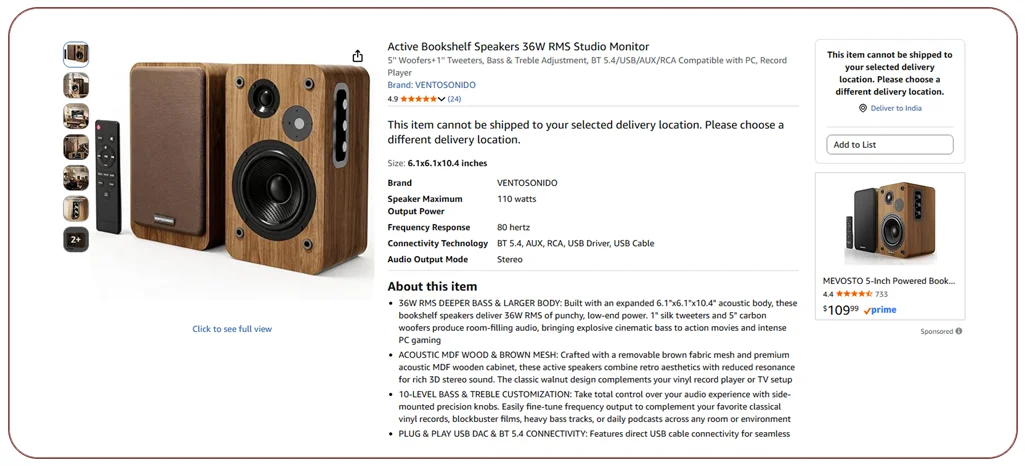
e-commerce competitor data extraction helps businesses build structured records of competing products and understand how rival brands position their catalogs. Instead of reviewing hundreds or thousands of listings manually, organizations can collect selected product attributes and organize them into consistent datasets.
The information captured may include product names, categories, SKUs, brands, prices, discounts, product URLs, ratings, reviews, seller details, and availability. Businesses can then compare competitors at product, category, brand, and marketplace levels.
Important competitor data points
| Data Point | What Businesses Can Monitor | Potential Use |
|---|---|---|
| Product name | Comparable products across competitors | Product matching |
| Price | Current and historical listed prices | Pricing analysis |
| Discount | Promotional reductions | Promotion monitoring |
| Availability | In-stock or unavailable status | Demand and assortment analysis |
| Brand | Brand-level product presence | Competitive positioning |
| Category | Product category classification | Category benchmarking |
| Seller | Marketplace seller information | Seller analysis |
| Rating | Average customer rating | Product-quality comparison |
These fields should be selected according to the business objective rather than collecting every available attribute.
2020–2026 perspective
In 2020, the rapid expansion of digital shopping increased the importance of online competitor monitoring. Brands needed greater visibility into product availability, pricing, and assortment as consumer purchasing behavior shifted toward digital channels. During 2021 and 2022, the growing importance of marketplaces made product-level monitoring increasingly useful for retailers and consumer brands.
Between 2023 and 2024, businesses increasingly benefited from historical competitive records rather than isolated snapshots. Comparing product prices across multiple collection dates could reveal whether changes were temporary or part of a broader pricing strategy. During 2025, automated workflows became increasingly valuable for companies managing large catalogs and multiple marketplaces.
In 2026, businesses can combine product-level observations with category and seller information to develop more comprehensive competitive views. However, market-wide conclusions should be based on representative datasets and clearly defined collection periods. A single marketplace, product, or observation date cannot necessarily represent an entire category.
Turning Marketplace Observations Into Market Opportunities
When brands scrape e-commerce market data, they can analyze more than competitor prices. Marketplace datasets can reveal product assortment changes, new launches, discount activity, seller participation, customer ratings, and category movements.
For example, a retailer monitoring a consumer electronics category may discover that several competitors have introduced similar products within a short period. A food brand may identify an increase in competing product variants. A fashion retailer may notice growing assortment in a particular product segment.
Market opportunity indicators
| Indicator | Example Observation | Opportunity |
|---|---|---|
| New product listings | More products entering a category | Identify emerging demand |
| Price gaps | Similar products have different prices | Review pricing strategy |
| Availability gaps | Competitor products frequently unavailable | Assess potential demand |
| Review growth | Rapidly increasing review activity | Identify popular products |
| Assortment expansion | Competitors adding variants | Evaluate catalog opportunities |
| Discount frequency | Frequent competitor promotions | Monitor market pressure |
2020–2026 perspective
The 2020–2021 period demonstrated how quickly digital demand could change across product categories. Businesses monitoring online marketplaces could use historical information to identify categories experiencing rapid changes in assortment or availability. In 2022, marketplace competition continued to make product and pricing observations valuable for category managers.
During 2023, brands increasingly needed a broader market view because competitors could change prices and promotions rapidly. In 2024, combining product, pricing, seller, and review information could provide more context for understanding market movements. By 2025, recurring data collection enabled organizations to compare current observations with historical baselines.
In 2026, the focus is increasingly on actionable intelligence rather than raw volume. Businesses can prioritize categories showing significant price changes, assortment growth, promotional activity, or availability gaps. These signals can then be reviewed by merchandising, pricing, marketing, and strategy teams. Importantly, automated observations should support human decision-making rather than replace business judgment. External factors such as seasonality, supply constraints, promotions, and regional differences can influence marketplace activity and should be considered when interpreting results.
Automating Competitive Market Monitoring
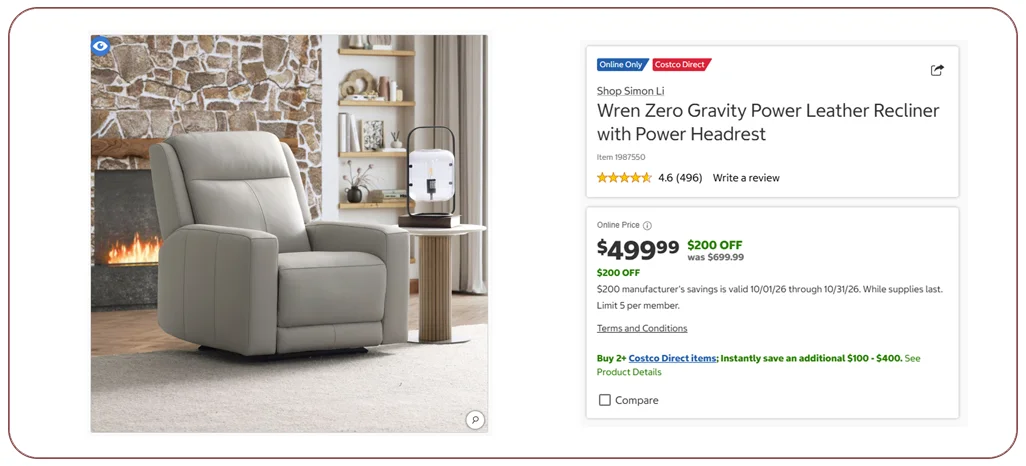
An e-commerce market intelligence API can provide a structured mechanism for collecting marketplace information and delivering it to systems used by analysts, retailers, and business intelligence teams. Instead of manually exporting information from multiple sources, businesses can establish automated workflows that collect selected fields according to predefined requirements.
Example API-driven workflow
Source selection → Data collection → Validation → Normalization → Storage → Analytics → Alerts
| Workflow Stage | Key Activity | Business Benefit |
|---|---|---|
| Source selection | Define marketplaces and competitors | Focuses monitoring |
| Collection | Retrieve accessible records | Reduces manual work |
| Validation | Check completeness and consistency | Improves data quality |
| Normalization | Standardize values and fields | Enables comparison |
| Storage | Maintain historical records | Supports trend analysis |
| Analytics | Generate reports and dashboards | Improves decision-making |
| Alerts | Flag major changes | Enables faster response |
2020–2026 perspective
In 2020, many organizations relied heavily on manual marketplace research and spreadsheet-based comparisons. As digital catalogs expanded during 2021 and 2022, manual monitoring became increasingly difficult to maintain at scale. By 2023, automated collection workflows offered businesses a more repeatable way to track selected competitors and categories.
In 2024 and 2025, integration between collected data and business intelligence platforms became increasingly valuable. Instead of simply storing product records, companies could create dashboards showing price movements, availability changes, new listings, and competitor activity. In 2026, API-based workflows can support more frequent monitoring and automated alerts, depending on the source, data accessibility, and technical requirements.
The best architecture depends on business scale. A small retailer may only need daily monitoring of several hundred products, while a multinational brand could require broader category coverage across multiple marketplaces. Data frequency should therefore be determined by the speed of market change and the business decisions being supported.
Want to automate your competitive monitoring workflow? Talk to Real Data API about building structured marketplace data pipelines aligned with your business intelligence requirements.
Get Insights Now!Improving Marketplace-Level Competitive Visibility
Businesses that extract marketplace competitor data can develop a broader understanding of how rival sellers and brands operate across digital channels. Marketplace-level analysis can connect product information with seller presence, pricing, ratings, promotions, and availability.
This approach is particularly useful when brands compete across multiple marketplaces because the same product may have different pricing, availability, seller positioning, or promotional treatment depending on the platform.
Marketplace benchmarking framework
| Benchmark | Data to Monitor | Strategic Question |
|---|---|---|
| Product presence | Competitor listings | Which competitors are active? |
| Price position | Comparable product prices | Are our prices competitive? |
| Seller coverage | Number and type of sellers | How fragmented is the category? |
| Promotions | Discounts and offers | How aggressive is competition? |
| Ratings | Product-level ratings | How is customer perception changing? |
| Availability | Stock status | Where are competitors facing gaps? |
2020–2026 perspective
From 2020 onward, marketplaces became increasingly important channels for product discovery and purchasing. During 2021–2022, brands faced greater competition for visibility as more businesses expanded their digital presence. By 2023, marketplace-level monitoring could help businesses understand not only individual competitors but also the broader competitive structure of their categories.
In 2024, combining seller, product, and pricing data created opportunities for deeper benchmarking. During 2025, historical marketplace datasets could help organizations identify recurring patterns such as seasonal promotions, product launches, and changes in seller participation.
In 2026, marketplace intelligence can be used to support assortment planning, price reviews, promotional decisions, and competitor prioritization. Businesses can rank competitors based on factors relevant to their strategy, such as catalog overlap, price proximity, product availability, or promotional intensity. However, seller presence should not automatically be interpreted as market share. Accurate market-share calculations require appropriate sales or transaction data. Marketplace observations are best used as competitive signals that complement internal sales, inventory, and customer information.
Scaling Data Collection Across E-commerce Channels
E-Commerce Data Scraping can support businesses that need to monitor large product catalogs across multiple digital sources. As the number of competitors, products, categories, and marketplaces increases, manual collection becomes difficult to maintain and more vulnerable to inconsistent updates.
A scalable workflow should focus on business-critical data instead of attempting to collect every available field.
Scalability considerations
| Requirement | Small-Scale Monitoring | Large-Scale Monitoring |
|---|---|---|
| Product coverage | Selected products | Large catalogs |
| Frequency | Daily or weekly | Multiple scheduled intervals |
| Sources | One or two marketplaces | Multiple marketplaces |
| Storage | Spreadsheet/database | Scalable data infrastructure |
| Analysis | Manual dashboards | Automated BI pipelines |
| Quality control | Periodic review | Automated validation rules |
2020–2026 perspective
In 2020, many businesses could manage competitive monitoring with relatively small product lists. As digital catalogs expanded during 2021 and 2022, the volume of information requiring review increased. During 2023 and 2024, multi-marketplace operations made scalability more important because brands often needed to compare the same product across several channels.
By 2025, businesses increasingly benefited from standardized schemas and automated validation because larger datasets created greater risks of duplicate, incomplete, or inconsistent records. In 2026, scalable data collection can support broader competitive coverage while allowing businesses to prioritize important categories and products.
Scalability should not be measured only by the number of records collected. Data freshness, accuracy, product matching, and successful delivery are equally important. A smaller high-quality dataset may generate greater business value than millions of poorly matched records. Organizations should therefore define KPIs such as collection success rate, field completeness, duplicate rate, product matching accuracy, and data freshness.
Creating Historical Datasets for Strategic Analysis
Well-structured E-Commerce Datasets give businesses the historical foundation required to understand competitive changes rather than viewing the market through isolated snapshots. A historical dataset can contain dated product prices, promotions, availability, seller information, ratings, reviews, and other relevant marketplace attributes.
Dataset structure
| Dataset Layer | Example Fields | Analytical Purpose |
|---|---|---|
| Product | Name, SKU, category, brand | Product classification |
| Pricing | Price, discount, currency | Price benchmarking |
| Seller | Seller name or identifier | Competitive mapping |
| Availability | Stock status | Assortment monitoring |
| Reviews | Rating, review count | Customer perception |
| Promotion | Offer type, discount | Campaign analysis |
| Metadata | Timestamp, source, location | Historical comparison |
2020–2026 perspective
In 2020, historical e-commerce information became increasingly valuable as businesses experienced rapid changes in online purchasing. During 2021 and 2022, maintaining dated product and pricing records helped companies compare marketplace conditions across different periods. By 2023, historical datasets could support more sophisticated trend analysis, including category-level price movements and assortment changes.
During 2024 and 2025, combining multiple years of observations could help businesses identify recurring seasonal patterns and distinguish temporary promotional events from longer-term competitive shifts. In 2026, organizations can use historical datasets to support forecasting, pricing reviews, assortment planning, and strategic competitor analysis.
Historical data should always include sufficient metadata to make observations interpretable. A price without a timestamp, location, currency, product identifier, or seller context may have limited analytical value. Similarly, changes in product packaging or listing structure can create false price movements if products are not matched correctly. Maintaining clear schemas and validation procedures is therefore essential for building trustworthy long-term datasets.
Why Choose Real Data API?
Modern brands need data workflows that are scalable enough to support growing product catalogs while remaining accurate enough for commercial decisions. Real Data API can help organizations structure marketplace data collection around specific competitors, products, categories, locations, and analytical requirements.
Using Web Scraping Services can help businesses establish recurring collection processes for product information, prices, availability, seller details, and other accessible marketplace attributes. Depending on the source, requirements may include data normalization, product matching, validation, scheduling, historical storage, and structured delivery.
Key advantages
- Scalable monitoring: Extend collection across larger product catalogs and multiple marketplaces.
- Structured outputs: Receive standardized records designed for downstream analytics.
- Historical tracking: Preserve dated observations for trend and competitor analysis.
- Pricing intelligence: Monitor product prices and promotional movements.
- Catalog monitoring: Identify assortment changes and new competitor listings.
- Data validation: Detect missing, duplicated, or inconsistent records.
- Business integration: Prepare outputs for databases, dashboards, reporting systems, or analytics workflows.
For organizations building a competitive intelligence program, the objective should be to create a repeatable process rather than a one-time dataset. The collection strategy should reflect the speed of market changes, the importance of monitored products, and the business decisions that depend on the information.
Conclusion
E-commerce competition changes continuously as brands adjust product assortments, prices, promotions, availability, and marketplace strategies. Businesses that rely only on occasional manual research can struggle to identify important changes quickly, particularly when they operate across multiple marketplaces and large product catalogs.
Competitor Intelligence for E-commerce Data Scraping can help brands create a structured approach to monitoring these market signals. By combining product information, pricing observations, seller activity, promotional data, availability, and historical records, organizations can develop a more complete view of their competitive environment.
The most valuable competitive intelligence is not simply the largest collection of records. It is data that is accurate, timely, comparable, and connected to specific business questions. When product matching, validation, historical tracking, and analytics are handled consistently, brands can identify pricing gaps, catalog opportunities, emerging competitors, and changes in market positioning with greater confidence.
Ready to strengthen your e-commerce competitive strategy? Partner with Real Data API to build scalable data collection and monitoring workflows that transform marketplace information into actionable business intelligence.
Frequently Asked Questions
1. How does competitor monitoring support e-commerce businesses?
Competitor Intelligence for E-commerce Data Scraping helps brands monitor prices, products, promotions, and availability, allowing teams to identify competitive gaps and respond to changing marketplace conditions more efficiently.
2. What can an API collect from e-commerce sources?
An Ecommerce Scraping API can organize accessible product prices, descriptions, seller information, ratings, reviews, and availability into structured records for competitive and market analysis.
3. Why is competitor product matching important?
Accurate e-commerce competitor data extraction helps businesses compare equivalent products by identifiers, variants, sizes, and brands, reducing misleading conclusions caused by comparing different products or pack configurations.
4. How often should businesses monitor marketplaces?
Companies that scrape e-commerce market data should select collection frequency based on market volatility, product volume, promotional activity, and the speed at which pricing or availability changes.
5. Can API-based monitoring reduce manual research?
An e-commerce market intelligence API can automate recurring data collection and structured delivery, helping teams reduce repetitive checks while maintaining historical records for analysis. Real Data API can support tailored workflows.
Latest posts
How to Scrape Grocery Product Listing Data in 2026 Using Grocery Data Scraping to Improve Grocery Pricing and Inventory Decisions?

How Foodpanda data scraping for restaurant market research Improves Restaurant Listings, Discounts, and Menu Intelligence

How Fashion Product Data Extraction for Retail Analytics Helps Retailers Track Prices, Trends, and Competitor Strategies
How OTT Data Scraping for Streaming Market Intelligence Helps Streaming Businesses Optimize Pricing, Content, and Market Strategy







.png)