
Introduction
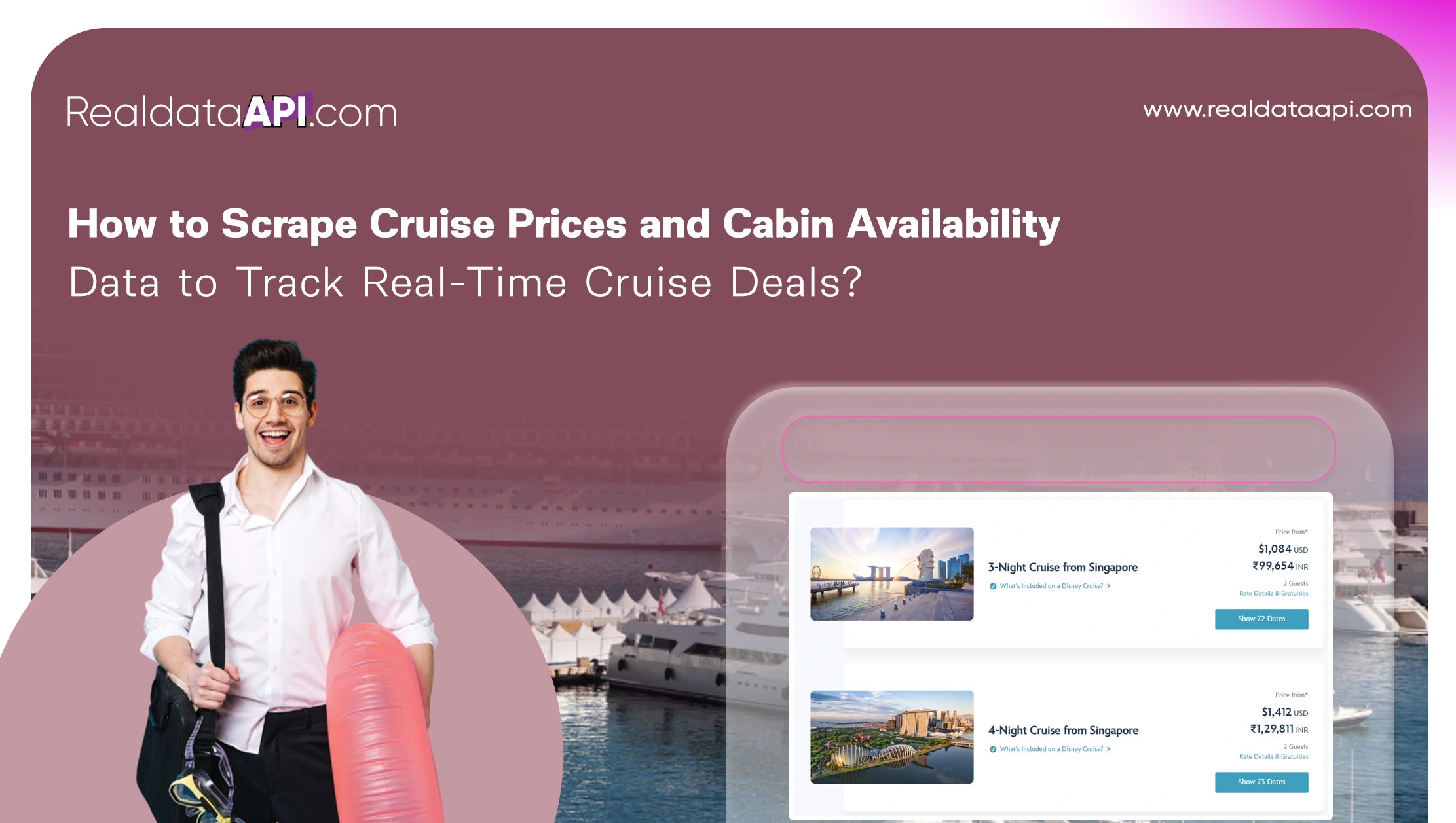
Modern travel businesses rely on data to understand pricing trends and cabin availability across cruise platforms. By leveraging scrape cruise prices and cabin availability data, companies can monitor fare fluctuations, identify the best booking opportunities, and provide travelers with competitive deals. Automated data collection eliminates manual research and enables real-time insights into cruise offerings across multiple destinations.
With growing demand for cruise vacations, travel agencies and comparison platforms use structured datasets to analyze pricing patterns and availability changes. The integration of Travel Data Scraping API solutions allows businesses to extract large-scale cruise information efficiently and convert raw data into actionable insights.
From itinerary tracking to pricing intelligence, automated data extraction empowers organizations to improve customer experiences and optimize travel recommendations. Real-time data monitoring ensures that businesses stay updated with market trends and deliver valuable information to travelers seeking the best cruise deals.
Cruise route monitoring and data automation
The travel industry generates vast amounts of information about cruise routes, schedules, and pricing. A cruise itinerary and schedule data scraper helps businesses collect structured data on departure dates, destinations, and travel durations. This automation enables travel platforms to analyze route popularity and optimize cruise recommendations.
Between 2020 and 2026, cruise travel demand has fluctuated due to changing consumer preferences and market conditions.
| Year | Global Cruise Passengers (Millions) | Average Cruise Price Change |
|---|---|---|
| 2020 | 6.0 | -18% |
| 2021 | 4.5 | -10% |
| 2022 | 7.2 | +8% |
| 2023 | 8.1 | +6% |
| 2024 | 9.3 | +5% |
| 2025 | 10.0 | +4% |
| 2026 | 11.2 | +3% |
Automated itinerary data collection allows travel companies to track cruise schedules and identify high-demand routes. By analyzing historical trends, businesses can improve pricing strategies and offer targeted promotions for popular destinations.
Additionally, structured data enables travel platforms to enhance search capabilities and provide customers with relevant cruise options based on departure dates and preferred itineraries.
Understanding vacation package data for better deals
Cruise vacation packages often include accommodation, meals, and onboard amenities, making them attractive travel options. A cruise vacation package data extraction solution helps businesses collect structured information about package offerings and pricing details.
The availability of bundled packages has increased over time, influencing consumer purchasing decisions.
| Year | Percentage of Bundled Packages | Average Discount Offered |
|---|---|---|
| 2020 | 45% | 12% |
| 2021 | 50% | 14% |
| 2022 | 56% | 16% |
| 2023 | 60% | 18% |
| 2024 | 64% | 20% |
| 2025 | 69% | 22% |
| 2026 | 74% | 24% |
By extracting package data, travel agencies can compare offerings across cruise providers and identify competitive pricing opportunities. Customers benefit from structured insights that highlight discounts and value-added services.
Data-driven analysis also helps travel platforms recommend vacation packages that align with customer preferences and budget constraints.
Tracking arrival and departure schedules
Cruise schedules play a critical role in travel planning and availability management. Using tools to Extract cruise arrival & departure schedule data, businesses can monitor real-time updates on ship movements and schedule changes.
Between 2020 and 2026, cruise scheduling data has become increasingly valuable for travel analytics.
| Year | Cruise Schedule Updates Per Month | Customer Interest in Schedule Data |
|---|---|---|
| 2020 | 8 | 35% |
| 2021 | 10 | 42% |
| 2022 | 12 | 48% |
| 2023 | 14 | 53% |
| 2024 | 16 | 59% |
| 2025 | 18 | 63% |
| 2026 | 20 | 68% |
Automated schedule monitoring allows travel companies to detect changes in departure times and adjust customer notifications accordingly. This reduces confusion and enhances the booking experience for travelers.
Real-time schedule data also supports operational planning for travel agencies and logistics providers involved in cruise operations.
Cruise pricing intelligence and market trends
Pricing fluctuations significantly influence consumer decisions in the cruise industry. A cruise line pricing intelligence data extractor enables businesses to monitor fare changes and identify trends in cabin pricing.
Dynamic pricing models have become common in the travel sector, reflecting shifts in demand and seasonal variations.
| Year | Average Cruise Price Increase | Demand Growth |
|---|---|---|
| 2020 | -12% | -15% |
| 2021 | -5% | -8% |
| 2022 | +7% | +10% |
| 2023 | +6% | +12% |
| 2024 | +5% | +14% |
| 2025 | +4% | +16% |
| 2026 | +3% | +18% |
Pricing intelligence helps travel businesses compare fares across providers and recommend competitive deals. Customers benefit from transparent pricing insights that highlight the best time to book cruises.
Data-driven analysis also supports revenue optimization for cruise providers by identifying demand patterns and adjusting pricing strategies accordingly.
Building structured travel datasets for analytics
Travel businesses rely on structured datasets to analyze market trends and improve decision-making. A comprehensive Travel Dataset containing cruise pricing, schedules, and availability information enables organizations to generate valuable insights.
The adoption of data analytics in the travel industry has grown steadily.
| Year | Travel Analytics Adoption Rate | Revenue Impact |
|---|---|---|
| 2020 | 28% | 6% |
| 2021 | 34% | 8% |
| 2022 | 40% | 10% |
| 2023 | 46% | 12% |
| 2024 | 52% | 14% |
| 2025 | 58% | 16% |
| 2026 | 65% | 18% |
Structured datasets help travel platforms analyze customer preferences and optimize marketing strategies. Businesses can identify popular cruise routes and tailor promotions to specific audience segments.
Analytics also supports operational improvements by highlighting trends in cabin demand and booking patterns.
Leveraging web data extraction for competitive advantage
The travel industry generates large amounts of publicly available information that can be analyzed for market insights. A Web Scraping API enables businesses to automate data collection and extract valuable travel information at scale.
Automated data extraction improves efficiency and reduces manual research efforts.
| Year | Companies Using Web Scraping | Data-Driven Decision Making |
|---|---|---|
| 2020 | 32% | 45% |
| 2021 | 38% | 50% |
| 2022 | 44% | 56% |
| 2023 | 50% | 61% |
| 2024 | 56% | 66% |
| 2025 | 62% | 70% |
| 2026 | 68% | 75% |
Web scraping solutions enable businesses to gather cruise data, pricing information, and market trends efficiently. This information supports strategic decision-making and helps travel companies remain competitive.
Real-time data insights also enhance customer experiences by providing accurate and up-to-date travel recommendations.
Why choose Real Data API?
Travel businesses require reliable data extraction tools to gather structured information from multiple sources. Using scrape cruise prices and cabin availability data solutions powered by APIs ensures accurate and scalable data collection.
API-based data extraction supports dynamic pricing analysis and real-time availability monitoring.
| Feature | Traditional Methods | API-Based Solutions |
|---|---|---|
| Data Accuracy | Moderate | High |
| Speed | Slow | Fast |
| Scalability | Limited | Extensive |
| Automation | Minimal | Full Automation |
| Market Insights | Basic | Advanced |
Dynamic pricing models in the travel industry require continuous data monitoring. API solutions provide real-time insights into fare changes and cabin availability, enabling businesses to make informed decisions.
Travel companies benefit from structured datasets that improve market analysis and operational efficiency.
Conclusion
Tracking real-time cruise deals requires access to structured data on pricing and availability. By leveraging Real Data API , businesses can automate data extraction and gain valuable insights into market trends.
Automated data collection supports the analysis of scrape cruise prices and cabin availability data, helping travel platforms optimize pricing strategies and improve customer experiences.
Real-time monitoring of cruise schedules, pricing trends, and availability ensures that businesses remain competitive in the evolving travel industry.
For organizations seeking data-driven travel insights, structured data extraction provides a powerful foundation for market analysis and strategic decision-making.
Latest posts
How Smiles API Enables Real-Time Food, Grocery, Restaurant, Product, and Delivery Data Intelligence
How BigBasket API Helps Businesses Extract Grocery Products, Prices, Offers, and Availability Data
How Restaurant, Menu, Price, Rating, and Delivery Data Helps Businesses Track Food Delivery Markets
How Businesses Solve Restaurant Market Intelligence Challenges with Rating, Review, and Location Data






.png)