.gif)
.gif)
Quick Summary
- Indian restaurants can use competitor pricing, discounts, promotional campaigns, and menu comparisons to identify market opportunities and develop more profitable pricing strategies.
- Data-driven competitor monitoring helps restaurant owners understand changing customer preferences, optimize promotional spending, and respond to market competition.
- By combining reliable market intelligence with automated data collection, restaurants can make informed decisions about discounts, menu pricing, and revenue growth.
Introduction
The Indian restaurant industry is becoming increasingly competitive as food delivery platforms, cloud kitchens, quick-service restaurants, and organized dining brands compete for customer attention. Restaurants must balance attractive menu prices, promotional discounts, operating expenses, and customer expectations to protect profitability. How Restaurants Use Competitor Offers Data to Optimize Pricing in India (2026) is an important business consideration because monitoring rival promotions helps restaurant owners understand market positioning, identify pricing gaps, and make more informed decisions about their own offers.
Food Data Scraping enables businesses to collect publicly available information about restaurant menus, product prices, discount campaigns, combo meals, and promotional offers across digital platforms. Instead of manually checking competitor listings, restaurant operators can organize market information into structured datasets and monitor changes over time. These insights help businesses understand whether their offers are competitive, which promotions appear frequently, and how pricing differs across locations.
According to the National Restaurant Association of India (NRAI), the Indian food services industry was valued at approximately ₹5.69 lakh crore in FY2024 and was projected to reach ₹7.76 lakh crore by FY2028, representing an estimated CAGR of 8.1%. This expanding market creates opportunities while increasing competitive pressure on restaurant businesses.
For restaurant chains, independent outlets, cloud kitchens, and food delivery businesses, competitor intelligence can support better promotional planning and more disciplined pricing decisions.
How Can Restaurants Build a Reliable View of Competitor Pricing?
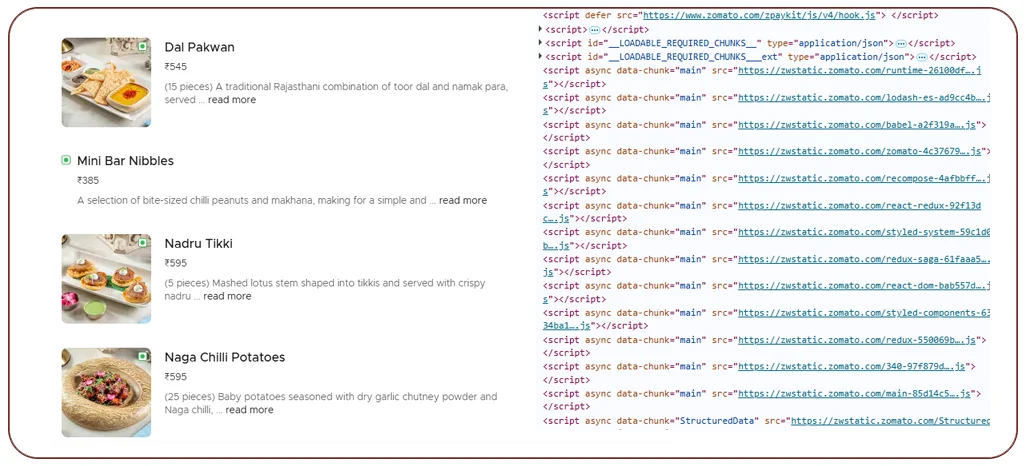
Restaurants need accurate competitor information before changing their menu prices or promotional strategies. A business that understands what nearby restaurants charge for similar meals can make better decisions about its price positioning. A restaurant offers API can support automated collection and integration of structured promotional information from accessible data sources.
The collected information may include menu prices, percentage discounts, flat-value offers, combo meal prices, minimum order conditions, delivery promotions, and offer validity periods. Restaurant operators can organize these fields by brand, cuisine, city, location, and product category.
For example, a quick-service restaurant comparing burger promotions can examine whether competitors offer individual meal discounts, family combos, or limited-period promotions. This helps management understand the competitive environment without automatically matching every discount.
What market indicators should restaurants monitor?
- Base menu price: The listed price before promotional reductions.
- Discount value: The monetary or percentage reduction offered.
- Final selling price: The displayed price after applicable discounts.
- Minimum order requirement: The spending threshold associated with an offer.
- Combo pricing: The combined price of meals containing multiple products.
- Offer duration: The period during which a promotion is available.
India's food services market was estimated at ₹5.69 lakh crore in FY2024, demonstrating the scale of the opportunity for restaurant operators.
A structured monitoring process also helps businesses distinguish between regular menu-price changes and temporary promotional activity. This distinction is essential because a competitor's discounted price should not automatically become the benchmark for permanent menu pricing.
Why Is Promotional Monitoring Important for Restaurant Profitability?
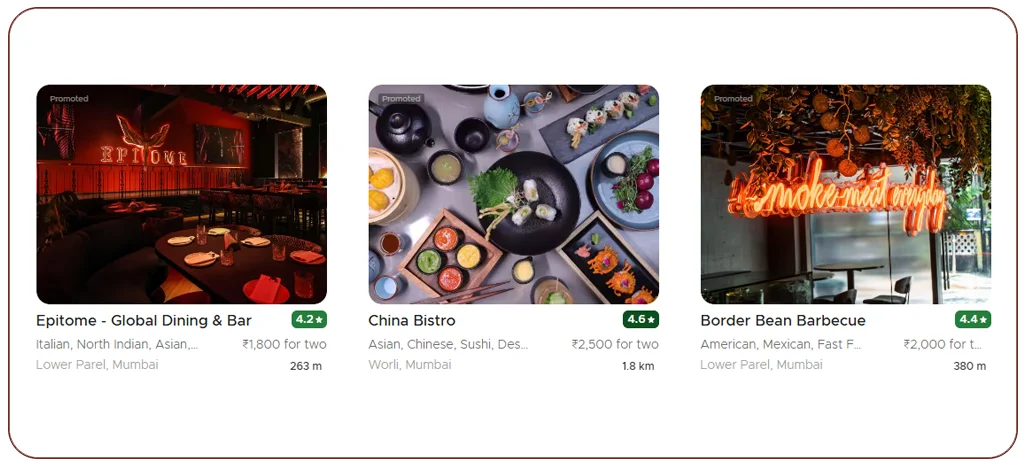
Promotions influence customer acquisition, order frequency, average transaction value, and purchasing decisions. However, offering discounts without understanding competitor activity and internal costs can reduce restaurant profitability.
restaurant deals data scraping helps businesses examine promotional patterns across food delivery marketplaces and restaurant websites. By collecting information about active deals, restaurants can identify which categories receive frequent discounts, how offers vary across locations, and whether competitors are using percentage-based or fixed-value promotions.
For example, restaurants can compare weekday lunch promotions with weekend family meal deals. They can also examine whether competitors promote individual dishes, beverages, desserts, or complete meals.
This information supports more targeted promotional decisions.
What should restaurant owners evaluate?
- Discount frequency: Identify how often competitors introduce new offers.
- Product-level promotions: Determine which menu categories receive promotional attention.
- Location-based pricing: Compare offers across different neighbourhoods and cities.
- Seasonal campaigns: Monitor discounts associated with festivals, holidays, and special occasions.
- Customer spending thresholds: Examine minimum order values and bundle conditions.
The Canadian government's market overview of India, drawing on Euromonitor data, reports that foodservice delivery sales increased from US$3.2 billion in 2019 to US$10.2 billion in 2024, equivalent to 25.9% annual growth. This demonstrates the increasing importance of digital delivery channels in restaurant competition.
Restaurants can use these insights to develop promotions around specific business objectives rather than relying on continuous price reductions. For instance, a business seeking to increase weekday orders may prioritize lunch bundles instead of offering discounts across its entire menu.
How Can Restaurants Evaluate Coupon Strategies Across Food Delivery Platforms?
Coupons are an important part of restaurant marketing because they provide customers with financial incentives to place orders. However, different restaurants use different coupon structures, eligibility conditions, and promotional periods. Understanding these differences helps businesses develop offers that attract customers without unnecessarily reducing revenue.
A restaurant coupon scraper can collect publicly accessible coupon information from supported restaurant websites and food ordering platforms. The extracted information can include coupon codes, discount percentages, fixed-value reductions, minimum order requirements, eligible menu categories, and expiration dates.
Restaurant managers can use this information to understand how competitors structure their promotional campaigns.
For example, businesses can compare:
- Percentage-based discounts against flat-value coupons.
- First-order promotions against repeat-customer incentives.
- Minimum order requirements across competing restaurants.
- Free-delivery promotions against meal-price reductions.
- Festival-specific promotions against regular weekday deals.
How can coupon intelligence improve promotional decisions?
Restaurants should evaluate the economics of every promotional campaign before introducing a similar offer. A 20% discount may generate additional orders, but its actual value depends on ingredient costs, packaging, platform commissions, delivery expenses, and the original selling price.
The following table presents a practical framework for analyzing coupon performance. These are evaluation criteria, not measured industry averages.
| Promotional indicator | Business application |
|---|---|
| Discount percentage | Understand promotional intensity |
| Minimum order value | Evaluate spending thresholds |
| Coupon validity | Identify campaign duration |
| Eligible products | Discover promoted menu categories |
| Final selling price | Compare customer-facing prices |
| Repeat-use conditions | Understand customer retention incentives |
Restaurants should also distinguish between offers funded by the restaurant and discounts funded by a delivery platform. This distinction matters because the financial impact can differ substantially.
The objective is not to reproduce every competitor coupon. It is to identify promotional structures that suit the restaurant's customer segments, operating costs, and profitability targets.
Turn publicly available restaurant promotion information into structured competitive intelligence and make more informed pricing decisions with Real Data API!
Get Insights Now!How Does Discount Monitoring Help Restaurants Respond to Market Changes?
Restaurant discounts change frequently because businesses respond to customer demand, local competition, seasonal occasions, and operating conditions. A restaurant that checks competitor promotions only once a month may overlook important pricing changes.
Businesses that scrape restaurant discounts from accessible digital sources can establish a more consistent monitoring process. This allows them to identify changes in promotional value, compare offers over time, and evaluate how competitors adjust their customer acquisition strategies.
For example, restaurant operators can monitor the following situations:
- A competitor introduces a new discount on a popular meal.
- A nearby restaurant reduces its combo price during weekday afternoons.
- A food delivery platform displays a limited-period promotion.
- A competing outlet introduces free delivery above a specified order value.
- A restaurant changes its promotional strategy during a festival period.
What historical market data reveals about restaurant competition
The Indian food services sector has experienced substantial changes in recent years. Industry estimates and corporate disclosures provide useful context for understanding the changing business environment.
| Year / period | Verified market indicator | Business relevance |
|---|---|---|
| 2020–21 | COVID-19 disrupted restaurant operations and dine-in activity | Businesses needed to reassess channels and promotions |
| 2022 | Food delivery continued operating as an important digital channel | Online competitive monitoring became relevant |
| 2023 | Digital ordering and organized restaurant operations continued evolving | Menu and offer comparisons gained importance |
| FY2024 | Indian food services industry valued at approximately ₹5.69 lakh crore | Indicates the size of the competitive market |
| FY2025 | Swiggy food delivery GOV reached ₹28,783 crore, increasing 16.4% year over year | Demonstrates the scale of platform-based food delivery |
| FY2026 | Platform order volumes and monthly transacting customers were reported in a SEBI-filed industry analysis | Provides a basis for examining digital market expansion |
Sources: NRAI industry reporting, Swiggy's FY2024–25 annual report, and a 2026 SEBI-filed industry analysis.
Historical comparisons should account for differences in reporting periods and market definitions. For example, food services market value, delivery gross order value, and restaurant revenue are separate measures and should not be treated as interchangeable.
Restaurants can combine historical promotional observations with current market conditions to identify recurring patterns. This creates a stronger foundation for deciding when to introduce discounts, revise menu prices, or discontinue campaigns that no longer support business objectives.
How Can Automated Data Collection Improve Pricing Decisions?
Manual competitor research requires employees to visit multiple restaurant websites and food delivery platforms, record prices, compare promotional conditions, and update spreadsheets. This process can become difficult when restaurants operate across several cities or manage large menus.
A Food Scraping API can help businesses automate the collection of accessible restaurant information and integrate structured results into their existing analytics systems.
A well-organized data pipeline can collect information, standardize fields, identify duplicate listings, and prepare records for further analysis. Businesses can then use dashboards, spreadsheets, or business intelligence tools to examine competitor pricing and promotional changes.
What does an effective restaurant intelligence workflow include?
- Source identification
Identify relevant restaurant websites, publicly accessible menus, and supported food ordering platforms.
- Data extraction
Collect available product names, listed prices, discounts, promotional conditions, and location information.
- Data standardization
Normalize restaurant names, product categories, currencies, prices, and discount formats.
- Quality validation
Check missing fields, duplicate records, inconsistent prices, and outdated promotional information.
- Market analysis
Compare competitors, identify pricing differences, and evaluate promotional patterns.
- Business application
Use the findings to review menu prices, plan campaigns, and improve promotional spending decisions.
Which metrics should restaurants analyze?
| Metric | What it helps measure |
|---|---|
| Competitor price difference | Relative menu positioning |
| Effective promotional price | Customer-facing price after discounts |
| Discount frequency | Promotional activity over time |
| Average order value | Customer spending per order |
| Contribution margin | Revenue remaining after variable costs |
| Promotion redemption | Actual coupon usage |
| Incremental orders | Additional orders associated with a campaign |
One important distinction is that competitor information alone cannot establish whether a promotion is profitable. Restaurant owners must combine external pricing information with their own sales, food costs, commission expenses, and campaign performance.
For instance, a restaurant may discover that a competing outlet offers a lower price for a similar meal. Instead of immediately reducing its own price, management can examine portion sizes, ingredients, delivery costs, and customer demand before making a decision.
This approach turns competitive monitoring into a practical input for financial planning rather than simply another source of market information.
How Can Structured Restaurant Information Support Long-Term Growth?
Restaurant businesses need more than isolated competitor price observations. They need consistent historical information that helps them understand how products, promotional strategies, and market positioning change over time.
Food Datasets can support this process by bringing together structured restaurant information from multiple accessible sources. Depending on source availability, the dataset may include restaurant details, menu categories, item descriptions, listed prices, promotional information, ratings, and location attributes.
For restaurant chains, this information can help compare pricing strategies across different cities. For cloud kitchens, it can support category-level competitive research. For independent restaurant owners, it can provide a clearer understanding of nearby competitors.
What business decisions can structured information support?
Menu optimization: Restaurants can identify products whose prices differ significantly from comparable market offerings. Management can then assess whether menu revisions are commercially justified.
Regional expansion: Businesses entering a new city can examine local menu pricing, restaurant categories, and promotional positioning before finalizing their market strategy.
Product bundling: Competitor combo information can help restaurants evaluate opportunities to introduce meal combinations that improve perceived value.
Promotional planning: Historical campaign observations can help businesses understand seasonal promotional activity and prepare more relevant offers.
Competitive benchmarking: Chains can compare their own pricing and promotional positioning across markets without relying entirely on manual research.
Swiggy's FY2024–25 annual report states that its food delivery business operated in more than 700 cities and recorded 14.7 million monthly transacting users in FY2025, with gross order value reaching ₹28,783 crore. These reported figures illustrate the geographic and commercial scale of a major digital food delivery ecosystem in India.
For businesses planning expansion, such market developments reinforce the importance of reliable, location-specific competitive information.
However, datasets must be maintained carefully. Menu information can become outdated, restaurant listings can be duplicated, and promotions may have eligibility conditions that are not immediately visible. Businesses should therefore validate records, preserve collection timestamps, and distinguish unavailable information from genuine zero values.
A consistent data foundation allows restaurant operators to make comparisons with greater confidence and build pricing strategies around measurable business requirements.
Why Choose Real Data API?
Restaurants need reliable, structured, and regularly updated market information to understand competitor activity and make informed pricing decisions. Real Data API helps businesses transform publicly accessible digital information into organized datasets that support market research and competitive analysis.
Key advantages include:
- Structured Data Collection: Organize restaurant names, menu items, prices, discounts, and promotional details into usable formats.
- Competitive Benchmarking: Compare restaurant pricing and promotional strategies across locations and categories.
- Market Trend Analysis: Examine historical information to identify changing pricing patterns and promotional activity.
- Data Quality Management: Apply validation, standardization, and duplicate detection to improve dataset consistency.
- Business Intelligence: Prepare structured information for dashboards, reporting systems, and analytical applications.
- Scalable Data Solutions: Support research requirements across multiple restaurant brands, locations, and food categories.
How Does Price Comparison Support Better Decisions?
Price comparison allows restaurant operators to understand how their menu prices relate to competing businesses. Instead of reducing prices simply because competitors offer discounts, management can evaluate product similarities, portion sizes, promotional conditions, and operating expenses.
Combining market intelligence with internal financial information helps restaurants identify commercially sensible pricing opportunities.
With Real Data API, businesses can build a more consistent information foundation for restaurant market research, competitive monitoring, and promotional planning.
Conclusion
The Indian restaurant industry is becoming increasingly competitive, making pricing intelligence and promotional monitoring important for sustainable business growth. Restaurants must understand competitor menu prices, discount structures, combo offers, and changing promotional strategies before making important pricing decisions.
How Restaurants Use Competitor Offers Data to Optimize Pricing in India (2026) highlights the importance of transforming fragmented market information into structured business intelligence. By monitoring competitor activity, validating collected information, and comparing promotional strategies, restaurants can make better-informed decisions about menu positioning and marketing expenditure.
However, successful pricing optimization requires more than matching competitor discounts. Restaurants must also evaluate food costs, platform commissions, customer demand, contribution margins, and campaign performance.
Looking to improve restaurant pricing intelligence and competitive research? Connect with Real Data API to explore structured data collection solutions and build smarter, data-driven promotional strategies!
FAQs
1. How does restaurant market intelligence improve pricing decisions?
Restaurant market intelligence helps businesses understand competitor pricing, customer-facing offers, and promotional changes. Food Data Scraping supports structured research for informed pricing decisions.
2. What information can restaurants collect through automated systems?
A restaurant offers API can provide structured information about accessible menu prices, discounts, combo meals, promotional conditions, and restaurant listings.
3. Why should restaurants monitor promotional campaigns?
restaurant deals data scraping helps businesses compare competitor promotions, identify discount patterns, and develop targeted campaigns without relying entirely on manual research.
4. How can restaurants analyze coupon strategies?
A restaurant coupon scraper can collect publicly available coupon codes, discount values, minimum order requirements, and promotional validity information for competitive analysis.
5. Can restaurants monitor competitor discounts across locations?
Yes. Businesses can scrape restaurant discounts from supported public sources to compare promotional strategies across restaurant categories, brands, and geographical markets.
Latest posts
mobile.de Scraping: Country-Wide Vehicle Listing Data for Germany
Walmart & TikTok Shop Seller Data Scraping for the USA
Amazon Industrial & Scientific Category Data Extraction (USA)

Used Car Buying Prices from Turo, Priceline & Kayak for Multiple Locations



.png)


