.gif)
.gif)

Introduction
The price of a car in the sharing and rental economy depends heavily on where and when you look. A compact car at a major airport can cost far more than the same class in a suburb. A convertible in a coastal city in summer follows a different curve from one in a mountain town in winter. For rental companies, car-sharing hosts, dealers, fleet managers and analysts, comparing prices across locations is essential. Turo, Priceline and Kayak are three of the most useful public sources, and car price data scraping across multiple locations makes them comparable.
This guide explains what each platform provides, how multi-location scraping works, what to watch for and how the data supports pricing, buying and market analysis. It covers rental prices in detail and explains how rental and listing data can be used as signals for used-car buying decisions. For broader vehicle datasets, this workflow can also be extended through car data scraping across additional automotive sources.
Understanding The Three Sources
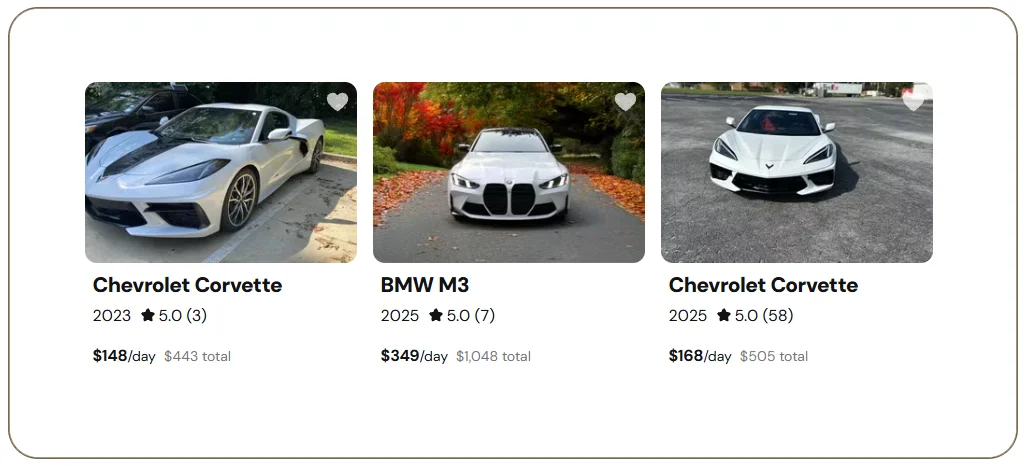
Turo is a peer-to-peer car-sharing marketplace. Owners list their vehicles, and renters book them by the day. Listings show vehicle make, model and year, daily price, mileage limits, delivery options, host ratings and trip counts. Because the vehicles are individually owned, Turo reveals the market's variety, including premium and unusual cars.
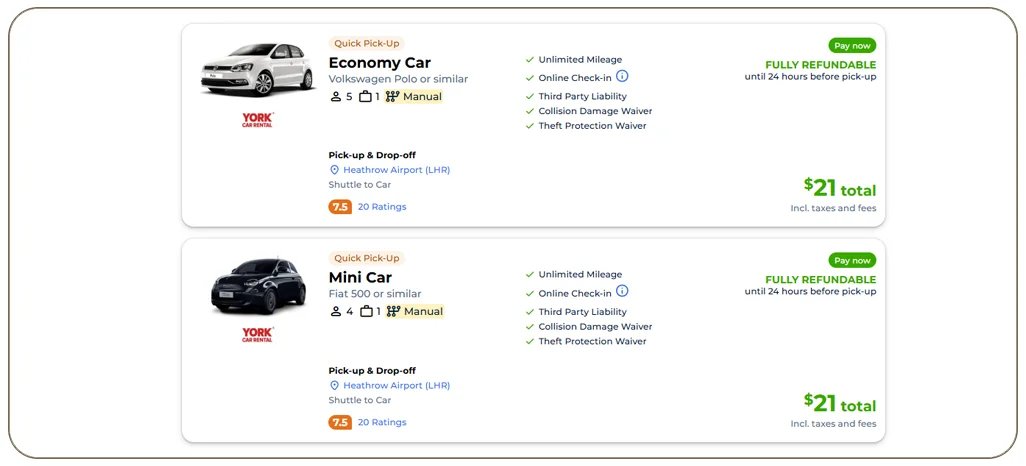
Priceline is a travel booking site that includes rental car search. It aggregates offers from rental companies and shows prices by car class, pick-up location, date and supplier.
Kayak is a travel metasearch engine that compares rental offers from many suppliers and booking sites, showing the cheapest options and price trends for car classes at chosen locations and dates.
Together they show both the peer-to-peer market and traditional rental pricing.
What Data Can Be Collected
Search context: pick-up location, drop-off location, pick-up and drop-off dates and times, and renter age where required.
Vehicle data: make, model, year, car class, transmission, fuel type, seats, doors and features.
Price data: daily rate, total price for the period, taxes and fees where shown, insurance or protection plan costs, delivery fees and discount labels.
Supplier or host data: rental company name, host name or ID (business-level), host rating, trip counts and cancellation policy.
Availability: number of listings available, sold-out indicators and mileage limits.
Trend information: price calendar or price history views where the platform shows them.
Multi-Location Planning
A useful project defines a grid of locations and dates:
- Locations: major airports, city centres and tourist destinations in the states or cities of interest
- Date windows: weekdays versus weekends, holidays, summer and winter seasons
- Lead times: searches made for the same day, next week, next month and three months ahead
- Car classes: economy, compact, mid-size, SUV, luxury, convertible and specialty vehicles
- Trip lengths: one day, three days, one week
The number of combinations grows quickly, so projects focus on those that match business decisions.
How The Scraping Works
- Build the search matrix. Combine locations, dates, trip lengths and classes.
- Run searches on each platform. Set location and dates as a user would and collect all results, including pagination or filters.
- Open listings or offers. Capture details such as vehicle, supplier, total price and fees.
- Standardise. Map vehicle makes and models, classes and fees into a common structure.
- Compute comparable metrics. Calculate daily price, total cost including fees and price per mile or per class.
- Store with search metadata. Every record keeps the search date and the travel dates, which are essential for interpretation.
- Track over time. Repeat searches regularly to capture how prices change as the travel date approaches.
- Deliver. Provide data and dashboards by location, class and date.
From Rental Data To Used-Car Buying Signals
Rental platforms are not used-car marketplaces, but they offer valuable signals for buyers, especially those who buy vehicles for rental or sharing:
- Utilisation proxy: popular models with frequent bookings and strong ratings indicate demand and potential income.
- Rate benchmarks: the daily rate of a given make, model and year indicates revenue potential and helps calculate payback on a purchase.
- Model mix: which vehicle types dominate in a location helps choose what to buy.
- Supplier concentration: how many professional hosts and fleets operate locally tells you about competition.
Combined with used-car listing prices from marketplaces, these signals support buying decisions for fleets and hosts.
Technical Challenges
- Date and location dependence: prices change by the minute and by the search parameters, so records must carry the full search context.
- Anti-bot protection: travel sites strongly limit automated traffic and use dynamic pricing, so collection needs careful pacing, rotation and monitoring.
- Dynamic and slow-loading results: search results often load progressively, so scrapers must wait for completion.
- Aggregator duplicates: the same supplier offer can appear on Priceline and Kayak, so de-duplication matters.
- Taxes and fees: the total price depends on location and renter details, so comparison should use the final total shown.
- Peer-to-peer variability: Turo listings are unique, so matching by make, model, year and features is needed to compare.
- Volume: many locations and dates multiply requests, so schedules must be planned.
Use Cases
- Rental companies: set competitive prices by location and season.
- Turo hosts and fleet owners: choose models and locations and set daily rates with data.
- Dealers and fleet buyers: estimate resale and earning potential of models before buying.
- Travel companies and apps: build price-comparison and alert features.
- Insurers and lenders: assess typical rates and utilisation for car-sharing products.
- Analysts and researchers: study seasonality and price differences across cities. These datasets can also support market research on regional demand and pricing patterns.
Example: A New Host Choosing A Model
A new host plans to buy a vehicle for Turo in Denver. They scrape Turo listings for SUVs and compact cars across weekdays and weekends, in summer and winter. The data shows that all-wheel-drive SUVs earn higher daily rates in winter and hold high ratings. The host compares rates and counts of competing listings and chooses a model with strong demand and moderate competition.
Example: A Rental Company Setting Prices
A regional rental company collects Priceline and Kayak data for five airports across three lead times. It finds that competitors raise prices sharply within three days of travel and that off-airport locations are consistently cheaper. The company adjusts its dynamic pricing and its off-airport promotions. This is also a practical use case for price monitoring when rental rates need to be tracked repeatedly across locations.
Sample Output
A row may include: platform, search date, pick-up location, drop-off location, pick-up date, drop-off date, trip length, car class, make, model, year, supplier or host, daily price, total price, fees, mileage limit, rating, trip count, availability count, offer URL and timestamp.
Data Quality Checks
- Check that search parameters are recorded for every row
- Compare total price with daily price multiplied by days
- Remove duplicates across aggregators
- Flag unusual outliers for review
- Sample manually against live search results
Delivery And Refresh
Data can be delivered as CSV, Excel or JSON via API or loaded into a data warehouse. Daily collection suits dynamic pricing, weekly collection suits seasonal analysis and one-time projects suit market studies. For broader data pipelines, e-commerce data scraping can be combined with automotive datasets where multiple retail categories are analyzed.
Responsible Data Collection
Collect only public price and listing information, avoid personal data about hosts or renters beyond what is displayed as business information, keep request rates reasonable and follow platform terms and applicable laws.
Why Choose Real Data API For Car Price Data Scraping
Real Data API builds search-matrix scrapers for Turo, Priceline and Kayak, standardises vehicle and fee data and keeps full search context with every record. A pilot with three locations and two date windows helps validate the data before you scale.
Conclusion
Car price data scraping across Turo, Priceline and Kayak gives rental companies, hosts and fleet buyers a clear picture of how prices vary by location, date and vehicle. With a well-designed search matrix, full search context and regular refreshes, you can price, buy and plan with confidence.
Need multi-location car price data? Real Data API can design a pilot for your locations and dates.
FAQs
Can you collect prices for specific dates and locations?
Yes. The search matrix is defined by you, and each record stores its search parameters.
Do the prices include taxes and fees?
Where the platform shows totals, yes. We capture both daily price and total price.
Can I get used-car sale prices from these sites?
These platforms are rental-focused. For used-car sale listings, we can combine them with dealer and classified marketplaces.
Can I see how prices change over time?
Yes. Repeated searches for the same dates build a price curve by lead time.
How many locations can be covered?
There is no fixed limit. Cost grows with locations, dates and classes, so projects start with a focused matrix.
Latest posts

mobile.de Scraping: Country-Wide Vehicle Listing Data for Germany
Walmart & TikTok Shop Seller Data Scraping for the USA

Amazon Industrial & Scientific Category Data Extraction (USA)
Used Car Buying Prices from Turo, Priceline & Kayak for Multiple Locations




.png)


