Introduction
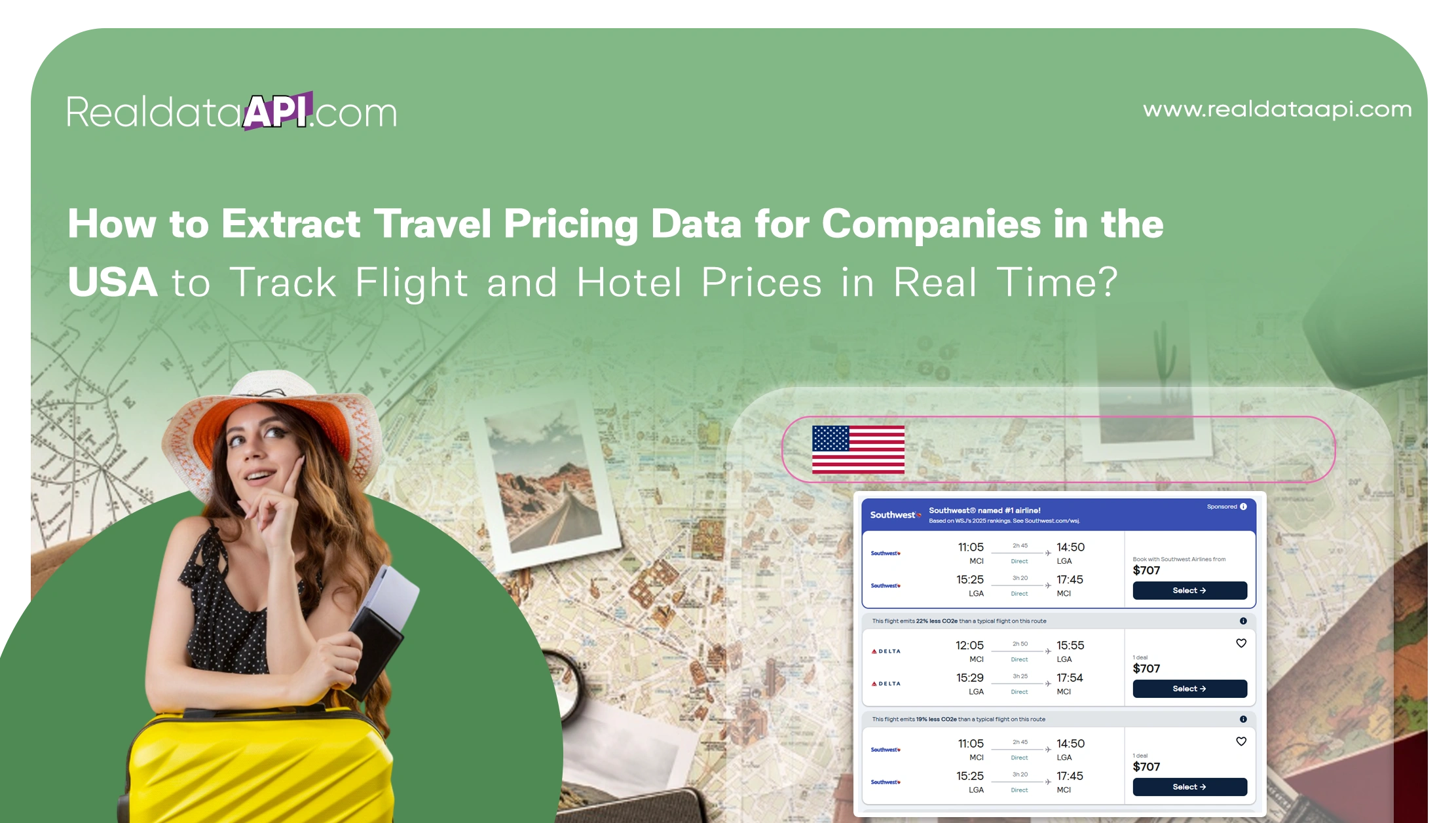
The travel industry runs on price. A flight fare can change dozens of times in a single day. A hotel rate for the same room on the same date can vary by 40% across three booking platforms simultaneously. Seasonal demand spikes, competitor flash sales, last-minute inventory releases, and algorithmic yield management systems mean that the pricing landscape for flights and hotels in the United States is in constant, rapid motion — and every travel company competing in this space must track it in near real time to remain competitive.
This is the fundamental challenge that web scraping USA hotel rates and flight fare data solves. Whether you are an online travel agency (OTA) building a price comparison engine, an airline revenue management team monitoring competitor fares, a hotel chain calibrating nightly rates against the market, or a travel startup developing a price prediction product, the ability to scrape flight and hotel prices in the USA systematically and continuously is the data infrastructure that makes intelligent pricing decisions possible.
This article explores how travel companies across the United States are using web scraping and travel data scraping APIs to extract travel pricing data, build comprehensive travel datasets, and generate the market research insights that power competitive strategy in one of the world's most dynamic industries.
$1.1T
US travel industry revenue 2025
500+
Airlines operating US routes
54,000+
Hotel properties in the USA
72x
Avg fare changes per route/day
Why Travel Pricing Data Changes Everything
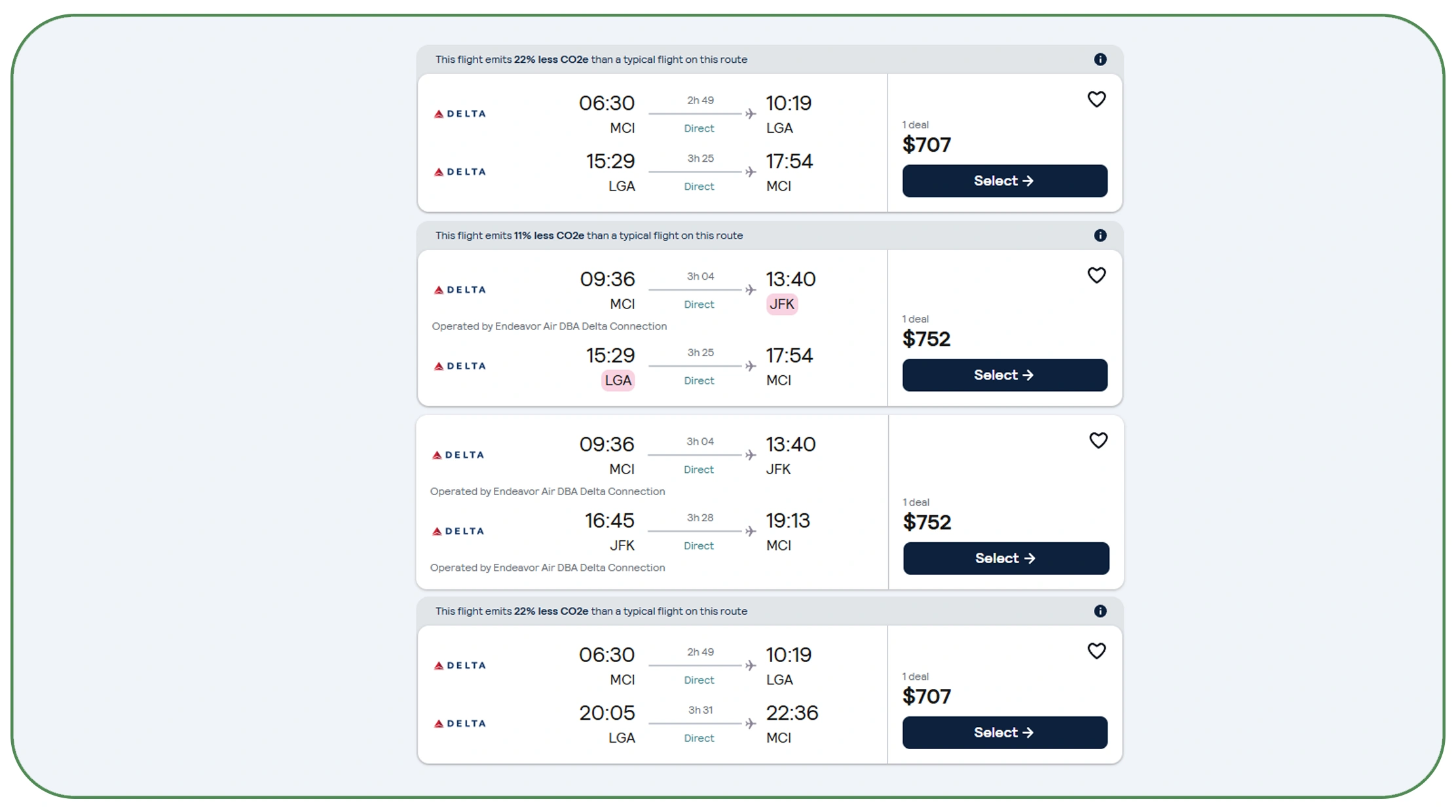
Few industries are as transparently and aggressively competitive on price as travel. The moment a major airline drops fares on a popular US domestic route, competitors typically respond within hours — sometimes minutes. Hotel chains in high-demand markets adjust rates dynamically based on occupancy levels, local events, weather forecasts, and real-time competitor pricing signals. For any travel company trying to win on price — or even maintain margin — operating without continuous visibility into what competitors are charging is not a neutral position. It is a structural disadvantage that compounds with every booking cycle.
The ability to extract travel pricing data for companies in the USA through web scraping transforms this disadvantage into an opportunity. By collecting competitor fares and rates continuously across the platforms where consumers actually book, travel companies can see exactly where their pricing stands in the market at any given moment — and adjust before it costs them revenue.
"In travel, data latency is revenue latency. A fare monitoring gap of even a few hours can mean thousands of lost bookings during a competitor's promotional window."
Key Data Sources for Flight and Hotel Price Scraping
An effective Real time airline and hotel pricing data scraper USA under travel pricing intelligence program draws from multiple source layers simultaneously. Each platform exposes a different dimension of the US flight and hotel pricing landscape.
- Google Flights: Real-time fare data across all major US carriers, route-level price calendars, price trend indicators, and lowest-fare alerts
- Expedia / Booking.com: Hotel nightly rates, room type pricing, availability windows, cancellation policy terms, and bundle package pricing
- Kayak / Skyscanner: Multi-airline fare aggregation, historical price trend data, fare prediction signals, and price alert metadata
- Airline Websites: Direct carrier fares, ancillary fee structures, loyalty pricing, seat-level upgrade pricing, and fare class availability
- Hotels.com / Marriott / Hilton: Chain-direct rates vs. OTA rates, loyalty member pricing, advance purchase discounts, and dynamic pricing windows
- Airbnb / Vrbo: Short-term rental pricing as a competitive benchmark for hotel rate strategy in leisure travel markets
How to Scrape Flight and Hotel Prices in the USA
The technical approach to scraping flight and hotel prices in the USA depends on the platform's architecture, update frequency requirements, and the volume of routes or properties being monitored. Most major travel platforms render pricing data dynamically through JavaScript after the initial page load, requiring browser automation tools rather than simple static HTML parsers.
# Real-time flight fare scraper — US domestic routes
import asyncio
from playwright.async_api import async_playwright
import pandas as pd
from datetime import datetime

async def scrape_flight_fares(origin, destination, travel_date):
    async with async_playwright() as p:
        browser = await p.chromium.launch(headless=True)
        page = await browser.new_page()
        url = (f"https://example-flights.com/search"
               f"?from={origin}&to={destination}&date={travel_date}")
        await page.goto(url, wait_until="networkidle")
        results = await page.query_selector_all(".flight-result")
        fares = []
        for r in results:
            airline = await r.query_selector(".airline-name")
            price = await r.query_selector(".fare-price")
            duration = await r.query_selector(".flight-duration")
            fares.append({
                "route": f"{origin}→{destination}",
                "date": travel_date,
                "airline": await airline.inner_text() if airline else None,
                "fare_usd": await price.inner_text() if price else None,
                "duration": await duration.inner_text() if duration else None,
                "scraped_at": datetime.utcnow().isoformat(),
            })
        await browser.close()
        return pd.DataFrame(fares)

# Monitor key US routes
jfk_lax = asyncio.run(scrape_flight_fares("JFK", "LAX", "2026-05-15"))
ord_mia = asyncio.run(scrape_flight_fares("ORD", "MIA", "2026-05-15"))
combined = pd.concat([jfk_lax, ord_mia])
combined.to_csv("us_flight_fare_monitor.csv", index=False)
For production-grade real-time airline and hotel pricing data scraper USA systems, this approach is complemented by a travel data scraping API — a managed service that handles proxy rotation, anti-bot countermeasures, session management, and structured data delivery at scale. This eliminates the fragility of maintaining custom scrapers for dozens of travel platforms simultaneously, while ensuring continuous data freshness across the full travel dataset.
Travel Scraping API Use Cases Across the Industry
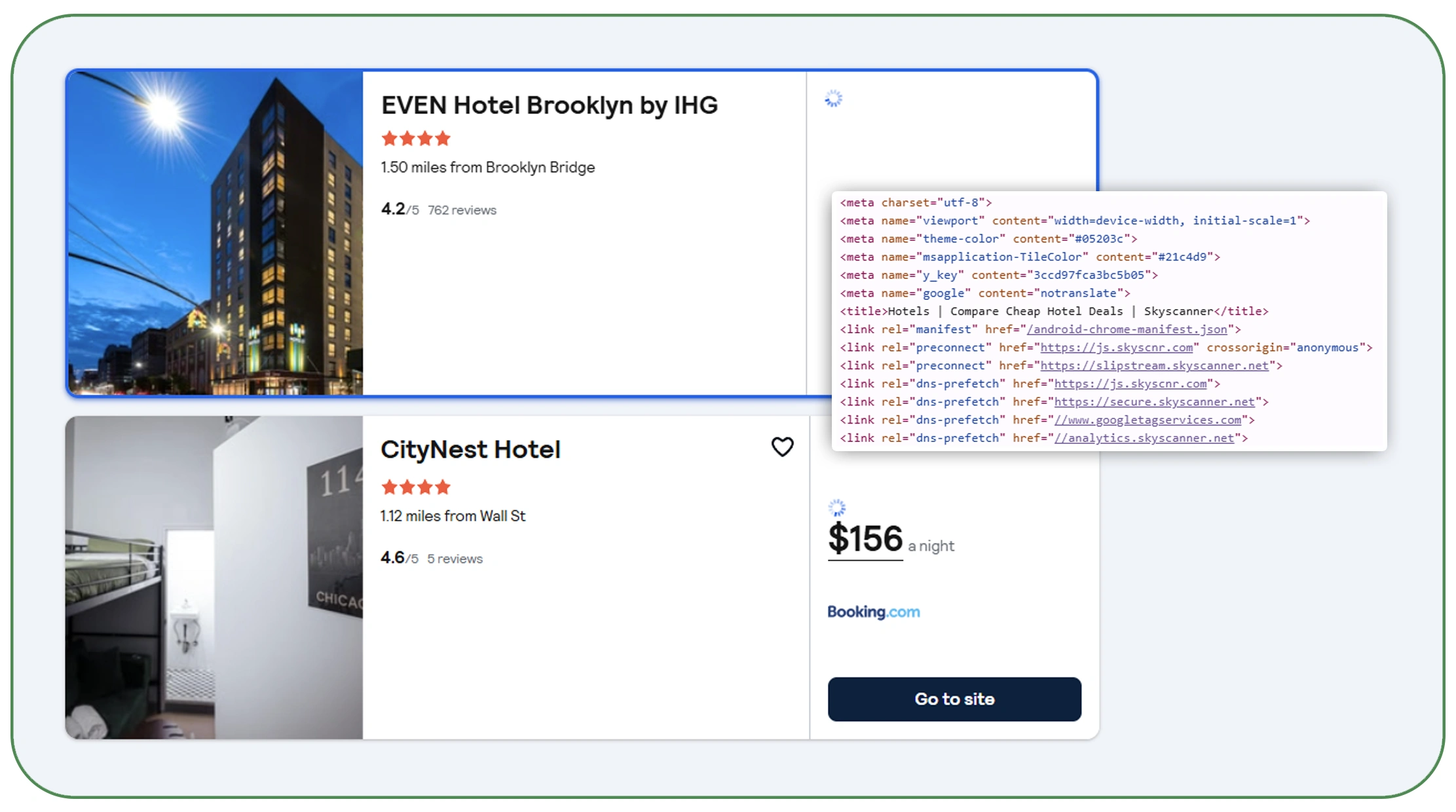
The value of a Travel Scraping API Use Cases extends across every segment of the US travel industry. Here are the highest-impact use cases driving adoption today.
OTA Price Parity MonitoringOTAs
Online travel agencies use travel scraping API pipelines to monitor whether hotel partners are offering lower rates on their own direct booking channels — a violation of rate parity agreements. Automated scraping alerts flag discrepancies in near real time, enabling rapid enforcement action before the price gap drives meaningful booking share shifts.
Airline Revenue ManagementAirlines
Revenue management teams at US carriers use competitor fare scraping to calibrate yield management decisions — knowing when a competitor has opened up low-cost inventory on a shared route allows a rapid tactical response rather than a delayed reactive one. Scraping flight fare data across all major US domestic routes on a continuous basis is now standard practice at any airline with a serious revenue intelligence function.
Hotel Dynamic Rate OptimizationHotels
Hotel chains and independent properties use real-time competitor rate scraping to power dynamic pricing engines. By knowing what competing hotels in the same market segment are charging for the same travel dates — updated hourly — revenue managers can ensure their rates are always optimally positioned relative to market supply and demand without manual research.
Travel Deal and Price Alert ProductsStartups
Travel tech startups building fare alert apps, deal aggregators, and price prediction tools rely entirely on web scraping USA hotel rates and flight fare data as their core data input. The consumer value proposition of these products — "we'll tell you when prices drop" — is only deliverable with a continuous, multi-source flight and hotel pricing dataset refreshed multiple times per day.
Sample US Route and Hotel Pricing Intelligence
The following illustrates the type of structured travel dataset that systematic scraping produces — enabling direct competitive benchmarking across routes and markets.
| Route / Market | Lowest Fare / Rate | Avg Market Price | Price Volatility |
|---|---|---|---|
| JFK → LAX (Economy) | $189 | $312 | High |
| ORD → MIA (Economy) | $142 | $228 | High |
| LAX → SEA (Economy) | $89 | $167 | Medium |
| NYC Hotels (3-star avg) | $189/night | $267/night | High |
| Miami Hotels (3-star avg) | $154/night | $218/night | Medium |
| Las Vegas Hotels (3-star) | $79/night | $142/night | Medium |
Building a Travel Dataset for Market Research
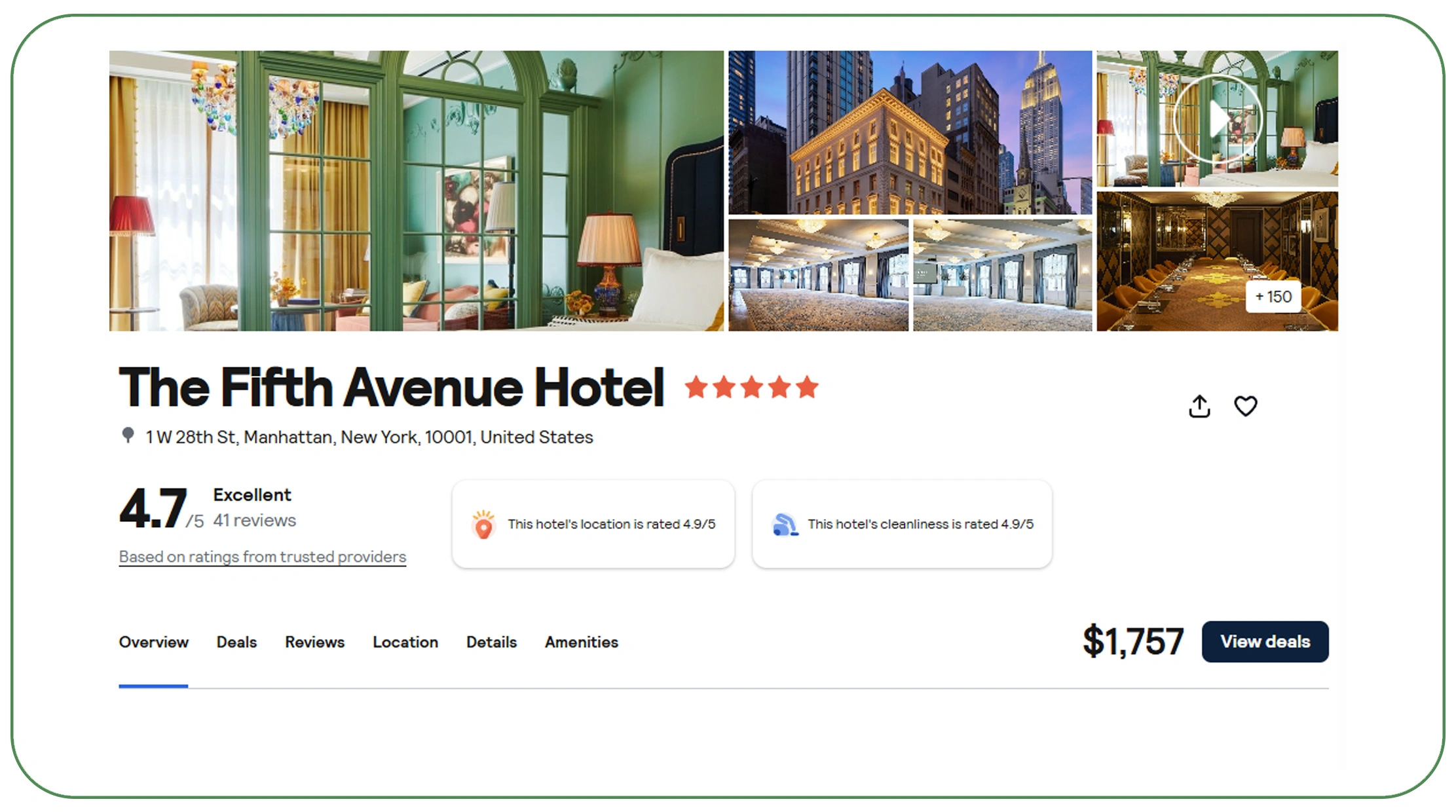
A well-structured travel dataset built from systematic flight and hotel price scraping is the foundation of serious travel industry market research. Beyond point-in-time price snapshots, a production-grade travel dataset includes historical fare time series by route and airline, hotel rate histories by property and room type, advance purchase discount curves showing how prices change with booking lead time, seasonal demand indices by market, competitive density metrics by route and destination, and ancillary fee structures by carrier and property type.
Travel Dataset — Key Fields for Market Research
- Flight fare records by route, carrier, fare class, travel date, and booking date — enabling advance purchase curve analysis and competitive fare positioning
- Hotel nightly rates by property, room type, platform source, and booking window — tracking OTA vs. direct rate differentials over time
- Availability signals including sold-out dates, last-room availability flags, and limited inventory indicators that proxy demand levels
- Ancillary and fee data — baggage fees, seat upgrade pricing, resort fees, and cancellation policy terms by carrier and property
- Price alert event logs — dates and magnitude of significant fare and rate drops across monitored routes and markets
Conclusion
The US travel market is among the most data-intensive competitive environments in the world. Flight fares and hotel rates change by the hour. Consumer booking behavior responds to price signals within minutes. OTAs, airlines, hotels, and travel tech companies that cannot see the full pricing landscape around them — in real time, across every relevant platform and competitor — are operating at a fundamental disadvantage that no amount of marketing budget or product quality can fully compensate for.
Web scraping USA hotel rates and flight fare data, building a structured travel dataset from multi-source price collection, and deploying a travel data scraping API for continuous market monitoring gives travel companies the pricing intelligence infrastructure that separates market leaders from followers. Whether the application is OTA parity enforcement, airline yield management, hotel dynamic pricing, or travel consumer product development, the data capability is the same: reliable, continuous, structured travel pricing data that reflects what the market is actually doing right now.
For travel companies that want this capability without managing complex multi-source scraping infrastructure, Real Data API delivers exactly that. Real Data API provides structured, continuously refreshed access to a comprehensive travel dataset spanning US domestic and international flight fares, hotel nightly rates across thousands of US properties, OTA price comparisons, advance purchase pricing curves, and destination-level demand signals — all through a travel data scraping API purpose-built for the pricing intelligence, market research, and competitive analytics workflows that modern travel businesses depend on. From airline revenue teams to OTA product managers and hotel chain strategists, Real Data API is the data infrastructure that turns travel pricing complexity into competitive clarity.
Real Data API — Travel Pricing Intelligence, Always Current
Access real-time flight fares, hotel nightly rates, OTA price comparisons, advance purchase curves, and destination demand signals across the USA — all through a single, clean travel data scraping API built for competitive pricing intelligence and market research.Pricing figures shown are illustrative estimates based on publicly available market data. Always verify against current platform listings. Review each platform's Terms of Service before initiating any data collection program.
Latest posts
Web Scraping Competitor Product Monitoring Using Marketplace Data for Real-Time E-commerce Insights and Business Growth?
How to Scrape Product Intelligence Platform Using Marketplace Data to Help Brands Optimize Pricing, Inventory, and Product Strategy?
Why Companies scrape business data from Google Maps using keywords to Build Accurate Business Lists and Competitive Insights?
How Review scraping and monitoring services Help Businesses Track Customer Sentiment and Protect Brand Reputation in 2026?
How Real Estate Investment Insights Using RERA Data Scraping Help Investors Minimize Risk and Maximize Returns

Real Data API stands out as one of the premier global companies specializing in web data Scraping and web extraction.




.png)


Rating 4.7
Rating 4.7
Rating 4.5
Rating 4.7
Rating 4.7


Disclaimer : RealData API functions solely as an independent data infrastructure and technology solutions provider. We build customized automation workflows designed to collect publicly accessible web data based exclusively on client instructions. RealData API neither owns proprietary datasets nor engages in the sale or redistribution of extracted information. Our operations are limited strictly to lawful public web data processing and never involve unauthorized access to restricted systems or private networks. Any company names, trademarks, logos, or brand references displayed on this website are used purely for demonstrative and illustrative purposes to showcase our technical capabilities and do not imply endorsement, partnership, or affiliation. Use of our platform and services remains subject to our Terms of Service.