

Introduction
Online shopping has transformed the way consumers make purchasing decisions. Platforms like Amazon rely heavily on customer feedback to guide buyers toward the best products. However, the increasing presence of manipulated or incentivized reviews has made it difficult for shoppers to determine which feedback is genuine. Businesses and consumers alike now depend on data-driven technologies to maintain transparency in product ratings and reviews.
Artificial intelligence has become a powerful solution for identifying suspicious patterns in customer feedback. By analyzing linguistic signals, reviewer behavior, posting frequency, and rating trends, AI systems can flag unusual review activity. This helps businesses maintain credibility and enables customers to make more confident purchasing decisions.
Understanding how to detect fake Amazon reviews using AI is becoming essential for researchers, sellers, and analytics teams. With the help of structured datasets and automated review extraction tools such as an Amazon Reviews Scraper, organizations can gather large volumes of review data to train machine learning models. These datasets help detect review manipulation, identify fake accounts, and uncover rating anomalies that influence purchasing behavior.
Data providers like Real Data API enable businesses to access accurate product and review data at scale. With structured insights from large datasets, companies can build intelligent review detection models, evaluate product authenticity, and improve decision-making across e-commerce analytics and reputation monitoring.
Understanding Patterns Hidden in Customer Feedback

Detecting review manipulation begins with collecting reliable review data at scale. Businesses and analysts often scrape Amazon reviews for fake review detection so they can analyze thousands of feedback entries simultaneously. Large-scale review extraction allows AI systems to examine linguistic patterns, reviewer history, and posting frequency to identify suspicious activity.
Research shows that fake reviews often share similar characteristics, such as repeated keywords, extreme positive ratings, or unusually short review intervals. By analyzing these patterns, AI algorithms can determine the likelihood that a review is genuine or artificially generated.
Below is an overview of estimated fake review trends in global e-commerce marketplaces between 2020 and 2026.
| Year | Estimated Fake Review Percentage | Average Reviews Analyzed (Millions) | Detection Accuracy Using AI |
|---|---|---|---|
| 2020 | 12% | 850 | 78% |
| 2021 | 14% | 930 | 82% |
| 2022 | 16% | 1050 | 86% |
| 2023 | 18% | 1200 | 89% |
| 2024 | 19% | 1350 | 91% |
| 2025 | 20% | 1500 | 93% |
| 2026 | 21% | 1700 | 95% |
AI models use techniques such as sentiment analysis, reviewer credibility scoring, and network analysis to detect clusters of suspicious reviews. By processing millions of reviews simultaneously, businesses can quickly identify irregular activity and protect product credibility. This data-driven approach helps online marketplaces maintain transparency while ensuring customers rely on trustworthy feedback.
Building Reliable Data Sources for Review Analysis

Machine learning models require structured and verified datasets to detect fake reviews effectively. Companies often rely on an Amazon product review dataset provider to access high-quality datasets containing product ratings, review text, reviewer profiles, and timestamps. These datasets allow researchers and businesses to train algorithms that detect fraudulent review patterns.
When organizations collect historical review data, they can build predictive models that identify abnormal trends. For instance, a sudden spike in five-star reviews within a short timeframe may indicate coordinated review manipulation. Similarly, accounts posting repetitive promotional content across multiple products may be flagged as suspicious.
The following table highlights how dataset usage for AI-driven review detection has grown between 2020 and 2026.
| Year | Dataset Size (Million Reviews) | Organizations Using Review Datasets | AI Models Trained |
|---|---|---|---|
| 2020 | 600 | 120 | 85 |
| 2021 | 720 | 150 | 110 |
| 2022 | 850 | 185 | 145 |
| 2023 | 980 | 210 | 175 |
| 2024 | 1100 | 250 | 210 |
| 2025 | 1250 | 290 | 245 |
| 2026 | 1450 | 340 | 300 |
Access to large and structured datasets significantly improves detection accuracy. AI models trained on millions of product reviews can detect subtle language patterns, unusual sentiment trends, and coordinated review campaigns. As the e-commerce ecosystem grows, structured datasets continue to play a vital role in maintaining trustworthy product feedback.
Leveraging Automated Systems to Identify Suspicious Activity

Automated data extraction tools allow organizations to analyze review patterns in real time. A powerful Amazon fake review detection scraper can collect product ratings, reviewer activity, timestamps, and review content across multiple categories simultaneously. This automated approach enables businesses to monitor large datasets without manual effort.
AI systems can analyze these datasets to identify anomalies such as sudden rating changes, duplicate review content, or unusual reviewer behavior. For example, if several reviews are posted within minutes using similar language structures, AI models may flag them as suspicious.
Below is an estimated growth in automated review monitoring tools used by e-commerce analytics teams.
| Year | Companies Using Scrapers | Reviews Processed Daily (Millions) | Suspicious Reviews Flagged |
|---|---|---|---|
| 2020 | 90 | 25 | 2.5M |
| 2021 | 120 | 35 | 3.8M |
| 2022 | 160 | 48 | 5.1M |
| 2023 | 200 | 60 | 6.8M |
| 2024 | 240 | 75 | 8.5M |
| 2025 | 280 | 92 | 10.4M |
| 2026 | 330 | 110 | 12.8M |
Automated review monitoring improves transparency across digital marketplaces. Instead of manually evaluating reviews, businesses can rely on AI systems to scan millions of data points and detect suspicious feedback quickly.
Helping Sellers Protect Their Product Reputation
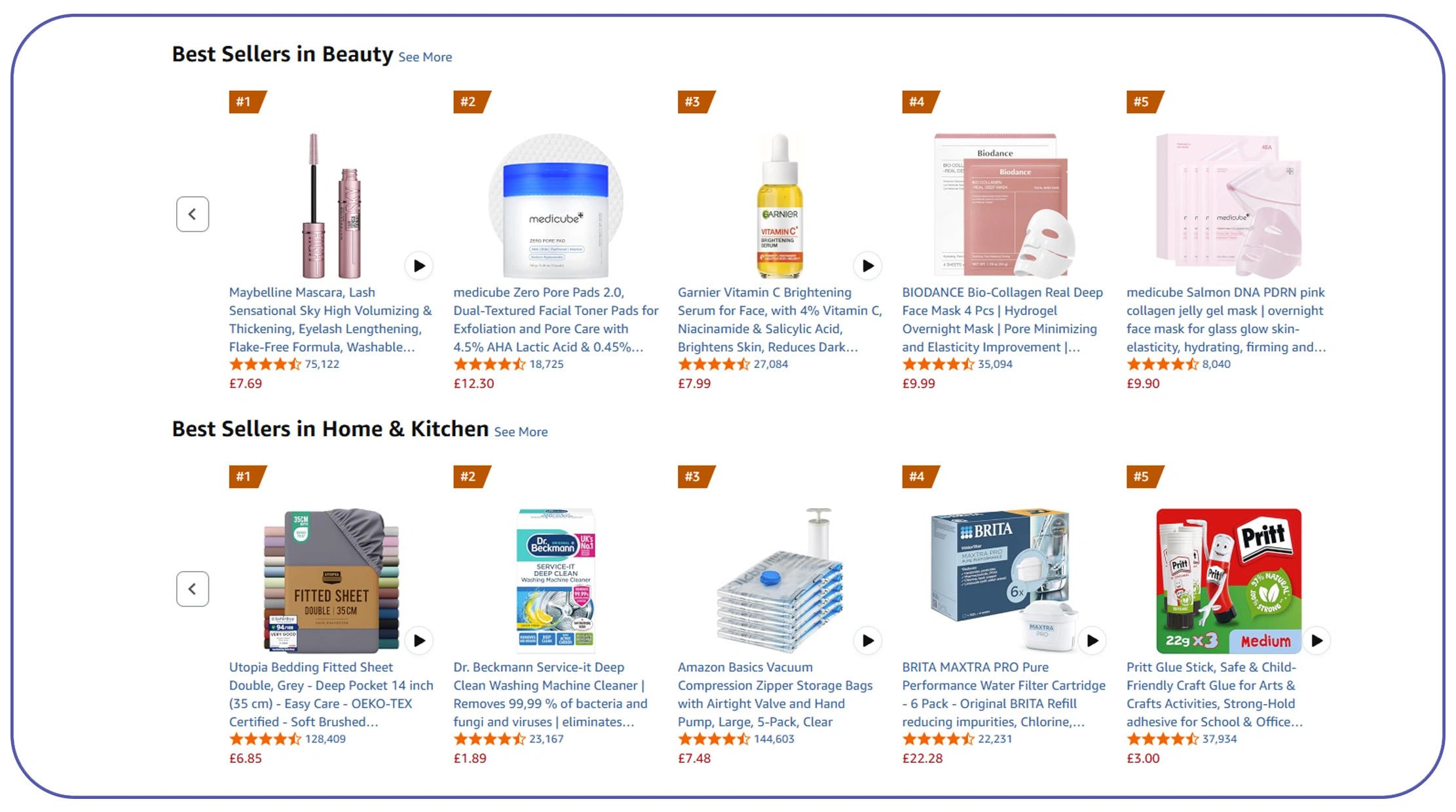
Fake reviews can significantly impact seller credibility and consumer trust. To address this issue, many businesses Extract Amazon fake feedback detection for sellers using large-scale data analytics. By analyzing product reviews and customer sentiment, sellers can identify whether negative feedback is genuine or part of a manipulation attempt.
AI-based review analysis helps sellers detect unusual patterns such as coordinated negative reviews from newly created accounts. These insights allow businesses to take corrective actions, protect their brand reputation, and maintain accurate product ratings.
The following table shows how review monitoring benefits sellers over time.
| Year | Sellers Monitoring Reviews | Products Tracked (Millions) | Fake Reviews Removed |
|---|---|---|---|
| 2020 | 40,000 | 12 | 1.2M |
| 2021 | 55,000 | 16 | 1.8M |
| 2022 | 70,000 | 21 | 2.5M |
| 2023 | 90,000 | 27 | 3.3M |
| 2024 | 115,000 | 34 | 4.1M |
| 2025 | 140,000 | 42 | 5.0M |
| 2026 | 170,000 | 52 | 6.4M |
By analyzing large datasets of customer feedback, sellers gain deeper insights into how their products are perceived in the marketplace. AI-powered analytics helps them maintain trust and improve customer experience.
Data Insights That Support Competitive E-commerce Strategy
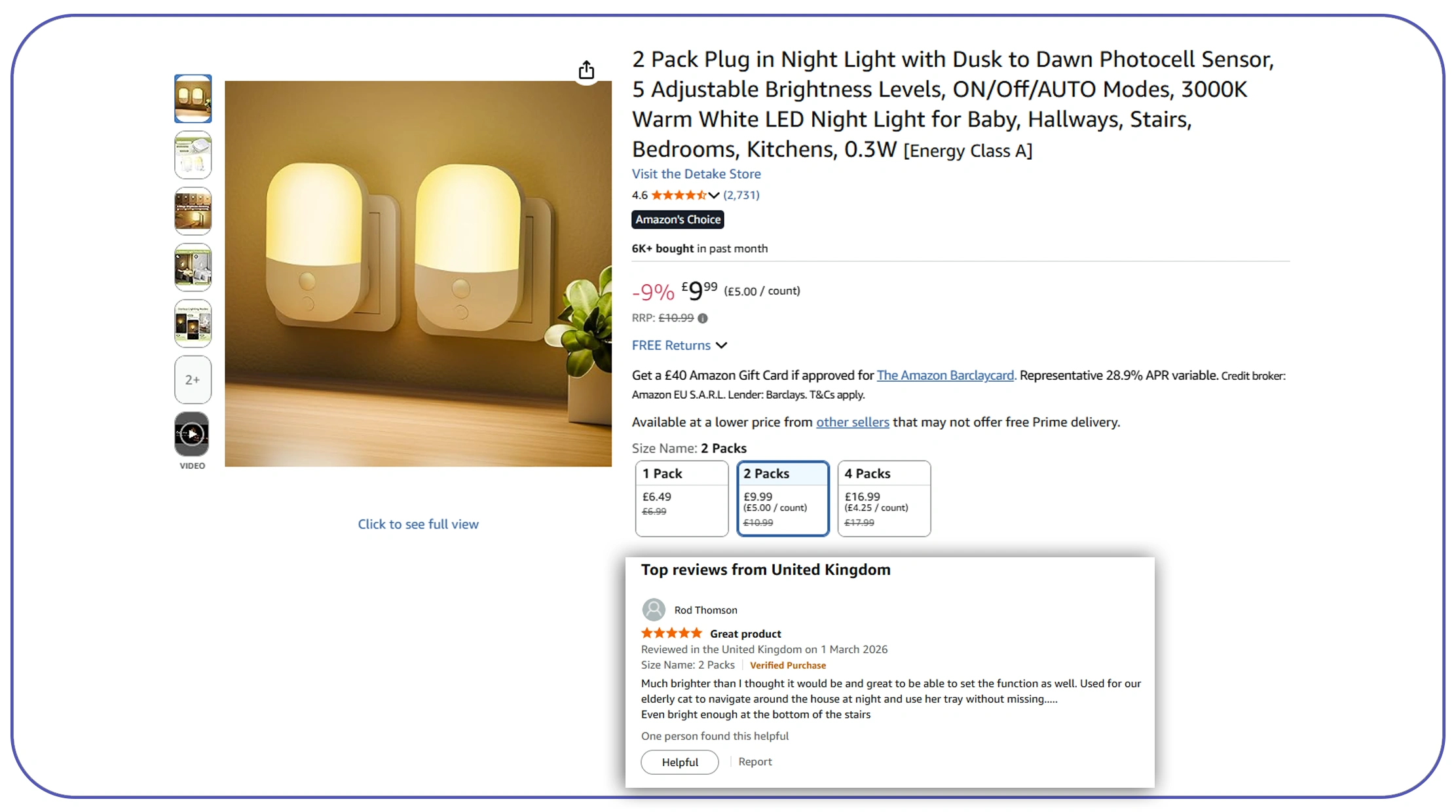
Businesses seeking deeper marketplace insights often rely on an Amazon Review Scraper for Sellers to collect product ratings and customer feedback from multiple categories. This data allows companies to analyze competitor strategies, understand customer preferences, and identify suspicious review trends.
Review analytics helps sellers evaluate product performance across different price ranges, categories, and customer segments. AI-driven insights can highlight whether product ratings are consistent with real customer sentiment or influenced by manipulated feedback.
Below is an overview of how review data analysis supports business decision-making.
| Year | Sellers Using Review Analytics | Average Reviews Analyzed per Seller | Strategic Decisions Influenced |
|---|---|---|---|
| 2020 | 35,000 | 3,500 | Pricing adjustments |
| 2021 | 50,000 | 4,200 | Product improvements |
| 2022 | 70,000 | 5,100 | Marketing strategy |
| 2023 | 90,000 | 6,000 | Competitor monitoring |
| 2024 | 120,000 | 7,400 | Customer sentiment insights |
| 2025 | 150,000 | 8,900 | Demand forecasting |
| 2026 | 185,000 | 10,500 | AI-driven optimization |
With reliable review data, businesses can identify market trends, improve product quality, and strengthen their competitive strategy.
Structured Data for Advanced Marketplace Intelligence

Access to large and organized datasets is essential for developing accurate AI models. Many companies use Amazon Product and Review Datasets to conduct advanced analytics, train machine learning models, and monitor marketplace trends. These datasets include product information, review text, ratings, reviewer activity, and timestamps.
With structured data, AI systems can detect linguistic patterns that indicate fake reviews, such as repetitive phrases, unnatural sentiment shifts, or unusual rating distributions. By analyzing these signals, businesses can identify potential manipulation campaigns and protect consumer trust.
The growth of structured e-commerce datasets between 2020 and 2026 demonstrates how organizations increasingly rely on data-driven insights.
| Year | Dataset Size (TB) | AI Projects Using Review Data | Businesses Using Marketplace Data |
|---|---|---|---|
| 2020 | 3.5 | 150 | 220 |
| 2021 | 4.2 | 185 | 260 |
| 2022 | 5.1 | 230 | 310 |
| 2023 | 6.3 | 280 | 360 |
| 2024 | 7.5 | 340 | 420 |
| 2025 | 9.0 | 410 | 480 |
| 2026 | 10.8 | 500 | 550 |
These datasets enable businesses to develop advanced analytics tools that improve transparency across the e-commerce ecosystem.
Why Choose Real Data API?
Real Data API provides scalable solutions for collecting and analyzing e-commerce marketplace data. Businesses can use a powerful Amazon Scraping API to gather structured product information, ratings, and customer reviews in real time. This allows organizations to build advanced analytics systems and detect suspicious review patterns more efficiently.
By integrating automated data pipelines with AI technologies, companies can better understand how to detect fake Amazon reviews using AI and develop more accurate review monitoring systems. Real Data API ensures that businesses have access to reliable and structured datasets needed for training machine learning models, conducting sentiment analysis, and tracking marketplace trends.
With robust infrastructure, high-volume data extraction capabilities, and structured data delivery, Real Data API supports businesses, researchers, and analytics teams seeking reliable e-commerce intelligence.
Conclusion
Fake reviews can significantly influence purchasing decisions and undermine trust in online marketplaces. By learning how to detect fake Amazon reviews using AI, businesses and consumers can identify suspicious feedback patterns and make more informed decisions. AI-powered analytics, combined with large-scale review datasets, enables organizations to detect fraudulent review activity with greater accuracy.
Tools like an Amazon Reviews Scraper and structured datasets from reliable providers make it possible to monitor review authenticity, analyze customer sentiment, and maintain marketplace transparency. As e-commerce continues to grow, data-driven review analysis will remain essential for protecting consumer trust and improving decision-making.
Discover reliable review datasets and powerful scraping tools with Real Data API to build smarter AI systems and detect fake reviews more effectively!
Latest posts

How Uber Eats API Helps Businesses Overcome Restaurant, Menu, and Pricing Data Challenges

How Myntra API Solves Fashion Retail Challenges with Fashion Product, Price, Brand, and Category Data

How Nykaa Fashion Dataset Solves Product, Price, Brand, and Fashion Market Trend Tracking Challenges

Harrods UK: The World's Leading Luxury Department Store - A Complete Guide to Harrods Data Scraping, API Access, and Datasets







.png)