Introduction
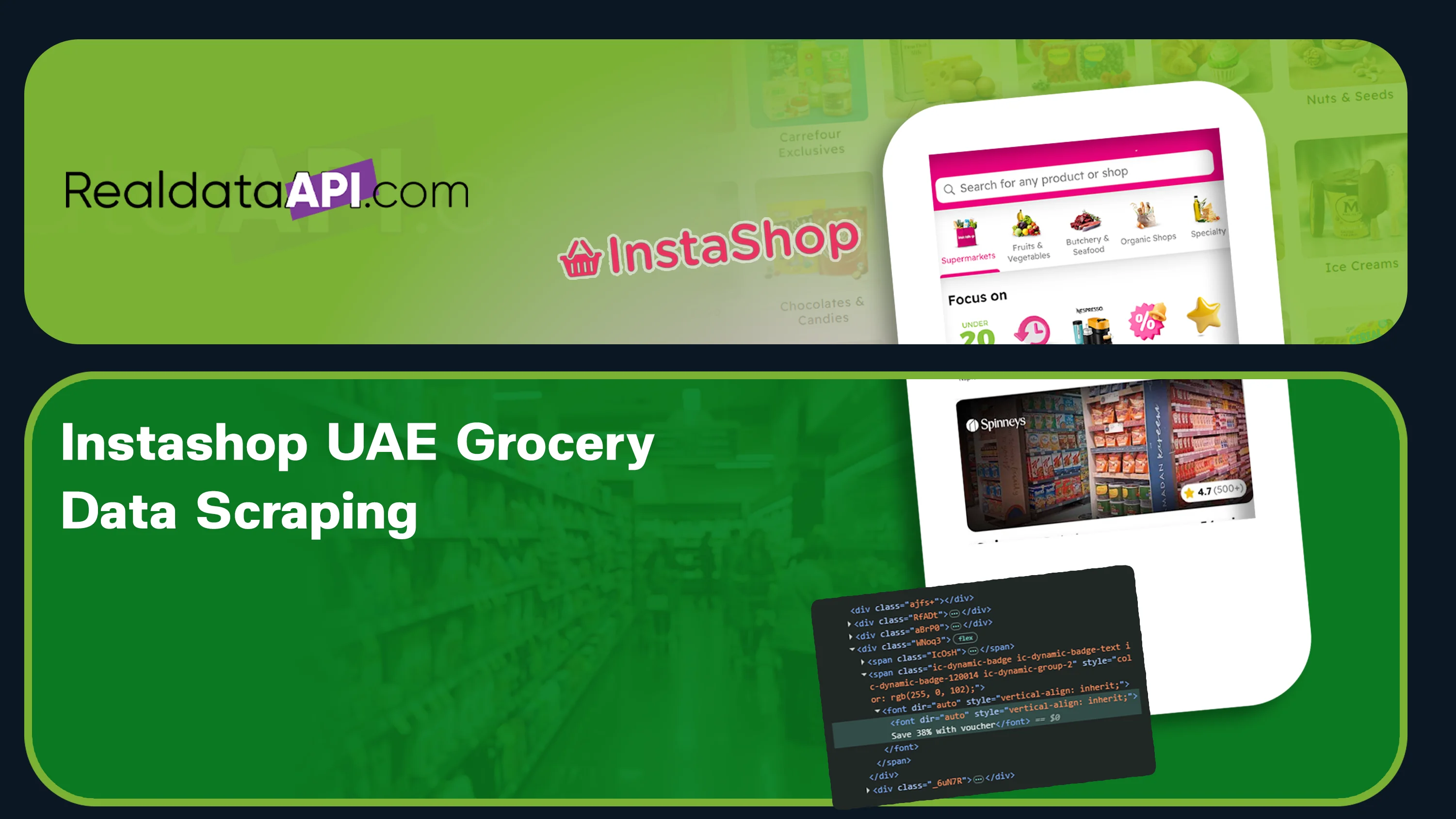
Instashop is not a single supermarket. It is a delivery aggregator that lists many supermarkets, pharmacies and specialty stores in one app. A shopper can open Instashop, select a store and order the products it stocks. For a brand or analyst, this structure is both an advantage and a challenge. The advantage is that one platform gives access to many retailers. The challenge is that each store has its own catalogue, price and promotions inside the same app. Instashop data scraping, done well, provides a unified view of all of them.
This guide explains how Instashop scraping works, what data you can collect, how store-wise differences are handled and how brands, importers and researchers use the output.
What Makes Instashop Different From A Retailer Website
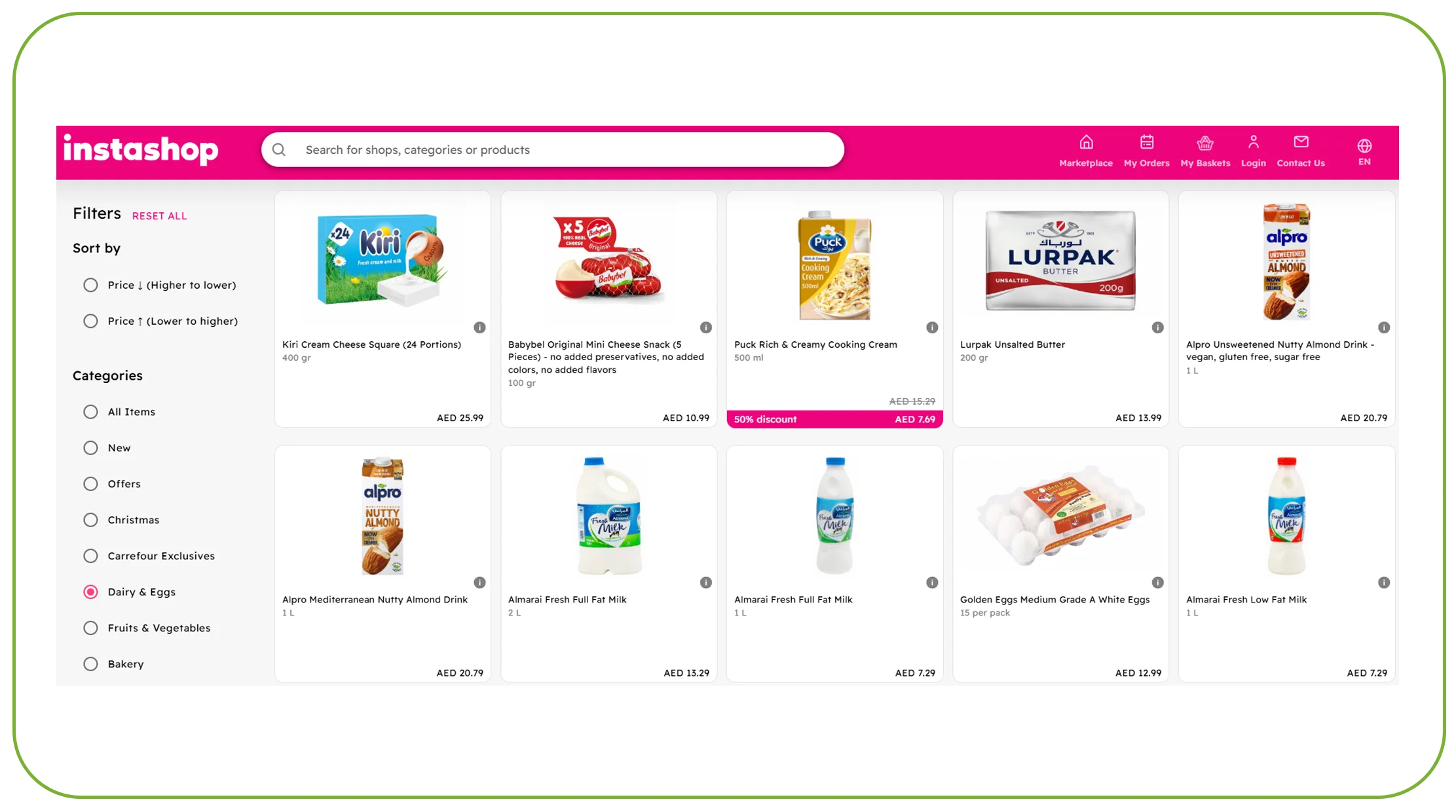
On a retailer's own site, you scrape one catalogue. On an aggregator like Instashop, you scrape many. The platform shows:
- A list of stores available at the shopper's location
- A separate catalogue for each store
- Store-specific prices, which may differ from the retailer's own store prices, and may include markups
- Store-specific stock and delivery times
- Platform-level fees and offers, such as delivery fees and service fees
- Platform-wide promotions and vouchers
For broader UAE retail benchmarking, teams can combine Instashop observations with UAE supermarkets and ecommerce data extraction to compare aggregator listings with retailer and e-commerce sources.
Because prices and availability sit at the store level, the key unit of analysis is the combination of store, product and location.
Why Scrape Instashop?
- Coverage: many supermarkets and specialty retailers are present in a single place.
- Consumer view: it reflects what customers actually see and pay when ordering through the app.
- Price comparison: you can compare the same product across stores in the same app, with the same delivery context.
- Assortment mapping: see which stores stock which brands, and where your product is missing.
- Promotion monitoring: track platform-driven discounts and vouchers in addition to store promotions.
Data Fields To Collect
Store level: store name, store type (supermarket, pharmacy, speciality), delivery time estimate, minimum order value, delivery fee, service fee, rating and opening status.
Product level: product name in English and Arabic where available, brand, pack size, category and sub-category, barcode where displayed, image URL and product ID.
Price and offers: price, original price, discount percentage, multi-buy offers and platform vouchers where visible.
Availability: in stock or out of stock, and any limited-stock messages.
Context: area or emirate used, timestamp and rank in category listings.
How Instashop Scraping Works
- Define locations. Choose addresses or areas across the emirates, for example Dubai Marina, Business Bay, Abu Dhabi city, Sharjah and Al Ain. Which stores appear depends on the delivery address.
- List available stores. For each location, collect the list of stores and their delivery details.
- Select the target stores. Choose all or a subset, such as the main supermarket chains.
- Map each store's catalogue. Discover all categories and sub-categories in the store.
- Collect products. Page through categories and capture product, price and stock.
- Add product details. Open product pages when you need descriptions, barcodes or nutrition information.
- Standardise and match. Normalise sizes and units. Match products across stores using barcode, brand and size.
- Validate and deliver. Check counts and prices, then deliver by file or API.
This makes Instashop especially useful for retail price comparison workflows that normalize the same SKU across multiple stores and delivery contexts.
Store-Wise Price Analysis
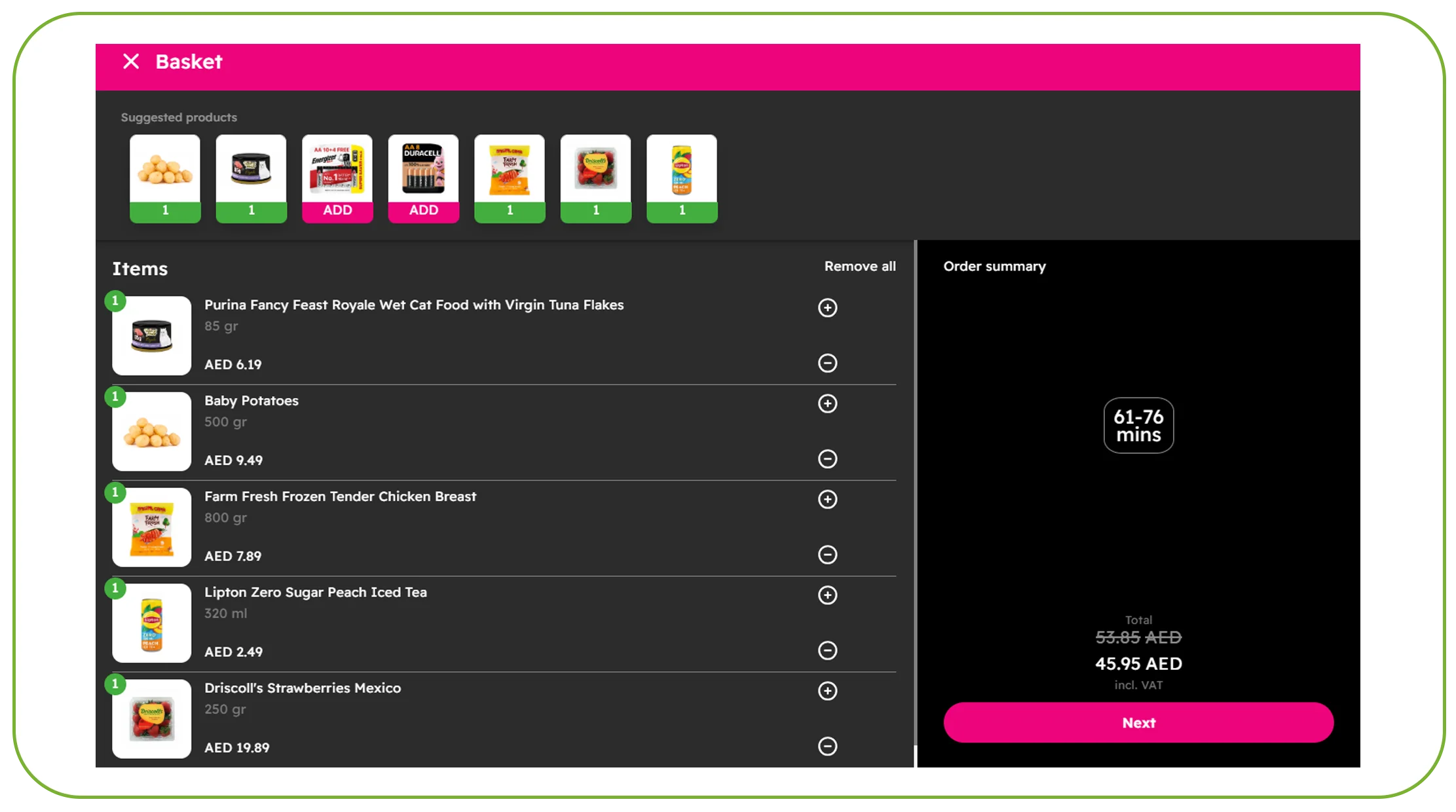
Once the data is matched, you can compare how different stores price the same product on Instashop. You may find that some stores price close to their in-store shelf price, while others add a margin for delivery. You may also see that availability differs widely: a premium supermarket may carry imported brands that a hypermarket does not, and vice versa. These patterns help brands choose where to focus promotions and help importers understand which retailers drive their products online.
Technical Challenges
- App-first design: Instashop is primarily a mobile app. Scrapers need to work with app endpoints or a web version, which can change often.
- Location dependency: stores and catalogues change with address, so many locations must be sampled.
- Large number of stores: each store has its own catalogue, which multiplies volume.
- Frequent promotions and vouchers: platform offers can change daily.
- Bilingual data: English and Arabic names need to be handled and matched.
- Anti-bot protection and rate limits: collection must be paced carefully.
- Product duplication: the same product appears in many stores. Careful de-duplication and matching are needed to avoid double counting.
Use Cases
- FMCG brands: monitor price and availability of their products across stores on the app.
- Importers and distributors: see which stores carry their products and where gaps exist.
- Retailers: compare their online price on Instashop with competitors and with their own website.
- Market researchers: measure the online grocery assortment and price levels in the UAE.
- Delivery and logistics analysts: study delivery fees, minimum orders and time promises by area.
- Investors: understand how aggregator and retailer dynamics shape the online grocery market.
Example: An Importer Of Organic Foods
An importer sells organic pasta, sauces and snacks in the UAE. It scrapes the premium and mid-market stores on Instashop across Dubai and Abu Dhabi weekly. The data shows that its products are available in only half of the stores that carry similar organic brands, and that two stores list its products at a higher price than others. The importer uses the findings to negotiate listings and pricing with specific retailers.
Sample Output
A row may include: location, store name, store type, category, product name (English), product name (Arabic), brand, size, price, original price, discount percent, promotion text, availability, barcode, delivery fee, minimum order value, delivery time, product URL and timestamp.
Data Quality Checks
- Compare store counts and product counts against previous runs
- Check that prices are numeric and in AED
- Verify that out-of-stock items are correctly flagged
- Confirm that Arabic text is stored correctly
- Review a sample manually against the app
For recurring structured feeds, a Grocery Data Scraping API can help move product, price, promotion and availability data into analytics systems.
Delivery And Refresh
Options include CSV and Excel files, JSON via API and direct loading into databases. A weekly cadence suits price comparison, while daily collection is useful during sales events and festivals.
If the project expands beyond Instashop, grocery datasets can provide additional retailer-level sources for broader market benchmarking.
Responsible Data Collection
Collect only publicly visible product and price information, avoid personal data, keep request rates reasonable and follow platform terms and applicable laws.
Why Choose Real Data API For Instashop Data Scraping
Real Data API builds location-aware scrapers that cover multiple stores within Instashop, standardise bilingual data and match products across stores. A pilot with two or three stores and a few categories helps you check data quality and plan the full project.
Conclusion
Instashop UAE grocery data scraping gives brands, importers and retailers a unified view of many supermarkets inside a single platform. With location-aware collection, store-wise price comparison and bilingual product matching, the data supports smarter listing, pricing and promotion decisions in the UAE.
Need Instashop UAE data? Real Data API can deliver a pilot for your stores and categories.
FAQs
Can you scrape all stores on Instashop?
Yes, within the locations you choose. The stores that appear depend on the delivery address, so more locations give wider coverage.
Do Instashop prices match the retailer's own prices?
Not always. Some stores add markups or have different promotions on the app. Collecting from both sources lets you compare.
Can you capture delivery fees and minimum orders?
Yes. Store-level delivery details are collected with each run.
Do you collect barcodes?
Where displayed, yes. Barcodes make matching across stores far more reliable.
How often should the data be refreshed?
Weekly for general monitoring and daily for campaigns.