Introduction
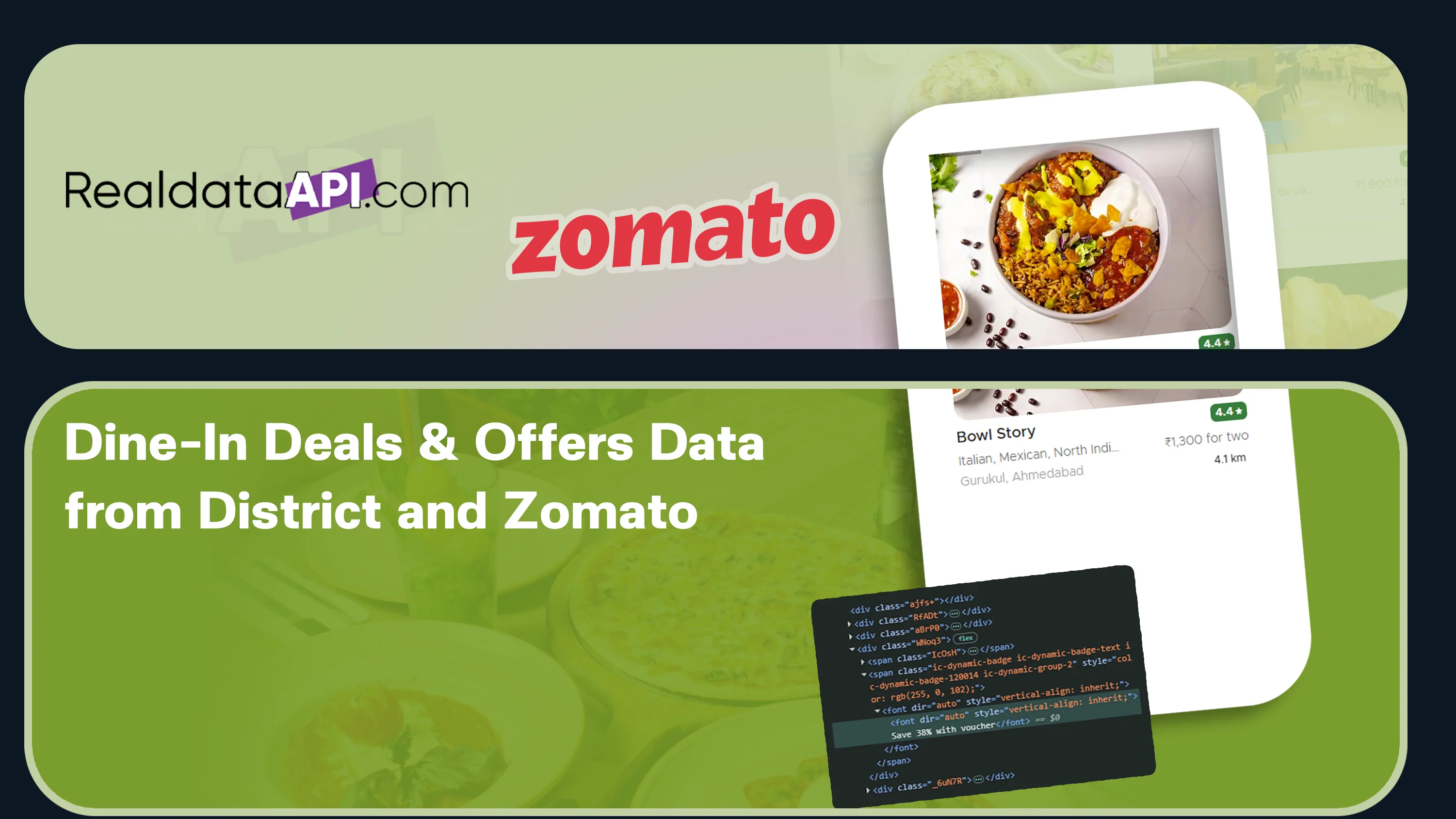
Dining out in India is increasingly driven by deals. Table-booking discounts, bank offers, flat percentage savings, free desserts, buy-one-get-one on drinks and loyalty perks shape where people eat and how much they spend. Platforms such as District and Zomato's dining section collect these offers in one place. For restaurants, banks, payment companies, aggregators and analysts, the offers themselves are a valuable dataset. Dine-in deals data scraping turns scattered offer listings into structured intelligence. The same structured approach is useful for wider food data scraping, where menus, prices, ratings and promotions can be analysed together.
This guide explains what dine-in offer data includes, how it is collected from District and Zomato, which challenges arise and how different teams use the output.
Why Offers Data Matters
Offers are a window into the dining market:
- Competition: which restaurants discount heavily, and which compete on experience instead
- Platform strategy: which platform pushes the strongest deals and in which cities
- Consumer behaviour: which offer types are most common on weekdays and weekends
- Partnerships: which banks and payment providers are most active in dining offers
- Pricing: how discounts relate to price bands and ratings
Without structured data, these insights stay buried in app screens.
Types Of Dine-In Offers
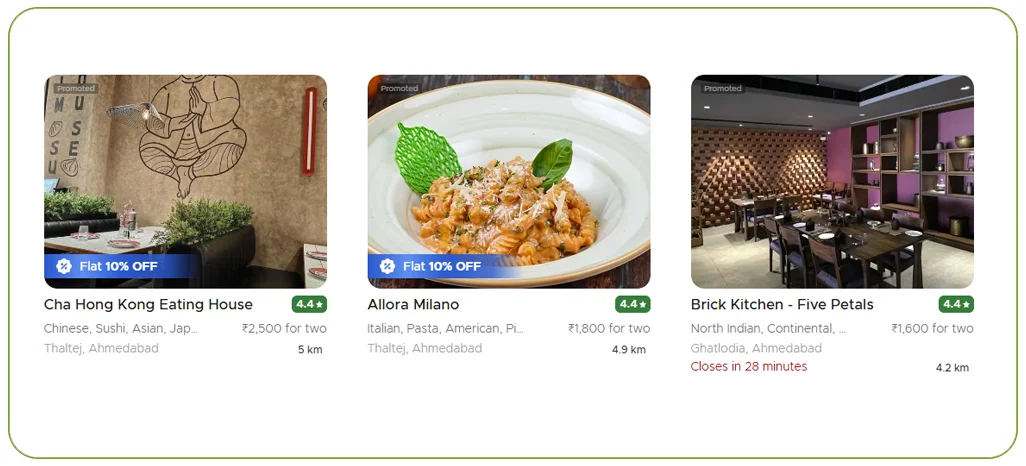
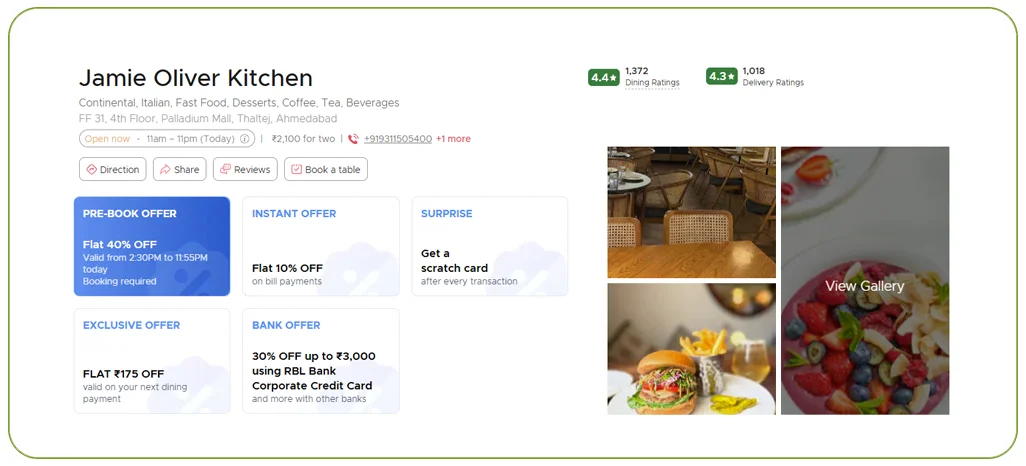
- Flat discount: for example a percentage off the total bill
- Bank and card offers: extra discounts for specific cards or payment methods
- Pre-paid vouchers: pay a small amount to get a larger voucher
- Time-based offers: happy hours, lunch specials and weekday deals
- Bundle and combo deals: set menus and chef specials
- Freebies: complimentary desserts or drinks above a bill value
- Membership benefits: gold-style programmes giving recurring benefits
- Table-booking incentives: extra savings for reserving through the app
Data Fields To Extract
Restaurant information: name, address, locality, city, cuisine, price-for-two, rating and review count.
Offer details: offer title and description, offer type, discount value or percentage, minimum bill requirement, maximum discount cap, applicable days and times, validity start and end dates, number of uses allowed, and terms and conditions text.
Payment conditions: bank or card names, wallet names and membership levels required.
Platform data: source platform, offer ID, position in the listing and collection timestamp.
How Offers Scraping Works
- Select cities and platforms. Dining offers vary by city, so the location is set first.
- Collect restaurant lists with offers. Platforms display deals on restaurant cards and detail pages. Both views are captured.
- Open restaurant pages. Offer sections often expand to show terms, so the scraper opens each offer panel.
- Parse the text into fields. Offer descriptions are written for humans, such as 20 percent off up to 500 rupees on bills above 1500. A parser extracts the percentage, cap and minimum bill into columns.
- Classify the offer. Rules assign an offer type and detect bank names.
- Track changes over time. Offers change daily, so each run is stored with a timestamp, and start and end of offers are inferred.
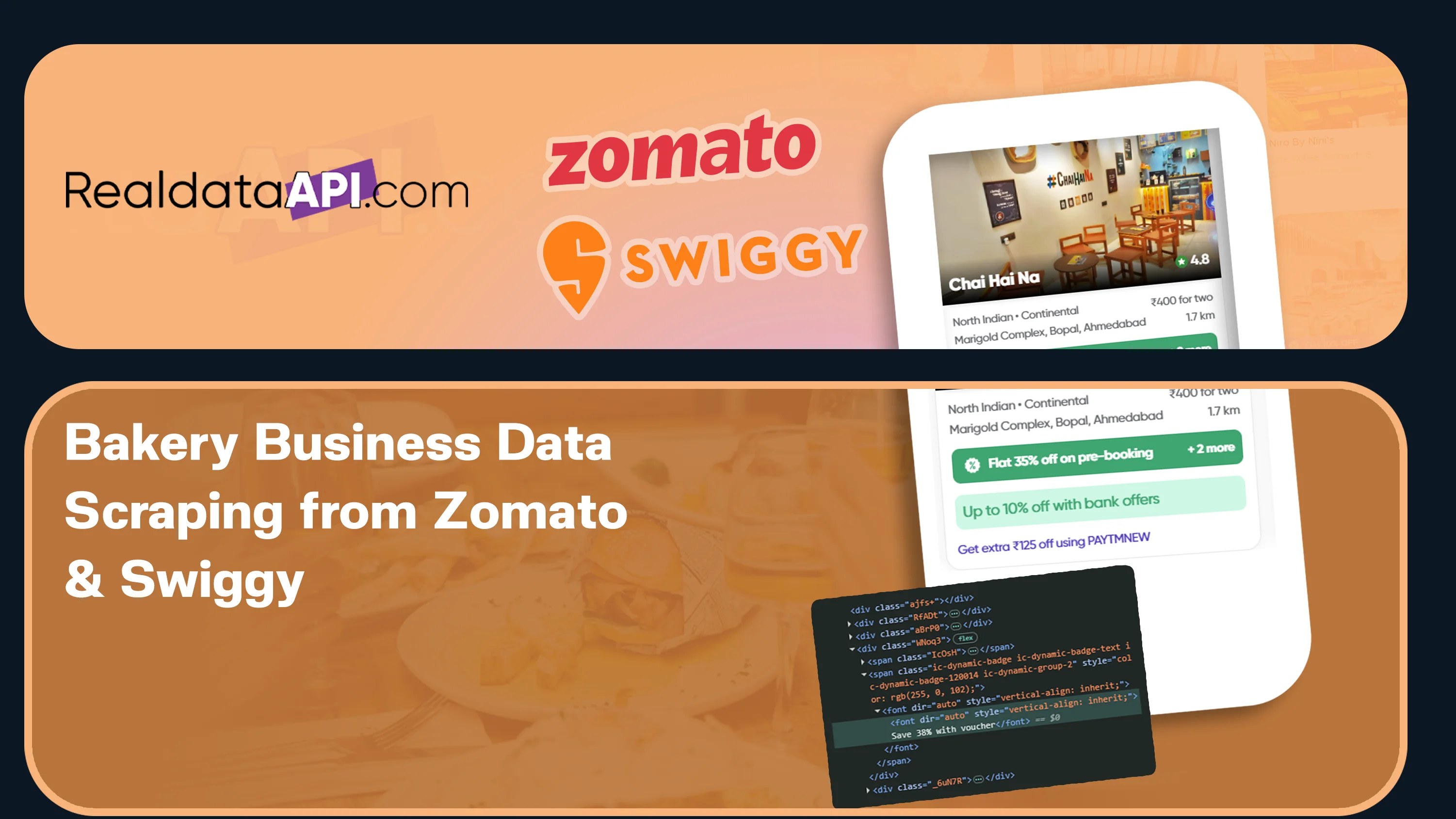
- Match restaurants across platforms. An outlet listed on both District and Zomato is linked, so you can compare its deals. For a related view of restaurant listings, menus and dine-in offers across Indian platforms, see Zomato and Swiggy restaurant data scraping.
- Deliver. Output is delivered as files or via API, ready for analysis.
Parsing Offer Text
The most important technical task is parsing. Offer text has many variations, including percentage, flat amounts, caps, minimum spends and conditions that apply only on certain days. A parser should output both the original text and structured fields. When it cannot parse a rule confidently, it should flag the offer for review rather than guess. Over time, patterns improve and the share of flagged offers shrinks.
Technical Challenges
- Dynamic content: offers appear in pop-ups and expandable sections.
- Frequent changes: deals can change daily or even hourly, and expire without notice.
- Location-based results: platforms show different restaurants and offers by city and locality.
- Mixed languages and formats: terms and conditions may vary widely.
- App-based platforms: District and similar services are strongly mobile-first, so scrapers may need to use app endpoints or advanced browser emulation. Handling app-rendered pages and changing interfaces may also require adaptable web scraping services designed for dynamic sources.
- Rate limits: collection must be controlled to avoid heavy load on the platform.
Use Cases
- Restaurants and chains: benchmark competitors' discount levels and design competitive offers.
- Banks and payment companies: see which restaurants offer deals tied to their cards, and find gaps compared with competitors.
- Aggregators and deal apps: build a unified offers feed for users.
- Market researchers: study how discounting varies with price, cuisine, city and weekday.
- Investors and analysts: track platform promotional intensity as a signal of competition.
- Marketing agencies: plan campaigns around active deal windows.
Example: A Bank Benchmarking Dining Offers
A bank wants to understand how its dining offers compare with those of other banks in Bengaluru. It collects dine-in offers from District and Zomato daily for a month, parses bank names and discount rules, and measures the share of restaurants offering each bank's deals, the average discount and the minimum bill. The analysis shows that competitors offer higher discounts at premium restaurants on weekends, so the bank adjusts its partnership strategy.
Example: A Restaurant Group
A group with 15 restaurants collects offer data for competing restaurants within a two-kilometre radius of each outlet. It sees which competitors discount on weekdays and by how much, and sets its own lunch promotions to respond. It also notices that certain competitors never discount and rely on ratings, which informs its brand positioning.
Sample Output Columns
Platform, city, restaurant name, address, cuisine, rating, offer title, offer type, discount percent, discount amount, maximum discount, minimum bill, applicable days, applicable time, bank or card, validity start, validity end, terms text, collection timestamp.
Delivery and Refresh
For competitive monitoring, daily collection is common. For campaigns, collection may run several times a day around peak periods. Output can be delivered as JSON via API, CSV files or as database tables that feed dashboards.
Responsible Scraping
Collect only public offer information, avoid personal data, respect platform terms of use and local laws, and keep request volumes sensible.
Why Choose Real Data Api For Dine-In Offers Scraping
Real Data API builds scrapers that handle app-based platforms, parse offer text into structured fields and track changes over time. We can run a sample for one city and a limited number of restaurants so you can validate the fields and parser quality before scaling. This work can be supported by a dedicated food scraping API for collecting and structuring restaurant information across supported platforms.
Conclusion
Dine-in deals data scraping from District and Zomato gives restaurants, banks and analysts a clear, structured view of discounting in the dining market. With accurate parsing, daily tracking and cross-platform matching, offers become measurable and comparable, supporting better pricing and partnership decisions.
Need dining offers data? Real Data API can deliver a sample for your city and restaurants.
FAQs
Can offers be tracked historically?
Yes, from the first collection date. Daily snapshots build a history of when offers start, change and end.
Can you detect which bank or card an offer applies to?
Yes. Bank and card names are extracted from the text, and unknown patterns are flagged.
Does the data include restaurant ratings and cuisines?
Yes. Restaurant details are included so offers can be analysed by cuisine, price band and rating.
Can you cover multiple cities?
Yes. The process is repeated for each city, with location set before collection.
What if an offer cannot be parsed?
The original text is always kept, and the structured fields are left empty with a flag for review.



.png)


