.gif)
.png)
Introduction
India's food-tech platforms hold the most detailed picture of the restaurant market. Whether you sell to restaurants, build a food app or research the industry, structured data from Zomato, Swiggy and District is the starting point. For teams that need structured restaurant and menu information at scale, a dedicated food data scraping can help collect and standardize these fields across supported platforms.
Data points available
- Restaurant name, address, locality, city and coordinates
- Cuisine types, price for two, ratings and review counts
- Full menus with item names, descriptions, veg/non-veg tags and prices
- Delivery vs dine-in availability and operating hours
- Offers: delivery discounts, bank offers and dine-in deals
- Business categories such as bakeries, cloud kitchens and cafes
Dine-in deals and offers
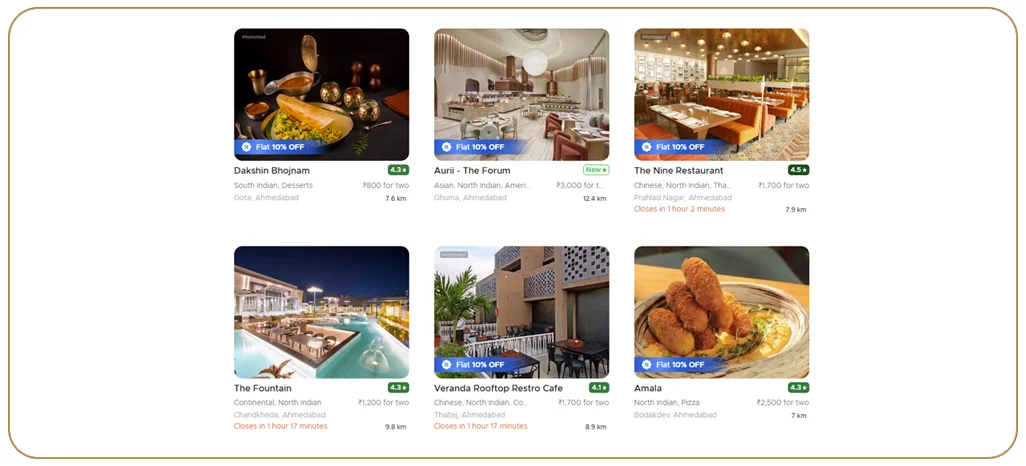
Dine-in platforms such as District and Zomato's dining section publish table-booking discounts and bank offers. Tracking these shows which restaurants discount, how deeply and when, which is useful for loyalty and aggregator teams.
Typical projects
- Lead generation: a supplier wants all bakeries or hotels in a city with address and cuisine.
- Menu benchmarking: compare the price of the same dish across areas or platforms.
- Market mapping: count restaurants per cuisine and locality to find white space. Using a structured food dataset makes this analysis easier to repeat across cities and cuisines.
- Supplier targeting: identify restaurants by type for B2B sales.
Challenges
Platforms limit requests, load content dynamically and structure menus differently. Prices on delivery apps may include markups over dine-in prices, so keep the source in each record.
How restaurant data collection works
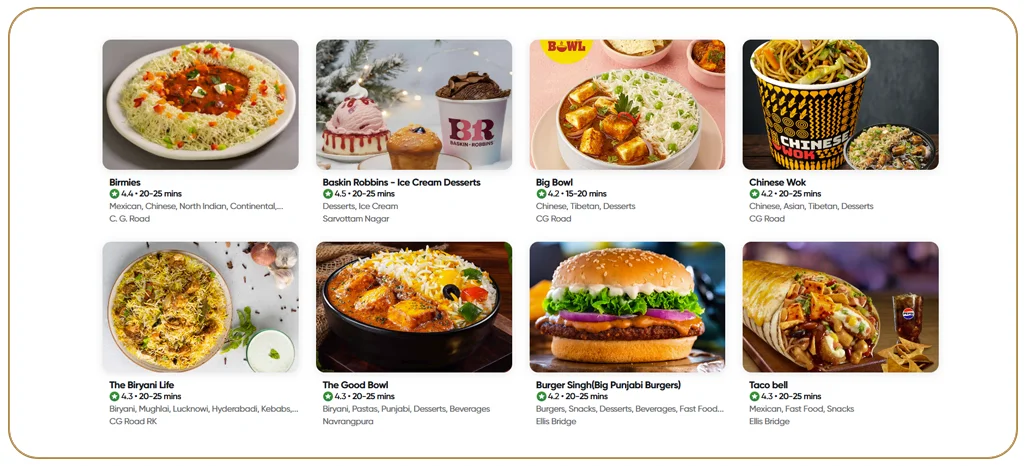
Restaurant platforms are location-based, so collection starts with the city and locality. The scraper selects the area, loads the restaurant list, opens each restaurant page, and reads the menu, offers and details. Results are de-duplicated, because one outlet can appear under several categories or collections. For automated collection across supported platforms, teams can explore a dedicated Food Scraping API workflow.
Building a restaurant database by city and cuisine
A clean database usually includes a unique outlet ID, restaurant name, full address, locality, city, coordinates, cuisines, price-for-two band, rating, review count, delivery and dine-in flags, and opening hours. With these fields you can count restaurants by cuisine and locality, find areas with few options in a category, and build targeted lead lists for suppliers.
What menu intelligence can tell you
- Price positioning: compare the price of the same dish type, such as paneer tikka or margherita pizza, across areas.
- Assortment gaps: see which cuisines or dish types are missing in a locality.
- Add-ons and combos: study how restaurants bundle items to raise order value.
- Veg and non-veg mix: useful for food brands choosing partners.
Tracking dine-in deals and offers
Offer data should include the restaurant, offer type (flat discount, bank offer, free dessert), minimum bill, validity and the platform that published it. Collected daily, this shows which restaurants rely on discounts and which platforms push the strongest deals.
Why choose Real Data API for Zomato and Swiggy data scraping
Platform pages change often, and menus are updated daily. Real Data API maintains the scrapers, normalises menu and cuisine fields, and delivers clean output in the format your team uses, whether that is CSV, JSON or an API. Teams that need automated collection and structured delivery can explore the Food Scraping API for relevant food and restaurant data workflows.
FAQs
1. Can I get only cuisine and address?
Yes, datasets can be limited to the fields you need.
2. Do you cover other cities?
Yes, by city, locality or pincode.
3. Can I get data for bakeries, cafes or cloud kitchens only?
Yes. The scrape can be filtered by category or cuisine, so you only receive the outlet types you need.
4. Do menu prices on delivery apps match dine-in prices?
Not always. Delivery menus can have different prices, so each record stores its source platform.
5. Can I get contact details for restaurants?
Only if they are publicly shown on the platform. Many platforms do not display direct phone numbers or emails, so these fields may be limited.
6. How often should menus be refreshed?
Weekly is common for lead lists, and daily for price and offer tracking.
Conclusion
Zomato and Swiggy data scraping gives food businesses a detailed view of restaurants, menus, cuisines and offers in any city. Whether the goal is lead generation, menu benchmarking or market mapping, structured restaurant data replaces hours of manual research with a reliable feed.
Need restaurant data? Ask Real Data API for a sample for your city.
Latest posts
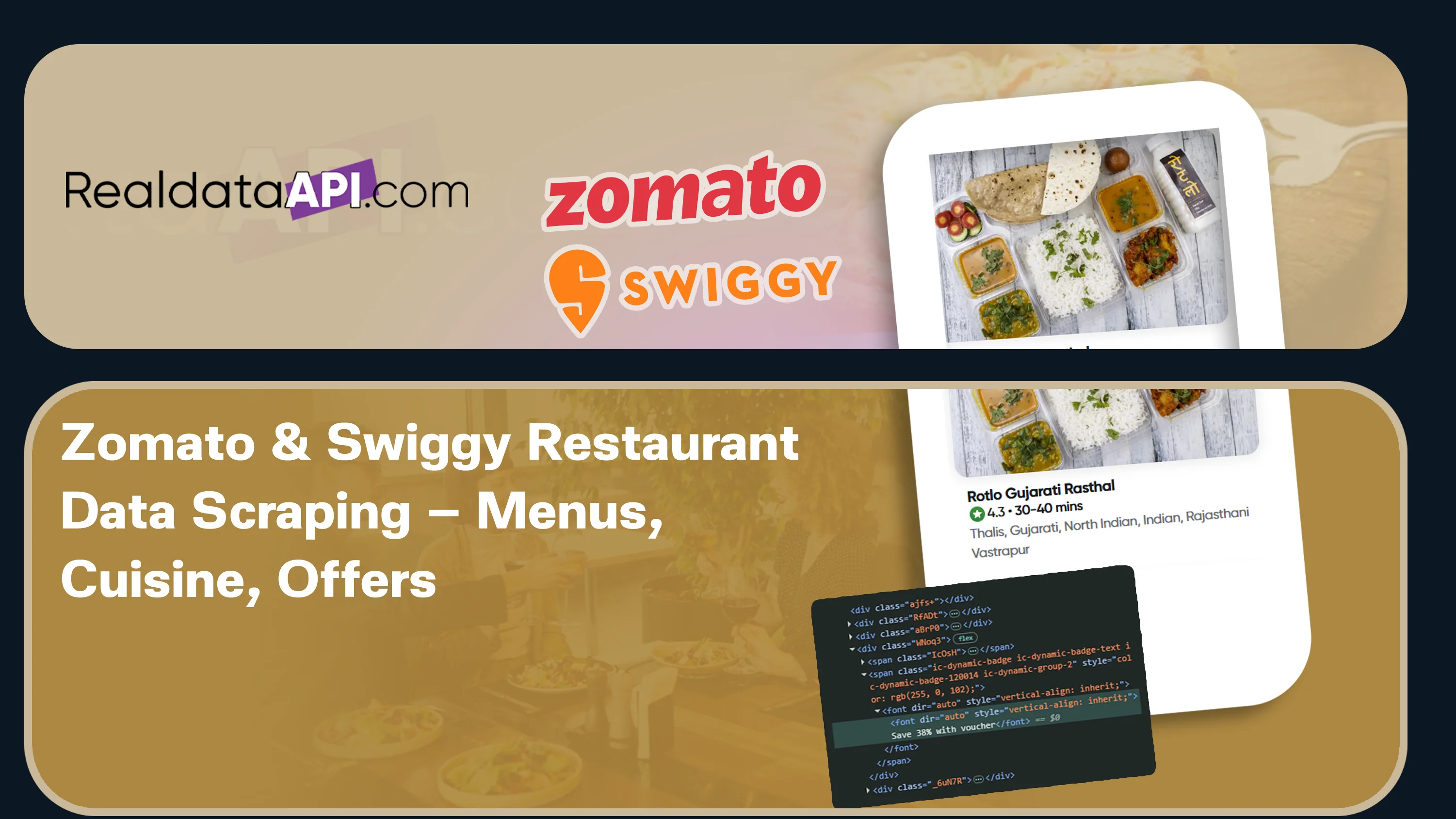
Zomato & Swiggy Restaurant Data Scraping: Menu, Cuisine, Address & Dine-In Offers
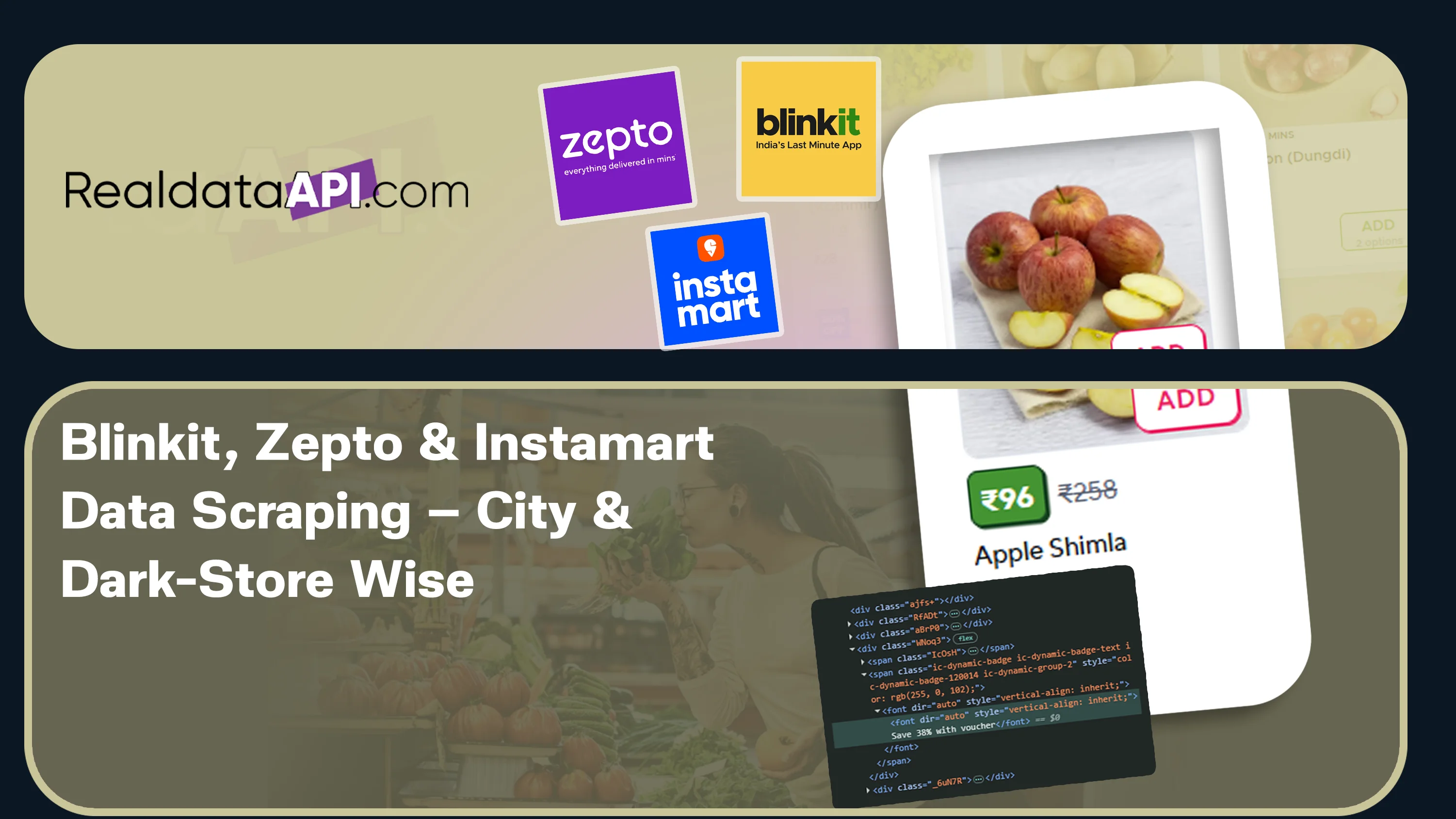
How to Scrape Blinkit, Zepto & Swiggy Instamart Data (City & Dark-Store Wise)
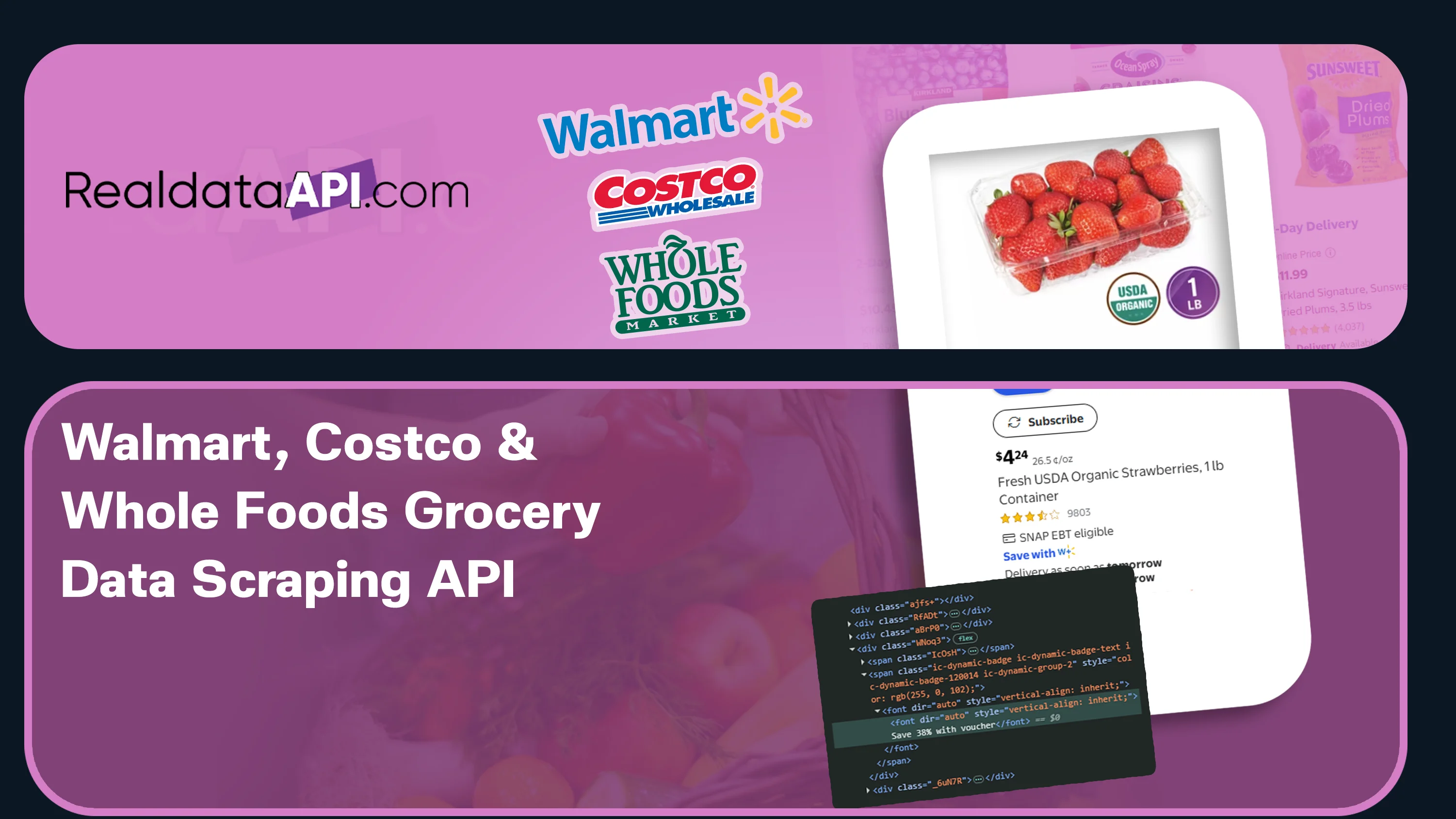
Walmart, Costco & Whole Foods Grocery Data Scraping: Pricing, Nutrition, Ingredients & Store Availability
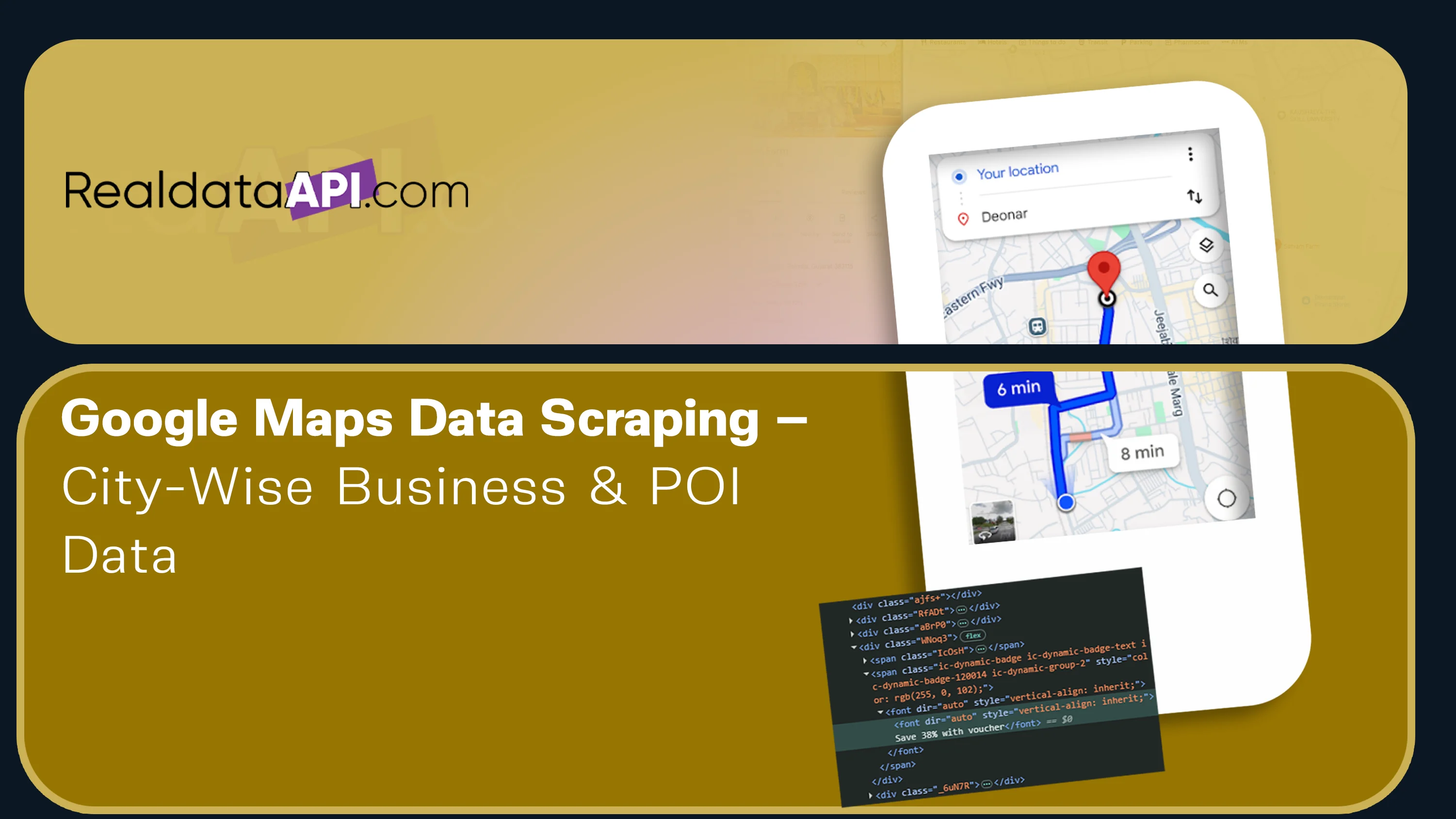
Google Maps Business Data Scraping: City-Wise Leads & Multi-Country POI Data


.png)


