.gif)
.png)
Quick Summary
- Food datasets for food delivery market intelligence help restaurants, food brands, and market researchers compare menu prices, monitor competitors, and identify potential pricing gaps using structured market observations.
- Food Data Scraping can organize available menu information, promotional offers, product categories, and delivery-related details for consistent analysis, subject to authorized access and applicable platform rules.
- Reliable results require accurate item matching, timestamps, comparable prices, and clear data-quality checks. This guide explains how businesses can use food-market data to improve pricing decisions without relying on unsupported assumptions.
Introduction
Food datasets for food delivery market intelligence help restaurants, food brands, delivery businesses, and market researchers understand how menu prices and competing offers differ across locations and time periods. By organizing product information, visible discounts, restaurant details, and delivery charges where available, businesses can investigate price gaps and make more informed decisions about menu positioning.
Food delivery markets are complex because displayed prices do not always represent the final amount paid by a customer. Portion sizes, meal combinations, add-ons, conditional discounts, taxes, and delivery fees can affect comparisons. A reliable research process therefore needs to compare equivalent products and clearly document the basis of each calculation.
India's online food-delivery sector has attracted substantial consumer and business interest. The Google, Temasek, and Bain & Company e-Conomy SEA research series examines digital commerce, including online food delivery, across the region. Its India report provides estimates of market size and growth expectations, offering context for businesses evaluating digital food services. Source: India e-Conomy Report 2023.
For commercial users, market growth alone cannot reveal whether a particular restaurant is overpriced or whether a discount is competitive. Those questions require relevant item-level observations, consistent matching rules, and a record of when each price was collected.
A structured workflow can help businesses replace occasional manual checks with repeatable research. The following sections explain how to compare competitors, normalize prices, monitor changes, and evaluate data collection approaches while distinguishing verified facts from analytical recommendations.
How can businesses compare restaurant menus across competitors?
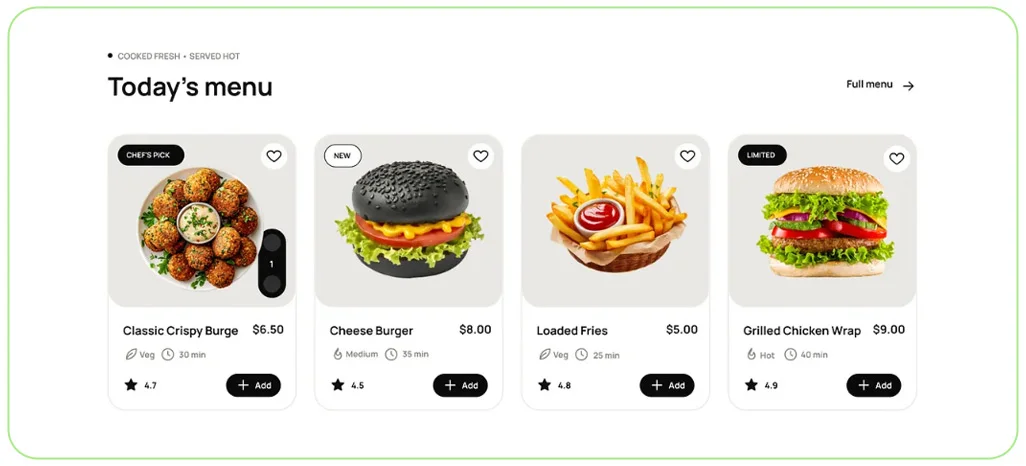
Food data scraping for food delivery market research can help restaurants, food brands, and analysts organize menu observations from permitted sources. The objective is to compare similar offerings across a defined set of restaurants, categories, and locations instead of relying on isolated menu checks.
A research project should begin with a specific question. A restaurant may want to compare the prices of similar meals in its local area. A food brand may investigate how comparable products are positioned across delivery platforms. A market researcher may examine differences in cuisine categories, menu variety, or promotional activity.
The comparison method should reflect the product being studied. Two dishes with similar names may have different portion sizes, ingredients, or included side dishes. Similarly, a meal bundle should not automatically be compared with a standalone dish. Analysts should record these differences and flag uncertain matches rather than force them into the same comparison group.
Historical industry estimates provide useful context. The Google, Temasek, and Bain & Company India e-Conomy Report 2023 estimated India's online food-delivery gross merchandise value at US$8–9 billion in 2022. It projected US$14–17 billion in 2025 and US$35–40 billion in 2030. These figures are estimates and forecasts from the report, not verified results for every subsequent year. Source: India e-Conomy Report 2023.
Businesses should use market forecasts to understand the broader environment, not to infer individual restaurant performance. To identify meaningful pricing gaps, analysts need actual comparable menu observations, documented collection dates, and a clear definition of the competing products.
A practical report should show the item, the observed price, the competitor, the location, the collection date, and the matching confidence. This makes the findings easier to validate and gives pricing teams a defensible starting point for further investigation.
How can grocery data improve food-market comparisons?
A Web data scraper for grocery food datasets can help researchers organize permitted product information into consistent records for comparison across selected retailers and categories. Although packaged groceries and prepared meals are different product types, both require accurate product identification, consistent quantity measurements, and documented pricing conditions.
For packaged foods, useful fields may include the brand, product variant, net quantity, displayed price, discount information, and source timestamp. For prepared meals, relevant fields may instead include the dish name, portion size, included sides, and customization options. These different product types should not be combined into a single benchmark without an appropriate methodology.
Unit-price normalization helps when quantities differ. For example, if the quantity and price are known, the price per kilogram can be calculated by dividing the product price by its weight in kilograms. The calculation supports comparisons between pack sizes, provided the products and pricing conditions are comparable.
Analysts should retain the original displayed values as well as normalized values. This allows another reviewer to verify how the calculation was made and identify errors in quantity conversion or product matching.
Promotions require similar care. A discount may depend on a minimum order, payment method, membership, or coupon. When the conditions are visible, they should be recorded separately rather than treated as an unconditional reduction available to every customer.
Structured grocery data can support assortment research, unit-price benchmarking, and the identification of potentially meaningful price differences. It cannot independently establish actual sales, consumer demand, profit margins, or the reason a retailer selected a particular price.
The most useful approach is to define the product set, standardize the relevant fields, document missing information, and preserve timestamps. This creates a repeatable research process and makes the resulting analysis easier to audit.
How should teams monitor changing food prices?
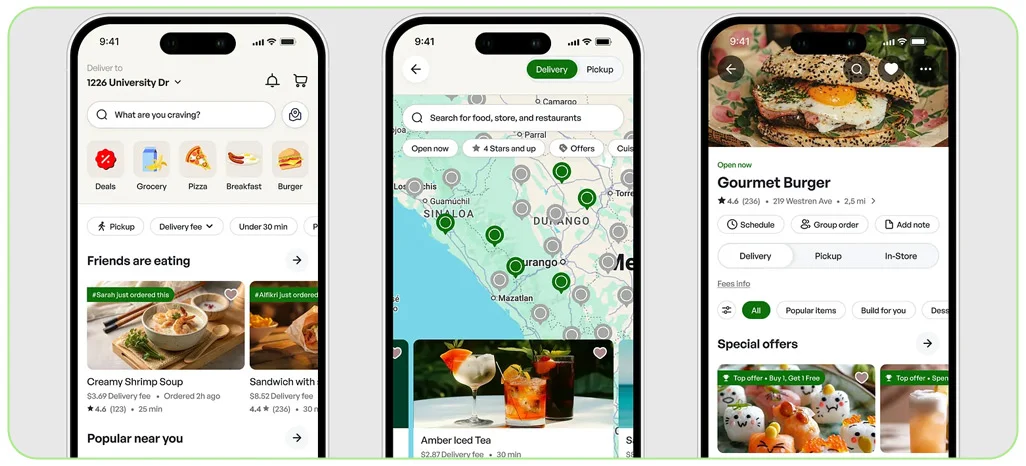
Real-time food datasets for grocery price monitoring can help businesses identify changes in observed prices when the data source and collection workflow support sufficiently frequent updates. However, real-time monitoring is not an automatic guarantee of instantaneous information. Freshness depends on source availability, access permissions, collection frequency, processing time, and delivery latency.
A monitoring workflow should establish a baseline for each comparable item. Depending on the research objective, this may include the latest validated price, recent historical observations, promotional information, and the timestamp of the last successful collection.
New observations can then be compared with the baseline. A pricing team may flag a substantial change, an unexpected promotional offer, or a difference between comparable products. The thresholds should reflect the business's actual needs rather than arbitrary alert volumes.
Every alert needs context. A lower displayed price may result from a temporary promotion or a different product size. A missing listing may reflect a technical collection failure rather than a confirmed stockout. An unchanged price may also be outdated if the latest collection attempt failed.
Company reporting provides context for the scale of the food-delivery sector. Swiggy's FY2024–25 annual report reported food-delivery gross order value of ₹28,783 crore, representing 16.4% year-over-year growth. This is a company-reported operating metric, not a measure of grocery inflation or competitor menu-price changes. Source: Swiggy Annual Report FY2024–25.
For pricing teams, the practical lesson is to connect monitoring to a defined business decision. An alert should identify the item, explain what changed, show when the observation was collected, and indicate whether the match has been verified.
Automated monitoring should improve the speed and consistency of investigation without replacing commercial judgment. Before acting on a price change, teams should verify the product, promotional conditions, and comparability of the underlying observations.
Want to develop a more consistent food-price monitoring process? Define your target sources, product coverage, and required refresh frequency before selecting a data collection solution.
Contact UsHow can automated collection improve food-market research?
Food datasets API for automated data collection can connect permitted data retrieval with validation, storage, and reporting. This can reduce repetitive manual work and make it easier to maintain consistent observations across a defined group of restaurants, menu items, or grocery products.
The first step is to identify the required data source and verify its access conditions. An official API, an authorized third-party provider, and a permitted public-page collection method are not interchangeable. Access to one set of product information does not guarantee that every competitor listing, location-specific price, or historical observation is available.
A practical workflow includes five stages:
- Define the research scope. Specify the target products, locations, required fields, and business questions.
- Collect permitted records. Use an authorized source and comply with applicable access limits.
- Validate observations. Check required fields, timestamps, currencies, quantities, and duplicate records.
- Store the data. Preserve raw observations and normalized records so results can be traced back to their sources.
- Generate reports. Highlight verified changes, potential pricing gaps, and uncertain product matches for review.
Data validation is particularly important when collection is automated. If an update fails, the system should not silently treat the previous observation as current. Similarly, a missing item should not automatically be classified as unavailable without additional evidence.
The data model should distinguish the original displayed price from calculated values. If currency conversion or unit-price normalization is required, record the original currency, quantity, conversion method, and relevant date. These details make the calculations reproducible.
Automation can also support monitoring coverage. Businesses can measure the proportion of planned products successfully observed, the number of records missing required fields, and the time since the last successful update.
These quality measures are often more useful than raw record counts. A smaller, well-validated dataset may provide stronger evidence than a larger collection containing unmatched products or outdated prices.
Before expanding a workflow, run a proof of concept on a defined sample. Compare collected records with their permitted sources, evaluate accuracy and completeness, and document any limitations. This gives stakeholders a practical basis for deciding whether the approach meets their needs.
What makes structured food information useful for business decisions?
Food Datasets bring menu, restaurant, product, and pricing observations into a consistent structure that analysts can query and compare. Their usefulness depends on the research objective, the quality of the underlying records, and whether the data contains the fields required to interpret the results.
For food-delivery market intelligence, a dataset may include restaurant names, menu items, categories, displayed prices, currency, portion information, promotional details, location, availability, source reference, and collection timestamp. These fields should only be included when they are available through permitted sources.
A clear data model makes it easier to distinguish different commercial measures. Menu price, delivery charge, order value, company revenue, and gross merchandise value are not interchangeable. Each describes a different aspect of the business and should be analyzed separately.
Zomato's FY2023–24 annual report recorded food-delivery gross order value of ₹32,224 crore for FY2024, compared with ₹26,305 crore in FY2023 and ₹21,297 crore in FY2022. These are reported company-level figures and should not be interpreted as menu-price changes or the performance of every restaurant on a platform. Source: Zomato Annual Report 2023–24.
For useful analysis, businesses should preserve the original observations alongside normalized fields. Product matching, currency conversion, duplicate handling, and exclusions should be documented so reviewers can understand how a result was produced.
The dataset should also identify missing information. If a price was not observed, it should not be replaced with an assumed value. If a menu item cannot be confidently matched, it should be flagged for review or excluded from direct price comparisons.
A well-structured dataset can support menu benchmarking, category analysis, and promotional research. However, it cannot independently prove why customers prefer one restaurant, whether a business is profitable, or how a competitor determines its pricing.
The strongest approach combines consistent data with clear analytical definitions and transparent limitations. This helps decision-makers distinguish observed market patterns from assumptions that require additional evidence.
How can an API-based workflow support scalable food research?
Food Scraping API describes an approach to integrating food-related data collection with downstream systems. The actual capabilities depend on the provider, available sources, permissions, supported fields, update frequency, and technical limitations. The term itself does not establish that a particular delivery platform exposes a public API or that all menu data is accessible.
Implementation should begin with a clearly defined use case. A restaurant group may need menu prices across selected cities, while a packaged-food company may need product prices and unit quantities from grocery sources. These requirements should be scoped separately because the necessary fields and matching rules differ.
A reliable integration should handle collection errors, duplicate records, missing values, and changes to source formats. It should also preserve timestamps so that reports can distinguish a newly verified price from an older observation.
Before choosing a solution, businesses should confirm:
- Which sources and locations are supported.
- Which menu or product fields are available.
- What collection frequency is achievable.
- Whether historical observations are retained.
- How product matching and duplicate detection are handled.
- How errors, missing records, and data-quality issues are reported.
- Whether the collection method complies with relevant terms, permissions, and laws.
A proof of concept can test these requirements before a larger commitment. Select a representative sample, compare returned records with the permitted source, and measure completeness, freshness, and matching quality.
Businesses should also define how data will be used. Pricing teams may need a daily comparison report, while researchers may require longer historical records and documented sampling methods. Designing around the intended decision helps avoid collecting unnecessary fields or creating a workflow that cannot answer the core business question.
An API-based approach is valuable when it produces dependable, traceable records that integrate with existing analytics systems. The goal is not simply to increase collection volume but to make food-market intelligence more consistent, reproducible, and useful.
Why Choose Real Data API?
Selecting a data provider requires more than confirming that it can collect records. Businesses should evaluate whether the provider's actual coverage, supported fields, and update frequency meet their requirements.
real-time food data scraping services should be assessed against measurable needs rather than general claims about speed or scale. Before choosing a provider, verify the available sources, permitted uses, field definitions, and service conditions directly.
Use these criteria during evaluation:
- Coverage: Does the provider support the required food categories, restaurants, retailers, and locations?
- Field availability: Can it supply the necessary prices, descriptions, quantities, discounts, and timestamps?
- Data freshness: How frequently are records refreshed, and how is the last successful update identified?
- Data quality: Are duplicates, missing fields, and uncertain product matches flagged?
- Integration: Can the output be used by existing reporting, analytics, or data-storage systems?
- Documentation: Are supported fields, limitations, and service conditions explained clearly?
- Compliance: Are collection methods consistent with applicable laws, platform terms, and permissions?
Real Data API is a potential provider to evaluate against these requirements. Request a sample of relevant records and verify them against the authorized source before committing to a larger implementation.
A small proof of concept can establish whether the data is sufficiently accurate, complete, and current for the intended use. It can also reveal whether important fields are missing or whether product matching requires additional work.
The best solution is not necessarily the one that returns the largest number of records. It is the one that can demonstrate reliable results for the business's specific research requirements and explain its limitations transparently.
Conclusion
Food datasets for food delivery market intelligence can help restaurants, food brands, and market researchers compare menu prices, monitor promotional activity, identify potential pricing gaps, and organize market observations for better decisions.
The most reliable process starts with a defined business question and a carefully selected set of products, restaurants, or markets. Teams should establish collection rules, normalize comparable prices, retain timestamps, and distinguish verified changes from incomplete or uncertain observations.
Published industry statistics can provide valuable context, but they cannot replace product-level evidence. Accurate product matching, transparent calculations, and documented data limitations help analysts determine which pricing differences deserve attention and which require further verification.
For businesses seeking to move beyond manual research, the next step is to define the required sources, fields, coverage, and update frequency. A carefully scoped workflow can make food-market analysis more consistent and easier to integrate into pricing, category management, and competitive strategy.
Ready to strengthen your food-market intelligence workflow? Contact Real Data API to discuss your data requirements, verify available collection options, and explore a practical approach to menu and pricing analysis!
Frequently Asked Questions
1. How can food datasets for food delivery market intelligence help businesses?
They organize menu prices, promotions, and restaurant information for structured comparisons. Businesses can use validated observations to investigate competitive positioning and support informed pricing decisions.
2. What is Food Data Scraping?
Food Data Scraping collects available food-related information from permitted sources for analysis. Depending on access, records may include menu items, prices, categories, quantities, and promotional details.
3. How does food data scraping for food delivery market research work?
It collects permitted restaurant and menu observations, standardizes comparable fields, and records timestamps. Researchers analyze validated records to identify pricing differences and category patterns.
4. What is a Web data scraper for grocery food datasets used for?
It gathers available grocery product information for structured comparison. Researchers can normalize pack sizes, compare unit prices, and study assortment differences while preserving source details and collection dates.
5. Can Real Data API provide real-time food datasets for grocery price monitoring?
Confirm supported sources, fields, and refresh intervals directly with Real Data API. Data freshness depends on collection frequency, source access, processing latency, and current observation availability.
Latest posts
How Mobile app scraping for app-based e-commerce data Enables Smarter E-commerce Analytics, Competitor Analysis, and Market Research
Digital Shelf Analytics for Indian Brands: Tracking Blinkit, Amazon, Flipkart, Nykaa & Myntra
UAE Grocery Price Scraping – Lulu, Carrefour, Spinneys, Waitrose & Instashop
Fashion Catalogue Scraping Across Countries: H&M Saudi, Zalando Germany & D2C Brands



.png)


