.gif)
.png)
Introduction
The UAE grocery market combines large hypermarkets, premium supermarkets and fast delivery apps. Prices and assortment differ by retailer and emirate, so brands and price-comparison businesses want structured data through grocery data scraping across them.
Sources covered
- Lulu and Carrefour: mass-market hypermarket pricing and promotions
- Spinneys and Waitrose: premium and imported product range
- Instashop: an aggregator showing multiple stores and delivery fees
Fields typically captured
- Product name (English and Arabic where available), brand and category
- Price, discounted price and promotion text
- Pack size and unit price
- Stock status and delivery slot information
- Country of origin where listed
Why Arabic and English matter
Many products appear in both languages with different spellings. A clean dataset normalises names so the same product can be matched across retailers.
Use cases
- Retail price index for the UAE
- Brand monitoring for imported goods
- Comparison shopping apps
- Promo calendars for category managers
Delivery area considerations
Stock and prices on delivery apps may depend on the emirate or area, so the scraper should set location before extraction.
How UAE grocery data is collected
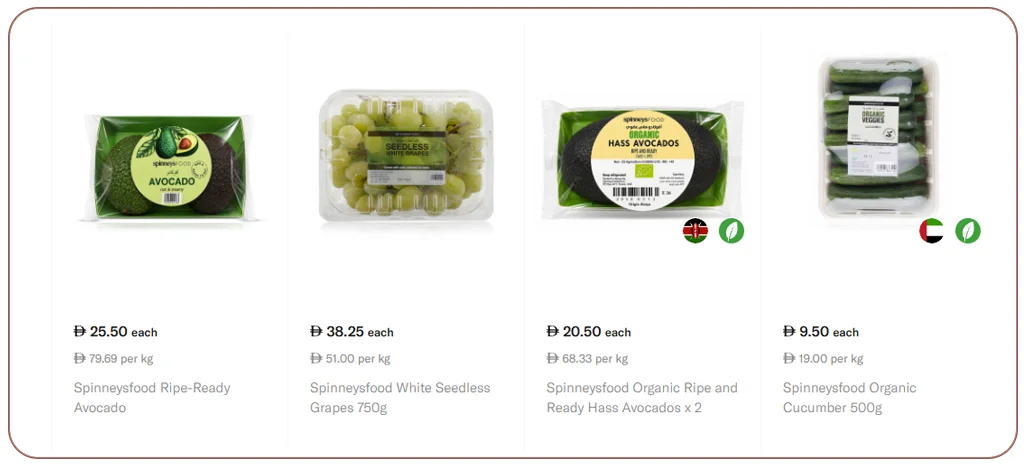
The process begins with a list of retailers, categories and emirates. For each retailer, the scraper sets the delivery location, browses the category tree and reads each product page. Product names, prices and promotions are stored with the collection date, so you can see price changes over time. Arabic and English fields are saved side by side. This workflow can be supported by a grocery scraping API when teams need structured product data across multiple retailers.
Normalising product names across retailers
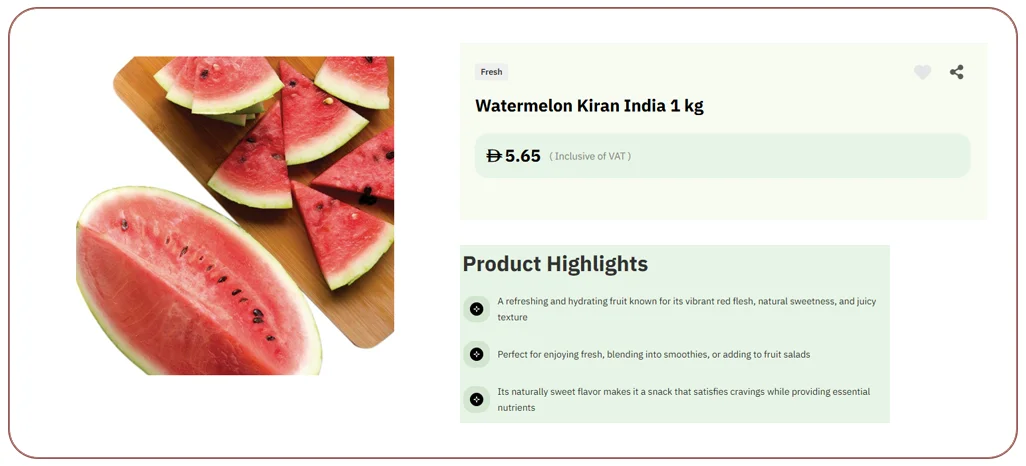
The same product can appear as a long title on one site and a short title on another, and brand names may be spelled differently in Arabic and English. A good pipeline normalises brand, pack size and unit, and matches products by barcode where available, otherwise by attribute and title matching. This allows a true like-for-like price comparison between Lulu, Carrefour, Spinneys and Waitrose.
Price intelligence use cases
- Retail price index: track the cost of a fixed basket over time.
- Promotion tracking: record the start, end and depth of offers.
- Imported brand monitoring: see which retailers stock premium international brands and at what price.
- Delivery app analysis: compare shelf prices on retailer sites with prices on aggregators such as Instashop.
Example: a weekly basket comparison
A food importer wants to know how its olive oil is priced against competitors. By collecting data weekly from four retailers and one delivery app, the importer sees that one competitor runs a recurring weekend discount. The importer can then plan its own promotions around those dates.
Why choose Real Data API for UAE and GCC grocery scraping
Real Data API builds custom scrapers for each retailer and keeps them running as the sites change. Explore our grocery data scraping solutions for structured product, price and availability data. The same approach can be extended to Saudi Arabia, Qatar, Kuwait and other GCC markets, with output in one common format.
FAQs
1. Can you extend to Saudi Arabia or Qatar?
Yes, with retailer-specific scrapers for each country.
2. What refresh rate is practical?
Daily is common for grocery.
3. Can I get Arabic product names?
Yes. Where a retailer shows Arabic text, it can be captured next to the English name.
4. Do prices differ across emirates?
They can, especially on delivery apps, so location is set before extraction.
5. Can I track promotions like multi-buy offers?
Yes. Promotion text, such as buy two get one free, can be stored and parsed into structured fields.
6. Can you add more retailers later?
Yes. New retailers can be added to the same feed without changing the output format.
Conclusion
UAE grocery data scraping gives brands, importers and price-comparison businesses a clear view of how Lulu, Carrefour, Spinneys, Waitrose and Instashop price the same products. With normalised names, regular refreshes and location-aware collection, the data becomes a dependable input for pricing and promotion decisions. Teams that need a ready-made source can also explore grocery datasets for market analysis and benchmarking.
Need GCC grocery data? Real Data API can set up a custom feed.
Latest posts
How Mobile app scraping for app-based e-commerce data Enables Smarter E-commerce Analytics, Competitor Analysis, and Market Research
Digital Shelf Analytics for Indian Brands: Tracking Blinkit, Amazon, Flipkart, Nykaa & Myntra
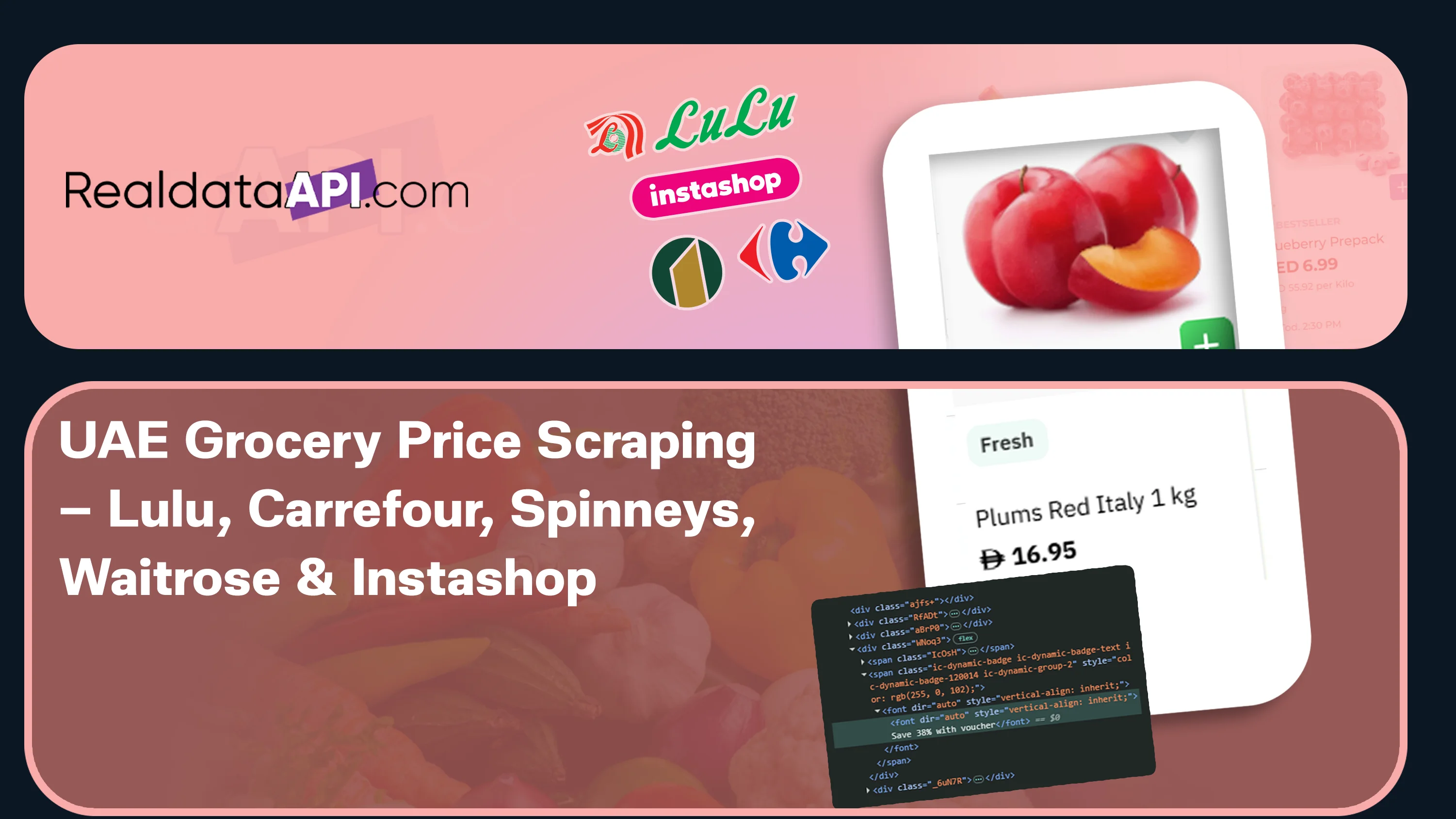
UAE Grocery Price Scraping – Lulu, Carrefour, Spinneys, Waitrose & Instashop
Fashion Catalogue Scraping Across Countries: H&M Saudi, Zalando Germany & D2C Brands



.png)


