.gif)
.png)
Introduction
Fashion moves fast, and so does pricing. A shirt can cost different amounts in Riyadh, Berlin and Mumbai, and the same brand may run a different assortment in each. Multi-country catalogue data helps retailers and brand analysts see those differences. For brands comparing apparel assortments across regions, fashion data scraping can organise product titles, prices, sizes and availability into a consistent dataset for market analysis.
Typical requests
- Men's and women's clothing from H&M's Saudi Arabia store
- Multi-brand fashion catalogues across several countries
- Amazon and Zalando Germany data for direct-to-consumer (D2C) brands
Fields collected
- Product name, brand, category and sub-category
- Price, sale price and currency
- Available sizes and colours, with size-level stock where shown
- Material and composition, care instructions
- Images, product URL and product ID
- New-arrival tag, discount percentage and ratings
Multi-country challenges
- Currency and tax: prices may include VAT in some countries and not in others, so record the currency and tax note.
- Language: product titles are localised, so keep both local and English fields when possible.
- Assortment differences: the same style code may not exist in every country.
- Size systems: EU, UK and US sizing must be standardised.
Use cases
For broader online retail comparisons beyond apparel, e-commerce data scraping can help collect comparable product, price and promotion information across marketplaces.
- Price parity checks across regions
- Trend analysis based on new arrivals and discount depth
- D2C brands tracking how marketplaces like Amazon and Zalando price and position them
- Competitor assortment mapping
Delivery
Catalogue data is commonly delivered as weekly or daily CSV/JSON, with a change log that highlights new products, price changes and removals.
Building a multi-country fashion data model
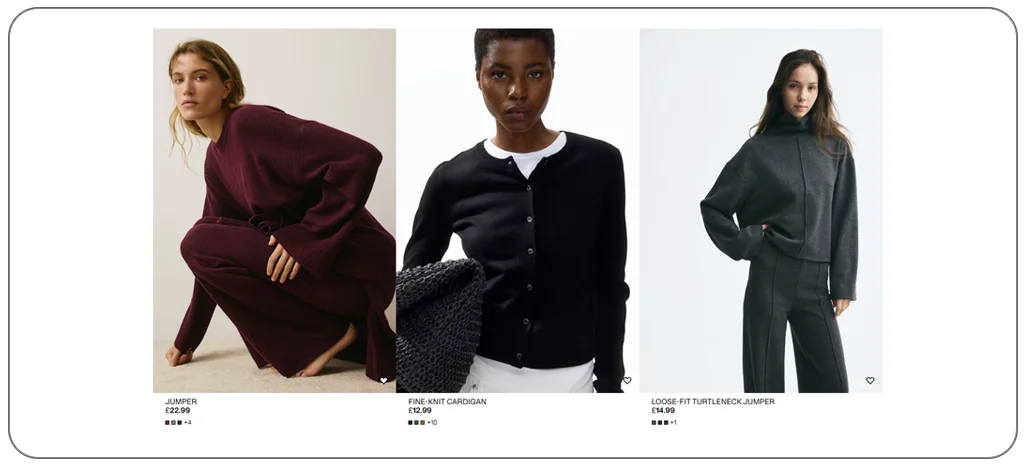
Fashion data becomes useful when every country feeds into the same structure. A practical model has one record per product and country, with the style code, product name, brand, category, colour, price, currency, sale flag, size availability, material and product URL. A separate field holds the local-language title, and another holds the English title when possible.
Price parity and assortment analysis
With data from several countries, you can answer questions that are hard to see on any single site: A structured fashion dataset can preserve country, currency, size and colour attributes, making like-for-like comparisons easier.
- Is the same style priced higher in Saudi Arabia than in Germany after converting currency?
- Which styles are sold only in one country?
- How deep and how frequent are discounts in each market?
- Which colours and sizes sell out first?
Tracking trends through new arrivals
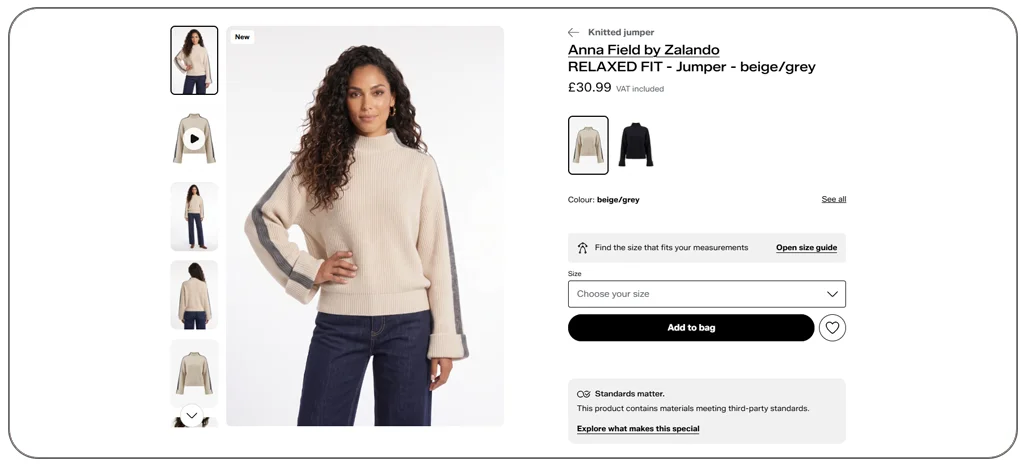
New-arrival tags, product launch dates and category counts show how a brand is changing its range. Collected weekly, they reveal which categories get more space, which colours are pushed and when end-of-season sales begin.
Example: a D2C brand watching marketplaces
A direct-to-consumer apparel brand sells through its own store and on Amazon and Zalando in Germany. By tracking its own listings and those of competing brands, it spots that a competitor has cut prices on similar jackets ahead of the season. The brand adjusts its promotion plan before the competitor's discount takes sales away.
Why choose Real Data API for fashion data scraping
Real Data API builds scrapers for each fashion site, standardises sizes, currencies and categories, and delivers a clean file or API feed. You can start with one brand and one country, and add more as your needs grow.
FAQs
1. Can you track out-of-stock sizes?
Where the site shows size availability, yes.
2. Can you cover many brands at once?
Yes, with a scraper per site and a shared output format.
3. Can you convert prices to one currency?
Yes. Original prices are kept, and a converted price using a stated exchange rate and date can be added.
4. Can I get both English and Arabic product names?
Where the site shows both, yes.
5. How do you handle different size systems?
Sizes are stored as published and mapped to a standard scale such as EU, UK and US so they can be compared.
6. Can I track discounts and sale periods?
Yes. Original price, sale price and discount percentage can be captured on each run, which shows when sales begin and end.
Conclusion
Fashion catalogue scraping across H&M Saudi Arabia, Zalando Germany and D2C stores gives brands and analysts a clear picture of pricing, assortment and trends in each country. With a common data model and regular refreshes, multi-country fashion data becomes a practical tool for pricing, merchandising and competitor tracking.
Need fashion data? Tell Real Data API your brands and countries and we will scope it.
Latest posts
How Mobile app scraping for app-based e-commerce data Enables Smarter E-commerce Analytics, Competitor Analysis, and Market Research
Digital Shelf Analytics for Indian Brands: Tracking Blinkit, Amazon, Flipkart, Nykaa & Myntra
UAE Grocery Price Scraping – Lulu, Carrefour, Spinneys, Waitrose & Instashop
Fashion Catalogue Scraping Across Countries: H&M Saudi, Zalando Germany & D2C Brands



.png)


