.gif)
.png)
Quick Summary
- Mobile app scraping for app-based e-commerce data can organize publicly accessible product, pricing, availability, and marketplace information for structured commercial research, while businesses must respect applicable platform terms, privacy requirements, and access restrictions.
- Extracting Geo-Based Pricing Data Using Mobile App Scraping can help researchers compare observable prices across defined locations, but location-based differences must be validated rather than automatically attributed to personalization or consumer characteristics.
Introduction
Mobile app scraping for app-based e-commerce data can help retailers, brands, pricing teams, and market researchers convert observable information from shopping applications into structured datasets for analysis. Product names, displayed prices, availability, promotions, categories, and location-dependent information can provide useful signals when collected consistently and interpreted within clearly defined research boundaries.
The importance of digital commerce has grown substantially. U.S. Census Bureau data shows that retail e-commerce sales reached an estimated $791.7 billion in 2020, representing 14.0% of total U.S. retail sales. By 2025, annual U.S. retail e-commerce sales were estimated at $1.2337 trillion and represented 16.4% of total retail sales.
For businesses, the challenge is no longer simply finding online product information. The harder problem is maintaining comparable information across applications, locations, products, and collection times. A product can have different availability, delivery conditions, or displayed prices depending on the selected market or delivery location. Researchers therefore need a methodology that records the context surrounding every observation.
Extracting Geo-Based Pricing Data Using Mobile App Scraping requires particular care because location can be a meaningful input into digital commerce experiences. Apple identifies precise and coarse location as distinct categories of app-related data, while Google Play similarly distinguishes approximate and precise location.
The goal should be business intelligence rather than indiscriminate data collection. A well-designed dataset can help a retailer understand competitive pricing, identify product availability differences, evaluate market opportunities, and detect changes over time without collecting unnecessary personal information.
How can mobile application data strengthen market research?
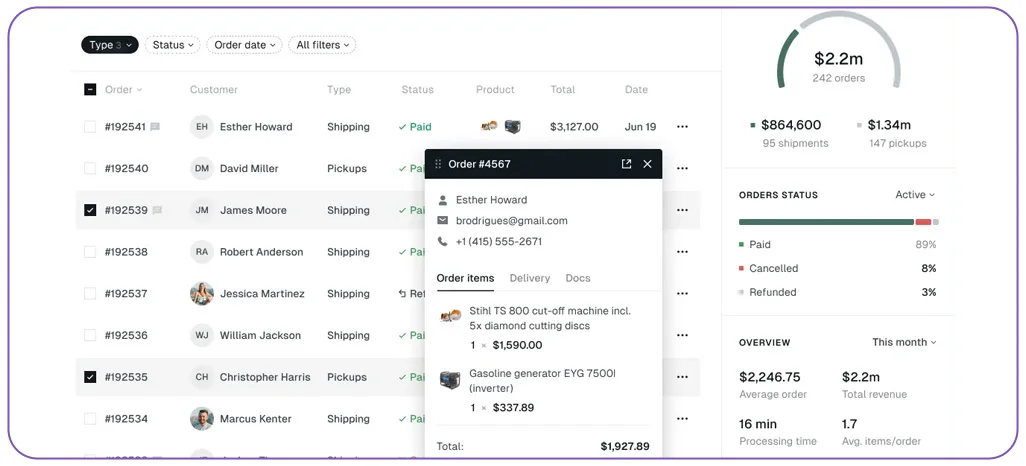
Mobile application web scraping for market research can provide structured observations that complement traditional surveys, reports, and publicly available market statistics. For an e-commerce research team, the key advantage is the ability to examine what customers can actually see within a defined shopping environment at a particular point in time.
A useful research dataset can contain product identifiers, product names, categories, displayed prices, currencies, availability, promotional labels, delivery information, location context, timestamps, and source references. The exact fields depend on the application and the permitted access method.
The distinction between observation and inference is important. If a product is displayed at ₹999 in one location and ₹1,049 in another, the dataset establishes that the displayed values differed under those collection conditions. It does not automatically establish why the difference occurred. Taxes, delivery zones, inventory, promotions, seller selection, currency rules, or personalization may contribute.
| Year | U.S. retail e-commerce sales | Share of total retail sales |
|---|---|---|
| 2020 | $791.7B | 14.0% |
| 2021 | $870.8B | 13.2% |
| 2022 | $1,034.1B | 14.6% |
| 2023 | Data series revised through later Census releases | — |
| 2024 | $1,192.6B | 16.1% |
| 2025 | $1,233.7B | 16.4% |
| 2026 | Annual figure not yet available | — |
The 2020–2022 figures come from U.S. Census Bureau quarterly e-commerce estimates, while 2024 and 2025 figures come from later Census releases. The Census Bureau has also revised historical estimates, so analysts should use the latest applicable series when building long-term comparisons.
For 2026, a complete annual figure cannot yet be stated because the year is still in progress. Avoid filling the gap with an estimate presented as an actual result. This is particularly important for automated reports intended for executives, investors, or published research.
What information improves e-commerce analytics?
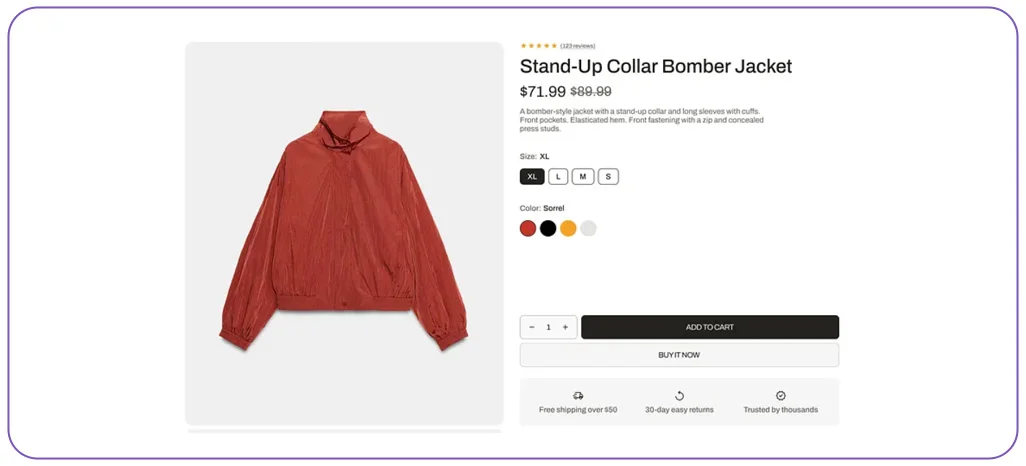
A Mobile app web data scraper for e-commerce analytics can organize product-level observations into a format suitable for dashboards, historical comparisons, and pricing analysis. The most useful architecture separates raw observations from normalized analytical fields.
For example, the raw layer can preserve the exact product title and displayed price captured during collection. A normalized layer can standardize currency, product category, brand name, and timestamp format. An analytical layer can then calculate changes, rankings, price gaps, availability rates, or promotional frequency.
This three-layer approach reduces the risk of destroying source information during cleaning. It also makes it easier to audit an unexpected result.
For pricing research, businesses should distinguish between list price, sale price, unit price, shipping charges, taxes, and the final checkout amount whenever those fields are available and legally collectable. Comparing only a headline price can produce misleading conclusions when two offers have different delivery or promotion conditions.
The broader market data demonstrates why this type of analysis matters. U.S. Census Bureau estimates show that e-commerce sales increased from $791.7 billion in 2020 to $1.2337 trillion in 2025. The 2025 figure was 5.4% higher than 2024, while e-commerce represented 16.4% of total U.S. retail sales.
For an analytics team, the practical lesson is to treat app observations as time-sensitive records. A dashboard should show when information was collected and what geography or market context applied. This allows users to distinguish current observations from historical values.
It is also important to avoid collecting personal information when it is not necessary for the analytical objective. Apple notes that app data can include location and other sensitive categories, and Google Play's Data Safety framework requires developers to describe relevant collection and sharing practices.
Can API-based collection improve product intelligence?
A Mobile app scraping API for e-commerce product data can provide a structured interface between data collection and downstream systems when an authorized source or access method is available. Instead of requiring analysts to manually transfer observations, an API-oriented workflow can deliver standardized records to databases, spreadsheets, data warehouses, or business intelligence systems.
The main advantage is consistency. A defined schema can specify product ID, product name, category, price, currency, availability, location, timestamp, and other permitted attributes. Validation rules can then check whether prices are numeric, currencies are recognized, timestamps are valid, and required identifiers are present.
For large-scale product monitoring, timestamping is especially important. A price collected on Monday should not be interpreted as the price available to every customer throughout the week. Similarly, a product that appears unavailable at one observation time should not automatically be classified as permanently out of stock.
Historical market data provides a useful benchmark for understanding the broader environment. U.S. Census Bureau quarterly estimates show that e-commerce accounted for 14.0% of total U.S. retail sales in 2020 and 16.4% in 2025. These statistics describe the U.S. retail market as a whole rather than any particular mobile application.
A production workflow should therefore separate three questions: what was observed, when was it observed, and what conclusion can reasonably be drawn from it.
Before implementation, businesses should also confirm the permitted collection method and applicable terms. API availability should never be assumed merely because an application exposes data to its users. Access controls, authentication requirements, robots policies, contractual terms, privacy obligations, and applicable law should all be reviewed.
Need structured product intelligence from digital commerce sources? Discuss your required fields, markets, update frequency, and authorized collection method with Real Data API before building the monitoring workflow!
Contact UsHow can competitive intelligence benefit from frequent observations?
Real-time mobile application scraping for competitor analysis focuses on the changing information visible to customers rather than relying solely on occasional manual checks. For pricing teams, repeated observations can reveal when competitors change displayed prices, introduce promotions, alter availability, or modify their product assortment.
The word "real-time" should be used carefully. A dataset collected every hour is not literally continuous real-time information. A more accurate description is near-real-time or scheduled monitoring. The collection frequency should match the business requirement and the source's permitted access conditions.
A competitor-monitoring system can calculate metrics such as price difference, percentage price change, number of products available, promotion frequency, and assortment overlap. These measurements become more reliable when the same products and comparable conditions are tracked consistently.
| Period | U.S. retail e-commerce sales | E-commerce share |
|---|---|---|
| 2020 | $791.7B | 14.0% |
| 2021 | $870.8B | 13.2% |
| 2022 | $1,034.1B | 14.6% |
| 2023 | Latest revised series should be used | — |
| 2024 | $1,192.6B | 16.1% |
| 2025 | $1,233.7B | 16.4% |
| 2026 | Full-year result unavailable | — |
The Census Bureau reported $1.0341 trillion in U.S. retail e-commerce sales for 2022 and later estimated $1.1926 trillion for 2024 and $1.2337 trillion for 2025.
Competitive analysis should not stop at price. Product assortment, availability, delivery promises, promotions, seller information, and category placement may provide additional context. However, analysts should clearly label which fields were actually observed.
Location-based competitive research also requires caution. The European Union's geo-blocking framework addresses unjustified discrimination based on nationality, residence, or establishment in specified circumstances and specifically recognizes that online interfaces can include mobile applications.
That makes geographic testing a valuable research method, but it also reinforces the need for lawful and transparent data practices.
What makes app data collection useful for retailers?
Mobile App Scraping can support several retail intelligence workflows, including assortment monitoring, price comparison, promotion research, product discovery, and availability analysis. Its usefulness depends less on the volume of records than on whether those records are consistent and relevant to the business question.
Retailers should begin with a defined product universe. For example, a pricing team might monitor a specific group of SKUs, while a market research team might track an entire category. The dataset should identify which products are included and how discontinued, renamed, bundled, or substituted products are handled.
Geo-based research adds another layer. A retailer comparing displayed prices across locations should record the location condition attached to each observation. It should also preserve the timestamp and any relevant delivery or seller context.
The U.S. Census Bureau's long-term figures illustrate the expanding importance of e-commerce. The bureau reported that annual e-commerce sales increased by 43% in 2020 to $815.4 billion in its Annual Retail Trade Survey, while its quarterly series estimated $791.7 billion for the same year. The difference reflects different statistical programs and methodologies, demonstrating why analysts should not combine incompatible datasets without checking definitions.
That methodological distinction is valuable for app-based research. Two datasets can describe the same year but use different definitions, populations, collection methods, or revisions.
Privacy should also remain central. Apple states that precise and coarse location are distinct data categories, while Google Play defines approximate location as an area of at least three square kilometers and precise location as an area smaller than three square kilometers.
Therefore, retailers should collect only the geographic information necessary for the stated analytical objective. Where location-level comparison is sufficient, there is no reason to introduce unnecessary personal identifiers.
How should retailers monitor changing prices?
Price Monitoring is most effective when businesses compare equivalent products under consistent conditions. A price-monitoring system can record the displayed price, currency, promotional state, product identifier, seller, geography, and observation timestamp. It can then flag meaningful changes according to predefined business rules.
Geo-based pricing requires additional validation. The Federal Trade Commission reported in January 2025 that its surveillance-pricing study found evidence that companies can use information such as precise location, browser history, demographics, and shopping behavior in individualized pricing systems. The FTC's findings concern the broader surveillance-pricing market and do not establish that a particular retailer or mobile application uses such practices.
This distinction is essential. If a data collection project observes different prices in two locations, the result should be described as a geographic price difference unless the underlying cause is independently established.
| Data point | Recommended analytical treatment |
|---|---|
| Product ID | Use as the primary comparison key where available |
| Displayed price | Preserve the original value and currency |
| Promotion | Record separately from base price |
| Location | Store the defined geographic test condition |
| Timestamp | Required for historical comparison |
| Availability | Separate unavailable from collection failure |
| Seller | Preserve when multiple sellers exist |
| Source | Retain for auditability |
The European Union's geo-blocking rules also demonstrate that geographic treatment of customers can have legal implications. The EU regulation addresses unjustified geo-blocking and discrimination in specified cross-border e-commerce situations, while also allowing certain territorial price differentiation.
For businesses, the actionable approach is straightforward: define the geographic experiment, use consistent product identifiers, collect timestamps, preserve raw observations, and avoid claiming personalization when the data only demonstrates a price difference.
Why Choose Real Data API?
Challenges and Benefits of Mobile App Scraping Services should be evaluated together. The benefits can include structured product intelligence, repeatable collection, historical monitoring, and reduced manual research. The challenges include changing application interfaces, authentication requirements, dynamic content, rate limitations, privacy obligations, platform terms, and the need to validate whether a particular collection method is authorized.
A professional data workflow should begin with requirements rather than technology. The buyer should identify the applications, countries or regions, product categories, fields, collection frequency, output format, and intended commercial use.
The phrase Mobile app scraping for app-based e-commerce data represents a broader data-engineering requirement, but successful projects need more than extraction. They need normalization, quality checks, timestamp management, duplicate handling, error reporting, and documentation.
Real Data API can be considered when a business needs structured data collection for an analytics workflow. Before deployment, buyers should verify exactly which applications and fields are supported, what access method is used, how frequently records can be updated, and what contractual restrictions apply.
A strong data pipeline should also minimize privacy exposure. Apple explains that app data may include location, device identifiers, financial information, and other categories, while Google Play requires developers to disclose relevant data collection and sharing practices through its Data Safety framework.
The best commercial datasets therefore follow a minimization principle: collect the fields necessary for the analytical objective, not every field that happens to be technically accessible.
Ready to turn app-based marketplace observations into structured competitive intelligence? Contact Real Data API to discuss your target applications, product fields, geographic coverage, update frequency, and compliant data-collection requirements!
Conclusion
Mobile app scraping for app-based e-commerce data can give e-commerce brands, retailers, pricing teams, and market researchers a structured way to analyze product information, competitive positioning, availability, and location-dependent marketplace observations.
The strongest results come from consistent collection and careful interpretation. Businesses should preserve timestamps, define geographic conditions, normalize comparable products, distinguish observations from assumptions, and avoid using personal information when it is unnecessary. Verified market statistics show the continuing scale of e-commerce, but external market totals should never be presented as application-specific performance.
The 2020–2025 U.S. Census data also demonstrates why historical context matters: annual e-commerce sales grew substantially over the period, reaching an estimated $1.2337 trillion in 2025. A complete 2026 annual figure is not yet available, so it should not be fabricated or projected as an actual result.
Ready to turn app-based marketplace observations into structured competitive intelligence? Contact Real Data API to discuss your target applications, product fields, geographic coverage, update frequency, and compliant data-collection requirements!
Frequently Asked Questions
1. What is mobile app scraping for app-based e-commerce data?
It is the structured collection of permitted product and marketplace observations from applications for analytics, pricing research, competitive monitoring, and market intelligence, subject to applicable restrictions.
2. How does Extracting Geo-Based Pricing Data Using Mobile App Scraping work?
Extracting Geo-Based Pricing Data Using Mobile App Scraping compares displayed product information under defined geographic conditions while recording timestamps and context. Differences should not automatically be attributed to personalization.
3. What does mobile application web scraping for market research collect?
Mobile application web scraping for market research can organize publicly accessible product names, categories, prices, availability, promotions, and location context when those fields are lawfully accessible.
4. How can a mobile app web data scraper for e-commerce analytics help retailers?
A mobile app web data scraper for e-commerce analytics can standardize product observations, preserve historical prices, monitor availability, and feed structured records into dashboards or analytical systems.
5. Does Real Data API provide a mobile app scraping API for e-commerce product data?
Real Data API can be evaluated for structured data workflows. A mobile app scraping API for e-commerce product data should be assessed for supported sources, fields, access permissions, coverage, and update frequency.
Latest posts
How Mobile app scraping for app-based e-commerce data Enables Smarter E-commerce Analytics, Competitor Analysis, and Market Research
Digital Shelf Analytics for Indian Brands: Tracking Blinkit, Amazon, Flipkart, Nykaa & Myntra
UAE Grocery Price Scraping – Lulu, Carrefour, Spinneys, Waitrose & Instashop
Fashion Catalogue Scraping Across Countries: H&M Saudi, Zalando Germany & D2C Brands



.png)


