.gif)
.png)
Introduction
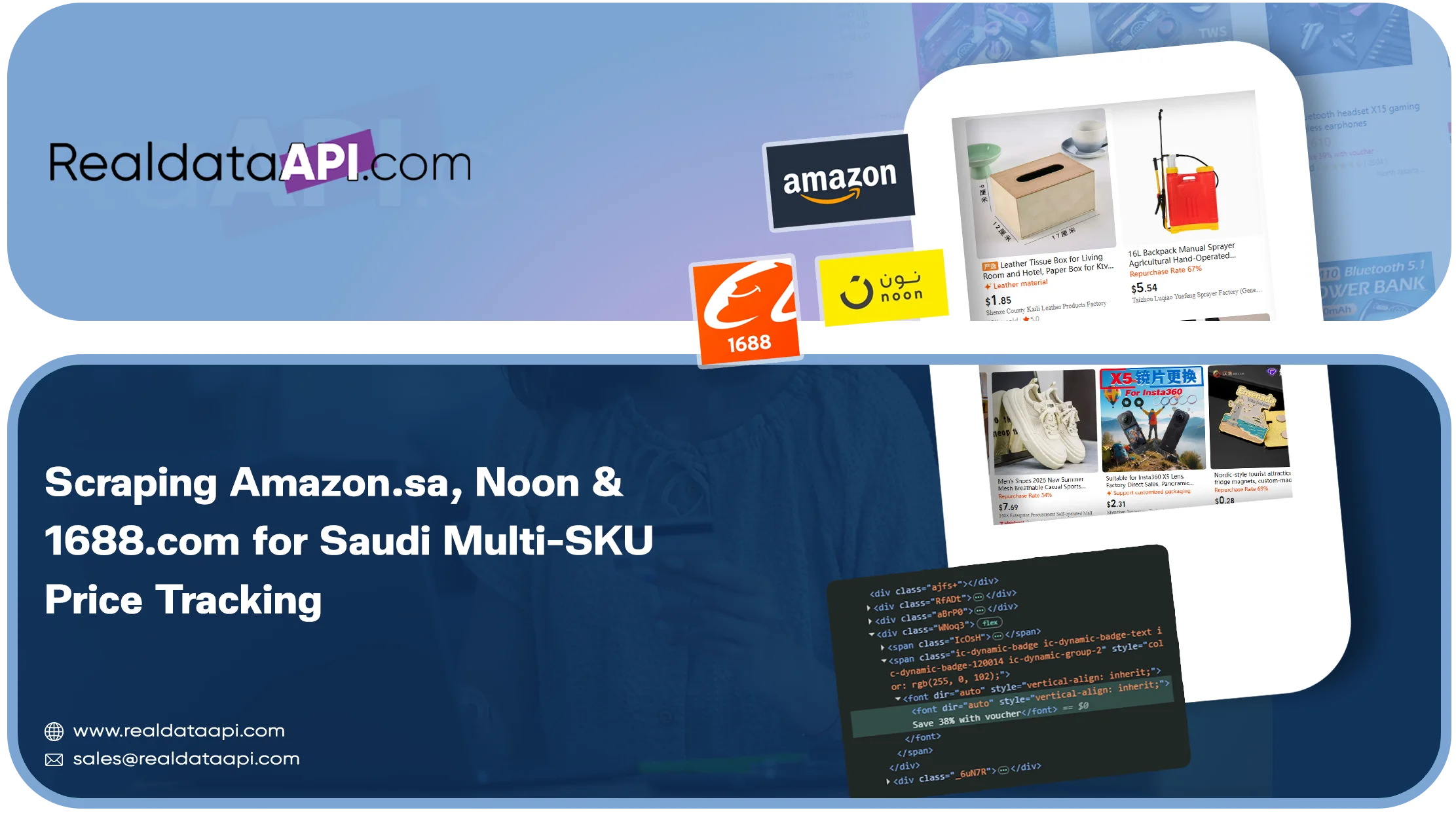
Saudi Arabia is one of the fastest-growing e-commerce markets in the region. Sellers and importers want to know what products sell for locally on Amazon.sa and Noon, and what the sourcing price is on wholesale platforms such as 1688.
Why combine retail and wholesale data
Retail prices from Amazon.sa and Noon show what shoppers pay. Wholesale prices from 1688 show what a product may cost to source. Together they reveal margin opportunities and help importers decide what to stock. This approach is especially useful for e-commerce price tracking, where consistent product attributes make retail-to-wholesale comparisons easier to review.
Multi-SKU tracking
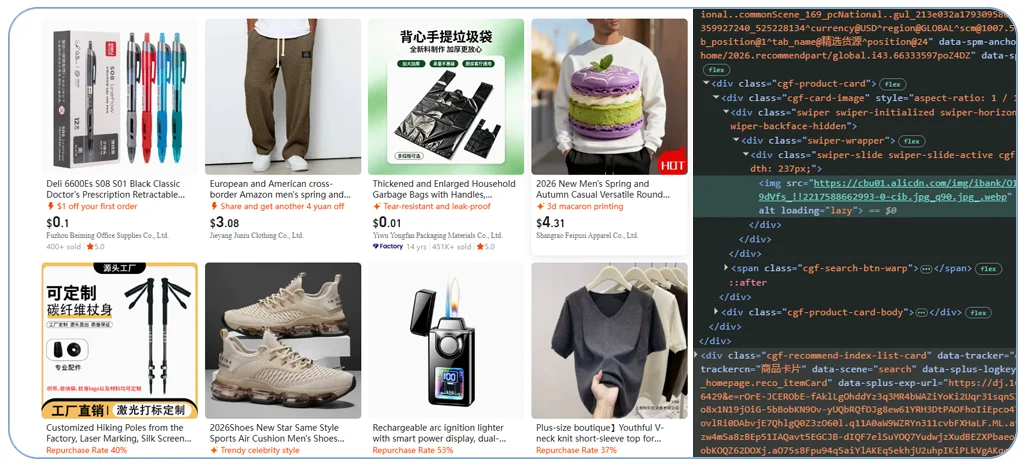
You provide a list of products by keyword, ASIN, Noon SKU or URL. The system then records for each product:
- Current price and previous price
- Seller name and number of sellers
- Stock status and delivery promise
- Rating, review count and best-seller rank
- Wholesale price tiers and minimum order quantity (for 1688 listings)
Live data samples and API
Most clients start with a sample covering 20 to 50 SKUs so they can check data quality. Once approved, the same logic runs as a scheduled feed or a real-time API.
Use cases
- Pricing strategy for Saudi sellers
- Finding profitable import opportunities
- Monitoring competitor listings and Buy Box ownership
- Tracking promotional events
Practical notes
- Wholesale platforms can be harder to access and change often, so availability and refresh rates should be confirmed during the sample stage.
- Product matching between Chinese-language listings and Arabic/English retail listings needs image and attribute matching.
- Currency conversion (CNY to SAR) should be included in the output.
Calculating margin opportunities
Once retail and wholesale prices sit in one dataset, you can estimate the potential margin for each product. A simple view takes the Saudi retail price, subtracts the converted wholesale price, shipping, customs, platform fees and local costs, and shows what is left. Products with a healthy margin and strong demand signals, such as high review counts or a good best-seller rank, move to the top of your sourcing list.
Matching products across platforms
Matching is the hardest part of a multi-platform price project. Chinese-language wholesale titles rarely match Arabic or English retail titles. Reliable matching combines product images, key attributes such as size, colour and material, and model or part numbers when they exist. Uncertain matches should be flagged so a person can confirm them before they appear in reports.
Tracking sellers and the Buy Box
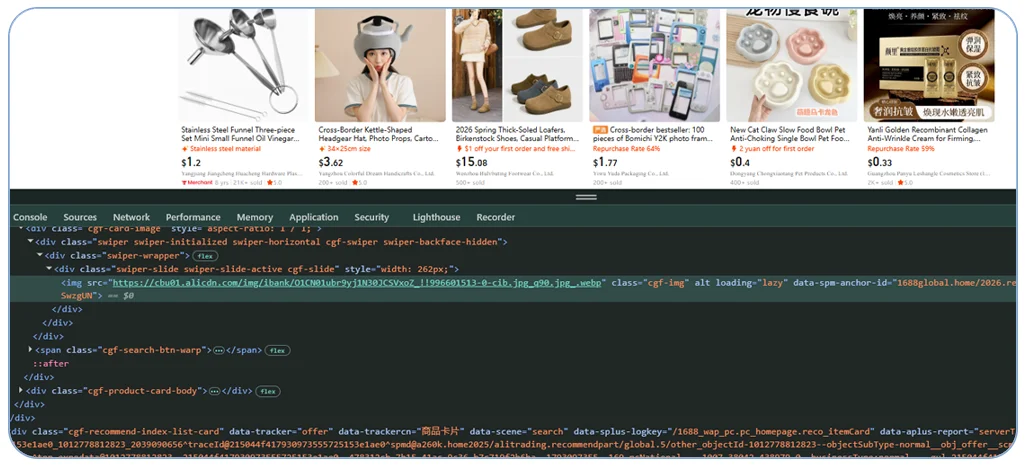
On Amazon.sa and Noon, price is only part of the story. The seller who owns the Buy Box wins most of the sales. Tracking which sellers list a product, how their prices change during the day and who holds the Buy Box shows how aggressive competitors are, and helps you set a price that protects both margin and visibility.
Example: an importer testing a new product line
A Saudi importer wants to add portable blenders. It tracks 40 blender SKUs on Amazon.sa and Noon for two weeks and notes the price range, the number of sellers and the review counts. It then compares the retail prices with wholesale quotes from 1688 listings. The importer picks three models with clear margin and low competition, instead of guessing.
Why choose Real Data API for Saudi e-commerce data scraping
Real Data API delivers multi-SKU price feeds for Saudi marketplaces, with Arabic and English fields, currency conversion and seller-level details. A small live sample lets you check the data quality before you commit to a full feed.
FAQs
1. Is Noon data available in Arabic and English?
Yes, both languages can be captured.
2. Can I get seller-level data?
Yes, on Amazon.sa and Noon.
3. Can I track prices in real time?
Near real-time tracking is possible for a limited SKU list, while larger lists are usually refreshed hourly or daily.
4. Do you provide currency conversion?
Yes. Original and converted prices can both be included, with the exchange rate and date.
5. Can I track Buy Box ownership?
Where the platform shows it, yes. The seller who holds the Buy Box can be recorded on every run.
6. What do you need from me to start?
A list of SKUs, keywords or URLs, plus the countries, platforms and refresh frequency you want. These feeds can also support wider compeititor Price Comparision by keeping seller-level prices and availability in a consistent format over time.
Conclusion
Saudi Arabia e-commerce data scraping across Amazon.sa, Noon and 1688 helps sellers and importers price confidently and choose products with real margin. A small sample, clear matching rules and a regular refresh turn scattered listings into a decision-ready dataset.
Want a sample for your SKUs? Share your list with Real Data API.
Latest posts
How Mobile app scraping for app-based e-commerce data Enables Smarter E-commerce Analytics, Competitor Analysis, and Market Research
Digital Shelf Analytics for Indian Brands: Tracking Blinkit, Amazon, Flipkart, Nykaa & Myntra
UAE Grocery Price Scraping – Lulu, Carrefour, Spinneys, Waitrose & Instashop
Fashion Catalogue Scraping Across Countries: H&M Saudi, Zalando Germany & D2C Brands



.png)


