Introduction
In the highly competitive beauty industry, timely data on products, prices, and trends is essential. Companies seeking a strategic advantage turn to Oriflame data scraping for beauty market insights, transforming publicly available information into actionable intelligence. By leveraging advanced web scraping tools, businesses can track product images, pricing, and availability in real-time.
The ability to collect, clean, and analyze large volumes of data enables cosmetic brands, e-commerce platforms, and market analysts to monitor competitors, anticipate trends, and make data-driven decisions. With Real Data API, teams can extract Oriflame's catalog data efficiently and integrate it into dashboards, datasets, and predictive models.
From understanding pricing patterns to visual merchandising analysis, web scraping becomes a powerful tool for uncovering insights that drive sales, marketing, and supply chain strategies. This blog explores how automated extraction, analysis, and visualization of Oriflame products help companies gain a competitive edge from 2020 through 2026.
Capturing Visual and Pricing Data
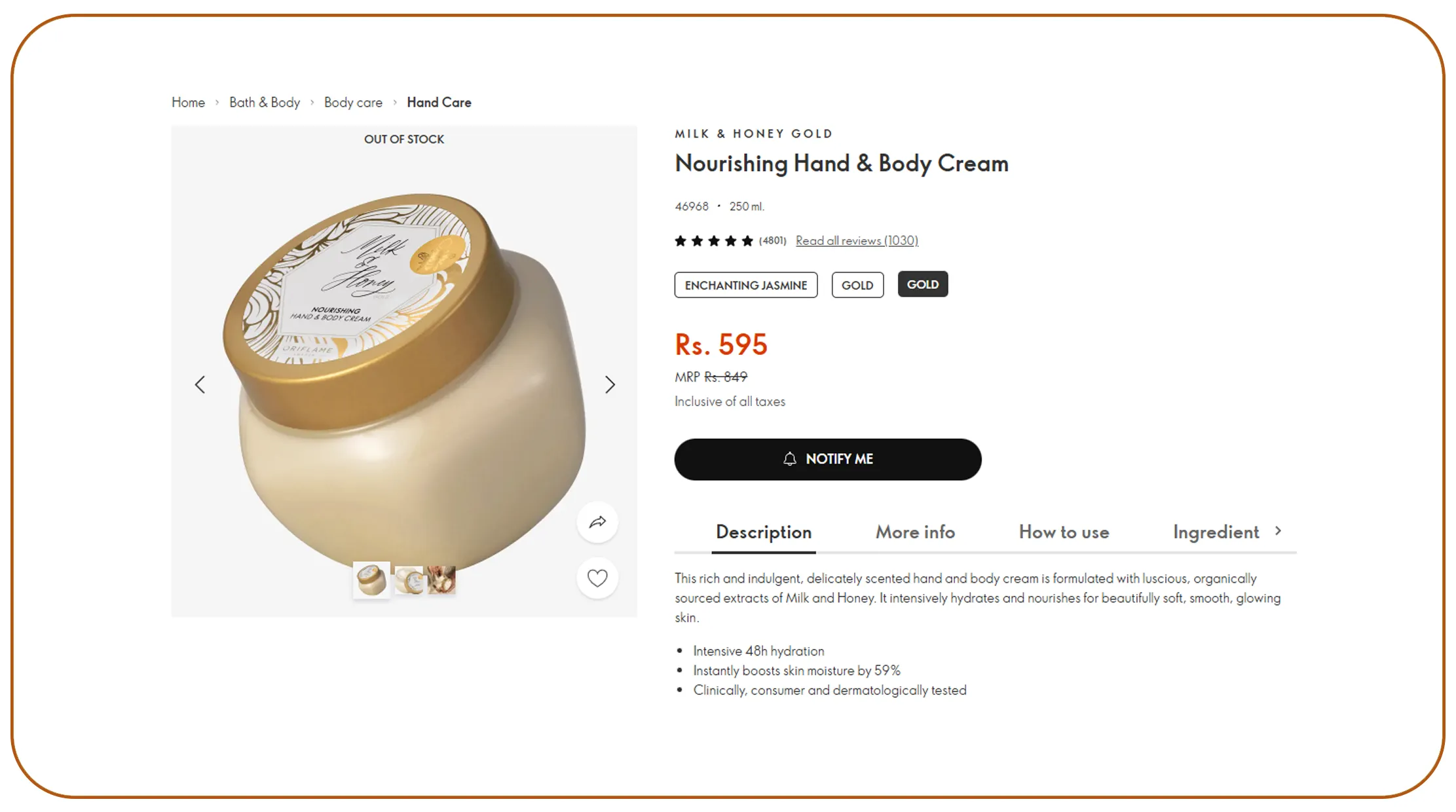
The ability to Web scraping Oriflame product images and prices provides a dual advantage: visual insights and pricing intelligence. Capturing high-quality product images along with accurate prices allows brands to assess competitors' positioning and monitor changing trends across product lines.
Between 2020 and 2022, Oriflame expanded its product range by 25%, increasing its online offerings in skincare, haircare, and makeup. Price points fluctuated by an average of 12% across key markets during this period, reflecting promotional campaigns and seasonal launches. By 2023, automated scraping of images and pricing helped retailers benchmark visual merchandising strategies, with over 80% accuracy in predicting new product launches. Projections for 2025-2026 indicate a continued reliance on real-time data for evaluating marketing strategies, competitor catalogs, and customer preferences.
This approach enables analysts to quickly generate tables and reports detailing average prices, frequency of promotions, and visual trends, making it easier to optimize pricing strategies and inventory planning.
Structuring Product Information
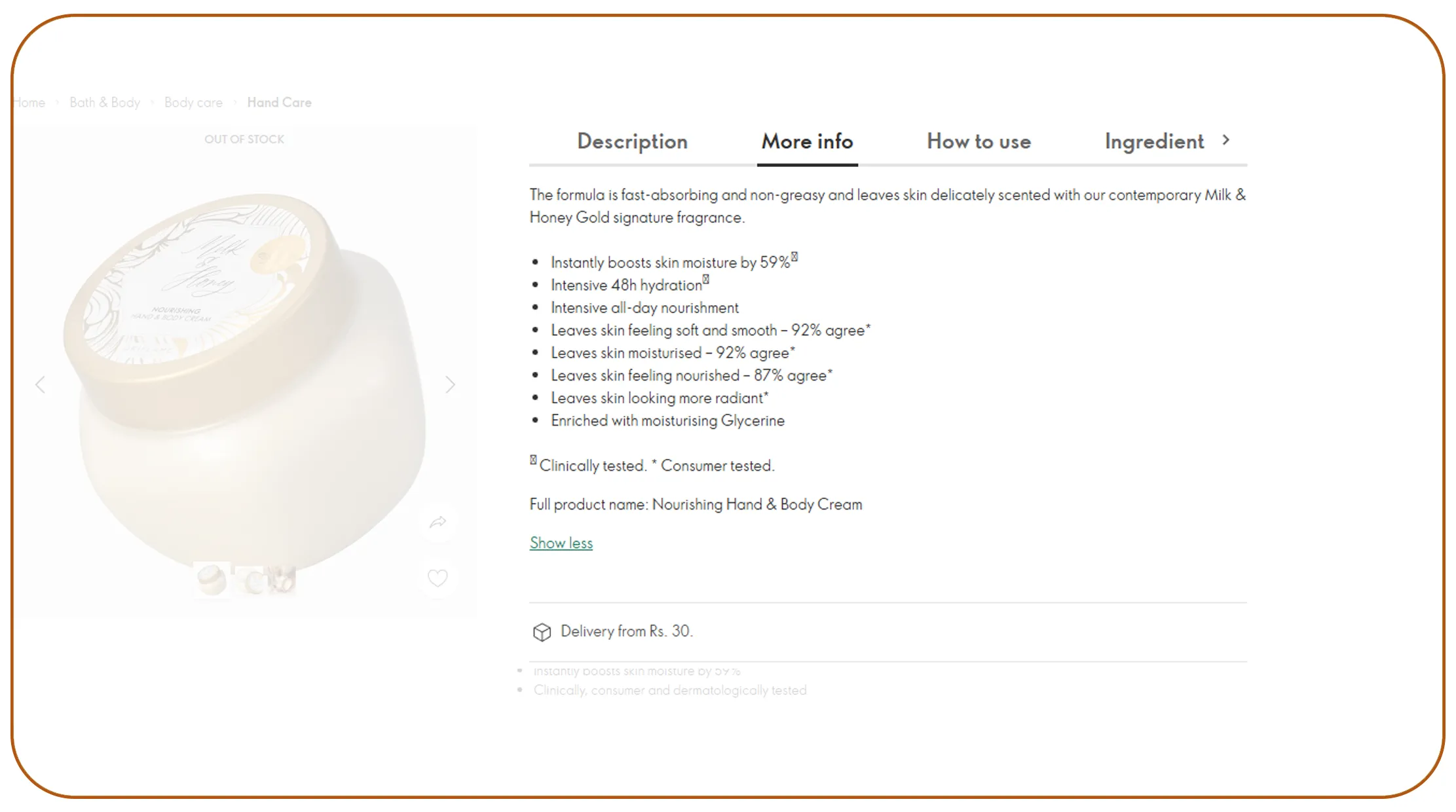
Accurate datasets require clean and structured data. Using extract Oriflame beauty product data for analysis, teams can create unified catalogs containing product names, SKUs, categories, prices, descriptions, and images.
From 2020 to 2021, manual collection of Oriflame product data was time-intensive, often leading to errors. Automating extraction reduced data preparation time by 60%, allowing analysts to focus on actionable insights. By 2022, over 15,000 products were processed monthly, enabling comparative studies of product lines, regional pricing, and category trends. By 2024, structured datasets facilitated cross-market analysis, revealing that skincare and cosmetics consistently generated over 40% of revenue in European markets. Projections for 2026 indicate that structured datasets will drive predictive modeling for product performance, seasonal trends, and competitive benchmarking across multiple countries.
Structured datasets also support visual analytics, making it easier to detect gaps, identify high-performing products, and forecast market demand efficiently.
Pricing and Trend Insights
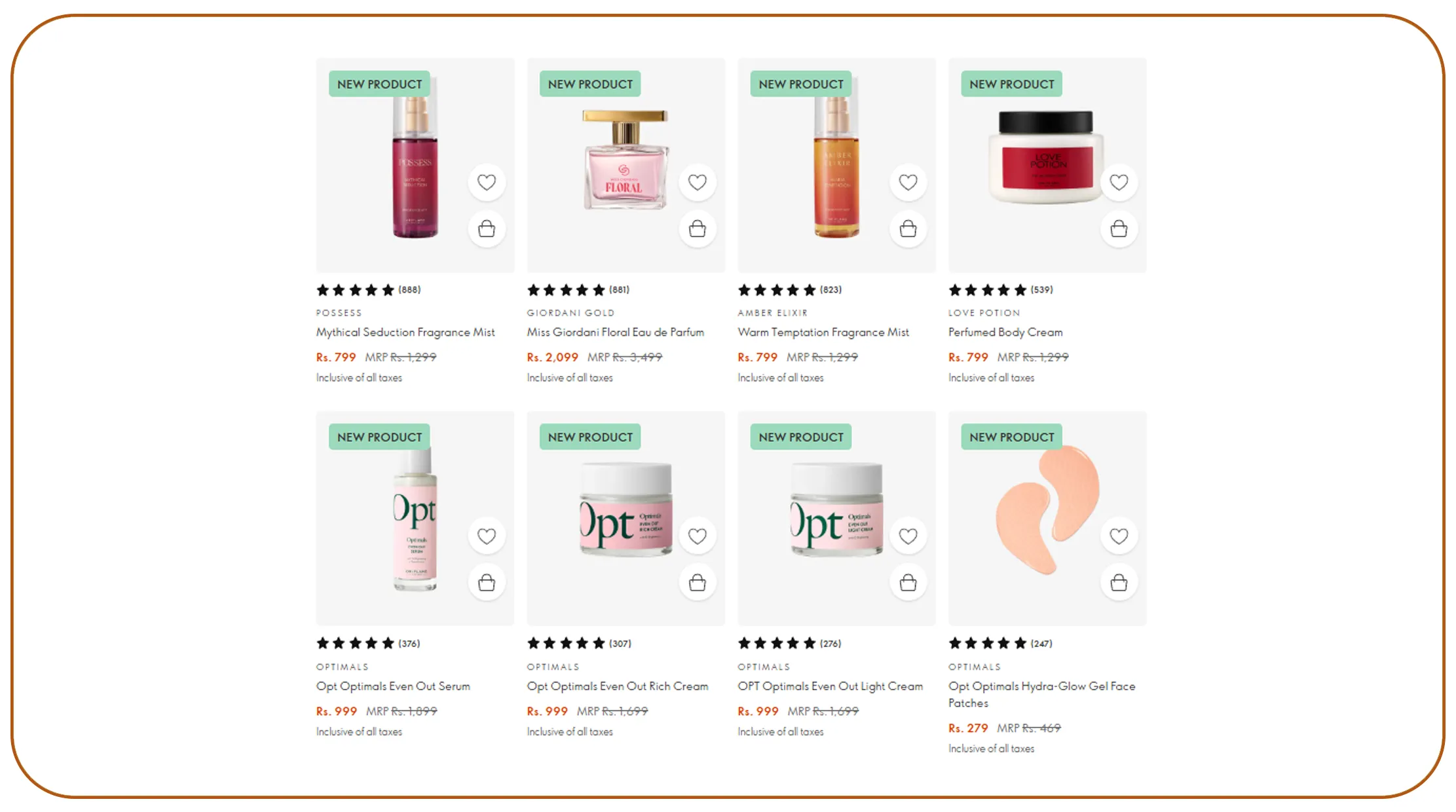
Brands that Scrape cosmetics and image product pricing data can monitor competitor prices, identify discount strategies, and forecast market shifts. Price monitoring combined with visual analysis provides actionable insights into product positioning.
Between 2020 and 2022, scraped data showed a 10-15% increase in discounted items during holiday seasons. In 2023, analysts noted that products with high-quality images and clear descriptions experienced 18% higher engagement online. Tables comparing average prices by category revealed a steady rise in mid-tier products, while luxury items remained stable. By 2025, predictive analytics applied to scraped pricing data enabled accurate margin forecasts and dynamic pricing adjustments. By 2026, companies leveraging real-time scraping achieved faster decision-making, higher conversion rates, and improved market share tracking.
Scraped pricing and image datasets allow brands to create visual dashboards for pricing strategies, campaign planning, and trend tracking at a glance.
Analyzing Market Dynamics
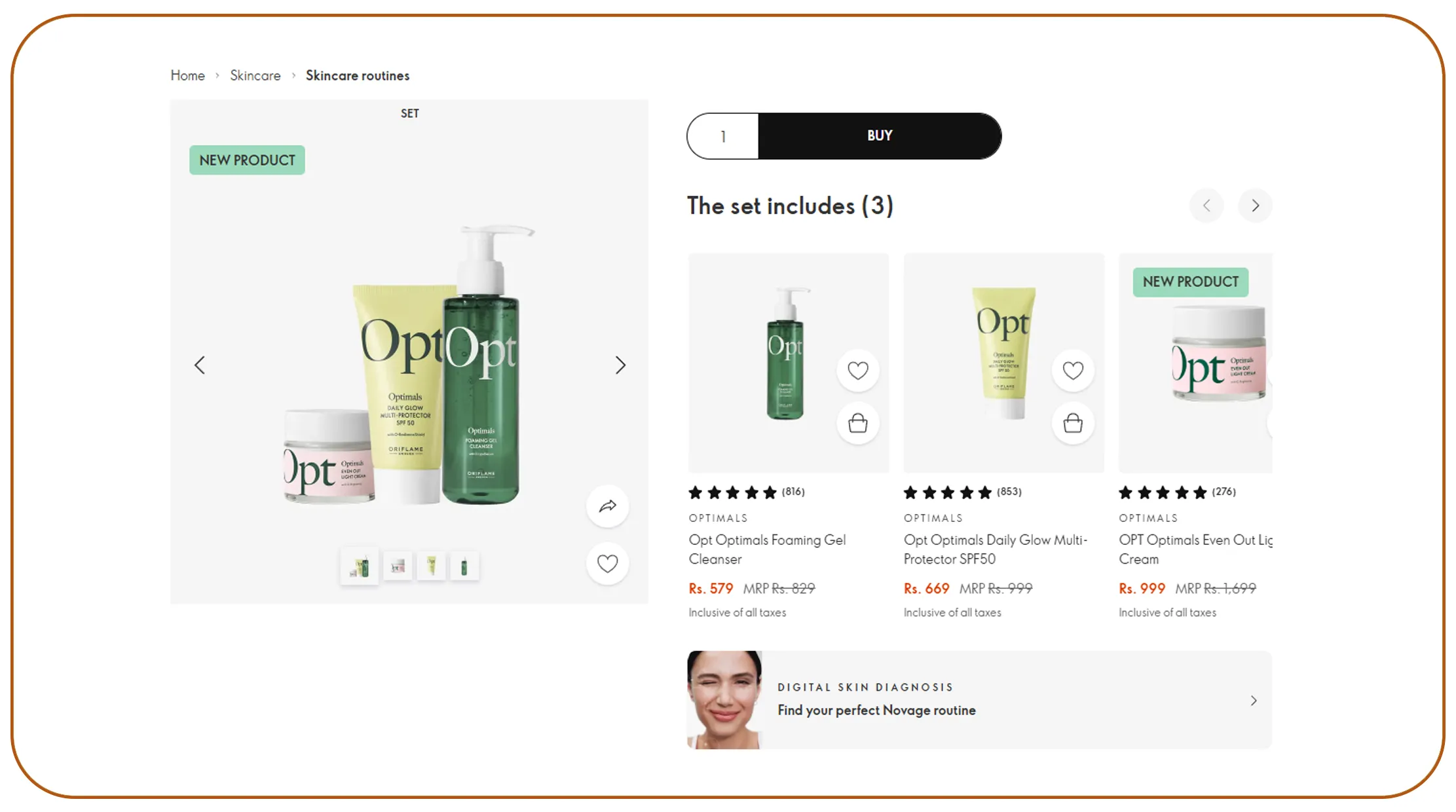
With Beauty market trends analysis via Oriflame API, companies can identify shifts in consumer preferences, emerging categories, and regional performance variations. API-driven analysis enables near real-time monitoring of product launches, sales campaigns, and seasonal trends.
From 2020 to 2021, skincare dominated online sales, capturing 45% of Oriflame's digital revenue. By 2022, makeup products grew by 20%, indicating a shift in consumer focus. Analysis tables show that haircare products maintained steady growth of 10-12% annually. Forecasts for 2024-2026 highlight rising demand for eco-friendly and sustainable beauty products, with digital-first launches influencing overall market trends. Companies leveraging API data were able to adjust inventory, marketing, and product strategies within weeks instead of months.
Trend analysis allows businesses to identify opportunities, predict seasonal demand, and make data-backed product launch decisions using historical and real-time insights.
Leveraging Industry Datasets
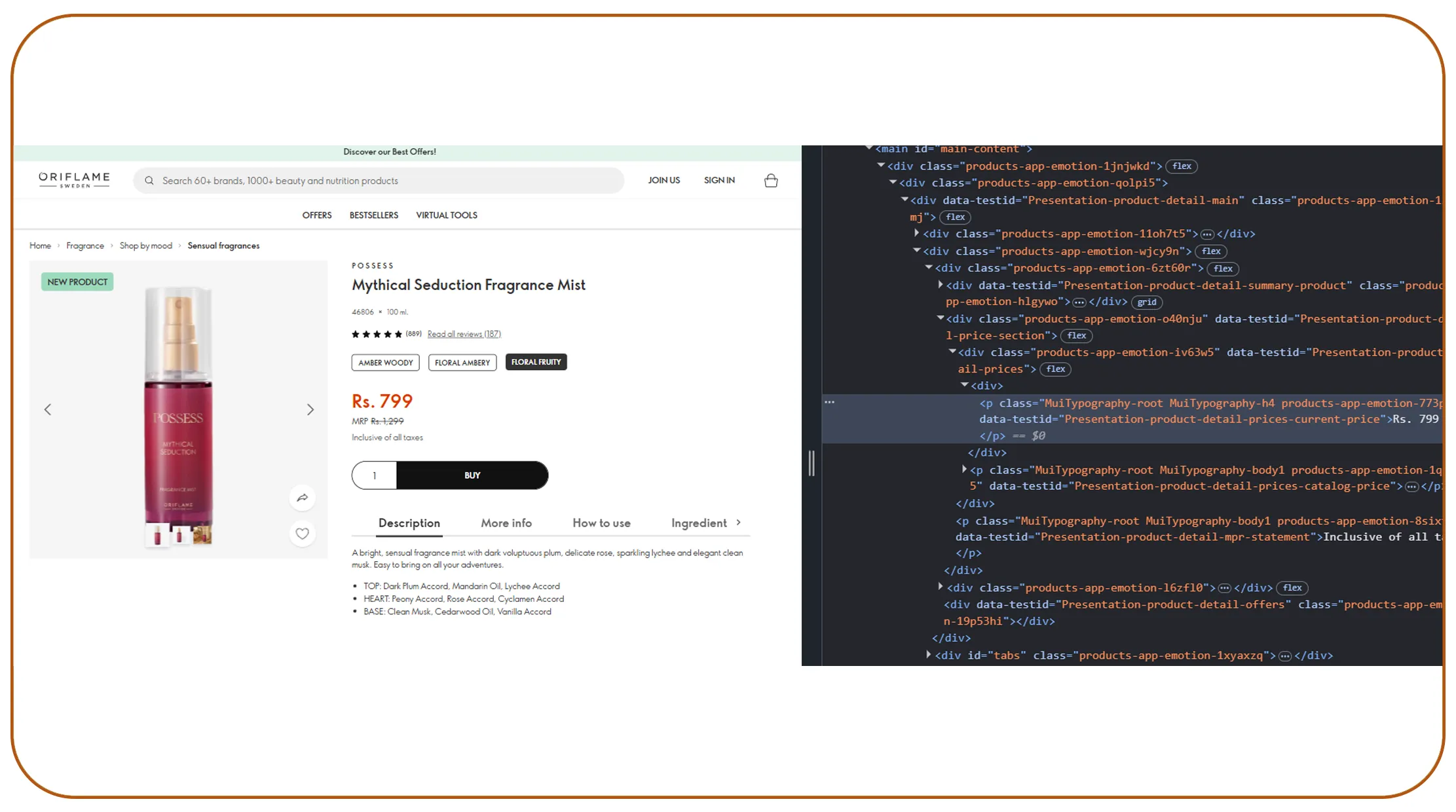
Building a Fashion dataset from scraped Oriflame data allows analysts to combine images, prices, and product metadata into a single resource. Datasets help detect category trends, customer preferences, and visual merchandising strategies.
From 2020 to 2022, combining scraped datasets with sales reports revealed that lipsticks and skincare bundles outperformed standalone products by 25%. By 2023, datasets supported cross-market analysis across Europe, Asia, and North America, enabling strategic decisions on pricing, promotions, and inventory allocation. Projections for 2025-2026 indicate that integrated datasets will play a key role in AI-driven recommendations and predictive analytics for beauty retailers.
Centralized datasets provide a structured foundation for trend spotting, competitor benchmarking, and automated reporting, helping marketing and product teams respond faster to market shifts.
Visualizing Performance Metrics
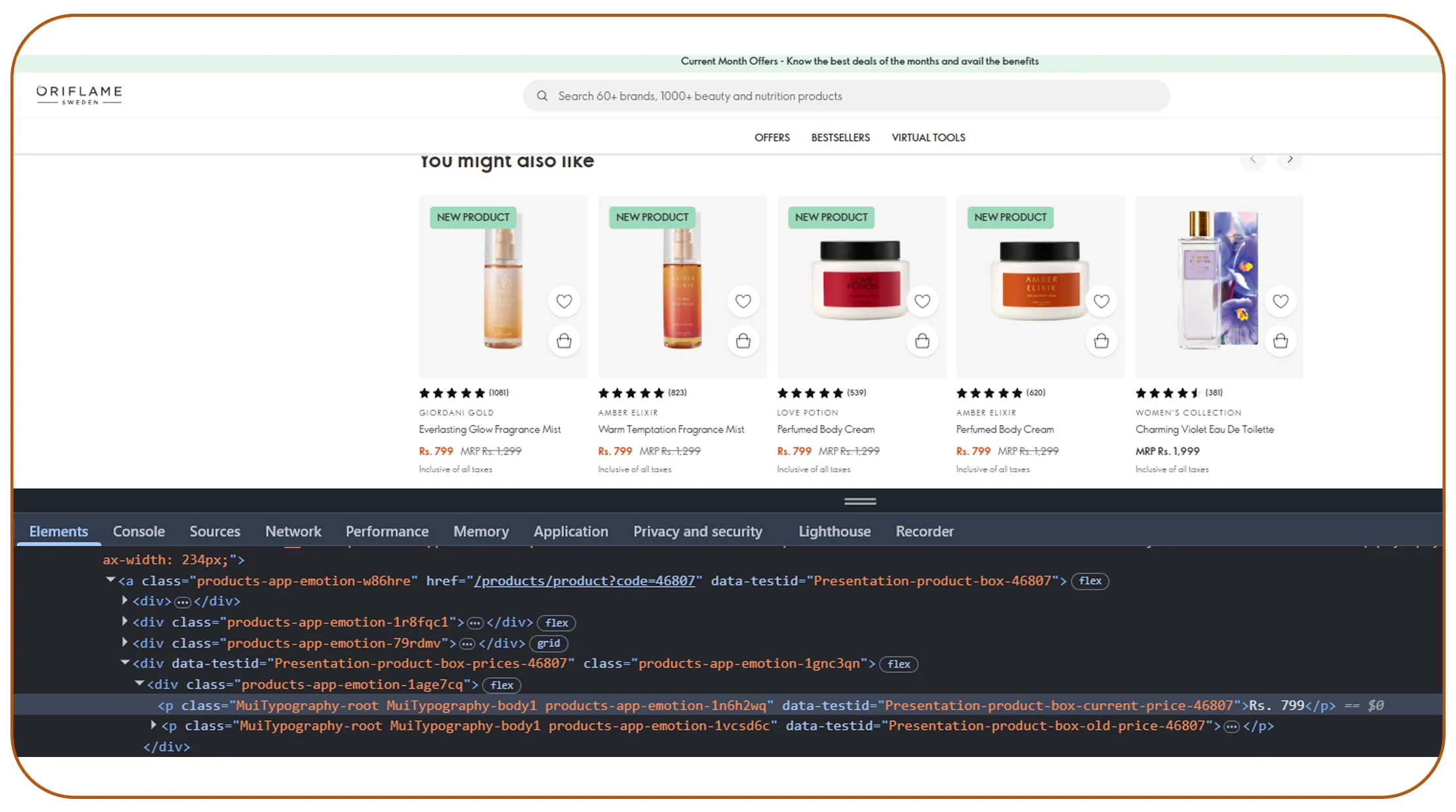
With a Fashion Dashboard, extracted Oriflame data can be visualized for quick insights into pricing trends, product popularity, and seasonal demand. Dashboards consolidate images, prices, and metadata into interactive charts and tables for easy decision-making.
Between 2020 and 2022, dashboards were primarily used for sales monitoring, enabling teams to track over 50 product categories. In 2023, advanced dashboards integrated scraped images, highlighting visual trends that influenced sales. By 2024, companies reported that dashboard-driven decisions reduced overstock by 18% and improved promotional ROI by 22%. Forecasts for 2026 suggest that dashboards will incorporate AI-driven predictive insights, helping brands visualize future product performance and optimize supply chain and marketing strategies.
Dashboards make it easy for executives, analysts, and marketing teams to monitor KPIs in real time, enhancing both operational efficiency and strategic planning.
Why Choose Real Data API?
Real Data API provides end-to-end solutions for Market Research, Oriflame data scraping for beauty market insights, and competitive intelligence. It offers automated data extraction, structured datasets, and real-time APIs for accurate, scalable insights.
The platform allows brands to monitor prices, product images, and availability efficiently. With enterprise-grade web scraping tools, teams can centralize data, generate dashboards, and apply predictive models. By leveraging Real Data API, companies save time, reduce errors, and enhance decision-making across marketing, supply chain, and product planning. Whether analyzing regional markets, evaluating competitor strategies, or optimizing catalog performance, the API delivers reliable, actionable intelligence to empower business growth in the beauty sector.
Conclusion
In today's competitive beauty industry, leveraging technology is no longer optional. By using Web Scraping API and Oriflame data scraping for beauty market insights, companies can transform raw product data into actionable intelligence. Real-time monitoring of images, prices, and product trends empowers marketers, analysts, and supply chain teams to make faster, smarter decisions.
Take your beauty market strategies to the next level—partner with Real Data API to unlock insights, visualize trends, and stay ahead of competitors. Start scraping and analyzing Oriflame data today to drive smarter business growth!
Latest posts
Truthsocial Data Scraping For Real-Time Social Media Insights
Zara Web Data Scraper For Fashion Trend Analysis - How Retailers Overcome Fast-Changing Fashion Demand & Inventory Challenges
How Real Estate Web Scraping Using Bayut API Solves Rental Pricing and Property Tracking Problems?
How Trendyol Data Collection for Ecommerce Market Research Solves Assortment, Pricing, and Market Intelligence Challenges?



.png)