
Introduction
Two destinations define leisure tourism in the United States more than any others: Florida and Las Vegas. Together they welcome over 200 million visitors annually, generate hundreds of billions in hospitality revenue, and operate some of the most dynamically priced hotel, flight, and entertainment markets anywhere in the world. For travel companies, hospitality operators, and market researchers trying to compete or invest intelligently in either market, access to timely, granular, and structured data is not a strategic advantage — it is a baseline requirement.
This is exactly why web scraping tourism market data intelligence in Florida and Las Vegas has become a critical discipline across the travel industry. Hotel nightly rates in Miami Beach shift by the hour during spring break. Las Vegas resort fees and room prices fluctuate with convention calendars, headline entertainment bookings, and last-minute inventory releases. Flight fares into Orlando and McCarran respond to competitor pricing moves within minutes. No manual research process can track these dynamics at the speed and scale required to make genuinely data-driven decisions — but a systematic Florida and Las Vegas tourism market data scraper can.
This article explores the data sources, tools, techniques, and market insights that define modern tourism market intelligence for these two iconic US destinations, and how a structured travel dataset built through scraping translates directly into competitive strategy.
137M
Annual Florida visitors (2025)
40M+
Annual Las Vegas visitors (2025)
$115B
FL tourism economic impact
$22B
Las Vegas gaming & hospitality revenue
Why Florida and Las Vegas Demand Real-Time Data Intelligence
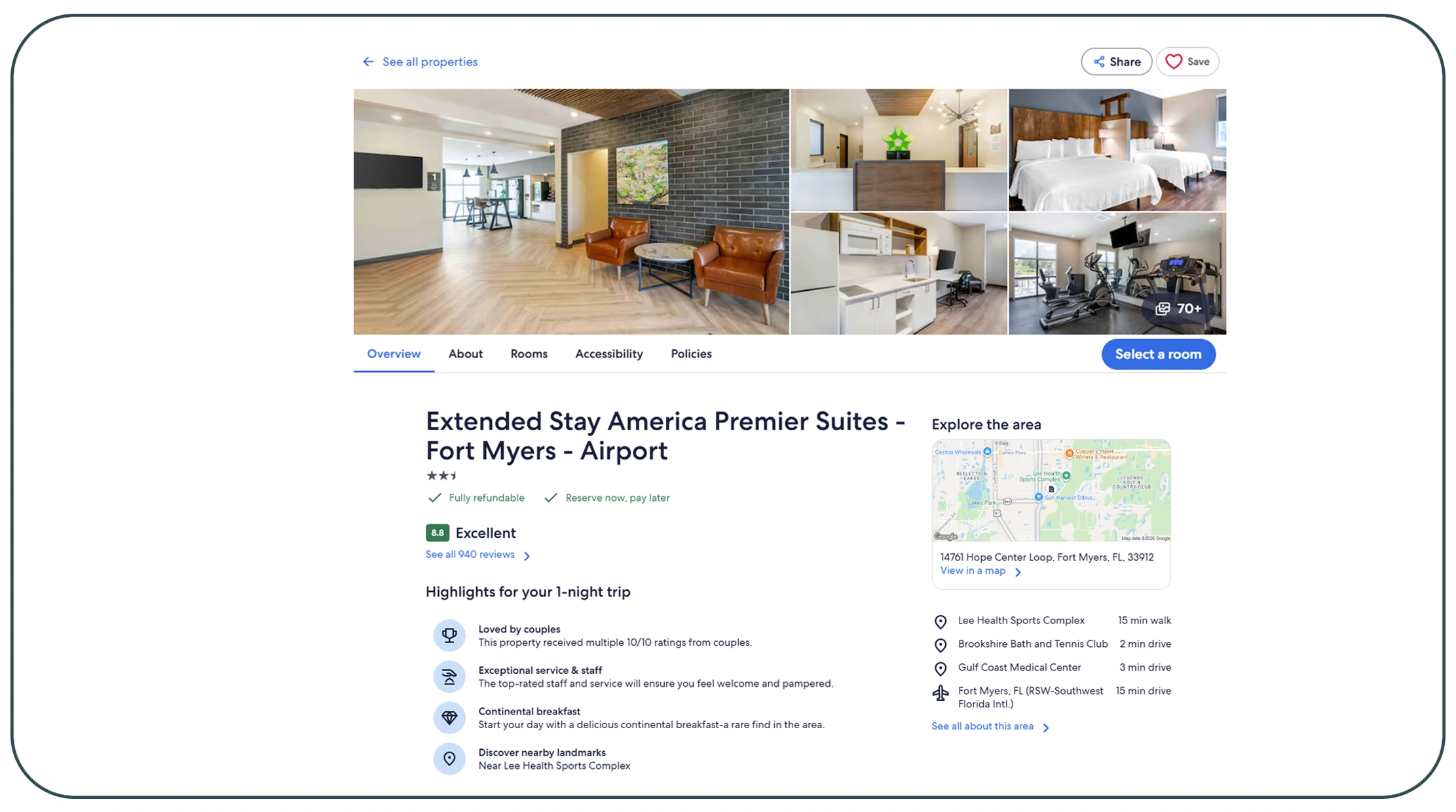
Florida and Las Vegas share a defining characteristic that makes them uniquely challenging — and uniquely rewarding — markets for tourism data collection: extreme price volatility driven by demand concentration. Both destinations experience demand surges that are intense, predictable in pattern but unpredictable in magnitude, and commercially consequential at a scale that few other US markets can match.
In Florida, the combination of year-round sunshine tourism, seasonal snowbird migration, theme park visitation centered on Orlando, spring break demand in Miami and the Gulf Coast, and hurricane season price suppression creates a pricing environment that is simultaneously cyclical and highly responsive to short-term signals. A single major convention booking in Miami, a viral TikTok video featuring a Gulf Coast beach, or an early hurricane season forecast can move hotel rates across an entire market segment within 24 hours.
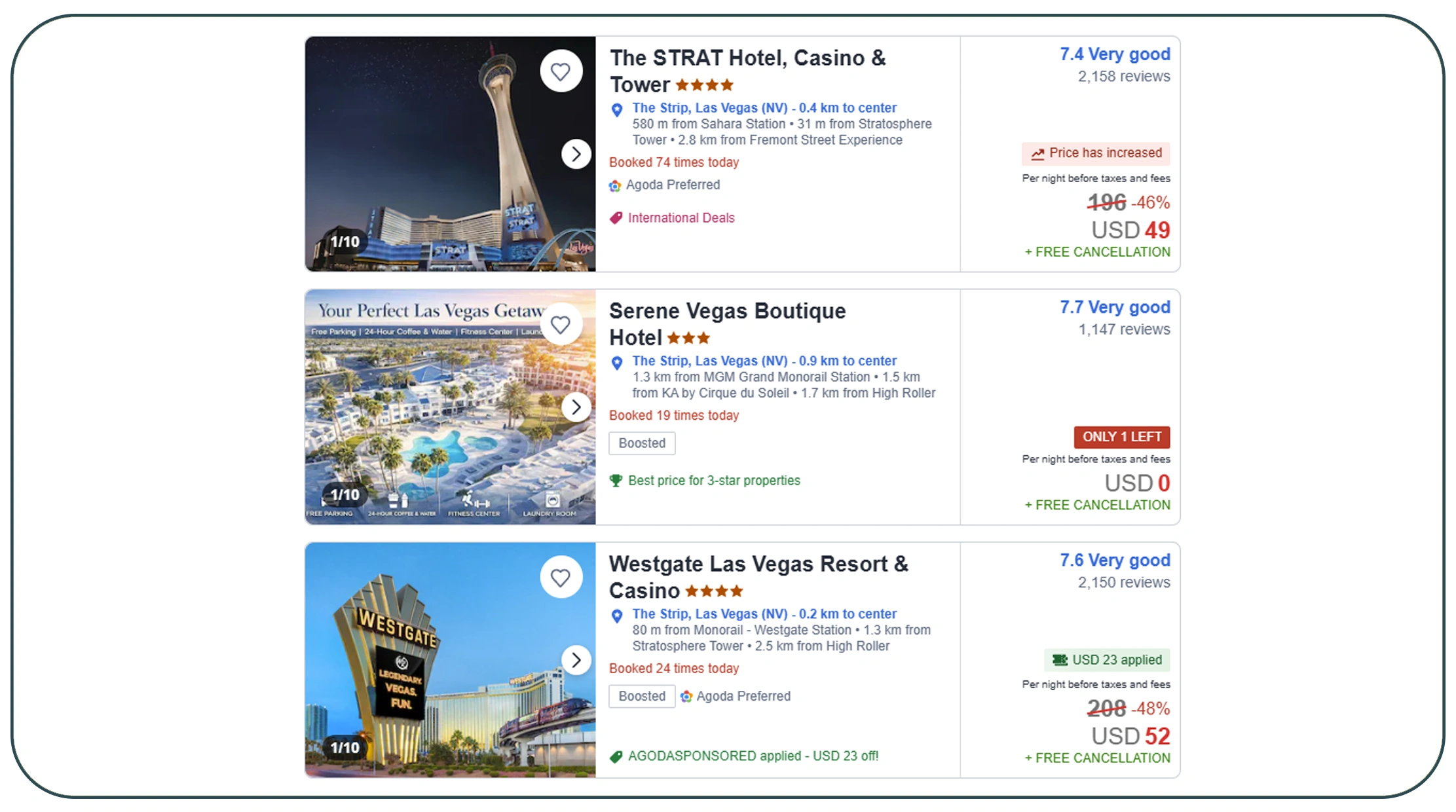
Las Vegas operates in an even more compressed pricing environment. The city's hotel inventory is among the most aggressively yield-managed in the world — rates for the same room at the same Strip resort can differ by a factor of five between a quiet Tuesday in February and the weekend of a major UFC fight or the Consumer Electronics Show. Understanding this pricing landscape in real time, across all major properties and OTA platforms simultaneously, is only possible through systematic tourism market data collection in Florida and Las Vegas powered by web scraping.
"In Florida and Las Vegas, yesterday's hotel rate data is already stale. The operators winning on revenue management are those refreshing their competitive intelligence every few hours, not every few days."
| Florida — Tourism Snapshot | Las Vegas — Tourism Snapshot |
|---|---|
| Top marketOrlando / Miami / Tampa | Top marketThe Strip / Downtown |
| Peak seasonDec – Apr / Jun – Aug | Peak eventsCES / NFL / UFC / NYE |
| Avg hotel rate (peak)$189 – $340/night | Avg hotel rate (event)$250 – $600/night |
| Top OTAExpedia / Booking.com | Top OTAHotels.com / Priceline |
Key Data Sources to Extract Hotel and Flight Data in Florida and Las Vegas
A comprehensive tourism market data scraper for Florida and Las Vegas draws from multiple platform layers, each contributing a distinct signal type to the overall intelligence picture.
- Expedia / Booking.com: Hotel nightly rates, room type pricing, availability windows, cancellation terms, and OTA-exclusive promotional rates
- Hotels.com / Priceline: Last-minute rate drops, opaque pricing deals, loyalty rate differentials, and resort fee disclosure patterns by property
- Google Flights / Kayak: Real-time fare data into MCO, MIA, TPA, and LAS, route-level price calendars, and carrier-by-carrier competitive fare positioning
- Airbnb / Vrbo: Short-term vacation rental pricing as a competitive benchmark for hotel strategy in Florida beach and Las Vegas neighborhood markets
- TripAdvisor / Yelp: Review volume trends, rating trajectories, attraction demand signals, and restaurant pricing context for full destination intelligence
- Resort & Casino Websites: Direct booking rates, entertainment package pricing, resort fee structures, and exclusive member rate differentials vs. OTA listings
Building a Real-Time Tourism Market Data Scraper
For travel companies and hospitality operators that need continuous pricing intelligence across Florida and Las Vegas, a production-grade real-time tourism market data scraping pipeline requires careful architectural design. The core challenge is volume: tracking hundreds of hotel properties across multiple OTAs, dozens of flight routes into each destination, and short-term rental inventory — all refreshed on a schedule fast enough to capture meaningful price movements.
# Tourism market data scraper — hotel rates Florida & Las Vegas
import asyncio
from playwright.async_api import async_playwright
import pandas as pd
from datetime import datetime

async def scrape_hotel_rates(destination, check_in, check_out):
    async with async_playwright() as p:
        browser = await p.chromium.launch(headless=True)
        page = await browser.new_page()
        url = (f"https://example-hotels.com/search"
               f"?dest={destination}&in={check_in}&out={check_out}")
        await page.goto(url, wait_until="networkidle")
        hotels = await page.query_selector_all(".hotel-result")
        records = []
        for h in hotels:
            name = await h.query_selector(".hotel-name")
            rate = await h.query_selector(".nightly-rate")
            stars = await h.query_selector(".star-rating")
            review = await h.query_selector(".review-score")
            records.append({
                "destination": destination,
                "check_in": check_in,
                "hotel": await name.inner_text() if name else None,
                "rate_usd": await rate.inner_text() if rate else None,
                "stars": await stars.inner_text() if stars else None,
                "review_score": await review.inner_text() if review else None,
                "scraped_at": datetime.utcnow().isoformat(),
            })
        await browser.close()
        return pd.DataFrame(records)

# Scrape both destinations simultaneously
miami = asyncio.run(scrape_hotel_rates("miami-beach-fl", "2026-06-20", "2026-06-23"))
vegas = asyncio.run(scrape_hotel_rates("las-vegas-nv", "2026-06-20", "2026-06-23"))
combined = pd.concat([miami, vegas])
combined.to_csv("fl_lv_hotel_rates.csv", index=False)
A travel data scraping API significantly reduces the complexity of managing this kind of multi-destination, multi-platform pipeline — providing pre-structured, continuously refreshed hotel and flight data across Florida and Las Vegas without the overhead of maintaining custom scrapers, proxy infrastructure, and data normalization logic in-house.
Tourism Market Intelligence Insights the Data Reveals
Event-Driven Rate Surge Forecasting — Las Vegas
By scraping Las Vegas hotel rates continuously and cross-referencing them against a scraped events calendar — conventions at the Las Vegas Convention Center, major sports events at Allegiant Stadium, headline entertainment bookings on the Strip — tourism analysts can build predictive rate surge models that identify which weekends will see the steepest rate increases weeks in advance. This intelligence is invaluable for corporate travel managers, group booking teams, and revenue management systems.Seasonal Demand Pattern Mapping — Florida
Florida's tourism market follows multiple overlapping seasonal cycles — winter snowbird season, spring break, summer family travel, and hurricane season slowdowns. Scraping hotel rates, flight fares, and Airbnb prices across Miami, Orlando, Tampa, and the Gulf Coast simultaneously over a full calendar year builds a granular seasonal demand map that reveals exactly when each Florida submarket peaks, troughs, and transitions — at a city and ZIP code level that aggregate reports cannot match.OTA vs. Direct Rate Differential Tracking — Both Markets
Monitoring the gap between OTA-listed rates and direct booking rates for the same Florida and Las Vegas properties reveals each hotel's channel management strategy in real time. Properties that consistently undercut their OTA rates through direct channels — a practice OTAs strictly prohibit through rate parity agreements — are identifiable through systematic multi-platform scraping, providing both compliance intelligence and competitive context for rival properties.Fast Food Chain Opening Hours Across US Cities
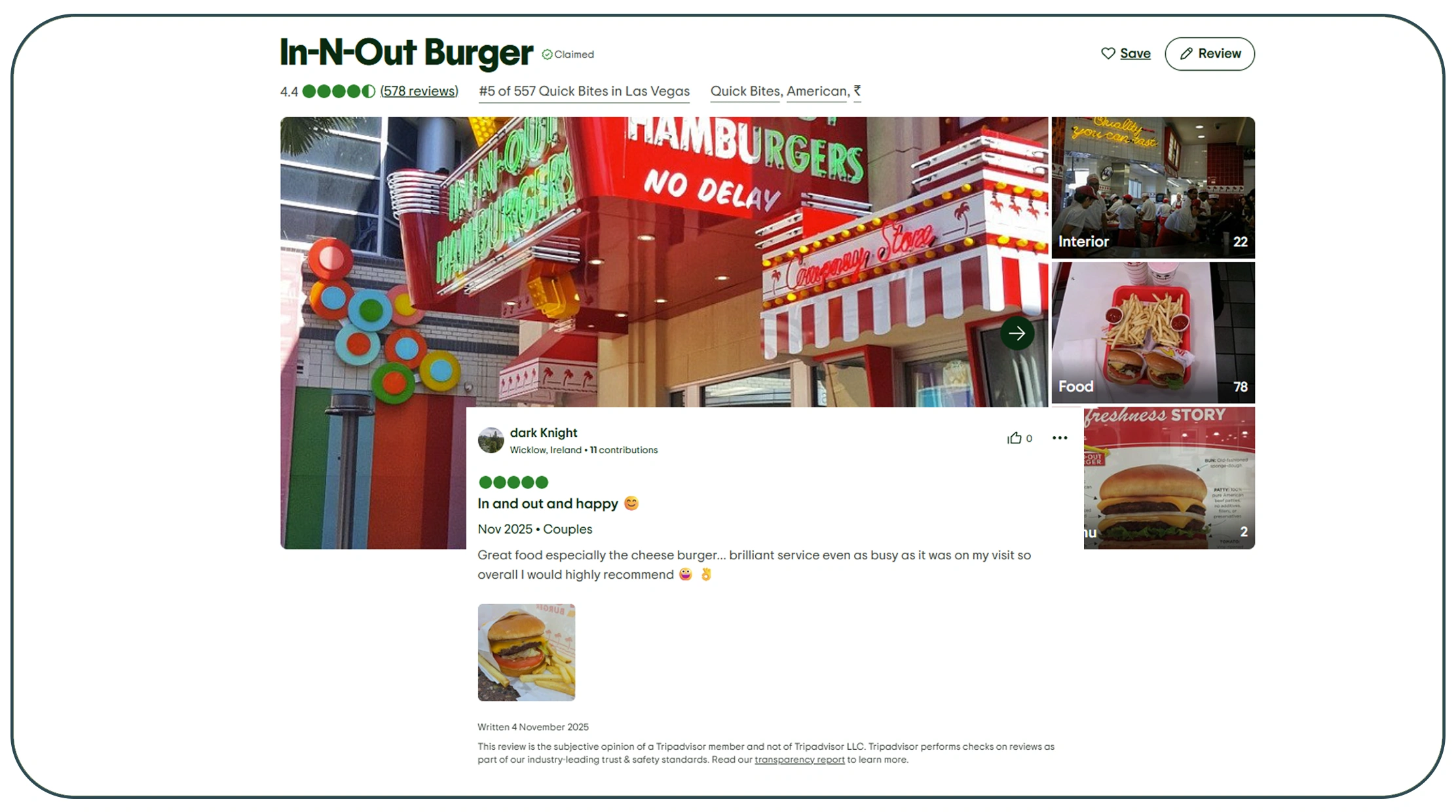
Tourism market intelligence extends beyond hotels and flights. For travel companies building comprehensive destination guides, corporate travel platforms, and tourism analytics products, fast food chain opening hours across US cities is a surprisingly high-value data point — particularly in tourist-heavy markets like Florida and Las Vegas where visitors heavily rely on familiar chain restaurants and late-night food options outside of resort dining.
In Las Vegas especially, where a significant portion of dining demand occurs between midnight and 4am, knowing which fast food chains operate 24-hour locations on and near the Strip — and scraping that data systematically across US cities for comparison — provides meaningful context for tourism businesses building itinerary tools, hotel concierge platforms, and destination intelligence products.
| Chain | Las Vegas (Strip) | Miami / Orlando FL | Late-Night Coverage |
|---|---|---|---|
| McDonald's | 24 hrs (select) | 6am – 12am typical | 24hr Las Vegas |
| In-N-Out Burger | 10:30am – 1:30am | Not present in FL | LV only |
| Taco Bell | 24 hrs (select) | 7am – 2am typical | 24hr LV select |
| Denny's | 24 hrs (Strip) | 24 hrs (select FL) | 24hr both markets |
| Subway | 7am – 12am typical | 9am – 10pm typical | Limited late hours |
Scraping fast food chain opening hours across US cities at scale — covering every major chain location in Florida tourist corridors and Las Vegas entertainment districts — builds a practical, continuously updated travel dataset layer that consumer-facing tourism products and corporate travel platforms can surface directly to users. When combined with hotel rate and flight data, this enriched travel dataset becomes a genuinely comprehensive tourism intelligence asset.
Travel Scraping API Use Cases for These Markets
Travel Scraping API Use Cases — Florida & Las Vegas
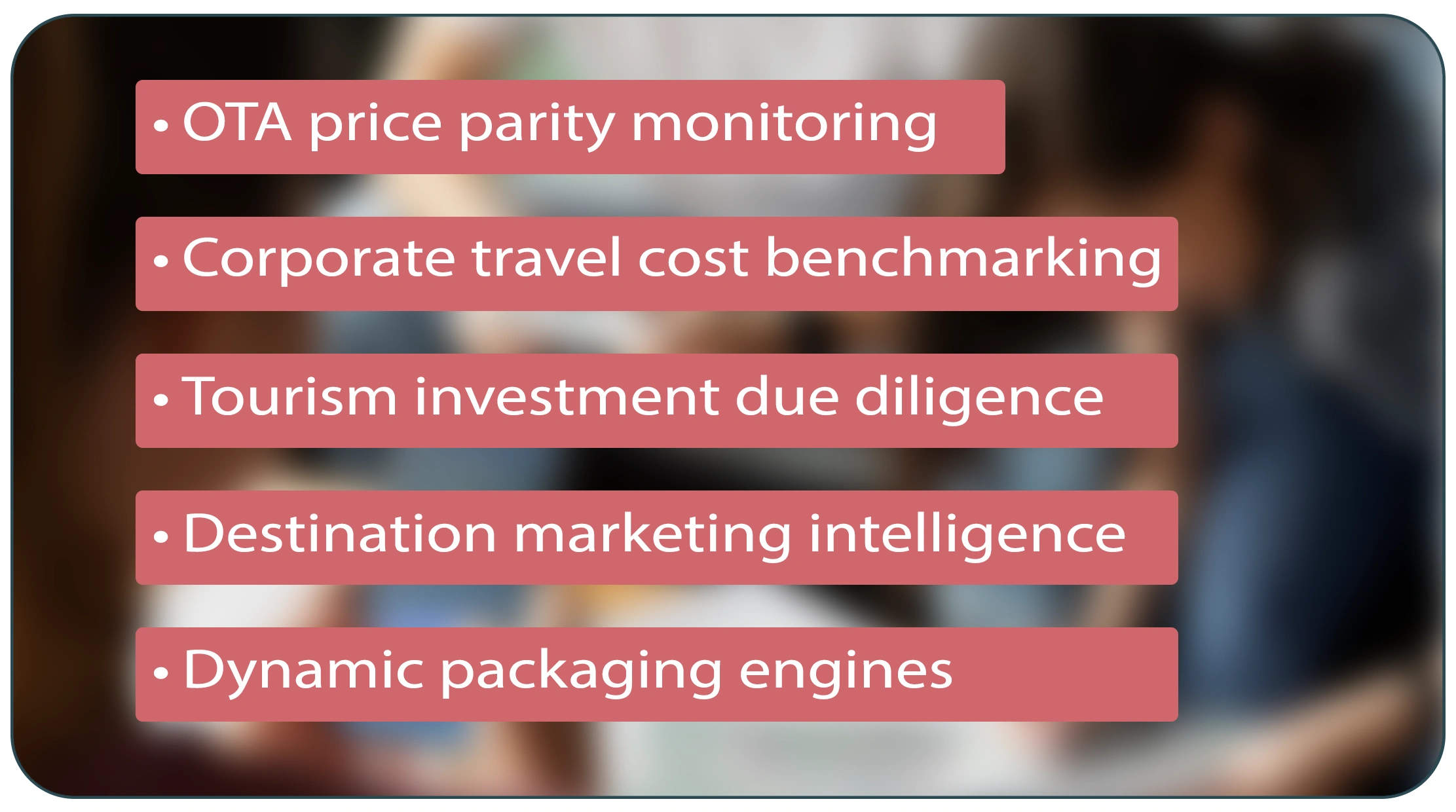
- OTA price parity monitoring — tracking whether Florida and Las Vegas hotel partners are violating rate parity agreements by offering lower rates on direct channels than on Expedia or Booking.com
- Corporate travel cost benchmarking — providing companies with real-time hotel and flight cost baselines for Florida and Las Vegas business travel expense policy management
- Tourism investment due diligence — supplying private equity and real estate investors with historical rate data, occupancy proxies, and competitive density metrics for Florida and Las Vegas hotel acquisitions
- Destination marketing intelligence — tracking visitor demand signals, review sentiment, and booking velocity for Florida tourism boards and Las Vegas Convention and Visitors Authority market research programs
- Dynamic packaging engines — powering OTA bundle pricing algorithms that combine scraped flight fares, hotel rates, and car rental prices into real-time optimized travel packages for Florida and Las Vegas destinations
Conclusion
Florida and Las Vegas are not just two of America's most visited destinations — they are two of its most analytically complex and commercially high-stakes tourism markets. In both, pricing volatility is a constant, competitive intensity is extreme, and the gap between a data-driven pricing decision and an intuition-based one can be measured directly in revenue. Web scraping tourism market data intelligence in Florida and Las Vegas, building a structured travel dataset from hotel rates, flight fares, short-term rental prices, and destination-level demand signals, and deploying a travel data scraping API for continuous market monitoring are no longer optional capabilities for serious tourism businesses — they are the infrastructure of competitive survival.
For travel companies, hospitality operators, and market research teams that want this intelligence without the complexity of building and maintaining multi-source scraping pipelines, Real Data API is the most direct and reliable path to structured Florida and Las Vegas tourism data. Real Data API provides continuously refreshed access to a comprehensive travel dataset covering hotel nightly rates across Florida and Las Vegas properties, flight fare data into MCO, MIA, TPA, and LAS, OTA price comparisons, short-term rental benchmarks, fast food chain opening hours across US cities, and destination-level demand signals — all delivered through a clean, production-ready travel data scraping API. Whether the goal is powering a dynamic pricing engine, conducting tourism market research, or building a competitive intelligence dashboard for Florida or Las Vegas hospitality assets, Real Data API delivers the data foundation that makes it possible at scale.
Real Data API — Florida & Las Vegas Tourism Intelligence
Access real-time hotel rates, flight fares, short-term rental benchmarks, chain opening hours, and destination demand signals for Florida and Las Vegas — all through a single, clean travel data scraping API built for tourism market research and competitive pricing intelligence.Pricing figures and statistics are illustrative estimates based on publicly available market data. Always verify against current platform listings. Review each platform's Terms of Service before initiating any data collection program.
Latest posts
How Foodpanda Food Dataset Helps Businesses Track Restaurants, Menus, Prices, Ratings, and Food Delivery Trends?
How IKEA E-commerce Dataset Helps Businesses Solve Product, Pricing, Category, and Retail Trend Challenges?
How Target e-commerce dataset Helps Brands Track Products, Prices, Availability, and Retail Market Trends for Smarter Insights?

How Dior fashion dataset Helps Brands Track Luxury Products, Prices, Collections, and Fashion Trends for Smarter Insights?






.png)