Introduction
In the era of digital retail and hyperlocal commerce, dynamic pricing is the new norm. Platforms such as BigBasket, Blinkit, and Zepto compete aggressively not just on delivery speed and product range, but on pricing and promotions as well. But how can retailers, brands, analysts, or even consumers determine the most competitive price for the same SKU across these platforms? This is where Retail Price Comparison APIs come in — often powered by Web Scraping Services, mobile data extraction, or reverse-engineered endpoints — to provide structured, real-time pricing and inventory data that fuels decision-making.
This research-oriented blog will explore:
- The concept and need for retail price comparison APIs
- Technical approaches to collecting pricing data from BigBasket, Blinkit and Zepto
- Data normalization, SKU matching and challenges
- Use cases across industries
- Legal and ethical considerations
- Future trends in retail analytics
Why Retail Price Comparison Matters
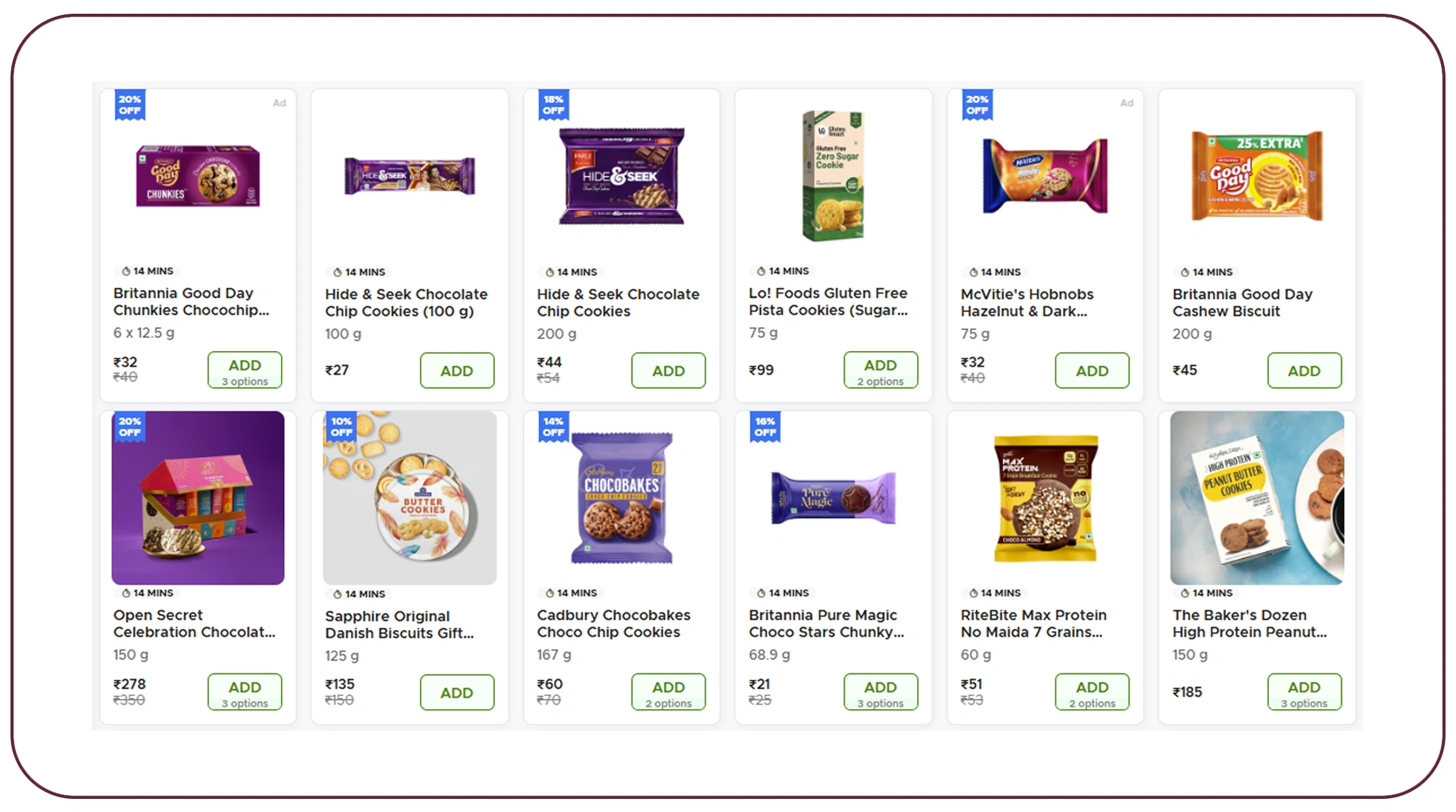
Simply put, Price Comparison enables stakeholders — from internal pricing teams to external analytics platforms — to benchmark product prices across competitors to make informed decisions. In the highly competitive quick-commerce segment in India, daily fluctuations in prices, flash deals, pin code-specific offers, and dynamic inventory make price data both complex and valuable.
A typical case might involve comparing prices of a set of standard SKUs — such as rice, cooking oil, sugar, potatoes, and eggs — across platforms like Blinkit, Zepto, Instamart, and BigBasket. Real data analysis can show significant differences in pricing even for identical items, providing strategic insight into competitor pricing and discount strategies.
Price comparison is essential for:
- Retailers – to adjust pricing dynamically and optimize margins
- Brands – to monitor competitor discounting trends and avoid margin erosion
- Market analysts & data scientists – to generate historical pricing trends and forecasts
- Consumers – to pick the most cost-effective platform for their needs
Approaches to Collecting Price Data

APIs vs. Web Scraping
In an ideal world, platforms would offer public APIs designed for price comparison — but most grocery marketplaces do not provide open API access to pricing data. Instead:
- Official APIs may be restricted or private.
- Third-party or reverse-engineered APIs are often used to extract JSON data endpoints.
- Web scraping and mobile app data extraction are the most common approaches for structured pricing feeds.
Web scraping API involves simulating the requests made by the app or browser to pull product catalogue responses, prices, discounts, availability, and other meta data. These responses are then parsed and structured into JSON or CSV for analysis. In many research and commercial implementations, highly customized scraping pipelines or REST-ful microservices are deployed to inventory these endpoints across cities and pin codes.
Profiled and Geo-Fencing Techniques
Hyperlocal pricing means that the same SKU may have different prices depending on the pin code or delivery zone. To handle this:
- Scrapers are configured with geographic session simulation — often using proxy networks — to mimic requests from different ZIP codes.
- Mobile app endpoints (e.g., Android or iOS catalogue APIs) are often targeted because they tend to be more structured and include inventory and offer data.
Challenges in Generating Unified Price Feeds
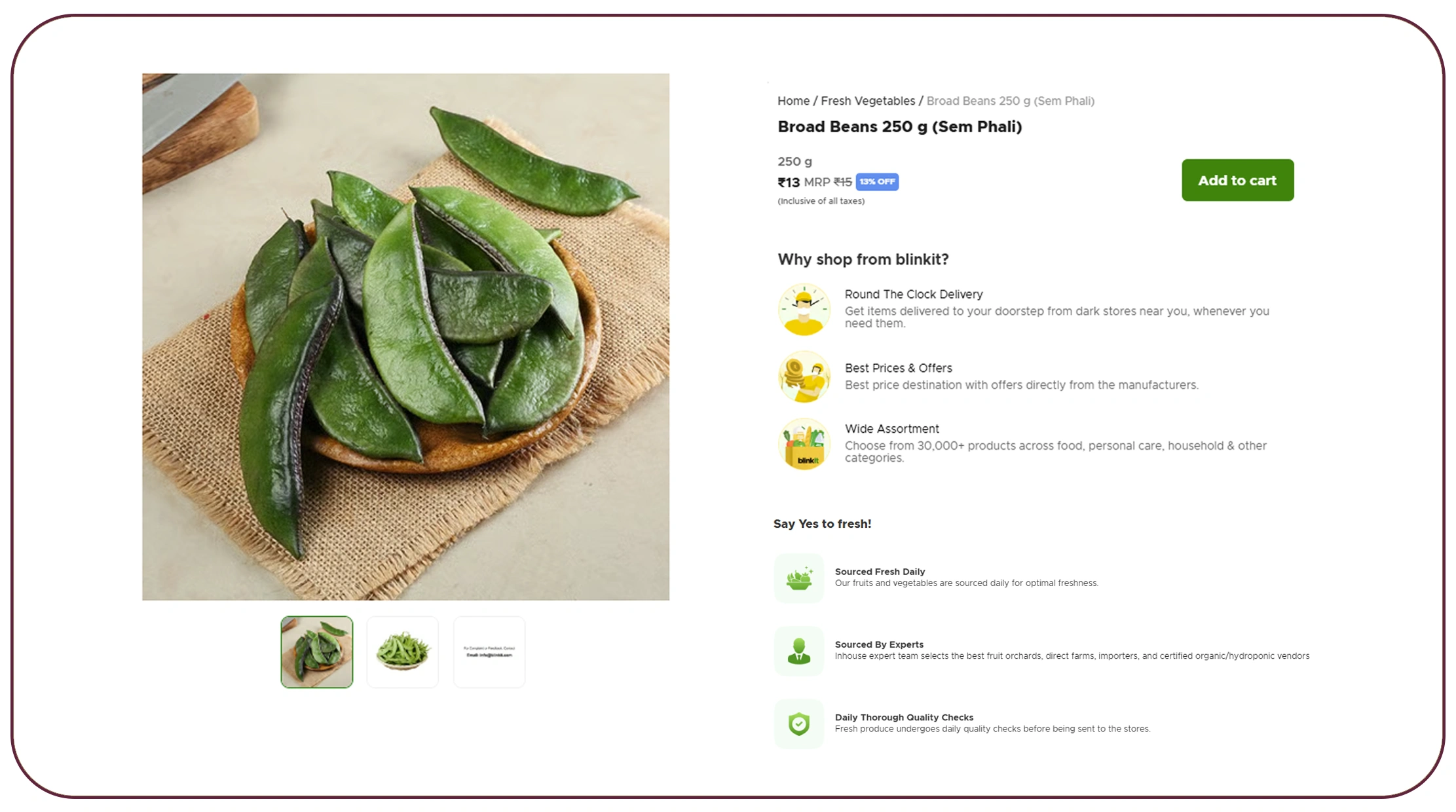
While APIs or scraping engines can fetch raw data, meaningful comparison requires standardized processing. Key challenges include:
SKU Matching
Platforms often list products with slight variations in:
- Brand names and descriptions
- Units (e.g., 500 ml vs 1 liter)
- Variant names and packaging
Fuzzy matching algorithms using product names, brand identifiers, and packaging sizes are essential to align SKUs across platforms into a common taxonomy. This process typically involves tokenization, similarity scoring, and threshold-based grouping to avoid mismatched comparisons.
Rapid Structural Changes
Grocery apps regularly update:
- JSON endpoints
- UI styling
- Endpoint parameters
These changes can break scraping pipelines, requiring frequent maintenance and adaptability in code.
Dynamic Pricing & Flash Deals
Quick commerce or Grocery Datasets platforms are notorious for micro-discounts and flash deals that change hourly. Monitoring these requires:
- High-frequency polling
- Infrastructure capable of capturing these shifts
Without real-time pipelines, analytics may miss the true pricing behavior.
Technical Architecture of Price Comparison APIs
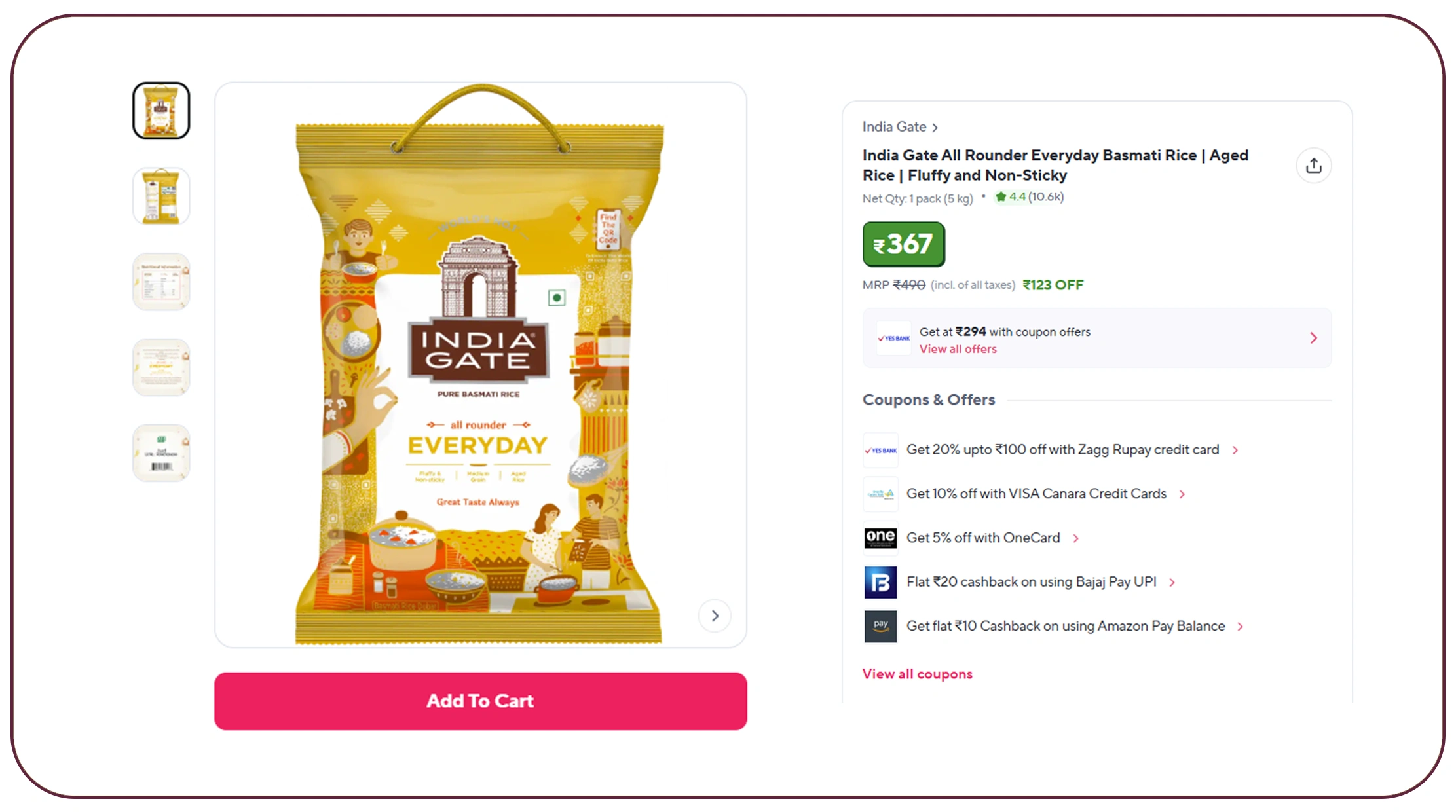
Here's a simplified typical architecture used to generate a retail price comparison API:
1. Data Collection Layer
- Custom scrapers or reverse-engineered endpoints to pull pricing and offer data from Blinkit / Zepto / BigBasket.
- Launch multiple threads or servers to collect region-specific data (e.g., pin codes).
2. Data Normalization & Storage
- Raw JSON responses are cleansed and normalized into a unified schema (SKU, price, discount, platform, timestamp).
- Data is stored in databases such as PostgreSQL, MongoDB, or even cloud data warehouses.
3. API Layer
- A REST API or GraphQL interface that serves real-time or cached price comparison.
- Optional filtering by category, city, brand, or pin code.
4. Analytics & Visualization
- Dashboards, heatmaps, time series analytics, and historical trends.
- Integration with business intelligence tools like Tableau or Power BI.
5. Alerting & Monitoring
- Price anomaly detection (e.g., sudden spike/drop alerts).
- Weekly or daily reports on competitor pricing trends.
In real commercial scenarios, some projects have deployed cloud functions and serverless crawlers to support real-time feeds with minimal latency.
Use Cases for Retail Price Comparison APIs
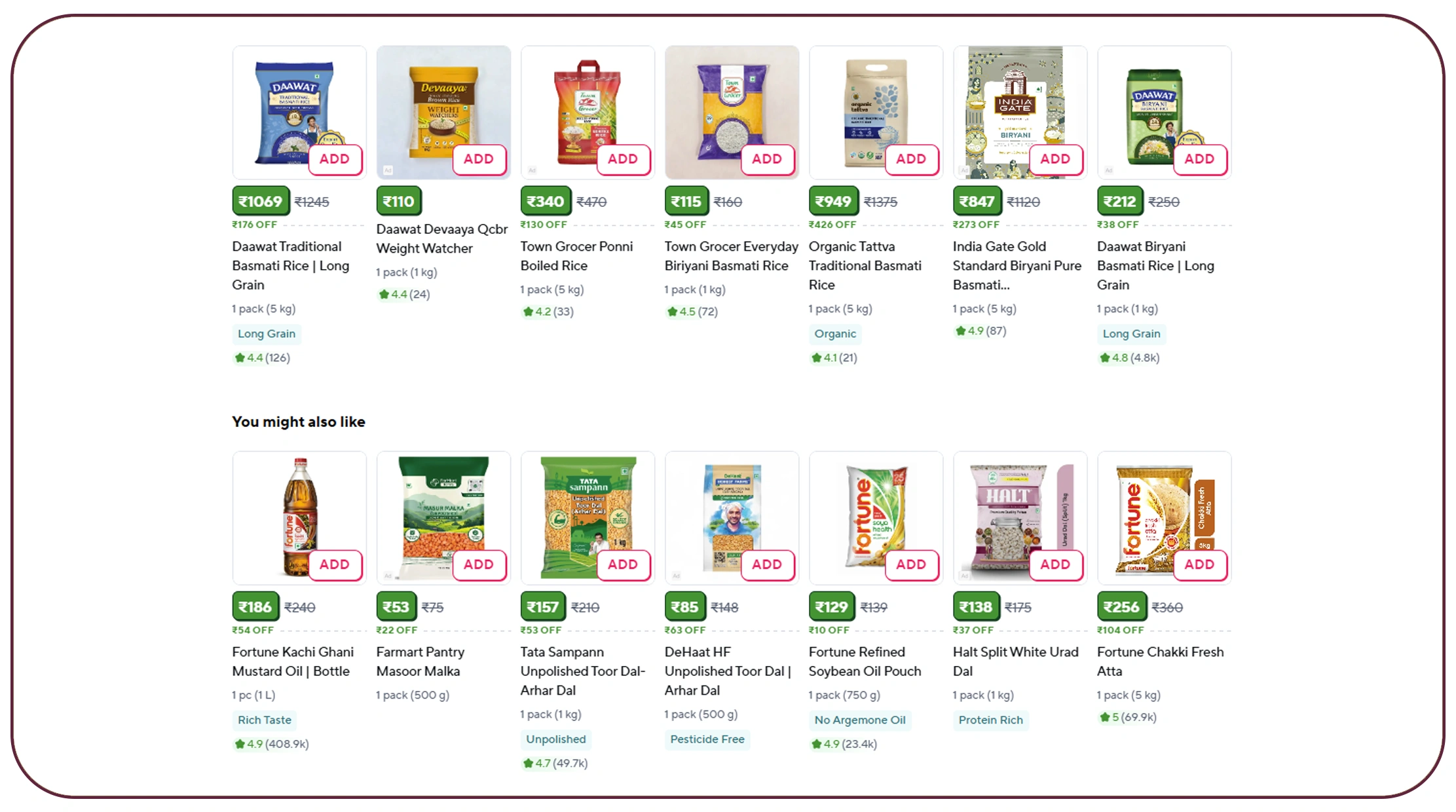
Dynamic Pricing & Competitive Intelligence
Retailers can feed real-time competitor pricing into their pricing engines to:
- Adjust prices automatically within target margins
- Respond to discount patterns quickly
- Avoid undercutting or overpricing in hyper-competitive markets
For example, grocery brands have leveraged web scraping engines to monitor daily pricing changes, stock status, and competitor offers across 30+ cities. These insights help in aligning price strategy with consumer expectations.
Inventory & SKU Forecasting
Price comparison data — especially when paired with availability data — can enhance forecasting models to account for stockouts, shelf availability, and seasonality.
Consumer Apps
Several community-driven apps (e.g., Comparify) aggregate price feeds from Blinkit, Zepto, Instamart, and BigBasket to offer users real-time comparative pricing and delivery time predictions. Although these projects highlight demand, they also illustrate access challenges due to closed APIs and data restrictions.
Legal and Ethical Considerations
Technical feasibility doesn't always equate to legal clearance. Most major grocery platforms do not expose public pricing APIs, and scraping is often explicitly restricted in their Terms of Service. Developers and companies should consider:
- Terms of Service Compliance — Understanding what the platform's terms allow or prohibit.
- Robots.txt Respect — While robots exclusion protocols are standard for web pages, app endpoints often lack clear robots.txt guidelines.
- User Privacy & GDPR/IT Rules — Data collection must avoid personal data unless explicitly permitted.
- Consent & Partnerships — The safest route is engaging in formal partnerships or licensing data access from platforms.
In developer forums, contributors often note the challenge of legally obtaining real-time grocery data because of these restrictions.
Case Study Examples
City-Level Price Intelligence
Large FMCG clients have used price scraping APIs to build hyperlocal dashboards showing:
- Price per SKU across cities
- Discount intensity and patterns
- Region-wise availability constraints
This enables rapid decision-making for promotions and stock allocation.
Real-Time Dynamic Pricing Engines
Companies have integrated automated grocery price APIs into their pricing engines, allowing structures like:
- Real-time alerts on competitor price drops
- End-of-day repricing based on historical trends and competitor discounts
- SKU ranking by price competitiveness for promotional triggers
Data Analysis and Insights
Analysis across platforms often reveals patterns such as:
- Platform-specific pricing behaviors — e.g., Blinkit being cheaper on certain staples, while Zepto has dynamic flash pricing.
- Regional fluctuations — where prices vary significantly between metros and satellite cities.
- Discount depth vs real baseline price — data shows that deeper print discounts don't always translate to real savings if the baseline price was inflated.
These insights illustrate why simple price comparisons are inadequate without robust data normalization, historical context, and statistical interpretation.
Future Directions in Retail Price Analytics
AI-Driven Prediction Models
With structured price comparison APIs, AI models can forecast pricing trends based on seasonality, demand shifts, and promotional cycles.
Enhanced Product Matching with ML
Future pipelines will rely more on machine learning models (BERT, embeddings) to improve SKU matching between platforms — reducing false positives and improving accuracy.
Consumer-Facing Smart Assistants
Apps that automatically suggest the best platform for each whole cart rather than individual items are in development, using richer analytics that consider delivery fees and loyalty offers.
Ethical Data Collaborations
Expect more negotiated partnerships where platforms allow vetted third-party access to pricing data via licensed APIs — lowering risks associated with scraping.
Conclusion
Retail price comparison APIs — particularly for Indian grocery platforms like BigBasket, Blinkit, and Zepto — are powerful tools for competitive pricing, inventory planning, and real-time decision support. However, building such systems comes with notable technical, legal, and ethical challenges:
- Platforms often lack public APIs, pushing builders toward scraping.
- Data must be normalized across SKU variations, pin code specifics, and frequent structural changes.
- Studies and case deployments show that robust price comparison yields actionable insights — from competitor discount strategies to dynamic pricing triggers.
Looking ahead, data collaboration and AI-augmented analytics will further enhance how Real Data API helps retailers monitor pricing across the hyper-competitive quick-commerce landscape.
Latest posts
How Scrape Xiaohongshu Product Trends in Real Time Solves Product Discovery and Competitor Monitoring Challenges?
How to Scrape Taobao Product Data to Solve Pricing, Inventory, and Competitor Monitoring Challenges?
How to Extract grocery product listings Data from SPAR to Build Accurate Grocery Intelligence and Competitive Market Insights?
Scrape Douyin follower growth and engagement data to track influencer performance and trends






.png)



