Introduction
In the modern retail landscape, location intelligence plays a crucial role in determining business success. Grocery chains rely heavily on accurate store location data to evaluate market coverage, understand customer accessibility, and plan new store expansions. Analyzing where stores are located and how they are distributed geographically can help businesses identify underserved markets and improve their retail footprint.
Retailers and market analysts increasingly use data-driven tools like retail Store location grocery chain analysis via WinCo API to gain detailed insights into grocery store distribution patterns. By accessing structured location data from grocery chains, businesses can evaluate competitor networks, identify growth opportunities, and refine expansion strategies.
Organizations can also Scrape WinCo Foods store locations data in the USA to build comprehensive datasets that include store addresses, city coverage, geographic coordinates, and operational details. These datasets provide valuable insights into grocery store density, regional demand, and market competition.
With automated data extraction and analytics tools, companies can transform raw store listings into structured datasets that power location intelligence dashboards, competitive research, and retail expansion planning.
Understanding Regional Retail Distribution

Retail chains expand strategically by analyzing geographic store distribution. Businesses that scrape WinCo Foods store location data can evaluate how grocery outlets are spread across cities, states, and regional markets.
WinCo Foods operates primarily across western and midwestern regions of the United States. By analyzing store locations, businesses can identify areas with strong retail presence and regions that may offer opportunities for expansion.
WinCo Foods Store Network Growth (2020–2026)
| Year | Total Stores | States Covered |
|---|---|---|
| 2020 | 128 | 10 |
| 2021 | 131 | 10 |
| 2022 | 134 | 10 |
| 2023 | 137 | 10 |
| 2024 | 140 | 10 |
| 2025 | 143 | 10 |
| 2026 | 146 | 11 |
Analyzing store distribution helps businesses:
- Identify regional market saturation
- Evaluate competitor store density
- Discover underserved markets
- Improve logistics and supply chain planning
Retail location analysis allows companies to visualize store clusters on maps and better understand how grocery networks evolve over time.
Leveraging Geographic Data for Market Research
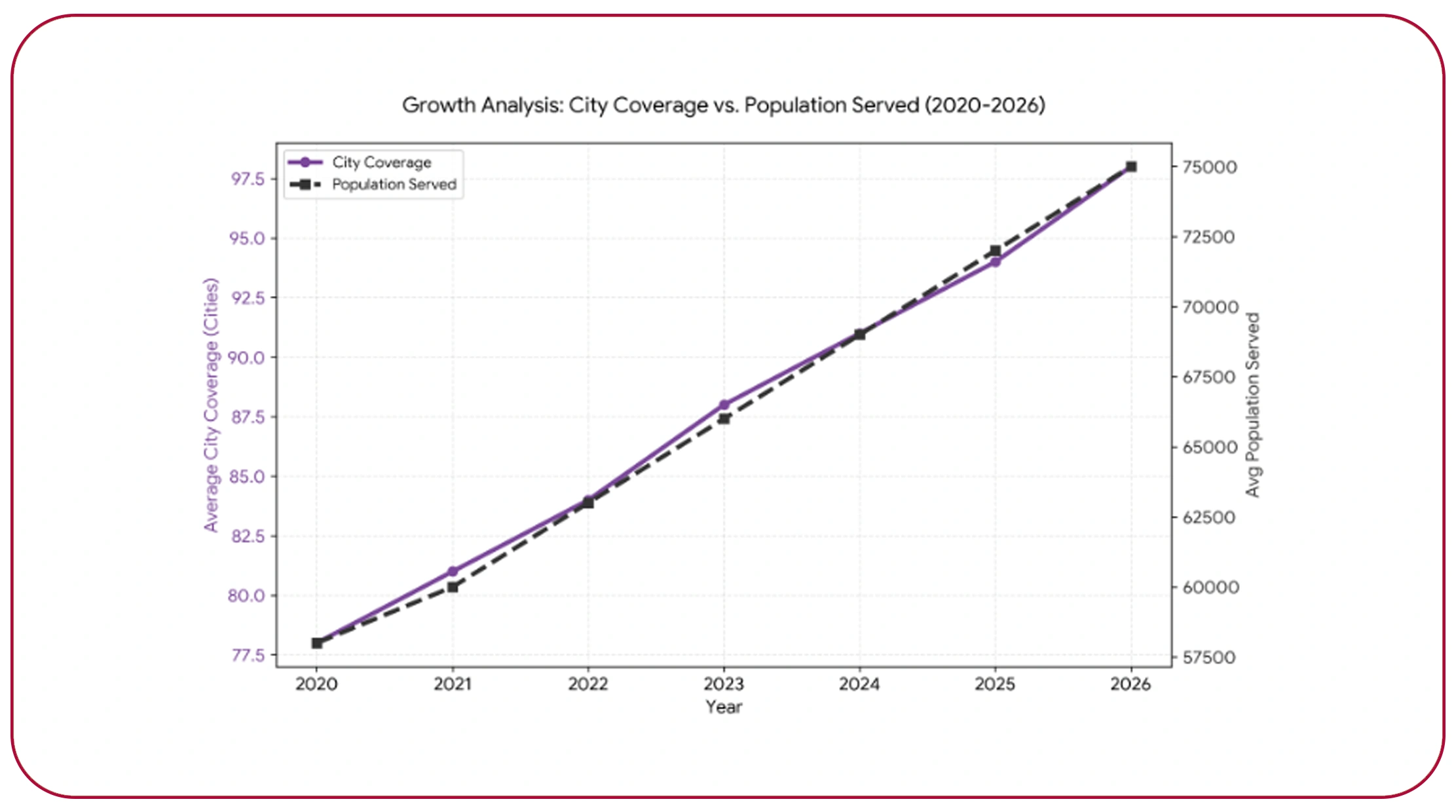
Retail analytics becomes significantly more powerful when businesses build structured geographic datasets. A WinCo Foods grocery store geographic distribution dataset provides detailed information about where stores operate, how they are clustered, and how they serve surrounding communities.
Such datasets typically include store coordinates, addresses, cities, operating hours, and service regions. When combined with demographic data, businesses gain deeper insights into consumer demand patterns.
Geographic Coverage Insights
| Year | Average City Coverage | Avg Population Served |
|---|---|---|
| 2020 | 78 cities | 58,000 |
| 2021 | 81 cities | 60,000 |
| 2022 | 84 cities | 63,000 |
| 2023 | 88 cities | 66,000 |
| 2024 | 91 cities | 69,000 |
| 2025 | 94 cities | 72,000 |
| 2026 | 98 cities | 75,000 |
Using geographic datasets allows businesses to:
- Map grocery store locations on interactive dashboards
- Analyze consumer accessibility to stores
- Identify urban vs rural store concentration
- Study demographic influence on store placement
Retailers that rely on location intelligence gain significant advantages when planning new store networks.
Extracting Data from Store Locator Platforms
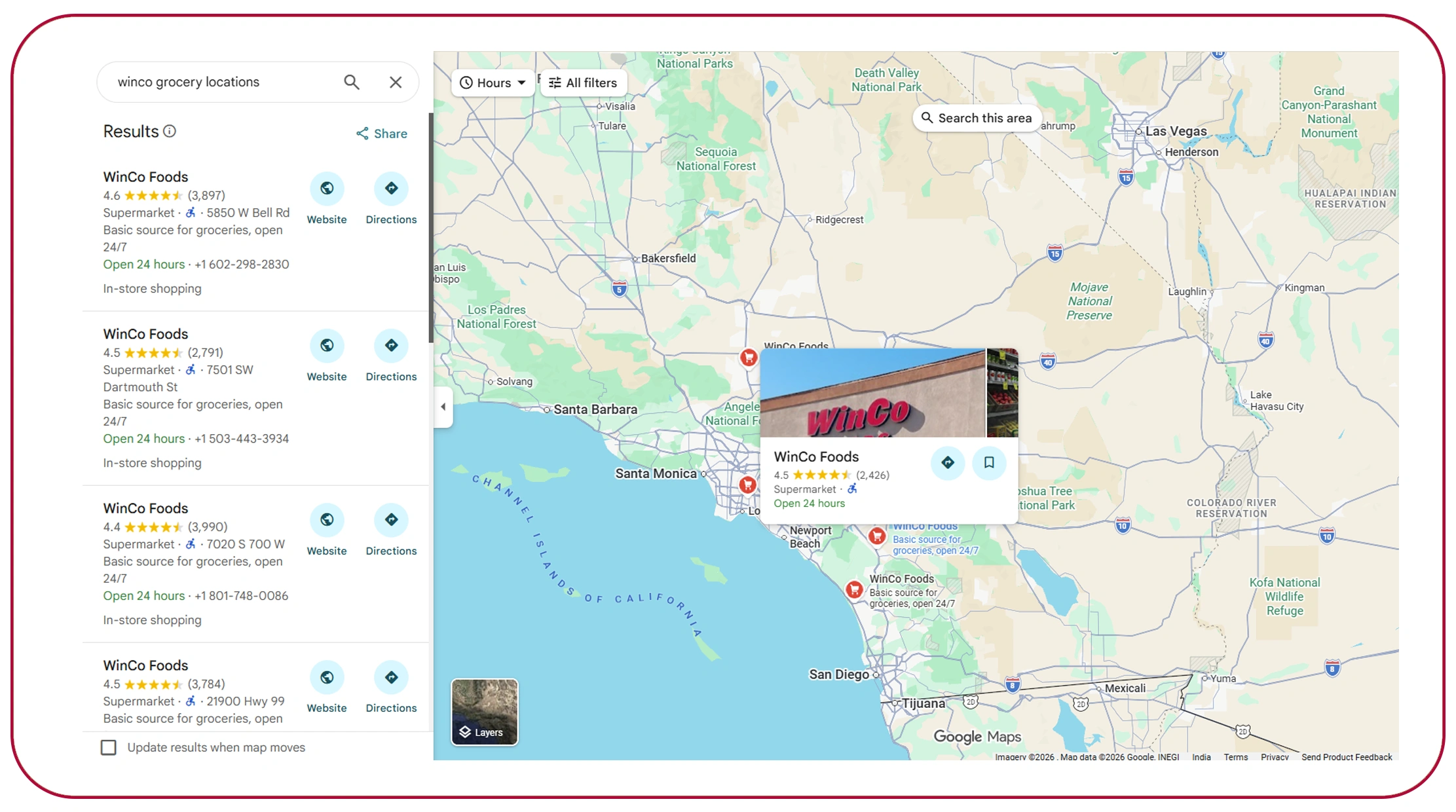
Most grocery chains provide online store locator tools that display store addresses and operational information. Through WinCo Foods store locator data scraping, businesses can collect this information automatically and convert it into structured datasets.
Store locator pages often include valuable attributes such as:
- Store address and ZIP code
- Operating hours
- Phone numbers
- Store services and amenities
- Latitude and longitude coordinates
Store Locator Data Attributes
| Data Attribute | Description |
|---|---|
| Store Name | Official grocery store name |
| Address | Street address |
| City | Store location city |
| State | State coverage |
| Latitude | Geographic coordinate |
| Longitude | Geographic coordinate |
Automating store locator extraction helps companies maintain up-to-date store datasets. This data can be integrated into mapping platforms, analytics tools, or business intelligence dashboards.
Organizations that maintain updated store locator datasets gain valuable insights into evolving grocery networks and competitor store strategies.
Turning Store Locations Into Market Intelligence
Retailers often analyze location data to uncover deeper insights into consumer markets. Businesses that Extract grocery market data using WinCo Foods store location can evaluate how grocery store placement aligns with population density, purchasing behavior, and economic activity.
Location data can reveal patterns such as:
- Store clustering in urban centers
- Expansion into suburban markets
- Growth in emerging residential areas
Grocery Market Analytics Trends
| Year | Retail Expansion Projects | New Regional Markets |
|---|---|---|
| 2020 | 9 | 2 |
| 2021 | 11 | 2 |
| 2022 | 13 | 3 |
| 2023 | 15 | 3 |
| 2024 | 17 | 4 |
| 2025 | 19 | 4 |
| 2026 | 21 | 5 |
Retail location intelligence allows companies to identify ideal store expansion zones while minimizing risk. Businesses can combine location datasets with demographic insights to create highly targeted expansion strategies.
Automating Grocery Store Data Collection
Manual data collection from store listings can be time-consuming and inefficient. A Grocery Data Scraping API allows organizations to automate the process of extracting grocery store location data from online platforms.
Automated scraping technologies enable businesses to collect large volumes of data quickly while ensuring accuracy and consistency.
Benefits of Automated Data Extraction
| Feature | Benefit |
|---|---|
| Real-Time Updates | Keeps store location data current |
| High-Speed Collection | Extracts thousands of records quickly |
| Scalability | Supports nationwide data extraction |
| Accuracy | Reduces manual errors |
Retail analysts can use automated scraping systems to maintain continuously updated store datasets. This allows businesses to track competitor expansions and monitor grocery retail market trends effectively.
Building Comprehensive Grocery Intelligence Datasets

Once extracted, store location data can be organized into a structured Grocery Dataset used for advanced analytics. These datasets often contain thousands of store records and support multiple strategic applications.
Typical grocery datasets include:
- Store names and addresses
- Geographic coordinates
- Operating hours
- Store categories
- Regional market coverage
Example Dataset Structure
| Field | Description |
|---|---|
| Store ID | Unique identifier |
| Store Name | Grocery store name |
| City | Store city |
| State | Store state |
| Latitude | Geographic coordinate |
| Longitude | Geographic coordinate |
Structured grocery datasets allow companies to analyze store networks, evaluate competitor coverage, and perform geographic market research.
Businesses can also integrate these datasets into geographic information systems (GIS) and analytics dashboards to visualize grocery store networks across the country.
Why Choose Real Data API?
Real Data API provides powerful data extraction solutions designed to help businesses gather large-scale retail intelligence from online sources. Companies can leverage the platform’s advanced Web Scraping API to automate the process of collecting grocery store location data and building structured datasets.
By using retail Store location grocery chain analysis via WinCo API, organizations can gain detailed insights into grocery store distribution, regional coverage, and market opportunities.
Key benefits of Real Data API include:
- Automated large-scale data extraction
- Reliable grocery store location datasets
- Real-time updates for store listings
- Seamless integration with analytics tools
- Scalable infrastructure for enterprise data projects
These capabilities help businesses transform raw store listings into actionable insights that drive smarter retail decisions.
Conclusion
Location intelligence has become a vital tool for retailers seeking to expand their store networks and stay competitive in the grocery industry. Businesses that leverage retail Store location grocery chain analysis via WinCo API can collect detailed store location data, analyze competitor distribution, and identify new market opportunities.
By converting store listings into structured datasets, companies gain valuable insights into regional demand, retail coverage, and expansion potential. These insights support smarter store placement decisions, optimized logistics strategies, and more effective market research.
With advanced data extraction technologies and scalable APIs, organizations can transform grocery store location data into powerful business intelligence.
Start using Real Data API today to unlock location-based grocery retail insights and build data-driven store network strategies!
Latest posts
How Scrape Xiaohongshu Product Trends in Real Time Solves Product Discovery and Competitor Monitoring Challenges?
How to Scrape Taobao Product Data to Solve Pricing, Inventory, and Competitor Monitoring Challenges?
How to Extract grocery product listings Data from SPAR to Build Accurate Grocery Intelligence and Competitive Market Insights?
Scrape Douyin follower growth and engagement data to track influencer performance and trends






.png)