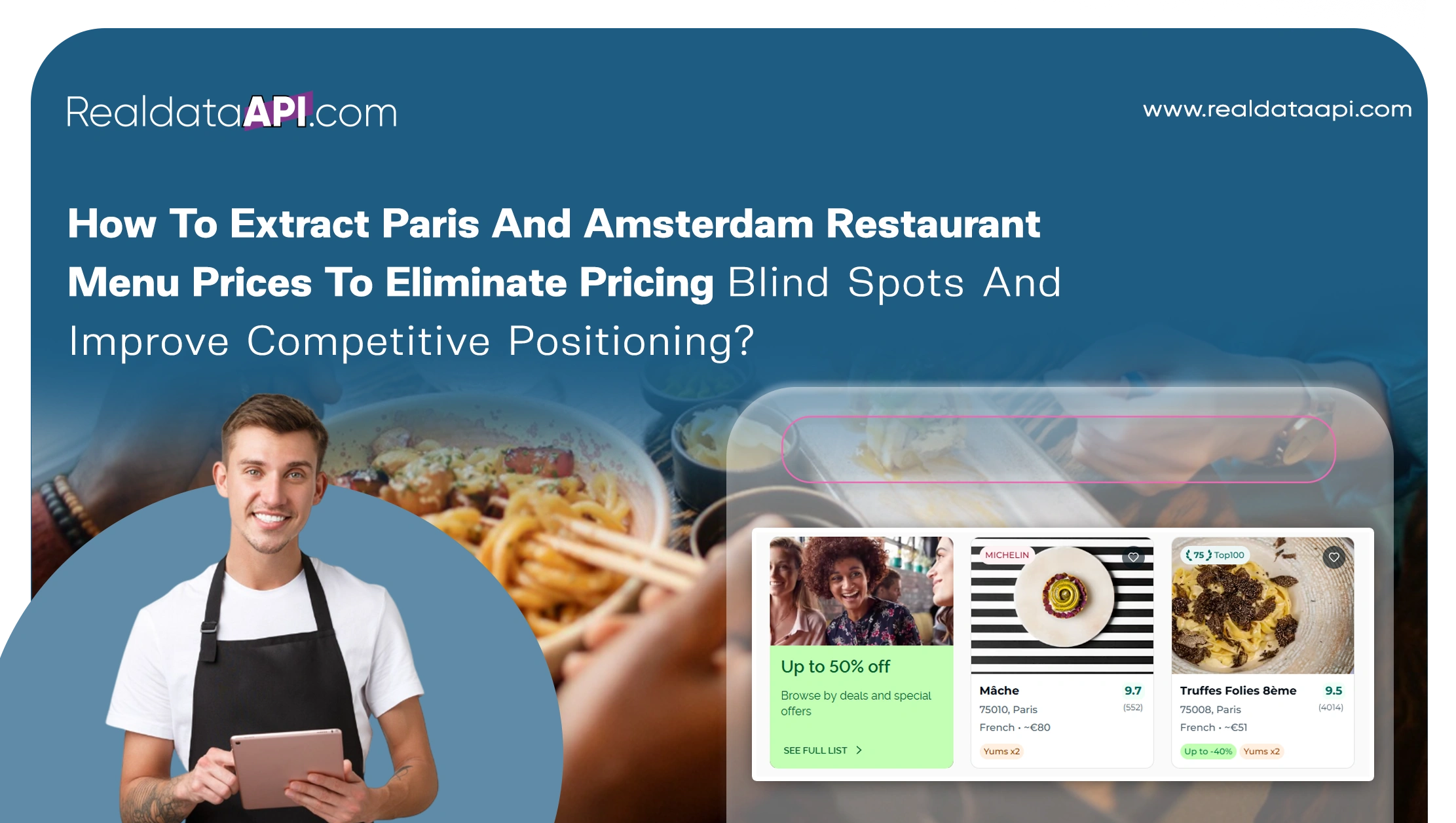
Introduction
In today's hyper-competitive food and restaurant landscape, pricing transparency and competitive intelligence are critical for success. Restaurants and food delivery platforms in major European cities face constant pressure to optimize pricing while staying aligned with evolving customer expectations. One of the most effective ways to achieve this is to extract Paris and Amsterdam restaurant menu prices, enabling businesses to identify pricing gaps, benchmark competitors, and improve profitability.
At the same time, global insights play a crucial role in refining regional strategies. Many organizations now Scrape QSR Market Trends in Canada and the USA to compare international pricing models, promotional strategies, and customer demand patterns. By combining European data with global benchmarks, businesses can build more resilient and adaptive pricing frameworks.
This blog explores how data-driven approaches, supported by advanced scraping technologies, help eliminate pricing blind spots and empower brands to make smarter, faster, and more profitable decisions in dynamic urban markets.
Building a Strong Pricing Intelligence Foundation
To compete effectively in cities like Paris and Amsterdam, businesses must first scrape restaurant menu data in Paris and Amsterdam for pricing insights, Market Research. Without accurate and real-time data, pricing decisions are often based on assumptions rather than evidence.
Between 2020 and 2026, digital menu listings across food delivery platforms have increased by over 250%, making manual tracking nearly impossible. Restaurants that invest in automated data extraction gain a clear advantage by continuously monitoring competitor pricing and promotional strategies.
Pricing Intelligence Trends (2020–2026):
| Year | Restaurants Listed (Thousands) | Avg Menu Updates/Month | Price Change Frequency (%) |
|---|---|---|---|
| 2020 | 45 | 3 | 20% |
| 2022 | 60 | 5 | 28% |
| 2024 | 75 | 7 | 35% |
| 2026 (Projected) | 90 | 10 | 42% |
With structured data collection, brands can identify underpriced or overpriced items, optimize their offerings, and ensure consistency across platforms. This foundational intelligence is essential for long-term growth and competitive positioning.
Eliminating Pricing Blind Spots with Real-Time Data
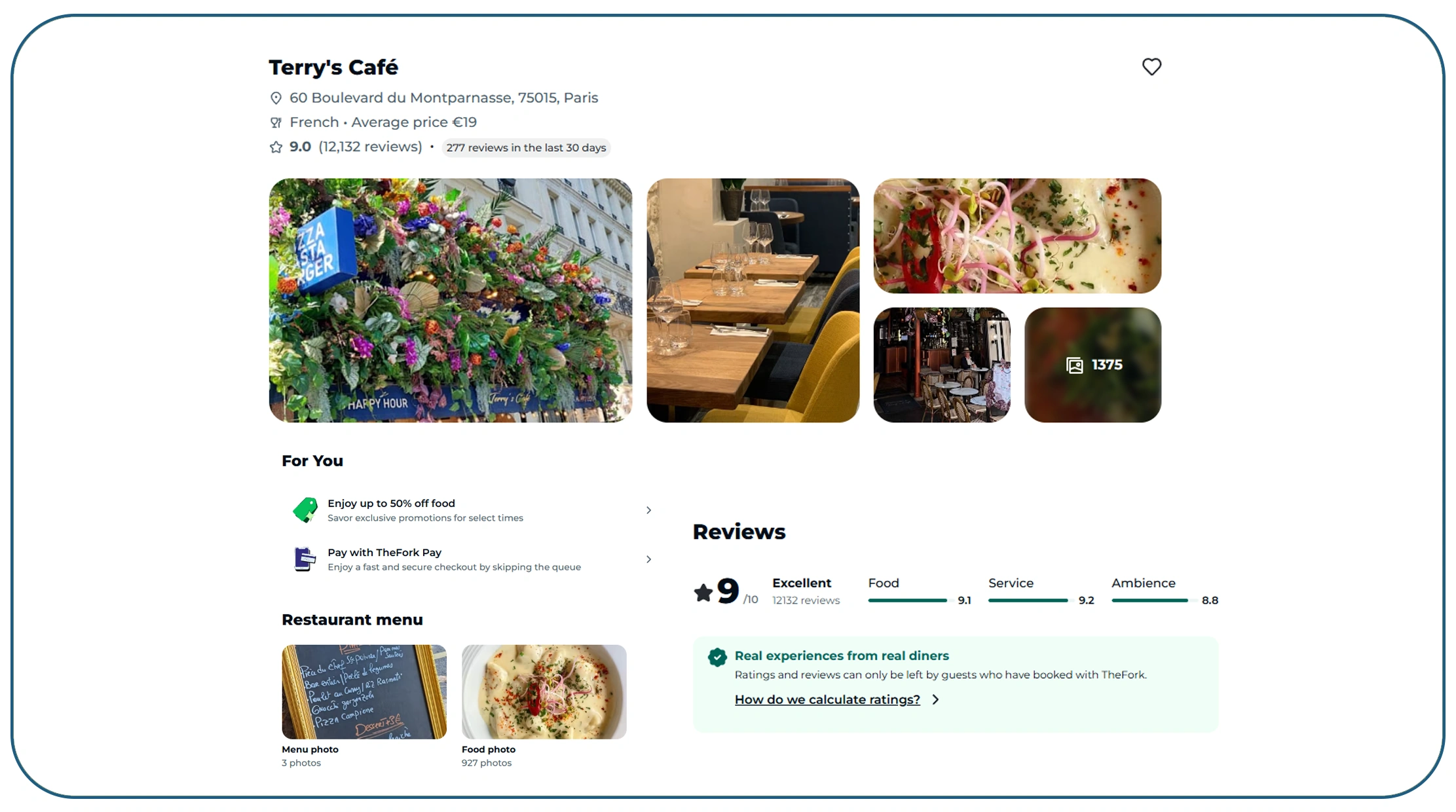
One of the biggest challenges in urban food markets is pricing inconsistency. Restaurants often list different prices across platforms, leading to confusion and lost revenue opportunities. To address this, businesses must extract Paris and Amsterdam restaurant menu prices consistently and at scale.
From 2020 to 2026, price variability across platforms has increased by nearly 30%, driven by dynamic pricing models and localized promotions. Without real-time insights, businesses risk falling behind competitors who adapt faster.
Price Variability Analysis:
| Year | Avg Price Variance (%) | Discount Usage (%) | Peak Hour Price Increase (%) |
|---|---|---|---|
| 2020 | 10% | 25% | 8% |
| 2022 | 15% | 32% | 12% |
| 2024 | 22% | 40% | 18% |
| 2026 (Projected) | 28% | 48% | 25% |
By leveraging automated scraping tools, businesses can monitor these fluctuations in real time, adjust their pricing strategies, and maintain a competitive edge. This eliminates blind spots and ensures data-driven decision-making.
Leveraging Global Benchmarks for Smarter Strategies

While local insights are crucial, global benchmarking provides a broader perspective. Many organizations now Scrape QSR Market Trends in Canada and the USA to understand how mature markets handle pricing, promotions, and customer engagement.
Between 2020 and 2026, North American QSR markets have demonstrated consistent growth, with advanced pricing strategies driven by data analytics. These insights can be adapted to European markets to improve competitiveness.
Global Benchmark Comparison:
| Region | Avg Meal Price ($/€) | Discount Frequency (%) | Digital Orders (%) |
|---|---|---|---|
| Canada | 12.5 | 30% | 55% |
| USA | 13.8 | 35% | 60% |
| Europe | 14.2 | 38% | 58% |
By integrating global data with local insights, businesses can refine their pricing strategies, introduce effective promotions, and enhance customer satisfaction. This approach ensures a well-rounded and competitive market presence.
Understanding Market Dynamics Through Trend Analysis
To stay competitive, businesses must continuously analyze menu pricing trends in Paris and Amsterdam. This involves tracking changes in pricing, demand, and customer preferences over time.
From 2020 to 2026, there has been a noticeable shift toward premium pricing for organic and specialty foods, while budget options remain popular among younger consumers.
Menu Pricing Trends:
| Category | 2020 Avg Price (€) | 2023 Avg Price (€) | 2026 Forecast (€) |
|---|---|---|---|
| Fast Food | 9.5 | 11.2 | 12.8 |
| Casual Dining | 14.0 | 16.5 | 18.9 |
| Premium Dining | 22.0 | 25.8 | 29.5 |
By analyzing these trends, businesses can adjust their pricing strategies, introduce new menu items, and target specific customer segments more effectively. This ensures sustained growth and improved profitability.
Enhancing Competitive Intelligence with Advanced Techniques
Modern businesses rely on Web scraping restaurant competitor pricing analysis in Paris and Amsterdam to gain a comprehensive view of the market. This involves collecting data from multiple platforms, analyzing competitor strategies, and identifying opportunities for differentiation.
Between 2020 and 2026, companies using advanced scraping techniques have reported a 35% improvement in pricing accuracy and a 25% increase in revenue growth.
Competitive Intelligence Metrics:
| Metric | Without Scraping | With Scraping |
|---|
With these insights, businesses can refine their strategies, optimize pricing, and stay ahead of competitors in dynamic urban markets.
Creating Scalable Data Pipelines for Growth
To sustain long-term success, businesses must invest in Paris and Amsterdam restaurant menu data collection systems that are scalable and reliable. These systems ensure continuous data flow, enabling real-time analysis and decision-making.
From 2020 to 2026, organizations with automated data pipelines have experienced a 40% increase in operational efficiency.
Data Pipeline Efficiency:
| Year | Automation Level (%) | Data Processing Time (Hours) | Insight Generation Speed |
|---|---|---|---|
| 2020 | 30% | 24 | Slow |
| 2022 | 50% | 16 | Moderate |
| 2024 | 70% | 8 | Fast |
| 2026 | 85% | 4 | Real-Time |
By implementing scalable solutions, businesses can ensure consistent data quality, faster insights, and improved decision-making capabilities.
Why Choose Real Data API?
Real Data API is a trusted partner for businesses looking to harness the power of data-driven insights. With a robust Food Data Scraping API, companies can automate data extraction, monitor competitor pricing, and gain real-time market intelligence.
By leveraging advanced technologies, Real Data API enables businesses to extract Paris and Amsterdam restaurant menu prices efficiently and accurately. The platform offers scalable solutions tailored to the food and restaurant industry, ensuring seamless integration and actionable insights.
From pricing optimization to competitor analysis, Real Data API empowers businesses to stay ahead in competitive markets and achieve sustainable growth.
Conclusion
In an increasingly competitive food industry, data-driven decision-making is no longer optional—it is essential. By leveraging advanced tools and strategies to extract Paris and Amsterdam restaurant menu prices, businesses can eliminate pricing blind spots, optimize their offerings, and improve competitive positioning.
A well-structured Food Dataset enables deeper insights, better forecasting, and more effective pricing strategies. With the right data and technology, businesses can transform challenges into opportunities and achieve long-term success.
Ready to gain a competitive edge? Start leveraging data-driven insights today with Real Data API and transform the way you analyze restaurant markets.
Latest posts

How Louis Vuitton Fashion Dataset Enables Better Analysis of Luxury Products, Prices, Brands, and Fashion Trends?
How Blinkit Grocery Dataset Enables Smarter Analysis of Products, Prices, Availability, and Quick-Commerce Trends?

How Chanel Fashion Dataset Enables Smarter Analysis of Luxury Products, Prices, Categories, and Fashion Trends?
How Foodpanda Food Dataset Helps Businesses Track Restaurants, Menus, Prices, Ratings, and Food Delivery Trends?






.png)