Introduction
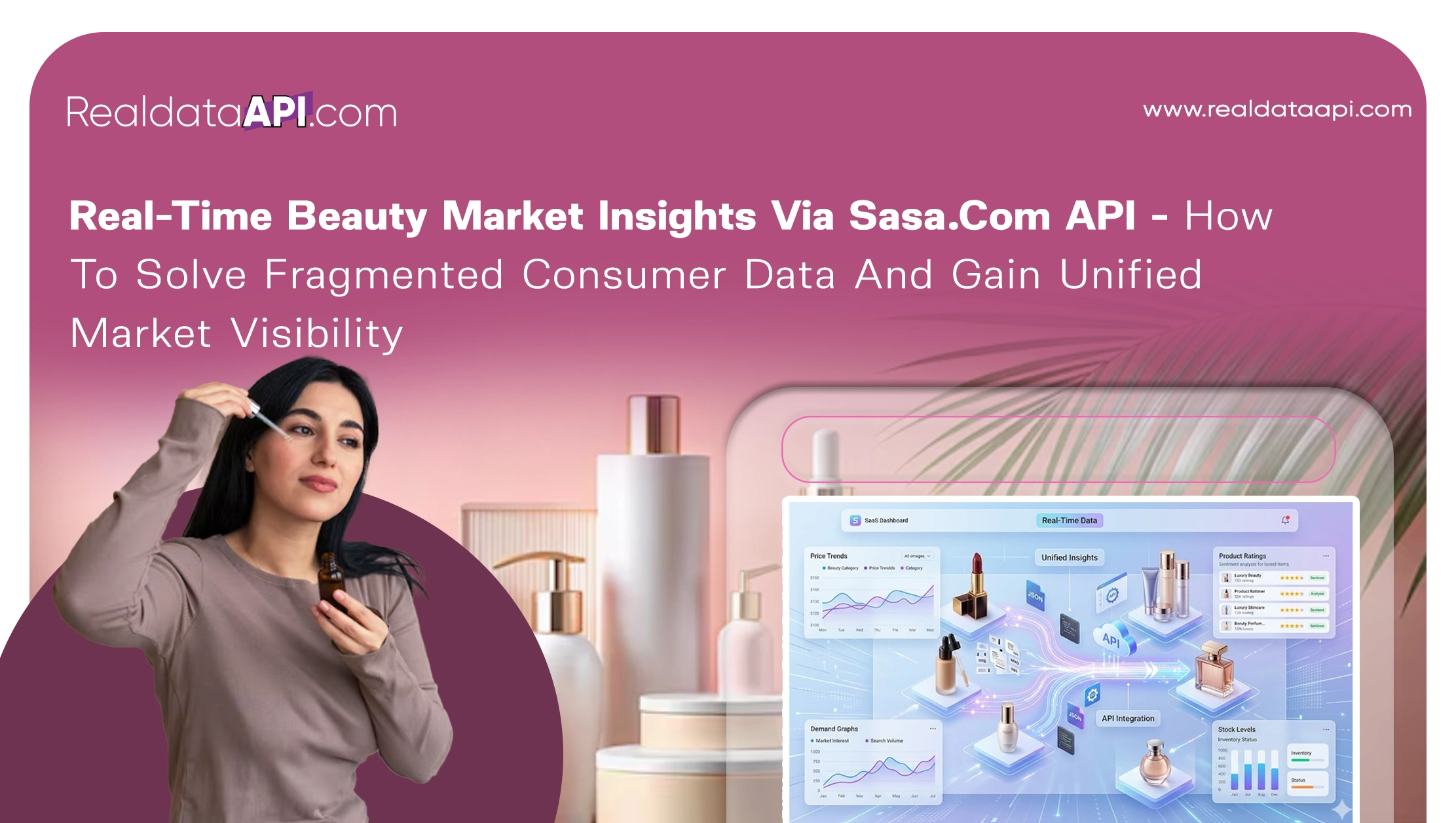
The global beauty industry is evolving rapidly, driven by digital transformation, changing consumer preferences, and the rise of e-commerce platforms. However, one of the biggest challenges brands and retailers face is fragmented consumer data spread across multiple platforms, categories, and regions. This makes it difficult to gain a unified view of market trends and customer behavior. Leveraging real-time beauty market insights via SaSa.com API enables businesses to consolidate scattered data into structured, actionable intelligence.
With the growing importance of online retail, companies need faster and more accurate ways to track product performance, pricing strategies, and customer demand. An E-Commerce Data Scraping API allows businesses to automate data collection from platforms like SaSa.com, ensuring continuous access to updated market insights.
By integrating real-time data into decision-making processes, beauty brands can improve forecasting, optimize pricing, and identify emerging trends early. This blog explores how data-driven strategies can solve fragmentation challenges and unlock unified market visibility for smarter growth.
Unlocking Unified Consumer Intelligence
To overcome fragmented data, businesses increasingly rely on tools that support web scraping SaSa.com for beauty market insights. These tools gather structured data across product listings, reviews, and pricing categories, providing a centralized view of the market.
Between 2020 and 2026, the beauty e-commerce market has experienced significant growth:
| Year | Global Beauty E-commerce Revenue ($B) | Data Utilization Rate (%) |
|---|---|---|
| 2020 | 75 | 30% |
| 2022 | 110 | 45% |
| 2024 | 150 | 60% |
| 2026* | 200 (Projected) | 75% |
This growth has led to an explosion of data, making manual analysis inefficient. Scraping tools help unify this data, enabling brands to track consumer preferences, product popularity, and pricing changes across regions.
For example, analyzing customer reviews across SaSa.com can reveal sentiment trends, helping brands understand what consumers value most. This unified approach ensures better visibility into market dynamics and reduces the risk of missed opportunities.
Transforming Product Data into Strategic Insights
Using extract skincare and cosmetics data for retail analytics from SaSa.com, businesses can gain deeper insights into product performance and category trends. This includes analyzing ingredients, product features, and customer feedback.
Retail analytics trends from 2020 to 2026:
| Year | Skincare Market Share (%) | Cosmetics Market Share (%) |
|---|---|---|
| 2020 | 52% | 48% |
| 2022 | 55% | 45% |
| 2024 | 58% | 42% |
| 2026* | 62% (Projected) | 38% |
This data highlights the growing dominance of skincare products in the beauty industry. By extracting detailed product data, businesses can identify which categories are gaining traction and adjust their strategies accordingly.
For instance, ingredient-level analysis can reveal rising demand for clean beauty or organic formulations. Retailers can use this information to optimize inventory and marketing campaigns.
Structured product data empowers businesses to move beyond surface-level insights and make more informed decisions.
Pricing Transparency and Demand Analysis
One of the key advantages of data scraping is the ability to Scrape SaSa.com cosmetics pricing and demand data. This helps businesses understand pricing strategies and consumer demand patterns across different product categories.
Pricing and demand trends:
| Year | Avg. Price Change (%) | Demand Growth (%) |
|---|---|---|
| 2020 | 5% | 12% |
| 2022 | 8% | 18% |
| 2024 | 12% | 25% |
| 2026* | 15% (Projected) | 32% |
By analyzing pricing data, brands can identify optimal price points and detect competitor discount strategies. Demand analysis also helps in forecasting sales and managing inventory effectively.
For example, if a particular product category shows consistent demand growth, businesses can allocate more resources to that segment.
This level of transparency reduces uncertainty and enables data-driven pricing decisions.
Identifying Emerging Trends Early
Tracking trends is essential for staying competitive in the beauty industry. Using tools to track emerging skincare trends using SaSa dataset, businesses can identify shifts in consumer preferences before they become mainstream.
Trend analysis data:
| Year | New Product Launches | Trend Adoption Rate (%) |
|---|---|---|
| 2020 | 8,000 | 20% |
| 2022 | 12,000 | 30% |
| 2024 | 18,000 | 42% |
| 2026* | 25,000 (Projected) | 55% |
Scraped data allows companies to monitor new product launches, ingredient trends, and customer reviews in real time. This helps brands stay ahead of competitors by quickly adapting to market changes.
For instance, identifying a rising trend in sustainable packaging can help brands align their strategies with consumer expectations.
Early trend detection is a key driver of innovation and long-term success.
Leveraging Structured Data for Business Growth
Access to an E-Commerce Dataset enables businesses to consolidate large volumes of data into a single, structured format. This simplifies analysis and improves decision-making efficiency.
Dataset adoption trends:
| Year | Businesses Using Structured Datasets (%) | Data Processing Efficiency (%) |
|---|---|---|
| 2020 | 28% | 35% |
| 2022 | 45% | 50% |
| 2024 | 60% | 65% |
| 2026* | 75% (Projected) | 80% |
Structured datasets allow businesses to integrate data into analytics tools, enabling advanced insights such as predictive modeling and customer segmentation.
For example, combining pricing, product, and review data can provide a holistic view of market performance.
This approach enhances efficiency and ensures that businesses can scale their data operations effectively.
Expanding Capabilities with Advanced Use Cases
Modern businesses are exploring Top Ecommerce Scraping API Use Cases to maximize the value of their data. These use cases go beyond basic data collection to include advanced analytics and automation.
Key use cases include:
- Competitor monitoring and benchmarking
- Dynamic pricing optimization
- Customer sentiment analysis
- Inventory and demand forecasting
Growth in API use cases:
| Year | API Use Case Adoption (%) | Automation Level |
|---|---|---|
| 2020 | 32% | Medium |
| 2022 | 48% | High |
| 2024 | 65% | Very High |
| 2026* | 80% (Projected) | Advanced |
By leveraging these use cases, businesses can transform raw data into actionable insights that drive growth and innovation.
Why Choose Real Data API?
Real Data API provides advanced solutions tailored for modern e-commerce data needs. With features like Price Comparison, businesses can analyze competitor pricing strategies and optimize their own offerings.
Additionally, real-time beauty market insights via SaSa.com API ensures continuous access to updated market data, enabling better decision-making and competitive advantage.
Key benefits include:
- Scalable data extraction solutions
- Real-time data access
- High-quality structured datasets
- Customizable analytics capabilities
- Compliance-ready infrastructure
Real Data API simplifies complex data challenges, allowing businesses to focus on growth and innovation.
Conclusion
In a rapidly evolving beauty market, real-time beauty market insights via SaSa.com API is essential for overcoming fragmented consumer data and achieving unified market visibility. By leveraging automated data collection, structured datasets, and advanced analytics, businesses can gain deeper insights into pricing, demand, and emerging trends.
Start using Real Data API today to unlock powerful beauty market insights and stay ahead in the competitive e-commerce landscape.
Latest posts
How Twitter Scraper Enables Faster Social Media Data Collection for Trend, Competitor, Audience Intelligence, and Social Media Data Collection

How Trip.com travel dataset Helps Brands Track Hotel Prices, Reviews, Availability, and Competitor Trends
How Reddit Scraper Solutions Collect Public Data for Market Research and Competitive Analysis
How Wildberries Product Scraper Helps Track Prices, Sellers, and Product Availability






.png)