Introduction
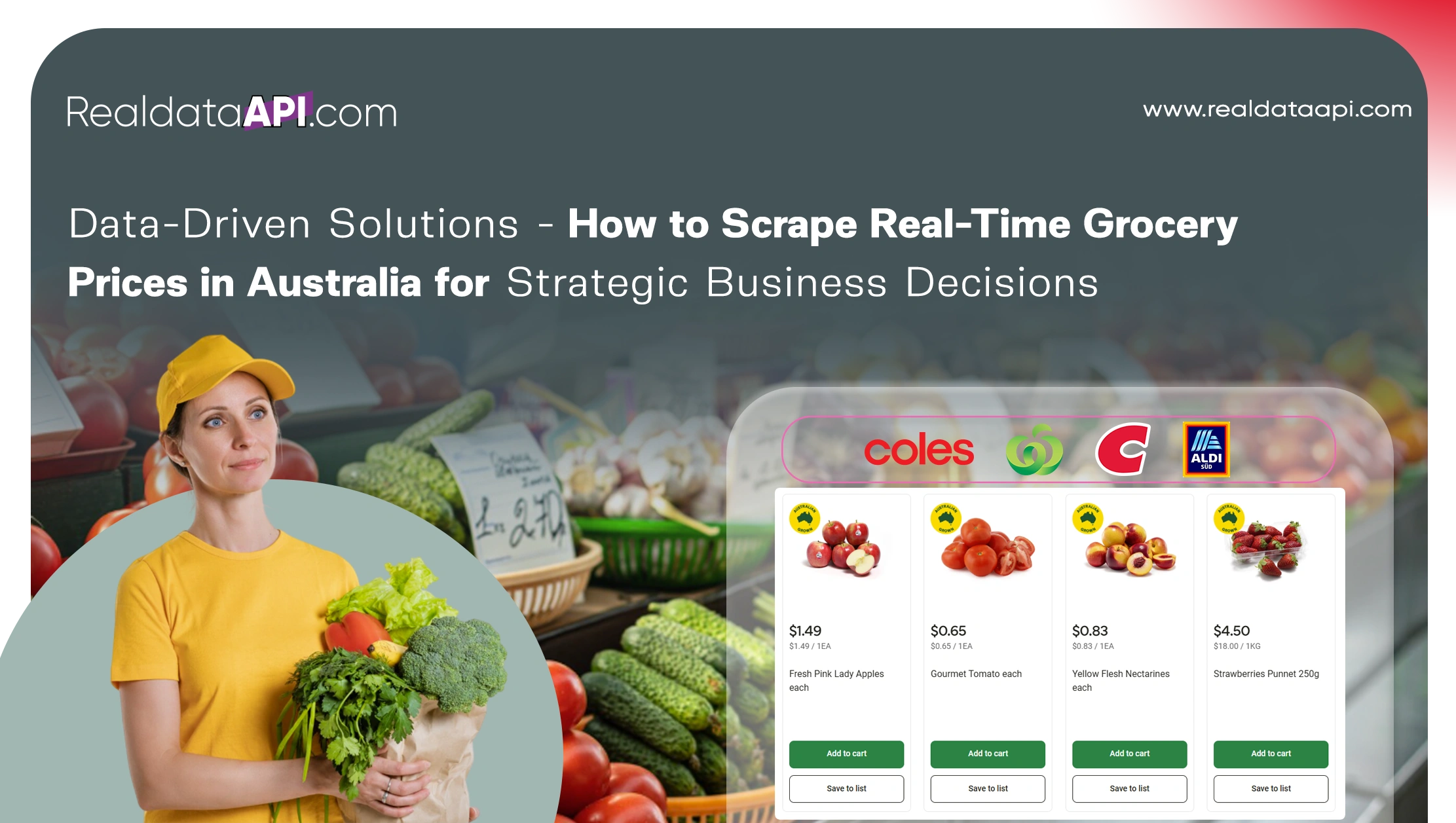
In the digital age, businesses must leverage data to stay competitive. One critical area in retail analytics is pricing intelligence, which enables companies to make informed decisions, optimize inventory, and respond rapidly to market trends. Using advanced tools like Real Data API, businesses can scrape real-time grocery prices in Australia, monitor competitors, and analyze consumer behavior to drive profitability. By accessing structured data from multiple supermarket sources, organizations can transform raw numbers into actionable insights.
From understanding price variations to predicting trends, accurate and up-to-date grocery pricing data can make the difference between leading the market and lagging behind. This blog explores six crucial aspects of grocery pricing data, provides insights into industry trends from 2020 to 2026, and shows how APIs and web scraping tools can simplify complex data collection.
Comparing Supermarket Pricing in Australia
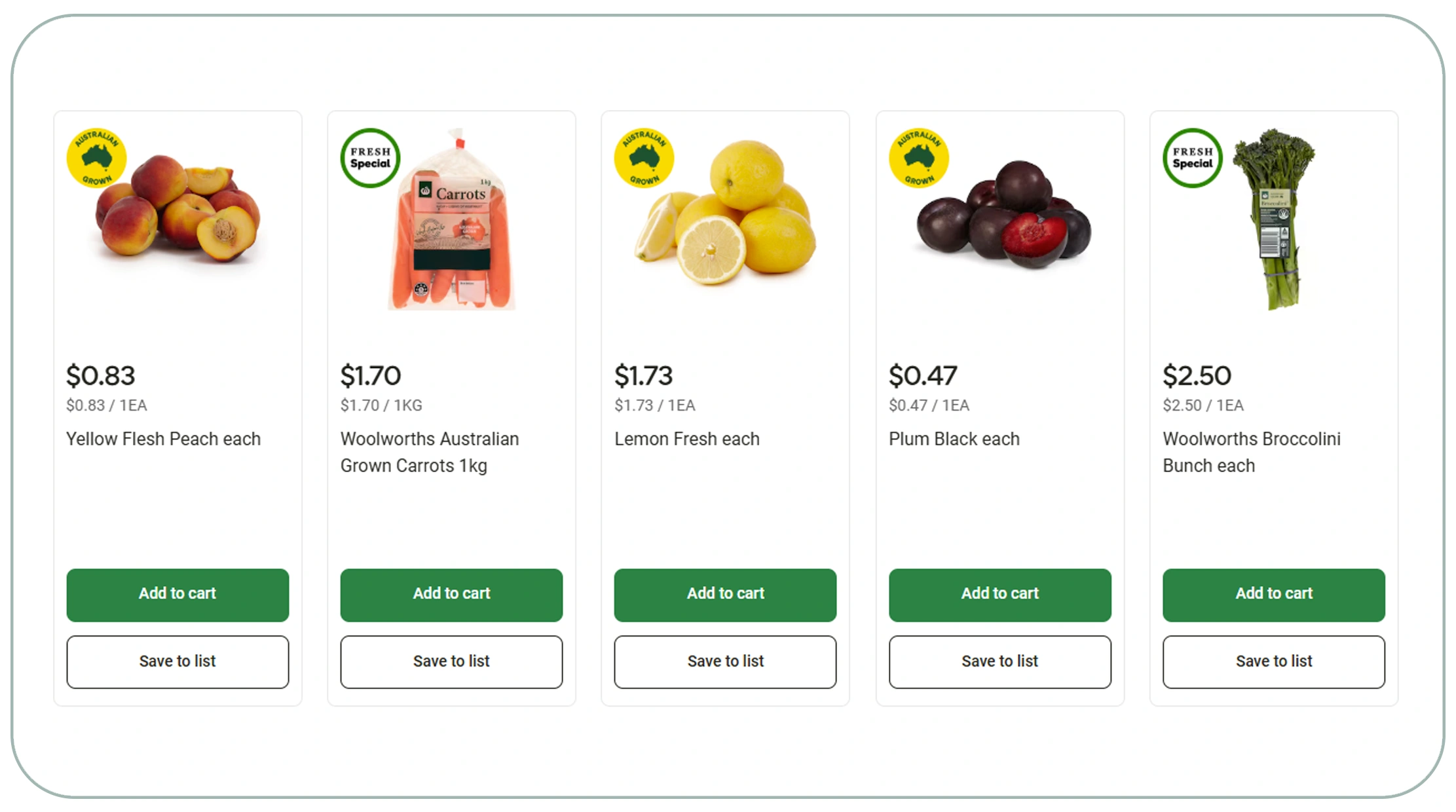
Price comparisons across Australian supermarkets reveal significant variations that can influence purchasing decisions. Between 2020 and 2026, data shows that larger chains, such as Woolworths and Coles, often maintain competitive prices for essentials, while smaller independent stores may offer periodic discounts on niche items.
A Real Data API-powered analysis allows businesses to scrape real-time grocery prices in Australia across multiple retailers simultaneously, providing a clear view of pricing dynamics. For instance, from 2020 to 2023, the average price of staple items like milk and bread fluctuated between $2.50 and $3.10 per liter and loaf, respectively, highlighting the need for constant monitoring.
| Year | Woolworths Avg Price ($) | Coles Avg Price ($) | Aldi Avg Price ($) | IGA Avg Price ($) |
|---|---|---|---|---|
| 2020 | 2.75 | 2.78 | 2.55 | 2.80 |
| 2021 | 2.85 | 2.88 | 2.60 | 2.90 |
| 2022 | 2.95 | 3.00 | 2.65 | 3.05 |
| 2023 | 3.05 | 3.10 | 2.70 | 3.15 |
This information helps retailers adjust their pricing strategies, optimize promotions, and enhance customer satisfaction. Using APIs reduces manual tracking and increases the accuracy of pricing comparisons, a critical factor in a competitive grocery market.
Tracking Product Price Changes
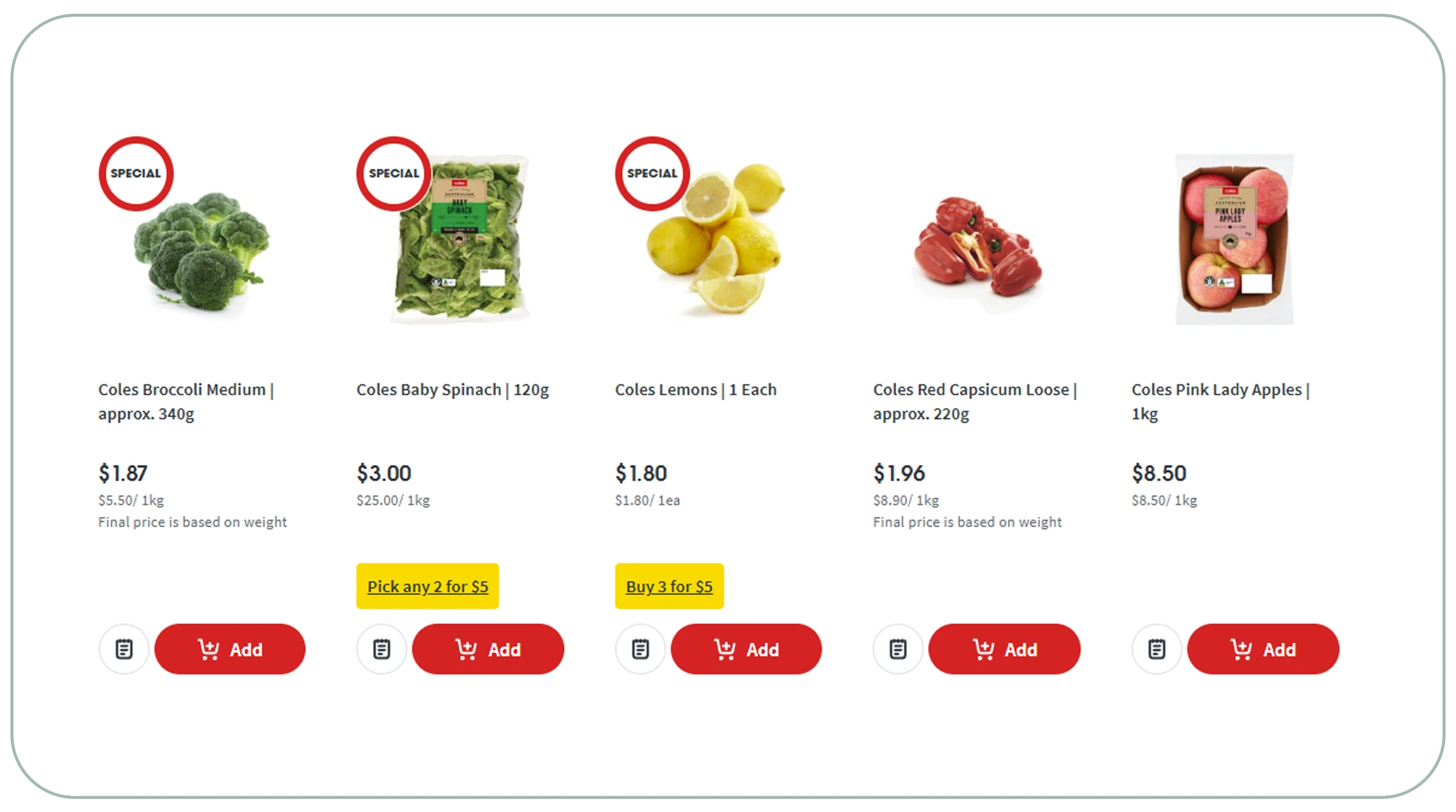
Monitoring price changes for products is essential to anticipate market trends and manage profitability. For example, fresh produce, dairy, and pantry staples have seen varying price growth between 2020 and 2026 due to supply chain disruptions and inflation.
By leveraging Real Data API, businesses can extract product price changes across Australian supermarkets, tracking increases or decreases in real time. This allows retailers to identify which items are experiencing high volatility and which remain stable, enabling smarter purchasing and inventory management decisions.
| Product | 2020 ($) | 2021 ($) | 2022 ($) | 2023 ($) | 2024 ($) | 2025 ($) | 2026 ($) |
|---|---|---|---|---|---|---|---|
| Milk (1L) | 2.75 | 2.85 | 2.95 | 3.05 | 3.10 | 3.15 | 3.20 |
| Bread (Loaf) | 2.50 | 2.60 | 2.70 | 2.80 | 2.85 | 2.90 | 2.95 |
| Eggs (Dozen) | 4.00 | 4.10 | 4.20 | 4.30 | 4.35 | 4.40 | 4.45 |
Regular monitoring of these changes helps businesses react proactively to cost fluctuations, ensuring competitive pricing and optimized profit margins.
Monitoring Price Variations Through Web Scraping
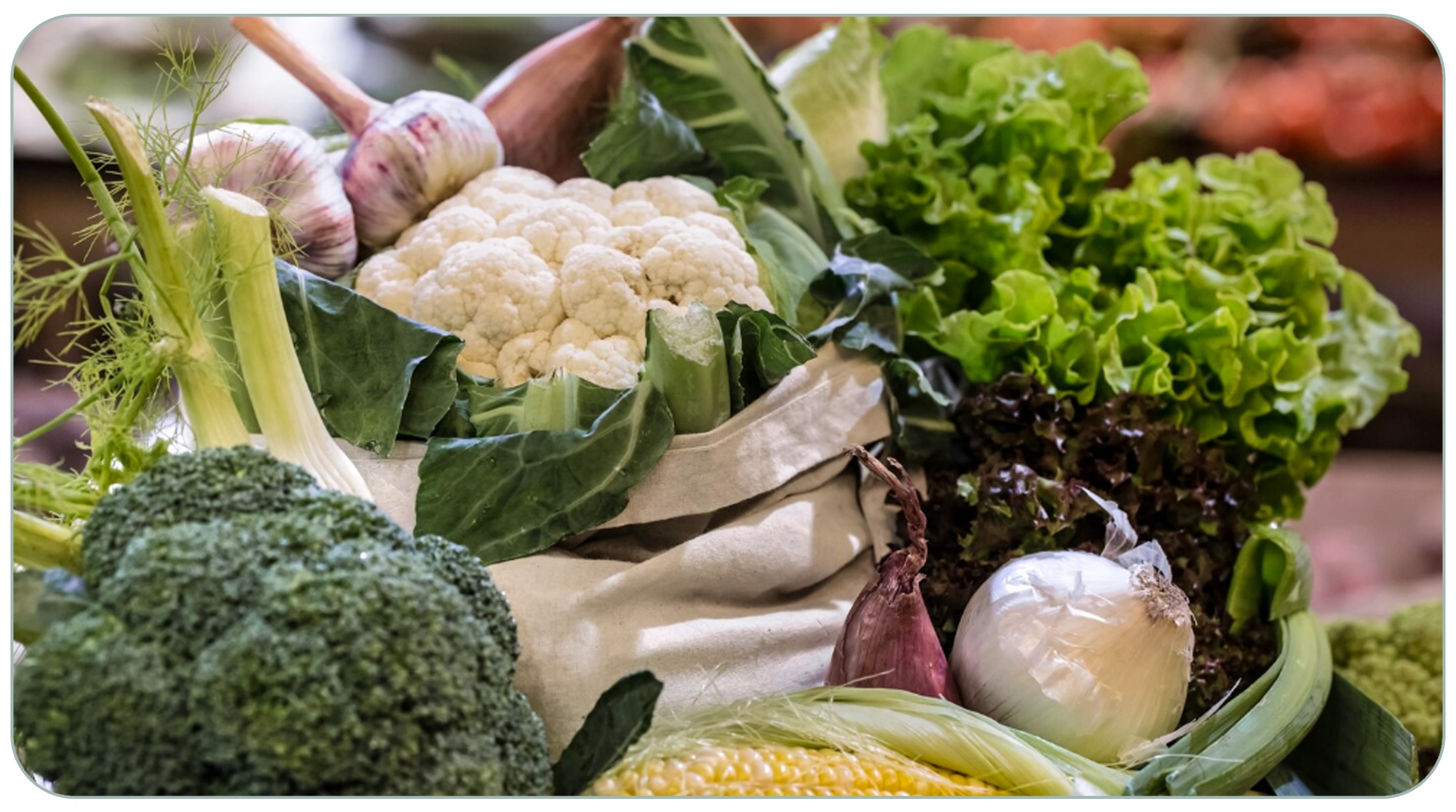
The grocery market is highly dynamic, with price variations occurring daily across different chains and regions. Companies need robust tools to web scrape grocery price monitoring data efficiently, capturing both online and in-store prices.
Real Data API enables automation of this process, eliminating manual errors and allowing businesses to collect accurate, structured datasets. Analysis of pricing trends from 2020 to 2026 shows that online grocery prices typically mirror in-store pricing but offer promotional advantages during peak shopping periods.
| Year | Avg Online Price ($) | Avg In-Store Price ($) | Difference ($) |
|---|---|---|---|
| 2020 | 2.78 | 2.75 | 0.03 |
| 2021 | 2.88 | 2.85 | 0.03 |
| 2022 | 3.00 | 2.95 | 0.05 |
| 2023 | 3.08 | 3.05 | 0.03 |
Automated scraping ensures businesses always have the most up-to-date information for competitive analysis, enabling timely strategic adjustments.
Understanding Grocery Price Trends
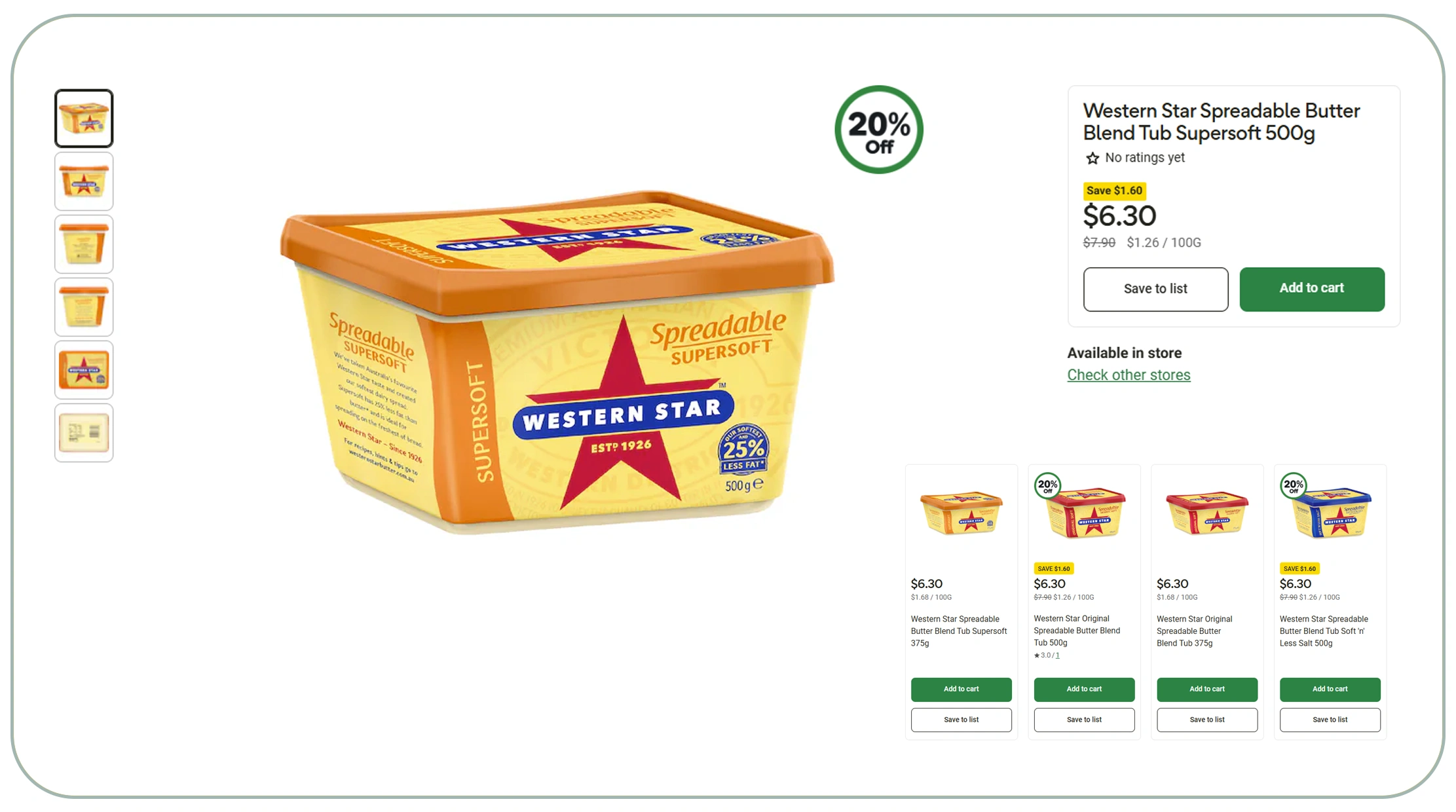
Analyzing grocery price trends over time allows businesses to forecast demand and adjust marketing strategies. From 2020 to 2026, Australia has seen gradual price increases in dairy, meat, and fresh produce, influenced by inflation and supply chain disruptions.
With Real Data API, companies can analyze grocery price trends Australia over multiple years, identifying patterns and predicting future fluctuations. This predictive insight is crucial for planning promotional campaigns, managing inventory, and avoiding overstocking or understocking products.
| Category | 2020 | 2021 | 2022 | 2023 | 2024 | 2025 | 2026 |
|---|---|---|---|---|---|---|---|
| Dairy ($/L) | 2.75 | 2.85 | 2.95 | 3.05 | 3.10 | 3.15 | 3.20 |
| Meat ($/kg) | 10.50 | 10.80 | 11.10 | 11.40 | 11.70 | 12.00 | 12.30 |
| Produce ($/kg) | 3.00 | 3.10 | 3.25 | 3.40 | 3.50 | 3.60 | 3.70 |
These insights equip businesses to make smarter decisions and remain competitive in a fluctuating market.
Leveraging API for Efficient Data Collection
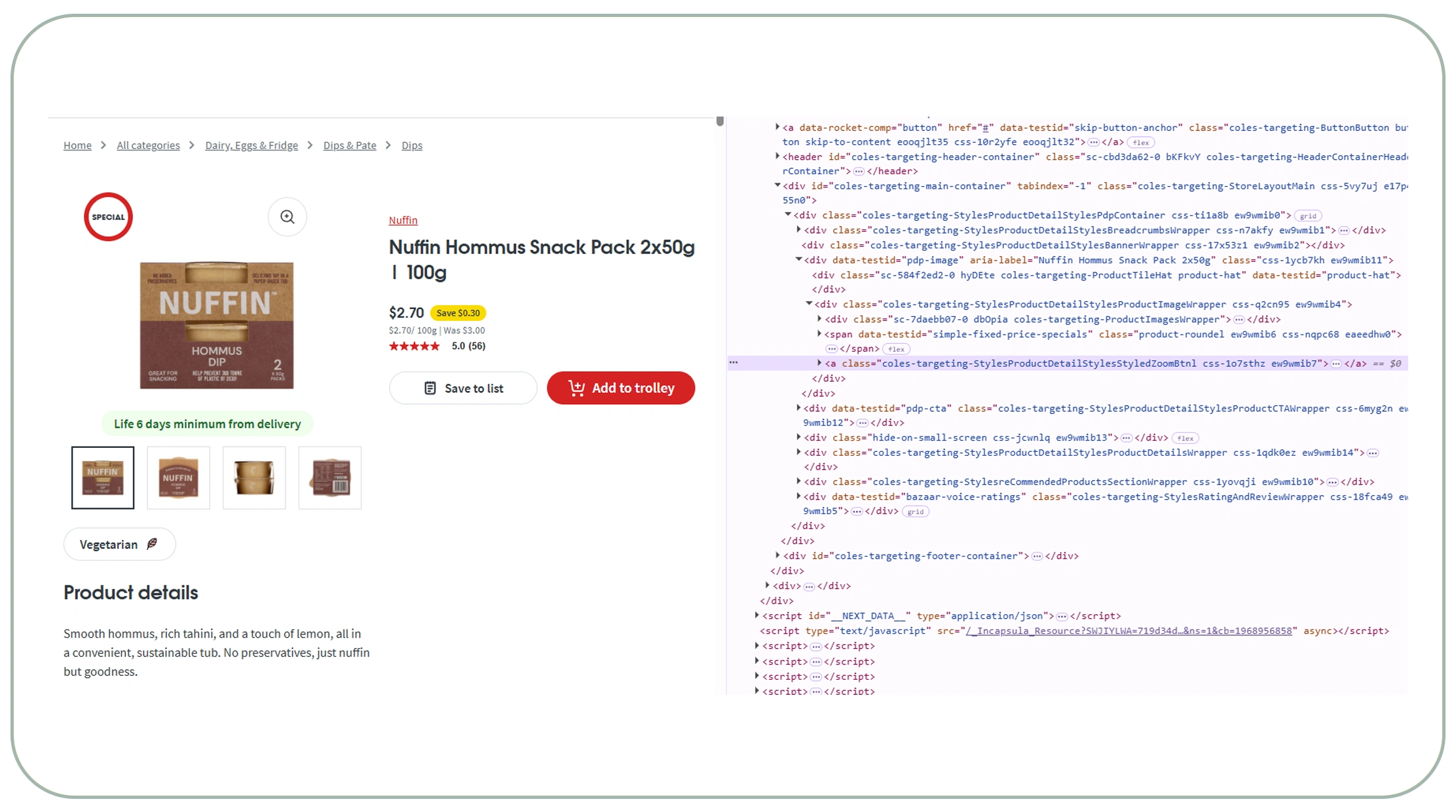
Modern grocery analytics relies heavily on APIs to deliver accurate, real-time information. The Grocery Data Scraping API from Real Data API allows businesses to access structured, ready-to-use data from multiple Australian supermarkets.
By integrating this API, businesses can scrape real-time grocery prices in Australia, saving hours of manual labor and minimizing errors. Between 2020 and 2026, companies using APIs reported up to 40% faster data collection, enabling timely pricing adjustments and better resource allocation.
| Metric | 2020 | 2022 | 2024 | 2026 |
|---|---|---|---|---|
| Avg Data Retrieval Time (hrs) | 10 | 8 | 6 | 5 |
| Data Accuracy (%) | 92 | 94 | 96 | 98 |
APIs streamline the process, empowering decision-makers to act quickly based on precise, real-time insights.
Building Comprehensive Datasets
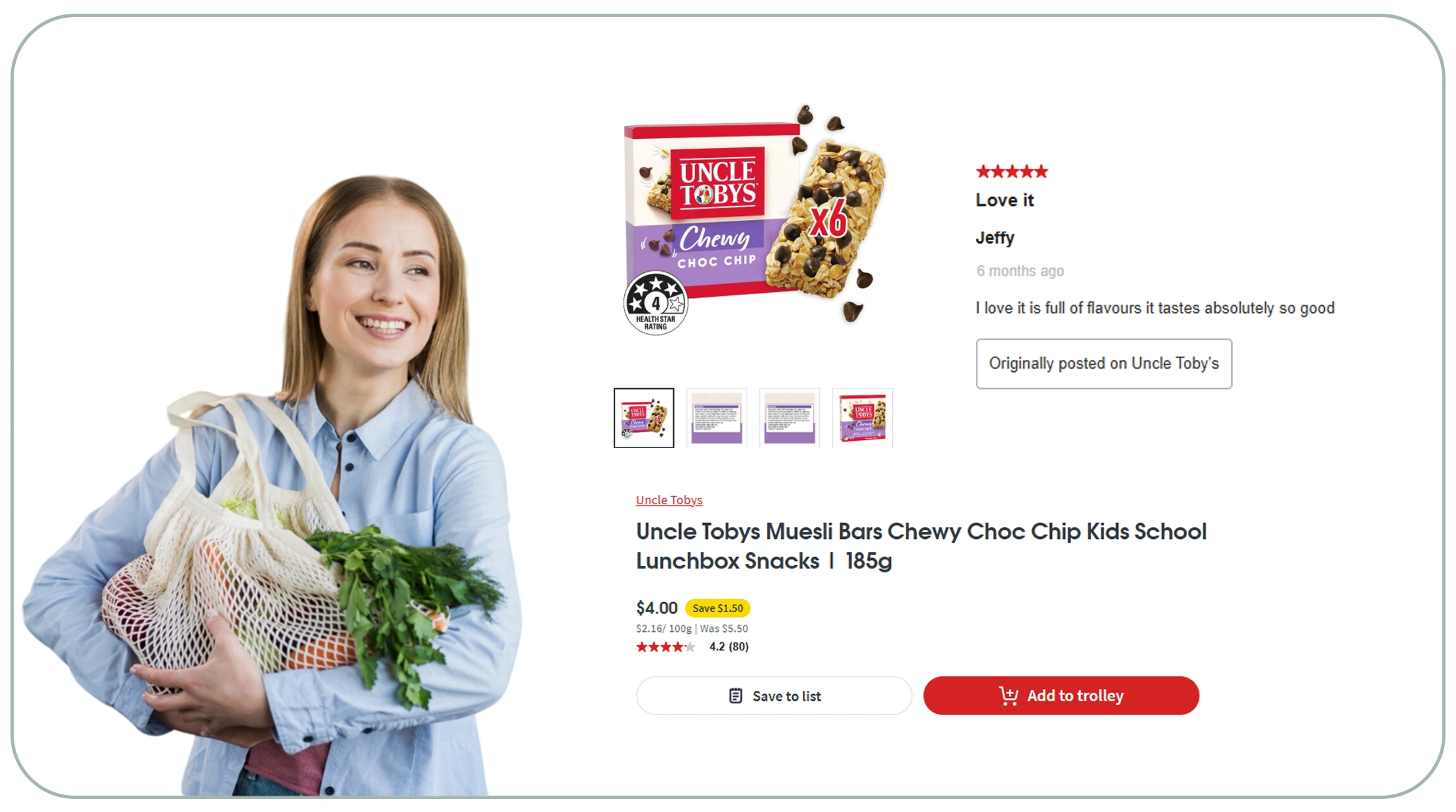
Accurate datasets are the backbone of strategic planning. Companies that maintain detailed grocery datasets from multiple sources can identify trends, track competitors, and forecast pricing strategies.
Using Real Data API, businesses can scrape real-time grocery prices in Australia and consolidate data into a unified dataset. From 2020 to 2026, datasets built using automated scraping show a consistent 20–30% improvement in accuracy over manually collected data.
| Dataset Type | Coverage | Accuracy (%) | Updates per Week |
|---|---|---|---|
| Manual Collection | Local | 70 | 1 |
| Automated API | National | 95 | 7 |
| Hybrid Approach | National | 98 | 7 |
These datasets allow companies to derive actionable insights, improve forecasting, and maintain competitive advantage.
Why Choose Real Data API?
Real Data API offers a seamless solution for businesses looking to scrape real-time grocery prices in Australia and leverage Web Scraping Services USA for international operations. Key advantages include:
- High accuracy and reliable data collection
- Fully automated API access
- Historical and real-time pricing datasets
- Easy integration with existing business analytics tools
Whether tracking competitors, monitoring trends, or optimizing pricing, Real Data API ensures companies have the data they need to make informed, strategic decisions.
Conclusion
In today’s competitive grocery market, access to accurate data is not optional — it’s essential. Using Web Scraping API solutions like Real Data API, businesses can scrape real-time grocery prices in Australia, monitor trends, and make data-driven strategic decisions that maximize profitability.
Start leveraging real-time grocery pricing data today and gain a competitive edge in the market.
Explore Real Data API now to transform your grocery pricing strategy and drive smarter business decisions!
Latest posts

Web Scraping Competitor Product Monitoring Using Marketplace Data for Real-Time E-commerce Insights and Business Growth?
How to Scrape Product Intelligence Platform Using Marketplace Data to Help Brands Optimize Pricing, Inventory, and Product Strategy?
Why Companies scrape business data from Google Maps using keywords to Build Accurate Business Lists and Competitive Insights?
How Review scraping and monitoring services Help Businesses Track Customer Sentiment and Protect Brand Reputation in 2026?
How Real Estate Investment Insights Using RERA Data Scraping Help Investors Minimize Risk and Maximize Returns

Real Data API stands out as one of the premier global companies specializing in web data Scraping and web extraction.





.png)


Rating 4.7
Rating 4.7
Rating 4.5
Rating 4.7
Rating 4.7


Disclaimer : RealData API functions solely as an independent data infrastructure and technology solutions provider. We build customized automation workflows designed to collect publicly accessible web data based exclusively on client instructions. RealData API neither owns proprietary datasets nor engages in the sale or redistribution of extracted information. Our operations are limited strictly to lawful public web data processing and never involve unauthorized access to restricted systems or private networks. Any company names, trademarks, logos, or brand references displayed on this website are used purely for demonstrative and illustrative purposes to showcase our technical capabilities and do not imply endorsement, partnership, or affiliation. Use of our platform and services remains subject to our Terms of Service.