Introduction
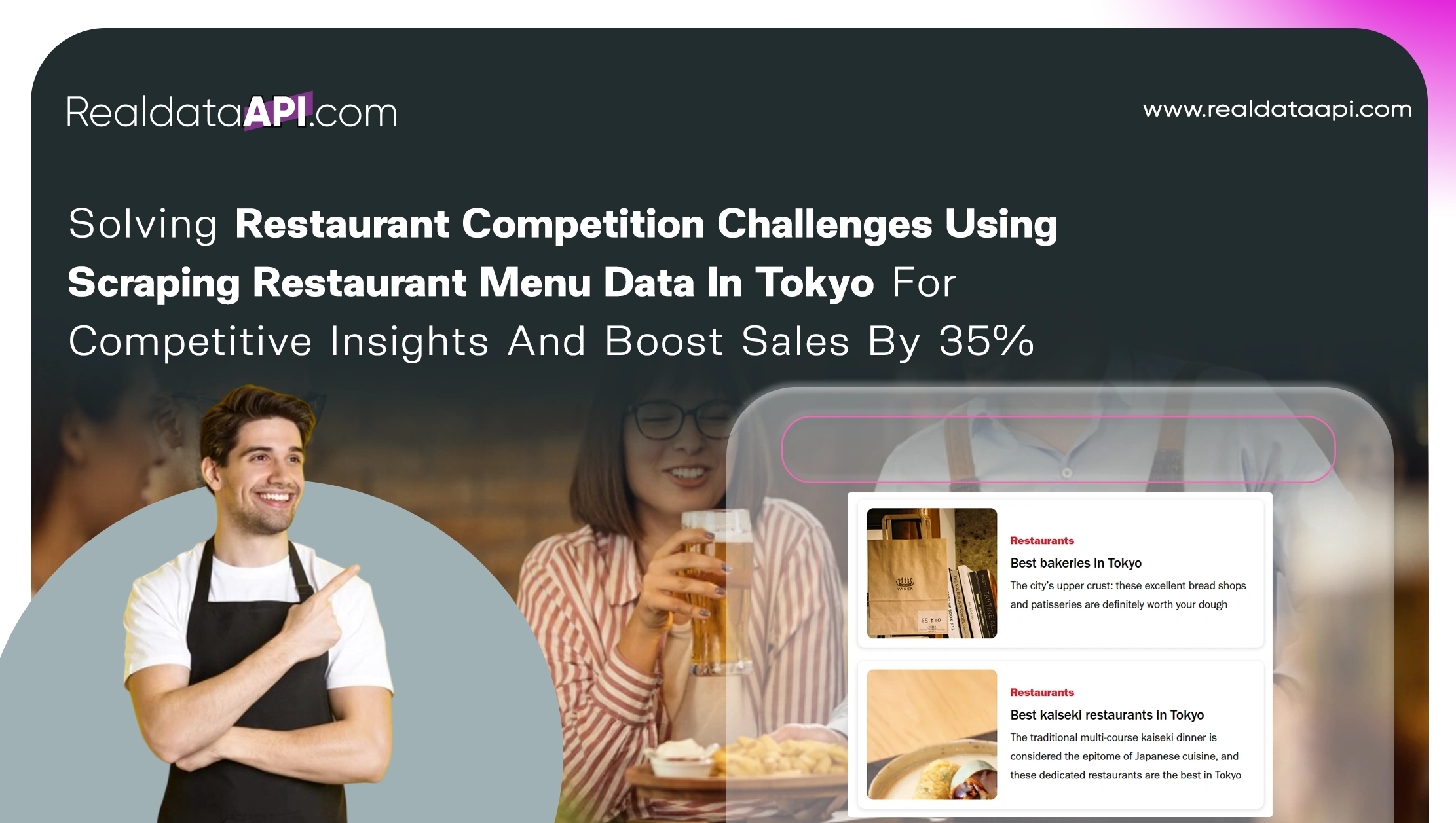
Tokyo’s restaurant industry is one of the most competitive in the world, with thousands of eateries competing for consumer attention daily. In such a market, relying on intuition alone is no longer sufficient. Businesses need data-driven insights to optimize menu offerings, pricing strategies, and promotions. By scraping restaurant menu data in Tokyo for competitive insights, restaurants can monitor competitor pricing, identify popular dishes, and track promotions in real-time.
A Food Data Scraping API simplifies this process by automating data collection across multiple platforms and ensuring accuracy. With structured datasets, restaurants can analyze trends over time, understand consumer preferences, and benchmark their performance against competitors. This approach helps businesses make informed decisions, reduce operational risks, and strategically position themselves in a crowded market. In this blog, we explore how menu data scraping can help restaurants gain actionable insights and boost sales by up to 35%.
Analyzing Competitor Pricing for Strategic Advantage
Monitoring competitor pricing is critical in a dynamic market like Tokyo. Using tools to extract Tokyo restaurant menu and pricing data, businesses can gather detailed information about competitor menus, including dish prices, portion sizes, and special offers.
Between 2020 and 2026, average menu prices have shown consistent growth across Tokyo, reflecting rising demand and food costs:
| Year | Avg Menu Price (USD) | Price Growth (%) |
|---|---|---|
| 2020 | 12.5 | 3% |
| 2021 | 13.0 | 4% |
| 2022 | 13.8 | 6% |
| 2023 | 14.5 | 5% |
| 2024 | 15.3 | 6% |
| 2025 | 16.0 | 5% |
| 2026 | 16.8 | 5% |
By analyzing these trends, restaurants can adjust their pricing strategies to remain competitive. For instance, identifying high-margin items allows for strategic menu placement or bundling, improving overall profitability. Additionally, real-time monitoring ensures restaurants respond promptly to competitor promotions or price changes, maintaining market relevance.
Leveraging Food Delivery Insights
With the rise of delivery platforms, tracking competitor menus on digital channels is crucial. Through scrape food delivery menu data in Tokyo restaurants, businesses can monitor which items are most frequently ordered, seasonal trends, and promotional campaigns.
Data from 2020–2026 indicates significant shifts in consumer ordering habits:
| Year | Avg Orders/Restaurant/Day | Popular Cuisine Type | Delivery Growth (%) |
|---|---|---|---|
| 2020 | 120 | Ramen | 15% |
| 2021 | 140 | Sushi | 20% |
| 2022 | 165 | Curry | 25% |
| 2023 | 180 | Tempura | 28% |
| 2024 | 200 | Bento Boxes | 30% |
| 2025 | 220 | Udon | 32% |
| 2026 | 240 | Fusion | 35% |
By understanding these trends, restaurants can optimize delivery menus, offer targeted promotions, and align with current consumer preferences. Tracking competitor performance on delivery apps ensures better decision-making and improved revenue from online channels.
Optimizing Menu Offerings with Data Analysis
Restaurants can gain a competitive edge by using Tokyo restaurant menu data extraction to study menu composition, ingredient trends, and pricing structures. This analysis reveals which items are popular, underperforming, or priced incorrectly.
| Menu Category | Avg Price (USD) | Popularity Index (%) |
|---|---|---|
| Ramen | 9.5 | 85% |
| Sushi | 12.0 | 80% |
| Curry | 8.5 | 75% |
| Tempura | 10.5 | 70% |
| Bento Boxes | 11.0 | 78% |
By leveraging these insights, restaurants can refine menus, introduce high-demand dishes, and eliminate low-performing items. This improves customer satisfaction and increases revenue per order. Data-driven menu optimization also allows for experimentation with pricing tiers, portion sizes, and combo offers to maximize profitability.
Identifying Food Trends and Consumer Preferences
Analyzing Tokyo food menu trend analysis enables businesses to anticipate emerging cuisines, seasonal demands, and flavor preferences. Between 2020–2026, consumer preferences in Tokyo shifted towards health-conscious options, premium ingredients, and fusion cuisine.
| Year | Trending Menu Item | Popularity (%) |
|---|---|---|
| 2020 | Vegan Ramen | 30% |
| 2021 | Organic Sushi | 35% |
| 2022 | Gluten-Free Curry | 40% |
| 2023 | Gourmet Tempura | 45% |
| 2024 | Bento Combos | 50% |
| 2025 | Plant-Based Sushi | 55% |
| 2026 | Fusion Bowls | 60% |
By tracking trends, restaurants can introduce menu items that align with evolving tastes, capture new market segments, and enhance customer loyalty. This approach also provides insights into competitor innovation, helping businesses stay ahead in a competitive landscape.
Building a Scalable Restaurant Dataset
A centralized Food Dataset provides a foundation for comprehensive analysis. Collecting structured data across multiple restaurants, cuisines, and platforms allows businesses to perform long-term trend analysis and benchmarking.
| Year | Restaurants Covered | Dishes Analyzed | Data Points (Millions) |
|---|---|---|---|
| 2020 | 5,000 | 25,000 | 1.2 |
| 2021 | 5,500 | 28,000 | 1.5 |
| 2022 | 6,000 | 32,000 | 1.8 |
| 2023 | 6,500 | 36,000 | 2.1 |
| 2024 | 7,200 | 40,000 | 2.5 |
| 2025 | 7,800 | 45,000 | 3.0 |
| 2026 | 8,500 | 50,000 | 3.5 |
A robust dataset enables predictive modeling, seasonal demand forecasting, and menu optimization strategies. Scalable datasets ensure that as new restaurants and dishes enter the market, businesses can maintain accurate insights and continue making data-driven decisions.
Automating Data Collection for Efficiency
Automation is critical to staying competitive. Leveraging a Web Scraping API allows continuous extraction of menu and pricing data without manual effort.
| Metric | Manual Collection | Automated Scraping |
|---|---|---|
| Data Accuracy | 75% | 95% |
| Collection Time | 12 hrs/day | 1 hr/day |
| Cost Efficiency | Medium | High |
Automated scraping ensures timely updates, reduces human errors, and provides consistent insights for menu optimization, competitive analysis, and pricing strategy. This frees up resources to focus on strategy, marketing, and operational improvements.
Why Choose Real Data API?
- Comprehensive Market Research
Real Data API helps businesses perform detailed Market Research to understand competitors, pricing, and menu trends. - Accurate Data Extraction
With the ability to scraping restaurant menu data in Tokyo for competitive insights, restaurants gain reliable and up-to-date information. - Scalable & Customizable Solutions
Designed to handle large-scale operations and tailor data collection according to business needs. - Actionable Insights
Enables menu optimization, pricing strategy improvements, and market positioning with real-time intelligence.
Conclusion
In Tokyo’s competitive food industry, data-driven insights are key to optimizing menus, pricing strategies, and customer engagement. By leveraging scraping restaurant menu data in Tokyo for competitive insights, restaurants can monitor competitors, identify trends, and boost sales by up to 35%. Combining automated data extraction with structured datasets ensures smarter decision-making, improved profitability, and stronger market positioning.
Ready to gain a competitive edge in Tokyo’s restaurant market? Partner with Real Data API today and transform menu data into actionable business intelligence!
Latest posts
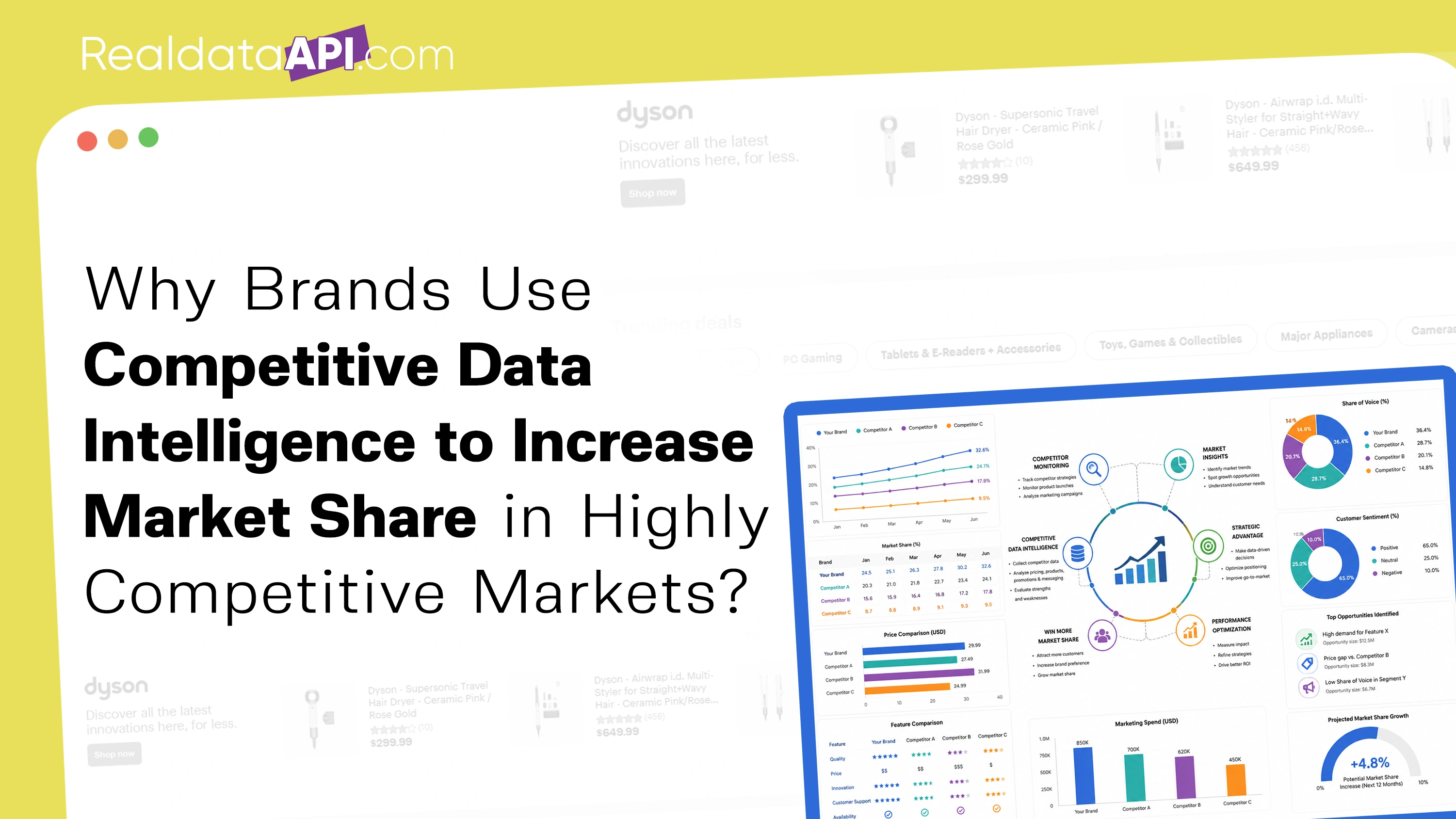
Why Brands Use Competitive Data Intelligence to Increase Market Share in Highly Competitive Markets?
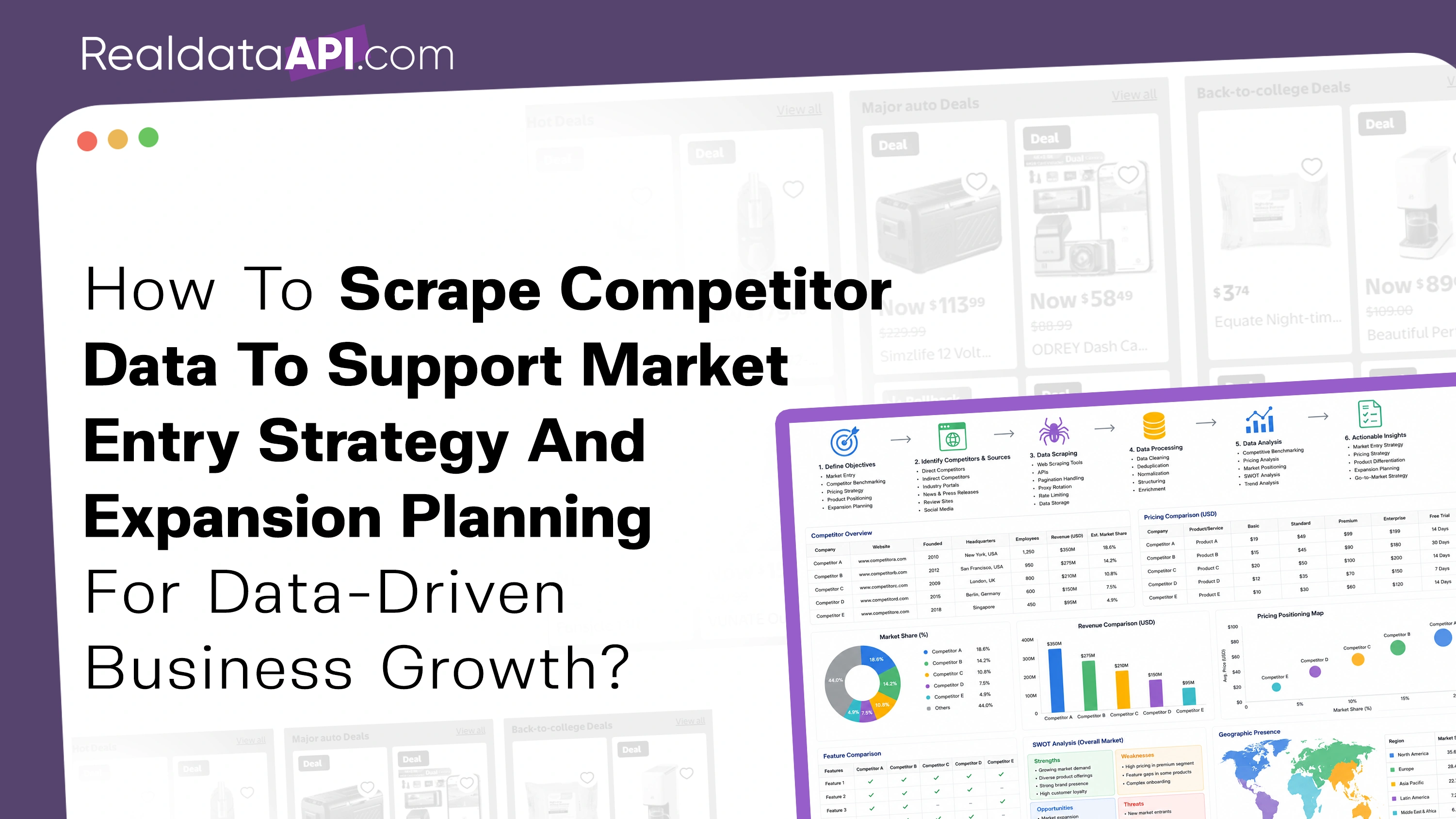
How To Scrape Competitor Data To Support Market Entry Strategy And Expansion Planning For Data-Driven Business Growth?
How Hotel Occupancy Intelligence Through Public Data Sources Is Reshaping Revenue Management
The ZIP Code Advantage: How Hyper-Local Amazon Product Data Collection Is Redefining Retail Intelligence

Real Data API stands out as one of the premier global companies specializing in web data Scraping and web extraction.





.png)


Rating 4.7
Rating 4.7
Rating 4.5
Rating 4.7
Rating 4.7


Disclaimer : RealData API functions solely as an independent data infrastructure and technology solutions provider. We build customized automation workflows designed to collect publicly accessible web data based exclusively on client instructions. RealData API neither owns proprietary datasets nor engages in the sale or redistribution of extracted information. Our operations are limited strictly to lawful public web data processing and never involve unauthorized access to restricted systems or private networks. Any company names, trademarks, logos, or brand references displayed on this website are used purely for demonstrative and illustrative purposes to showcase our technical capabilities and do not imply endorsement, partnership, or affiliation. Use of our platform and services remains subject to our Terms of Service.