Introduction
Web scraping has become an essential strategy for businesses that rely on real-time digital intelligence. Companies use automated extraction tools to collect public data for SEO tracking, pricing analysis, market research, competitor monitoring, lead generation, and customer insights. However, responsible data extraction requires more than technical automation. Businesses must also follow ethical and compliance-focused practices to avoid operational risks and maintain sustainable access to online information.
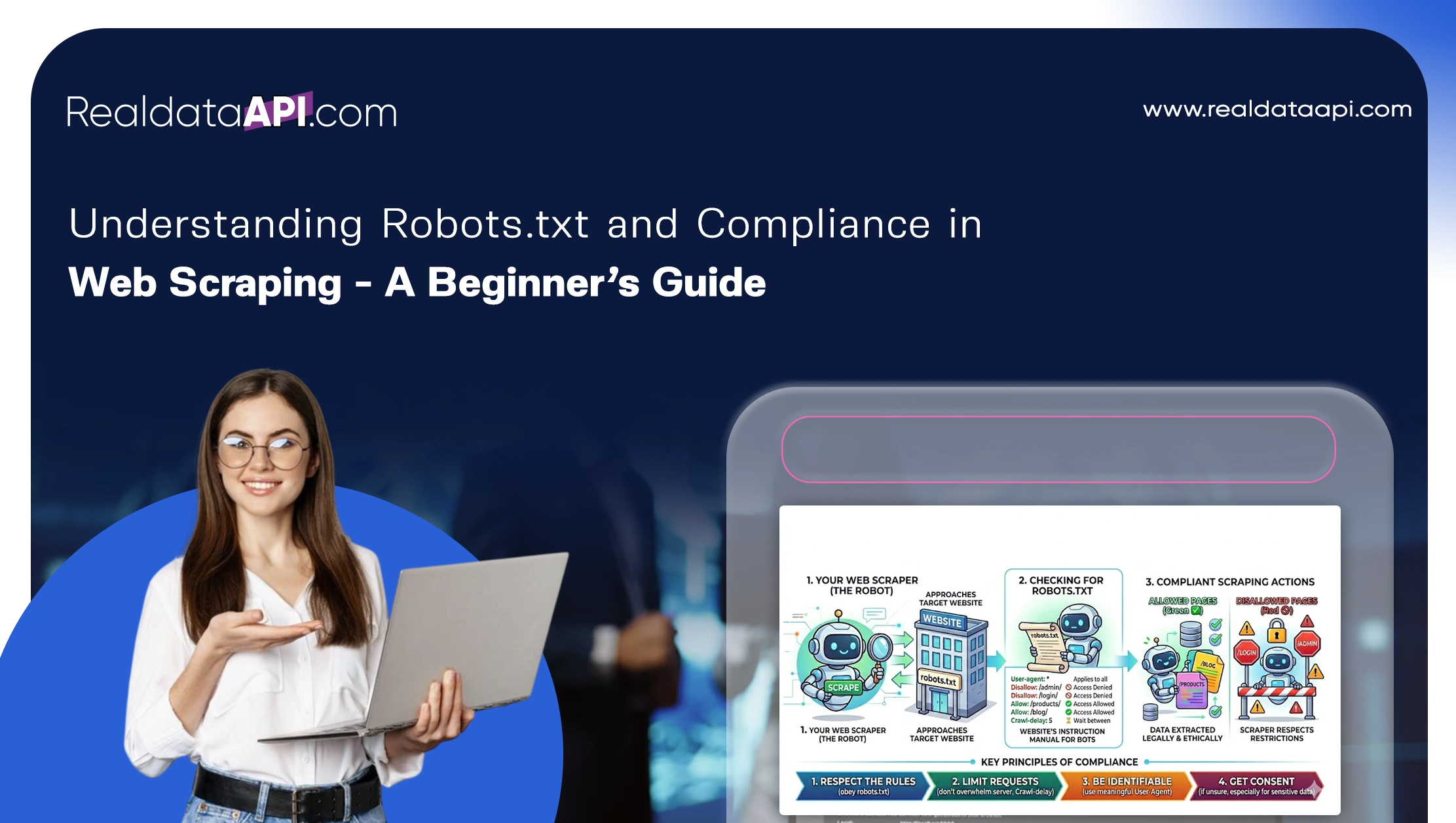
One of the most important concepts in ethical data collection is understanding robots.txt and compliance in web scraping. A robots.txt file is a website instruction document that tells bots and crawlers which pages or directories can be accessed and which should remain restricted. It acts as a communication layer between websites and automated systems.
Search engines, enterprise crawlers, and automation tools commonly use robots.txt guidelines to manage crawling behavior responsibly. While robots.txt is not always legally enforceable, ignoring these directives can lead to blocked requests, IP restrictions, server strain, reputational damage, and compliance concerns.
Today, organizations are increasingly investing in scalable automation frameworks that combine AI-driven crawling systems, compliance monitoring, intelligent scheduling, and API-based extraction infrastructure. Businesses that prioritize ethical scraping practices gain higher data reliability, lower operational disruptions, and improved scalability.
This beginner’s guide explains robots.txt compliance, ethical scraping strategies, governance frameworks, crawl management, AI-powered automation trends, and the role of intelligent extraction systems in modern enterprise environments.
Why Robots.txt Matters for Ethical Automation

Ethical automation begins with respecting website access preferences and minimizing the impact of automated requests on servers. Businesses that fail to follow responsible crawling practices often experience access restrictions, reduced data quality, and legal concerns. This is why how robots.txt affects ethical web scraping practices has become a major focus area for modern data extraction projects.
Robots.txt files help websites communicate acceptable crawler behavior. These files specify restricted paths, crawl permissions, user-agent instructions, and access limitations. Ethical scrapers analyze these rules before initiating data extraction.
Between 2020 and 2026, the percentage of websites implementing robots.txt directives increased significantly as businesses adopted stronger anti-bot infrastructure and traffic management systems.
| Year | Websites Using robots.txt | Ethical Scraping Adoption | Bot Blocking Growth |
|---|---|---|---|
| 2020 | 61% | 38% | 32% |
| 2021 | 65% | 44% | 36% |
| 2022 | 69% | 51% | 41% |
| 2023 | 72% | 57% | 47% |
| 2024 | 75% | 63% | 52% |
| 2025 | 77% | 69% | 57% |
| 2026 | 78% | 74% | 61% |
Organizations that follow ethical scraping standards often benefit from better data continuity and lower detection rates. Responsible crawling strategies include controlled request frequencies, transparent user-agent declarations, adaptive scheduling, and selective extraction targeting.
Ethical scraping also improves long-term operational scalability. Businesses that overload websites with aggressive requests frequently encounter incomplete datasets and unstable scraping performance. In contrast, compliance-driven systems maintain consistent access while minimizing disruption to website operations.
As enterprise automation continues expanding, ethical web scraping is becoming a critical requirement for sustainable digital intelligence collection.
Building Smarter and Safer Extraction Systems

Modern enterprises require scalable extraction systems that balance efficiency with compliance. Businesses increasingly rely on structured workflows to ensure automated crawlers operate responsibly across multiple websites and platforms. This has increased the importance of best practices for compliant data extraction using robots.txt.
A compliant extraction strategy starts with robots.txt analysis before initiating requests. Businesses should identify restricted directories, review crawl permissions, and evaluate acceptable access frequency. Organizations also implement intelligent request scheduling to reduce server strain during high-traffic periods.
Industry data from 2020–2026 shows that businesses using compliance-focused extraction frameworks experienced significantly fewer IP bans and improved operational uptime.
| Compliance Strategy | Blocking Reduction | Performance Improvement |
|---|---|---|
| Request Throttling | 44% | 28% |
| robots.txt Monitoring | 47% | 26% |
| Dynamic Scheduling | 42% | 29% |
| Intelligent Retry Systems | 39% | 23% |
| Proxy Rotation | 51% | 32% |
Another important practice involves monitoring HTTP response behavior. Frequent 403 or 429 errors often indicate websites are restricting crawler access. Smart scraping systems automatically reduce request rates when detection thresholds increase.
Organizations also use APIs as an alternative to traditional scraping whenever structured access is available. A reliable Web Scraping API enables businesses to gather data efficiently while improving scalability and minimizing infrastructure complexity.
Compliance-focused systems also support better data quality. Websites are more likely to deliver stable and accurate content when crawlers follow acceptable request behavior.
Businesses implementing responsible extraction frameworks improve operational stability, maintain sustainable website access, and reduce the risks associated with unmanaged automation systems.
Governance Strategies for Enterprise Data Operations
As enterprise data extraction expands globally, organizations are investing heavily in governance frameworks to reduce legal exposure and operational risks. One major focus area is enterprise web scraping governance and robots.txt awareness, which helps companies build scalable and compliant automation systems.
Governance frameworks ensure that scraping activities align with internal policies, regional regulations, and website access guidelines. These systems typically include crawler monitoring, compliance reviews, data retention controls, audit tracking, and automated robots.txt validation.
From 2020 to 2026, enterprise investment in governance-focused scraping operations increased rapidly due to growing regulatory pressure and cybersecurity concerns.
| Year | Governance Adoption | Compliance Audits | Legal Risk Reduction |
|---|---|---|---|
| 2020 | 28% | 19% | 14% |
| 2021 | 34% | 25% | 21% |
| 2022 | 41% | 32% | 29% |
| 2023 | 49% | 39% | 37% |
| 2024 | 57% | 46% | 44% |
| 2025 | 64% | 54% | 51% |
| 2026 | 71% | 62% | 58% |
Large enterprises increasingly treat unmanaged scraping infrastructure as a cybersecurity and compliance risk. Poorly controlled bots can generate excessive traffic, trigger blacklisting, or violate website policies.
Governance-focused systems also improve internal operational visibility. Organizations can track extraction activities, optimize crawl efficiency, and identify unnecessary requests across distributed automation environments.
Modern compliance teams now collaborate with legal, cybersecurity, and engineering departments to establish responsible automation policies. This cross-functional governance approach improves accountability while supporting enterprise scalability.
As global regulations continue evolving, governance-centric scraping infrastructure will become increasingly important for businesses managing high-volume automated data operations.
Optimizing Crawl Efficiency Without Overloading Servers

Responsible crawling requires balancing extraction speed with server stability. Businesses operating large-scale automation systems increasingly focus on crawl-delay and user-agent management in web scraping projects to improve performance while reducing detection risks.
Crawl-delay directives define how frequently bots should send requests to websites. Ignoring these settings can create excessive traffic loads and negatively affect website performance. User-agent configuration also plays a critical role in ethical scraping because it helps websites identify crawler behavior transparently.
Industry reports from 2020–2026 show that projects implementing crawl-delay optimization experienced significantly lower rejection and blocking rates.
| Crawling Technique | Server Stability Improvement | Detection Reduction |
|---|---|---|
| Crawl-Delay Compliance | 48% | 37% |
| User-Agent Transparency | 41% | 29% |
| Session Rotation | 46% | 35% |
| Adaptive Retry Logic | 39% | 26% |
| Traffic Scheduling | 44% | 31% |
Businesses using transparent user-agent identification are often treated more favorably than anonymous or misleading crawlers. Ethical configuration also simplifies monitoring and debugging processes.
Advanced crawling platforms now use AI-based scheduling systems to adjust request timing dynamically according to server response behavior. This reduces unnecessary retries and improves long-term access reliability.
Organizations should also monitor peak traffic periods before launching large extraction campaigns. Scheduling requests during lower-traffic windows minimizes disruption and helps maintain sustainable access.
Efficient crawl management supports ethical automation, improves data reliability, and reduces operational instability across enterprise scraping systems.
The Growing Role of Intelligent Automation
Automation technologies are transforming how organizations collect and process digital information. One major driver of this transformation is Robotic Process Automation, which helps businesses automate repetitive workflows, browser interactions, and extraction processes with minimal human intervention.
From 2020 to 2026, enterprises significantly increased investment in automation-driven data operations to improve efficiency and reduce manual processing costs.
| Year | RPA Adoption | Automated Data Tasks | Efficiency Improvement |
|---|---|---|---|
| 2020 | 31% | 24% | 18% |
| 2021 | 38% | 29% | 23% |
| 2022 | 45% | 36% | 31% |
| 2023 | 53% | 44% | 39% |
| 2024 | 61% | 51% | 46% |
| 2025 | 68% | 58% | 54% |
| 2026 | 74% | 65% | 61% |
RPA systems are widely used across industries such as finance, healthcare, retail, logistics, and eCommerce. These solutions automate repetitive extraction tasks, reporting systems, form submissions, and workflow orchestration.
Automation improves consistency and reduces human error in large-scale operations. Modern RPA platforms also integrate with AI engines, APIs, cloud infrastructure, and analytics systems to support enterprise-level scalability.
Despite these advantages, organizations must ensure automation systems operate responsibly and comply with website access policies. Automation without governance can increase legal and operational risks.
Businesses combining intelligent automation with compliance-focused strategies achieve higher productivity, better data accuracy, and stronger operational reliability across digital intelligence environments.
AI-Powered Crawling and the Future of Data Intelligence
Artificial intelligence is rapidly reshaping enterprise scraping infrastructure and automated data analysis. One of the most influential technologies driving this transformation is Generative AI, which enables adaptive, intelligent, and context-aware extraction workflows.
Between 2020 and 2026, enterprises increasingly integrated AI into crawling systems to improve extraction efficiency, automate categorization, and optimize large-scale data operations.
| AI Capability | Operational Improvement | Data Accuracy Growth |
|---|---|---|
| Smart Content Recognition | 43% | 38% |
| AI-Based Scheduling | 39% | 31% |
| Automated Categorization | 46% | 42% |
| Error Recovery Systems | 37% | 29% |
| Predictive Extraction Logic | 41% | 35% |
AI-powered systems can automatically adapt to website layout changes and identify relevant content structures without requiring constant manual updates. This significantly improves long-term scraping stability.
Generative AI also enhances enterprise intelligence operations by summarizing extracted content, identifying trends, classifying datasets, and generating automated reports. Businesses increasingly use AI-powered scraping to support market forecasting, pricing analysis, customer research, and competitive intelligence.
However, AI-driven extraction systems must still follow ethical automation standards. Compliance with robots.txt directives and responsible crawl behavior remain essential regardless of technological sophistication.
Organizations combining AI-powered infrastructure with compliance-first governance frameworks gain stronger scalability, improved operational resilience, and more accurate digital intelligence systems.
Why Choose Real Data API?
Modern enterprises require scalable, reliable, and compliance-aware extraction solutions to remain competitive in fast-moving digital markets. Real Data API delivers enterprise-grade Web Scraping Services designed to support intelligent automation, real-time extraction, and large-scale data collection workflows.
Our infrastructure supports adaptive crawling, proxy management, AI-powered extraction, intelligent scheduling, and governance-focused automation systems. We prioritize compliance-driven practices while helping businesses simplify understanding robots.txt and compliance in web scraping.
Real Data API provides secure, scalable, and performance-focused solutions for SEO tracking, competitor analysis, product monitoring, lead generation, pricing intelligence, and market research operations.
Our platform is built for businesses seeking sustainable and ethical automation systems without compromising extraction efficiency or operational reliability.
Conclusion
As digital ecosystems continue evolving, ethical automation and compliance-focused extraction practices are becoming essential for long-term success. Businesses that invest in responsible crawling strategies improve operational stability, reduce legal risks, and maintain sustainable access to valuable online data sources.
Developing expertise in understanding robots.txt and compliance in web scraping helps organizations build scalable extraction systems that balance efficiency with ethical responsibility. From crawl-delay optimization to AI-powered governance frameworks, compliance-first automation is shaping the future of enterprise data intelligence.
Businesses that prioritize responsible scraping practices will gain stronger scalability, higher-quality datasets, and better long-term operational performance in increasingly regulated digital environments.
Ready to scale secure and compliant data extraction? Connect with Real Data API today for enterprise-ready scraping solutions built for performance, governance, and growth!
Latest posts
Web Scraping Competitor Product Monitoring Using Marketplace Data for Real-Time E-commerce Insights and Business Growth?
How to Scrape Product Intelligence Platform Using Marketplace Data to Help Brands Optimize Pricing, Inventory, and Product Strategy?
Why Companies scrape business data from Google Maps using keywords to Build Accurate Business Lists and Competitive Insights?
How Review scraping and monitoring services Help Businesses Track Customer Sentiment and Protect Brand Reputation in 2026?
How Real Estate Investment Insights Using RERA Data Scraping Help Investors Minimize Risk and Maximize Returns

Real Data API stands out as one of the premier global companies specializing in web data Scraping and web extraction.





.png)


Rating 4.7
Rating 4.7
Rating 4.5
Rating 4.7
Rating 4.7


Disclaimer : RealData API functions solely as an independent data infrastructure and technology solutions provider. We build customized automation workflows designed to collect publicly accessible web data based exclusively on client instructions. RealData API neither owns proprietary datasets nor engages in the sale or redistribution of extracted information. Our operations are limited strictly to lawful public web data processing and never involve unauthorized access to restricted systems or private networks. Any company names, trademarks, logos, or brand references displayed on this website are used purely for demonstrative and illustrative purposes to showcase our technical capabilities and do not imply endorsement, partnership, or affiliation. Use of our platform and services remains subject to our Terms of Service.