

Introduction
The furniture ecommerce market has become increasingly competitive as brands continuously launch new collections, adjust pricing strategies, introduce promotional campaigns, and expand online product assortments. Businesses that fail to monitor these market changes in real time often struggle with inaccurate pricing decisions, poor inventory planning, and reduced market visibility.
To solve these challenges, companies increasingly rely on Competitive analysis for furniture brands using scraped data to automate ecommerce intelligence collection and competitor monitoring. By leveraging an advanced E-Commerce Data Scraping API, businesses can collect real-time information related to pricing, inventory, product assortments, customer reviews, and seasonal promotions across multiple furniture marketplaces.
Traditional competitor research methods are time-consuming and difficult to scale when managing thousands of furniture SKUs across ecommerce platforms. Automated scraping systems provide structured datasets that help furniture brands identify market trends, benchmark competitor performance, optimize pricing strategies, and improve inventory planning.
Between 2020 and 2026, the adoption of ecommerce intelligence systems in the furniture industry has grown rapidly as businesses increasingly depend on real-time data to improve market responsiveness and strengthen competitive positioning.
Why Competitor Benchmarking Matters in Furniture Ecommerce
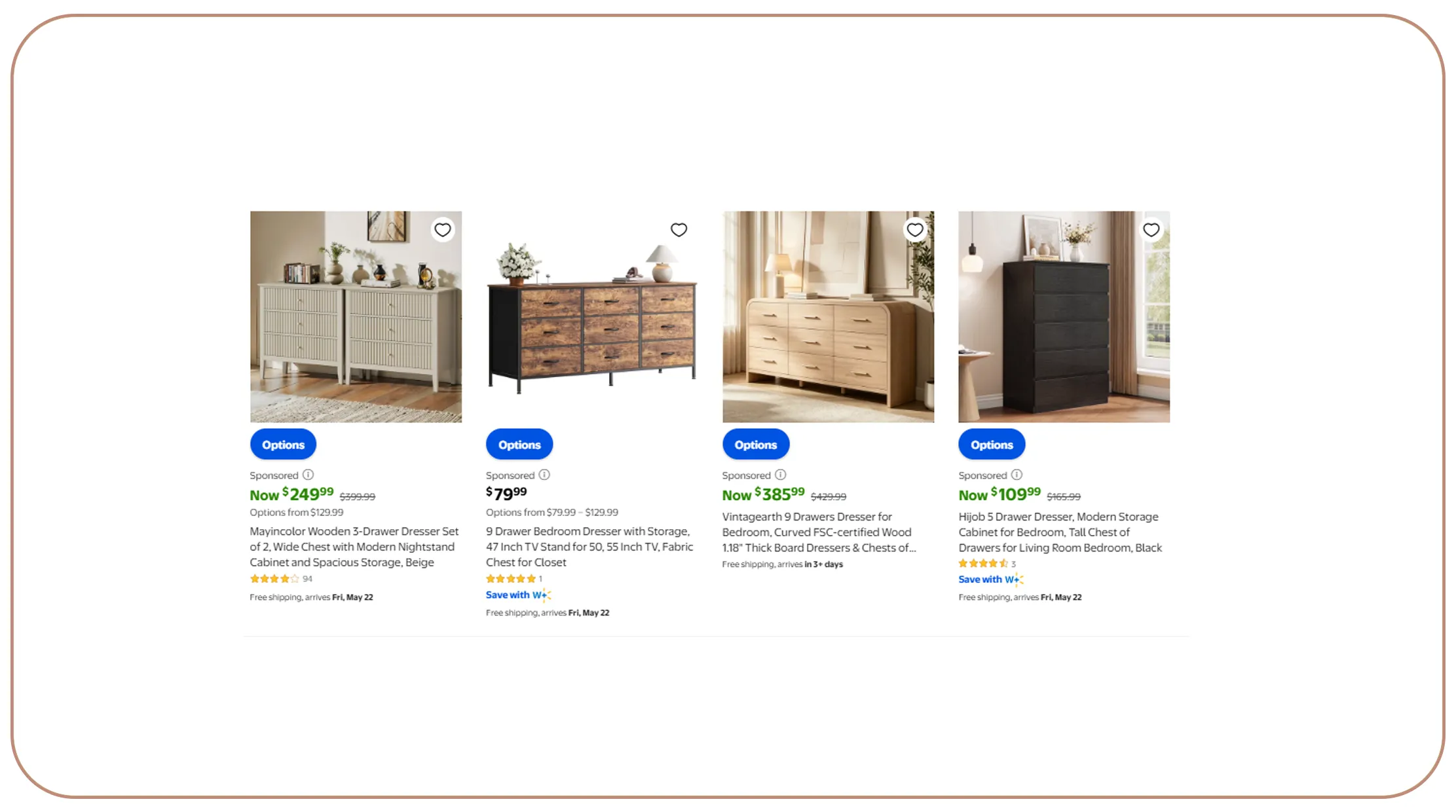
Furniture brands operate in a highly dynamic market where pricing, promotions, and product assortments change frequently. Businesses require continuous visibility into competitor catalogs to maintain pricing accuracy and respond to evolving customer demand effectively.
Companies increasingly use extracting furniture catalog and pricing data for competitor benchmarking to monitor competitor product assortments, identify pricing gaps, and compare inventory availability across ecommerce marketplaces. Automated extraction systems help brands process large-scale competitor intelligence efficiently.
Key Areas of Competitor Benchmarking
- Product pricing comparison
- Catalog assortment analysis
- Variant availability monitoring
- Customer review tracking
- Promotional campaign analysis
- Inventory visibility benchmarking
Competitor Benchmarking Trends (2020–2026)
| Year | Businesses Using Competitor Benchmarking | Pricing Accuracy Improvement | Market Visibility Growth |
|---|---|---|---|
| 2020 | 23% | 18% | 15% |
| 2021 | 32% | 26% | 23% |
| 2022 | 44% | 35% | 31% |
| 2023 | 57% | 44% | 40% |
| 2024 | 69% | 53% | 49% |
| 2025 | 81% | 62% | 58% |
| 2026 | 91% | 71% | 67% |
Competitor benchmarking improves pricing intelligence while helping brands maintain stronger market positioning.
Why Seasonal Pricing Intelligence Improves Market Responsiveness
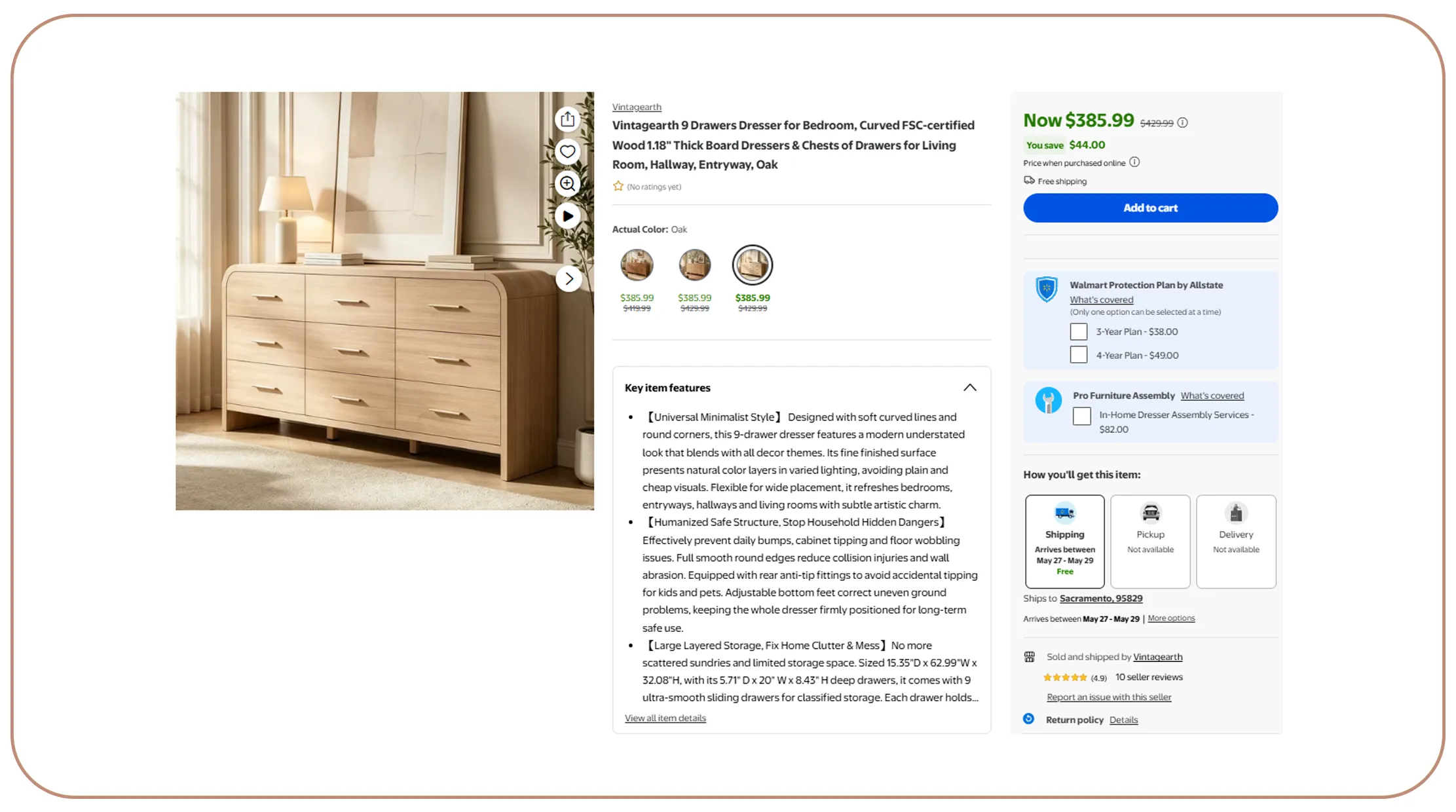
Furniture pricing changes significantly during seasonal sales periods, festive campaigns, and high-demand shopping cycles. Businesses that fail to monitor these changes often miss important pricing opportunities and demand shifts.
Retailers increasingly rely on Web Scraping seasonal pricing trends in furniture industry to analyze seasonal discounts, promotional pricing strategies, and market demand fluctuations. Scraped pricing intelligence enables brands to understand competitor behavior and optimize pricing decisions accordingly.
Benefits of Seasonal Pricing Intelligence
- Better promotional planning
- Improved demand forecasting
- Faster pricing optimization
- Enhanced inventory management
- Reduced revenue loss
Seasonal Pricing Intelligence Statistics
| Year | Seasonal Pricing Accuracy | Demand Forecast Efficiency | Promotional Performance |
|---|---|---|---|
| 2020 | 61% | 58% | 54% |
| 2021 | 68% | 65% | 61% |
| 2022 | 75% | 73% | 69% |
| 2023 | 82% | 80% | 77% |
| 2024 | 88% | 86% | 83% |
| 2025 | 93% | 92% | 89% |
| 2026 | 97% | 97% | 95% |
Seasonal pricing intelligence helps businesses respond faster to changing market conditions while improving revenue optimization strategies.
How Analytics Dashboards Improve Furniture Market Intelligence
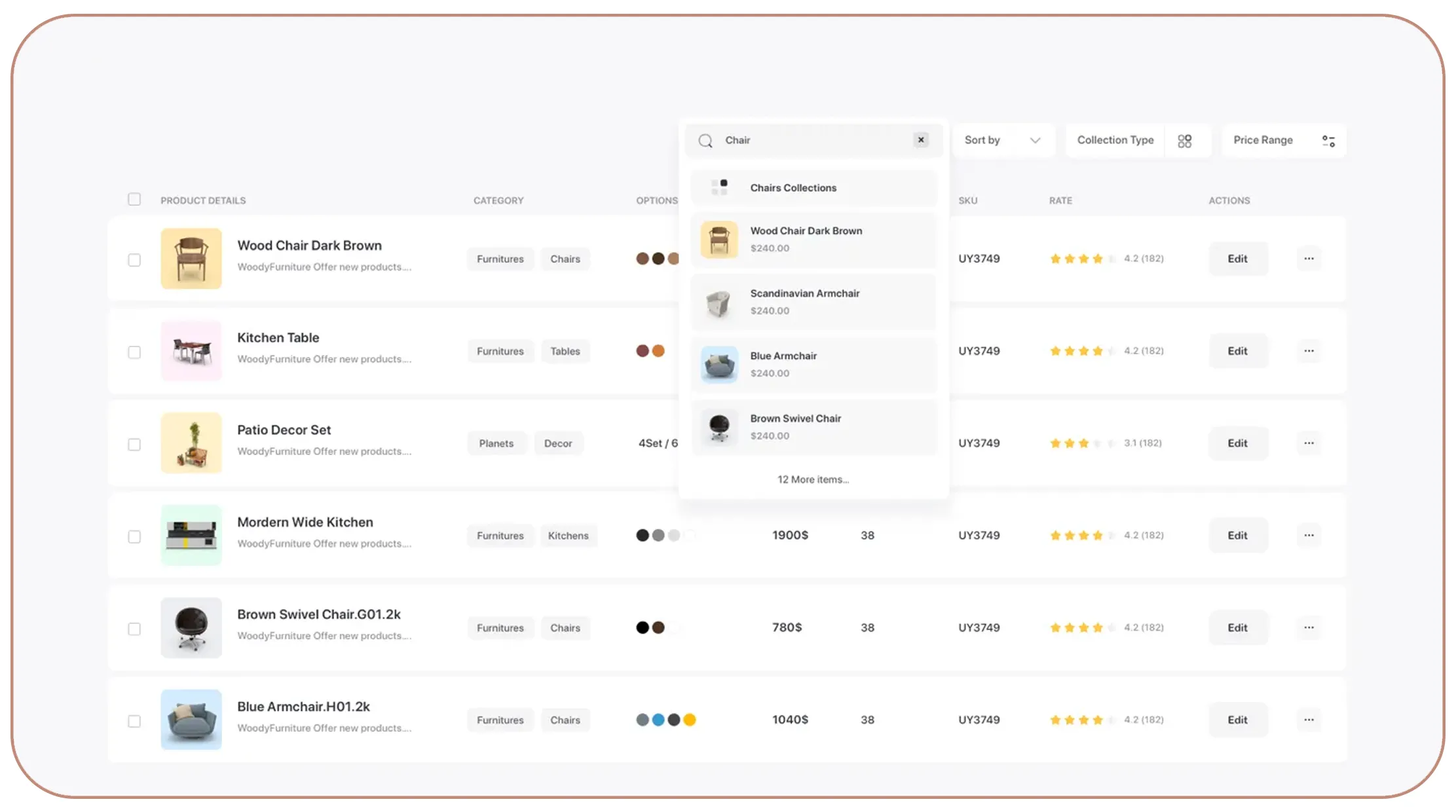
Raw ecommerce data becomes significantly more valuable when businesses transform it into visual analytics dashboards that support decision-making. Furniture brands increasingly rely on centralized dashboards to monitor market trends and competitor activity efficiently.
Companies now Build furniture market intelligence dashboards via ecommerce data scraper to visualize pricing movements, inventory trends, product launches, and customer demand patterns across ecommerce platforms. These dashboards simplify large-scale data analysis and improve operational visibility.
Key Dashboard Features
- Competitor pricing visualization
- Inventory monitoring reports
- Product trend analysis
- Assortment tracking
- Promotional activity monitoring
- Customer review analytics
Market Intelligence Dashboard Adoption
| Year | Businesses Using Analytics Dashboards | Reporting Efficiency | Decision-Making Speed |
|---|---|---|---|
| 2020 | 22% | 18% | 15% |
| 2021 | 31% | 26% | 23% |
| 2022 | 43% | 35% | 31% |
| 2023 | 56% | 44% | 40% |
| 2024 | 68% | 53% | 49% |
| 2025 | 80% | 62% | 58% |
| 2026 | 91% | 71% | 67% |
Analytics dashboards improve ecommerce visibility while enabling furniture brands to make faster and more accurate business decisions.
Why Retail Assortment Monitoring Is Essential
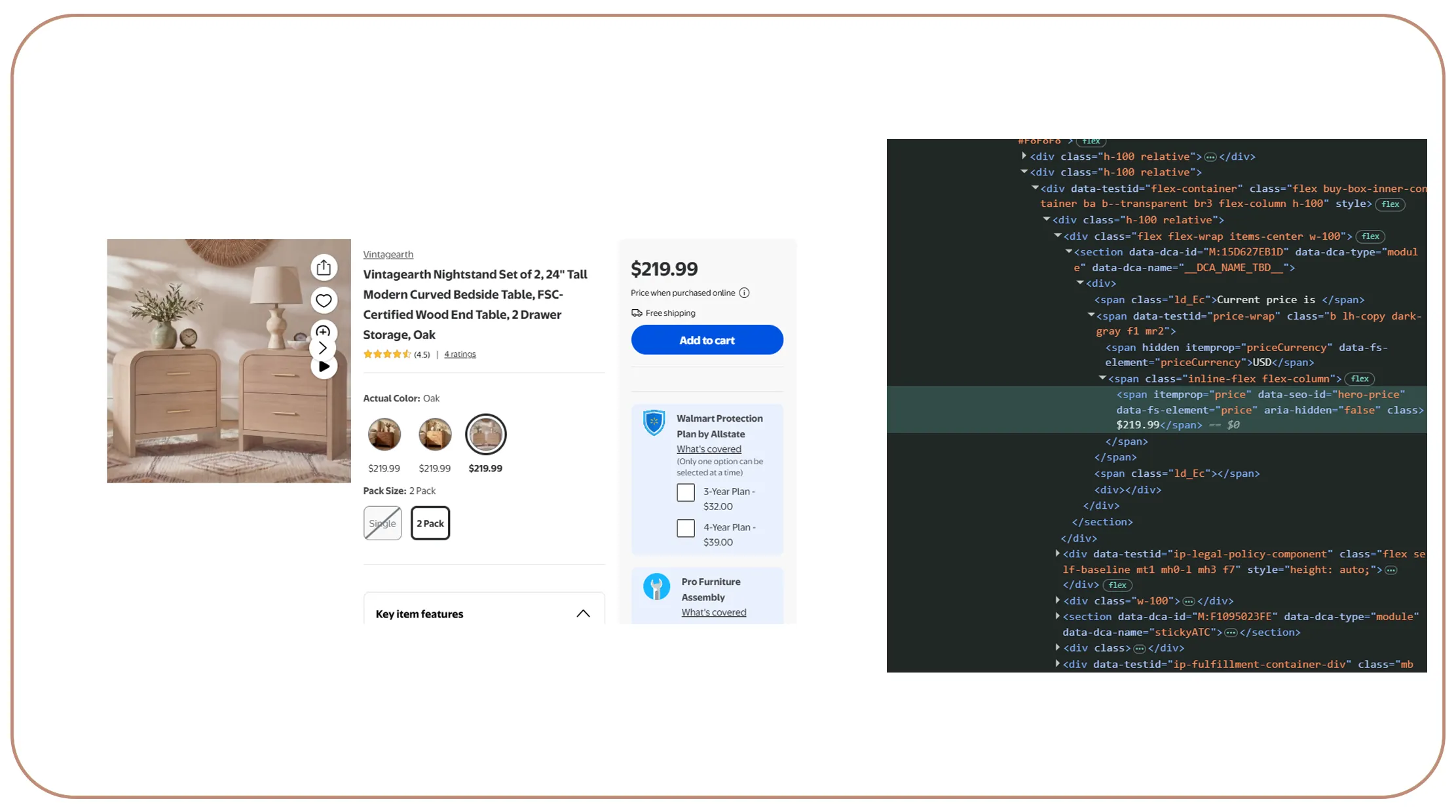
Furniture assortments constantly evolve based on customer demand, seasonal launches, and inventory availability. Brands need continuous visibility into competitor assortments to identify product gaps and respond to emerging trends quickly.
Businesses increasingly focus on monitoring furniture assortment and promotions across retailers to analyze promotional campaigns, track assortment expansions, and identify trending product categories. Automated scraping systems provide real-time assortment intelligence without manual monitoring efforts.
Benefits of Assortment Monitoring
- Faster trend detection
- Better inventory planning
- Improved product positioning
- Enhanced promotional analysis
- Smarter assortment optimization
Retail Assortment Monitoring Trends
| Year | Assortment Tracking Accuracy | Promotion Visibility | Product Trend Detection |
|---|---|---|---|
| 2020 | 60% | 55% | 52% |
| 2021 | 67% | 63% | 59% |
| 2022 | 74% | 71% | 67% |
| 2023 | 81% | 78% | 75% |
| 2024 | 87% | 84% | 82% |
| 2025 | 92% | 90% | 88% |
| 2026 | 97% | 95% | 94% |
Assortment monitoring helps furniture brands improve product planning while maintaining stronger competitive awareness.
How APIs Improve Ecommerce Intelligence Automation
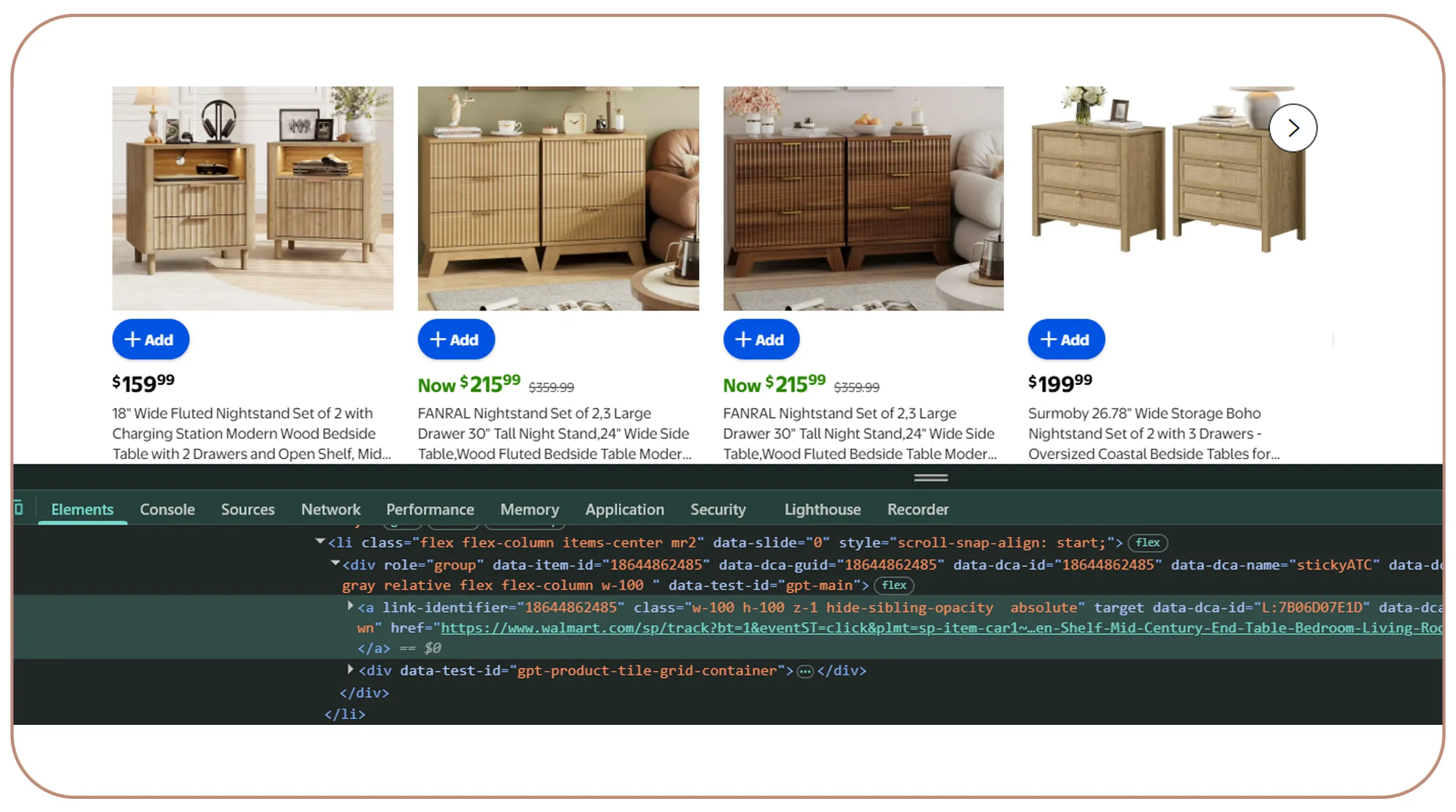
Modern furniture ecommerce operations require scalable automation systems capable of processing millions of product records efficiently. APIs simplify data extraction and support continuous ecommerce intelligence collection.
Businesses increasingly leverage Top Ecommerce Scraping API Use Cases to automate competitor tracking, inventory monitoring, product analytics, and pricing intelligence across furniture marketplaces. APIs improve operational scalability while reducing manual research efforts.
Common Ecommerce API Use Cases
- Competitor pricing monitoring
- Inventory synchronization
- Product review tracking
- Assortment intelligence
- Promotional campaign analysis
- Product trend forecasting
API Automation Growth Statistics
| Year | Businesses Using APIs | Data Collection Speed Improvement | Analytics Automation Efficiency |
|---|---|---|---|
| 2020 | 23% | 19% | 16% |
| 2021 | 32% | 27% | 24% |
| 2022 | 44% | 36% | 32% |
| 2023 | 57% | 45% | 41% |
| 2024 | 69% | 54% | 50% |
| 2025 | 81% | 63% | 59% |
| 2026 | 91% | 72% | 68% |
API-powered automation improves ecommerce intelligence scalability while enabling faster market responsiveness.
Why Structured Ecommerce Datasets Improve Analytics
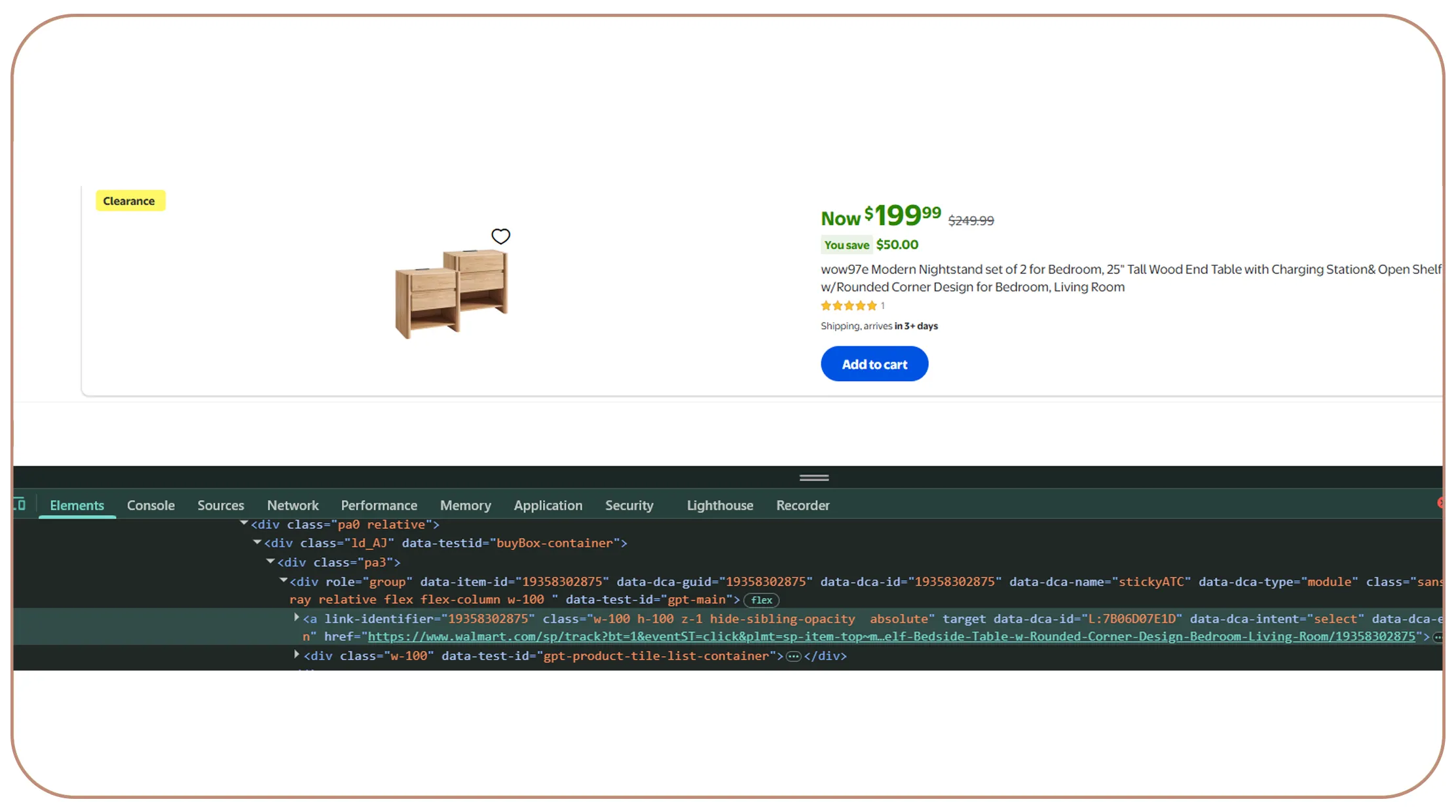
Furniture brands generate large volumes of ecommerce intelligence data that must be organized into structured formats for analytics and reporting purposes. Structured datasets simplify large-scale competitor analysis and market trend forecasting.
Businesses increasingly rely on E-Commerce Dataset solutions to centralize pricing, inventory, assortment, and customer review information collected from furniture ecommerce platforms. Structured datasets improve reporting efficiency and support advanced business intelligence workflows.
Benefits of Structured Ecommerce Datasets
- Centralized competitor intelligence
- Faster reporting workflows
- Improved forecasting accuracy
- Better pricing analytics
- Enhanced inventory visibility
Dataset Usage Growth Trends
| Year | Businesses Using Structured Datasets | Analytics Efficiency | Forecast Accuracy |
|---|---|---|---|
| 2020 | 24% | 61% | 58% |
| 2021 | 33% | 68% | 65% |
| 2022 | 45% | 75% | 72% |
| 2023 | 58% | 82% | 79% |
| 2024 | 70% | 88% | 85% |
| 2025 | 82% | 93% | 91% |
| 2026 | 92% | 97% | 96% |
Structured datasets help furniture brands convert raw ecommerce information into actionable market intelligence for long-term growth.
Why Choose Real Data API?
Real Data API delivers enterprise-grade ecommerce intelligence solutions designed for competitor monitoring, pricing analysis, and furniture market analytics. Businesses seeking scalable Web Scraping API automation can streamline furniture ecommerce intelligence collection efficiently.
Companies implementing Competitive analysis for furniture brands using scraped data can leverage Real Data API for real-time product monitoring, inventory tracking, pricing intelligence, and competitor assortment analysis.
Key Features of Real Data API
- Real-time competitor tracking
- Furniture catalog monitoring
- Pricing intelligence automation
- Structured ecommerce dataset generation
- Scalable API infrastructure
- Product assortment analytics
- Enterprise-grade data extraction solutions
Real Data API helps furniture brands transform raw ecommerce information into actionable business intelligence for smarter pricing, stronger market positioning, and faster operational decision-making.
Conclusion
The furniture ecommerce industry continues evolving rapidly as brands compete through pricing, promotions, product assortments, and customer experience strategies. Businesses implementing Competitive analysis for furniture brands using scraped data gain stronger visibility into market trends, competitor behavior, and customer demand patterns.
Automated ecommerce intelligence systems help brands improve pricing accuracy, optimize inventory planning, and respond faster to changing market conditions. Real Data API provides scalable automation solutions that transform raw furniture ecommerce data into actionable business intelligence for smarter decision-making and sustainable growth.
Contact Real Data API today to automate furniture competitor analysis and unlock real-time market intelligence for smarter pricing, inventory optimization, and trend forecasting!
Latest posts

How Louis Vuitton Fashion Dataset Enables Better Analysis of Luxury Products, Prices, Brands, and Fashion Trends?
How Blinkit Grocery Dataset Enables Smarter Analysis of Products, Prices, Availability, and Quick-Commerce Trends?

How Chanel Fashion Dataset Enables Smarter Analysis of Luxury Products, Prices, Categories, and Fashion Trends?

How Foodpanda Food Dataset Helps Businesses Track Restaurants, Menus, Prices, Ratings, and Food Delivery Trends?







.png)



