
Introduction
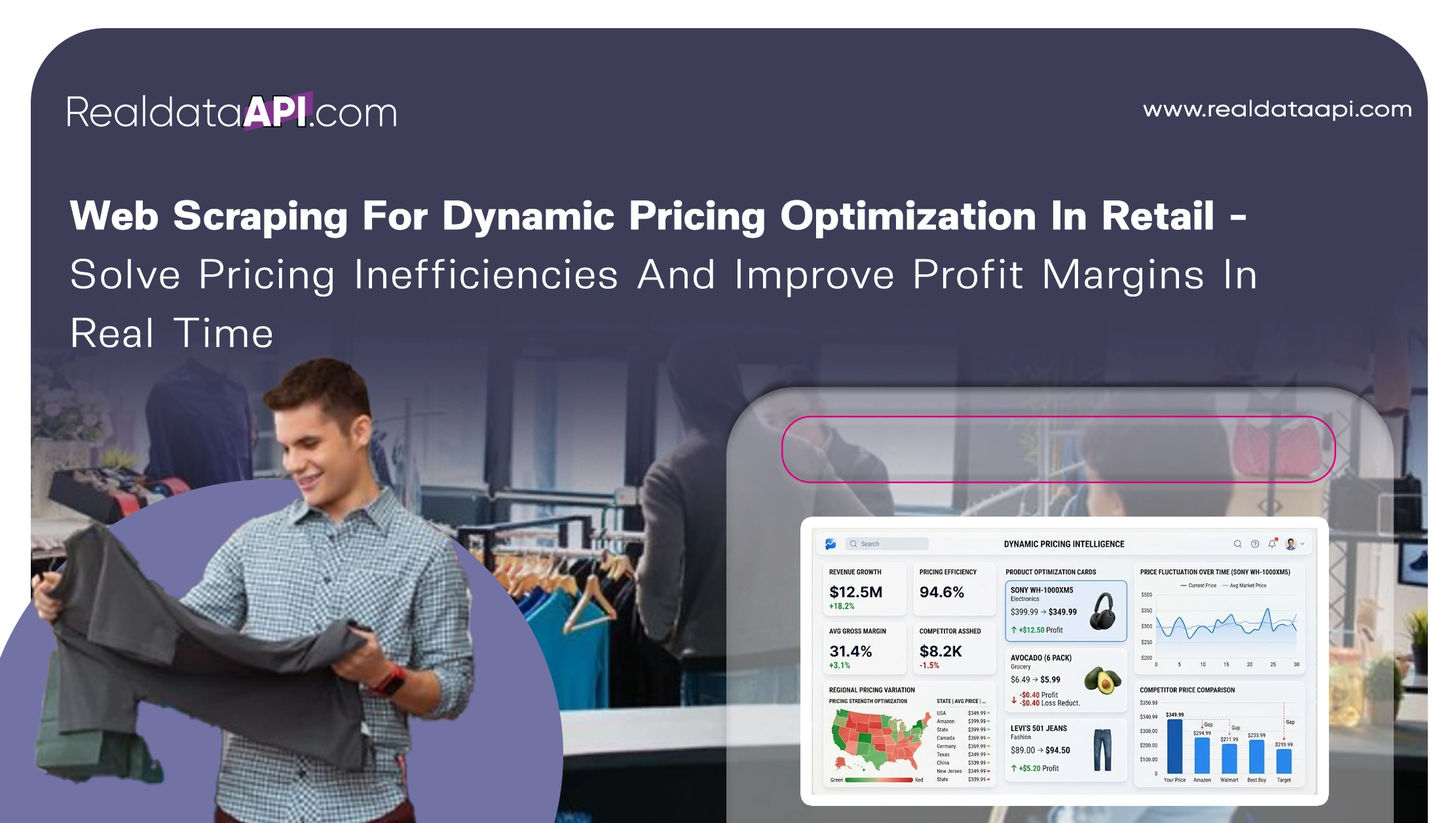
Retail markets are becoming increasingly competitive, with prices changing multiple times a day across platforms, regions, and customer segments. Traditional pricing models often fail to keep up with these rapid shifts, leading to lost revenue and reduced competitiveness. This is where web scraping for dynamic pricing optimization in retail becomes a powerful strategy for modern businesses.
Instead of relying on static data or delayed reports, retailers can now access real-time competitor pricing, demand signals, and market trends. By integrating Web Scraping Services, businesses can automate data collection and ensure continuous visibility into pricing movements across multiple channels.
This approach helps retailers eliminate inefficiencies, react instantly to market changes, and optimize profit margins with precision. With advanced tools like APIs and automated pipelines, pricing decisions are no longer reactive—they become proactive and data-driven.
In this blog, we will explore how retailers can build scalable systems, improve pricing intelligence, and leverage real-time data for smarter business decisions.
Leveraging Real-Time Data for Smarter Pricing Decisions
Modern retailers are shifting toward data-driven pricing models. Using retail pricing optimization using real-time data, businesses can continuously adjust prices based on market demand and competitor behavior.
Between 2020 and 2026, real-time pricing adoption in retail has increased significantly due to rising eCommerce competition and customer expectations.
| Year | Adoption Rate | Pricing Update Frequency |
|---|---|---|
| 2020 | 30% | Daily |
| 2022 | 48% | Hourly |
| 2024 | 66% | Every 15–30 minutes |
| 2026 | 80% | Real-time |
Real-time data enables retailers to identify pricing opportunities instantly. For example, if demand increases for a product, prices can be adjusted dynamically to maximize revenue.
This approach also helps reduce overpricing or underpricing issues, ensuring better market alignment.
By using automated systems, retailers can eliminate manual delays and respond instantly to market fluctuations, improving both competitiveness and profitability.
Competitive Price Tracking Across Retail Platforms
Understanding competitor pricing is essential for retail success. The ability to Scrape competitor prices for retail pricing optimization helps businesses stay ahead in highly competitive markets.
From 2020 to 2026, multi-channel retail competition has grown by over 70%, making competitor tracking more critical than ever.
| Data Source | Importance | Update Frequency |
|---|---|---|
| Ecommerce Sites | High | Real-time |
| Marketplaces | High | Frequent |
| Brand Stores | Medium | Hourly |
| Mobile Apps | Very High | Real-time |
Scraping competitor prices allows businesses to analyze pricing patterns, discount strategies, and seasonal variations. This data helps retailers position their products strategically in the market.
By combining multiple sources, companies can build a unified pricing intelligence system that improves decision-making accuracy and speed.
Automating Pricing Strategies with Data Intelligence
Automation is a key driver of modern retail success. Implementing automate pricing strategies using web scraping allows businesses to remove manual intervention and improve efficiency.
Between 2020 and 2026, automation in pricing systems has increased by 75%, driven by the need for faster and more accurate decision-making.
| Process Stage | Manual System | Automated System |
|---|---|---|
| Data Collection | Slow | Instant |
| Price Updates | Delayed | Real-Time |
| Error Rate | High | Low |
| Scalability | Limited | High |
Automated systems continuously collect competitor pricing data and update internal pricing rules in real time.
This ensures that businesses remain competitive without constant manual monitoring.
Automation also improves consistency, reduces errors, and enables large-scale pricing adjustments across thousands of products.
Building Smarter Retail Pricing Models
Retail pricing is no longer static—it is dynamic and data-driven. A retail dynamic pricing strategy allows businesses to adjust prices based on demand, competition, and inventory levels.
From 2020 to 2026, dynamic pricing adoption in retail has grown by over 68%, especially in eCommerce and quick commerce sectors.
| Factor | Influence on Pricing |
|---|---|
| Demand | High |
| Competition | High |
| Inventory Levels | Medium |
| Time of Day | Low–Medium |
Dynamic pricing models use real-time inputs to adjust product prices automatically. For example, prices may increase during peak demand or decrease during low-sales periods.
This approach helps retailers maximize revenue while maintaining competitiveness in the market.
Enhancing Revenue Through Dynamic Pricing Systems
Dynamic pricing is at the core of modern retail strategies. Dynamic Pricing systems allow businesses to continuously optimize prices based on real-time market conditions.
Between 2020 and 2026, dynamic pricing systems have helped businesses improve revenue by up to 25–40% in competitive markets.
| Benefit | Impact Level |
|---|---|
| Revenue Growth | High |
| Margin Optimization | High |
| Market Responsiveness | High |
| Customer Targeting | Medium |
Dynamic pricing uses algorithms that analyze competitor prices, customer behavior, and demand trends. This ensures optimal pricing at all times.
By implementing these systems, retailers can stay competitive while maximizing profitability in fast-changing markets.
Improving Market Visibility with Continuous Monitoring
Continuous tracking is essential for retail success. Implementing Price Monitoring systems ensures businesses never miss critical pricing changes in the market.
From 2020 to 2026, automated price monitoring adoption has increased by 65%, driven by the need for real-time insights.
| Metric | Manual Monitoring | Automated Monitoring |
|---|---|---|
| Speed | Slow | Instant |
| Accuracy | Medium | High |
| Coverage | Limited | Extensive |
| Scalability | Low | High |
Price monitoring systems track competitor pricing, discounts, and promotions continuously.
This enables businesses to respond quickly and adjust strategies based on live market conditions.
Why Choose Real Data API?
Real Data API provides advanced Web Scraping Services designed to support Competitive Benchmarking and enable effective web scraping for dynamic pricing optimization in retail. It helps businesses collect real-time pricing data, automate workflows, and improve decision-making accuracy.
With scalable infrastructure and high-performance APIs, Real Data API ensures continuous data flow, reduced latency, and improved pricing intelligence. It simplifies complex data extraction processes and enables retailers to focus on strategy rather than technical challenges.
Conclusion
In today's competitive retail landscape, web scraping for dynamic pricing optimization in retail is essential for eliminating inefficiencies and improving profit margins in real time. By combining automation, real-time data, and intelligent pricing systems, businesses can stay ahead of competitors and maximize revenue.
As retail continues to evolve, dynamic pricing and real-time intelligence will become core drivers of success.
Ready to optimize your pricing strategy? Partner with Real Data API today and unlock real-time retail intelligence for smarter, faster, and more profitable decisions!
Latest posts
How Gemini Scraper For Real-Time Data Extraction Enables Faster Market Intelligence, Monitoring, and Competitive Analysis
How Web Scraping Makemytrip Travel Data For Market Research Helps Identify Growth Opportunities?
How to Solve Data Freshness Challenges With Claude Web Scraping for Real-Time Information?
How to Scrape Dynamic Website Data Using a Scraping Browser API Without Browser Automation Complexity?






.png)



