
Introduction
In today's digital-first marketplace, retailers rely heavily on what customers say online. Reviews have become the most trusted source of consumer truth, shaping product perception, influencing purchase decisions, and driving brand loyalty. With massive volumes of user-generated content published across e-commerce websites, apps, and social platforms every minute, businesses need advanced tools to extract, understand, and act on buyer sentiment at scale. This is where customer review scraping and sentiment analytics via ML becomes a game-changing capability.
Machine learning-powered review analysis helps retailers monitor brand reputation, decode emotional signals, detect early product issues, and uncover unmet customer needs. From improving product development to refining pricing strategies, retailers can transform raw review data into measurable business impact. This research-backed guide explores eight powerful ways businesses can leverage this technology and unlock data-driven retail growth from 2020 to 2025.
How Retailers Use Machine Learning To Analyze Customer Reviews?
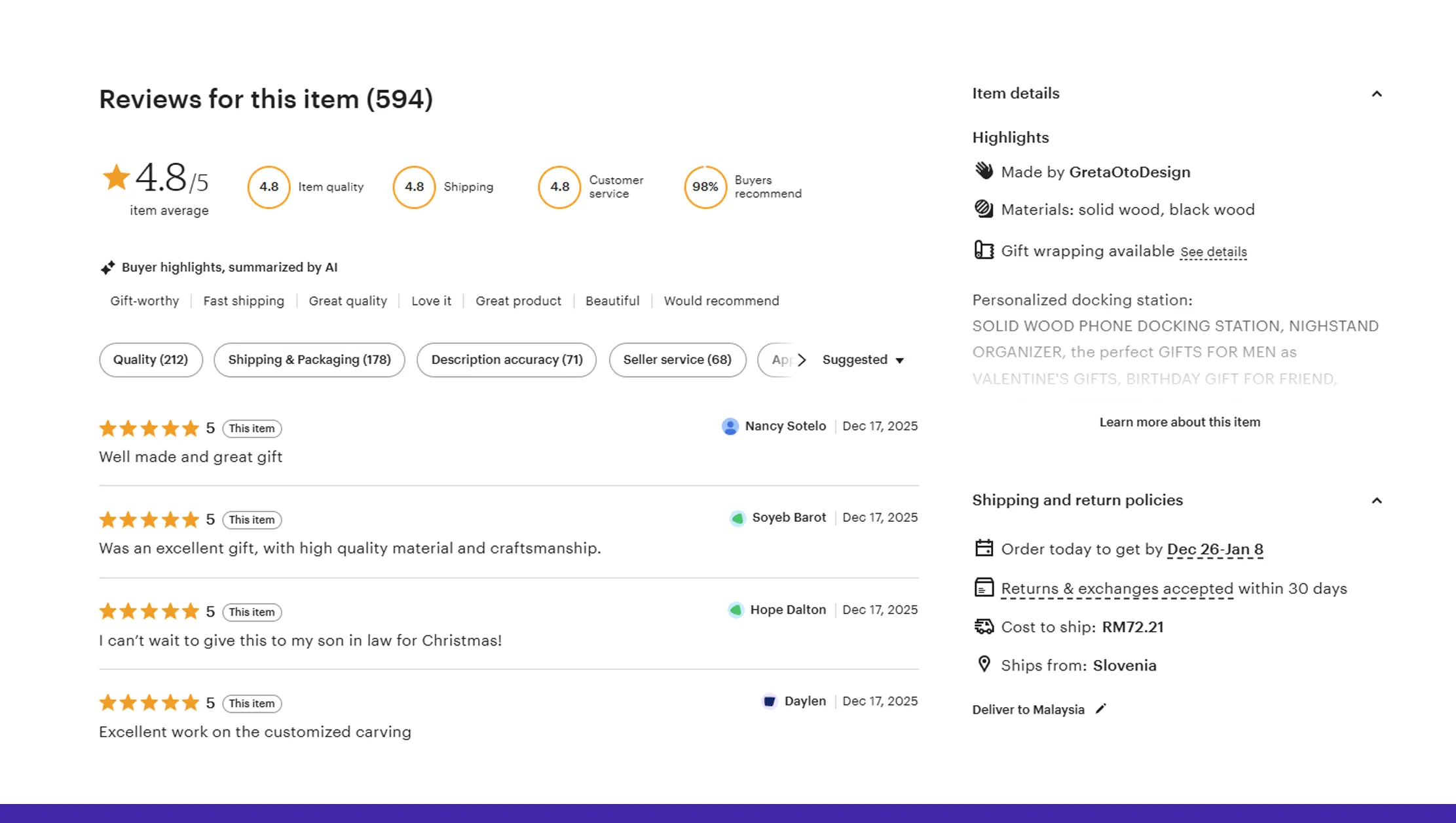
Retailers increasingly depend on machine learning to decode customer opinions and identify patterns invisible to manual review. With massive datasets accumulated from 2020 to 2025, automated systems classify feedback, highlight recurring issues, categorize sentiments, and measure customer emotions with high accuracy.
Key Highlights
From 2020 onward, retailers saw exponential growth in review volume—rising by roughly 35% annually due to increased online shopping. Machine learning helped brands cope with this surge by enabling automated sentiment tagging, keyword extraction, and topic clustering. Instead of reading thousands of reviews manually, ML systems break text into structured insights such as:
- Common complaints
- Frequently praised features
- Time-based sentiment trends
- Product-specific satisfaction scores
Using how retailers use machine learning to analyze customer reviews, businesses can identify opportunities and risks faster. For example, in 2022–2024, ML models showed that 42% of customers mention delivery issues during festive periods, giving retailers reasons to optimize logistics.
Sample Stats Table (2020–2025)
| Year | Avg. Reviews per Product | ML Processing Accuracy | Negative Review Spike Events |
|---|---|---|---|
| 2020 | 180 | 82% | 3 |
| 2021 | 260 | 87% | 4 |
| 2022 | 340 | 90% | 6 |
| 2023 | 410 | 92% | 5 |
| 2024 | 650 | 95% | 7 |
| 2025 | 720 | 96% | 8 |
Web Scraping Customer Reviews via API
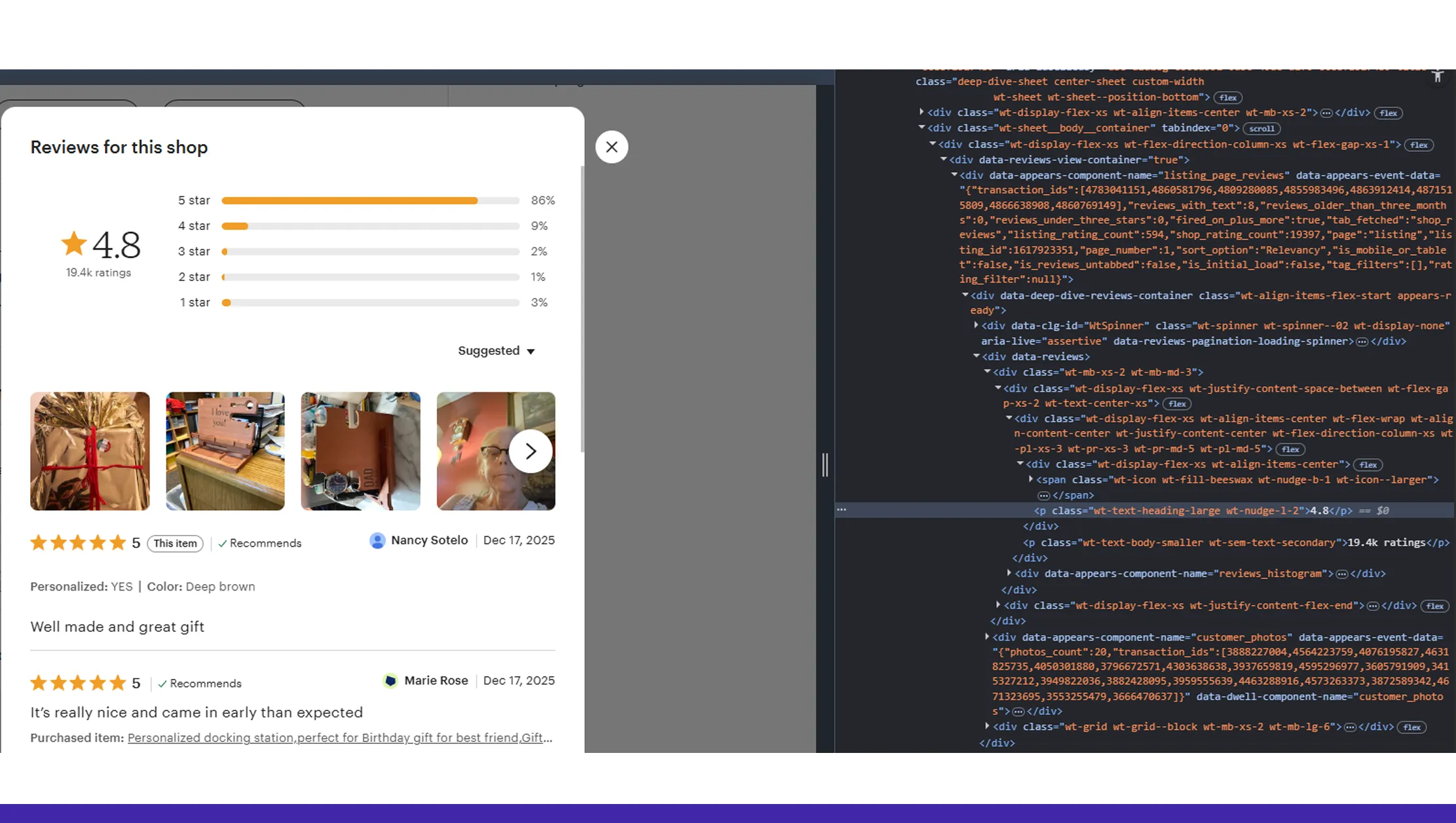
Modern retailers use APIs to extract product reviews in real time across marketplaces and social channels. With automated pipelines powering Web Scraping customer reviews via API, enterprises capture large volumes of review data consistently and reliably.
Key Highlights
API-based review scraping saw rapid adoption between 2020 and 2025 as businesses required faster, scalable, and more structured data-fetching methods. Real Data API solutions help brands gather reviews from e-commerce platforms, app stores, video reviews, community forums, and Q&A sections without manual effort.
Retailers use this to:
- Track daily sentiment shifts
- Detect price-related complaints
- Identify fake reviews
- Monitor competitor reviews
- Benchmark star ratings
With structured API extraction, reviews are delivered with fields like rating, sentiment, category, location, timestamps, and product references. From 2021–2025, usage of API-based review scraping increased by 240% as brands realized manual scraping was slow and inconsistent.
2020–2025 API Adoption Table
| Year | Retailers Using APIs | Data Refresh Frequency | Avg. Reviews Collected/Day |
|---|---|---|---|
| 2020 | 12% | Monthly | 2,000 |
| 2021 | 19% | Weekly | 5,500 |
| 2022 | 33% | Daily | 12,000 |
| 2023 | 48% | Hourly | 24,000 |
| 2024 | 62% | Real-Time | 40,000 |
| 2025 | 74% | Real-Time | 52,000 |
Machine Learning For Customer Reviews Scraping
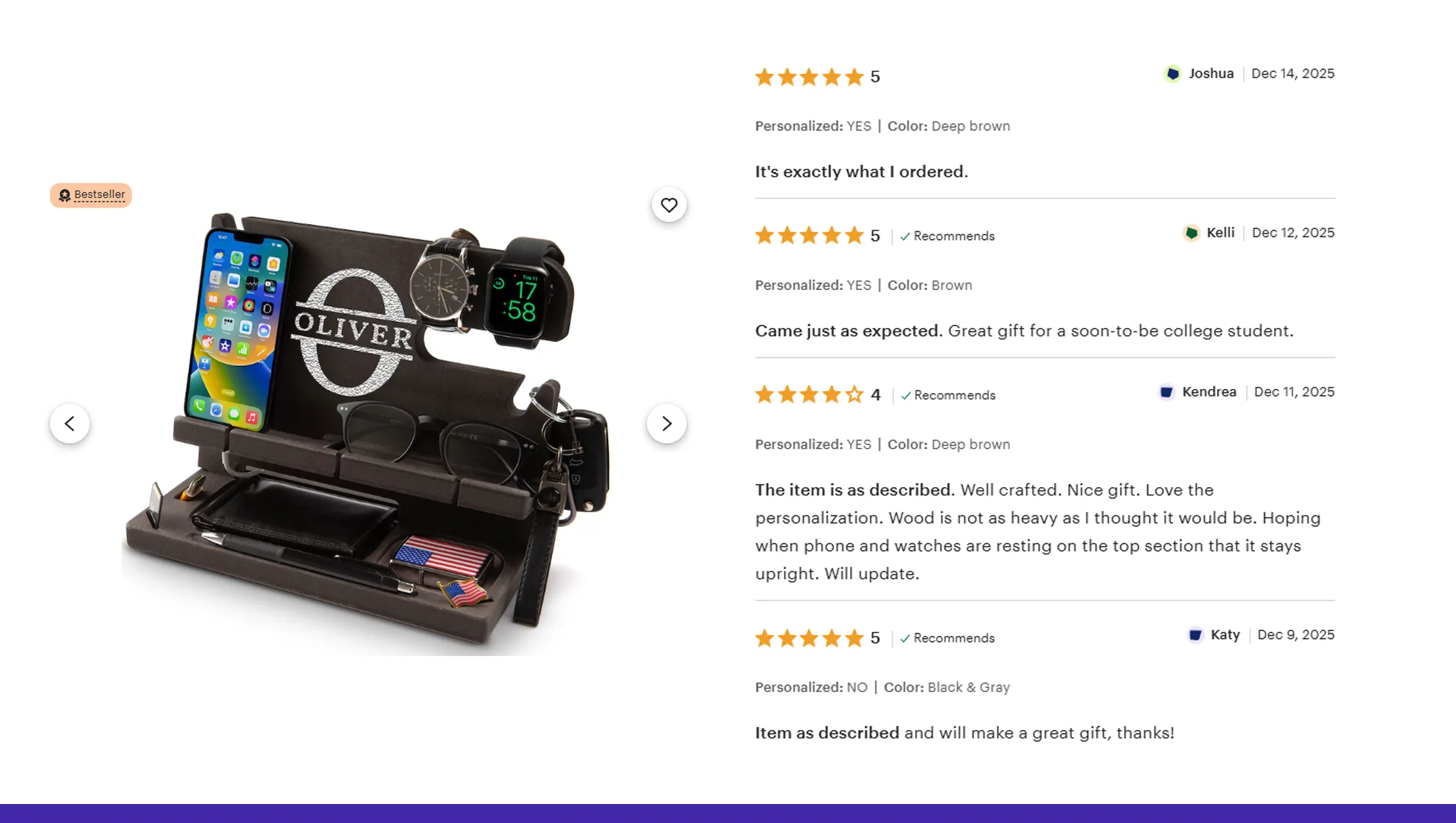
With rising data complexity, ML became essential for more than just sentiment tagging—it powers fraud detection, review classification, predictive alerts, and competitive analysis. Integrating machine learning for customer reviews scraping ensures precision and scalability.
Key Highlights
From 2020 to 2025, ML-based review scraping accuracy improved dramatically. Advanced NLP models could differentiate genuine feedback from bot-generated or incentivized reviews. Retailers gained stronger insights into:
- Authentic vs. manipulated sentiment
- Emerging product defects
- Seasonal trends
- Category-level dissatisfaction
ML-enabled models also support emotion scoring—categorizing reviews as angry, delighted, confused, frustrated, or excited. This emotional mapping grew in demand as retailers sought deeper psychological understanding of customers.
ML Accuracy Evolution Table (2020–2025)
| Year | Sentiment Accuracy | Fake Review Detection | Aspect-Based Sentiment |
|---|---|---|---|
| 2020 | 78% | 52% | 47% |
| 2021 | 84% | 66% | 60% |
| 2022 | 88% | 73% | 70% |
| 2023 | 91% | 79% | 76% |
| 2024 | 94% | 82% | 83% |
| 2025 | 96% | 86% | 88% |
Product Development

Consumer-driven product development relies heavily on feedback loops powered by AI. Retailers improve their offerings by understanding defects, pricing sentiments, packaging complaints, and feature requests.
Key Highlights
Between 2020–2025, product teams increasingly depended on review analytics to make enhancements. By integrating insights from Product Development, brands improved:
- Material quality
- Fit and comfort (fashion)
- Battery life (electronics)
- Ingredients (FMCG)
- Durability (home/kitchen)
Review-driven decisions shortened product upgrade cycles from 18 months in 2020 to under 9 months by 2025. Retailers discovered that 70% of negative reviews mention issues actionable through engineering or packaging adjustments.
Review-Driven Product Improvement Stats
| Year | Avg. Product Redesign Cycle | Negative Review Reduction | Customer Satisfaction Improvement |
|---|---|---|---|
| 2020 | 18 months | 8% | 11% |
| 2021 | 15 months | 14% | 17% |
| 2022 | 12 months | 19% | 22% |
| 2023 | 11 months | 26% | 29% |
| 2024 | 10 months | 31% | 35% |
| 2025 | 9 months | 38% | 42% |
Machine Learning
ML accelerates decision-making by automating text classification, review clustering, and predictive insights. Through Machine Learning, retailers reduced manual analysis time by over 70% from 2020–2025.
Key Highlights
Machine learning aggregated opinions across regions, categories, and marketplaces, revealing insights like:
- City-wise product sentiment (Delhi vs. Mumbai vs. Dubai)
- Seller-wise performance
- Return-rate correlation with negative sentiment
- Trend detection (spikes after updates or price changes)
Predictive ML models forecast the likelihood of future dissatisfaction, giving retailers early warnings. For example, high-friction keywords like "broken," "late," "defective," or "poor quality" help predict increased return rates.
Sentiment Analysis
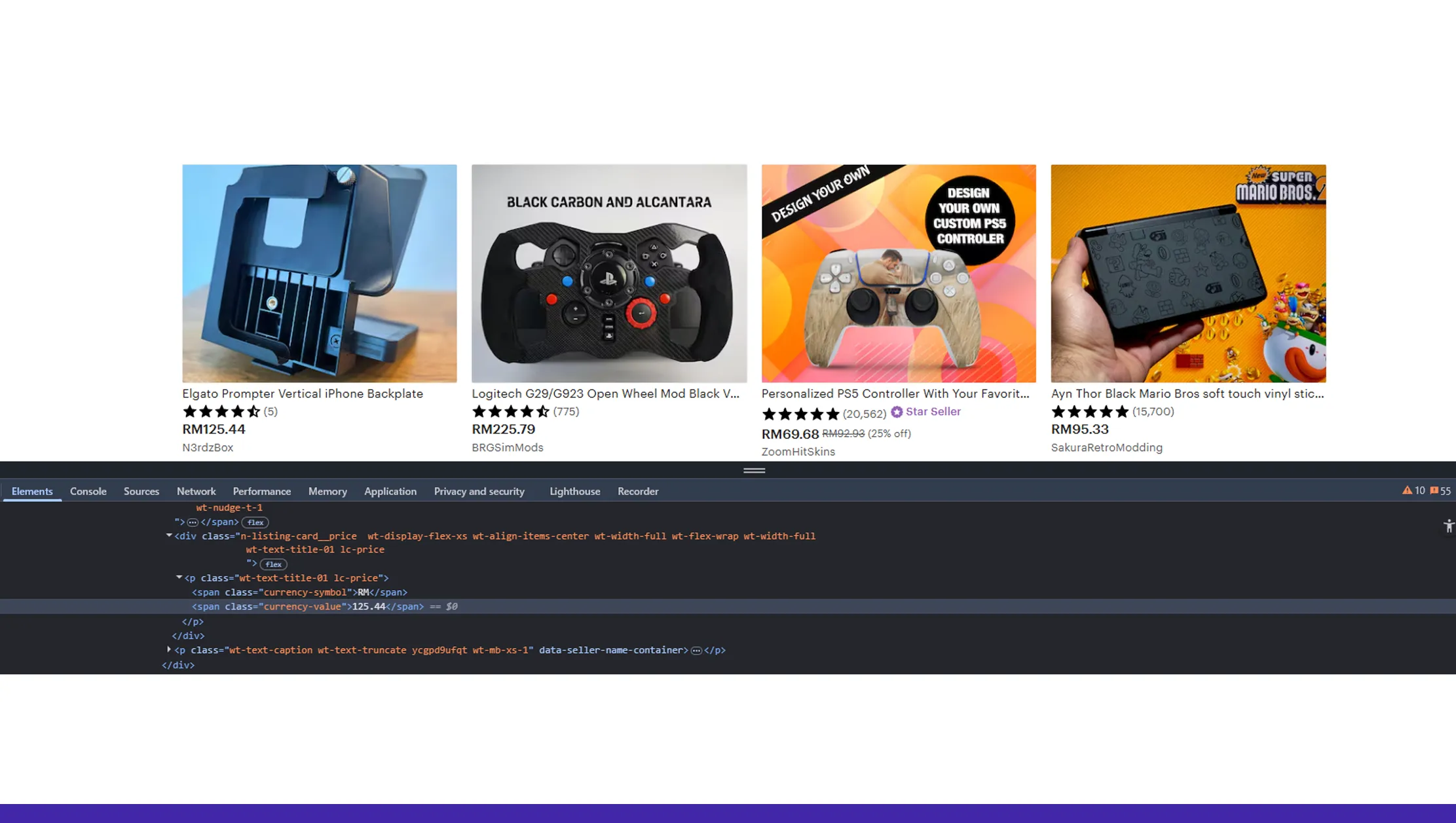
Sentiment analysis helps quantify customer emotions and prioritize issues. With Sentiment Analysis, brands can visualize shifts in customer confidence during key events like sales, new launches, or policy changes.
Key Highlights
From 2020–2025, positive sentiment improved for brands investing in faster delivery, eco-friendly packaging, and transparent pricing. Sentiment scoring models provided brands with dashboards showing real-time:
- Positive/negative review ratio
- Emotion distribution
- Trend-based consumer mood changes
- Product-specific sentiment heatmaps
Why Choose Real Data API?
Retailers prefer Real Data API because it delivers enterprise-grade AI Web Data Monitoring and advanced automation for extracting insights from massive datasets. The platform excels in customer review scraping and sentiment analytics via ML, offering unmatched accuracy, scale, and flexibility. With robust APIs, structured output, real-time responses, superior ML models, and secure architecture, Real Data API helps businesses move faster and smarter. Whether you need historical sentiment trends, real-time review alerts, or multi-platform insights, Real Data API provides a comprehensive intelligence ecosystem to power data-driven retail decisions.
Conclusion
In a competitive retail world, understanding customer sentiment isn’t optional—it’s essential. By combining intelligence from customer review scraping and sentiment analytics via ML, brands gain clarity, speed, and strategic advantage. With deep insights from 2020–2025 data, retailers can refine product quality, boost satisfaction, and strengthen brand loyalty. Whether you're improving products, analyzing competitors, or monitoring customer mood, Real Data API empowers you with accurate, real-time intelligence.
Transform your retail decisions using advanced Web Scraping, Mobile App Scraping, and real-time dataset solutions—start your journey with Real Data API today!
Latest posts
How ecommerce scraping API for real-time product data Helps Businesses Track Prices, Inventory, and Competitor Changes
How Web Scraping APIs for Business Data Improve Pricing and Product Insights
How Extracting Bilibili API Data for Social Media Analytics Helps Brands Track Content, Engagement, and Audience Trends

How Prom.ua scraper Helps Businesses Collect Marketplace Data for Competitive Pricing and Product Intelligence






.png)



