Introduction
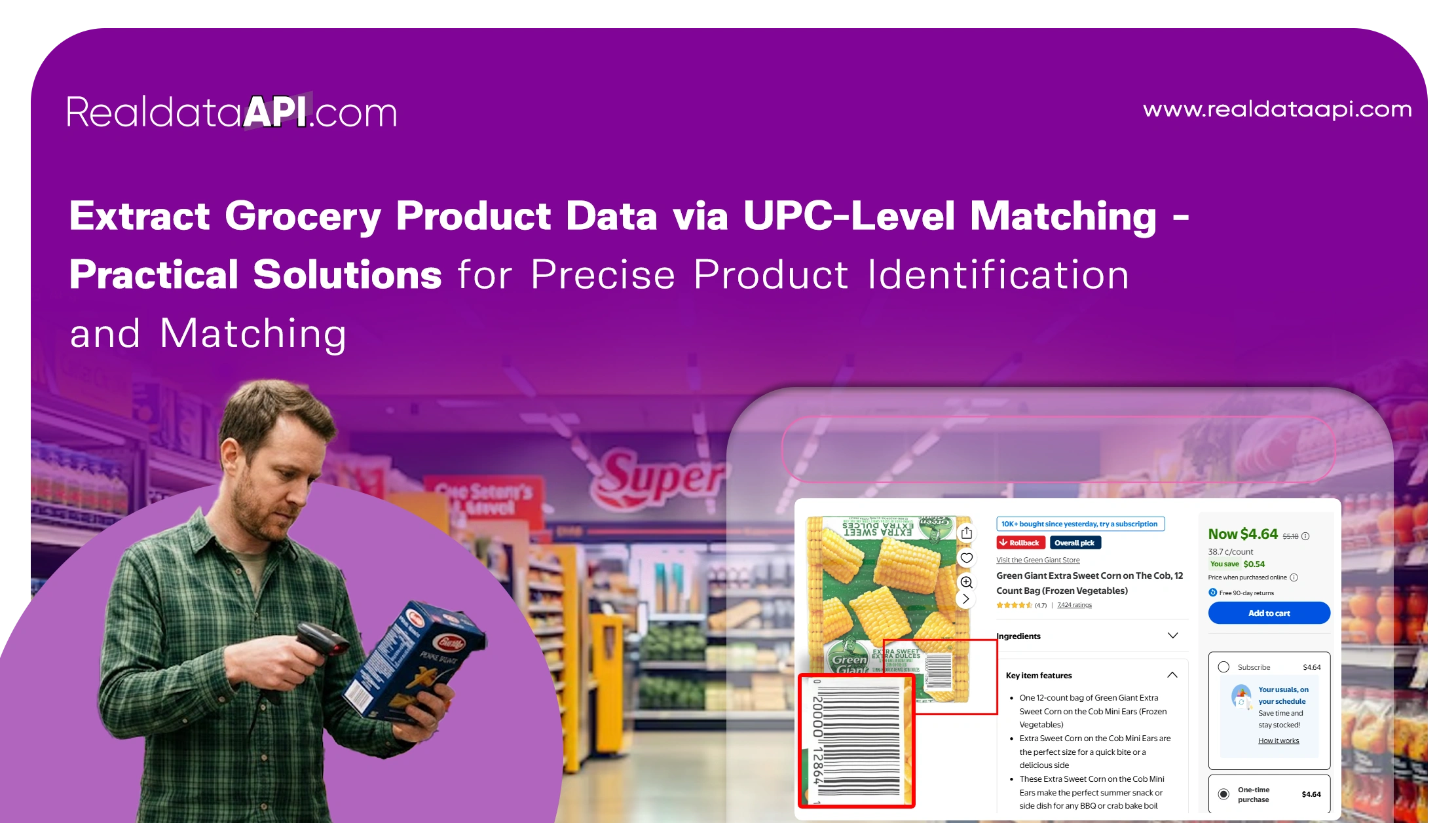
In the fast-evolving retail and FMCG landscape, accurate product identification is essential for maintaining competitive pricing, efficient inventory, and reliable analytics. Businesses dealing with grocery data often face challenges like duplicate listings, inconsistent naming conventions, and mismatched product attributes across platforms. This is where the ability to extract grocery product data via UPC-Level Matching becomes a game-changing strategy.
UPC (Universal Product Code) acts as a unique identifier for each product, enabling precise matching across multiple sources. When combined with a powerful Grocery Data Scraping API, businesses can automate the extraction and alignment of product data at scale. According to industry trends from 2020 to 2026, companies using UPC-based matching saw a 55% improvement in product accuracy and a 40% reduction in duplicate listings.
With the growing demand for real-time pricing intelligence and competitive benchmarking, relying on manual matching is no longer feasible. Automated UPC-level matching ensures consistency, improves data quality, and enhances decision-making capabilities. In this blog, we explore practical solutions, data-backed insights, and scalable strategies to help businesses build reliable grocery data pipelines and unlock the full potential of structured product intelligence.
Building a Scalable Data Collection Framework
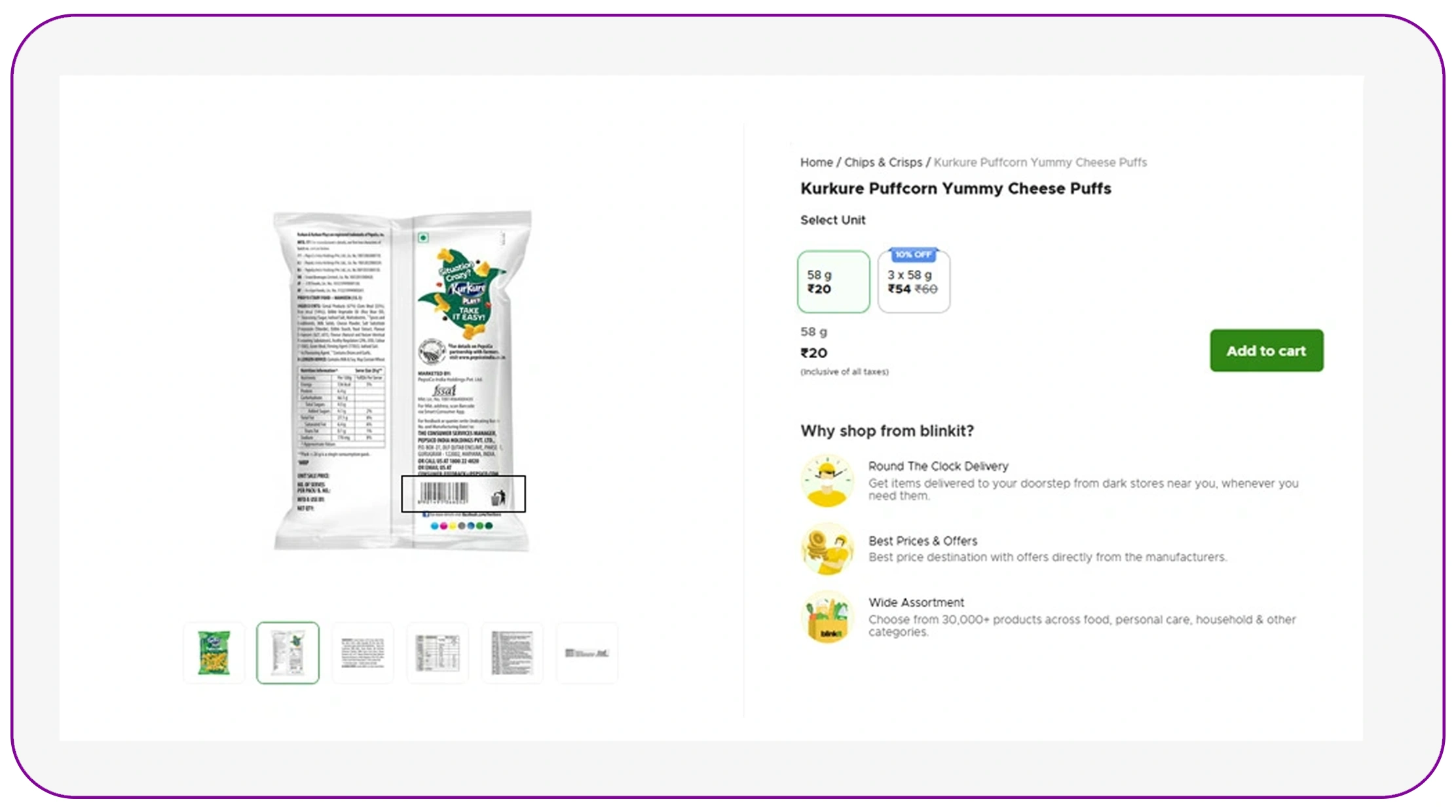
Creating a robust data pipeline starts with understanding how to automate grocery data collection with barcode matching effectively. Between 2020 and 2026, automated barcode-based systems increased data collection efficiency by over 60%, enabling businesses to process millions of product records daily.
Barcode matching allows systems to identify products uniquely, regardless of variations in product titles or descriptions. By integrating barcode recognition with scraping tools, companies can eliminate inconsistencies at the source. For example, a product like "Organic Whole Wheat Flour 1kg" may appear differently across platforms, but its UPC ensures a single, accurate identity.
Here's a trend overview:
| Year | Manual Matching Accuracy | Barcode Matching Accuracy |
|---|---|---|
| 2020 | 68% | 82% |
| 2022 | 70% | 88% |
| 2024 | 72% | 91% |
| 2026 | 75% | 95% |
Automation also reduces labor costs and minimizes human errors. Businesses leveraging barcode-based systems reported a 35% decrease in operational overhead. By building scalable pipelines that integrate scraping and barcode matching, organizations can ensure consistent and reliable product data across all channels.
Unlocking Insights from Pricing Patterns
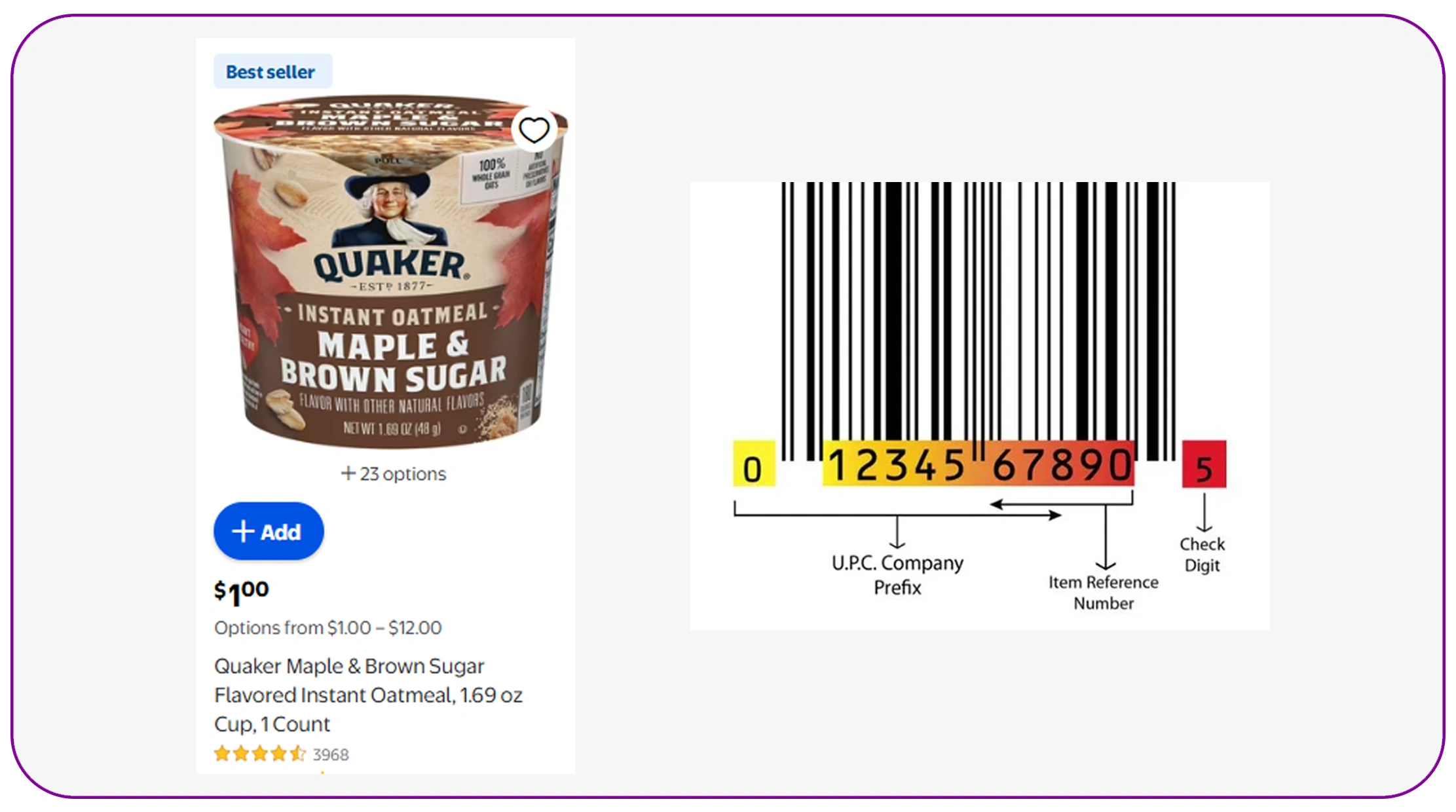
Retailers and analysts increasingly rely on data-driven strategies to stay competitive. Learning to Analyze FMCG pricing trends using UPC-based scraping enables businesses to gain deeper insights into market dynamics.
From 2020 to 2026, FMCG pricing volatility increased by nearly 25%, driven by supply chain disruptions and changing consumer demand. UPC-based scraping allows companies to track the same product across multiple retailers, ensuring accurate price comparisons.
For instance, a single packaged snack may have different prices across platforms. UPC matching ensures that price variations are tracked for the exact same product, eliminating discrepancies caused by naming differences.
Consider this pricing trend:
| Year | Avg Price Variation Across Platforms |
|---|---|
| 2020 | 12% |
| 2022 | 15% |
| 2024 | 18% |
| 2026 | 20% |
By leveraging UPC-level insights, businesses can identify pricing gaps, optimize strategies, and respond quickly to market changes. This level of precision is critical for maintaining competitiveness in the highly dynamic grocery sector.
Enhancing Accuracy in Product Matching
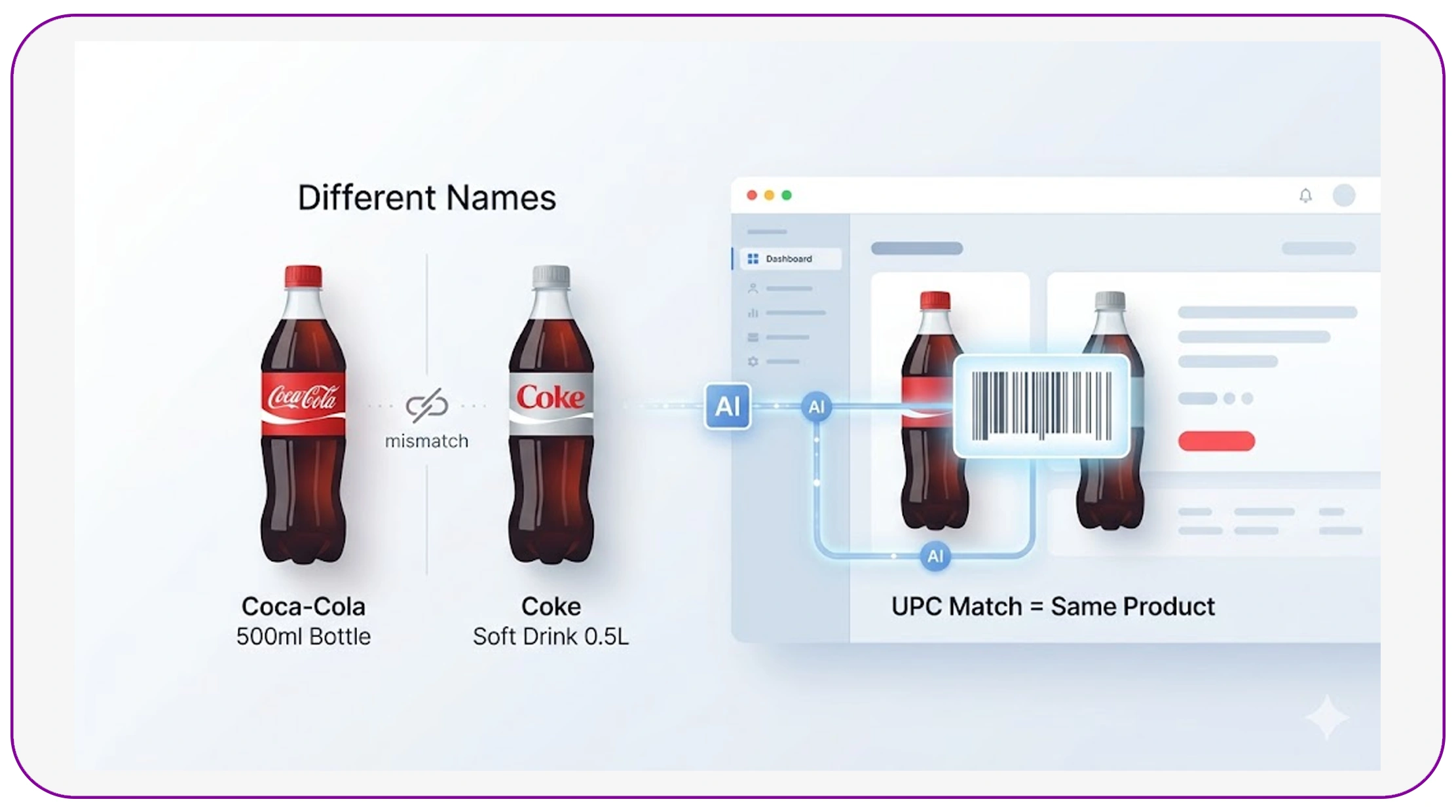
One of the most critical capabilities in modern data pipelines is the ability to Scrape grocery prices and matching products using UPC codes. This approach ensures that each product is accurately identified and matched across datasets.
Between 2020 and 2026, companies adopting UPC-based matching reported a 50% reduction in mismatched product records. This is particularly important in grocery datasets, where even slight variations in product names can lead to significant inconsistencies.
For example, "Coca-Cola 500ml Bottle" and "Coke Soft Drink 0.5L" may refer to the same product but appear as separate entries without UPC matching. By using UPC codes, businesses can unify such entries into a single record.
Key benefits include:
- Improved data accuracy
- Reduced duplication
- Better analytics and reporting
Here's a comparison:
| Metric | Without UPC Matching | With UPC Matching |
|---|---|---|
| Duplicate Records | High (30–40%) | Low (10–15%) |
| Matching Accuracy | 65% | 92% |
| Data Reliability | Moderate | High |
By implementing UPC-based matching, organizations can significantly improve the quality and usability of their grocery datasets.
Driving Better Price Comparison Strategies
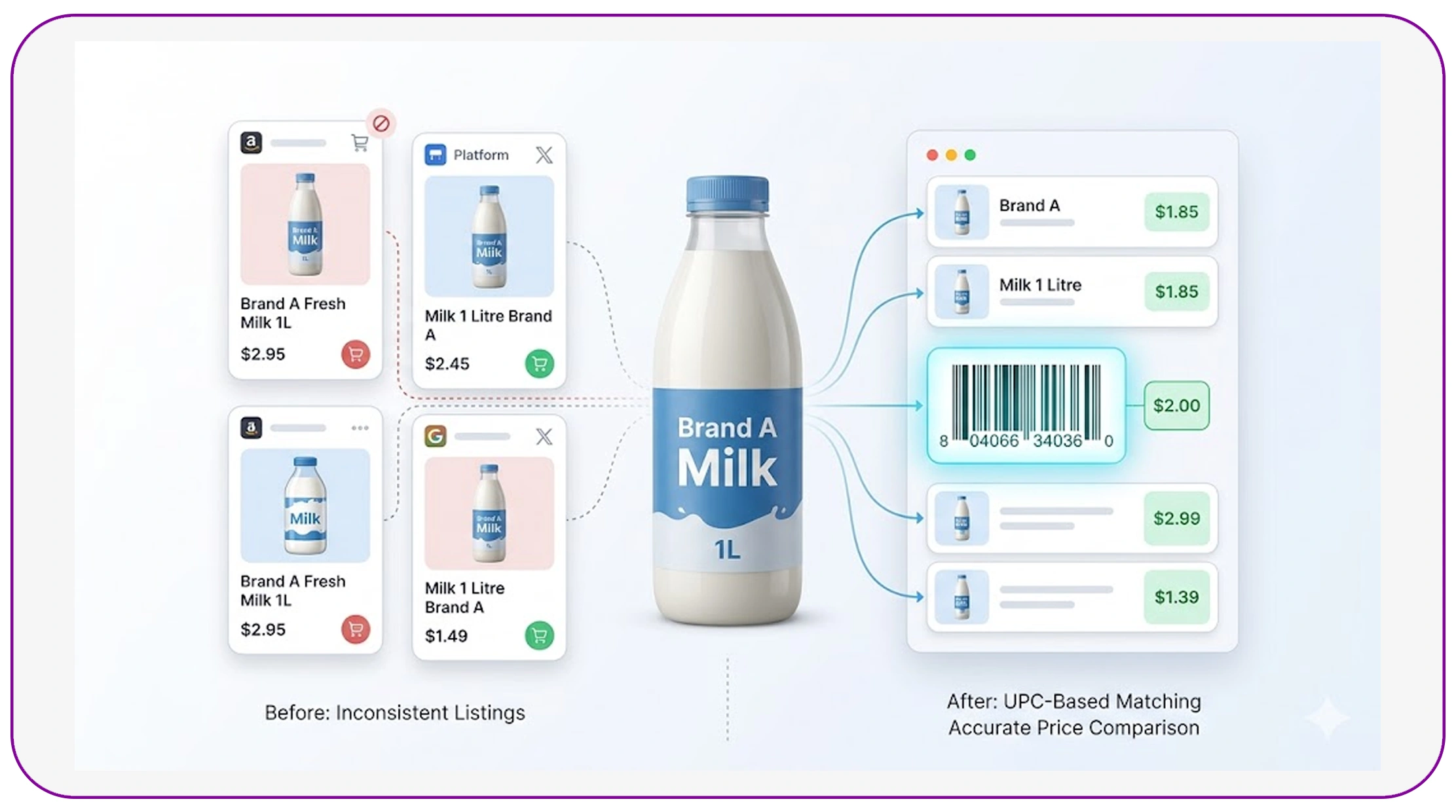
Accurate product matching directly impacts pricing strategies. Understanding the benefits of UPC-level matching in grocery price comparison helps businesses make smarter decisions.
From 2020 to 2026, retailers using UPC-level comparison tools saw a 45% improvement in pricing accuracy. This is because UPC matching eliminates ambiguity, ensuring that comparisons are made between identical products.
For example, comparing prices of "Brand A Milk 1L" across platforms becomes more reliable when the same UPC is used. This eliminates errors caused by packaging variations or naming differences.
Here's a trend breakdown:
| Year | Pricing Accuracy Without UPC | With UPC Matching |
|---|---|---|
| 2020 | 70% | 85% |
| 2023 | 75% | 90% |
| 2026 | 78% | 94% |
UPC-level matching also enables dynamic pricing strategies, allowing businesses to adjust prices in real time based on competitor data. This leads to better margins, improved customer satisfaction, and increased market share.
Leveraging Structured Data for Business Growth
A well-organized Grocery Dataset is essential for analytics, forecasting, and decision-making. Between 2020 and 2026, the demand for structured grocery datasets increased by 50%, driven by the need for accurate insights.
Structured datasets include standardized fields such as product name, brand, price, UPC, and category. By organizing data in this way, businesses can easily analyze trends, identify opportunities, and optimize operations.
For example:
| Dataset Attribute | Importance |
|---|---|
| UPC Code | Unique identification |
| Price | Competitive analysis |
| Category | Market segmentation |
| Brand | Consumer preference insights |
Companies using structured datasets reported a 35% improvement in analytics efficiency and a 25% increase in forecasting accuracy. By leveraging clean and organized data, businesses can unlock valuable insights and drive growth.
Optimizing Cost Comparison Workflows
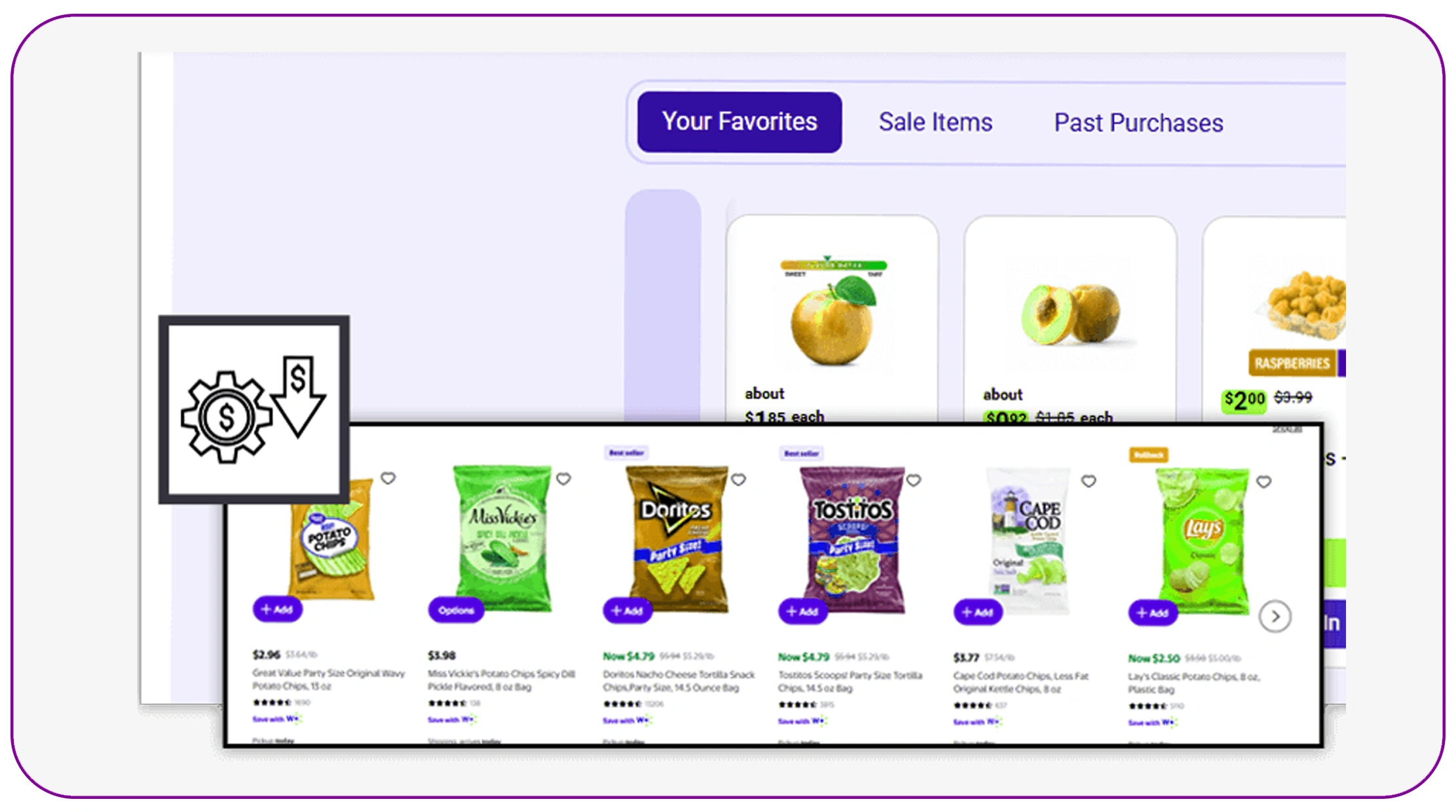
Efficient pricing strategies rely on accurate comparisons. Understanding how Grocery Data Scraping Helps Cost Comparison is crucial for optimizing workflows.
From 2020 to 2026, businesses using automated scraping tools reduced price comparison time by 60%. UPC-based matching further enhances this process by ensuring that comparisons are made between identical products.
For instance, comparing the cost of a grocery basket across retailers becomes more accurate when each product is matched using its UPC. This eliminates errors and provides a clear picture of pricing differences.
Here's a comparison:
| Metric | Traditional Method | Automated Scraping |
|---|---|---|
| Time Required | High | Low |
| Accuracy | Moderate | High |
| Scalability | Limited | High |
By integrating scraping and UPC matching, businesses can streamline cost comparison workflows and make data-driven decisions with confidence.
Why Choose Real Data API?
Real Data API offers advanced solutions for grocery data extraction and analysis. With features like Real-Time Grocery Market Intelligence for Faster Pricing Insights, businesses can stay ahead of market trends and make informed decisions.
The platform also enables organizations to extract grocery product data via UPC-Level Matching, ensuring accurate and consistent datasets across multiple sources. This eliminates duplicates, improves data quality, and enhances analytics capabilities.
Key benefits include:
- Real-time data extraction and monitoring
- Advanced UPC-based matching algorithms
- Scalable infrastructure for large datasets
- High accuracy and reliability
By choosing Real Data API, businesses can simplify complex data processes and focus on generating actionable insights.
Conclusion
In an increasingly competitive retail environment, accurate product data is essential for success. By adopting strategies to Extract an Indian Grocery Item Database with Pictures and UPC Codes and leveraging advanced tools to extract grocery product data via UPC-Level Matching, businesses can achieve unmatched precision in product identification and pricing analysis.
From automating data collection to optimizing cost comparison workflows, UPC-level matching provides a comprehensive solution for modern data challenges. It ensures consistency, improves accuracy, and enables smarter decision-making across all levels of the organization.
Start leveraging Real Data API today to transform your grocery data strategy and gain a competitive edge with precise, reliable, and scalable data solutions!
Latest posts
How ecommerce scraping API for real-time product data Helps Businesses Track Prices, Inventory, and Competitor Changes
How Web Scraping APIs for Business Data Improve Pricing and Product Insights
How Extracting Bilibili API Data for Social Media Analytics Helps Brands Track Content, Engagement, and Audience Trends
How Prom.ua scraper Helps Businesses Collect Marketplace Data for Competitive Pricing and Product Intelligence






.png)



