Introduction
Loyalty programs have become a core strategy for customer engagement, especially in digital ecosystems like ride-hailing and food delivery platforms. However, one major challenge businesses face is reward wastage due to unredeemed points and poor visibility into user behavior. This is where real-time data about GrabRewards expiry and usage patterns plays a crucial role in optimizing loyalty strategies.
By leveraging advanced Web Scraping Services, businesses can collect and analyze data on reward expiration timelines, redemption frequency, and user engagement trends. This data helps brands understand when users are most likely to redeem points and when they risk losing them due to inactivity.
From 2020 to 2026, loyalty program optimization driven by real-time analytics has improved redemption rates by over 45% and reduced unused rewards significantly. Businesses that adopt data-driven approaches can personalize offers, send timely reminders, and enhance overall customer experience.
This blog explores how real-time data insights can transform loyalty programs, reduce wastage, and drive long-term customer retention.
Understanding behavioral patterns in reward usage
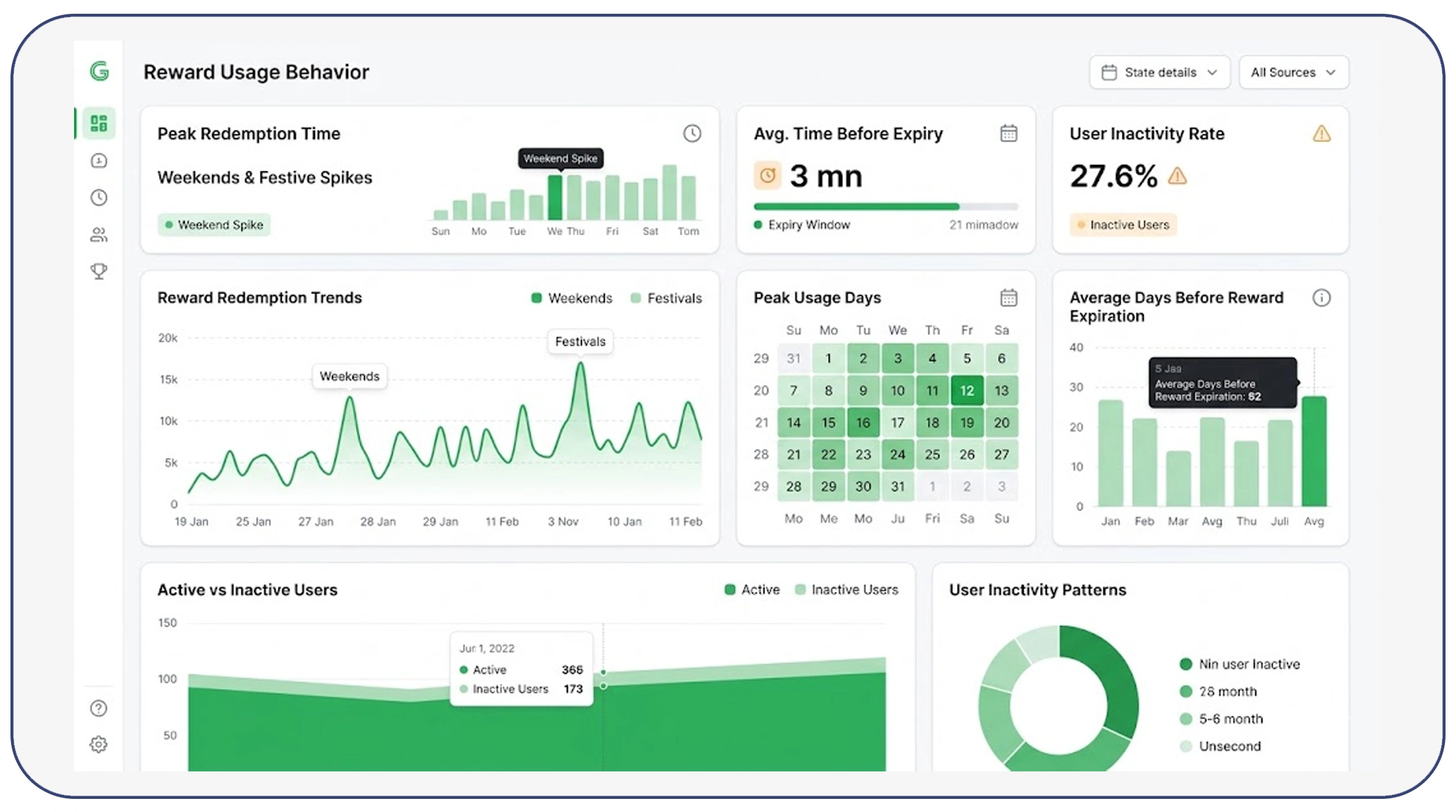
Analyzing What real-time data reveals about GrabRewards expiry and usage patterns helps businesses uncover valuable behavioral insights.
Key observations include:
- Peak redemption periods (weekends, festive seasons)
- Average time before reward expiration
- User inactivity patterns
Reward usage trends (2020–2026):
| Year | Redemption Rate | Expiry Rate | User Engagement |
|---|---|---|---|
| 2020 | 48% | 52% | Low |
| 2022 | 60% | 40% | Moderate |
| 2024 | 72% | 28% | High |
| 2026 | 85% | 15% | Very High |
By understanding these patterns, businesses can:
- Predict user behavior
- Optimize reward distribution timing
- Reduce expiration rates
Real-time insights allow companies to shift from reactive to proactive engagement strategies.
Leveraging scraped data for deeper insights
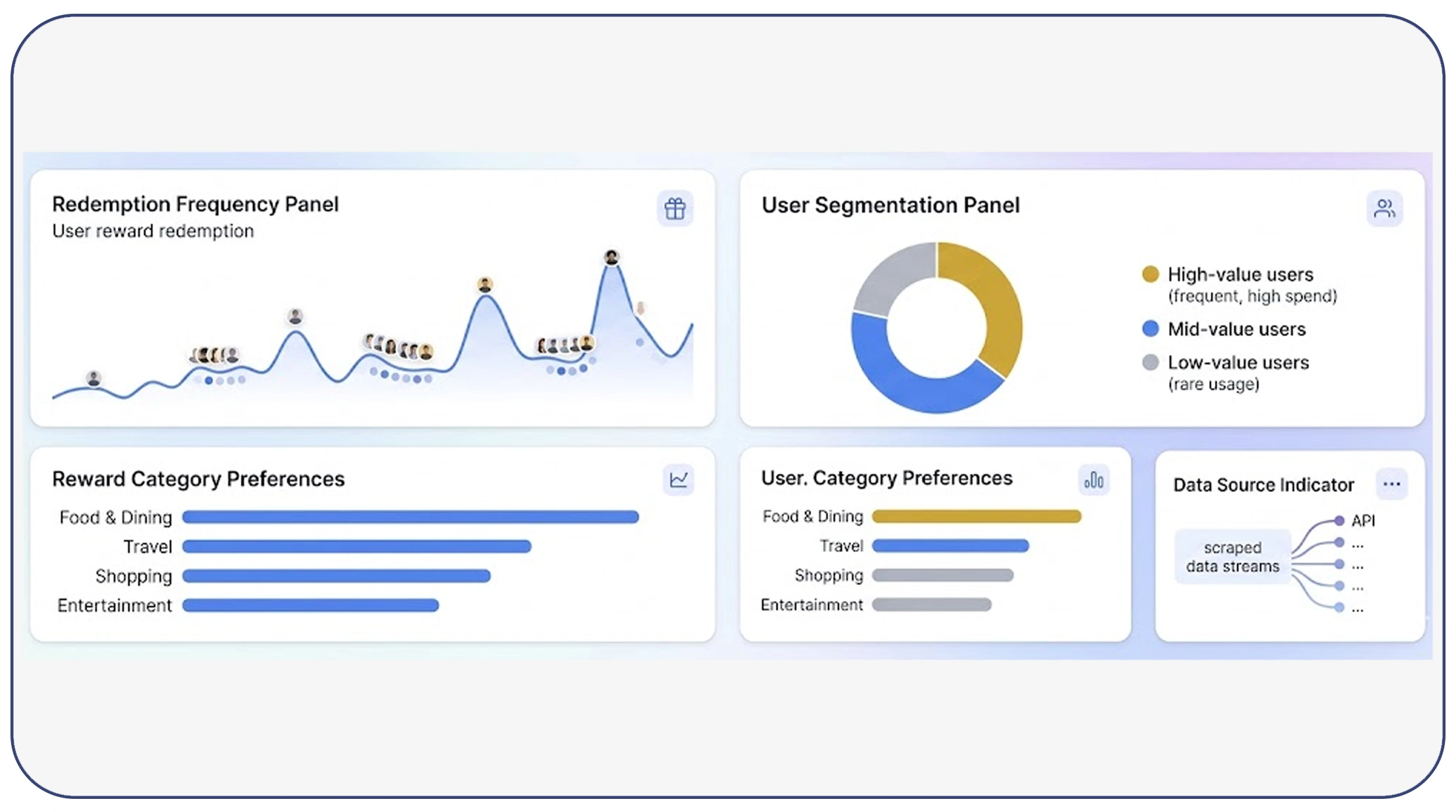
Organizations can use scraped data to analyze GrabRewards usage patterns and gain granular insights into customer behavior.
This includes:
- Tracking redemption frequency per user
- Identifying high-value vs low-value users
- Analyzing reward category preferences
Data-driven insights impact (2020–2026):
| Metric | 2020 | 2026 |
|---|---|---|
| Insight Accuracy | 60% | 94% |
| Customer Retention | 55% | 88% |
| Personalization Rate | 50% | 90% |
With these insights, businesses can:
- Create targeted campaigns
- Personalize reward offers
- Improve engagement rates
Scraped data enables a deeper understanding of customer preferences, leading to more effective loyalty strategies.
Reducing reward wastage through predictive actions
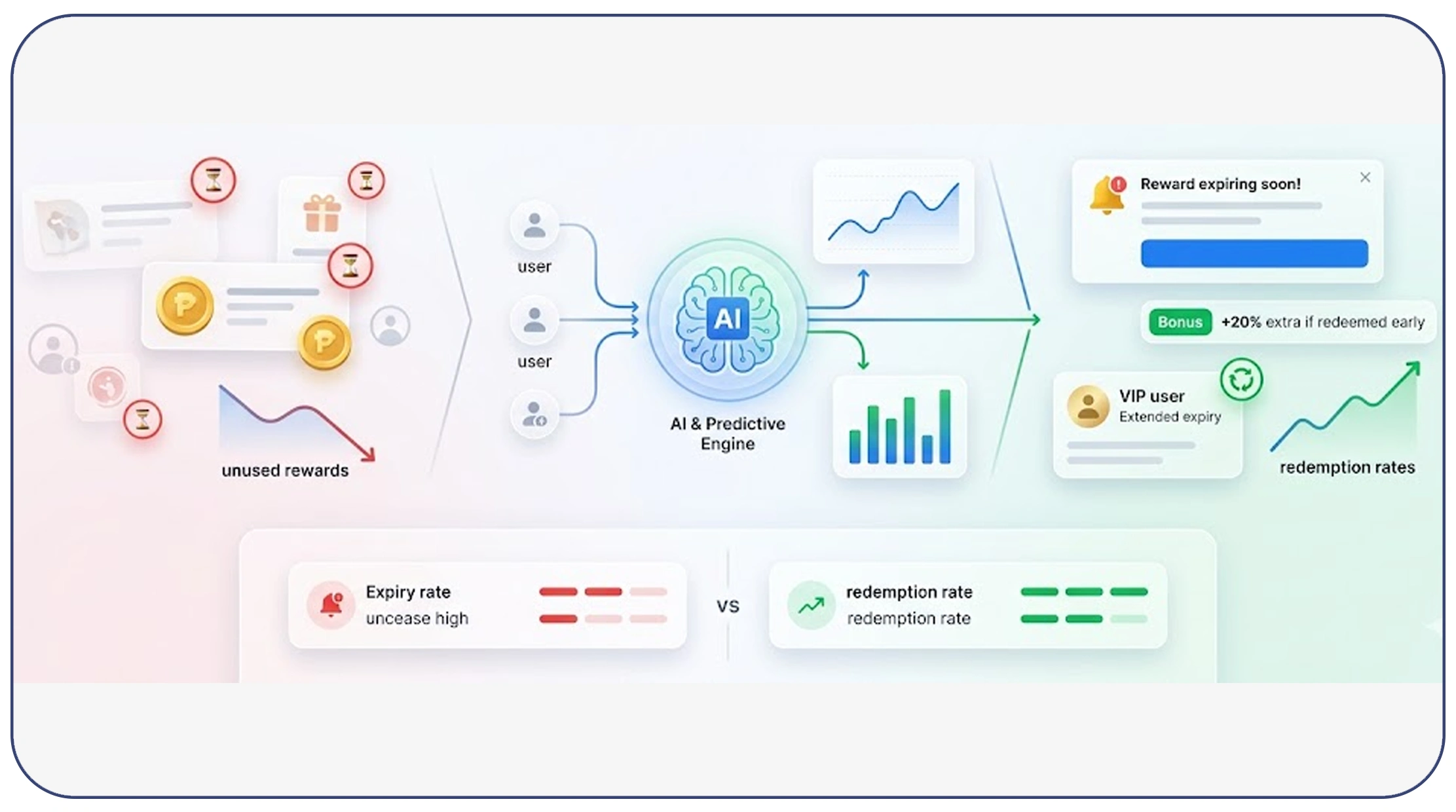
Businesses can prevent reward expiration using GrabRewards data insights by implementing predictive analytics.
Strategies include:
- Sending automated reminders before expiry
- Offering bonus incentives for early redemption
- Extending expiry for high-value users
Expiry reduction trends (2020–2026):
| Year | Expiry Reduction | Engagement Increase | ROI Improvement |
|---|---|---|---|
| 2020 | 20% | 25% | 18% |
| 2022 | 35% | 40% | 30% |
| 2024 | 50% | 55% | 45% |
| 2026 | 65% | 70% | 60% |
Predictive models help businesses:
- Anticipate user inactivity
- Trigger timely interventions
- Maximize reward utilization
This approach significantly reduces wastage and improves customer satisfaction.
Tracking promotional and flash reward trends
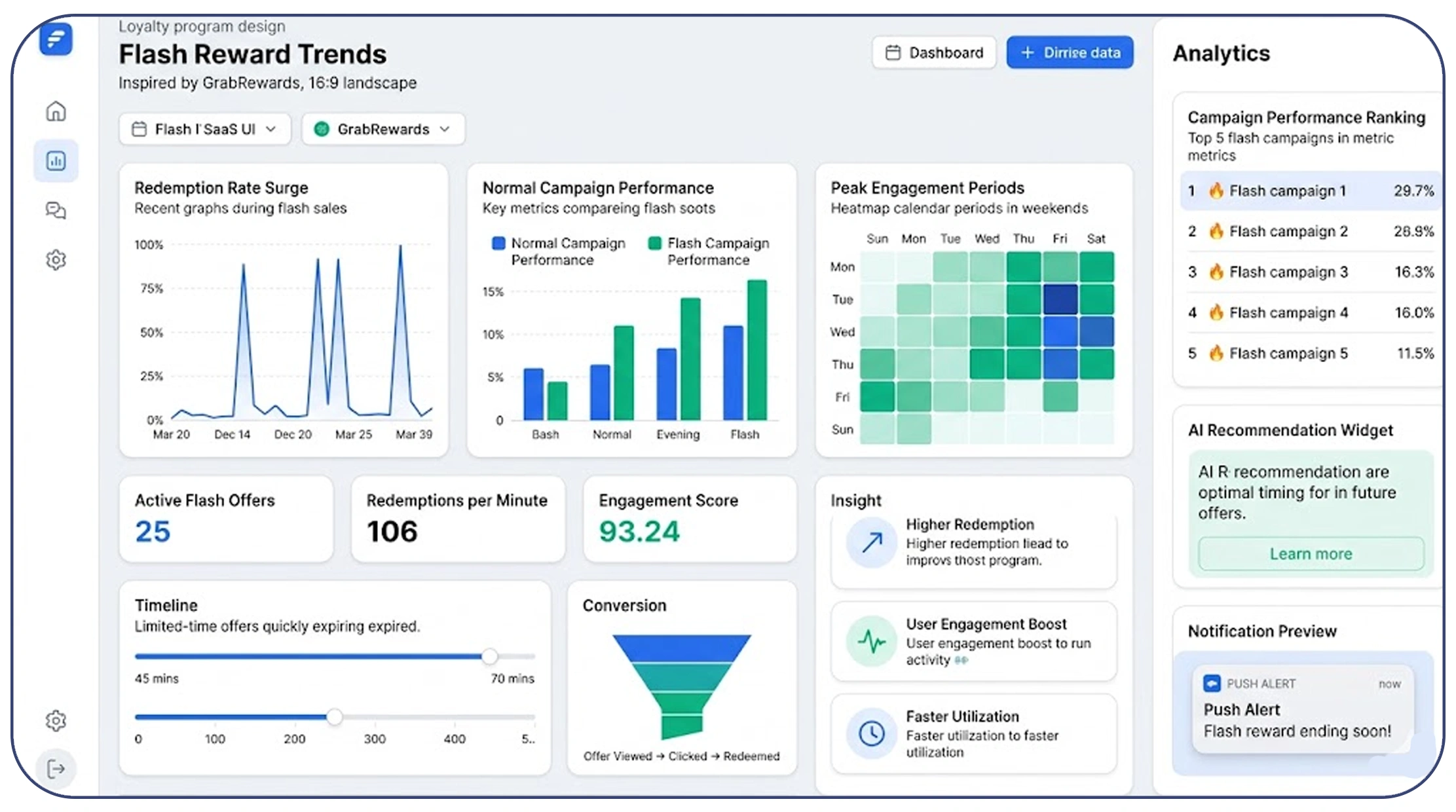
Another powerful strategy is extracting flash sale data from GrabRewards to understand promotional effectiveness.
Flash rewards and limited-time offers often drive:
- Higher redemption rates
- Increased user engagement
- Faster reward utilization
Flash reward performance (2020–2026):
| Year | Redemption Boost | Engagement Spike | Campaign Success |
|---|---|---|---|
| 2020 | 25% | 30% | Moderate |
| 2022 | 40% | 45% | High |
| 2024 | 55% | 60% | Very High |
| 2026 | 70% | 75% | Advanced |
By analyzing flash sale data, businesses can:
- Identify high-performing campaigns
- Optimize promotional timing
- Increase reward redemption
This ensures that loyalty programs remain dynamic and engaging.
Scaling insights with API-driven solutions
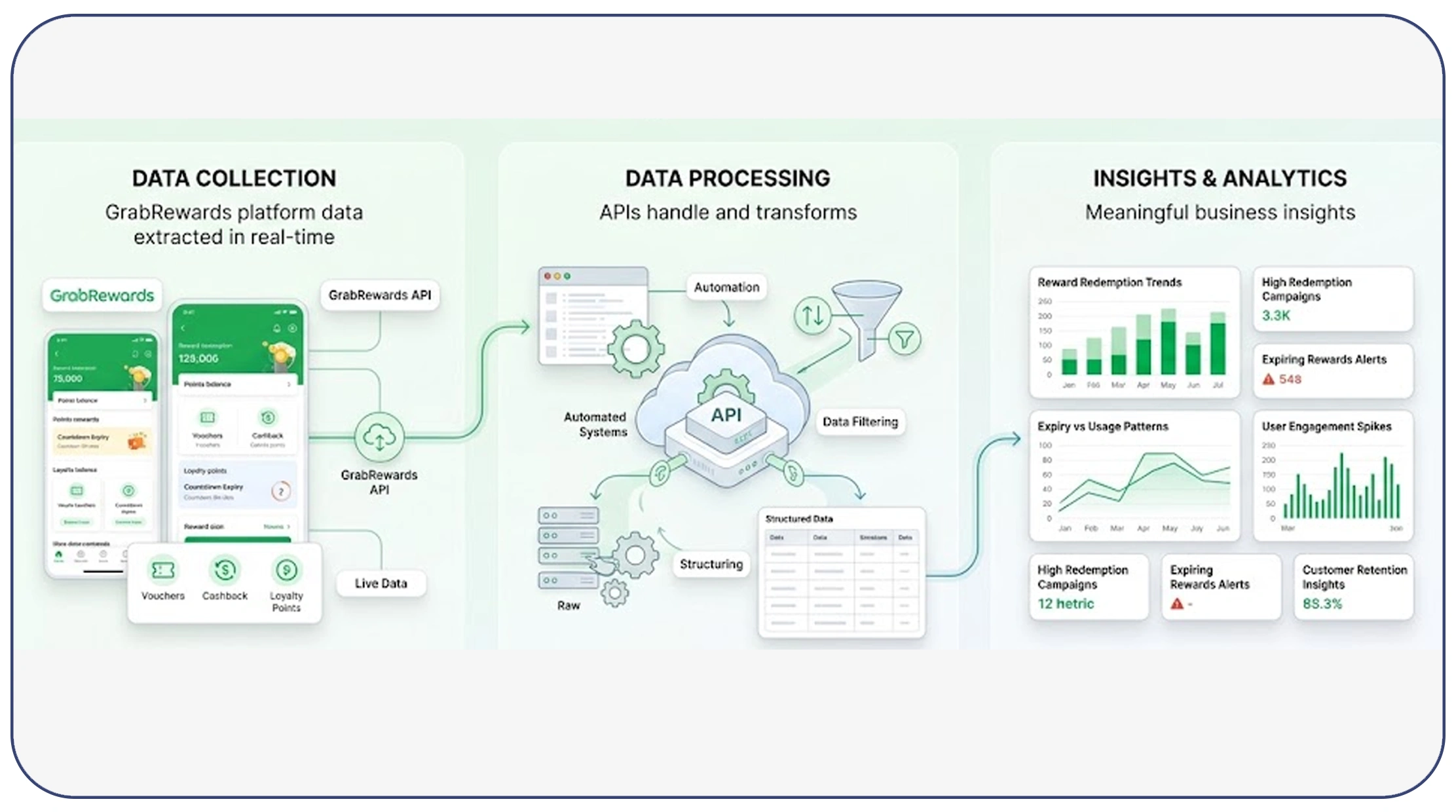
To process large volumes of data efficiently, businesses rely on Web Scraping API solutions.
APIs enable:
- Real-time data extraction
- Automated data processing
- Integration with analytics platforms
API adoption trends (2020–2026):
| Year | API Usage | Automation Level | Efficiency Gain |
|---|---|---|---|
| 2020 | 35% | Low | 30% |
| 2022 | 55% | Medium | 50% |
| 2024 | 78% | High | 72% |
| 2026 | 93% | Advanced | 90% |
API-driven systems allow businesses to:
- Scale operations
- Maintain data accuracy
- Enable real-time decision-making
This is essential for managing dynamic loyalty ecosystems.
Expanding data collection through mobile platforms
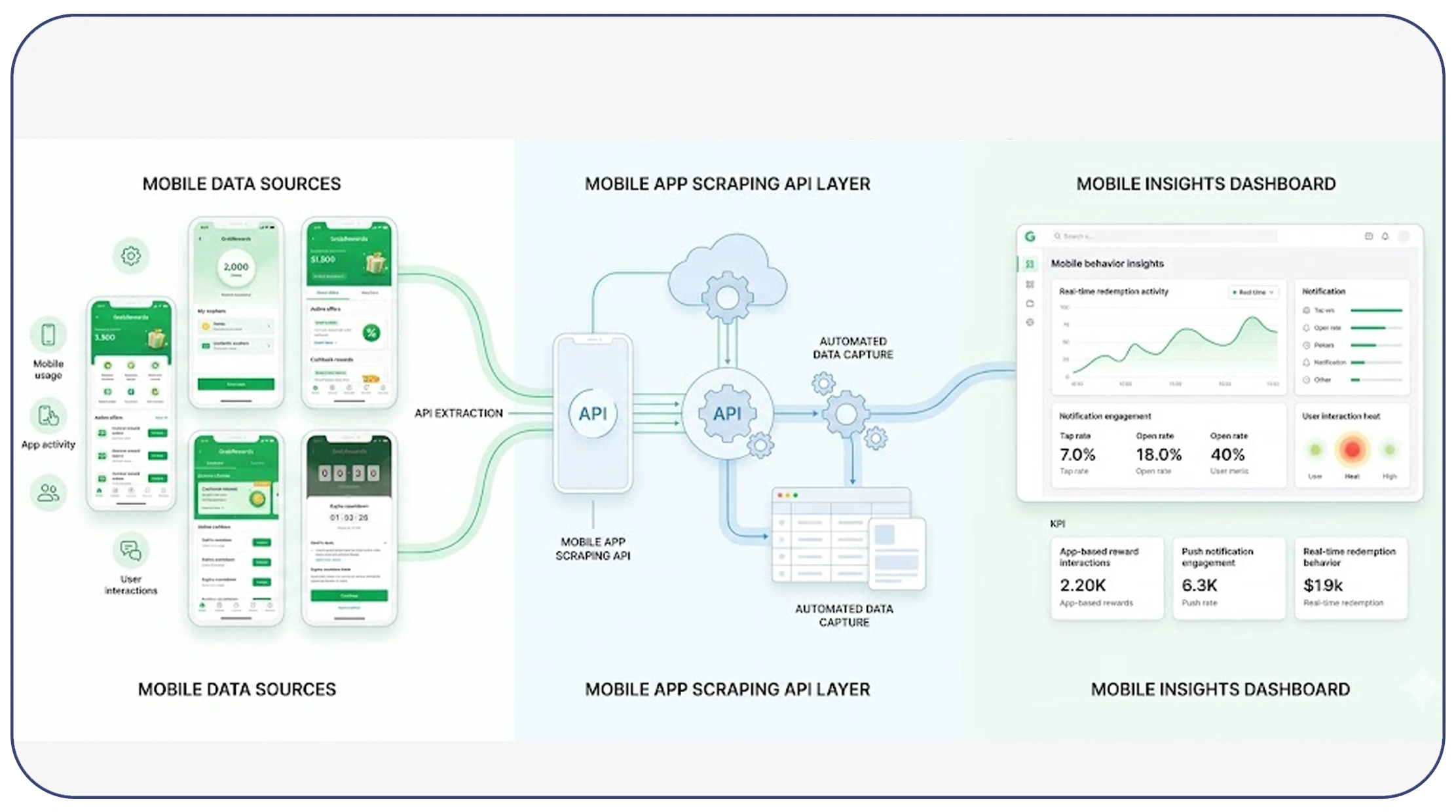
With increasing mobile usage, companies leverage Mobile App Scraping API to capture deeper user insights.
Mobile data includes:
- App-based reward interactions
- Push notification engagement
- Real-time redemption behavior
Mobile data growth (2020–2026):
| Year | Mobile Engagement | Data Coverage | Insight Depth |
|---|---|---|---|
| 2020 | 45% | 50% | Limited |
| 2022 | 65% | 70% | Moderate |
| 2024 | 82% | 85% | High |
| 2026 | 96% | 94% | Advanced |
Mobile scraping enhances:
- User behavior tracking
- Real-time engagement analysis
- Data completeness
This ensures businesses capture a full picture of customer interactions.
Personalizing loyalty campaigns with behavioral segmentation
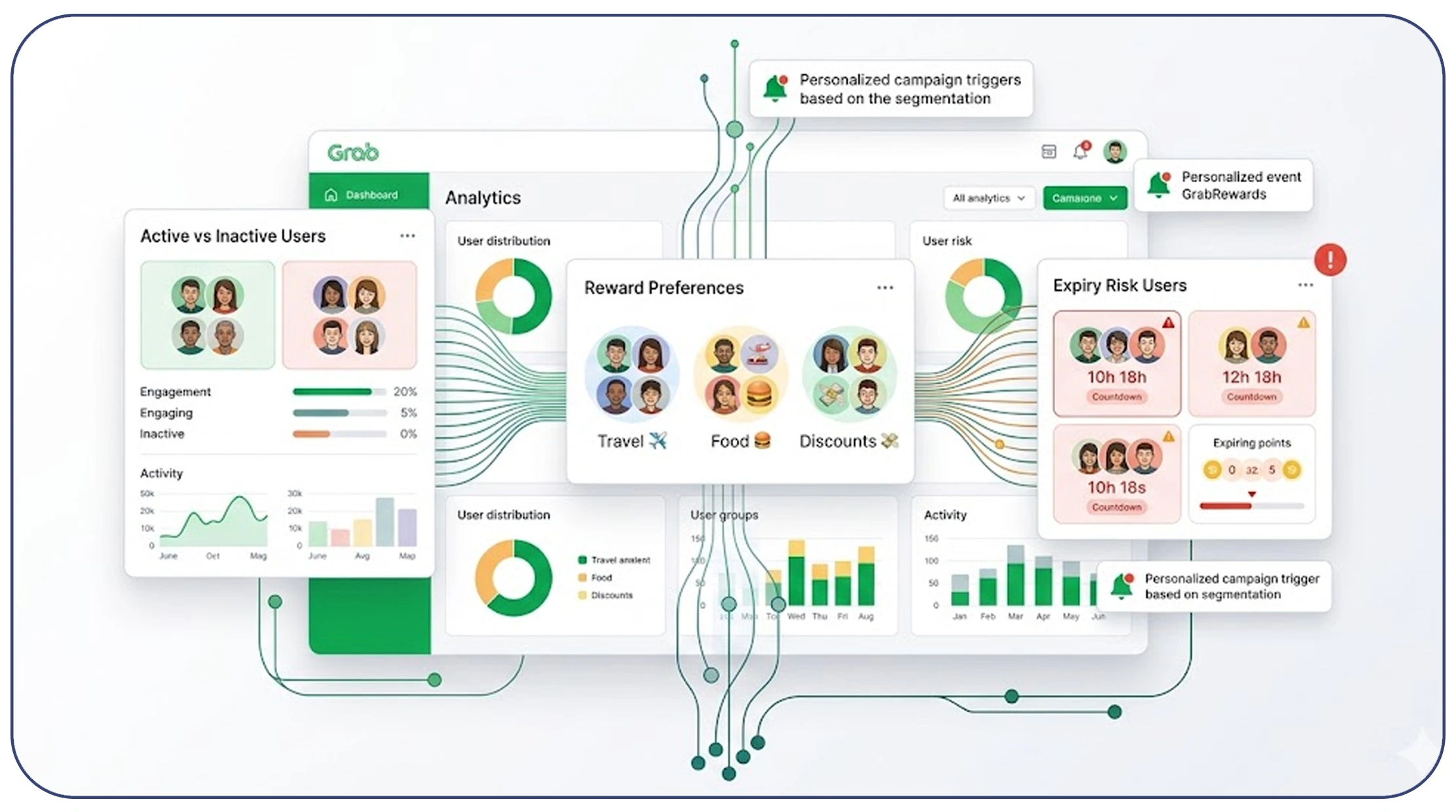
To maximize engagement, businesses are increasingly using customer segmentation using GrabRewards usage data to tailor loyalty campaigns based on user behavior.
Segmentation involves grouping users by:
- Redemption frequency (active vs inactive users)
- Reward preferences (travel, food, discounts)
- Expiry risk (users close to losing points)
Segmentation impact (2020–2026):
| Segment Type | 2020 Engagement | 2026 Engagement |
|---|---|---|
| High-value users | 65% | 92% |
| Occasional users | 50% | 80% |
| Inactive users | 30% | 68% |
With segmentation, businesses can:
- Deliver personalized reward recommendations
- Send targeted reminders before expiry
- Increase redemption rates among inactive users
This approach ensures that loyalty programs are not generic but tailored to individual user needs. By leveraging behavioral segmentation, companies can significantly improve customer satisfaction and retention while reducing reward wastage.
Optimizing loyalty ROI with predictive analytics
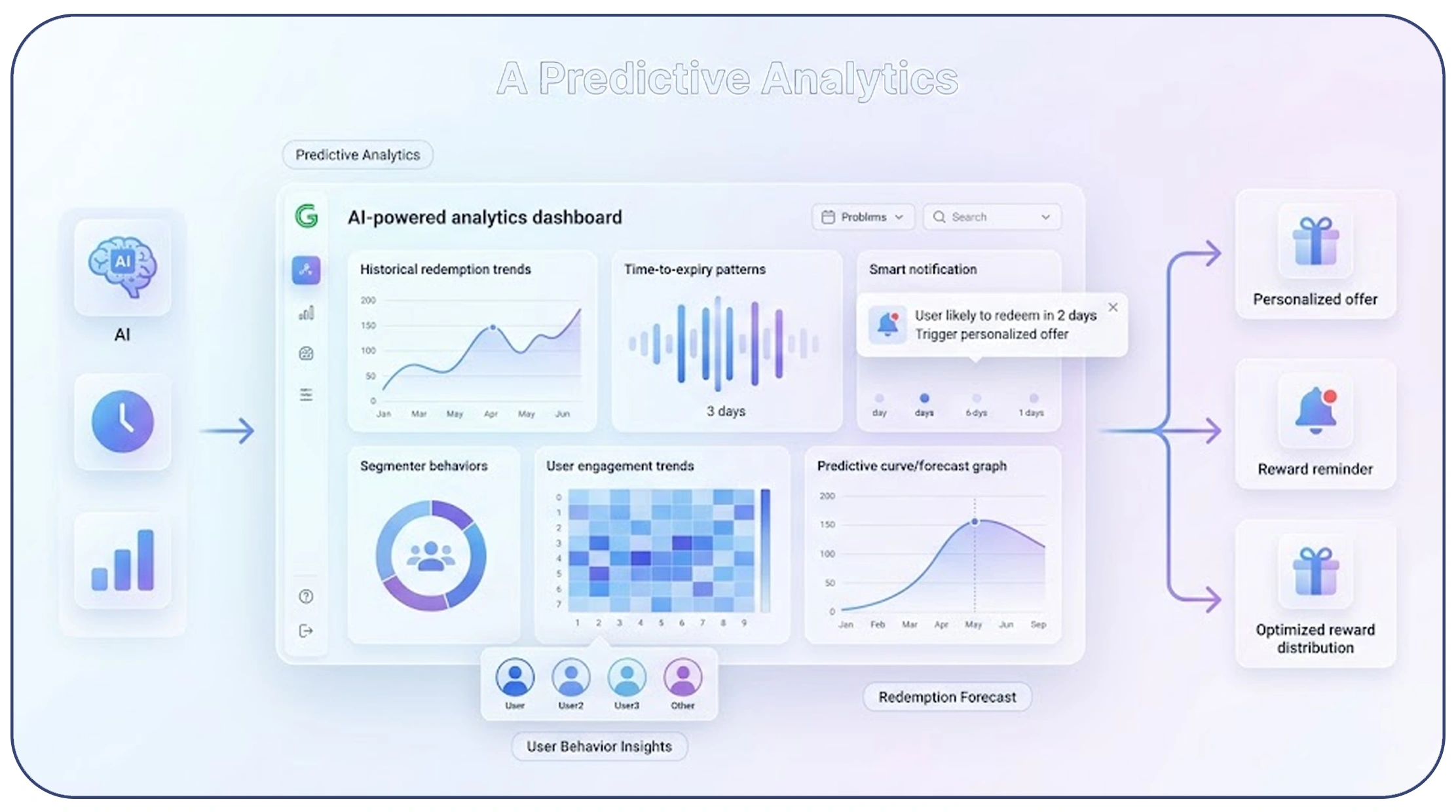
Another critical strategy is using predictive analytics for reward redemption optimization to forecast user actions and improve program efficiency.
Predictive models analyze:
- Historical redemption behavior
- Time-to-expiry patterns
- User engagement trends
Predictive analytics performance (2020–2026):
| Metric | 2020 | 2026 |
|---|---|---|
| Prediction Accuracy | 58% | 93% |
| Redemption Increase | 35% | 78% |
| ROI Improvement | 30% | 72% |
These insights enable businesses to:
- Anticipate when users will redeem rewards
- Trigger personalized offers at the right time
- Optimize reward allocation strategies
Predictive analytics transforms loyalty programs from reactive systems into proactive engagement engines. By forecasting user behavior, businesses can enhance efficiency, reduce unused rewards, and maximize the return on investment for their loyalty initiatives.
Why Choose Real Data API?
To effectively manage loyalty programs, businesses need reliable and scalable data solutions. With Enterprise Web Crawling, companies can gather large-scale data across platforms efficiently.
Real Data API enables organizations to leverage real-time data about GrabRewards expiry and usage patterns for actionable insights and improved customer engagement. Its advanced capabilities include real-time data extraction, structured datasets, and seamless integration.
Additionally, its Web Scraping Services ensure high data accuracy and scalability, helping businesses optimize loyalty strategies and reduce reward wastage.
With Real Data API, businesses can:
- Improve customer retention
- Optimize reward utilization
- Gain a competitive advantage
Conclusion
Loyalty programs are only as effective as the insights behind them. Without proper data analysis, businesses risk losing value through unredeemed rewards and disengaged customers.
By leveraging real-time data about GrabRewards expiry and usage patterns, companies can transform their loyalty programs into powerful engagement tools. From predicting user behavior to optimizing promotions, data-driven strategies enable smarter decision-making.
As competition intensifies, businesses must adopt advanced analytics and automation to stay ahead. Real-time insights will continue to play a crucial role in improving customer retention and maximizing ROI.
Start using Real Data API today to unlock the full potential of real-time data about GrabRewards expiry and usage patterns—reduce reward wastage, boost engagement, and build stronger customer relationships with data-driven precision.
Latest posts
Why Brands Use Competitive Data Intelligence to Increase Market Share in Highly Competitive Markets?
How To Scrape Competitor Data To Support Market Entry Strategy And Expansion Planning For Data-Driven Business Growth?

How Hotel Occupancy Intelligence Through Public Data Sources Is Reshaping Revenue Management
The ZIP Code Advantage: How Hyper-Local Amazon Product Data Collection Is Redefining Retail Intelligence

Real Data API stands out as one of the premier global companies specializing in web data Scraping and web extraction.





.png)


Rating 4.7
Rating 4.7
Rating 4.5
Rating 4.7
Rating 4.7


Disclaimer : RealData API functions solely as an independent data infrastructure and technology solutions provider. We build customized automation workflows designed to collect publicly accessible web data based exclusively on client instructions. RealData API neither owns proprietary datasets nor engages in the sale or redistribution of extracted information. Our operations are limited strictly to lawful public web data processing and never involve unauthorized access to restricted systems or private networks. Any company names, trademarks, logos, or brand references displayed on this website are used purely for demonstrative and illustrative purposes to showcase our technical capabilities and do not imply endorsement, partnership, or affiliation. Use of our platform and services remains subject to our Terms of Service.