
Introduction
In today's highly competitive retail and ecommerce landscape, pricing decisions can directly impact demand, revenue, and long-term profitability. Businesses that rely on static pricing models often struggle to respond to changing market conditions, competitor strategies, and shifting customer behavior. This is why many organizations now perform price elasticity analysis using scraped retail data to gain a deeper understanding of how price changes influence demand.
By leveraging an E-Commerce Data Scraping API, companies can collect large-scale, real-time data on competitor pricing, product availability, and promotional trends. This data becomes the foundation for building accurate elasticity models that measure how sensitive customers are to price fluctuations.
Between 2020 and 2026, the adoption of data-driven pricing strategies has grown significantly, with businesses reporting improved revenue optimization, reduced pricing errors, and stronger competitive positioning. Price elasticity analysis enables companies to identify optimal price points, detect overpricing or underpricing, and forecast demand more accurately.
This blog explores how scraped retail data can be used to build effective price elasticity models, helping businesses move from guesswork to precision-driven pricing strategies.
Understanding price-demand relationships through data
A strong pricing strategy begins with understanding how price changes affect demand. Businesses increasingly rely on Web scraping For price and demand relationship analysis to gather structured data across multiple retail platforms.
By collecting competitor prices, discounts, and product availability, companies can analyze how demand shifts in response to price movements. This data-driven approach has evolved significantly over the years.
Price-demand analysis trends (2020–2026):
| Year | Data Accuracy | Demand Prediction Accuracy |
|---|---|---|
| 2020 | 60% | 58% |
| 2022 | 72% | 70% |
| 2024 | 85% | 83% |
| 2026 | 94% | 91% |
Scraped data enables businesses to:
- Identify price-sensitive vs price-insensitive products
- Detect threshold pricing points
- Analyze competitor pricing impact on demand
By understanding these relationships, companies can optimize pricing strategies to maximize both sales volume and margins.
Tracking pricing changes and their impact on sales
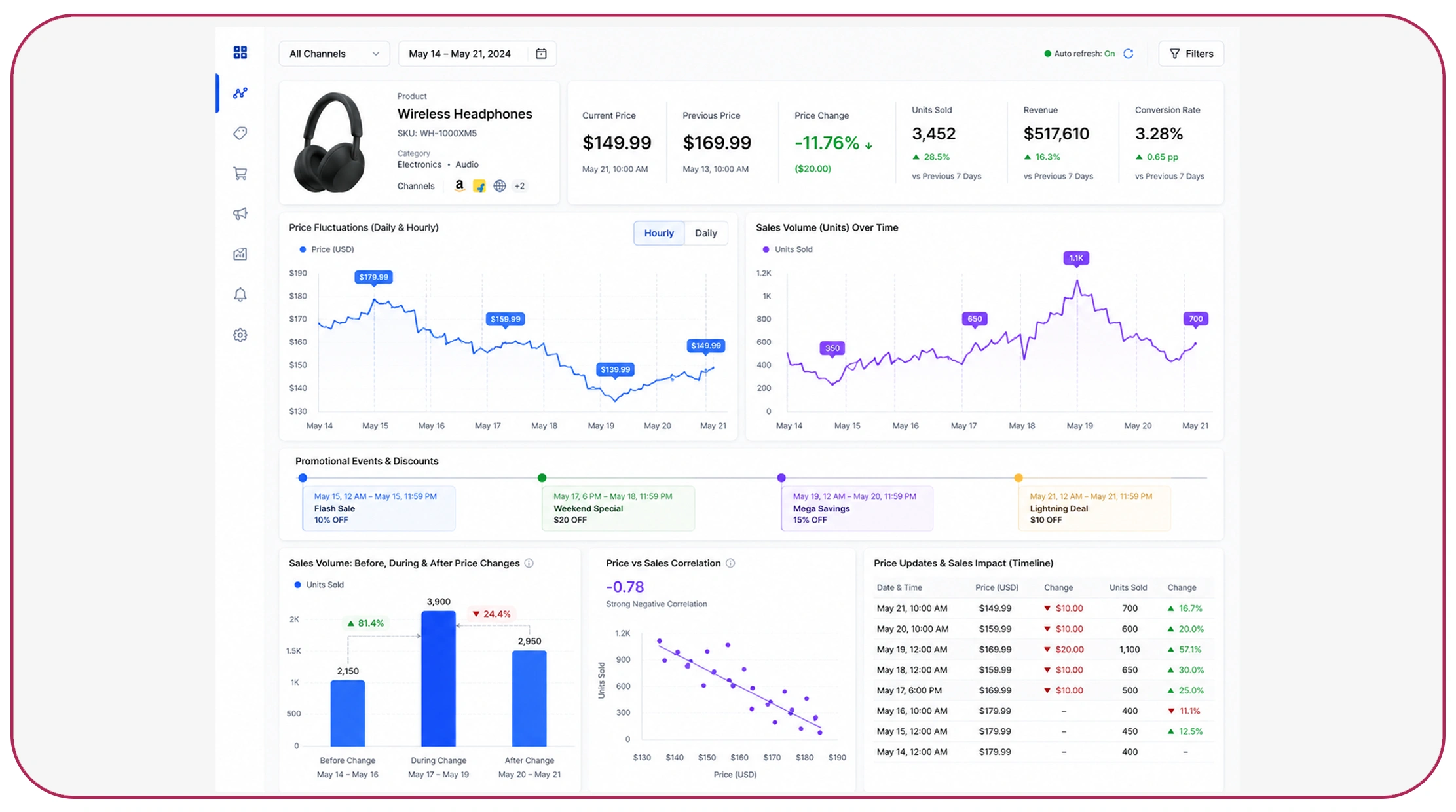
To build accurate elasticity models, businesses must continuously Scrape price changes and sales impact data across multiple channels.
This involves tracking:
- Daily or hourly price fluctuations
- Promotional campaigns and discounts
- Corresponding changes in sales volume
Sales impact analysis (2020–2026):
| Metric | 2020 | 2026 |
|---|---|---|
| Price Change Detection | 65% | 96% |
| Sales Impact Accuracy | 60% | 92% |
| Revenue Optimization | 12% | 30% |
For example:
- A 10% price drop may lead to a 20% increase in demand for price-sensitive products
- Premium products may show minimal demand change despite price fluctuations
This data helps businesses understand elasticity coefficients and adjust pricing strategies accordingly.
Building predictive models with real-time data
Modern pricing systems rely on real-time price elasticity modeling using retail datasets to forecast demand and optimize pricing decisions.
These models use machine learning algorithms and large-scale datasets collected through scraping tools.
Predictive modeling performance (2020–2026):
| Metric | 2020 | 2026 |
|---|---|---|
| Model Accuracy | 62% | 95% |
| Forecast Reliability | 58% | 93% |
| Decision Speed | Low | Real-time |
Key inputs for these models include:
- Historical pricing data
- Competitor price movements
- Customer purchase behavior
- Seasonal demand patterns
Real-time modeling allows businesses to simulate different pricing scenarios and predict outcomes before implementing changes.
Leveraging APIs for scalable elasticity analysis
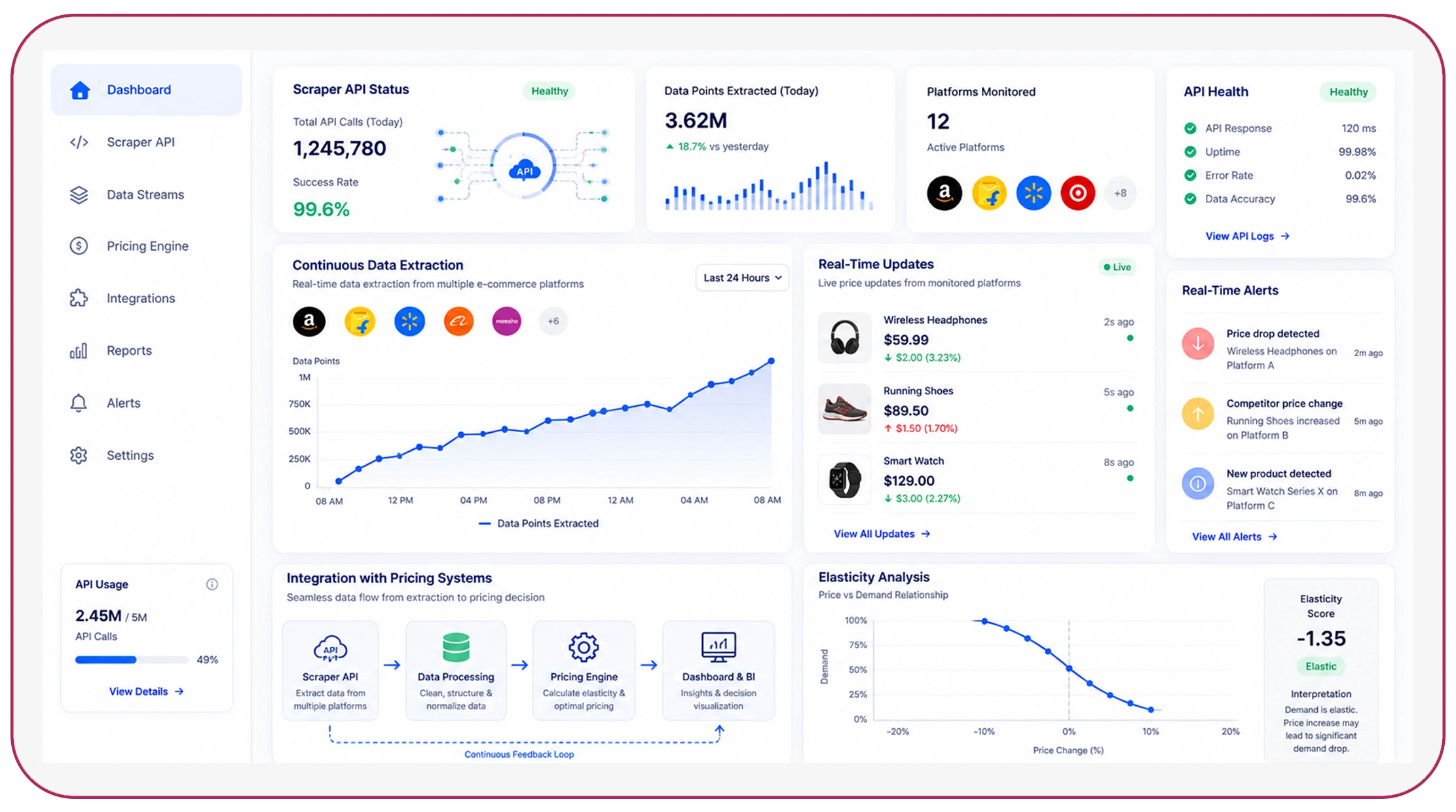
Scalability is essential for large ecommerce operations. Companies now use E-commerce pricing elasticity analysis via Scraper API to automate data collection and analysis.
APIs enable:
- Continuous data extraction from multiple platforms
- Integration with pricing systems and dashboards
- Real-time updates for decision-making
API adoption growth (2020–2026):
| Year | API Usage Rate | Data Volume Processed |
|---|---|---|
| 2020 | 35% | Medium |
| 2022 | 55% | High |
| 2024 | 75% | Very High |
| 2026 | 90% | Massive |
By automating data collection, businesses can focus on analysis and strategy rather than manual tracking.
Benchmarking competitors for pricing decisions
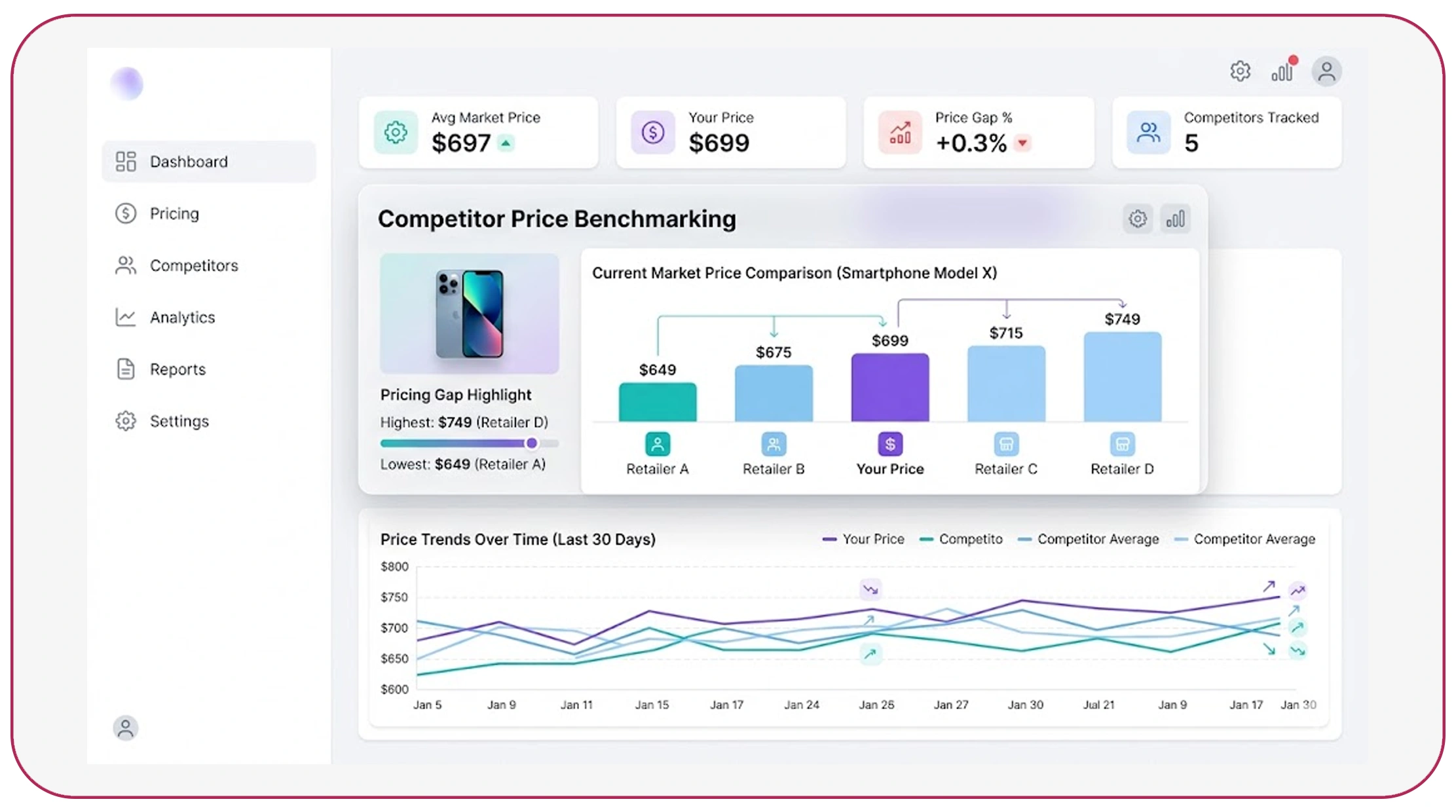
A critical component of elasticity analysis is Price Comparison, which helps businesses understand their position relative to competitors.
Through scraped data, companies can:
- Compare prices across multiple retailers
- Identify pricing gaps
- Adjust strategies based on competitor behavior
Competitive benchmarking trends (2020–2026):
| Metric | 2020 | 2026 |
|---|---|---|
| Price Visibility | 50% | 95% |
| Competitive Accuracy | 60% | 93% |
| Margin Optimization | 15% | 35% |
Price comparison helps businesses determine whether they are overpriced, underpriced, or competitively positioned.
Adapting pricing strategies dynamically
The ultimate goal of elasticity analysis is to enable Dynamic Pricing, where prices are adjusted in real time based on demand and market conditions.
Dynamic pricing impact (2020–2026):
| Metric | 2020 | 2026 |
|---|---|---|
| Revenue Growth | 10% | 28% |
| Pricing Efficiency | 65% | 92% |
| Customer Retention | 60% | 85% |
Dynamic pricing systems use elasticity insights to:
- Increase prices when demand is strong
- Offer discounts when demand drops
- Optimize pricing across different regions and segments
This ensures businesses remain competitive while maximizing profitability.
Why Choose Real Data API?
Building effective elasticity models requires accurate and real-time data. With Price Monitoring, businesses can track competitor pricing, discounts, and market trends continuously.
Using advanced data extraction capabilities, Real Data API enables companies to perform price elasticity analysis using scraped retail data at scale. It provides structured datasets, real-time updates, and seamless integration with analytics platforms.
By leveraging these capabilities, businesses can make smarter pricing decisions, reduce risks, and stay ahead of competitors in dynamic markets.
Conclusion
In a rapidly evolving retail environment, understanding price sensitivity is essential for long-term success. Businesses that rely on static pricing strategies risk losing revenue and market share.
By leveraging advanced data collection and analytics, companies can perform price elasticity analysis using scraped retail data to gain actionable insights into demand behavior. This enables accurate forecasting, optimized pricing strategies, and improved profitability.
With real-time data and predictive modeling, businesses can move from reactive pricing to proactive decision-making.
Start leveraging data-driven pricing strategies today with Real Data API and perform price elasticity analysis using scraped retail data to maximize revenue, improve demand forecasting, and stay ahead in a competitive marketplace.
Latest posts

How Uber Eats API Helps Businesses Overcome Restaurant, Menu, and Pricing Data Challenges

How Myntra API Solves Fashion Retail Challenges with Fashion Product, Price, Brand, and Category Data

How Nykaa Fashion Dataset Solves Product, Price, Brand, and Fashion Market Trend Tracking Challenges

Harrods UK: The World's Leading Luxury Department Store - A Complete Guide to Harrods Data Scraping, API Access, and Datasets






.png)