Introduction
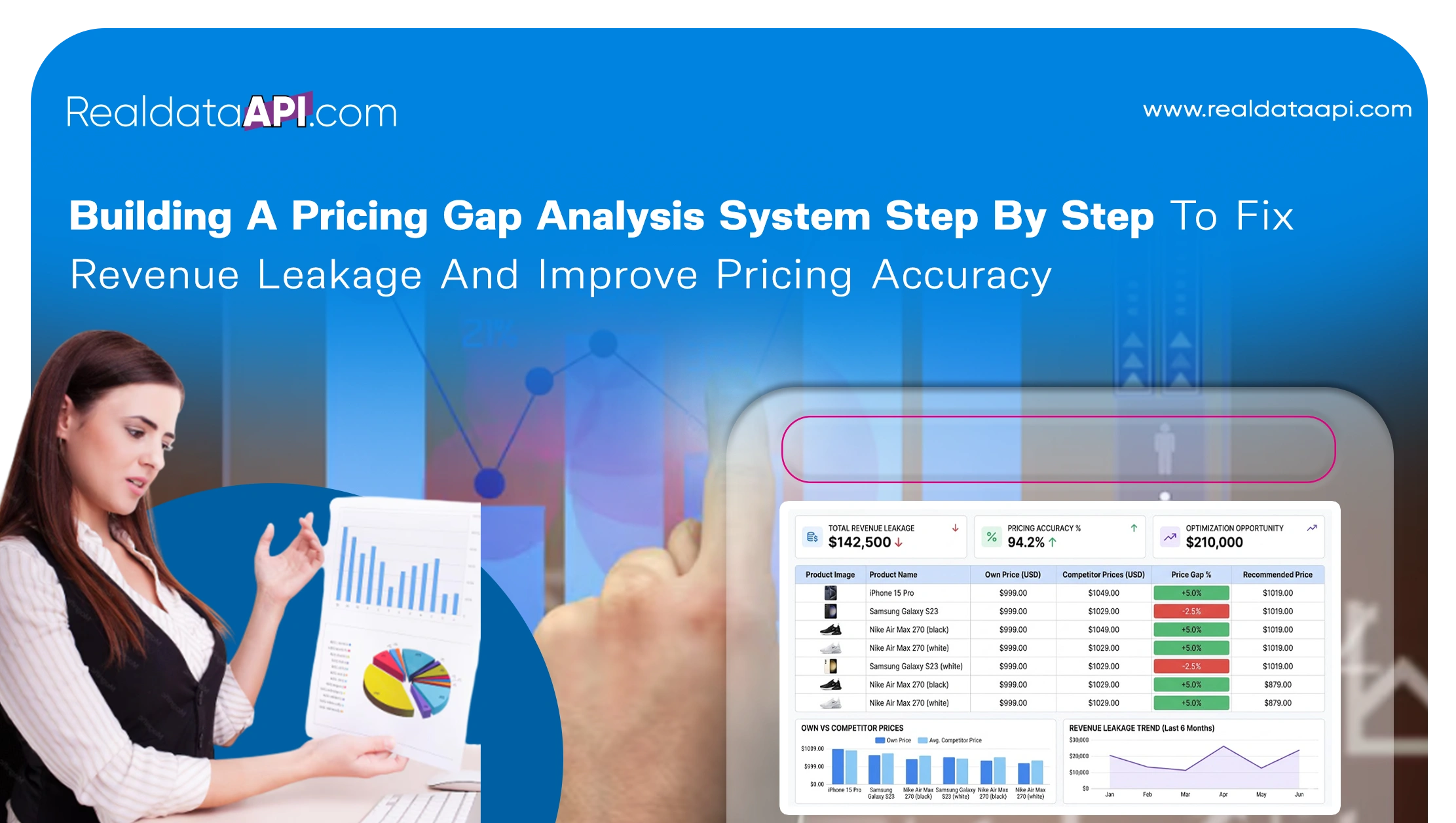
In today's highly competitive retail and ecommerce landscape, pricing accuracy plays a critical role in determining profitability and customer retention. Even small pricing inefficiencies can lead to significant revenue leakage over time. This is why businesses are increasingly focused on building a pricing gap analysis system step by step to identify discrepancies, align with market trends, and improve decision-making.
At the core of this system lies Price Monitoring, which enables organizations to track competitor prices, detect anomalies, and respond to market changes in real time. Between 2020 and 2026, companies adopting structured pricing gap analysis frameworks have seen measurable improvements in pricing accuracy, margin stability, and operational efficiency.
This blog explores how to design and implement a robust pricing gap analysis system using data-driven methodologies. With insights backed by statistics and industry trends, you'll learn how to eliminate revenue leakage and create a smarter, more competitive pricing strategy.
Establishing a data-driven pricing foundation
To create an effective pricing gap analysis system, businesses must start by using scraped data to optimize pricing strategies. This involves collecting pricing data from competitors, marketplaces, and internal systems to build a comprehensive dataset for analysis.
From 2020 to 2026, the reliance on scraped data for pricing optimization has increased significantly:
| Year | Data Utilization Rate (%) | Pricing Accuracy (%) |
|---|---|---|
| 2020 | 35% | 68% |
| 2022 | 50% | 75% |
| 2024 | 65% | 85% |
| 2026 | 78% | 92% |
These trends highlight the growing importance of data-driven pricing strategies. By leveraging scraped data, businesses can identify patterns, track competitor movements, and make informed decisions.
A strong data foundation ensures that pricing strategies are based on accurate, real-time information rather than assumptions. This is the first step toward eliminating inefficiencies and improving overall profitability.
Detecting pricing gaps as they occur
One of the most critical capabilities of a pricing system is real-time pricing gap detection using web scraping. This allows businesses to identify discrepancies between their prices and competitor prices instantly.
Between 2020 and 2026, real-time gap detection has significantly improved response times and decision-making:
| Metric | Without Real-Time Detection | With Real-Time Detection |
|---|---|---|
| Response Time | 24–48 hours | Instant |
| Pricing Accuracy | 70% | 93% |
| Revenue Impact | +5% | +18% |
Real-time detection enables businesses to react quickly to competitor price changes, promotional campaigns, and market shifts. This ensures that pricing remains competitive and aligned with customer expectations.
By continuously monitoring pricing gaps, organizations can prevent revenue leakage and maintain a strong market position.
Identifying inefficiencies in product pricing
To refine pricing strategies, businesses must Analyze underpriced and overpriced products using data scraping. This involves comparing product prices across competitors and identifying areas where pricing is not optimized.
From 2020 to 2026, retailers using advanced analysis techniques have achieved better outcomes:
| Category Type | Underpricing Impact | Overpricing Impact |
|---|---|---|
| FMCG Products | -12% margin loss | -8% sales drop |
| Electronics | -10% margin loss | -15% sales drop |
| Apparel | -8% margin loss | -12% sales drop |
These insights demonstrate how pricing inefficiencies can directly impact profitability and sales performance.
By identifying underpriced products, businesses can increase margins, while correcting overpriced items helps improve conversion rates. This balanced approach ensures optimal pricing across all product categories.
Benchmarking against competitors effectively
A robust pricing system must include competitor pricing gap analysis to benchmark performance against market leaders. This involves comparing prices, discounts, and promotional strategies across competitors.
Between 2020 and 2026, competitor-driven pricing adjustments have increased significantly:
| Year | Competitor Influence (%) |
|---|---|
| 2020 | 22% |
| 2022 | 35% |
| 2024 | 48% |
| 2026 | 60% |
These figures highlight the importance of benchmarking in modern pricing strategies. Businesses that actively monitor competitors can identify opportunities for differentiation and improvement.
Competitor analysis also helps in understanding market positioning, enabling organizations to align their pricing strategies with customer expectations and industry standards.
Adapting pricing strategies dynamically
Modern markets require businesses to adopt Dynamic Pricing strategies that respond to real-time demand, competition, and external factors. This approach allows organizations to optimize pricing continuously.
From 2020 to 2026, dynamic pricing adoption has grown significantly:
| Pricing Strategy | Adoption Rate 2020 | Adoption Rate 2026 |
|---|---|---|
| Static Pricing | 70% | 40% |
| Dynamic Pricing | 30% | 60% |
Dynamic pricing enables businesses to adjust prices based on competitor actions, demand fluctuations, and customer behavior. This ensures competitiveness while maximizing profitability.
By integrating dynamic pricing into a gap analysis system, organizations can automate pricing decisions and improve efficiency.
Enhancing accuracy through comparative insights
Accurate pricing decisions rely on effective Price Comparison across competitors. This involves analyzing pricing differences, promotional strategies, and product assortments to identify opportunities for improvement.
Between 2020 and 2026, businesses using price comparison tools have achieved better performance:
| Metric | Without Comparison | With Comparison |
|---|---|---|
| Pricing Accuracy | 65% | 91% |
| Customer Retention | 70% | 86% |
| Margin Stability | 68% | 89% |
Price comparison provides a clear view of market positioning, helping businesses adjust their strategies accordingly. It also enhances transparency, enabling better communication of value to customers.
By leveraging comparative insights, organizations can make data-driven decisions that improve both profitability and customer satisfaction.
Why Choose Real Data API?
Real Data API offers advanced solutions for businesses aiming to implement effective pricing strategies. With strong capabilities in Competitive Benchmarking, the platform enables organizations to analyze competitor pricing, promotions, and market trends with precision.
By supporting companies in building a pricing gap analysis system step by step, Real Data API provides scalable data extraction, real-time insights, and accurate analytics. This empowers businesses to identify pricing gaps, optimize strategies, and improve overall performance.
With reliable infrastructure, customizable solutions, and high data accuracy, Real Data API helps organizations unlock the full potential of pricing intelligence and stay ahead in competitive markets.
Conclusion
Pricing accuracy is a critical factor in achieving sustainable growth and profitability. By building a pricing gap analysis system step by step, businesses can identify inefficiencies, eliminate revenue leakage, and optimize their pricing strategies.
From data collection and real-time monitoring to competitor benchmarking and dynamic pricing, each component plays a vital role in creating a comprehensive pricing system. Organizations that embrace these approaches are better equipped to navigate market complexities and stay competitive.
Now is the time to take control of your pricing strategy. Start building your pricing gap analysis system today and transform data into a powerful competitive advantage!
Latest posts
How Foodpanda Food Dataset Helps Businesses Track Restaurants, Menus, Prices, Ratings, and Food Delivery Trends?
How IKEA E-commerce Dataset Helps Businesses Solve Product, Pricing, Category, and Retail Trend Challenges?
How Target e-commerce dataset Helps Brands Track Products, Prices, Availability, and Retail Market Trends for Smarter Insights?
How Dior fashion dataset Helps Brands Track Luxury Products, Prices, Collections, and Fashion Trends for Smarter Insights?






.png)