Introduction
In today's hyper-competitive retail landscape, pricing decisions can make or break profitability. Retailers must continuously monitor competitor pricing, promotional strategies, and market trends to remain relevant. This is why businesses increasingly aim to build a price benchmarking model across multiple retailers to gain a clear understanding of where they stand in the market. Such a model helps identify pricing gaps, uncover inefficiencies, and optimize strategies for maximum returns.
At the core of this approach lies Price Monitoring, which enables real-time tracking of competitor prices across various channels. Between 2020 and 2026, retailers leveraging structured benchmarking models have significantly improved pricing accuracy, margin stability, and customer retention. By combining data collection, analytics, and visualization, businesses can transform raw pricing data into actionable insights.
This blog explores how to design an effective benchmarking model, supported by industry statistics and practical frameworks that empower retailers to make smarter pricing decisions and drive sustainable growth.
Building visibility into competitor pricing
Retailers must compare product prices across retail competitors to gain a comprehensive understanding of the market landscape. This process involves collecting pricing data across multiple platforms and analyzing variations in product categories, regions, and timeframes.
From 2020 to 2026, pricing disparities across retailers have widened due to supply chain disruptions and increased competition:
| Year | Avg Price Gap (%) | Promo Frequency (%) |
|---|---|---|
| 2020 | 8% | 15% |
| 2022 | 12% | 22% |
| 2024 | 18% | 30% |
| 2026 | 24% | 38% |
These insights highlight the importance of continuous price comparison. Retailers can identify underpriced or overpriced products and adjust their strategies accordingly.
By analyzing competitor pricing data, businesses can also uncover patterns in discounting strategies and seasonal trends. This enables them to align their pricing models with market expectations, ensuring competitiveness while maintaining profitability.
Transforming data into actionable insights
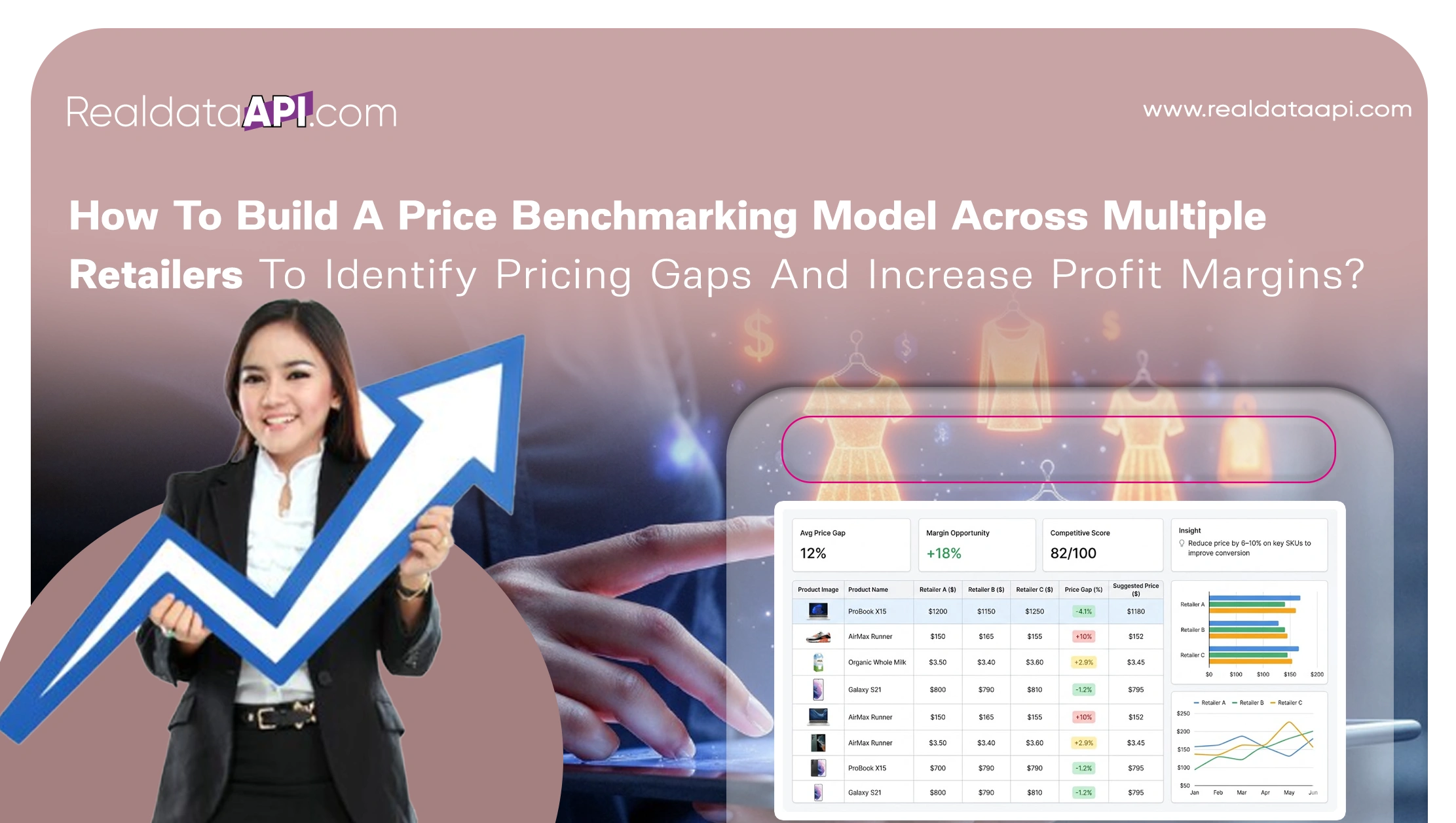
A centralized retail price benchmarking dashboard is essential for converting raw data into meaningful insights. Such dashboards provide real-time visibility into pricing trends, enabling decision-makers to act quickly and effectively.
Between 2020 and 2026, retailers adopting dashboards have seen significant improvements in operational efficiency:
| Metric | Without Dashboard | With Dashboard |
|---|---|---|
| Pricing Accuracy | 65% | 90% |
| Decision Speed | Slow | Fast |
| Margin Stability | 70% | 88% |
Dashboards allow businesses to visualize pricing data through charts, heatmaps, and trend analyses. This makes it easier to identify anomalies, track competitor actions, and measure performance over time.
By integrating multiple data sources into a single platform, retailers can eliminate data silos and improve collaboration across teams. This ensures that pricing decisions are based on accurate, up-to-date information.
Designing effective analytical frameworks
Developing robust techniques for price benchmarking models is crucial for accurate analysis. These techniques involve data normalization, competitor mapping, and statistical analysis to ensure consistency and reliability.
From 2020 to 2026, advancements in analytics have improved benchmarking accuracy:
| Technique Type | Accuracy 2020 | Accuracy 2026 |
|---|---|---|
| Manual Analysis | 60% | 55% |
| Rule-based Models | 75% | 85% |
| AI-driven Models | 82% | 94% |
These techniques help retailers standardize data across different formats and platforms, ensuring meaningful comparisons. They also enable predictive analytics, allowing businesses to forecast pricing trends and adjust strategies proactively.
By implementing advanced benchmarking techniques, retailers can gain deeper insights into competitor behavior and optimize their pricing models for better outcomes.
Adapting to market changes with flexible pricing
Modern retail requires the adoption of Dynamic Pricing strategies that respond to real-time market conditions. This approach allows businesses to adjust prices based on demand, competition, and external factors.
Between 2020 and 2026, dynamic pricing has become increasingly prevalent:
| Pricing Strategy | Adoption Rate 2020 | Adoption Rate 2026 |
|---|---|---|
| Static Pricing | 70% | 40% |
| Dynamic Pricing | 30% | 60% |
Dynamic pricing enables retailers to remain competitive while maximizing profitability. By leveraging benchmarking data, businesses can adjust prices in response to competitor actions and market trends.
This approach also improves customer satisfaction by ensuring fair and competitive pricing. Retailers can offer personalized discounts, optimize promotions, and enhance overall shopping experiences.
Strengthening decisions through comparative analysis
Effective benchmarking relies on accurate Price Comparison across competitors. This involves analyzing pricing differences, promotional strategies, and product assortments to identify opportunities for improvement.
From 2020 to 2026, retailers using comparison tools have achieved better performance metrics:
| Metric | Without Comparison | With Comparison |
|---|---|---|
| Pricing Accuracy | 65% | 90% |
| Customer Retention | 70% | 85% |
| Revenue Growth | 8% | 20% |
Price comparison helps businesses identify gaps in their pricing strategies and adjust accordingly. It also enables better communication of value to customers, enhancing trust and loyalty.
By leveraging comparative analysis, retailers can make data-driven decisions that align with market expectations and drive long-term growth.
Automating data collection for scalability
To scale benchmarking efforts, businesses must leverage Web Scraping Services for automated data collection. These services enable continuous extraction of pricing data from multiple sources, ensuring accuracy and efficiency.
Between 2020 and 2026, the adoption of web scraping has significantly improved data collection capabilities:
| Year | Adoption Rate (%) | Data Accuracy (%) |
|---|---|---|
| 2020 | 35% | 78% |
| 2022 | 50% | 85% |
| 2024 | 65% | 90% |
| 2026 | 75% | 95% |
Automated scraping reduces manual effort, minimizes errors, and ensures real-time data availability. It also supports large-scale data collection, enabling businesses to monitor thousands of products across multiple platforms.
By integrating web scraping into their benchmarking models, retailers can maintain a competitive edge and make informed pricing decisions.
Why Choose Real Data API?
Real Data API offers advanced solutions for retailers looking to build a price benchmarking model across multiple retailers. With robust data extraction capabilities, scalable infrastructure, and high accuracy, the platform enables businesses to collect and analyze pricing data efficiently.
By leveraging Real Data API, companies can automate data collection, integrate multiple data sources, and gain real-time insights into competitor pricing. This empowers retailers to optimize pricing strategies, improve decision-making, and maintain competitiveness in dynamic markets.
With reliable support and customizable solutions, Real Data API ensures that businesses can unlock the full potential of pricing intelligence and achieve sustainable growth.
Conclusion
Building a robust pricing strategy requires a data-driven approach that leverages real-time insights and advanced analytics. By choosing to build a price benchmarking model across multiple retailers, businesses can identify pricing gaps, optimize strategies, and enhance profitability.
From competitor analysis to dynamic pricing and automated data collection, each component plays a critical role in creating an effective benchmarking system. Retailers that embrace these strategies are better equipped to navigate market complexities and stay ahead of competitors.
Now is the time to take control of your pricing strategy. Start building your benchmarking model today and transform data into a powerful competitive advantage!
Latest posts
How Scrape Xiaohongshu Product Trends in Real Time Solves Product Discovery and Competitor Monitoring Challenges?
How to Scrape Taobao Product Data to Solve Pricing, Inventory, and Competitor Monitoring Challenges?
How to Extract grocery product listings Data from SPAR to Build Accurate Grocery Intelligence and Competitive Market Insights?
Scrape Douyin follower growth and engagement data to track influencer performance and trends






.png)



