Introduction
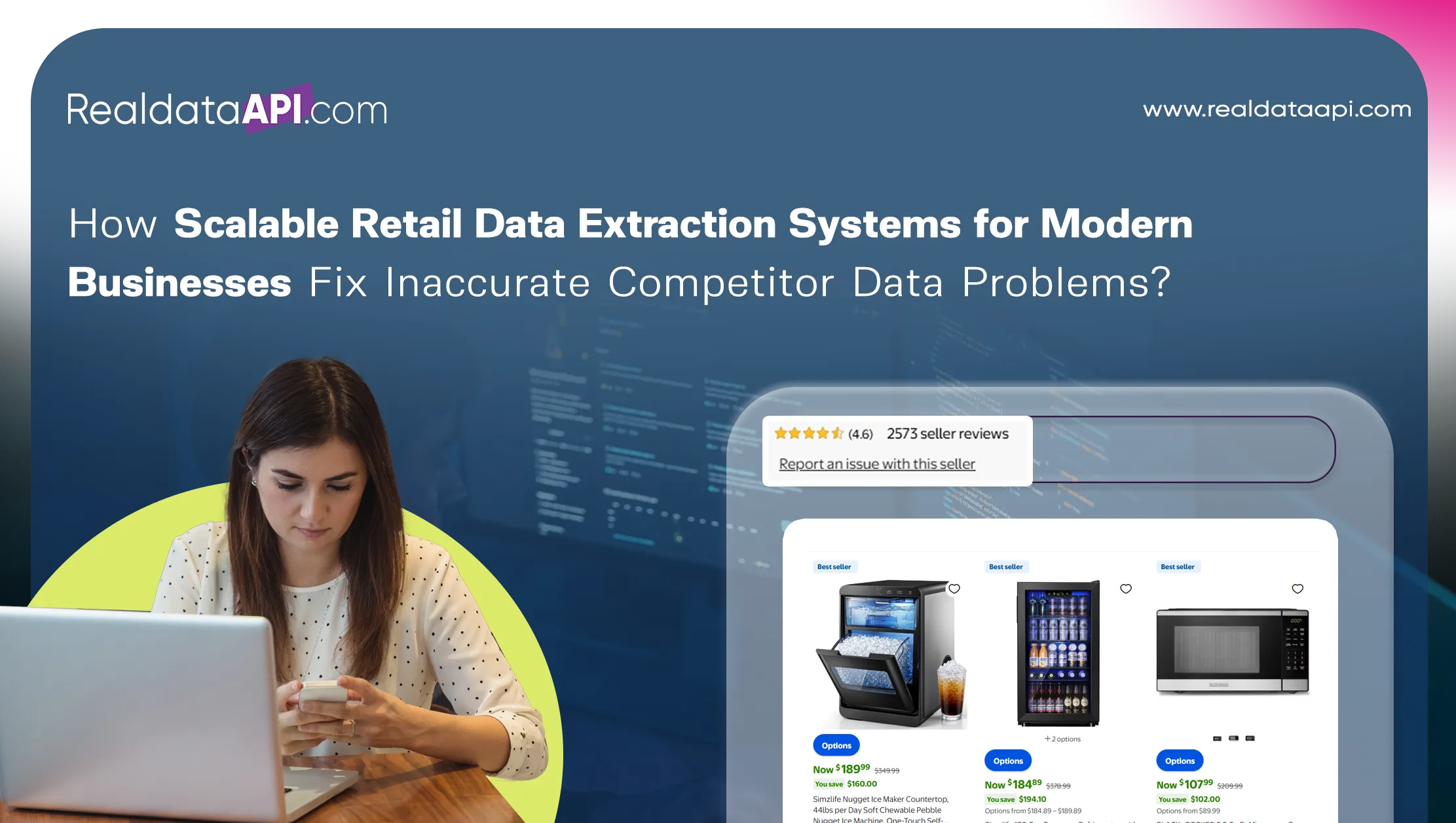
Modern retailers operate in an environment where pricing changes, inventory updates, customer preferences, and promotional campaigns shift rapidly across digital platforms. Businesses that rely on outdated or incomplete market data often struggle to make competitive pricing decisions, forecast demand accurately, or maintain consistent customer experiences. Inaccurate competitor data can lead to poor pricing strategies, stock imbalances, revenue loss, and reduced market visibility.
To overcome these challenges, companies increasingly invest in scalable retail data extraction systems for modern businesses that automate large-scale data collection and provide real-time competitive intelligence. These systems help retailers monitor market activity continuously, gather structured information from multiple sources, and improve operational decision-making.
Modern retailers also depend on advanced E-Commerce Data Scraping API solutions to collect accurate pricing, product, inventory, and promotional data from eCommerce platforms efficiently. Automated APIs reduce manual effort, improve scalability, and help businesses process high-volume retail information in real time.
According to global retail analytics reports, digital commerce activity is projected to grow steadily between 2020 and 2026 as businesses increase investments in automation, pricing intelligence, and AI-powered retail analytics. Retailers that use automated extraction systems gain faster insights, better forecasting accuracy, and stronger adaptability in highly competitive markets.
This guide explains how scalable retail intelligence systems solve inaccurate competitor data problems and help businesses improve pricing optimization, operational efficiency, and strategic growth.
Improving Competitive Pricing Accuracy Across Online Retail Channels
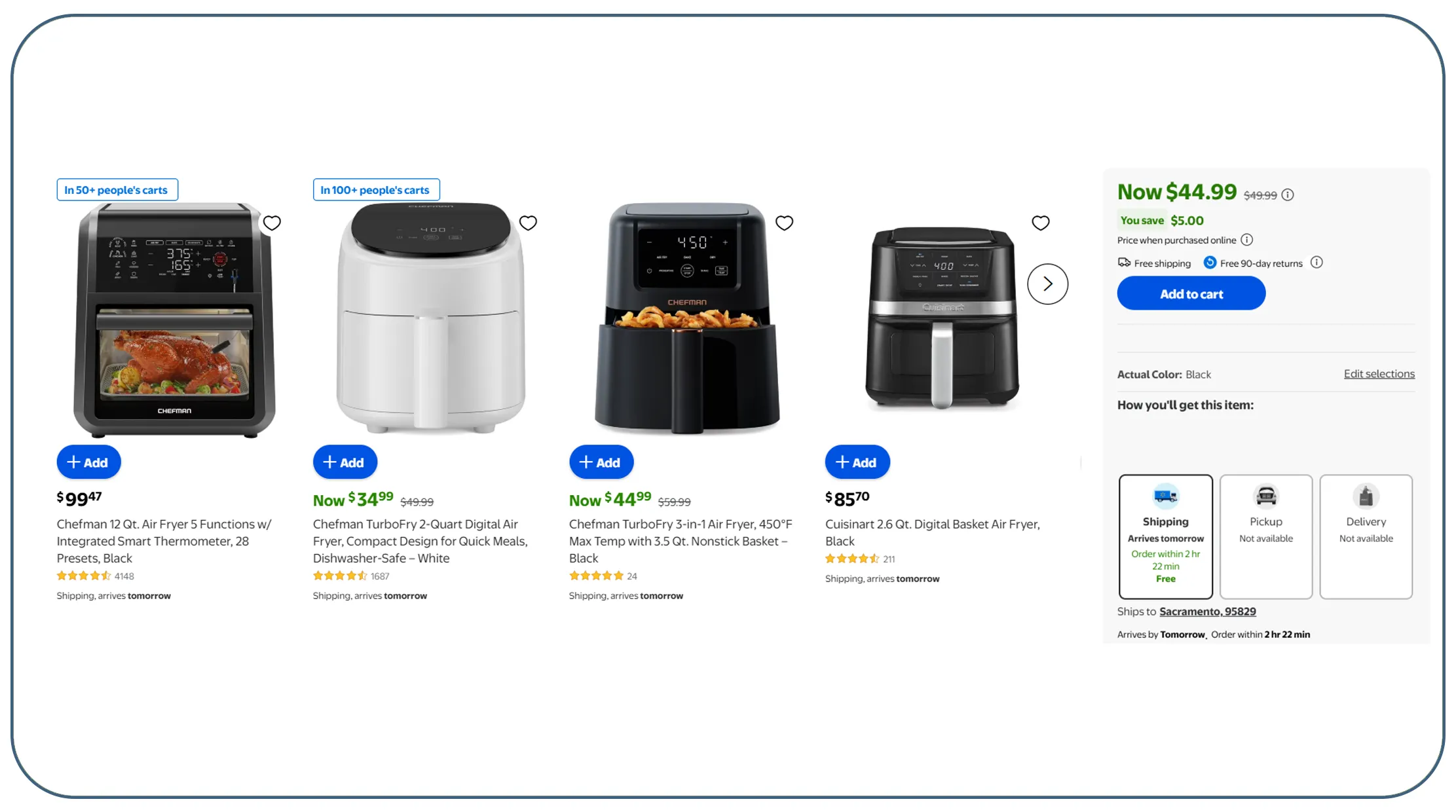
Retailers often face serious challenges when competitor pricing changes multiple times daily across online marketplaces. Manual monitoring methods fail to provide timely updates, resulting in delayed responses and inaccurate price positioning. Businesses that lack reliable market visibility may lose customers to competitors offering more attractive pricing or promotions.
One of the most effective solutions involves implementing real-time price monitoring and inventory tracking using web scraping technologies. These systems automatically collect product pricing, stock availability, promotional offers, and product listing changes from multiple online sources simultaneously. Businesses gain accurate and continuously updated insights without relying on time-consuming manual research.
Between 2020 and 2026, retailers investing in automated pricing intelligence platforms have significantly increased due to rising eCommerce competition and demand for faster decision-making.
| Year | Retailers Using Automated Price Monitoring | Average Daily Price Changes Tracked |
|---|---|---|
| 2020 | 26% | 18 million |
| 2021 | 33% | 24 million |
| 2022 | 41% | 31 million |
| 2023 | 49% | 39 million |
| 2024 | 57% | 48 million |
| 2025 | 65% | 58 million |
| 2026 | 73% | 70 million |
Real-time monitoring systems also improve inventory management by identifying stock shortages and replenishment patterns across competitors. Retailers can adjust inventory planning more effectively and reduce the risk of overstocking or missed sales opportunities.
Businesses that maintain accurate market visibility gain stronger control over pricing strategies, promotional planning, and revenue optimization. As digital retail ecosystems continue evolving, automated monitoring systems will become essential for maintaining competitive positioning.
Reducing Operational Delays Through Automated Retail Intelligence
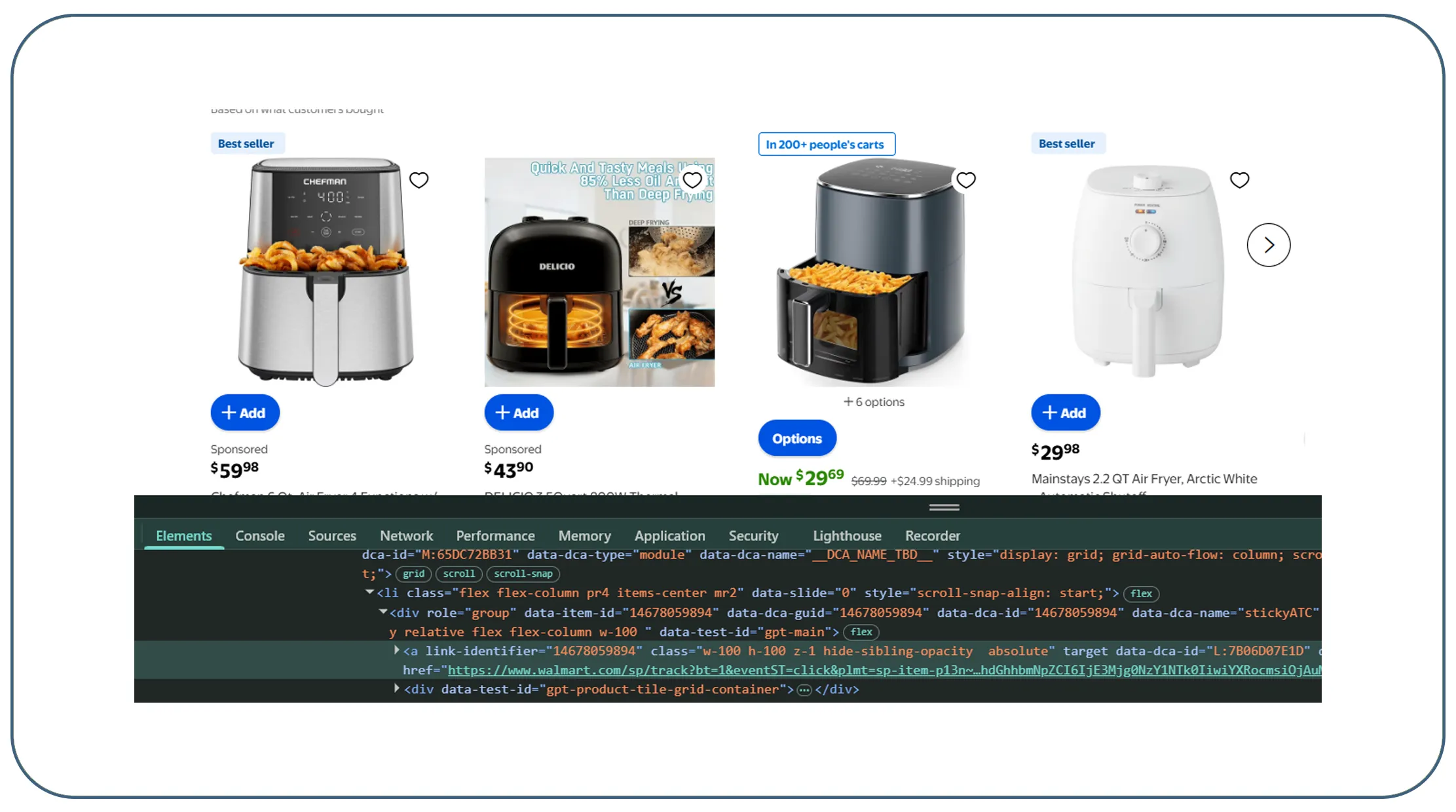
Retail companies managing thousands of products across multiple marketplaces often struggle with slow and inconsistent data collection methods. Manual competitor tracking creates operational bottlenecks, increases human error, and limits the speed of decision-making.
To solve these issues, businesses increasingly focus on the benefits of automated retail data collection for ecommerce brands that improve efficiency and reduce dependency on manual workflows. Automated extraction systems gather structured product information, reviews, ratings, and pricing details from large-scale retail platforms in real time.
From 2020 to 2026, organizations adopting automated retail intelligence systems have reported significant improvements in operational efficiency and market responsiveness.
| Year | Retail Businesses Using Automation | Reduction in Manual Research Time |
|---|---|---|
| 2020 | 29% | 18% |
| 2021 | 36% | 24% |
| 2022 | 44% | 31% |
| 2023 | 52% | 39% |
| 2024 | 60% | 47% |
| 2025 | 68% | 55% |
| 2026 | 75% | 63% |
Automated workflows help businesses process large amounts of market information faster while improving data consistency. Retailers can monitor multiple competitors simultaneously and receive structured updates without additional operational burden.
Intelligent automation also reduces data duplication and improves reporting accuracy. Businesses gain access to centralized dashboards that support better collaboration between pricing teams, inventory managers, and marketing departments.
As eCommerce competition continues increasing globally, automated data collection systems will remain essential for businesses seeking faster decision-making and scalable operational efficiency.
Using Live Retail Insights to Improve Market Responsiveness
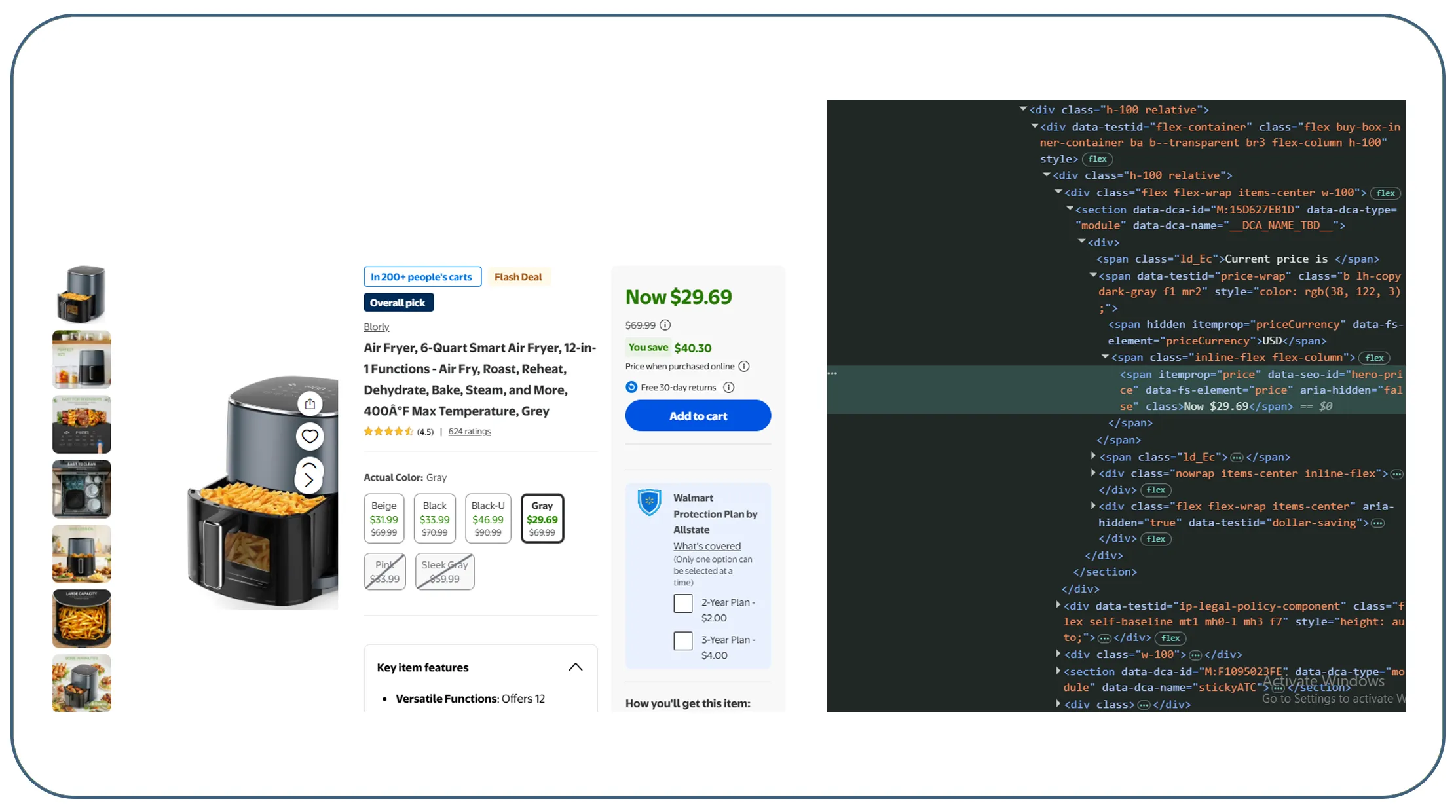
Why is live market intelligence important?
Live intelligence helps retailers react quickly to pricing shifts, promotions, and customer demand changes.
How do retailers optimize pricing with real-time insights?
Retail pricing strategies depend heavily on accurate market intelligence. Companies that rely on outdated competitor information often struggle to optimize pricing dynamically, leading to lost sales opportunities or reduced profit margins.
Modern retailers increasingly focus on understanding how retailers use live market intelligence for pricing optimization to improve strategic decision-making. Real-time intelligence systems continuously analyze pricing trends, promotional campaigns, customer demand signals, and competitor product positioning.
Between 2020 and 2026, the adoption of AI-assisted pricing optimization systems has increased rapidly across global retail markets. Businesses now use predictive analytics and live intelligence to automate pricing recommendations and improve profitability.
| Year | Retailers Using AI Pricing Optimization | Average Revenue Improvement |
|---|---|---|
| 2020 | 17% | 6% |
| 2021 | 24% | 8% |
| 2022 | 32% | 11% |
| 2023 | 41% | 14% |
| 2024 | 50% | 17% |
| 2025 | 59% | 20% |
| 2026 | 68% | 24% |
Continuous intelligence systems also help businesses identify emerging market trends and competitor behavior patterns faster. Retailers can respond immediately to discount campaigns, stock shortages, or demand fluctuations.
Advanced analytics platforms further improve strategic planning by integrating pricing data with customer behavior insights and regional demand patterns. Businesses using live market intelligence often achieve stronger customer retention, higher conversion rates, and better long-term profitability.
As retail markets become increasingly data-driven, organizations that prioritize real-time intelligence will gain stronger competitive advantages and improved operational agility.
Scaling Retail Analytics for Faster Business Decisions
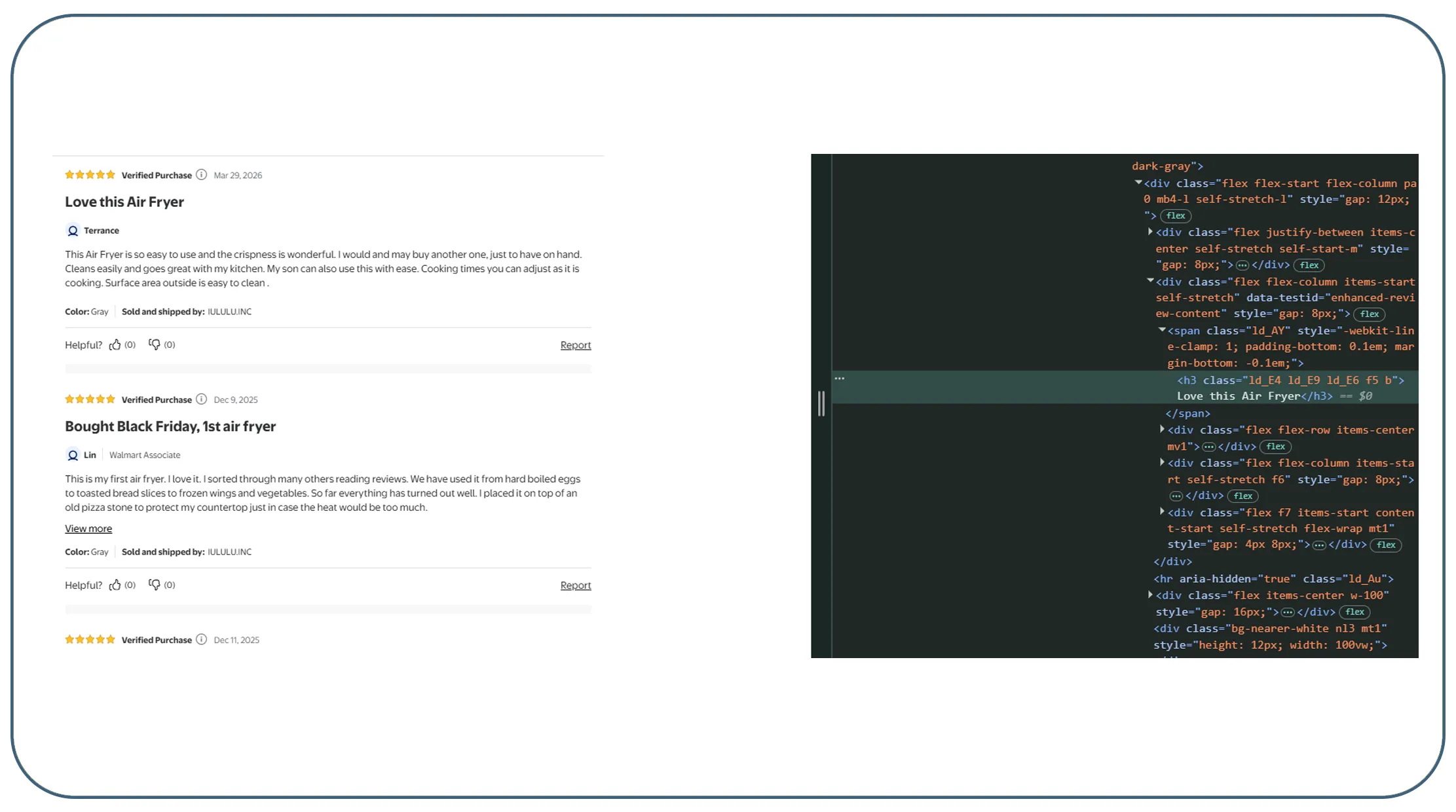
What challenges do enterprise retailers face?
Large retailers must process millions of data points daily while maintaining reporting accuracy and operational speed.
How do real-time analytics platforms help?
Real-time analytics platforms centralize retail intelligence, improve forecasting, and support faster strategic decisions.
Large retailers require scalable analytics systems capable of processing millions of data points daily from multiple online marketplaces. Traditional reporting methods are often unable to handle the complexity and speed required for modern retail intelligence operations.
Businesses increasingly adopt enterprise retail analytics powered by real-time data scraping to improve forecasting, trend analysis, and operational decision-making. These analytics systems transform large volumes of extracted retail data into actionable insights that support pricing optimization, inventory planning, and customer engagement strategies.
From 2020 to 2026, enterprise investment in retail analytics platforms has grown steadily as companies prioritize automation and AI-powered forecasting capabilities.
| Year | Global Retail Analytics Market (USD Billion) | Enterprises Using Real-Time Analytics |
|---|---|---|
| 2020 | 5.8 | 31% |
| 2021 | 6.7 | 38% |
| 2022 | 7.9 | 45% |
| 2023 | 9.4 | 53% |
| 2024 | 11.1 | 61% |
| 2025 | 13.0 | 69% |
| 2026 | 15.2 | 76% |
Real-time analytics systems improve decision-making speed by delivering updated insights through centralized dashboards and automated reporting tools. Businesses can monitor pricing performance, customer trends, and competitor movements without delays.
Enterprise-scale analytics also support cross-functional collaboration between marketing, sales, operations, and executive teams. Organizations gain a unified view of market performance, helping them align business strategies more effectively.
As retail ecosystems continue becoming more data-intensive, scalable analytics platforms will remain essential for enterprises seeking sustainable growth and operational efficiency.
Expanding Retail Growth Opportunities with Intelligent APIs
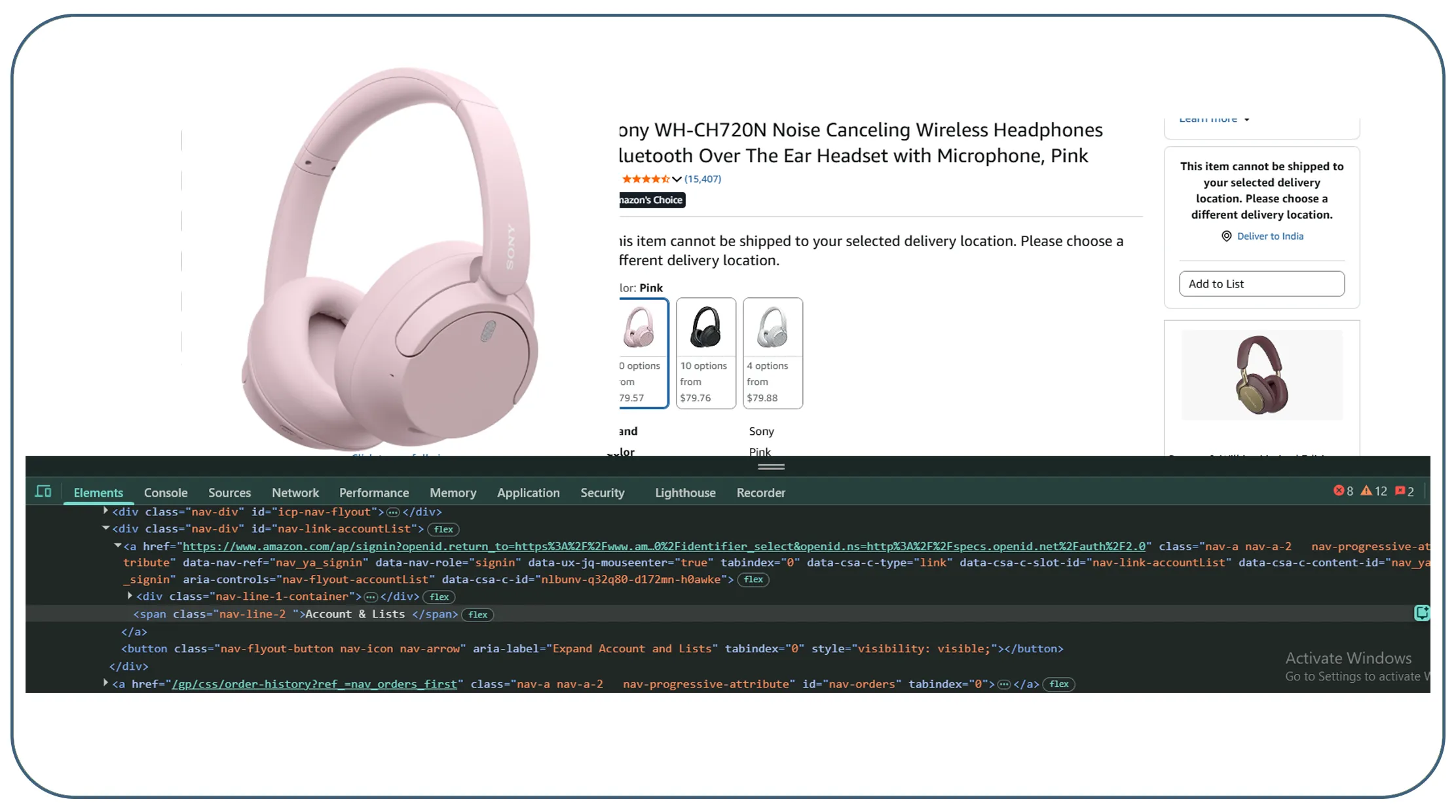
Why are APIs important in modern retail automation?
APIs simplify large-scale retail intelligence operations and improve access to structured data.
What business functions benefit from retail APIs?
Retail APIs support pricing comparison, trend analysis, review monitoring, inventory forecasting, and customer intelligence.
Retail businesses increasingly use automated extraction technologies to support multiple operational functions beyond competitor monitoring. These systems help organizations improve customer intelligence, optimize product positioning, and enhance digital commerce strategies.
Many organizations now explore Top Ecommerce Scraping API Use Cases to strengthen operational scalability and market intelligence initiatives. APIs support use cases such as pricing comparison, review monitoring, catalog synchronization, product trend analysis, sentiment analysis, and inventory forecasting.
Between 2020 and 2026, the demand for API-based retail intelligence systems has expanded rapidly due to increasing eCommerce activity and AI adoption.
| Year | Businesses Using Retail Intelligence APIs | API-Driven Retail Data Requests Daily |
|---|---|---|
| 2020 | 22% | 8 billion |
| 2021 | 29% | 11 billion |
| 2022 | 37% | 15 billion |
| 2023 | 46% | 20 billion |
| 2024 | 55% | 26 billion |
| 2025 | 64% | 33 billion |
| 2026 | 72% | 41 billion |
API-driven automation systems also improve scalability because businesses can integrate extraction capabilities directly into existing workflows and analytics platforms. Retailers gain faster access to structured market data without building complex infrastructure internally.
Organizations leveraging intelligent APIs often improve customer targeting, optimize promotions more effectively, and increase operational flexibility. These systems allow businesses to respond quickly to changing market conditions while maintaining consistent data quality.
As retail competition accelerates globally, API-based automation will continue driving innovation and operational growth across the eCommerce ecosystem.
Improving Forecasting Accuracy with Structured Retail Intelligence
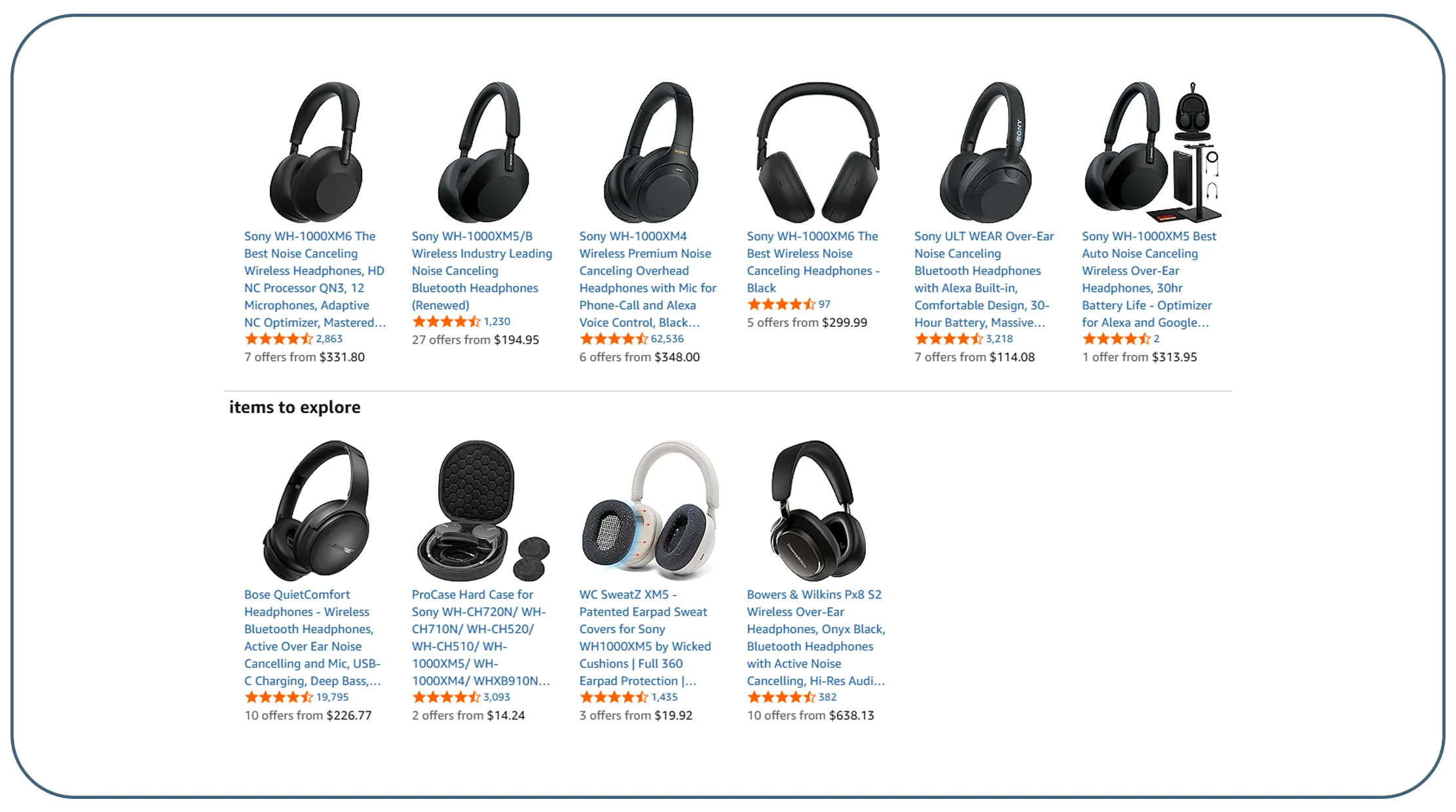
Why are structured datasets important for retailers?
Structured datasets improve forecasting accuracy, analytics quality, and machine learning performance.
How do datasets support business growth?
High-quality retail datasets help businesses optimize inventory, pricing, customer targeting, and demand forecasting.
Retail businesses generate massive amounts of external market data daily, but extracting value from this information requires structured organization and validation. Unstructured or inconsistent datasets often result in inaccurate reporting and weak forecasting performance.
Modern organizations increasingly depend on high-quality E-Commerce Dataset solutions to improve predictive analytics, customer segmentation, inventory forecasting, and trend analysis. Structured datasets allow retailers to standardize product information, pricing history, customer reviews, and competitor activity across multiple platforms.
Between 2020 and 2026, demand for structured retail datasets has increased significantly due to the rapid growth of AI-powered analytics and machine learning systems.
| Year | Global Structured Retail Data Market (USD Billion) | Retailers Using AI-Based Forecasting |
|---|---|---|
| 2020 | 4.1 | 28% |
| 2021 | 4.9 | 34% |
| 2022 | 5.8 | 41% |
| 2023 | 6.9 | 49% |
| 2024 | 8.2 | 57% |
| 2025 | 9.7 | 65% |
| 2026 | 11.4 | 73% |
Structured datasets improve forecasting accuracy by enabling businesses to identify seasonal trends, customer demand shifts, and pricing fluctuations more effectively. Retailers can also build stronger machine learning models that support personalized recommendations and dynamic pricing strategies.
High-quality datasets reduce reporting inconsistencies and improve confidence in business decisions. Organizations that prioritize structured intelligence assets gain stronger adaptability and improved long-term strategic planning.
As AI adoption expands globally, structured retail datasets will become increasingly important for businesses seeking accurate forecasting and sustainable competitive growth.
Why Choose Real Data API?
Real Data API helps businesses simplify retail intelligence operations through scalable automation, real-time monitoring, and enterprise-grade extraction infrastructure. The platform is designed to support modern retailers that require accurate competitor data, large-scale automation, and reliable analytics integration.
Using advanced Web Scraping API infrastructure and scalable retail data extraction systems for modern businesses, Real Data API helps organizations improve pricing visibility, inventory intelligence, and market responsiveness.
Key advantages include:
- Real-time retail data extraction across multiple marketplaces
- Scalable infrastructure for enterprise-level operations
- Accurate product, pricing, and inventory monitoring
- Automated scheduling and intelligent request management
- Faster access to structured retail datasets
- Reliable integration with analytics and BI platforms
- Improved operational efficiency and forecasting accuracy
- Reduced manual research and infrastructure overhead
Real Data API also supports businesses with customizable extraction workflows, centralized monitoring systems, and scalable API integrations. This enables organizations to maintain consistent market visibility while improving strategic decision-making.
For retailers seeking reliable automation, scalable intelligence systems, and long-term operational growth, Real Data API provides a strong foundation for data-driven success.
Conclusion
Retail intelligence is becoming increasingly dependent on automation, real-time analytics, and structured data systems. Businesses that continue relying on outdated competitor tracking methods risk losing market visibility and pricing accuracy.
What Should Businesses Do Next?
Retail businesses can no longer rely on outdated competitor tracking methods in rapidly evolving digital markets. Inaccurate pricing data, delayed inventory insights, and inconsistent reporting create major operational challenges that directly affect profitability and customer retention.
Implementing scalable retail data extraction systems for modern businesses enables organizations to collect real-time market intelligence, improve forecasting accuracy, and optimize pricing strategies more effectively. Automated extraction systems help retailers reduce manual effort, improve operational scalability, and gain stronger visibility across competitive marketplaces.
As eCommerce ecosystems continue expanding between 2020 and 2026, businesses that prioritize automation, structured datasets, and real-time analytics will gain stronger market positioning and long-term growth opportunities.
Ready to improve competitor intelligence and retail analytics at scale? Connect with Real Data API today and build smarter, faster, and more accurate retail data operations!
Latest posts
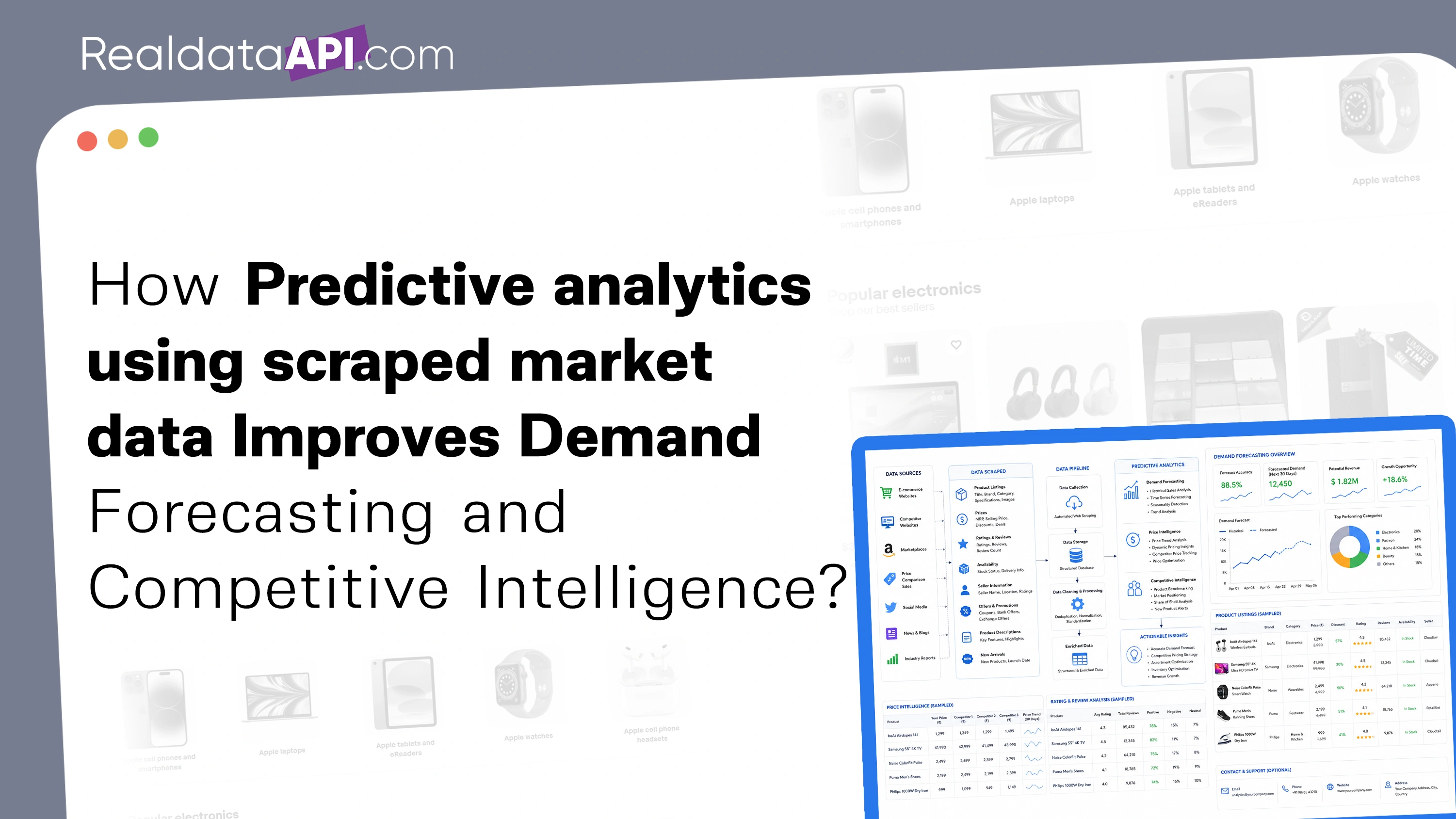
How Predictive analytics using scraped market data Improves Demand Forecasting and Competitive Intelligence?
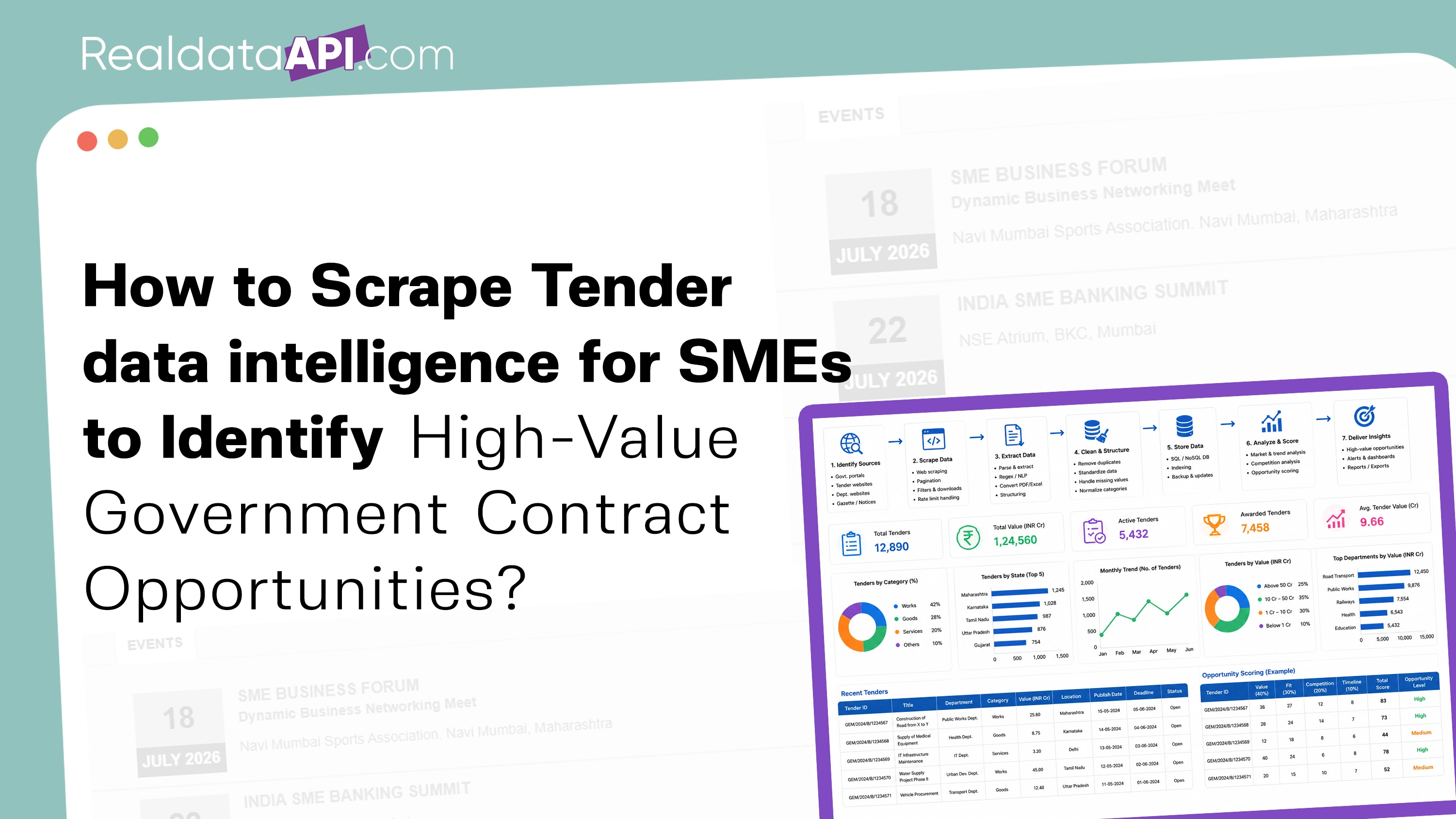
How to scrape Tender data intelligence for SMEs to Identify High-Value Government Contract Opportunities?
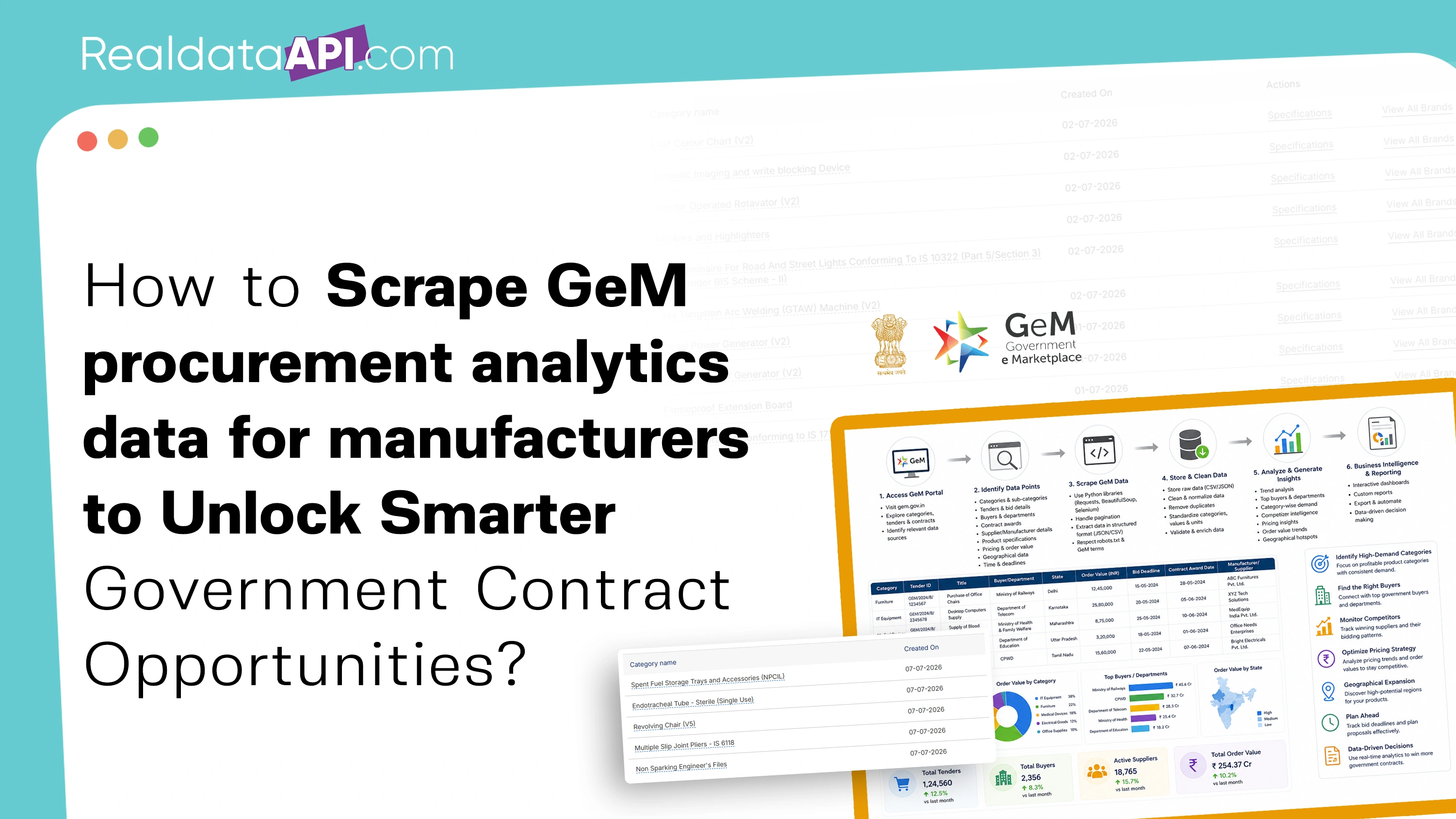
How to scrape GeM procurement analytics data for manufacturers to Unlock Smarter Government Contract Opportunities?
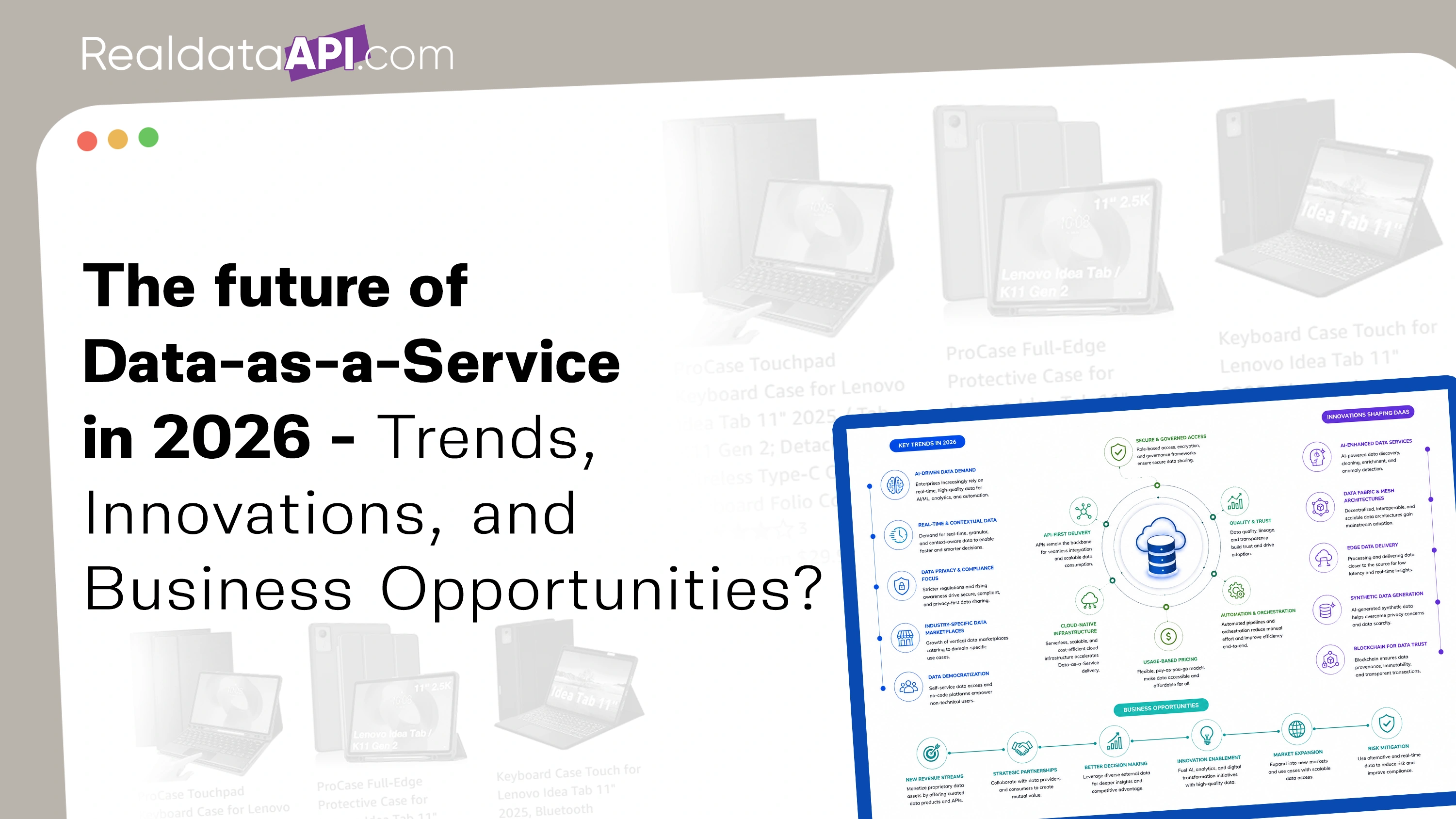
The future of Data-as-a-Service in 2026 - Trends, Innovations, and Business Opportunities
How To Use AI Agents For Automated Data Collection and Analysis to Improve Business Intelligence And Decision-Making

Real Data API stands out as one of the premier global companies specializing in web data Scraping and web extraction.





.png)


Rating 4.7
Rating 4.7
Rating 4.5
Rating 4.7
Rating 4.7


Disclaimer : RealData API functions solely as an independent data infrastructure and technology solutions provider. We build customized automation workflows designed to collect publicly accessible web data based exclusively on client instructions. RealData API neither owns proprietary datasets nor engages in the sale or redistribution of extracted information. Our operations are limited strictly to lawful public web data processing and never involve unauthorized access to restricted systems or private networks. Any company names, trademarks, logos, or brand references displayed on this website are used purely for demonstrative and illustrative purposes to showcase our technical capabilities and do not imply endorsement, partnership, or affiliation. Use of our platform and services remains subject to our Terms of Service.