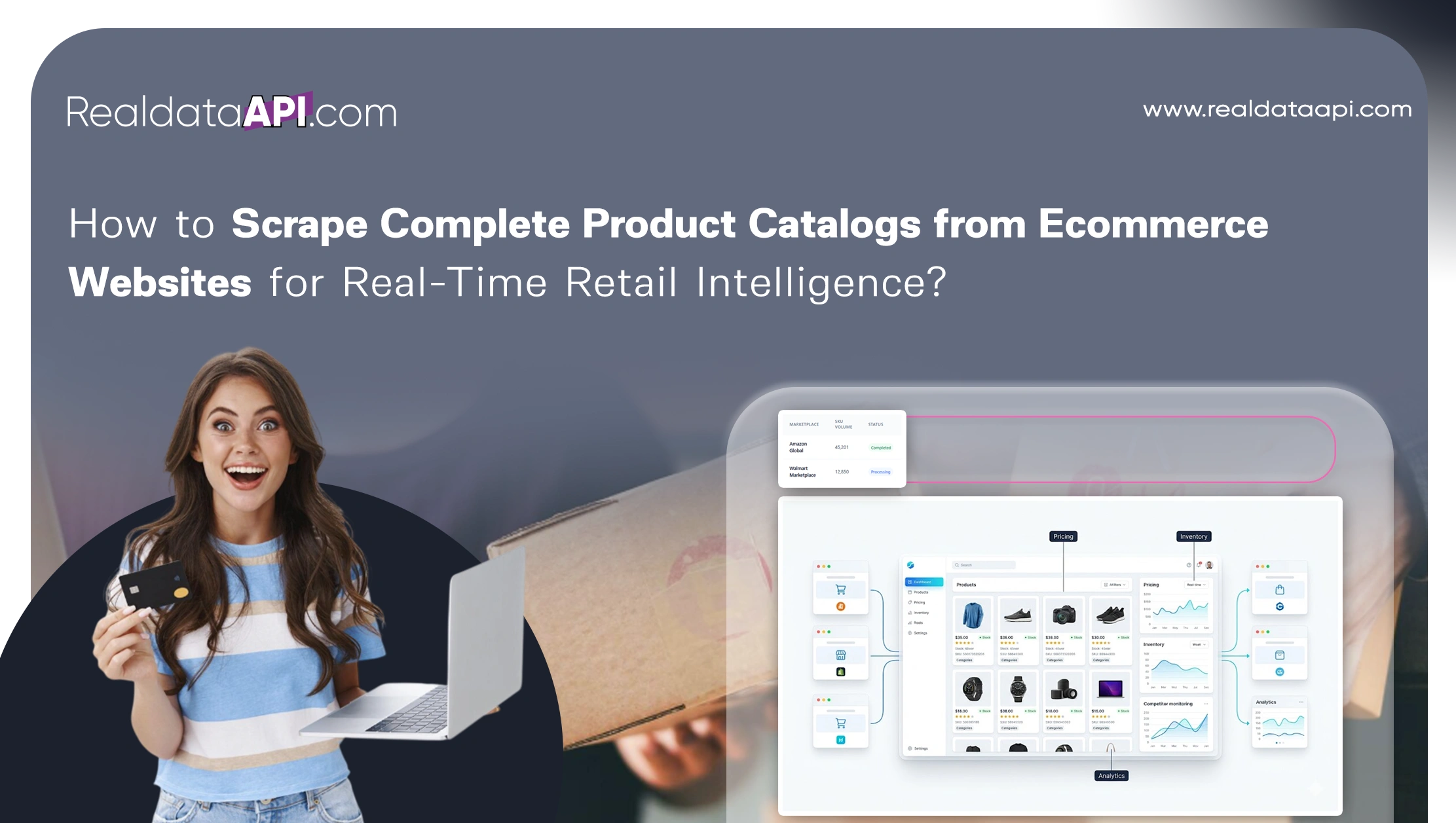
Introduction
In today’s hypercompetitive digital retail environment, brands and analytics companies rely heavily on real-time product intelligence to optimize pricing, improve assortment planning, and monitor competitor activities. Businesses increasingly scrape complete product catalogs from ecommerce websites to gain visibility into SKU availability, dynamic pricing, product descriptions, discounts, ratings, and inventory fluctuations across online marketplaces.
Modern retailers manage millions of products across categories, making manual monitoring nearly impossible. This is where an advanced E-Commerce Data Scraping API becomes essential. Automated extraction systems help organizations collect structured retail datasets at scale while ensuring data accuracy, speed, and consistency. From consumer electronics and grocery to fashion and healthcare, ecommerce catalog intelligence supports demand forecasting, market trend analysis, and competitor benchmarking.
According to Statista, global ecommerce sales are expected to surpass $8 trillion by 2026, increasing the demand for scalable product data extraction technologies. Businesses leveraging automated retail data collection are achieving faster pricing decisions, improved customer targeting, and more responsive inventory strategies. Real-time catalog scraping has evolved into a critical component of retail intelligence and digital commerce transformation.
Smarter Approaches to Large-Scale Catalog Monitoring

Retail websites contain complex structures including dynamic pages, pagination layers, AJAX content, and variant-based product listings. Businesses implementing best techniques for ecommerce product catalog scraping use automated crawlers combined with intelligent parsing systems to handle these challenges effectively.
Modern catalog extraction systems rely on rotating proxies, browser automation, anti-bot bypassing, and structured parsers to capture accurate product information from thousands of ecommerce pages simultaneously. AI-powered extraction methods further improve data normalization and category mapping for enterprise-scale analytics projects.
Ecommerce Product Scraping Growth Trends (2020–2026)
| Year | Businesses Using Catalog Scraping | Avg. Products Monitored Daily |
|---|---|---|
| 2020 | 38% | 120K |
| 2021 | 44% | 180K |
| 2022 | 51% | 260K |
| 2023 | 58% | 390K |
| 2024 | 65% | 520K |
| 2025 | 72% | 710K |
| 2026 | 79% | 950K |
Companies increasingly deploy distributed scraping architectures to ensure uninterrupted retail intelligence collection. Advanced crawlers identify hidden product pages, category hierarchies, and variant-level details including color, size, and packaging configurations.
Important factors improving extraction performance include:
- Headless browser rendering
- Intelligent retry systems
- Dynamic JavaScript execution
- Automated CAPTCHA handling
- AI-powered field detection
- Cloud-based scraping infrastructure
- Real-time API integrations
Unlocking SKU-Level Commerce Intelligence
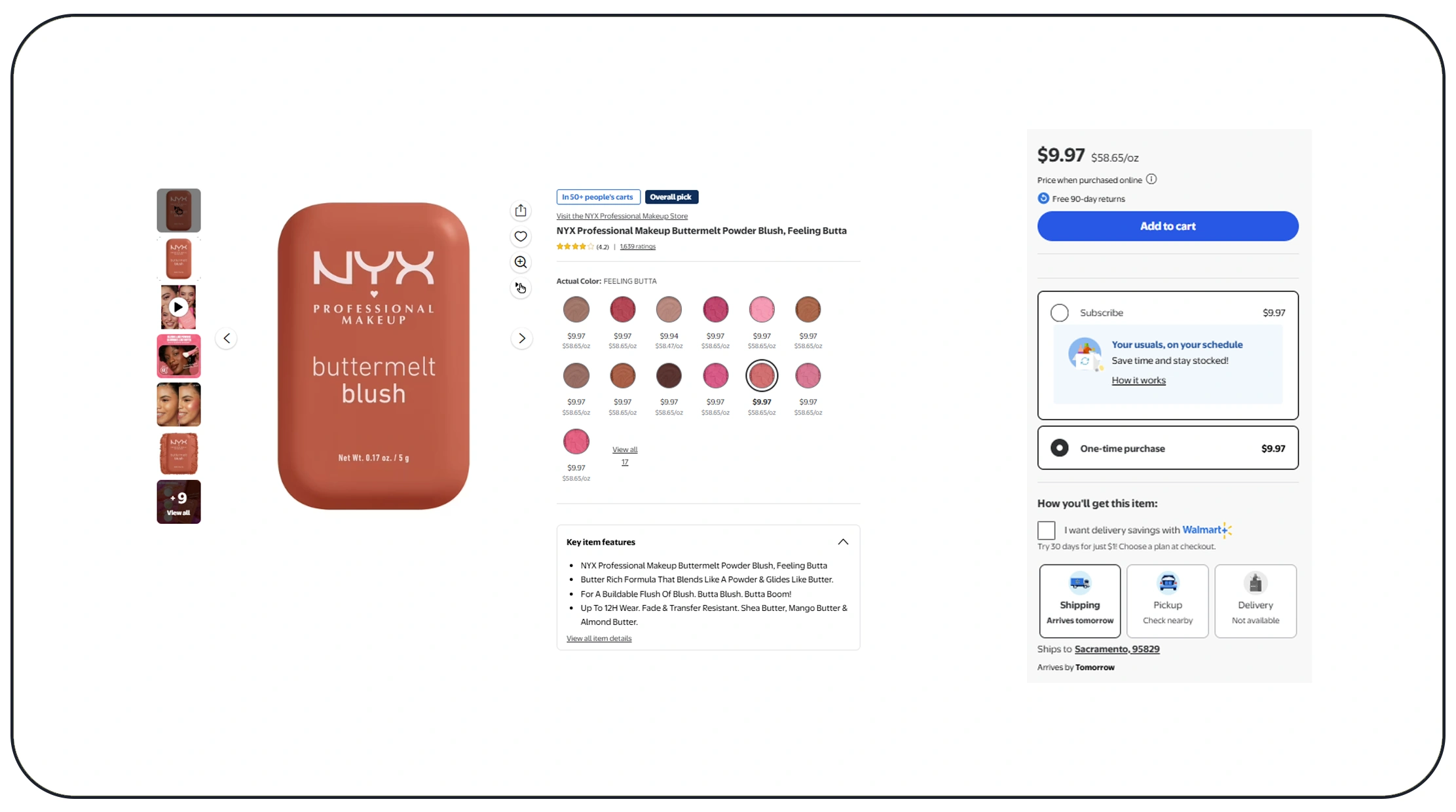
Retailers and brands increasingly focus on extracting SKU price and inventory data from ecommerce sites to understand market demand and pricing behavior in real time. SKU-level intelligence provides visibility into stock movement, promotional trends, regional pricing variations, and product availability across online channels.
Inventory monitoring has become particularly important in sectors like electronics, FMCG, beauty, and grocery where stock fluctuations directly impact customer purchasing behavior. Real-time price monitoring also enables businesses to adjust competitive pricing strategies quickly.
SKU Intelligence Market Data (2020–2026)
| Year | Average SKU Changes Tracked Daily | Retailers Using Real-Time Monitoring |
|---|---|---|
| 2020 | 2 Million | 29% |
| 2021 | 3.1 Million | 35% |
| 2022 | 4.8 Million | 42% |
| 2023 | 6.7 Million | 51% |
| 2024 | 8.5 Million | 61% |
| 2025 | 10.9 Million | 69% |
| 2026 | 13.4 Million | 77% |
Real-time SKU intelligence enables businesses to:
- Detect out-of-stock events instantly
- Analyze flash sale pricing trends
- Monitor competitor discount campaigns
- Track marketplace seller performance
- Improve supply chain forecasting
- Optimize dynamic pricing algorithms
- Enhance inventory replenishment planning
Building Structured Retail Intelligence Pipelines
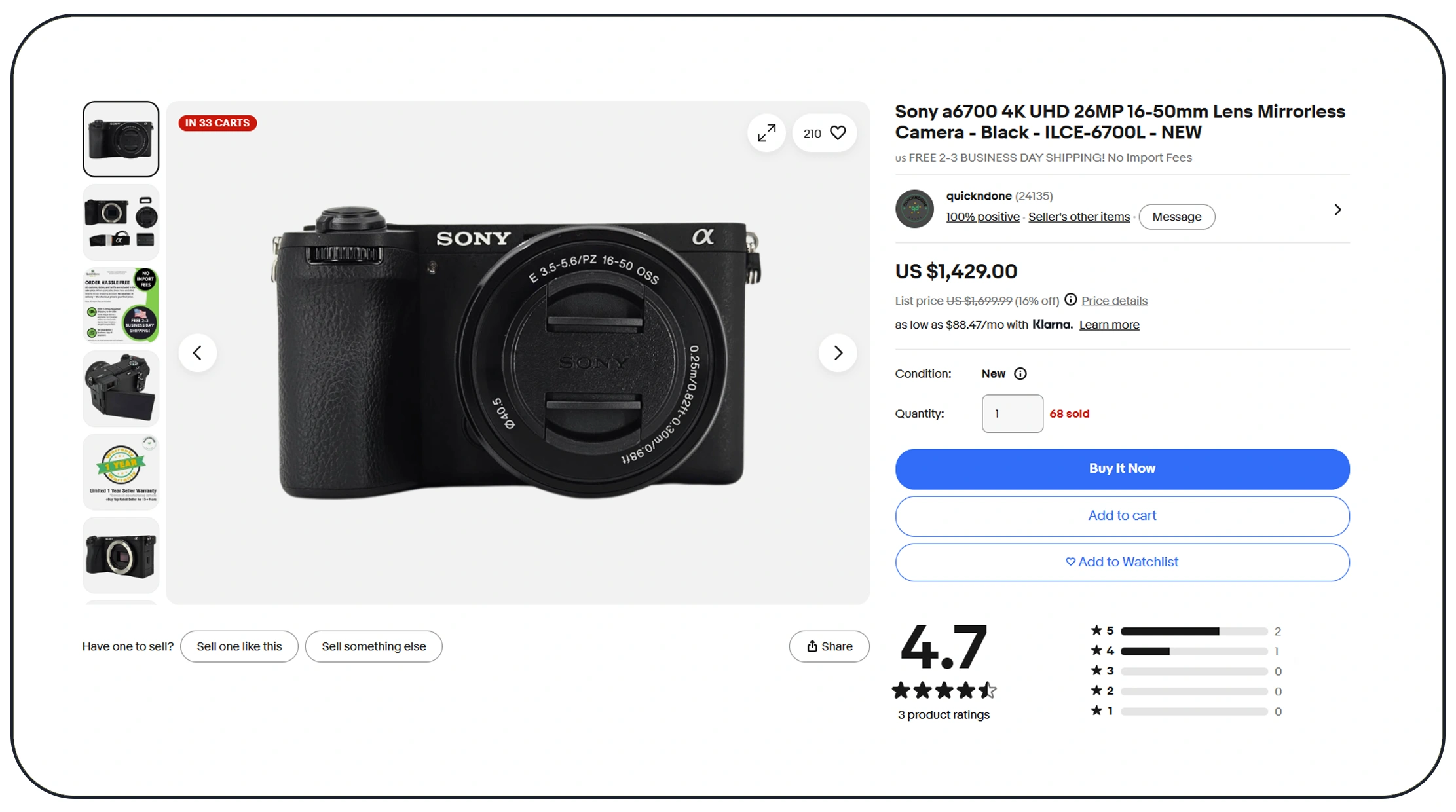
Businesses aiming to collect structured product data from online stores focus heavily on data normalization and attribute consistency. Raw ecommerce data is often unstructured and varies across websites, making transformation pipelines essential for downstream analytics and machine learning applications.
Structured product data includes:
- Product titles
- Brand information
- Specifications
- Descriptions
- Images
- Ratings and reviews
- Pricing
- Category mappings
- Variant details
- Seller information
Structured Ecommerce Data Usage Statistics
| Year | Structured Data Adoption | AI Retail Analytics Usage |
|---|---|---|
| 2020 | 34% | 18% |
| 2021 | 41% | 24% |
| 2022 | 49% | 31% |
| 2023 | 57% | 40% |
| 2024 | 66% | 51% |
| 2025 | 74% | 63% |
| 2026 | 82% | 72% |
Retail intelligence platforms increasingly use structured product datasets for:
- Recommendation engines
- Search optimization
- Market basket analysis
- Trend forecasting
- Customer segmentation
- Competitor benchmarking
- Personalized merchandising
Scaling Data Collection Across Thousands of Stores
Organizations seeking scalable retail intelligence often invest in tools to extract complete ecommerce product catalogs across multiple marketplaces and direct-to-consumer platforms. These tools combine automation frameworks, cloud infrastructure, proxy management, and parsing engines to process millions of product pages efficiently.
Enterprise-grade extraction systems must handle frequent website structure changes, anti-bot protections, and high-volume data processing requirements. API-first architectures now allow seamless integration with pricing engines, BI platforms, and retail analytics dashboards.
Ecommerce Extraction Tool Adoption (2020–2026)
| Year | Companies Using Automation Tools | Avg. Websites Monitored |
|---|---|---|
| 2020 | 32% | 45 |
| 2021 | 39% | 63 |
| 2022 | 47% | 88 |
| 2023 | 56% | 120 |
| 2024 | 64% | 165 |
| 2025 | 71% | 220 |
| 2026 | 80% | 310 |
Modern extraction ecosystems support:
- Distributed cloud crawling
- Real-time API synchronization
- Intelligent scheduling
- Automated data validation
- Change detection systems
- Historical pricing archives
- Multi-country retail monitoring
The Growing Value of Retail Data Assets
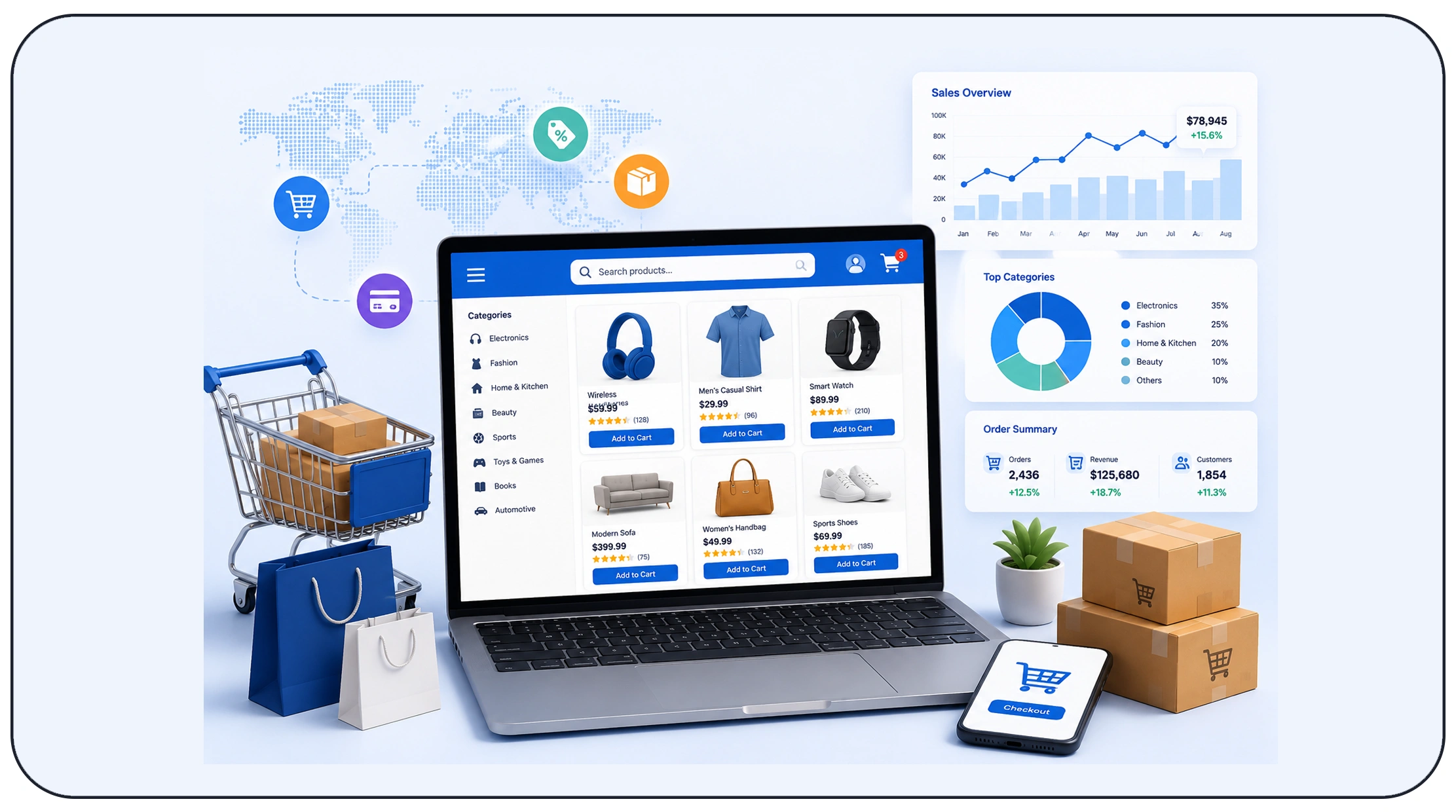
The importance of high-quality E-Commerce Dataset solutions has increased significantly as businesses adopt AI-driven analytics and predictive commerce strategies. Ecommerce datasets provide the foundation for retail forecasting, customer behavior analysis, assortment optimization, and pricing intelligence.
Large-scale ecommerce datasets contain millions of records covering categories such as electronics, apparel, beauty, grocery, automotive, and home improvement products. Historical data archives further help businesses analyze long-term pricing patterns and seasonal demand shifts.
Global Ecommerce Dataset Expansion (2020–2026)
| Year | Dataset Size Processed Daily | AI Retail Projects Using Datasets |
|---|---|---|
| 2020 | 5 TB | 21% |
| 2021 | 8 TB | 29% |
| 2022 | 12 TB | 37% |
| 2023 | 18 TB | 46% |
| 2024 | 26 TB | 57% |
| 2025 | 35 TB | 68% |
| 2026 | 48 TB | 79% |
Retail datasets support several strategic initiatives including:
- Demand forecasting
- Assortment intelligence
- Price elasticity modeling
- Market trend prediction
- Customer personalization
- Competitive benchmarking
- Retail media optimization
Real-Time APIs Powering Commerce Automation

Modern retail intelligence systems increasingly depend on scalable Web Scraping API infrastructure for automated product extraction and real-time commerce monitoring. APIs simplify integration with analytics platforms, ERP systems, dynamic pricing engines, and market intelligence dashboards.
Unlike traditional scraping approaches, API-driven architectures enable faster deployment, centralized control, and higher extraction efficiency across thousands of ecommerce sources. Businesses can automate catalog updates, inventory tracking, and pricing analysis without maintaining large scraping infrastructures internally.
Web Scraping API Market Growth (2020–2026)
| Year | API-Based Extraction Adoption | Avg. API Requests Daily |
|---|---|---|
| 2020 | 27% | 12 Million |
| 2021 | 35% | 18 Million |
| 2022 | 44% | 27 Million |
| 2023 | 53% | 39 Million |
| 2024 | 62% | 54 Million |
| 2025 | 71% | 73 Million |
| 2026 | 81% | 96 Million |
API-driven extraction platforms deliver several advantages:
- Faster deployment cycles
- Real-time data synchronization
- Simplified system integration
- Scalable cloud infrastructure
- Improved extraction accuracy
- Centralized monitoring
- Automated maintenance
Why Choose Real Data API?
Real Data API delivers enterprise-grade retail intelligence solutions designed for scalable ecommerce monitoring and advanced analytics. Businesses seeking reliable Web Scraping Services benefit from high-speed infrastructure, intelligent extraction systems, and customizable retail data pipelines.
The platform enables organizations to scrape complete product catalogs from ecommerce websites while maintaining high accuracy, real-time synchronization, and structured output delivery. From SKU monitoring and pricing intelligence to inventory tracking and competitor analysis, Real Data API supports a wide range of ecommerce data extraction use cases.
Key advantages include:
- Scalable cloud infrastructure
- Real-time product monitoring
- Advanced anti-bot bypass systems
- Structured JSON and CSV delivery
- Historical retail data archives
- AI-powered data normalization
- Global ecommerce coverage
- Automated scheduling and updates
Real Data API helps retailers, brands, research firms, and analytics providers build faster, smarter, and more scalable retail intelligence ecosystems.
Conclusion
As ecommerce competition intensifies globally, businesses increasingly rely on automated retail intelligence systems to improve pricing strategies, optimize inventory management, and track market trends. The ability to scrape complete product catalogs from ecommerce websites enables organizations to access real-time product intelligence at scale while supporting advanced analytics and AI-driven decision-making.
From SKU-level monitoring and structured product extraction to API-powered automation and large-scale ecommerce datasets, modern catalog scraping technologies are transforming how businesses understand digital commerce markets.
Accelerate your retail intelligence strategy with Real Data API and unlock scalable ecommerce product extraction, real-time pricing insights, and enterprise-grade catalog monitoring solutions today!
Latest posts
How To Solve Product Data Tracking Challenges At Scale with Costco Web Data Scraper For Product Information
Truthsocial Data Scraping For Real-Time Social Media Insights

Zara Web Data Scraper For Fashion Trend Analysis - How Retailers Overcome Fast-Changing Fashion Demand & Inventory Challenges
How Real Estate Web Scraping Using Bayut API Solves Rental Pricing and Property Tracking Problems?






.png)



