
Introduction
The United States is the world's largest travel economy, generating over $2.3 trillion in annual economic impact and welcoming nearly 100 million international visitors alongside hundreds of millions of domestic travelers every year. From the resort corridors of Hawaii and the ski slopes of Colorado, to the entertainment districts of Las Vegas, the theme park ecosystems of Orlando, the coastal tourism markets of Florida and California, and the urban travel hubs of New York and Chicago — the breadth and complexity of the US tourism market is unmatched anywhere in the world.
For travel companies, hospitality operators, airlines, OTAs, and market researchers trying to compete and invest intelligently in this environment, access to timely, granular, and structured data is not a strategic advantage — it is table stakes. Hotel rates, flight fares, and booking platform data change by the hour across thousands of properties and hundreds of routes simultaneously. The only way to track this landscape at the speed and scale that decision-making demands is to scrape travel data in the United States systematically, using a real-time travel data scraper USA pipeline that collects, normalizes, and delivers actionable intelligence continuously.
This article explores the data sources, tools, API infrastructure, and market insights that define modern USA travel market intelligence data extraction — and how a well-structured travel dataset transforms raw platform data into genuine competitive advantage.
$2.3T
US travel economic impact 2025
100M+
International visitors to USA annually
54,000+
Hotel properties across the USA
72x
Avg daily fare changes per US route
Why Real-Time Travel Data Scraping Is Non-Negotiable
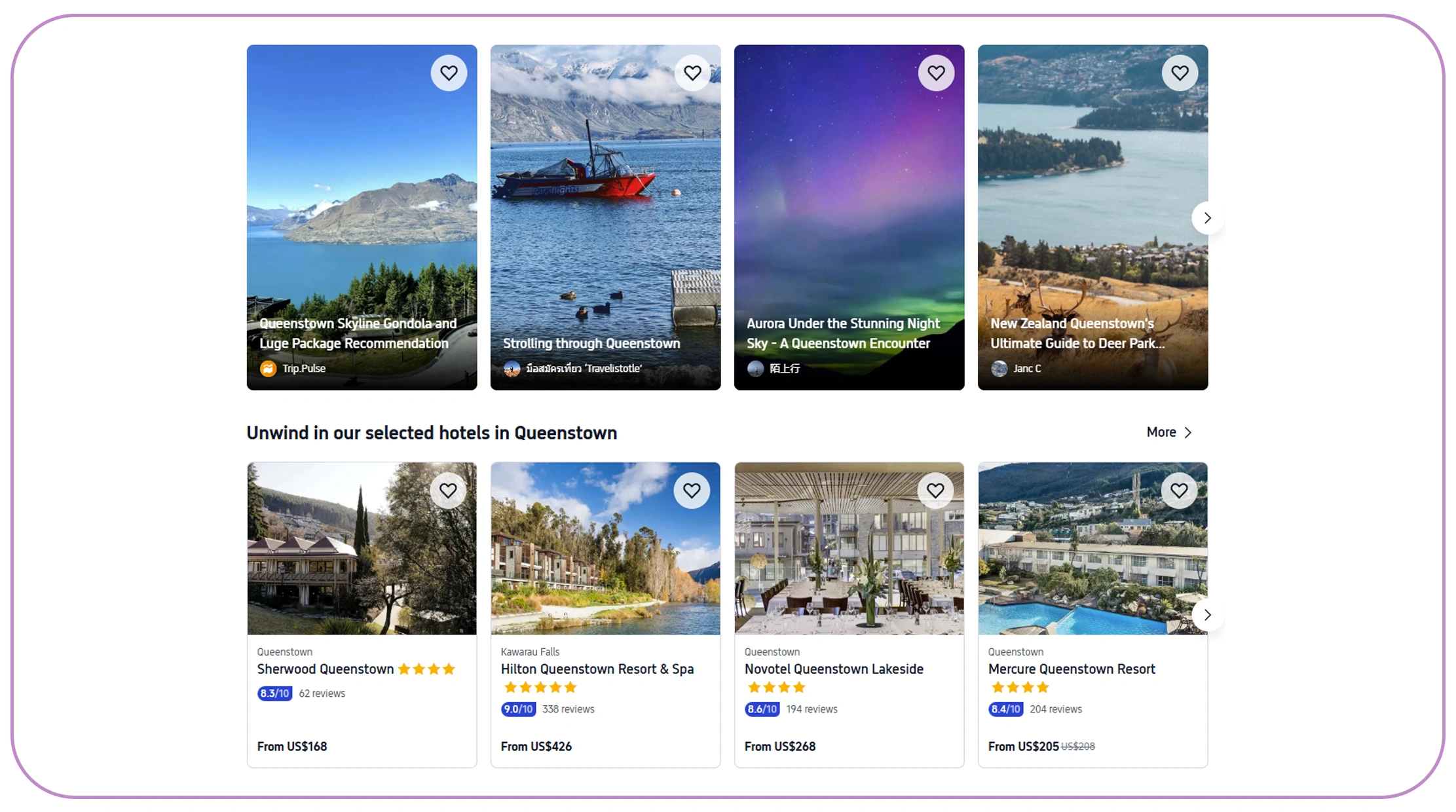
The fundamental challenge in US travel market intelligence is not data scarcity — it is data velocity. Every major OTA, airline, and hotel booking platform updates its pricing continuously through algorithmic yield management systems designed specifically to maximize revenue by responding to real-time demand signals. The result is a pricing environment that moves faster than any manual monitoring process can track.
A hotel revenue manager checking competitor rates once a day is operating with yesterday's intelligence in a market that updated dozens of times overnight. A travel startup building a price prediction product on weekly data snapshots cannot deliver the accuracy that consumers expect and competitors are already providing. An OTA enforcing rate parity agreements across thousands of hotel partners needs automated, continuous monitoring — not periodic manual audits. In every one of these scenarios, a real-time travel data scraper USA solution is not a luxury enhancement but the operational baseline that makes the core business function possible.
This is the context in which web scraping USA tourism market trends has grown from a niche technical practice into a mainstream data discipline adopted by airlines, hotel chains, OTAs, travel tech startups, and institutional investors across the country.
"USA travel market intelligence data extraction has become as fundamental to hospitality strategy as a PMS system or a CRS — it is the data infrastructure layer that everything else depends on."
Key Data Sources to Extract Booking and Pricing Data
Effective USA travel market intelligence data extraction begins with identifying the right platforms and sources. The US travel data landscape spans booking aggregators, direct supplier sites, review platforms, and short-term rental marketplaces — each contributing a distinct data signal to the overall intelligence picture.
- Expedia / Booking.com: Hotel nightly rates, room type pricing, OTA-exclusive promotions, availability windows, and cancellation policy terms
- Google Flights / Kayak: Real-time flight fares across all US carriers, route-level price calendars, historical fare trends, and lowest-fare signals
- Hotels.com / Priceline: Last-minute rate drops, opaque pricing deals, loyalty rate differentials, and resort fee disclosure by property
- Airline Websites: Direct carrier fares, ancillary fee structures, fare class availability, seat upgrade pricing, and loyalty member rates
- Airbnb / Vrbo: Short-term rental pricing as a competitive benchmark for hotel rate strategy across leisure travel markets nationally
- TripAdvisor / Yelp: Review volume and sentiment trends, destination demand signals, attraction pricing, and competitive reputation data
Tools and Infrastructure for USA Travel Data Collection

Building a production-grade real-time travel data scraper USA system requires selecting the right combination of tools based on data volume requirements, platform complexity, and update frequency needs. Most major travel platforms use JavaScript rendering, dynamic pricing APIs, and anti-bot countermeasures that require sophisticated browser automation rather than simple static HTML parsing.
Python + Playwright
Browser automation for JS-rendered OTAs like Expedia, Booking.com, and Kayak — handles dynamic pricing load and interactive search flows
Scrapy
High-throughput crawling framework for large-scale structured extraction across hundreds of hotel property pages simultaneously
Web Scraping API
Managed API infrastructure handling proxy rotation, CAPTCHA solving, and session management at scale — eliminating scraper maintenance overhead
Travel Data Scraping API
Domain-specific travel APIs delivering pre-structured, continuously refreshed hotel rates, flight fares, and booking data without custom scraper development
Apache Airflow
Pipeline orchestration for scheduling multi-source scraping jobs on staggered cadences — hourly for rates, daily for reviews, weekly for market benchmarks
PostgreSQL / BigQuery
Columnar and relational storage for time-stamped travel datasets enabling historical trend analysis, benchmarking, and BI tool integration
# Real-time travel data scraper — bookings & pricing across US destinations
import asyncio
from playwright.async_api import async_playwright
import pandas as pd
from datetime import datetime

async def extract_travel_pricing(destination, check_in, check_out, segment):
    async with async_playwright() as p:
        browser = await p.chromium.launch(headless=True)
        page = await browser.new_page()
        url = (f"https://example-ota.com/search"
               f"?dest={destination}&in={check_in}&out={check_out}")
        await page.goto(url, wait_until="networkidle")
        results = await page.query_selector_all(".listing-card")
        records = []
        for r in results:
            name = await r.query_selector(".property-name")
            price = await r.query_selector(".nightly-rate")
            rating = await r.query_selector(".guest-rating")
            category = await r.query_selector(".property-type")
            records.append({
                "segment": segment,
                "destination": destination,
                "property": await name.inner_text() if name else None,
                "rate_usd": await price.inner_text() if price else None,
                "rating": await rating.inner_text() if rating else None,
                "type": await category.inner_text() if category else None,
                "scraped_at": datetime.utcnow().isoformat(),
            })
        await browser.close()
        return pd.DataFrame(records)

# Multi-destination USA travel dataset extraction
nyc = asyncio.run(extract_travel_pricing("new-york-ny", "2026-06-15","2026-06-18","Northeast"))
miami = asyncio.run(extract_travel_pricing("miami-fl", "2026-06-15","2026-06-18","Southeast"))
vegas = asyncio.run(extract_travel_pricing("las-vegas-nv", "2026-06-15","2026-06-18","Southwest"))
chicago= asyncio.run(extract_travel_pricing("chicago-il", "2026-06-15","2026-06-18","Midwest"))
travel_dataset = pd.concat([nyc, miami, vegas, chicago])
travel_dataset.to_csv("usa_travel_pricing_june2026.csv", index=False)
USA Travel Market Intelligence: What the Data Reveals
When travel data is collected systematically across platforms, destinations, and time periods using a web scraping USA tourism market trends pipeline, several high-value intelligence layers emerge that are invisible to manual or periodic research approaches.
| Intelligence Layer | Data Source | Business Value | Update Frequency |
|---|---|---|---|
| Competitor hotel rate positioning | Expedia, Booking.com, Hotels.com | Dynamic rate optimization | Hourly |
| Flight fare trend tracking | Google Flights, Kayak, Airlines | Yield management & alerts | Hourly |
| OTA rate parity monitoring | All major OTA platforms | Contract compliance enforcement | Daily |
| Short-term rental benchmarking | Airbnb, Vrbo | Hotel strategy vs. STR market | Daily |
| Review sentiment tracking | TripAdvisor, Google, Yelp | Brand reputation intelligence | Weekly |
| Seasonal demand mapping | Multi-platform aggregation | Forecasting & inventory planning | Weekly |
Travel Scraping API Use Cases Across the US Industry
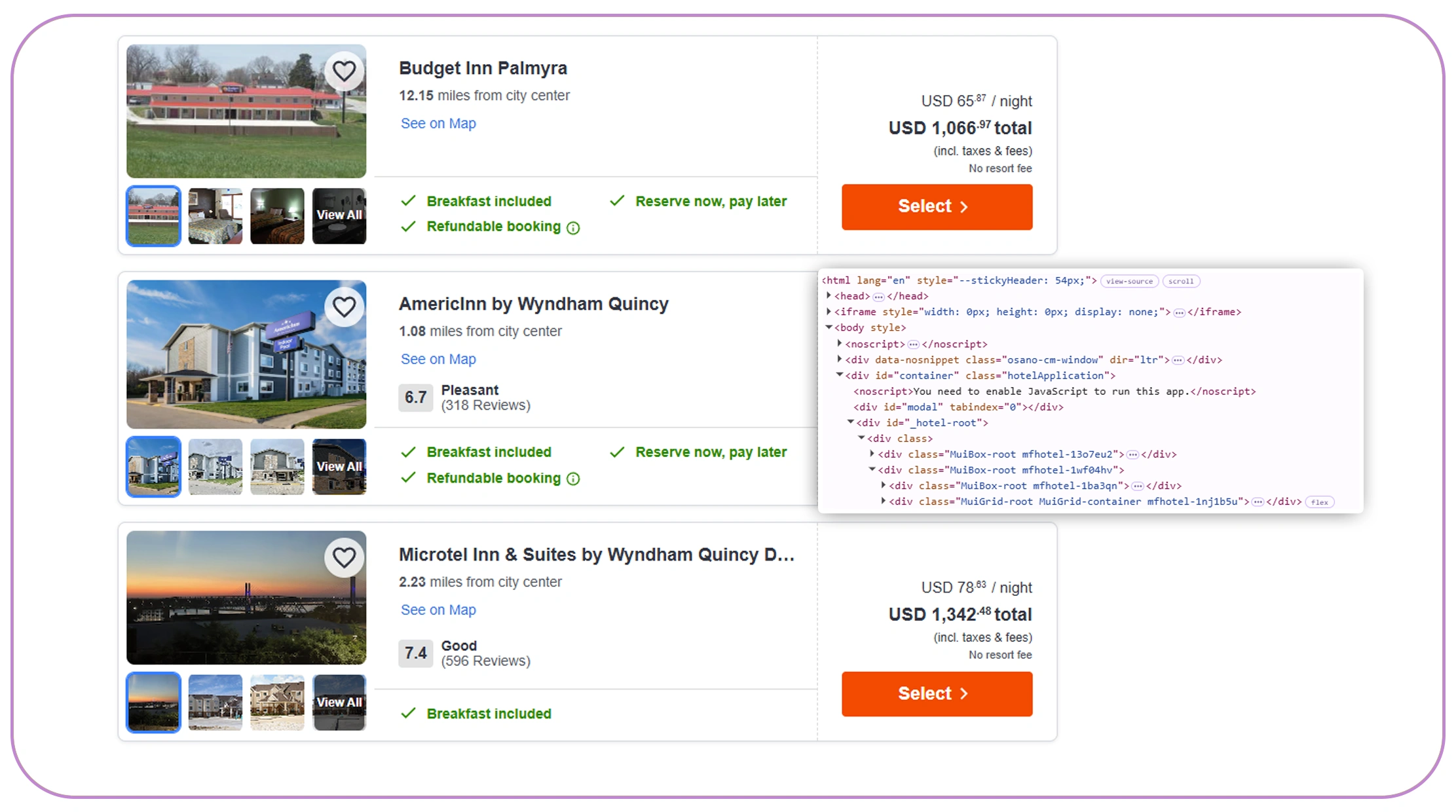
A travel data scraping API purpose-built for the US market eliminates the engineering complexity of managing multi-platform scrapers by delivering pre-structured, continuously refreshed travel data through a single, standardized interface. Here are the most impactful Travel Scraping API Use Cases driving adoption across the US travel industry today.
Revenue Management
Hotel chains and independent properties use travel data scraping APIs to feed dynamic pricing engines with real-time competitor rate data — automating rate adjustments that keep properties competitively positioned 24 hours a day
OTA Price Parity
OTAs enforce rate parity agreements across thousands of hotel partners by running continuous cross-platform rate comparisons through a web scraping API — flagging violations automatically before they cause booking share loss
Fare Alert Products
Travel tech startups power consumer-facing fare alert and price prediction apps with continuously refreshed flight fare datasets delivered through a travel data scraping API — the core data input that makes real-time price intelligence possible
Investment Due Diligence
Private equity and real estate investors use structured travel datasets to conduct due diligence on US hotel acquisitions — analyzing historical rate performance, occupancy proxies, competitive density, and demand trajectory by market
Building a Travel Dataset for USA Market Research
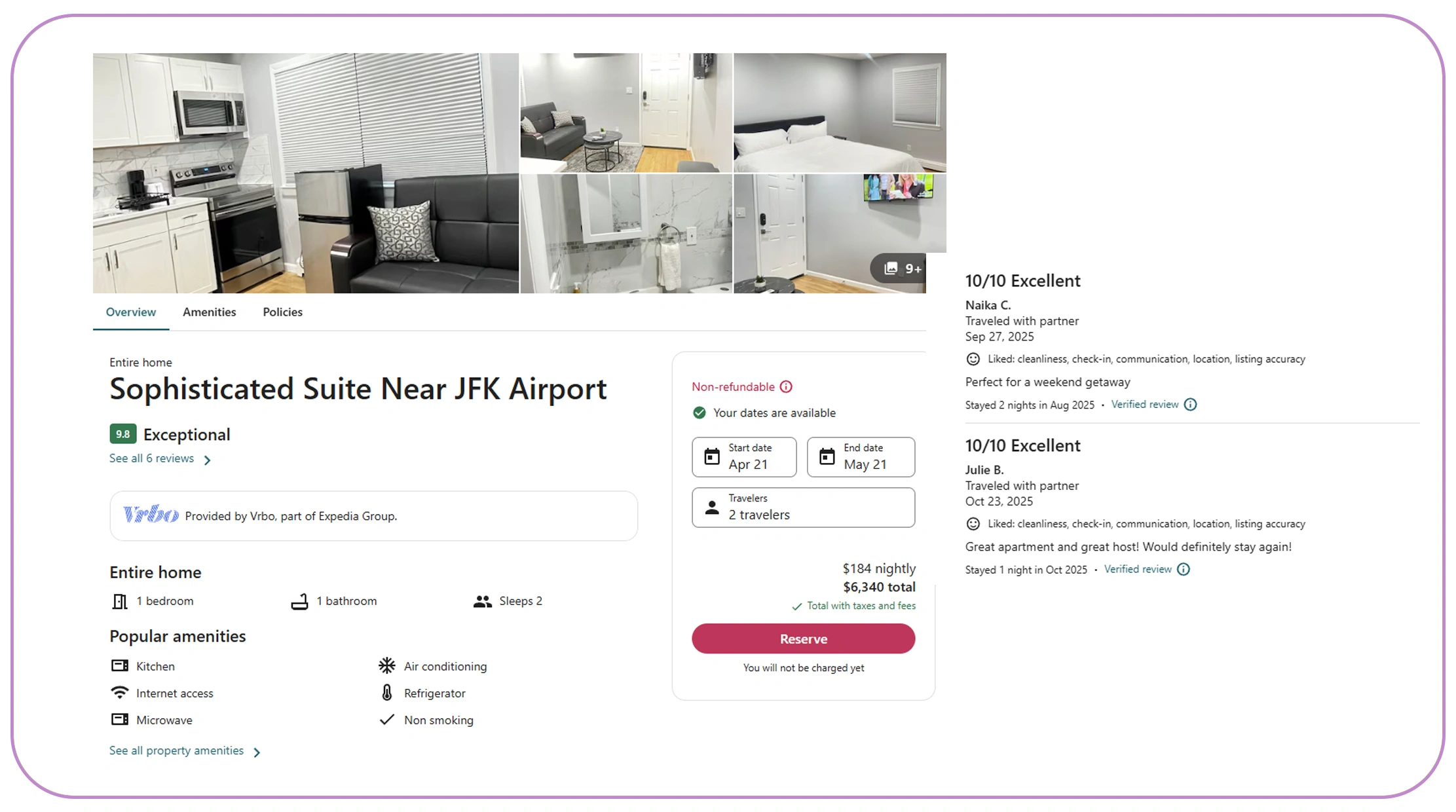
A production-grade travel dataset built from systematic US travel data scraping is the foundation of serious tourism market research. Beyond point-in-time price snapshots, a comprehensive US travel dataset includes hotel nightly rate histories by property, platform source, and room type; flight fare time series by route, carrier, and fare class; advance purchase discount curves showing how prices change with booking lead time; seasonal demand indices by destination and market segment; short-term rental pricing benchmarks by neighborhood and property type; OTA vs. direct rate differential tracking; and review volume and sentiment time series for competitive reputation monitoring.
US Travel Dataset — Core Fields for Market Research
- Hotel nightly rates with OTA source, room type, booking window, and timestamp for historical trend analysis
- Flight fare records by route, carrier, fare class, travel date, and booking date across all major US airports
- Booking and availability signals — sold-out dates, last-room-availability flags, and limited inventory markers that proxy demand
- Ancillary fee data — baggage fees, resort fees, seat upgrade pricing, and cancellation policy terms by property and carrier
- Short-term rental pricing benchmarks by destination, neighborhood, and property type for hotel competitive context
- Review volume and rating trajectories for all major US destinations enabling competitive reputation tracking over time
Legal and Ethical Considerations
Scraping travel data in the United States for tourism market insights operates within a well-defined and broadly permissive legal framework for publicly available data. The Ninth Circuit's landmark ruling in hiQ Labs v. LinkedIn affirmed that scraping publicly accessible web data does not violate the Computer Fraud and Abuse Act — a foundational precedent that covers the publicly visible hotel rates, flight fares, and booking platform listings that form the core of any US travel data collection program.
Responsible practitioners always review each platform's Terms of Service before initiating collection, apply reasonable rate limiting to avoid service disruption, refrain from accessing data behind authentication walls without authorization, and ensure that collected data is used for legitimate market research and competitive intelligence purposes. Using a licensed travel data scraping API or web scraping API — which operates within established data provider agreements — is consistently the most compliant and operationally sustainable approach for commercial-scale travel intelligence programs.
Conclusion
The US travel market is not slowing down — and neither is the competitive intensity within it. Hotel rates, flight fares, booking platform dynamics, short-term rental competition, and consumer review signals all evolve continuously, at a pace that only systematic, real-time data collection can match. For travel companies, hospitality operators, and market researchers who want to make decisions that are genuinely informed by how the market is behaving right now — not last week, not last quarter — scraping travel data in the United States through a structured, continuously updated pipeline is the only viable path.
Whether the goal is to extract booking and pricing data for USA tourism market insights to power a dynamic pricing engine, build a travel dataset for OTA rate parity enforcement, deploy a web scraping API for multi-destination competitive monitoring, or generate USA travel market intelligence for investment due diligence, the data infrastructure requirement is the same: clean, structured, continuously refreshed travel data that reflects the US market as it actually is in real time.
For travel companies and market research teams that need this capability without building and maintaining complex multi-source scraping pipelines, Real Data API is the most complete and production-ready solution available in the market today. Real Data API provides structured, continuously refreshed access to a comprehensive US travel dataset — spanning hotel nightly rates across thousands of US properties, flight fare data across all major domestic routes, OTA price comparisons, short-term rental benchmarks, booking availability signals, and destination-level demand indicators — all delivered through a clean, scalable travel data scraping API and web scraping API purpose-built for the pricing intelligence, market research, and competitive analytics that US travel businesses depend on. From airline revenue teams to hotel chain strategists, OTA product managers to hospitality investors, Real Data API delivers the data infrastructure that turns US travel market complexity into actionable competitive intelligence.
Real Data API — US Travel Market Intelligence, Always On
Access real-time hotel rates, flight fares, booking data, OTA price comparisons, short-term rental benchmarks, and USA tourism market trends — all through a single, production-ready travel data scraping API and web scraping API built for competitive intelligence and market research at scale.
Statistics and pricing figures are illustrative estimates based on publicly available market data. Always verify against current platform listings. Review each platform's Terms of Service before initiating data collection programs.
Latest posts
Allegro scraper for competitor price monitoring – How to Track Product Prices and Stay Ahead of Competitors
Ocado API data collection services for retailers - Track Competitor Prices and Deals
Using Flipkart API for e-commerce competitor benchmarking to Monitor Competitors Across Online Marketplaces

How Myntra scraper for online fashion retail analytics Helps Track Trends, Prices, and Product Demand





.png)