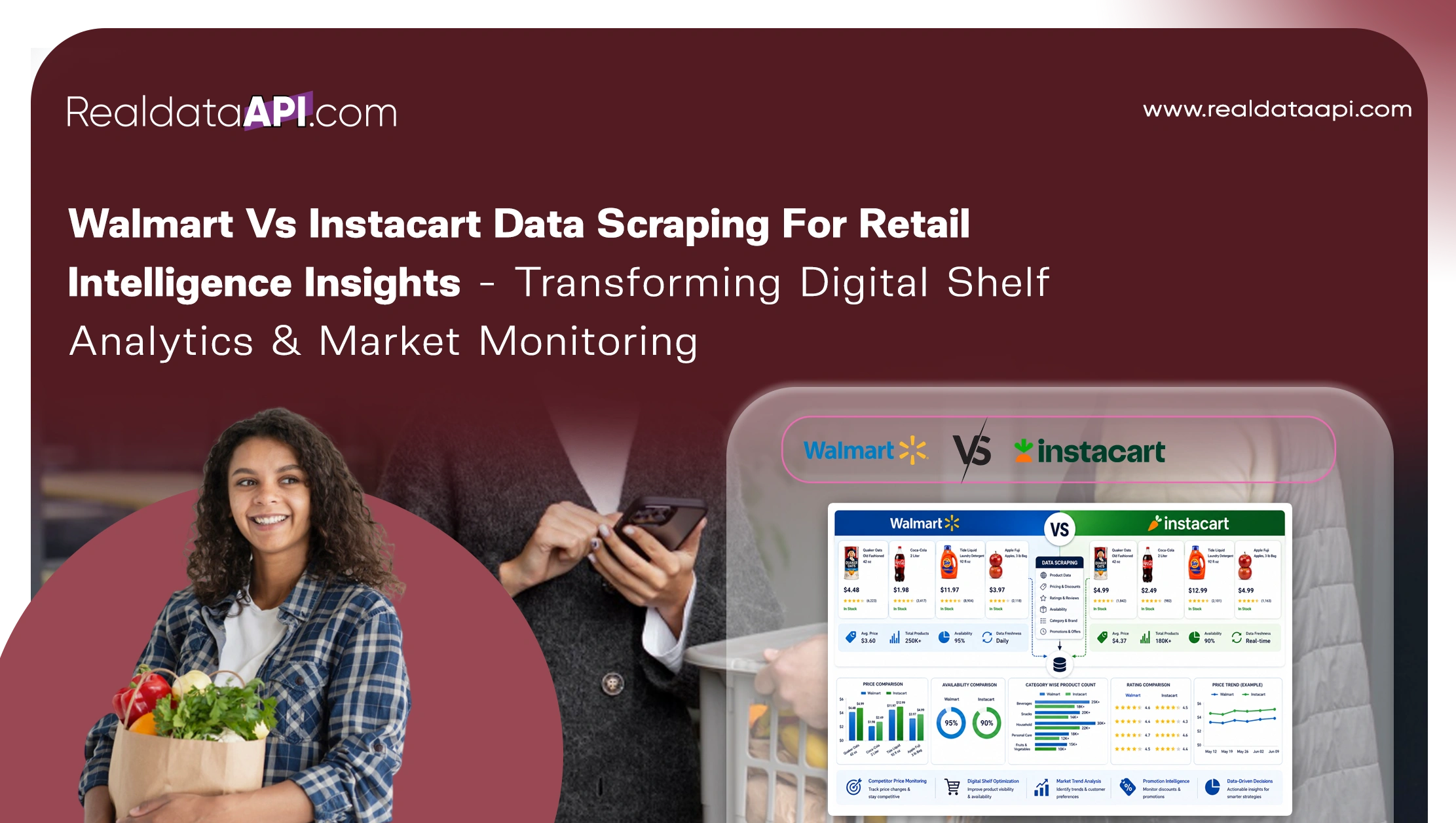
Introduction
Retailers, FMCG brands, and grocery analytics companies use Walmart vs Instacart data scraping for retail intelligence insights to monitor pricing, inventory, promotions, customer demand, and digital shelf performance across leading grocery platforms. Businesses that automate retail intelligence gain faster market visibility, stronger pricing strategies, and better competitive positioning.
According to industry estimates, online grocery sales are expected to grow by more than 18% annually through 2026, while quick-commerce and same-day delivery demand continue rising globally. Companies now depend on scalable automation tools such as the Instacart Quick Commerce Scraping API to collect structured grocery datasets in real time for analytics and forecasting.
For retail decision-makers, category managers, pricing analysts, and eCommerce strategy teams, the biggest challenge is managing rapidly changing product data across multiple marketplaces. Real-time retail intelligence helps solve this problem by enabling faster pricing optimization, inventory monitoring, and promotional tracking.
This report explores major market trends, consumer behavior changes, digital shelf analytics developments, and retail intelligence strategies shaping Walmart and Instacart ecosystems between 2020 and 2026.
How Are Consumers Changing Their Grocery Shopping Preferences?
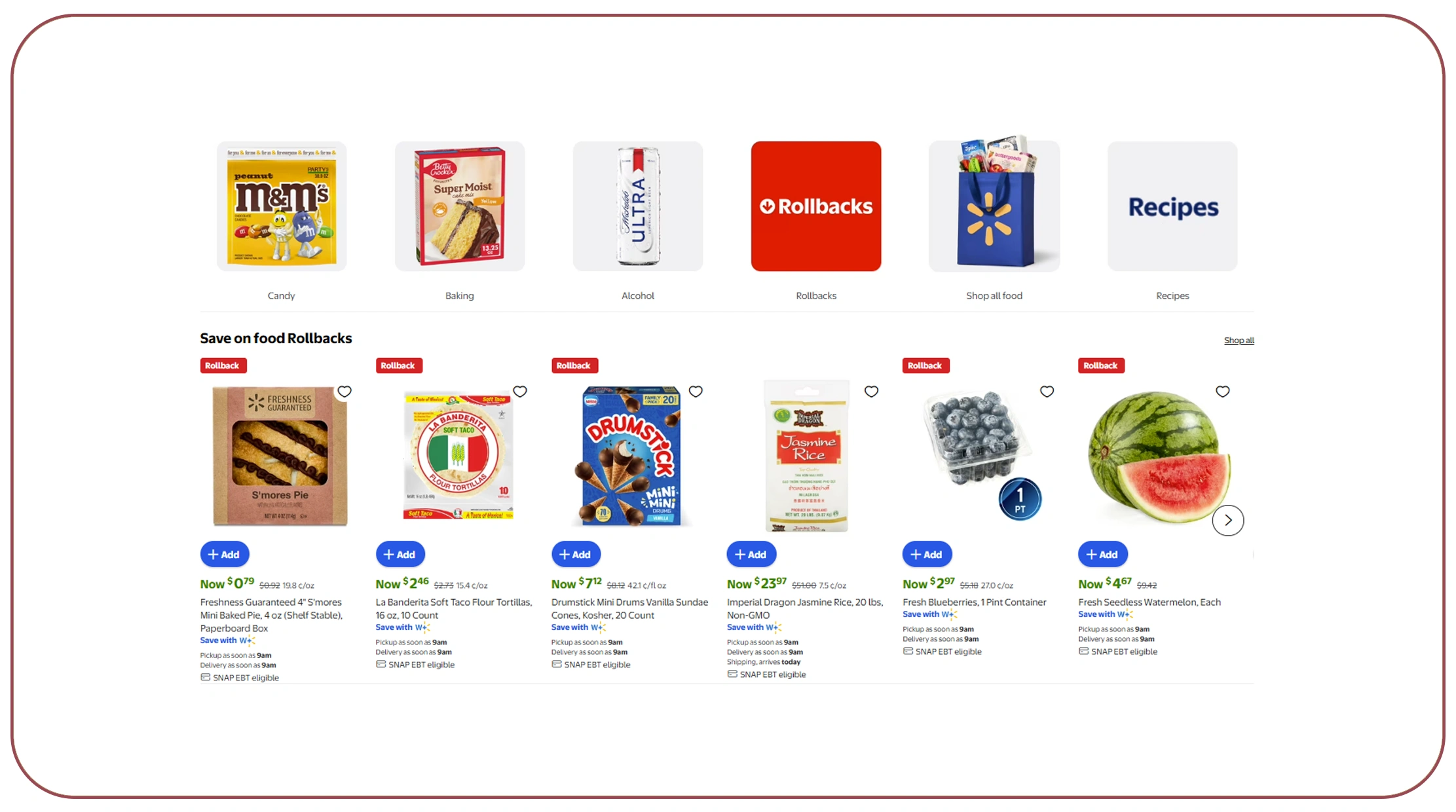
Consumer purchasing behavior has shifted significantly since 2020. More customers now rely on mobile apps, same-day grocery delivery, and digital-first shopping experiences. Businesses therefore need stronger visibility into consumer buying behaviour Walmart vs Instacart insights 2026 to improve pricing strategies and product positioning.
Modern shoppers prioritize convenience, product availability, discounts, and delivery speed. Walmart continues attracting value-focused customers through large-scale inventory and competitive pricing, while Instacart focuses heavily on convenience and quick commerce partnerships.
Grocery Consumer Preference Trends (2020–2026)
| Year | Online Grocery Adoption | Mobile Grocery Purchases | Same-Day Delivery Usage |
|---|---|---|---|
| 2020 | 24% | 38% | 18% |
| 2021 | 31% | 45% | 25% |
| 2022 | 39% | 53% | 33% |
| 2023 | 47% | 60% | 41% |
| 2024 | 55% | 67% | 49% |
| 2025 | 63% | 73% | 56% |
| 2026 | 71% | 79% | 64% |
Key Market Insights
- Consumers increasingly compare prices before purchasing groceries online
- Same-day delivery strongly influences customer loyalty
- Grocery promotions drive higher cart conversion rates
- Mobile commerce dominates grocery purchasing decisions
- Inventory visibility impacts repeat purchases significantly
Retail intelligence solutions help businesses understand demand shifts faster and respond to customer expectations more effectively.
Why Do Walmart and Instacart Shape Grocery Retail Competition?
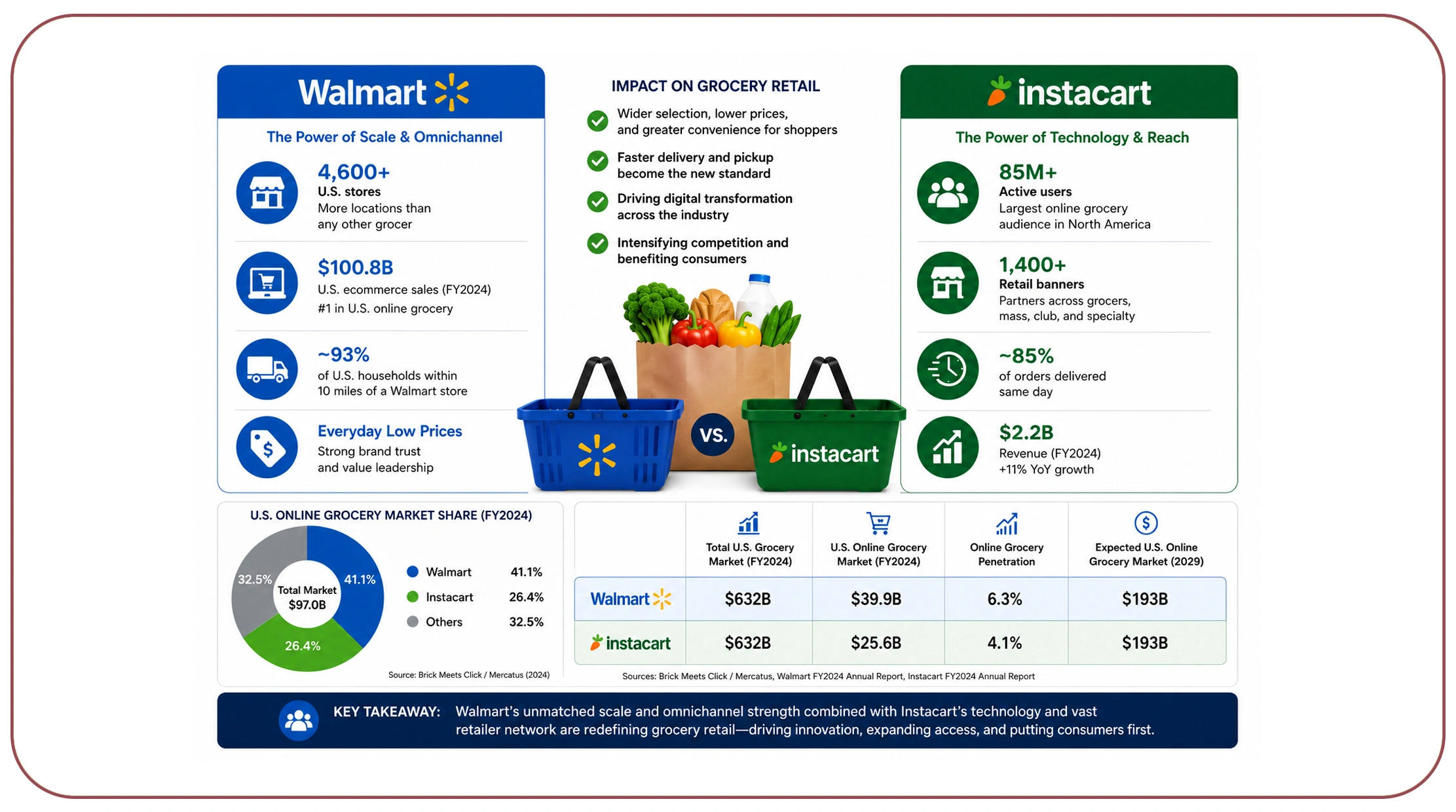
Retail competition between Walmart and Instacart continues transforming digital grocery ecosystems worldwide. Businesses increasingly analyze how Walmart and Instacart influence grocery shopping behavior to improve customer targeting and competitive positioning.
Walmart dominates through extensive product assortment, low pricing strategies, and nationwide fulfillment capabilities. Instacart differentiates itself with convenience-focused delivery partnerships, personalized shopping experiences, and multi-retailer aggregation models.
Grocery Platform Competition Statistics (2020–2026)
| Year | Walmart Online Grocery Share | Instacart Delivery Market Share | Digital Grocery Competition Growth |
|---|---|---|---|
| 2020 | 29% | 17% | 14% |
| 2021 | 34% | 21% | 19% |
| 2022 | 39% | 26% | 25% |
| 2023 | 44% | 31% | 32% |
| 2024 | 49% | 36% | 39% |
| 2025 | 53% | 41% | 46% |
| 2026 | 58% | 45% | 52% |
Key Retail Dynamics
- Walmart focuses on pricing competitiveness and inventory scale
- Instacart prioritizes delivery speed and convenience
- Promotions strongly influence basket size growth
- Multi-platform shopping behavior continues increasing
- Digital shelf visibility impacts customer engagement
Businesses monitoring these shifts gain stronger pricing intelligence and improved promotional planning capabilities.
What Grocery Trends Are Driving Retail Intelligence Growth?
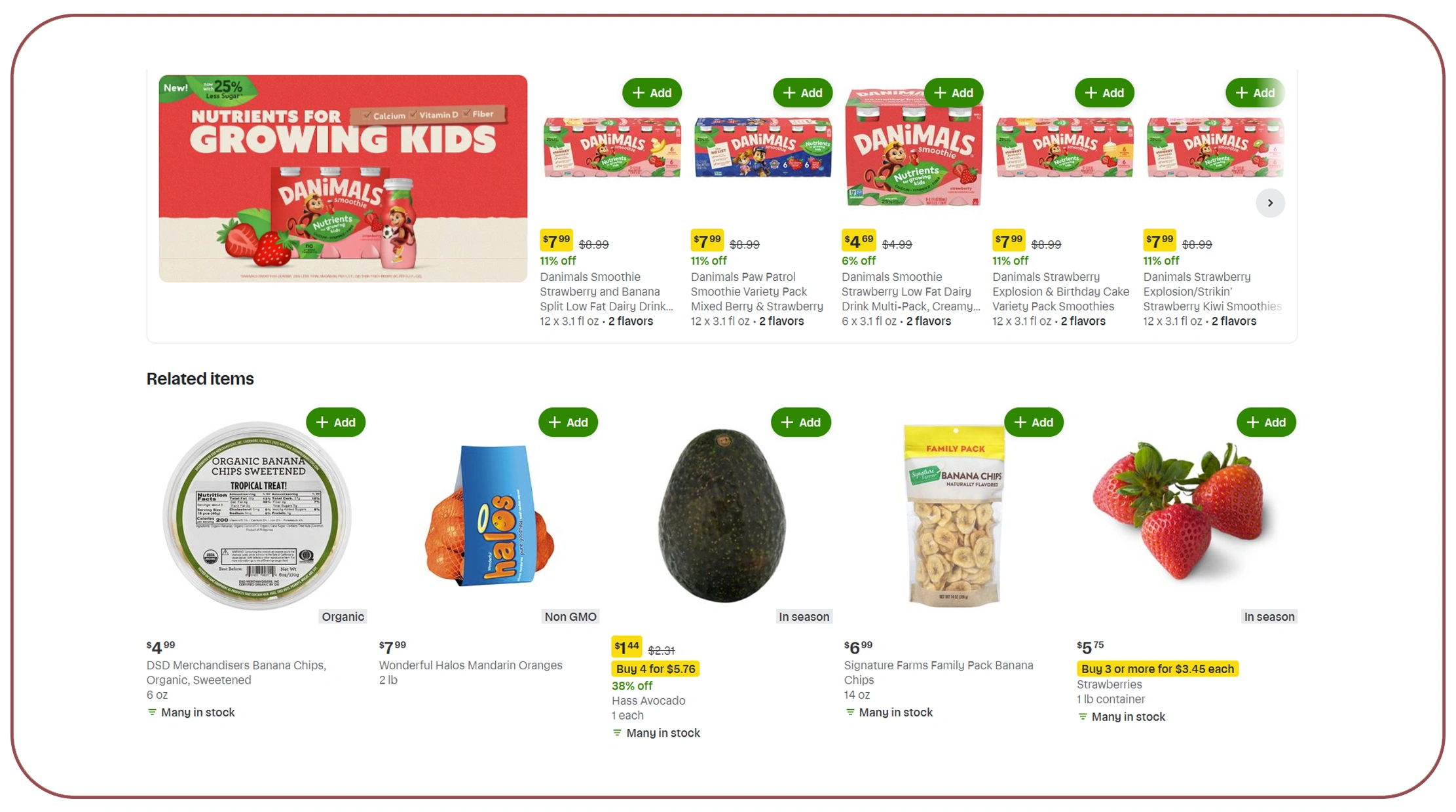
The grocery industry increasingly depends on predictive analytics, automated monitoring, and customer behavior analysis. Companies now analyze online grocery consumer trends from Walmart and Instacart to optimize digital merchandising strategies and inventory planning.
Consumer expectations for instant availability, personalized promotions, and faster delivery continue driving grocery technology investments. Retailers use data scraping and automation tools to improve category forecasting and monitor pricing trends continuously.
Online Grocery Growth Trends (2020–2026)
| Year | Personalized Promotions Usage | Real-Time Inventory Tracking | AI-Based Retail Analytics Adoption |
|---|---|---|---|
| 2020 | 21% | 19% | 15% |
| 2021 | 28% | 26% | 22% |
| 2022 | 36% | 34% | 30% |
| 2023 | 44% | 42% | 38% |
| 2024 | 52% | 50% | 47% |
| 2025 | 60% | 59% | 56% |
| 2026 | 68% | 67% | 64% |
Key Retail Intelligence Trends
- Personalized grocery recommendations are increasing
- AI-driven analytics improve demand forecasting
- Inventory synchronization reduces stock shortages
- Dynamic pricing strategies improve profitability
- Real-time monitoring supports faster business decisions
Retailers that invest in automated intelligence systems gain better operational efficiency and stronger customer retention.
How Does Data Extraction Improve Grocery Market Visibility?
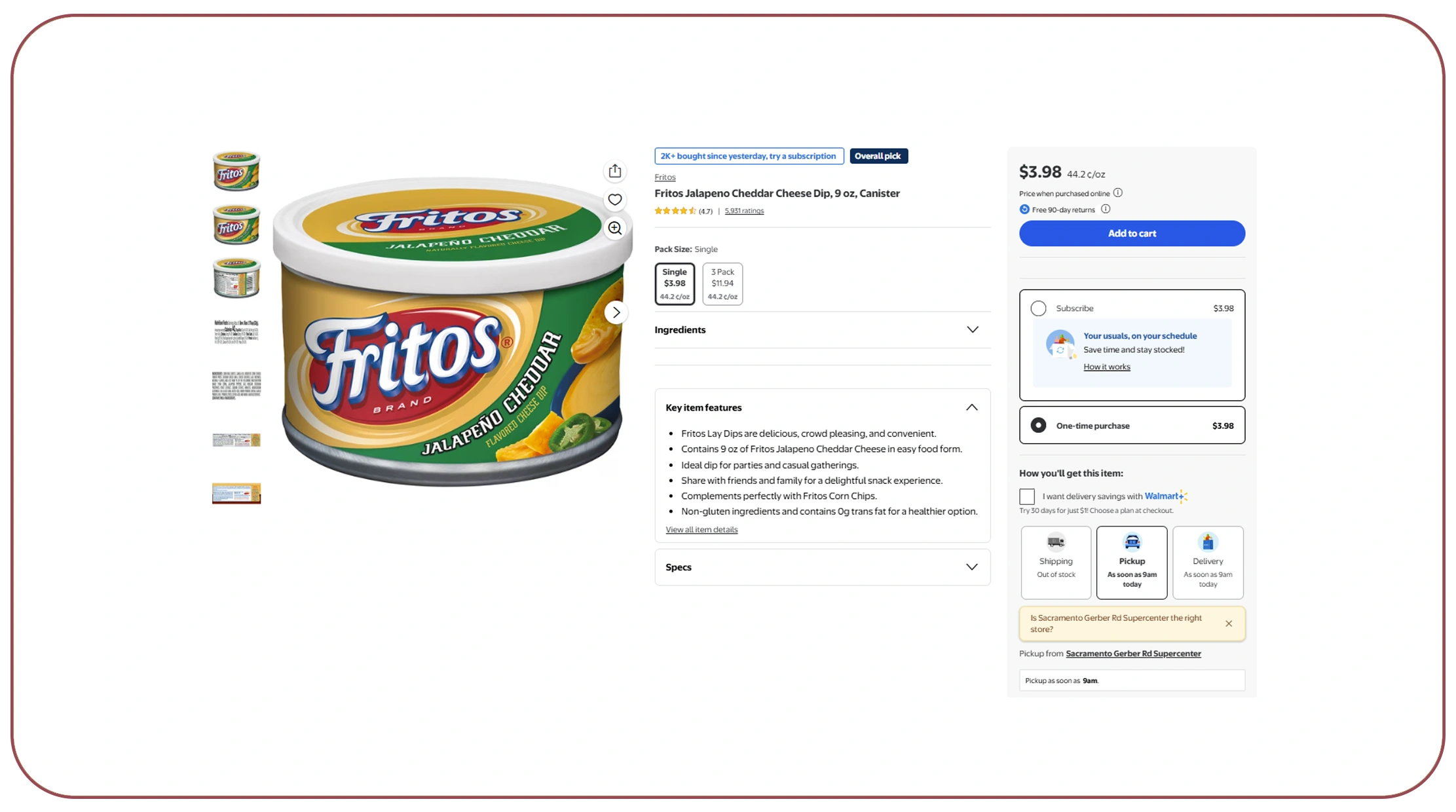
Modern retail analytics depend heavily on automation and scalable data collection frameworks. Businesses increasingly use Walmart vs Instacart grocery data scraping to monitor pricing updates, promotions, stock levels, and product assortment changes across marketplaces.
Automated extraction systems collect structured grocery datasets continuously, helping brands improve competitive analysis and digital shelf visibility. Real-time access to retail intelligence enables faster response to promotional changes and customer demand shifts.
Grocery Data Automation Trends (2020–2026)
| Year | Automated Data Extraction Adoption | Competitive Pricing Monitoring | Real-Time Analytics Usage |
|---|---|---|---|
| 2020 | 26% | 24% | 20% |
| 2021 | 33% | 31% | 27% |
| 2022 | 41% | 39% | 35% |
| 2023 | 49% | 47% | 43% |
| 2024 | 57% | 55% | 51% |
| 2025 | 65% | 63% | 60% |
| 2026 | 73% | 71% | 68% |
Benefits of Grocery Data Scraping
- Faster pricing intelligence collection
- Better inventory visibility across platforms
- Improved category-level analytics
- Enhanced promotional monitoring
- Stronger competitive benchmarking
Retailers leveraging automation gain more accurate and scalable market intelligence operations.
Why Is Structured Grocery Data Critical for Analytics?

Retail analytics platforms require high-quality and structured datasets for accurate reporting and forecasting. Businesses increasingly depend on Web Scraping Instacart Dataset systems to collect pricing, inventory, customer ratings, and promotional data across grocery categories.
Structured grocery datasets support dynamic pricing models, promotional analysis, assortment optimization, and digital shelf analytics. Automated extraction systems also reduce manual effort while improving reporting consistency.
Structured Data Usage Growth (2020–2026)
| Year | Structured Dataset Adoption | Inventory Forecasting Accuracy | Retail Dashboard Automation |
|---|---|---|---|
| 2020 | 23% | 17% | 21% |
| 2021 | 31% | 24% | 28% |
| 2022 | 39% | 32% | 36% |
| 2023 | 47% | 40% | 44% |
| 2024 | 55% | 48% | 52% |
| 2025 | 63% | 56% | 60% |
| 2026 | 71% | 64% | 68% |
Structured Data Advantages
- Improved reporting consistency
- Faster dashboard integration
- Better predictive analytics performance
- Stronger inventory planning accuracy
- Scalable retail intelligence workflows
Retailers using structured grocery datasets can make faster and more informed business decisions.
How Will Automation Shape Future Grocery Intelligence?
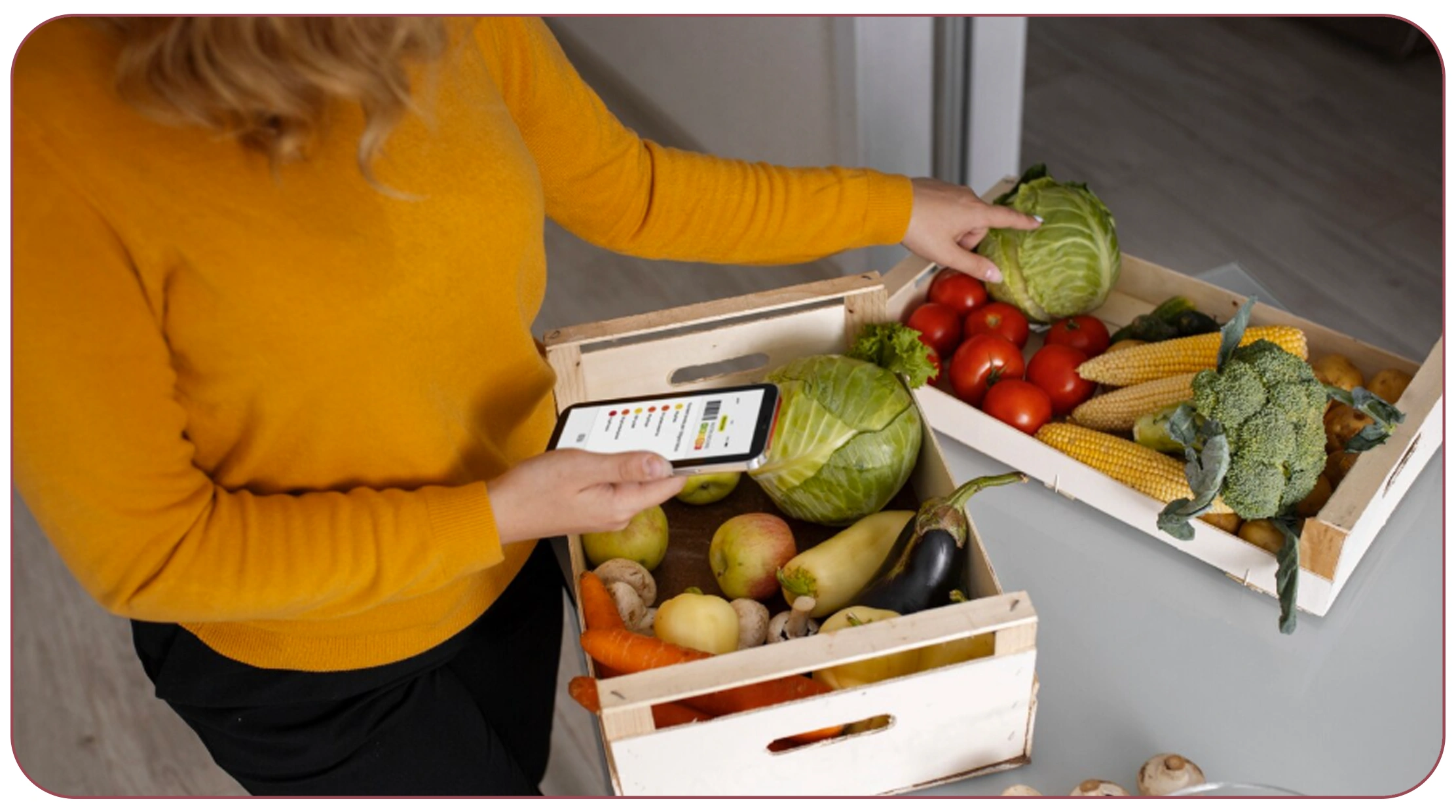
Automation and AI-driven analytics will continue reshaping grocery retail intelligence through 2026. Businesses increasingly use advanced systems such as an Instacart Scraper to automate product monitoring, pricing analysis, and inventory tracking at scale.
Future retail ecosystems will rely more heavily on predictive analytics, machine learning, and automated merchandising systems. Businesses adopting scalable automation frameworks will improve operational efficiency and market responsiveness significantly.
Future Retail Automation Trends (2020–2026)
| Year | AI-Powered Retail Analytics | Automated Pricing Optimization | Predictive Inventory Systems |
|---|---|---|---|
| 2020 | 14% | 16% | 13% |
| 2021 | 21% | 23% | 20% |
| 2022 | 29% | 31% | 28% |
| 2023 | 37% | 39% | 36% |
| 2024 | 45% | 48% | 44% |
| 2025 | 54% | 57% | 53% |
| 2026 | 63% | 66% | 62% |
Future Retail Intelligence Opportunities
- AI-powered pricing strategies
- Automated promotional forecasting
- Real-time inventory synchronization
- Personalized customer targeting
- Advanced digital shelf analytics
Businesses investing early in automation technologies will gain stronger long-term competitive advantages.
Why Choose Real Data API?
Real Data API delivers scalable retail intelligence solutions designed for modern grocery ecosystems. Our advanced infrastructure helps businesses extract structured grocery datasets efficiently while maintaining speed, scalability, and operational reliability.
We specialize in Web Scraping Walmart Grocery Dataset automation and competitive analytics solutions that support pricing intelligence, inventory monitoring, promotional tracking, category analysis, and digital shelf optimization.
Our expertise in Walmart vs Instacart data scraping for retail intelligence insights enables retailers, FMCG brands, analytics firms, and quick-commerce businesses to gain real-time visibility into changing grocery market conditions.
Benefits of Partnering with Real Data API
- Real-time pricing and inventory monitoring
- Automated grocery data extraction
- API-ready structured datasets
- Scalable cloud-based infrastructure
- Enhanced digital shelf analytics
- Faster retail intelligence reporting
- Improved competitive benchmarking
Our automation frameworks help businesses transform raw grocery data into actionable retail intelligence for smarter strategic decision-making.
Conclusion
The grocery retail landscape continues evolving rapidly due to changing consumer expectations, quick-commerce growth, and increasing competition between major platforms. Businesses now rely heavily on Walmart vs Instacart data scraping for retail intelligence insights to improve pricing optimization, inventory forecasting, promotional planning, and digital shelf performance.
Retailers, analytics firms, and FMCG brands that invest in scalable automation and real-time intelligence systems will gain stronger operational efficiency and better customer engagement between 2024 and 2026. Advanced retail analytics and automated grocery data extraction will remain essential for long-term growth in the competitive online grocery ecosystem.
Ready to strengthen your retail intelligence strategy? Contact Real Data API today to unlock scalable grocery analytics, automated market monitoring, and real-time competitive insights for your business growth!
Latest posts
What Role Does Comprehensive SKU Mapping and Price Benchmarking Play in Smarter Pricing Analysis?
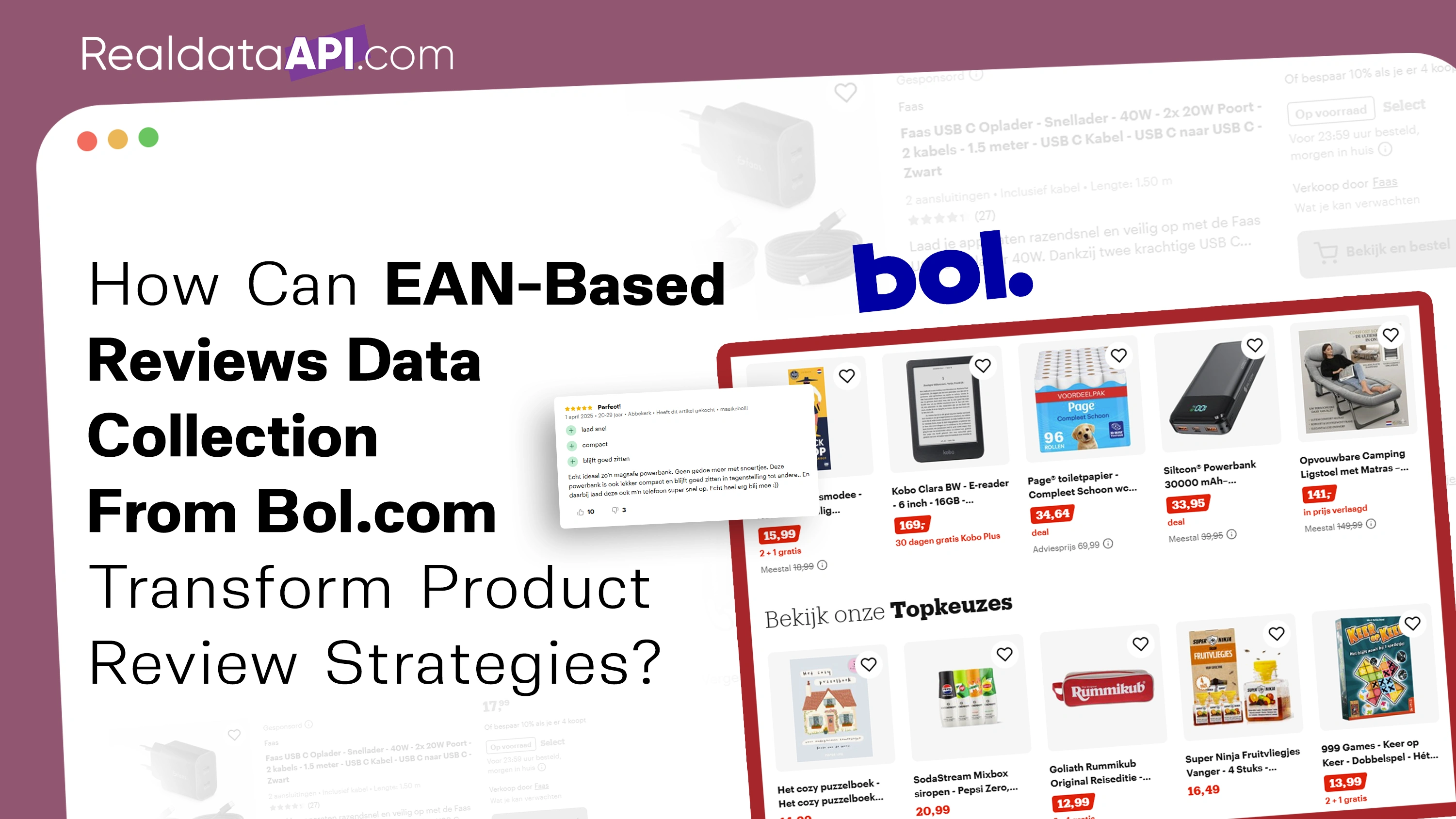
How Can EAN-Based Reviews Data Collection From Bol.com Transform Product Review Strategies?
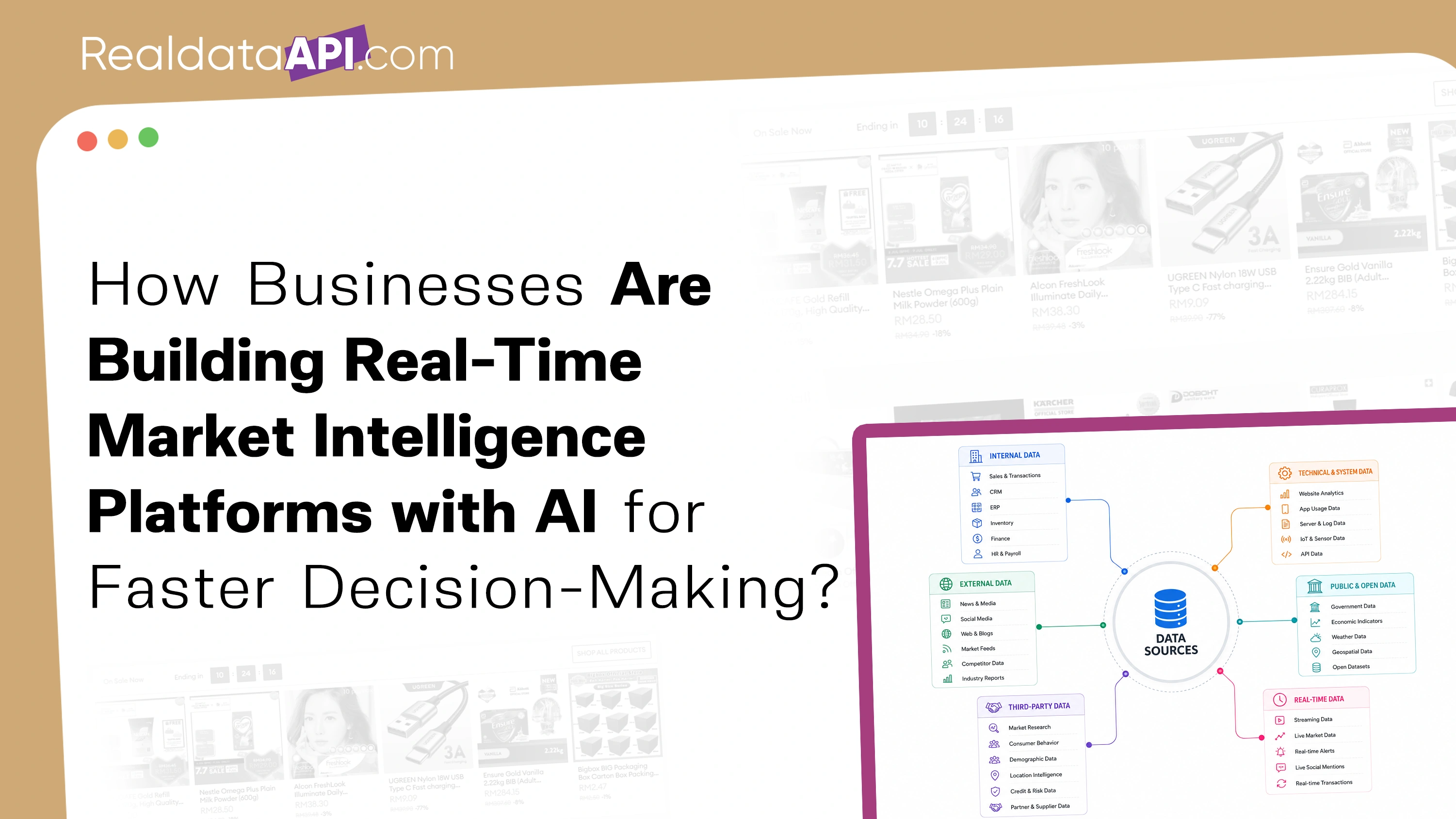
How Businesses Are Building Real-Time Market Intelligence Platforms with AI for Faster Decision-Making?
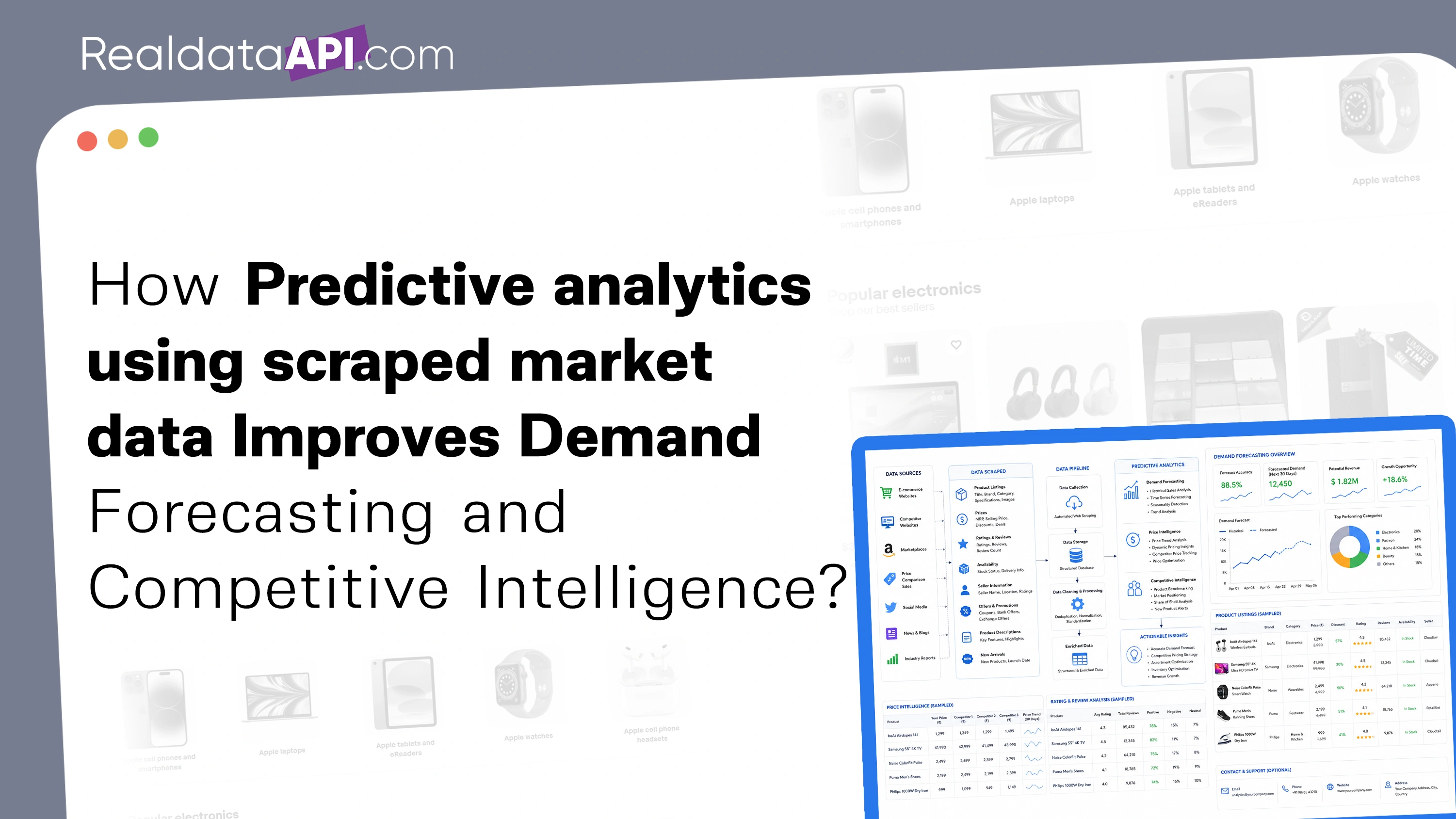
How Predictive analytics using scraped market data Improves Demand Forecasting and Competitive Intelligence?
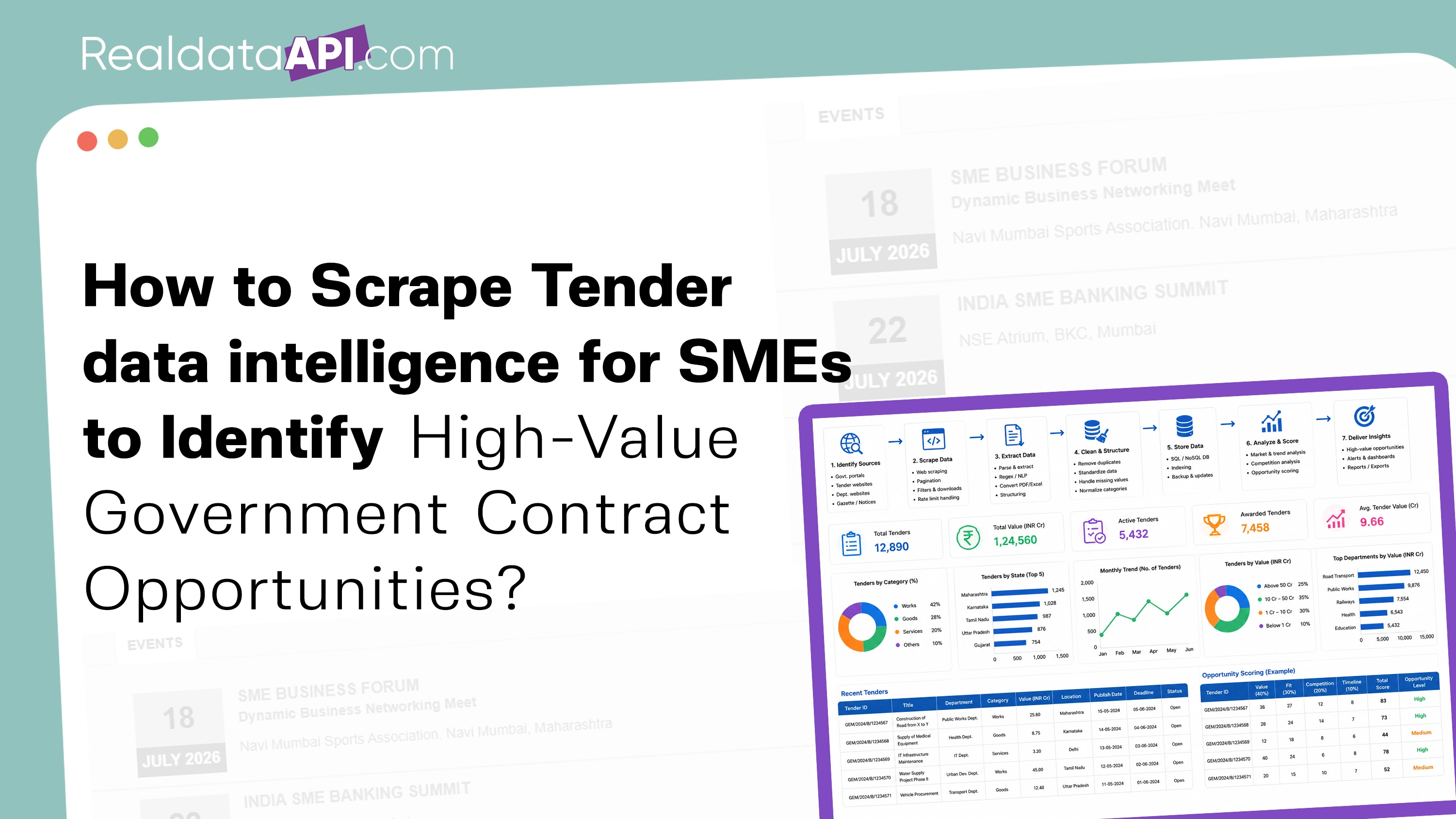
How to scrape Tender data intelligence for SMEs to Identify High-Value Government Contract Opportunities?

Real Data API stands out as one of the premier global companies specializing in web data Scraping and web extraction.





.png)


Rating 4.7
Rating 4.7
Rating 4.5
Rating 4.7
Rating 4.7


Disclaimer : RealData API functions solely as an independent data infrastructure and technology solutions provider. We build customized automation workflows designed to collect publicly accessible web data based exclusively on client instructions. RealData API neither owns proprietary datasets nor engages in the sale or redistribution of extracted information. Our operations are limited strictly to lawful public web data processing and never involve unauthorized access to restricted systems or private networks. Any company names, trademarks, logos, or brand references displayed on this website are used purely for demonstrative and illustrative purposes to showcase our technical capabilities and do not imply endorsement, partnership, or affiliation. Use of our platform and services remains subject to our Terms of Service.